
banner

Practice curiosity by reframing our expectations

“Picture Frames at Photo LA” by ricardodiaz11 is licensed under CC BY 2.0. To view a copy of this license, visit https://creativecommons.org/licenses/by/2.0/?ref=openverse.

Changing my expectations of myself and of others is easy and hard at the same time. It’s easy because it doesn’t require any physical change or financial investment. Yet it is hard because it demands that I challenge my own beliefs.

I’ve developed a list of what I call “reframes,” that can help to spark our thinking and re-frame our expectations. A popular reframe is changing a thought from “I have to…” to “I get to…” 

Instead of seeing a task like picking up your kids from school as a burden that “you have to do,” you might think of it as an opportunity that “you get to do.” It is a way to shift our perspective, especially when we feel stuck.

We often think of things as “a glass half empty” or as “a glass half full” situations. The classic framing of an optimist would consider the glass half full.

While I’m an unapologetically optimistic person, I don’t use reframing to trick myself into thinking positively. Instead, I reframe to explore different possible interpretations for any given situation, while also acknowledging that how I feel in any given moment will be influenced by external factors beyond my control.

The glass can be half empty and half full simultaneously. There is no particular “right” interpretation, just different.

All of these reframes I offer are opportunities to practice curiosity and to ask ourselves, is there another way to understand this situation, to examine our own expectations?

Reframing reminds us of all the different, contradictory feelings and thoughts we can hold at the same time.

I’ve loosely categorized these reframes into three buckets that align with how we at CuriosityBased describe the three elements of practicing curiosity:

1) increasing self-awareness (getting curious about myself)

2) building relationships (getting curious about other people and let them get curious about me)

3) communicating clearly (listening and asking questions with curiosity)

Each reframe is a set of two to three different interpretations of the same thing, usually stated as questions, as written below.  Here they are:

Increase self-awareness (Get curious about myself)

  1. What should matter to me?/What does matter to me?
  2. What does success look like to me?/ What does success feel like to me?
  3. Am I not being heard?/ Am I not getting what I want?
  4. Am I Managing my energy /Am I managing my time?
  5. Is this a problem to solve?/Is this problem teaching me something?
  6. Is someone judging me/Am I judging myself?
  7. What will I achieve?/What will I learn?
  8. Am I feeling pain?/Am I feeling change?
  9. Do I own my possessions?/Do my possessions own me?
  10. Am I the victim?/Am I the persecutor?
  11. They made me feel bad/I made myself feel bad
  12. What should do in this situation?/What could do in this situation?/What would I do in this situation?

Building relationships (get curious about other people and let them get curious about me)

  1. Is someone judging me?/Am I judging someone?
  2. Am I waiting for an invitation?/Should I extend an invitation?
  3. Are they asking me for something?/Are they offering me something?
  4. Was I wrong?/Was I in the wrong?
  5. Do I feel superior to…?/Do I feel inferior to…?
  6. Does their behavior reflect disrespect?/ Does their behavior reflect a lack of respect?
  7. Am I anti-(fill in the blank)? Am I pro-(fill in the blank)
  8. Am I Code switching? Am I strategically adapting?
  9. You make me whole/I am already whole
  10. Was their intention good?/ Was their intention bad?/ What was their intention?
  11. Is someone making assumptions about me?/ Am I making an assumption about them?

Communicate clearly (listening and asking questions with curiosity)

  1. Do we have different perspectives?/ Do we have different approaches?
  2. Do we have different values?/ Do we have different priorities?
  3. What should we do?/ What could we do? What would we do? 
  4. Are we thinking of the present in this situation? Are we thinking of the future in this situation? Are we thinking of the past in this situation?
  5. Are we talking about a need?/ Are we talking about a want?
  6. What does success look like to us? What does success feel like to us?

Which of these reframes resonate with you? Do you have some reframes you’d like to share?

This was originally published in Dr. Julie Pham’s Substack on Oct. 5, 2022 as Practice curiosity by reframing our expectations
Simple, inexpensive vacation tips to help you rest and reconnect

My friends Joyce Zhou (left) and Louisa Lambert (right) with me in the center, near the Edmonds waterfront during my “Northern” tour.

When I decided to leave my executive job last year, I had to make a lot of personal budget cuts so I could self-fund my company.

These constraints forced me to be more creative and scrappy. “Vacations” used to mean trips far from here. I would use this time to travel to Vietnam, Burma, England, the East Coast, the mid-West or at least California. I now “vacation” by reconnecting with friends who live 10, 20, at most 40 miles away. 

Through these trips, I’ve deepened my appreciation for the natural beauty of local parks and waterfronts, as well as for the familiarity of long-time friendships. 

I’ve put together a list of easy, low-cost hyperlocal travel tips, including guest-room hopping (i.e., upscale couch surfing). I hope they help you both rest and reconnect with yourself and with your friends.

  1. Don’t over schedule/overbook
    My natural impulse is to try to do and see as many things with as many people as possible. I constantly have to remind myself that running to meet back-to-back visits is stressful. Also, leaving open space on my schedule allows for spontaneous activities. Recently, I went on a walk with a friend and then she asked me if I was available for dinner that night. And I was free! 
  2. Housesit for friends
    I recently house sat for a friend in her charming Columbia City home. It was a great way to change scenery for me, and I used it as an opportunity to visit with many of my friends in the area. She thought I was doing her a favor by watering her plants on a daily basis but I really felt like she was doing me the favor.
  3. Invite yourself over for a meal or coffee
    I contact friends who live in the area where I’ll be vacationing and I invite myself over. People often thank me for initiating and breaking us out of the cycle of saying, “we should get together sometime.” For more, read my essay on “Being a bit rude can deepen relationships.”
  4. Local sleepovers and guest room surfing
    My friend and website designer, Stacy Nguyen, and I have an annual summertime tradition of me coming over for a sleepover at her place in Lynnwood. I have since added more cities on this “Northern tour” of Washington by visiting friends in Edmonds and Marysville. I also do a 5-day long West Seattle trip so I can easily visit my friends out there. Fortunately, many of my friends have guest rooms, so I don’t have to couch surf. Bonus: Sleepovers allow for late night conversations. 
  5. Take walks
    I often suggest going for walks at local parks with friends whose neighborhood I’m visiting. It’s a free and healthy alternative to Happy Hour. I just discovered how delightful the illustrated Seattle Walk Report guides are. 

My hyperlocal vacations usually involve me asking for friends to pick me up or drop me off at the bus stop or at another friends’ place, to plan a meal, to host me. These are not just people I’m visiting, they are helping make my vacation possible.

Let me know which tips you found helpful! And please share with me your own tips.

I originally posted this essay on Substack on Aug 22, 2022. You can also listen to me reading it. Please subscribe to my Substack newsletter.

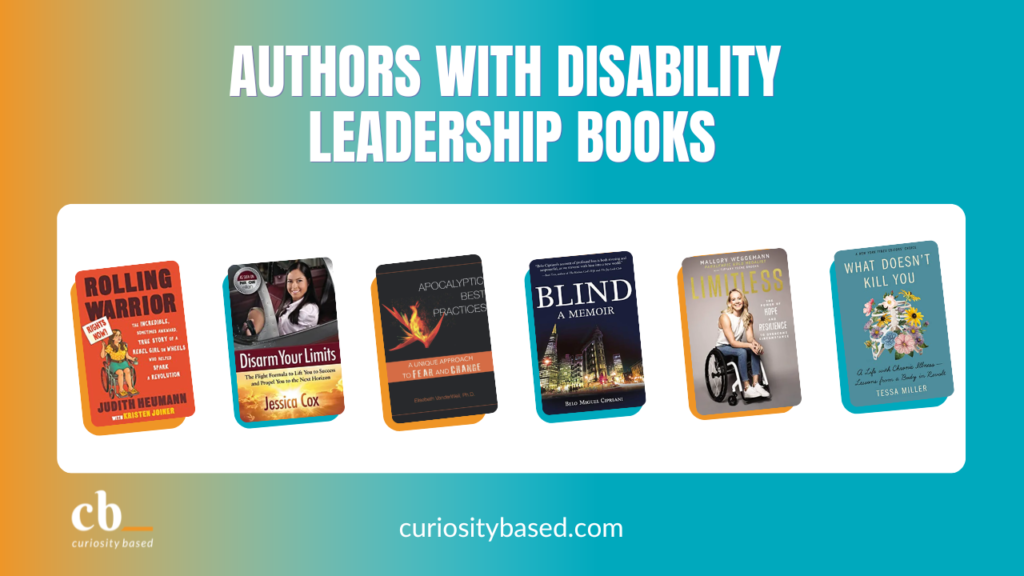
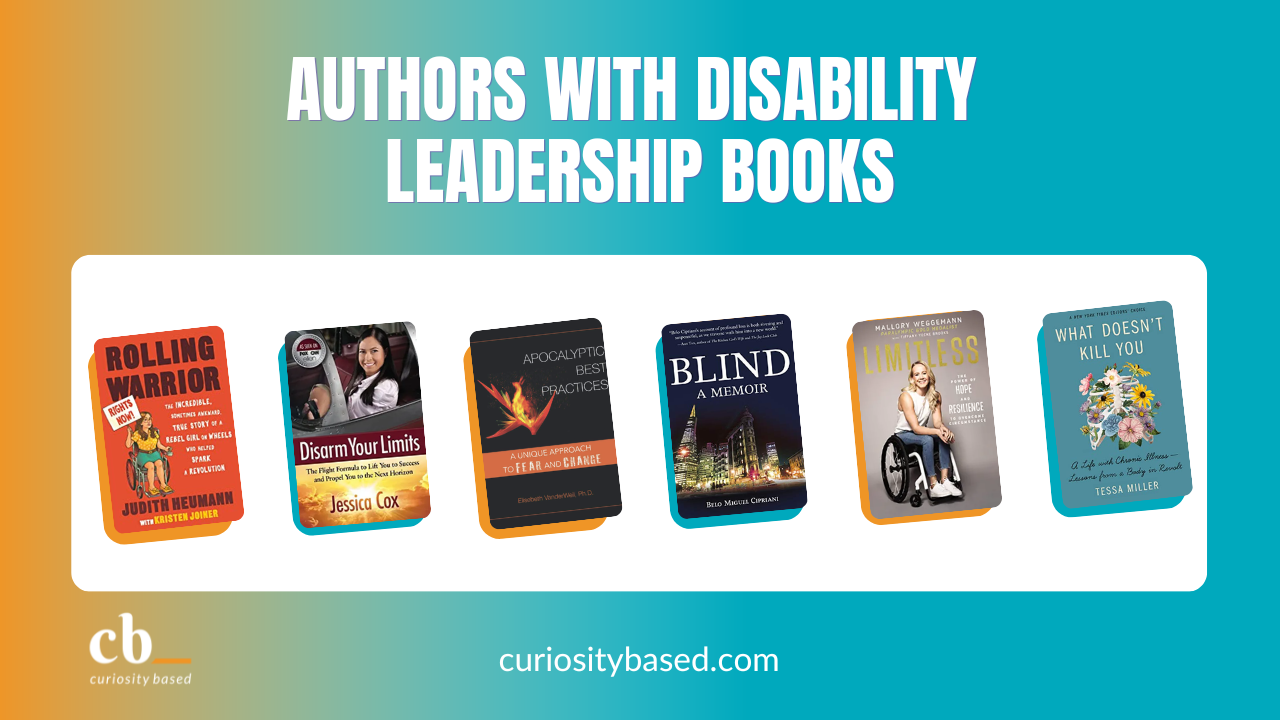
2022 Authors with Disability Leadership Booklist

We created this list to promote leadership narratives written by authors with disabilities. This list is meant to be a resource, not an official endorsement. The books are not ranked or listed in any particular order.

  1. Disarm Your Limits: The flight formula to lift you to success and propel you to the next horizon by Jessica Cox
  2. The White Album by Joan Didion
  3. Chef Interrupted by Trevis Gleason 
  4. Fall Down, Laughing: How Squiggy caught multiple sclerosis and didn’t tell nobody by David Lander
  5. Speedbumps: Flooring it through Hollywood by Teri Garr
  6. And Now We Are Going to Have a Party: Liner Notes to a Writer’s Early Life by Nicola Griffith
  7. To Know As We Are Known: Education as Spiritual Journey by Parker Palmer
  8. The World I Live In by Helen Keller
  9. Don’t Worry, He Won’t Get Far on Foot  by John Callahan
  10. Haben: The Deafblind Woman who Conquered Harvard Law by Haben Girma
  11. Exile and Pride: Disability, Queerness, and Liberation by Eli Clare
  12. Wishful Drinking by Carrie Fisher
  13. House of Prayer No. 2 by Mark Richard
  14. Resistance and Hope: Essays by Disabled People edited by Alice Wong
  15. Marbles: Mania, Depression Michelangelo, and Me by Ellen Forney
  16. Strangers Assume My Girlfriend Is My Nurse by Shane Burcaw
  17. I Am Schizophrenic: Poetry from a Beautiful Brain by Kerenza Ryan
  18. Apocalyptic Best Practices: A Unique approach to fear and change by Elisebeth VanderWeil
  19. You Don’t Have to Say You Love Me by Sherman Alexie
  20. Being Huemann: An Unrepentant Memoir of a Disability Rights Activist by Judith E. Heumann
  21. The Pretty One: On life, pop culture, disability, and other reasons to fall in love with me by Keah Brown
  22. Sitting Pretty: The View from My Ordinary Resilient Diabled Body by Rebekah Taussig
  23. Disability Visibility: First-Person Stories from the Twenty-First Century by Alice Wong
  24. Nothing About Us Without Us: Disability Oppression and Empowerment by James I. Charlton
  25. I Am Not a Label by Cerrie Burnell
  26. Limitless: The Power of Hope and Resilience to Overcome Circumstances by Mallory Weggemann
  27. Care Work: Dreaming Disability Justice by Leah Lakshmi Piepzna-Samarasinha
  28. Life in the Mind Interrupted: Essays on Mental Health and Disability in Higher Education by Katie Rose Guest Pryal
  29. Rolling Warrior: The Incredible, Sometimes Awkward, True Story of a Rebel Girl on Wheels Who Helped Spark a Revolution by Judith Heumann
  30. The Disability Experience: Working Toward Belonging by Hannalora Leavitt
  31. When the Chant Comes by Kay Ulanday Barrett
  32. The Story of My Life by Helen Keller
  33. Look Me in the Eye: My Life with Asperger’s by John Elder Robison
  34. Be Different by John Elder Robison
  35. Switched On: A Memoir of Brain Change and Emotional Awakening by John Elder Robison
  36. Moving Violations: Warzones, Wheelchairs, and Declarations of Independence  by John Hockenberry
  37. Disfigured: On Fairy Tales, Disability and Making Space by Amanda Leduc
  38. Thinking in Pictures: My Life with Autism by Temple Grandin
  39. Calling all Minds: How to Think and Create Like an Inventor by Temple Grandin
  40. The Way I See It: A Personal Look at Autism and Asperger’s by Temple Grandin
  41. Unwritten Rules of Social Relationships: Decoding social mysteries through autism’s unique perspectives by Temple Grandin
  42. Golem Girl by Riva Lehrer
  43. Find Another Dream by Maysoon Zayid
  44. Too Late to Die Young: Nearly True Tales from a Life by Harriet McBryde Johnson
  45. If at Birth You Don’t Succeed: My Adventures with Disaster and Destiny by Zach Anner
  46. Fading Scars: My Queer Disability History by Corbett O’Toole
  47. Extraordinary Bodies: Figuring Physical Disability in American Culture and Literature by Rosemarie Garland-Thomson
  48. Staring: How We Look by Rosemarie Garland-Thomson
  49. Elegy for a Disease: A Personal and Cultural History of Polio by Anne Finger
  50. Waist-High in the World: A Life Among the Nondisabled by Nancy Mairs
  51. In the Province of God by Kenny Fries
  52. The History of My Shoes and the Evolution of Darwin’s Theory by Kenny Fries
  53. Body, Remember: A Memoir by Kenny Fries
  54. Mad at School: Rhetorics of Mental Disability and Academic Life by Margaret Price 
  55. The Obsessive Joy of Autism by Julia Bascom 
  56. Blind: A Memoir by Belo Cipriani 
  57. Count Us In: Growing Up with Down Syndrome by Jason Kingley and Mitchell Levitz
  58. Holding Change: The Way of Emergent Strategy Facilitation and Mediation by Adrienne Maree Brown
  59. Pleasure Activism: The Politics of Feeling Good by Adrienne Maree Brown
  60. Brilliant Imperfection: Grappling with Cure by Eli Clare
  61. Feminist Queer Crip by Alison Kafer
  62. ASL Saved My Life…Until it Didn’t by Jenni Kleinman Berebitsky
  63. We Are Never Meeting in Real Life by Samantha Irby
  64. Disabled Leadership by Dr. Tom A. Wiggins
  65. Deaf Utopia: A Memoir – and a Love Letter to a Way of Life coauthored by Nyle DiMarco
  66. Demystifying Disability: What to Know, What to Say, and How to be an Ally by Emily Ladau
  67. Year of the Tiger: An Activist’s Life by Alice Wong
  68. What Doesn’t Kill You: A Life with Chronic Illness – Lessons from a Body in Revolt by Tessa Miller
  69. A Face for Picasso: Coming of Age with Crouzon Syndrome by Ariel Henley 
  70. Just Human: The Quest for Disability Wisdom, Respect, and Inclusion by Arielle Silverman, PhD
  71. Different, Not Less: A neurodivergent’s guide to embracing your true self and finding your happily ever after by Cholé Hayden
  72. How I See It: A Personal and Historical View of Disability by H Penny Mishkin
  73. Successful to Burnt Out: Experiences of Women on the Autism Spectrum by Karletta Abianac 
  74. Adult ADHD: How to Succeed as a Hunter in a Farmer’s World by Thom Hartmann
  75. More the Same than Different: What I Wish People Knew About Respecting and Including People with Disabilities by Lorraine Cannistra
  76. Not a Poster Child: Living Well with a Disability – A Memoir by Francine Falk-Allen
  77. My Body is Not a Prayer Request: Disability Justice in the Church by Amy Kenny
  78. The ADHD Advantage: What You Thought was a Diagnosis May Be Your Greatest Strength by Dale Archer, MD
  79. Black, Blind, & In Charge: A Story of Visionary Leadership and Overconing Adversity by David A. Paterson
  80. Unleash Different: Achieving Business Success Through Disability by Rich Donovan 
  81. Crazy, Who Me?: My Journey as a Leader Overcoming Depression by John Panigas

Learn From Your Cringe-Worthy Experiences, And Share Your Lessons

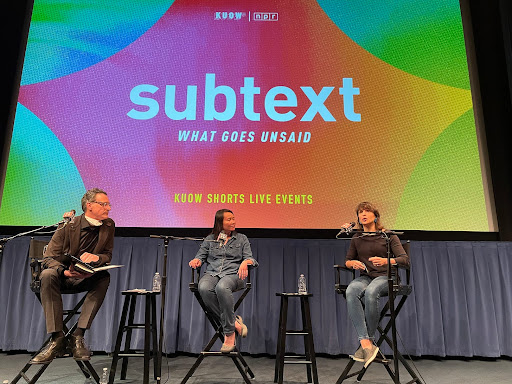
KUOW reporter Bill Radke, Julie Pham, and author Monica Guzman at a live, public talk on July 7, 2022 at McCaw Hall. This is an example of the public talk, but not the one I described in the essay.

There I was, presenting to a virtual audience of 100 people about my work, something I had talked about dozens of times before. I was excited. It was going to be my biggest audience yet.

Five minutes into my talk, an audience member asked why I was presenting on a topic that wasn’t relevant to the event’s theme. I explained. She pressed. I became defensive. Messages started to flow into the chat, criticizing the relevancy of my topic and flaws they perceived in my work. 

An audience member said my presentation was a waste of his time. I worked hard to maintain my composure. I thanked him and acknowledged that my work wasn’t going to be relevant and fit everyone’s needs. I tried to move into the planned activity and get people into breakout rooms. I said I wanted to give people time to process. In reality, I needed a break. Chat messages questioning my motives kept pouring in.

Finally, the session ended. I tried to hold on as long as I could. Then I turned off my camera and cried. I cried out of disappointment, shame, frustration and resentment.  And then I asked myself, “What did I learn?” 

I don’t regret what happened. If I’d been warned ahead of time about what would happen at that event, I would have still done it. When I share the story, some people try to reason what should have been done to prevent the negative reaction. I have to explain that I’m grateful for the experience. 

I learned more in that 75 minute session than I had in the dozens of times prior I presented on the topic. I wouldn’t change a single thing. Pain is a teacher. 

Whenever something like this happens, I process the pain by learning from it.

So, I talked about the experience a lot, with my team, with friends, acquaintances, and people I volunteer with. I even talked about it with clients and potential clients. 

When I share my pain, others learn too. I learn from their reactions and observations. I want to know their perspective. The learning spreads. And I model what it means to be willing to learn from my mistakes. 

Sharing this experience has also resulted in something surprising. Many shared their own related painful, shameful experiences. They implicitly said, “I’m going to let my pain be your teacher too.” They reciprocated. Our trust deepened.

We all have difficult, cringe-worthy, experiences we don’t want to talk about. 

What can happen when you share what you learned from the pain?

Others can learn from you, and you can learn from them. I’ve been doing this all my life.

It’s what allowed me to make rapid career changes. I went from being an academic to running a Vietnamese newspaper, to tech marketing, to nonprofit leadership, and then starting my own company last year.

My life has been a series of painful experiences that I rapidly learned from. My parents are an inspiration for me. As Vietnamese refugees, I watched them navigate America in their limited English. They had no choice but to get out and try and they knew that it wouldn’t be perfect, and they did it anyway. Over and over again.

When I was a grad student, I had to learn Vietnamese quickly. I didn’t grow up speaking it, so I had to learn as an adult. Within two years, I was volunteering to present in Vietnamese to Vietnamese researchers. I had a very heavy American accent and I’m sure that there are times when I made many grammatical mistakes. And I did it anyway.

I got my real-life MBA by returning to Seattle and running my family ‘s Vietnamese language newspaper. One of the things I had to learn was how to sell. So, I’d get on these calls with ad agencies, and they would ask me all of these questions and I just had to say, “I don’t know, I don’t know.” I remember after one particularly hard call, I told myself, “You are bad at this now, but you’re going to get really good in two years.” And I did get better.

I decided to leave the best job I ever had in the middle of the pandemic to start my own company called CuriosityBased. With my own team, I’m constantly taking risks to push our own learning. Here are two examples: 

Whenever we are about to go into a workshop with new exercises, I remind the team, “Even though we’ve rehearsed this a lot, we’re going to make some mistakes. And when they happen, we just need to roll with it. We will learn.” 

When I created my first digital course, we opted for speed over quality. We created a course in two weeks, which usually takes three months to do. Some early testers criticized the video quality as unprofessional. And yet I put it out in the world because I wanted to start the learning process. I wanted to hear thoughts and reactions. 

One of the things that I’m most proud of is that I share what I learn with others and in doing so, I model learning in public.

People often ask, “What am I going to achieve?” 

I ask, “What am I going to learn?”

Some people are motivated by the impact that they’re going to have on the world. My motivations are much more selfish. I’m motivated by what I’m going to learn and sharing what I learned with others in hopes that they will share with me their perspectives and what they’ve learned. I’m motivated to create a space for people to practice curiosity.

I want to return to the event I described earlier. Here’s some of my lessons:

  • I didn’t manage the audience’s expectations.
  • I didn’t think enough about what the audience wanted to learn
  • I was warned before the talk and brushed off other people’s concerns. I was naïve. 
  • When confronted with questions about the relevancy of my topic, I got defensive. 
  • I feared engaging in conflict in front of a live audience, so I retreated to the agenda

All of these mistakes have since made me a much better presenter and facilitator.

It’s not just about getting better and changing; it’s about getting clearer.

I learned to lean into what I do and what I don’t do. From the pain came clarity. 

Not only did I learn what I can change, I also learned what I’m not willing to change because it’s core to who I am. There are some things I won’t apologize for.

And remember, pain is a teacher. You don’t have to experience learning alone.

This post was based on my Substack post, Pain is a teacher: Learn from your cringe-worthy experiences, and share your lessons, which was originally posted on July 13, 2022. You can listen to me reading the original essay. Please subscribe.

7 Ways Team Leaders Can Practice Curiosity

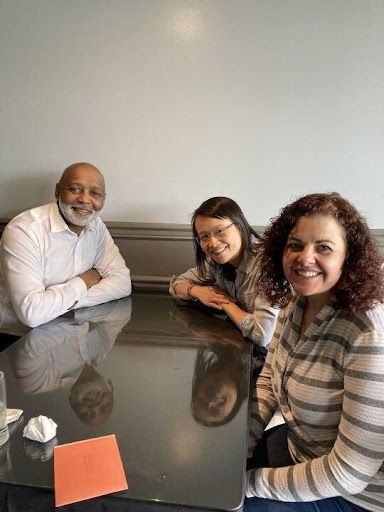
The author sits with two leaders who constantly inspire her with how they practice curiosity: Robert Britten (left), executive director of Equity, Diversity, and Inclusion (EDI) at Lake Washington Institute of Technology, and Dr. Suzy Ames, president of Peninsula College (right).

I liken practicing curiosity to meditation – it looks easy, but it’s really hard. There are some days it’s easier to practice curiosity than other days. And yet when leaders practice curiosity, we can set the conditions for creativity, innovation, resourcefulness, resilience, and empathy for our teams.

I’ve worked in and with companies that ranged from three employees to more than 100,000. Something that any size company has in common is that culture is set from the top. Those in power determine what’s acceptable behavior. Leaders, keep in mind that your team members are watching what you do. They will follow what you do, not what you say you do.

Here are some tips on how leaders can practice curiosity themselves, which will have ripple effects in your organization. These tips are based on mistakes I have made, things I’ve learned in meetings and in everyday interactions.

1. Speak last in meetings

Often a leader’s opinion can have outsized impact, and can influence what other people feel comfortable sharing. I often declare that I’m going to give my opinion last, so that others can share theirs first, especially when we are brainstorming or giving feedback.

2. Let other people facilitate team meetings

There is an expectation that the team leader always has to run the meetings. By accident, I flipped this my first year in business because someone on my team wanted to practice facilitation. I said that she could set the agenda and facilitate our weekly team syncs. Having someone else set the agenda will encourage them to talk to other people on the team to find out what should be discussed. And they get an opportunity to shine. There are actually many meetings I don’t facilitate at all, when I don’t have a discussion topic to lead. I love this! Another approach is rotating the facilitator role, especially among those who might not be in leadership positions.

3. Admit when you’re wrong

When I make a bad decision or mistake, I own up to it. I had to do that recently because a team member wanted to institute a new project management tool. Because I didn’t want to learn a new tech tool, I said I wouldn’t use it but everyone else could. Five months later, only half the team was using the tool. I realized my resistance undermined my colleague’s efforts to streamline work processes. I apologized to her and I committed to using the tool. I could tell she was appreciative that I admitted I was wrong.

4. Show what you don’t know

Leaders don’t have to pretend to have all the answers because, in reality, we don’t. I often get asked, “What should we do?” and I reply, “I’m not sure. What do you think we should do?” Early on in my career, I thought I needed to have all the answers. I was so relieved when a boss modeled for me he didn’t always know and he would ask me to suggest solutions. Asking clarifying questions is also a way for leaders to model that it’s okay not to know the answers. I often ask “Can you give me an example of that?” “What does that word mean?” When you think others don’t know a concept, even if you do, ask for an explanation so that it benefits everyone.

5. Be aware of the possible impact of your questions

Power dynamics means that sometimes people see questions from leaders as directives. A friend of mine told me she serves on a nonprofit board. She described when she asked the executive director (ED) of that nonprofit some questions, that ED responded defensively. I pointed out to her that the ED may have interpreted the question as an order because she as a board member is technically her boss. It can be helpful to preface a question with, “I’m asking this to understand, not because I want you to change anything or do something different.”

6. Make time to care

I talked about this in an earlier essay about managing my energy vs. my time. At the beginning of every meeting, our team members share our personal highs and lows. We get to be curious about others and let them be curious about us; this reciprocity is critical to relationship building. I’ve shared my struggles with maintaining a prediabetic diet, how I miss my late father, and other things that are pulling me down. Studies even show that teams that share their personal lows are able to be more honest with one another when it comes to the work.

7. Ask questions when you’re upset

Feeling anger, resentment, fear, annoyance can become curiosity killers. I have to be extra intentional about asking questions when I’ve got those feelings, because my gut reaction is to assume bad intentions. A friend told me that he was upset with someone on his team for not following his directions. He felt deeply disrespected. I suggested he ask that colleague, “What’s your process for your work?” to understand how they approach work. Then follow up with, “What do you think about the process I’m asking you to do?” Curiosity can be the antidote to assuming bad intentions just perpetuates.

I hope you’ll try some of these tips. Let me know how it goes.

This post was based on my LinkedIn Newsletter post, 7 ways team leaders can practice curiosity, which was originally posted on August 23, 2022. Please subscribe.

Tips on Deepening Relationships Remotely

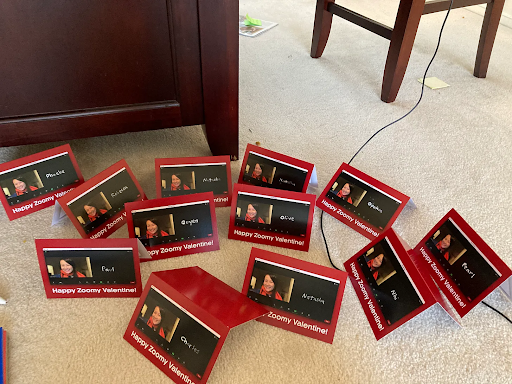
My 2021 Valentine Card concept. To capture the spirit of 2020, the theme was “silver linings.” The front of the card is a Zoom frame and the right square is black. I personalized each card by writing the recipient’s name in with white ink. The inside had the design of a Zoom chat window with a standard message sharing some silver linings I experienced in 2020. Below the fold was space for me to handwrite a personal message. I sent the card in a white envelope lined in silver, to add to the “silver lining” theme.

I get energy from interacting with other people. I organize social gatherings. I love meeting new people. In many ways, I’m a classic extrovert. When the quarantine started, I wondered how I would survive. 

My social schedule went from 4-8 in-person meetings on any given day to none. For the first 5 month, because I lived alone, I didn’t see anyone, not my family, not my boyfriend through June. What surprised me was how some of my more introverted friends went stir crazy from the lack of human interaction and I was actually doing pretty okay. 

I thought I’d be the one feeling super isolated. It has been the opposite. I do acknowledge that my lowest-scoring Love Language is touch, so I don’t actually need to physically be with people to feel connected to them. 

While the rate of making new relationships has dropped a lot, I have deepened existing relationships exponentially.

There are many friends I would only see 1-2x a year who I now talk to regularly on the phone. 

Although I appreciate large gatherings to increase the chances of meeting a stranger who might become a lifelong friend, my favorite form of connecting is 1:1 conversations, which I am still able to have virtually. And because I don’t have to worry about commute time, I’m actually able to connect socially with more people 1:1 on any given day than ever before.

So here are some tips for deepening relationships remotely. The quarantine amplified their impact. 

  1. Text message. I send a text to at least 5 acquaintances/casual friends a week. Send a text to say  “happy birthday” or a “checking in…how are you?” I use Facebook to get reminders of people’s birthdays and updates on their lives. When I see a reminder, I check to see if I have that person’s phone number and if I do, I text message a happy birthday wish or a congratulations because it is so much more personal. It has sometimes led to long text exchange or even phone conversations to catch up. Most of the time, it just reminds people, “Someone is thinking about you.” 
  1. Email update. Once a year, I send out a long email update that I personalize with mail merge. My rule of thumb is if I can’t refer to a specific detail about that person’s life or the last time we interacted, I shouldn’t be emailing them. And to be real in the email, I include the happy and the hard stuff. I will usually include a small request, like check out a free workshop I’m piloting or an essay I just wrote to give me feedback. It’s my way of asking people to be part of my journey. I have gotten detailed responses from people, telling me about their lives.
  1. Phone calls. I have regular weekly,  monthly, and quarterly phone calls with friends now. I often take calls while I’m stretching or walking. I am on video conferencing so much that I love an old fashioned phone call and I know others often appreciate it too. I’ve said to people,  “Hey, want to make this a regular thing?” Many are also ad hoc phone calls. There are some days I can reconnect with 4-7 different friends and acquaintances this way. I have one friend who I only met 2-3 times over two years before the quarantine and now we talk once a month. Another friend refers to our now monthly calls as “therapy.” 
  1. Send cards when people don’t expect them. Most people send their cards out in December. Since I was in high school, I have sent out Valentine cards because most adults don’t get Valentines. I express appreciation for friends who supported me during the previous year. I design each year’s card to recap the theme of the previous year and I’m particularly proud of this year’s concept. I still write at least 3-5 lines of a personal message in each card. Since I started using EE Printing ten years ago, I can send out about a 100 a year, limited by my ability to write personal messages.  These have been great ways to reconnect with people. 

I heard a great interview with Morra Aarons-Mele of Women Online by Guy Raz with more tips. 

This post was based on “Tips on Deepening Relationships Remotely,” which was originally posted on Feb. 21, 2022.