banner

Professional Networking Strategies: Three Approaches for Engaging Conversations

When engaging in professional networking, you may encounter conversations that seem boring. Here are three professional networking strategies you can use to make the conversation more engaging and beneficial.

Learn about their field/industry (Build basic knowledge)

Start by gaining basic knowledge about their field or industry. Treat the person as a subject matter expert and a personal tutor on the topic. Ask questions like: What does your work entail? What’s the business model? Who are the different players in your field? What does an average day of work look like for you? Don’t hesitate to ask for explanations of any acronyms they use.

Learn about their opinion of their field/industry (Build your understanding of different perspectives)

Dive deeper into their opinions and perspectives related to their work. This approach helps you develop a broader understanding of the topic. Make comparisons to check your understanding. For example, you could ask: Is having a personal wealth manager like having a general contractor who finds subcontractors for you, while managing your investments with online brokerages is more like shopping online and reading reviews yourself? This approach allows you to expand your knowledge and seek clarification on specific aspects.

Learn why they care about their field/industry (Understand their motivations)

Explore the personal motivations behind their work. This approach is useful when you genuinely want to understand their perspective or when you are not particularly interested in the topic itself. Ask questions like: How did you get into wealth management? Have you always been interested in money? What makes you stay in this field? What are some of your favorite customer success stories? Understanding what underlies someone’s passion and motivation might be more interesting than the work itself.

During the conversation, try to refer to your own experiences or opinions on related matters. This may prompt them to ask you follow-up questions. If they don’t, continue asking questions to gain useful knowledge from the conversation. People generally enjoy talking about their passions, so by showing interest in their field and making them feel good about themselves, you leave a favorable impression.

Regarding which approach you naturally gravitate towards, it depends on your personal preferences and the specific situation. Some individuals may find themselves naturally inclined towards one approach over the others. However, it’s beneficial to be adaptable and use a combination of these approaches based on the context and the person you are engaging with.

Which of these professional networking approaches do you think that you naturally gravitate towards? If this post was helpful, please share it with a friend or post it on social media. You can also check out these tips on how to make networking less stressful or these on how to grow your professional network.


How to Grow Your Professional Network in 3 Steps

Building a strong professional network is crucial for career advancement and business growth. In this article, I will discuss two important categories of people to grow your professional network: peer mentors and referral partners

Peer mentors are individuals with specific knowledge or expertise who can coach you, while you have different knowledge or expertise to offer in return. 

Referral partners are valuable for sales roles and entrepreneurship, as they help each other find opportunities and expand their networks.

To increase your peer mentors and referral partners, follow these three steps:

  1. Identify the people you want to connect with:

Consider individuals whom you believe you can add value to, and who can add value to you based on your own definition of “value.” You can connect with people through introductions from friends, engagement on social media, or virtual networking spaces such as breakout rooms. When approached to pitch a service, respond by suggesting a conversation to learn about each other’s offerings and potential customers, offering mutual advice.

  1. Reach out:

This step is critical to expanding your network. If you’re good at starting conversations, make sure to follow up and pursue them actively. If reaching out with a cold call, take action rather than just planning. Use email or LinkedIn to send messages, including the following templates:

Peer mentoring:

“We met through this group/at this event, and I appreciated your insights on (fill in the blank). As you are an expert in (fill in the blank), I was wondering if I could seek your advice. I would be happy to share my expertise on (fill in the blank) and address any questions you may have. If you’re interested, let’s schedule a virtual meeting where we can help each other out.”

Referral partner call:

“While there are many things I do, there are also many things I don’t do. I always strive to be a resource for my clients, even if I’m not the solution provider. Would you be interested in a 30-minute call to learn about each other’s businesses and explore potential client referrals?”

Always include a scheduling tool to facilitate the next steps, as some recipients may immediately schedule the session.

  1. Get what you need out of the call:

Don’t hesitate to be clear about your expectations regarding time and value sharing. If someone agrees to a call focused on sharing leads, they expect this arrangement. Clearly define the agenda for the call. After a brief introduction, divide the remaining time to address each person’s needs. Peer coaching calls can be 30-60 minutes, while referral partner calls can be 20-30 minutes. Stick to the intentions you expressed in your outreach message.

During the call, feel free to ask for what you need without hesitation. Use peer coaching calls for role-playing difficult conversations, getting feedback on presentations, or conducting user tests. Referral partner calls should primarily focus on understanding each other’s businesses and potential client referrals.

By following these steps and maintaining clear expectations, you can make the most out of your connections and build a strong network of peer mentors and referral partners.

Are you inspired to expand your network now?  If this post was helpful, please share it with a friend or post it on social media. You can also check out these professional networking strategies to make any conversation more engaging.

Daisy Jones & the Six: Lessons on Love, Respect & Learning (Spoilers)

I don’t watch many shows and I don’t own a TV, so I surprised myself with how obsessed I became with Amazon Prime’s new series, “Daisy Jones and the Six.” The show depicts the rise and fall of a fictional rock band that achieved great fame in the 1970s.

I found myself re-watching episodes, searching for interviews with the actors, and even reading the original book by Taylor Jenkins Reid, on which the series is based. I decided to explore why I became so engrossed, embracing curiosity.

Here’s what watching Daisy Jones taught me about love, respect, and learning. Please note that this discussion contains spoilers, including the ending. If you haven’t seen the series yet, you may want to pause here and watch it first.

Lessons on Love

The show demonstrates that people are capable of loving multiple individuals simultaneously. It’s not about loving someone more or less, but rather about loving them differently because they resonate with different aspects of who we are. The central plot revolves around the love triangle between Daisy Jones, Billy Dunn (the two lead singers), and Billy’s wife, Camlia. While some fans may interpret this differently, I firmly believe that Billy loves both women equally, albeit in different ways. They each connect with different parts of his complex self.

Lessons on Respect

To make the best choices for themselves, individuals must possess self-respect. I particularly appreciated the portrayal in the Amazon Prime version compared to the book. In the book, Camilla tells Daisy to stay away, and Daisy complies. However, in the show, Camilla tells Billy that he must choose whether to remain in their relationship or not. This act demonstrates self-respect. Camilla doesn’t approach Daisy with a possessive stance. Similarly, Daisy respects herself by realizing that she can’t simply stay in the band, hoping for a romantic relationship with Billy. She understands that she needs to leave the band, enter rehab, and regain control of her own life. Her decision is not influenced by Camilla’s request, as depicted in the book. Billy also exhibits self-respect by striving to be a faithful partner and father, contrary to his own father’s behavior. He understands the importance of making difficult choices to align with the best version of himself. As they all respect themselves and set boundaries, they are able to pursue their own best lives.

Lessons on Lifelong Learning

The series teaches us that it’s never too late to learn something new, regardless of our age. The actors Sam Clafin and Riley Keough learned how to sing and perform as a band in just a year and a half, and they excel at it! They even became the first fictionalized band to reach number one on the Billboard charts. The behind-the-scenes story of the show’s production has inspired me to contemplate my own potential for learning. It’s impressive that all the actors are singing and playing their instruments, without the use of voiceovers. The music is undeniably catchy.

If you’ve watched the series, I’d love to hear if you agree with any of my observations. Which of these three lessons resonates with you the most? If you found this post helpful, please consider sharing it with a friend or on social media.

How to Respond to Constructive Feedback

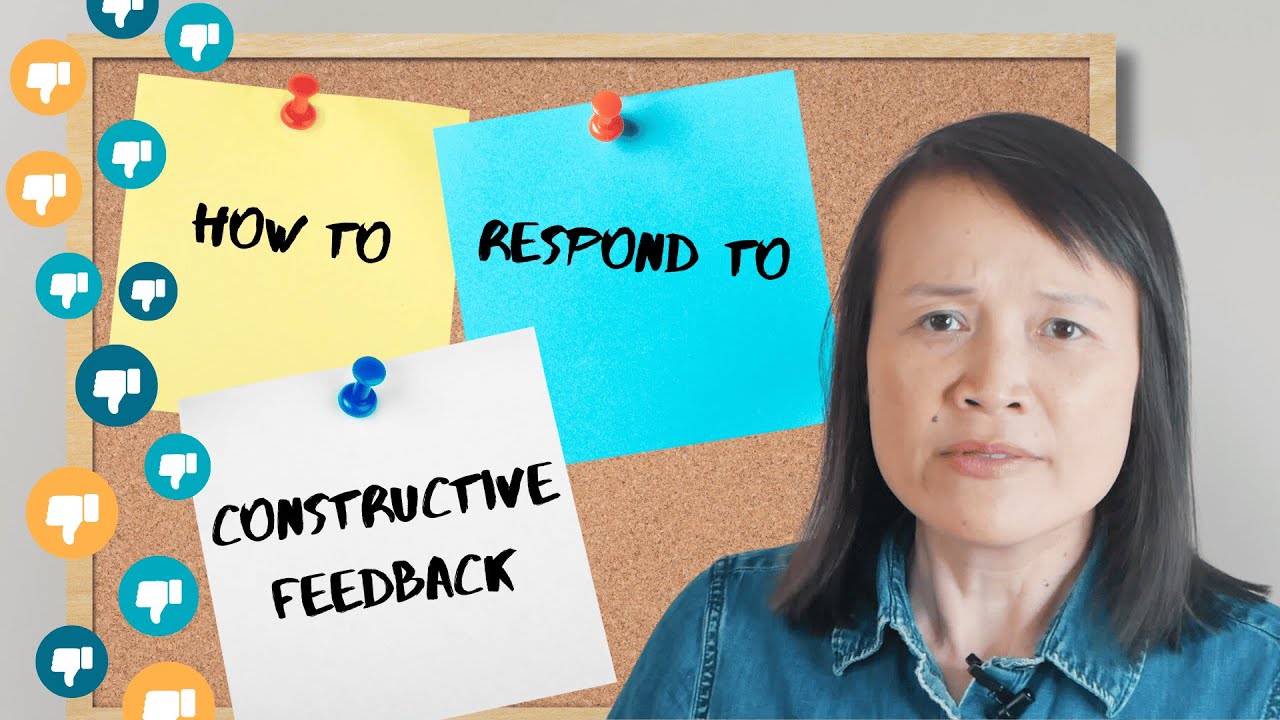
It’s natural to feel defensive or hurt when getting negative or constructive feedback. I know I feel that way. A common mistake I see people make about getting feedback is that they think they automatically had to change or react immediately. We all benefit from taking some time to think about the feedback given to us because it is just one person’s opinion, not a universal truth. Knowing how to respond to constructive feedback takes practice. Here are three different stages that will help you practice how to respond to constructive feedback.

First stage– how to respond when you’re getting the constructive feedback:

  1. Thank the person for the feedback.
  1. Ask clarifying questions, such as the behavior they’re giving you feedback on. Be careful not to sound defensive when you are asking these clarifying questions that you were not being defensive. You are truly trying to understand what they saw. Sometimes people can’t give you examples, and that is telling their feedback might be very subjective. For example, they may say “you’re rude” and they can’t think of any examples of things you’ve said. If you don’t think you can stop yourself from getting defensive, skip to the next step.
  1. Let them know you need some time to process their feedback. We often assume that we have to react right away and I think that’s wrong. We all need some time to process hard news, so give yourself permission to take that time. It will also benefit them because when you respond to them, you will be more calm and have processed what they said.

Second stage, process the constructive feedback by yourself: 

  1. Remind yourself that negative feedback isn’t a personal attack.
  1. Ask yourself why you do what you’re being criticized for–is there a purpose?

When you’re processing, it could also be helpful to think about why you do that thing that you do. Perhaps you grew up in a family that was very blunt and direct. You can explain this, not as a way to get them to excuse you, but as a way for them to understand you more. For example, “I grew up in a family that spoke very directly to one another and I guess that has been carried over in how I present myself at work. I will think about making adjustments and I also want you to understand this is where I am familiar and comfortable with.”

  1. Talk to other people about the feedback you received and ask for different interpretations. It’s natural for different people to have different interpretations and reactions to your behavior, which is why it’s important not to let one person’s opinion sway everything. I remember one person was told she was too blunt by a few coworkers, and then she was told by other coworkers she was too indirect and not blunt enough. 
  2. Decide if you want to take it or leave it and/or just adjust your behavior with the person giving you that feedback. Remember, this is just one person’s opinion.

Third stage- closing the feedback loop:

After you’ve taken the time to process, then go back to the person and see if you can talk about it. This is the third stage and closes the loop.

Which of these strategies resonates with you? I’d love for you to share your thoughts in the comments section. If this was helpful, please share it with a friend or post it on social media.