banner

How Employers Can Foster Continual Learning at Work

How to Foster a Culture of Continuous Learning in the Workplace

Creating a culture of continuous learning is essential for maintaining adaptability and innovation in the workplace. When employees are encouraged to grow, experiment, and learn, the entire organization benefits. Here’s a straightforward guide on how employers can foster continuous learning and nurture this culture.

1. Encourage Reflective Thinking

Promote a mindset where challenges are seen as opportunities for growth. Encourage team members to ask, “What can this challenge teach us?” This approach helps develop deeper insights and fosters a thoughtful, solution-driven approach to problem-solving. Reflective thinking enhances creativity and allows employees to learn from their experiences.

2. Support Risk-Taking

Fostering an environment where calculated risk-taking is supported is key to continuous learning. Implementing something like an experiment tracker can help demonstrate your commitment to innovation and learning. Encourage your team to propose new ideas, experiment, and evaluate their potential. Even if not all ventures succeed, each one offers a valuable lesson that contributes to the team’s growth and knowledge.

3. Challenge Assumptions

Cultivate a workplace where questioning assumptions is standard practice. By encouraging team members to challenge the status quo, you not only enhance critical thinking but also ensure that decisions are well-informed. A culture of inquiry promotes better decision-making and reduces the risk of errors due to outdated or unexamined beliefs.

4. Normalize the Unknown

Make it clear that not having all the answers is perfectly acceptable. This mindset reduces pressure and creates a more open and collaborative environment for learning and problem-solving. When employees feel safe admitting they don’t know everything, they are more likely to ask questions and seek help, fostering a more dynamic learning culture.

5. Implement Reverse Mentorship

Introducing reverse mentorship is an effective way to break down hierarchical barriers and foster mutual learning. Allow junior team members to mentor more experienced colleagues. This practice not only gives younger employees a voice but also creates opportunities for fresh ideas and different perspectives. Reverse mentorship builds respect and encourages a more collaborative, inclusive work environment.

6. Leverage New Perspectives

New team members bring fresh perspectives and can offer invaluable insights. Encourage them to share their viewpoints on existing processes and solutions. Sometimes, a fresh set of eyes can identify solutions that others haven’t considered, helping to drive innovation and progress within the team.

7. Make Learning a Regular Practice

Integrate continuous learning into everyday work processes. Set aside time in meetings for exploratory discussions, encourage trying new approaches to ongoing projects, and prioritize learning as a core value. When learning becomes a regular part of the workday, it becomes ingrained in the team’s culture and leads to long-term success.

By adopting these strategies, employers can create a dynamic and engaging workplace where continuous learning is woven into everyday culture. This approach not only increases professional growth but also contributes to a more innovative and adaptable organization.
3 Effective Strategies to Seek Constructive Feedback

Have you ever heard that feedback is a gift? It really is, though getting it isn’t always straightforward. People often hesitate to give feedback, worried about how it might be received. But feedback is crucial – it sharpens our communication skills and is vital for our growth, both personally and professionally. Actively seeking constructive feedback is key. Let me walk you through three practical tips for doing just that:

  1. Combine Affirming and Constructive Feedback: Let people know you’re open to hearing both positives and areas for improvement. For example, after giving a presentation, ask each attendee to provide one thing they liked and one suggestion. This approach encourages a more balanced and open exchange.
  2. Request Specific Feedback: General feedback requests like “any feedback for me?” can be too vague. Instead, ask pointed questions. If you’ve written an essay, inquire about specific aspects like the effectiveness of your quotes or the flow of your introduction. This specificity makes it easier for others to offer detailed and meaningful feedback.
  3. Accommodate Different Feedback Preferences: People vary in how they like to give feedback. Some prefer writing, others like surveys, while some are best with in-person discussions. By offering various options, you make it easier for everyone to provide their input. For instance, if you’re preparing for a big talk, consider a rehearsal for live feedback, a survey for those who prefer writing, and a video option for those who can’t attend.

With these strategies, you’re all set to seek out and make the most of feedback. To receive feedback sometimes requires you to be able to effectively ask for feedback.

Mastering Productivity: How to Write an Effective “To-Don’t” List

In our quest for productivity, we often focus on to-do lists. These are the tasks we need to accomplish, guiding our daily activities. However, there’s another, equally important concept: the ‘to-don’t’ list. This isn’t about piling more tasks onto your already full plate. Instead, it’s about identifying what you should stop doing or avoid, which can significantly boost your time management and productivity.

Here are four practical tips to help you create a powerful to-don’t list:

  1. Transform Your To-Dos into To-Don’ts: Start with your current to-do list. Look at each item and think about how it could be reframed as a to-don’t. For instance, if your to-do is “reach out to 5 new potential clients a week,” your to-don’t might be “don’t connect with fewer than 5 new potential clients per week.”
  2. Identify Obstacles to Your To-Dos: Consider what’s hindering you from accomplishing your tasks. If your to-do is “connect with more people in my community,” reflect on what’s preventing this. Perhaps you’ve been waiting for others to make the first move. Therefore, your to-don’t could be “don’t wait for others to reach out first.”
  3. Address Underlying Barriers: Reflect on the factors like inner criticism, perfectionism, or procrastination that impede your progress. Turn these into to-don’ts such as “don’t listen to my inner critic,” “don’t be a perfectionist,” or “don’t procrastinate.”
  4. Collaborate for Insight: If you’re finding it challenging, brainstorm with someone else. Getting a fresh perspective can be enlightening. Discuss potential to-don’ts in your life and help them identify theirs too.

By shifting focus from what to do to what not to do, you can streamline your efforts towards productivity and efficiency. Try incorporating these tips into your routine and notice the positive changes in your productivity journey.

5 Ways to Boost Your Personal Accountability

5 Actionable Tips for Practicing Personal Accountability to Achieve Your Goals

Personal accountability is crucial for our growth and success, whether in our personal lives or professional careers. It’s more than just a concept—when practiced effectively, personal accountability can help you achieve your goals. Here are five actionable tips to help you approach your objectives with greater discipline and determination.

1. Schedule Regular Progress Check-Ins

One of the simplest ways to stay accountable is by having someone in your network regularly check in on your progress. This could be a friend, family member, or colleague. For example, if you’re saving for a special purchase, have them ask you regularly about your savings. Similarly, if you’re learning a new language, ask a family member to inquire about your practice routine. These regular check-ins help keep your goals top of mind and create a sense of responsibility.

2. Partner with a Goal Buddy

Find a friend or colleague who shares a similar goal. This method is like having a workout buddy who motivates you to stay on track. Knowing someone else is counting on you can significantly boost your commitment to your goal. For example, if you’re both studying for an exam or certification, you can schedule regular study sessions together. This accountability boosts focus and helps keep you on target.

3. Set Clear Deadlines

Deadlines are powerful motivators. When I wrote my book, 7 Forms of Respect, I set strict deadlines for each chapter and shared the drafts with peers for feedback. This external accountability pushed me to stay on schedule. You can apply the same method to work projects, such as committing to a colleague to complete a section of a joint presentation by a certain date. Setting clear, firm deadlines creates a sense of urgency that propels you forward.

4. Introduce a Financial Element to Your Goals

Adding a monetary component to your goals can be a strong motivator. For example, if you’re trying to reduce screen time, commit to paying a friend every time you exceed your daily limit. Or, if you’re working on punctuality, pledge a small donation to a charity every time you’re late to a meeting. This financial accountability adds a tangible consequence, making it easier to stay focused on your objectives.

5. Reverse the Financial Incentive for Motivation

Get creative with financial incentives. For example, if you’re trying to quit a bad habit like nail-biting, create a rule where every time you slip up, your accountability partner contributes to your savings fund. This reversal of the financial incentive adds an extra layer of motivation, turning the negative into a positive reinforcement. This approach can help break habits and maintain focus on your goals.

By implementing these strategies, you can enhance your personal accountability in a way that’s both effective and engaging.

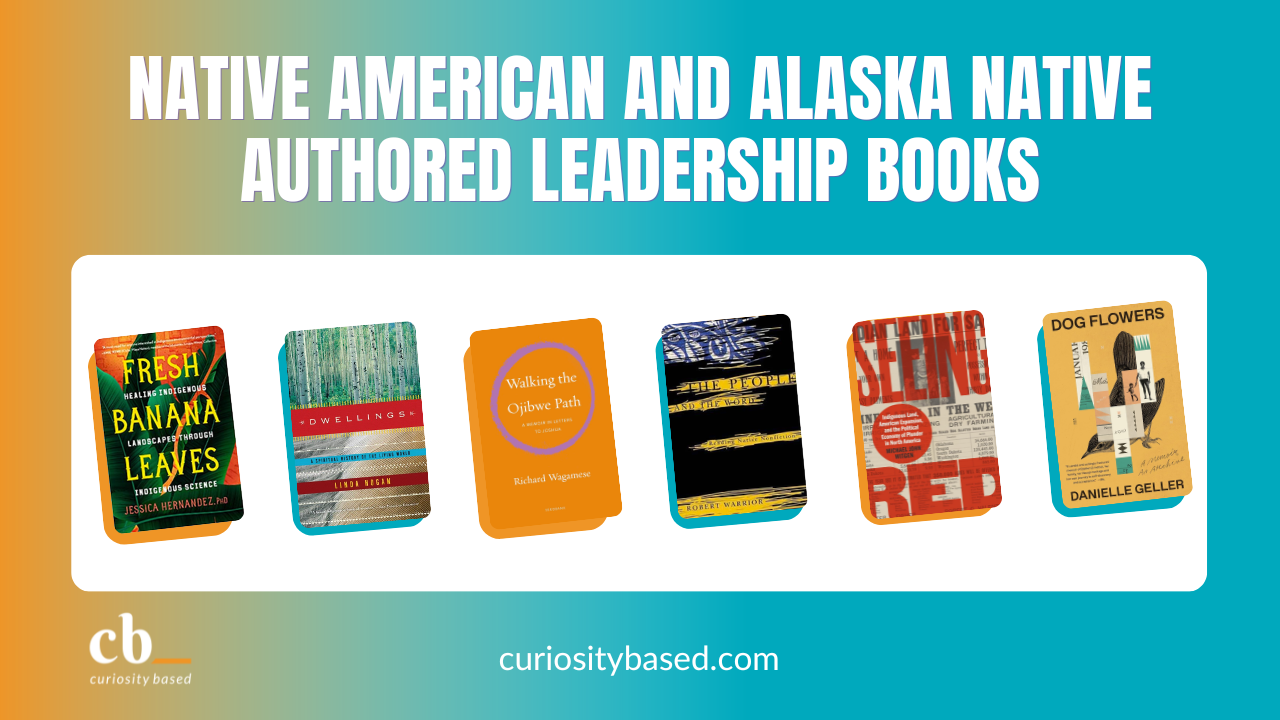
105 Leadership Books Written by Native American and Alaska Native Authors

We created this list to promote leadership narratives written by people of Native American and Alaska Native Heritage. This list is meant to be a resource, not an official endorsement. The books are not ranked or listed in any particular order.

  1. You Don’t Have to Say You Love Me by Sherman Alexie
  2. Recovering the Sacred: The power of naming and claiming by Winona LaDuke
  3. Braiding Sweetgrass: indigenous wisdom, scientific knowledge, and the teachings of plants by Robin Wall Kimmerer
  4. The Tao of Raven: An Alaska Native Memoir by Ernestine Hayes
  5. Black Indian: A memoir by Shonda Buchanan
  6. Custer Died for Your Sins: An Indian manifesto by Vine deLoria Jr. 
  7. Where White Men Fear to Tread: The autobiography of Russell Means by Russell Means and Marvin J. Means
  8. Prison Writings: My life is my Sun Dance by Leonard Peltier
  9. The School Days of an Indian Girl, and an Indian Teacher Among Indians by Zitkala-Sa
  10. The Man Made of Words: Essays, stories, passages by N. Scott Momaday
  11. Muscogee Daughter: My sojourn to the Miss America Pageant by Susan Supernaw 
  12. Life of Black Hawk, or Ma-ka-tai-me-she-kia-kiak: Dictated by himself by Black Hawk
  13. Our History Is the Future: Standing Rock Versus the Dakota Access Pipeline, and the Long Tradition of Indigenous Resistance by Nick Estes
  14. Code Talker: The first and only memoir of the original Navajo Code Talkers of WWII by Chester Nez
  15. Abandon Me: Memoirs by Melissa Febos
  16. Heart Berries by Terese Marie Mailhot
  17. As Long As Grass Grows: The Indigenous Fight for Environmental Justice, from Colonization to Standing Rock by Dina Gilio-Whitaker
  18. Crazy Brave: A Memoir by Joy Harjo
  19. Gathering Moss: A Natural and Cultural History of Mosses by Robin Wall Kimmerer
  20. God is Red: A Native View of Religion by Vine deLoria Jr. 
  21. The Heartbeat of Wounded Knee by David Treuer
  22. The Inconvenient Indian: A Curious Account of Native People in North America by Thomas King
  23. Lakota Woman by Mary Brave Bird
  24. #Not Your Princess: Voices of Native American Women by Lisa Charleyboy and Mary Beth Leatherdale (editors)
  25. The Turquoise Ledge by Leslie Silko
  26. Men We Reaped: A Memoir by Jesmyn Ward 
  27. Dwellings: A Spiritual History of the Living World by Linda Hogan
  28. Bad Indians: a Tribal Memoir by Deborah Miranda 
  29. Night Flying Woman: An Ojibway Narrative by Ignatia Broker
  30. Dog Flowers: A Memoir by Danielle Geller
  31. Portage Lake: Memories of an Ojibwe Childhood by Maude Kegg
  32. Everything You Wanted to Know about Indians But Were Afraid to Ask by Anton Treuer
  33. The Assassination of Hole in the Day by Anton Treuer
  34. As We Have Always Done: Indigenous Freedom Through Radical Resistance by Leanne Betasamosake Simpson
  35. Nooping: The Cure for White Ladies by Leanne Betasamosake Simpson
  36. The People and the Word: Reading Native Nonfiction by Robert Warrior
  37. Tribal Secrets: Recovering American Indian Intellectual Traditions by Robert Warrior
  38. Like a Loaded Weapon by Robert A. Williams Jr. 
  39. Bear Island: The War at Sugar Point by Gerald Vizenor
  40. The Third Space of Sovereignty by Kevin Bruyneel
  41. Navajo Courts and Navajo Common Law: A Tradition of Tribal Self-Governance by Raymond D. Austin
  42. Firsting and Lasting: Writing Indians out of Existence in New England by Jean O’Brien
  43. X-Marks by Scott Richard Lyons
  44. Red Skin, White Masks: Rejecting the Colonial Politics of Recognition by Glen Sean Coulthard
  45. The Queerness of Native American Literature by Lisa Tatonetti
  46. Speaking of Indigenout Politics: Conversations with Activists, Scholars, and Tribal Leaders by J. Kehaulani Kauanui and Robert Warrior
  47. Standing with Standing Rock: Voices from the #NoDAPL Movement by Nick Estes and Jaskiran Dhillon
  48. Hungry Listening: Resonant Theory for Indigenous Sound Studies by Dylan Robinson
  49. Written by the Body: Gender Expansiveness and Indigenous Non-Cis Masculinities by Lisa Tatonetti
  50. Remembering Our Intimacies: Mo’olelo, Aloha ‘Aina, and Ea by Jamaica Heolimeleikalani Osario
  51. Everything You Know About Indians is Wrong by Paul Chatt Smith
  52. Red Nation Rising: From Bordertown Violence to Native Liberation by Nick Estes, Melanie K. Yazzi, Jennifer Nez Denetdale, and David Correia
  53. Wiping the War Paint off the Lens: Native American Film and Video by Beverly Singer
  54. The People Shall Continue by Simon Ortiz
  55. Poet Warrior: A Memoir by Joy Harjo
  56. The Four Hills of Life: Ojibwe Wisdom by Thomas Peacock and Marlene Wisuri
  57. The Sacred Hoop: Recovering the Feminine in American Indian Traditions by Paula Gunn Allen
  58. Critically Sovereign: Indigenous Gender, Sexuality, and Feminist Studies by Joanne Barker
  59. For indigenous Eyes only: A Decolonization Handbook by Waziyatawin and Michael Yellow Bird
  60. Mark My Words: Native Women Mapping Our Nations by Mishuana Goeman
  61. The Beginning and End of Race: Confronting Sexual Violence in Native America by Sarah Deer
  62. When My Brother Was an Aztec by Natalie Diaz
  63. A History of my Brief Body by Billy-Ray Belcourt
  64. Starvation Mode by Elissa Washuta
  65. The Roots of Ticasuk by Ticasuk (Emily Ivanoff Brown)
  66. Native American DNA by Kim TallBear
  67. Fresh Banana Leaves: Healing Indigenous Landscapes Through Indigenous Science by Jessica Hernandez, PhD
  68.  Pollution is Colonialism by Max Libioron
  69. Making Love with the Land by Joshua Whitehead
  70. Nulato: An Indian Life on the Yukon by Poldine Carlo
  71. Cold River Spirits: Whispers from a Family’s Forgotten Past by Jan Harper-Haines
  72. Two Old Women: An Alaska Legend of Betrayal, Courage and Survival by Velma Wallis 
  73. Bad Girl and the Man who Followed the Sun by Velma Wallis
  74. Raising Ourselves: A Gwitch’in Coming of Age Story from the Yukon River by Velma Wallis
  75. We Have Not Stopped the Trembling Yet: Letters to my Filipino-Athabascan Family by E.J.R David 
  76. Qulirat Qanemcit-Ilu Kinguvarcimalriit: Stories for Future Generations by Paul John 
  77. Yuuyaraq: The Way of the Human Being by Harold Napoleon
  78. A Yupiaq Worldview: A Pathway to Ecology and Spirit by Anagyuqaq Kawagley
  79. Qanruyuteput IInruugut: Our Teachings Are Medicine by Alice Rearden
  80. Yupiit Qanruyutait: Yup’ik Words of Wisdom by Ann Fienup-Riordan
  81. Rock Piles Along the Eddy by Ishmael Hope
  82. Blonde Indian: An Alaska Native Memoir by Ernestine Hayes 
  83. Indian Stories: Ahtna India Stories from Cantwell, Alaska by Jake Tansy
  84. Cormorant Hunter’s Wife by Joan Naviyuk Kane
  85. Roughly for the North by Carrie Ayagduk Ojanen
  86. People of Kauwerak: Legends of the Northern Eskimo by William A. Oquilluk
  87. Takes of Ticasuk: Eskimo Legends and Stories by Ticasuk Emily Ivanoff Brown
  88. Fifty Miles from Tomorrow: A Memoir of Alaska and the Real People by William Iggiagruk Hensley
  89. Sand Talk: How Indigenous Thinking Can Save the World by Tyson Yunkaporta
  90. Red Paint: The Ancestral Autobiography of a Coast Salish Punk by Sasha Lapointe
  91. Black and Blue: A Memoir of Racism and Resilience by Veronica Gorrie
  92. Spílexm: A Weaving of Recovery, Resilience, and Resurgence by Nicola I. Campbell 
  93. Peyakow: Reclaiming Cree Dignity by Darrel McLeod
  94. White Magic by Elissa Washuta 
  95. An Indian Among Los Indígenas: A Native Travel Memoir by Ursula Pike 
  96. Carry: A Memoir of Survival on Stolen Land by Toni Jensen
  97. A Mind Spread Out on the Ground by Alicia Elliott 
  98. Project 562: Changing the Way We See Native America by Matika Wilbur
  99. Know We Are Here: Voices of Native California Resistance by Terria Smith
  100. Think Indigenous: Native American Spirituality for a Modern World by Doug Good Feather
  101. Girlhood by Melissa Febos
  102. The Rediscovery of America by Ned Blackhawk
  103. Seeing Red: Indigenous Land, American Expansion, and the Political Economy of Plunder in North America by Michael John Witgen
  104. Thinning Blood by Leah Myers
  105. Walking the Ojibwe Path by Richard Wagamese

Non Profit MBA: Addressing Burnout in Nonprofits

In our ongoing quest at CuriosityBased to foster a culture of continuous learning and curiosity in professional settings, we encounter various challenges that teams and leaders face. One such pervasive issue in the nonprofit sector is burnout. This phenomenon, often overshadowed by the day-to-day demands of the job, calls for a deeper understanding and innovative solutions. In an engaging episode of The Nonprofit MBA Podcast, CuriosityBased CEO Dr. Julie Pham joins Stephen Halasnik from Financing Solutions to explore a nuanced approach to combatting burnout, centered around the concept of respect in the workplace.

The Nonprofit MBA Podcast 

PRESS RELEASE 

November 18, 2023

Reducing Burnout: The 7 Forms of Respect® For Nonprofit Leaders and Teams 

The Nonprofit MBA Podcast 

Over the years, burnout among nonprofit leaders, employees, and volunteers has been a real and pervasive challenge. One could link it to the highly demanding nature of the job and, to some extent, the personalities of these individuals. However, a closer look at the issue has revealed that burnout could be reduced to the barest minimum if people understood what respect means to them. This is because people tend to have different views of what they think respect means to them. As a nonprofit leader, understanding what respect means to you and incorporating it into your organization’s culture would make your work seamless, thereby reducing burnout. In today’s podcast, Julie Pham from CuriosityBased and Stephen Halasnik from Financing Solutions, a leading provider of business loans for nonprofits, discuss reducing burnout: The 7 forms of respect for nonprofit leaders and teams. 

Read an Executive Summary or Listen to the Podcast HERE: Reducing Burnout: The 7 Forms of Respect For Nonprofit Leaders and Teams

About our guest, Julie Pham from CuriosityBased

Julie Pham, Ph.D., is the founder and the CEO of CuriosityBased, an organizational development firm based in Seattle. She is the author of the #1 Amazon New Release and Bestseller 7 Forms of Respect: A Guide to Transforming Your Communication and Relationships at Work. Dr. Pham has been recognized with numerous awards for her community leadership. She was a nonprofit executive for six years and has served on numerous nonprofit boards of directors and government commissions.

About Stephen Halasnik, The Nonprofit MBA Podcast, and Financing Solutions

Stephen Halasnik co-founded Financing Solutions, the leading provider of lines of credit for nonprofits and church financing. The credit line program for nonprofits & churches is fast, easy, inexpensive, and costs nothing to set up, making it a great backup plan when cash flow is temporarily down. Mr. Halasnik is also the host of the popular Nonprofit MBA Podcast. The podcast brings experts to discuss fundraising, nonprofit grants, executive director leadership, nonprofit boards, and other important topics. You can learn more about the nonprofit line of credit program here or call 862-207-4118.

Personal Branding Made Easy: 5 Simple Steps 

Building Your Personal Brand: A Dynamic Approach Rooted in Curiosity and Adaptability

Understanding and shaping your personal brand is essential for standing out based on your unique strengths and values. A strong personal brand helps you communicate your identity effectively, whether in professional or personal settings. Let’s explore a dynamic approach to personal branding, driven by curiosity and adaptability.

Step 1: Brainstorm Your Identity Words

The first step in building your personal brand is to identify the qualities that define you. This might require stepping outside your comfort zone, especially if humility is your default. Take the time to uncover and acknowledge the attributes that make you unique. This exercise can be an eye-opening opportunity to reflect on how you want others to perceive you.

Here’s how to start:

  1. Ask friends and colleagues for words they’d use to describe you.
  2. Think about people you admire—what words would you use to describe them?
  3. List the qualities you aspire to be recognized for.

Step 2: Select Your Three Key Words

From the list you’ve created, choose three words that resonate most with how you want to be known. These words will act as the foundation of your personal brand. They should represent the core aspects of your identity, both personally and professionally.

Step 3: Define Your ‘Why’

Once you’ve chosen your three words, clarify why they are significant to you. Ask yourself, “What do these words represent in the context of my personal and professional life?” Understanding the deeper meaning behind your selected words will help you stay aligned with your personal brand and ensure that it reflects your true values.

Step 4: Find Real-Life Examples

To strengthen your personal brand, identify real-life examples that exemplify your three chosen words. Think about experiences from your life where you’ve demonstrated these traits. For instance, if one of your words is “curious,” reflect on instances where your curiosity led to valuable insights or connections. These examples make your personal brand more tangible and relatable.

Step 5: Communicate Your Brand

Finally, communicate your personal brand to others. In conversations about yourself, strategically reference these examples and words. This will help reinforce your brand in others’ minds. For example, my words are “connector,” “curious,” and “win-win.” I often share stories of how I’ve facilitated connections, engaged in learning, and fostered mutually beneficial partnerships. This reinforces how others see me and strengthens my brand..

I hope these steps inspire you to craft a personal brand that’s not only memorable but also a genuine reflection of your evolving journey.

The Easy Guide to Hosting a Memorable Dinner Party

I love hosting dinner parties for people who don’t know each other and who I also might not know very well. This is a really great way to get to know people better, and to build new relationships

I define a dinner party that is limited to the number of people who can sit around one table. Otherwise, I think of it as just a party where dinner is served. I’ve been to dinner parties that are as large as 30 people around a cluster of tables and I’ve also been to dinner parties as small as three people.

Some people think you need to have a fancy home to host. You don’t. You just have to focus on giving people a memorable experience through what is shared. My preference is 6 to 8 people, which is the number of people who can sit around my dining room table.

Some people think that the food is the most important thing for a dinner party and I disagree. I think it’s actually the conversation and who you bring together. Before the pandemic, I hosted about 10-15 dinner parties with guests who didn’t know each other each year at my home. 

The following advice is based on my experience, which is for a dinner party among acquaintances.

  1. Brainstorm the invite list

The first priority for a dinner party is to figure out who you want to invite and think on why these people might have something in common that they will enjoy talking to one another about.  Create a primary and secondary invite list.

  1. Secure a time/date

Then think about the first 30 to 50 percent of guests who you definitely want to attend and find out their availability. Once you secure their availability, then start to reach out to other people on the list to see when they’re available. Now you may want to wait until everyone is available, but that can be really hard to do. 

  1. Send out your invites

It doesn’t matter if it’s email, text, or phone. Unless it’s a very special occasion, I wouldn’t invite via snail mail. I like to invite those on your primary list out 4-8 weeks ahead of time.  Definitely let them know when you need to hear from them by. If people on your primary list don’t respond by the RSVP deadline, you can move on to ask those on your secondary list. Ask for dietary restrictions and accessibility needs. You might feel awkward asking people to bring things. Yet I find if I don’t specify, people will bring random things. So, I usually say, “No need to bring anything but if you would like to, a bottle of wine is appreciated.”

  1. Create the menu based on dietary needs

I usually cook to save money. If you can afford to cater, go for it. I try, whenever possible, not to have to create multiple versions of menu items. So to simplify things, I’ll cook to accommodate whoever has the most dietary restrictions or do a mix of dishes. If someone’s vegan, the whole meal will be vegan. 

  1. Design discussion prompts

The worst dinner parties are when people are just talking in pairs around a dinner table. That’s not the point of bringing people together. Yet you have to be intentional about facilitating a conversation. So I like to have two rounds of prompts–a quick one and a deeper one. 

Examples of quick openers: What’s the origin story behind your first name? What do you spend most of your time doing? What is one thing you’d like this group to know about you? And my personal favorite: What are three communities you belong to?

Examples of deep questions: What advice would you tell your 18 year old self? When is a time you’ve asked for help? Who is a role model in your life and why? 

If there’s a common thread across the group, design some prompts that reflect that. I’ve often hosted dinner parties just for entrepreneurs.  For the opener you could ask, “who is an entrepreneur you admire?” and for the deeper question, “What is something in your business that keeps you up at night?

  1. Send out a reminder email 1 to 2 week before your dinner party

Let people know what to expect, including all the directions, the menu, and the prompt questions. This is also enough time to see if there are any drop offs. And you can remind them to tell you if they can’t make it after all

  1. Enjoy the conversation! 

Focus on bringing people together. Remember what Maya Angelou said, “I’ve learned that people will forget what you said, people will forget what you did, but people will never forget how you made them feel.” My dinner party twist on this is, “People will forget what you fed them, how you decorated, but they will never forget the dinner conversation.”

5 Practical Icebreakers to Enhance Team Building at Work

5 Effective Icebreakers for Building Strong, Connected Teams

Building strong, connected teams is an ongoing process that requires continuous effort. Even if your team has worked together for a while and knows each other well, team-building exercises are essential for maintaining engagement. The reality is that no matter how long your team has been together, investing time in team building is crucial. At CuriosityBased, we often get asked for effective icebreakers for both virtual and in-person meetings. In this post, we’ll share five simple yet powerful icebreakers to help your team connect and start engaging conversations.

Why Team Building and Icebreakers Matter

Team building isn’t a one-and-done event—it’s an ongoing effort. Icebreakers are a great tool for fostering connections among team members, whether they meet in person or virtually. These activities can boost engagement, encourage communication, and create a supportive atmosphere. Let’s dive into five straightforward icebreakers that can help get your team engaged.

1. Opening Word

Start the meeting by asking everyone to share a word that encapsulates how they’re feeling at the moment, followed by a brief explanation. This simple icebreaker helps gauge the mood and creates an open, supportive atmosphere as the meeting kicks off. It’s a great way to check in with your team and set the tone for the rest of the discussion.

2. Personal High and Low

Encourage your team members to share one good thing (high) and one challenge (low) that has happened since the last meeting. This simple practice not only helps people share their experiences, but it also fosters mutual support. It opens up the floor for both positive and constructive conversations, creating a balanced team dynamic.

3. Rose, Bud, Thorn

Similar to the “Personal High and Low” icebreaker, but with a twist. Have each team member share:

  • Rose: A positive experience or achievement
  • Thorn: A challenge or obstacle faced
  • Bud: Something new or hopeful, whether personal or professional

This icebreaker provides a well-rounded opportunity for personal and professional sharing, making it easier for team members to connect on different levels.

4. PEIS Check-In

This icebreaker asks team members to check in on four areas: Physical, Emotional, Intellectual, and Spiritual (PEIS). Participants can share insights on one or more of these aspects. It’s a well-rounded way to check in with your team, ensuring that everyone feels heard, supported, and understood across multiple dimensions of their well-being.

5. Photo Share

Ideal for teams that meet infrequently, this icebreaker invites team members to share a photo from a recent significant event in their life. Whether it’s a family gathering, vacation, or a personal achievement, sharing photos creates a sense of connection and sparks interesting discussions. This icebreaker works well for both in-person and virtual meetings, bringing a personal touch to team interactions.

Incorporating these icebreakers into your team meetings, be they virtual or in-person, can aid in breaking down communication barriers and fostering a collaborative environment. These simple yet effective conversation starters pave the way for better understanding and stronger relationships within the team.

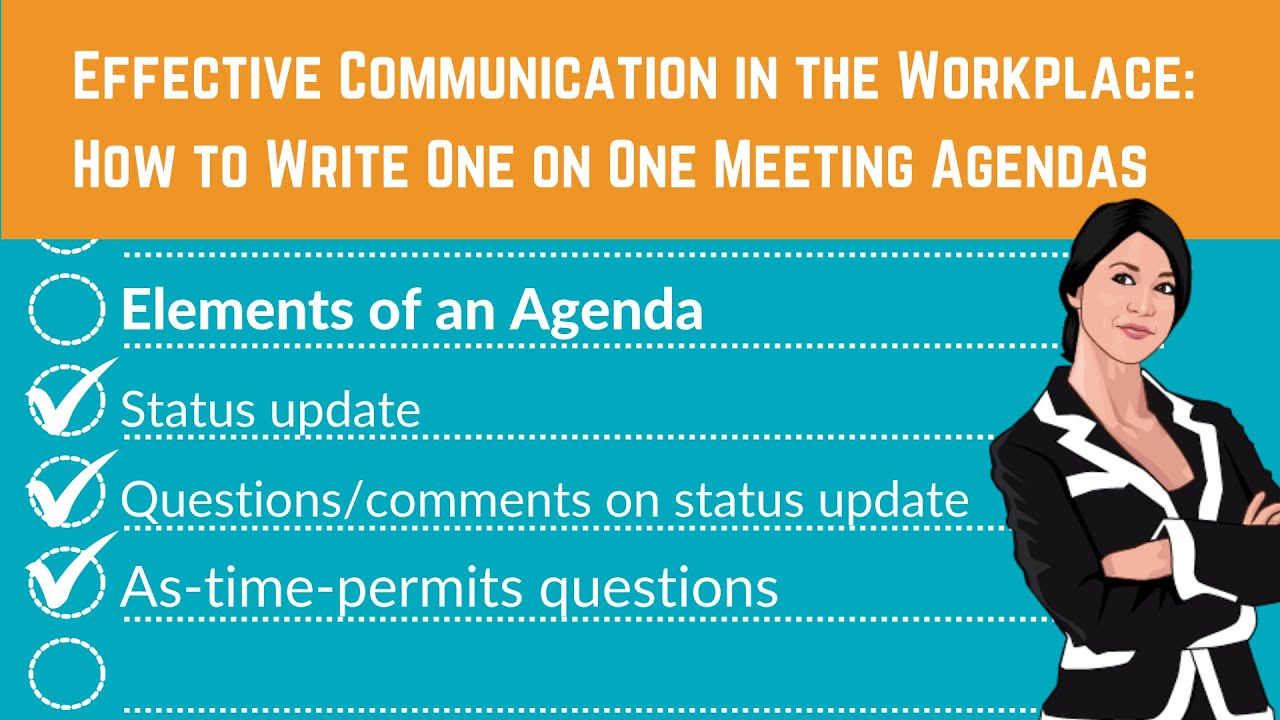
Effective Communication at Work: One-on-One Meeting Agendas

How to Craft an Effective Agenda for One-on-One (1:1) Meetings

Effective communication in the workplace is essential, especially during one-on-one (1:1) meetings between managers and team members. These meetings are opportunities to foster productivity, clarify goals, and build stronger working relationships. However, without a structured agenda, a 1:1 meeting can easily lose focus. Here’s how to craft one-on-one meeting agendas to make your 1:1 meetings more productive and impactful.

A) Start with a Status Update

Kick off the meeting with a status update to set the tone for the conversation. This demonstrates that you’re organized and prepared. Organize your tasks into three categories:

  • Backlog/Not Yet Started
  • In Progress
  • Finalizing

This simple structure makes it easier to track progress, identify areas that need attention, and keep the discussion on track.

B) Questions and Comments on Status Update

After the status update, dive into specific questions or comments related to your progress. Use this time to address any current challenges or roadblocks you’re facing. For example, if you’ve encountered a problem with code, ask, “Who can assist with code-related issues?” Or if you’re planning an event, inquire, “Are there any dietary restrictions, or should I survey the guests?”

Additionally, share your discoveries and challenges:

  • “Here’s what I found…”
  • “I could use some help with…”
  • “This is how I plan to apply what I’ve learned toward my goals…”

This allows for open communication and collaboration, ensuring any issues are resolved promptly.

C) Seek Feedback for Improvement

This section is crucial for personal and professional growth. Ask for feedback to ensure you’re meeting expectations and identify areas for improvement:

  • “Am I meeting expectations?”
  • “What can I improve?”

This helps foster a culture of continuous improvement, making it easier to align with team goals and organizational standards.

D) As-Time-Permits Questions

If there’s still time left in the meeting, use it to explore broader or open-ended questions. These can be questions you’ve prepared in advance for a deeper discussion. Examples include:

  • “Why do we approach this task in this particular way?”
  • “Considering today’s discussion, how should I approach similar tasks in the future?”

These questions encourage a reflective discussion that can lead to deeper insights and better decision-making.

This agenda structure is more than just a guideline; it’s a tool to facilitate engaging, insightful dialogues tailored to your professional growth. It aims to maximize every moment of the 1:1 meeting, turning the interaction into a platform for better understanding and actionable insights. As you prepare for your next 1:1, a well-crafted agenda will be your stepping stone towards a more meaningful and productive discussion.

How to Be Proactive at Work

Being proactive is more than just taking the initiative. It reflects a deep-rooted care for your work, your teammates, and the overarching success of your organization. Especially for individuals new to a team or the workforce, sh14 Actionable Tips to Be More Proactive at Work and Boost Your Career

Being proactive isn’t just about taking the initiative—it’s about demonstrating a deep care for your work, teammates, and the overall success of your organization. For those new to a team or the workforce, adopting a proactive attitude is a gateway to growth and career stability. However, it’s equally important for seasoned employees, especially during times of organizational shifts or potential layoffs. Being perceived as a proactive asset can significantly enhance job security and make you an invaluable member of your team.

If you’re on a performance improvement plan, these tips can help shift perceptions and show your commitment to enhancing productivity and collaboration. By embodying proactivity, you demonstrate your genuine care for your work and your desire to contribute to your organization’s success.

Here are 14 actionable tips to help you be more proactive at work:

1. Prepare for Your Meetings

Thoroughly review pre-reads, previous meeting notes, and the agenda. This shows that you’re prepared and ready to contribute, earning the respect of the meeting organizer and making you a valuable participant.

2. Volunteer as the Note-Taker

Taking notes isn’t just a task; it’s an opportunity to show attentiveness. By volunteering, you demonstrate care and attention to detail, becoming a resource for your team.

3. Ask Clarifying Questions

By asking insightful questions, you show attentiveness and help improve clarity for everyone in the meeting. This fosters a productive, collaborative environment where everyone is on the same page.

4. Confirm Understanding

After key points are made, paraphrase them and seek confirmation. This ensures that there are no misunderstandings and shows your commitment to ensuring clarity for yourself and others.

5. Get to Know Your Team

Building strong professional relationships is essential. Take time to learn your team’s preferences, priorities, and challenges. This will help you collaborate better and foster a supportive work environment.

6. Shadow Another Team

Expand your understanding of the organization by shadowing other teams. This broadens your perspective, fosters cross-functional knowledge, and helps you contribute to the organization’s overall success.

7. Network Across Departments

Especially during organizational changes, networking across departments is crucial. Cultivating relationships across teams ensures you have advocates and collaborators throughout the company.

8. Reschedule Canceled Meetings

When a meeting gets canceled, take the initiative to reschedule. This shows that regular interactions matter to you and that you’re committed to staying engaged and visible.

9. Offer Solutions, Not Just Problems

Instead of simply pointing out issues, focus on proposing solutions. Being a problem-solver makes you more valuable to your team and demonstrates a proactive mindset.

10. Do Additional Research

Show your interest in your work by conducting research on topics relevant to your role or your manager’s interests. Sharing your findings demonstrates initiative and a willingness to go above and beyond.

11. Mention Your Work

Keep people updated on your projects, especially when you accomplish something significant. Regularly sharing your progress ensures your hard work is recognized.

12. Show Your Ambition

Align your daily tasks with your long-term career goals. Demonstrating how your work ties into your career growth shows that you’re committed to the future and continuously striving for success.

13. Take Charge of Your Learning

Show initiative by suggesting books, courses, or learning opportunities to your manager. This demonstrates a keen interest in developing your skills and growing professionally.

14. Advocate for Yourself

Constructively express concerns and offer potential solutions. Advocating for yourself in a positive, solution-oriented way shows maturity, initiative, and a commitment to making the workplace better for everyone.

For a more detailed exploration of these strategies, watch our informative video and check out some of our other resources.

Managing Up: Smart Questions to Ask Your New Boss

StartingManaging Up: Essential Questions to Ask Your New Boss

Starting a new job or working under a new manager can be both exciting and nerve-wracking. One of the best ways to ease into your new role and build a strong relationship with your boss is by asking the right questions. In this blog post, I’ll guide you through managing up by suggesting key questions to ask your new boss. These questions aren’t just random—they are strategic tools designed to help you understand your manager’s expectations, align your goals, and foster effective communication.

Basic Get-to-Know-You Questions

Let’s start with the basics. These questions help you understand your manager’s communication style and expectations. Here’s why they matter:

1. How long have you been with the company?

Why ask: Knowing your boss’s tenure gives you insights into their experience and understanding of the company culture. This helps you understand their perspective and how they might approach challenges.

2. What do you like most about your job?

Why ask: Understanding what motivates your manager will help you align your contributions with what drives them. This insight can help you better support their goals.

3. What do you find most challenging about your job?

Why ask: Knowing what challenges your boss faces provides an opportunity for you to become a problem-solver on your team. It shows initiative and a willingness to help.

4. What are the main responsibilities of our team?

Why ask: This question sets the stage for understanding what is expected from the team as a whole, ensuring you align your work with team goals.

5. What are my main responsibilities on our team?

Why ask: Clarifying your role helps you focus on what truly matters, ensuring you’re aligned with your manager’s expectations.

6. How do you see me supporting our team’s objectives?

Why ask: This question ensures your actions align with your manager’s goals. It shows initiative and a commitment to contributing to team success.

Going Deeper: Questions for Alignment

Once you’ve established the basics, it’s time to dig deeper. These questions help you understand your manager’s goals, values, and priorities:

7. How have past career experiences influenced what you do today?

Why ask: Understanding how your manager’s career experiences shape their decision-making provides valuable context for how they approach their role and guide the team.

8. What do you value most (personally and professionally)?

Why ask: Knowing what your manager values can help guide your actions and decisions, ensuring you contribute in a way that aligns with their priorities.

9. What are you ultimately trying to accomplish at this organization?

Why ask: This question helps you align your goals with your manager’s long-term vision for the organization. It gives you clarity on how your role fits into the bigger picture.

10. How can I support your vision?

Why ask: This shows your willingness to be a team player and contribute to shared goals. It also positions you as someone eager to help your manager succeed.

Conclusion: Building a Strong Relationship Through Effective Communication

Asking the right questions isn’t just about gathering information; it’s about building a strong relationship with your new boss. By asking thoughtful questions, you show initiative, curiosity, and a genuine desire to align with your manager’s expectations and the organization’s objectives. The more you understand your manager’s values and goals, the more effectively you can contribute to team success and grow in your role.

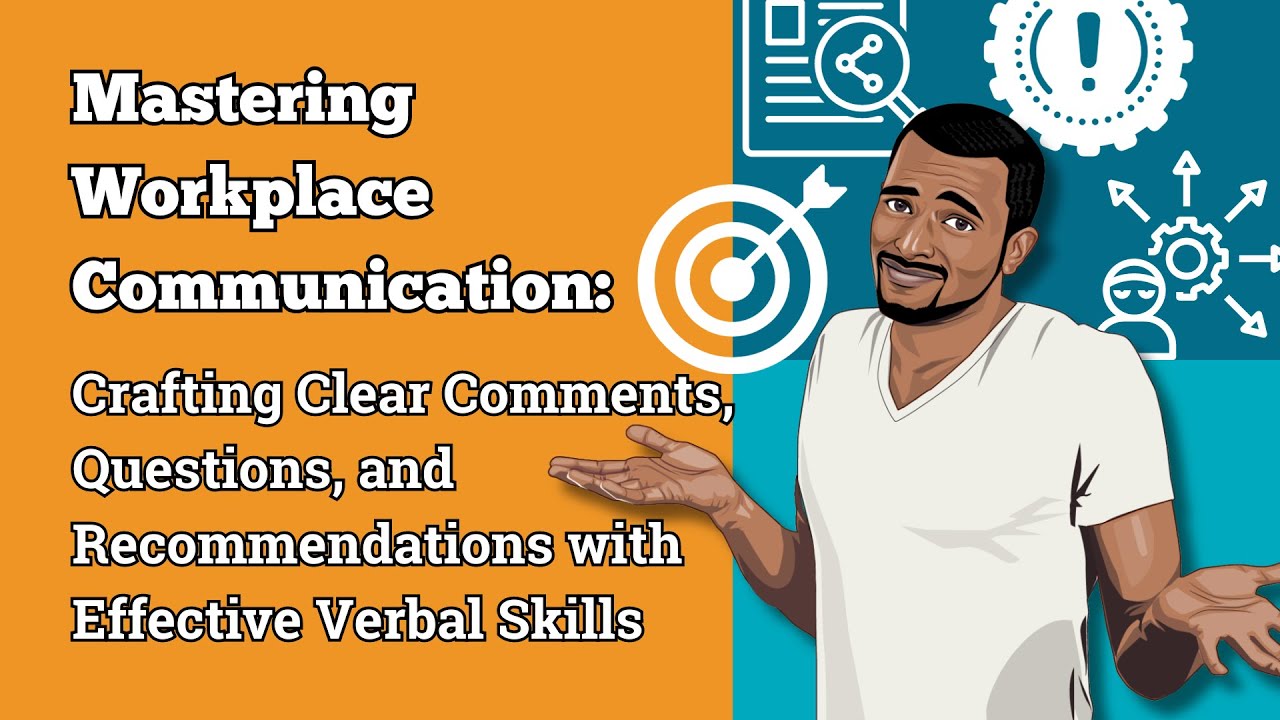
Mastering Workplace Communication with Effective Verbal Skills

The Four Pillars of Effective Verbal Communication

Over the years, I’ve seen that the foundation of every strong professional relationship is effective verbal communication. It is, in fact, one of the three essential elements of practicing curiosity: self-awareness, relationship-building, and clear communication. Because misunderstandings in the workplace happen frequently—and can be costly both in resources and relationships—it is critical to communicate with clarity and purpose.

That’s why I want to share a structured approach that has been a game-changer in my professional journey: The Four Pillars of Effective Communication.

Why a Structure Matters

When you need to raise a difficult topic at work, the natural impulse is to over-explain. Many people give long introductions, adding multiple layers of context, and end up burying their main point. By contrast, a simple four-step framework keeps your message focused, concise, and impactful.

The Four Pillars of Effective Communication

  1. The Point: Begin with your main idea or question. This is the heart of your message. Aim to state it in fewer than 10 words.
  2. Context: Next, set the stage by reminding your listener of the background or your role in the issue.
  3. Significance: Then, explain why you’re raising the issue now. Highlight its urgency or importance.
  4. Possible Consequence: Finally, outline what might happen if the issue is not addressed. Showing consequences clarifies the stakes and encourages action.

Applying the Pillars in Real-World Scenarios

  • Team Priorities
    • The Point: I need clarity on our team’s priorities.
    • Context: I’m shaping our project plan around them.
    • Significance: A clear plan prevents confusion.
    • Possible Consequence: Ambiguity will hurt productivity.
  • Project Timelines
    • The Point: I think we should request an extension.
    • Context: Delays from another team pushed back our schedule.
    • Significance: Our client expects quality results.
    • Possible Consequence: Rushing may compromise quality.
  • Resource Allocation
    • The Point: We need additional support for this project.
    • Context: Right now, I’m the only contributor.
    • Significance: Timely delivery is critical to our client.
    • Possible Consequence: Missing the deadline could damage trust.

Effective verbal communication is both an art and a science. By practicing this four-pillar strategy, you’ll deliver messages that are clear, actionable, and respected. In professional relationships, where curiosity and clarity matter most, every conversation is an opportunity to build trust and drive results.

Mastering Effective Verbal Communication at Work

Effective communication is a part of practicing curiosity, which consists of three essential elements: self-awareness, relationship building, and clear communication. It’s important to understand that before we can genuinely resonate with others with our communication, we have to first align with our own thoughts and objectives.

To guide this alignment, I’ll introduce five logical structures. Each structure serves a unique purpose in communication, and requires you to really think about the core message you aim to convey. Recognizing the essence of your message allows you to use the most fitting structure for clarity. To illustrate these structures, I will use a scenario involving a fictional software company facing challenges with its product offerings.

1. Cause and Effect

Effective communication starts with understanding the cause and its subsequent effects. It’s about tracing back to the root of an issue and comprehending its implications.

Logical StructureQuestion AddressedExampleSoftware Company Scenario
Cause and EffectWhat’s the root cause, and what are its consequences?A neglected core software product leads to unrealized revenue potential.The company hasn’t maximized the profit of its core software product.

2. Steps in a Sequence

Every situation has a backstory. By breaking down events step by step, we can gain a clearer understanding of how a situation unfolded.

Logical StructureQuestion AddressedExampleSoftware Company Scenario
Steps in a SequenceWhat events led to the current situation?Sales desires more software features; engineering cites resource constraints; a less profitable product is identified; resources are reallocated.Sales team wants enhanced features; engineering team flags resource limitations; focus shifts from a low-profit product.

3. Problem-Solution-Benefit

Every challenge presents an opportunity. By identifying problems and crafting solutions, we can unlock potential benefits.

Logical StructureQuestion AddressedExampleSoftware Company Scenario
Problem-Solution-BenefitWhat’s the challenge, the solution, and the resulting benefits?Customers seek more software features; an underperforming product is discontinued to free up resources; this leads to enhanced customer retention and increased profits.Addressing customer demands by reallocating resources, leading to higher customer retention and profitability.

4. Short Term vs. Long Term

Immediate actions have both present and future implications. It’s essential to weigh the short-term impacts against the long-term outcomes.

Logical StructureQuestion AddressedExampleSoftware Company Scenario
Short Term vs. Long TermWhat are the immediate implications and the future outcomes?An engineer’s initial productivity dip during transition, followed by a projected 40% profitability boost within a year.Initial productivity challenges offset by a long-term rise in profitability.

5. Costs and Rewards

Every decision has its price. By evaluating potential investments against expected returns, we can make informed choices.

Logical StructureQuestion AddressedExampleSoftware Company Scenario
Costs and RewardsWhat are the potential investments and the expected returns?An engineer’s learning curve with the core product, offset by the potential for maximized company profits.Investment in training yields potential for significant profit increase.

As you can see with each of these different logic structures, they each have their own function. That’s why understanding what you’re trying to convey is paramount. These logical structures serve as tools to help you communicate effectively by articulating your thoughts with precision. As you move forward, consider employing these structures in your daily communications, be it in professional settings or personal interactions. They can guide you in presenting information clearly, ensuring your message is both understood and impactful. Clarity in communication is a skill, and with the right tools and practice, it can be mastered.

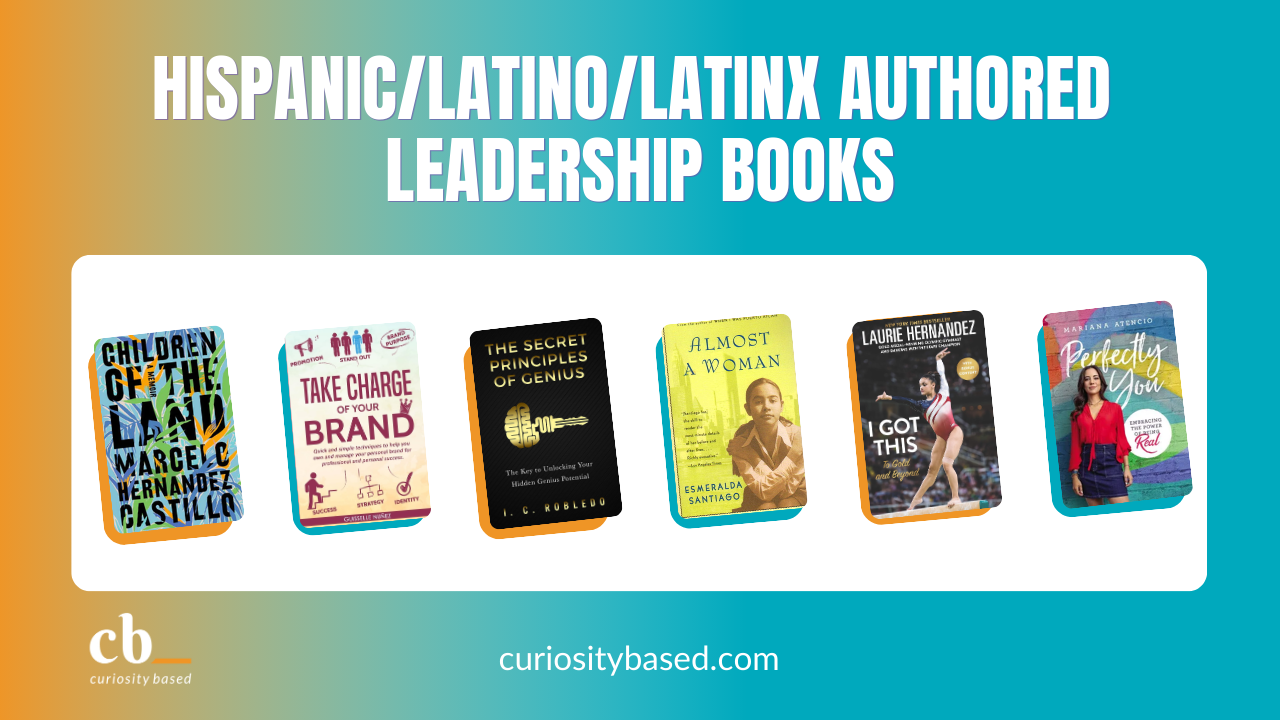
120+ Leadership Books Written by Hispanic/Latino/Latinx Authors

We created this list to promote leadership narratives written by the Hispanic/Latino/Latinx community. This list is meant to be a resource, not an official endorsement. The books are not ranked or listed in any particular order.

Check out our other leadership book lists by authors who identify as LGBTQIA+, AANHPI, Native American, women, and those who identify as having disabilities.

  1. Me by Ricky Martin
  2. And A Voice to Sing With: A Memoir by Joan Baez
  3. The Gloria Anzaldúa Reader (Latin America Otherwise) by Gloria Anzaldúa
  4. Borderlands / La Frontera: The New Mestiza by Gloria Anzaldúa
  5. Almost a Woman by Esmeralda Santiago
  6. In the Time of the Butterflies by Julie Alvarez
  7. Farmworker’s Daughter: Growing up Mexican American by Rose Castillo Guilbault
  8. The Power of Latino Leadership: Culture, Inclusion, and Contribution by Juana Bordas
  9. When I was Puerto Rican by Esmeralda Santiago
  10. Salsa, Soul, and Spirit: Leadership for a Multicultural Age by Juana Bordas
  11. Autentíco: The definitive guide to Latino Career Success by Robert Rodriguez
  12. Brown Church: Five Centuries of Latina/o Social Justice, Theology, and Identity by Robert Chao Romero
  13. Hermanas: Deepening Our Identity and Growing Our Influence by Natalia Kohn Rivera
  14. Isabel’s Hand-Me-Down Dreams by Isabel Lopez
  15. Leaving Little Havana: A Memoir of Miami’s Cuban Ghetto by Cecilia M. Fernandez
  16. Gmorning, Gnight!: Little Pep Talks for Me & You by Lin-Manuel Miranda
  17. [Un]framing the “Bad Woman”:Sor Juana, Malinche, Coylxauhqui, and other rebels with a cause by Alicia Gaspar de Alba
  18. Always Running: La Vida Loca – Gang Days in L.A. by Luis J. Rodriguez
  19. Cruz: A Cross-Border Memoir by Jean Guerrero
  20. Dear America: Notes of an Undocumented Citizen by Jose Antonio Vargas
  21. Undocumented: A Dominican Boy’s Odyssey from a Homeless Shelter to the Ivy League by Dan-el Padilla Peralta
  22. The Far Away Brothers: Two Young Migrants and the Making of an American Life by Lauren Markham
  23. My Beloved World by Sonia Sotomayor
  24. Latina Empowerment Through Leadership: Mindful Stories from Inspiring Women by Catherine Munos Garces, Monica Rivera, et al
  25. An Organizer’s Tale by Cesar Chavez
  26. My Time to Speak: Reclaiming Ancestry and Confronting Race by Ilia Calederon
  27. Rita Moreno: A Memoir by Rita Moreno
  28. American Poison: How Racial Hostility Destroyed Our Promise by Eduardo Porter
  29. My (Underground) American Dream: My True Story as an Undocumented Immigrant Who Became a Wall Street Executive by Julissa Arce
  30. The Virtuous Circle: Restore Your Confidence, Bounce Back, and Emerge Stronger by Gaby Natale
  31. Self Made: Become Empowered, Self Reliant and Rich in Every Way by Nely Galán
  32. Latino Leaders Speak: Personal Stories of Struggle and Triumph edited by Micky Ibarra and Maria Pérez-Brown
  33. Leapfrog: The New Revolution for Women Entrepreneurs by Nathalie Molina Niño
  34. The Soul of a Woman by Isabel Allende
  35. In the Dream House: A Memoir by Carmen Maria Machado
  36. Once I was You: A Memoir of Love and Hate in a Torn America by María Hinojosa
  37. More than Ready: Be Strong and Be You…and Other Lessons for Women of Color on the Rise by Cecilia Muñoz
  38. Perfectly You: Embracing the Power of Being Real by Mariana Atencio
  39. Take Charge of Your Brand: Quick and Simple Techniques to Help You Own and Manage Your Personal Brand for Professional and Personal Success by Guisselle Nuñez
  40. In the Country We Love: My Family Divided by Diane Guerrero
  41. Frida by Barbara Mujica
  42. Finding Latinx: In Search of the Voices Redefining Latino Identity by Paolo Ramos
  43. The Undocumented Americans by Karla Conejo Villavicenci
  44. AOC: The Fearless Rise and Powerful Resonance of Alexandria Ocasio-Cortes by Lynda Lopez
  45. Latinx: The New Force in American Politics by Ed Morales
  46. Mexican Enough: My Life Between the Borderlines by Stephanie Elizondo Griest
  47. Being Brown: Sonia Sotomayer and the Latino Question by Lázaro Lima
  48. An Unlikely Journey: Waking up from My American Dream by Julián Castro
  49. Hispanic Women Seeking Higher Leadership Roles in Business by Sylvia C. Motta, PhD
  50. Wild Tongues Can’t be Tamed: 15 Voices from the Latinx Diaspora edited by Saraciea J. Fennell
  51. The Leadership Shift: The Strategic Positioning of Latino Business Leaders by Dr. Nilda Perez
  52. ¡Rise up, Mi Gente! A Roadmap for Latinos to Achieve Success in Corporate America by Jesse A Mejia
  53. Inventing Latinos: A New Story of American Racism by Laura E. Gómez
  54. The 5 Disciplines of Inclusive Leaders: Unleashing the Power of Us All coauthored by Andrés Tapia
  55. When We Make It by Elisabeth Velasquez
  56. I am Not Your Perfect Mexican Daughter by Erika L. Sanchéz
  57. Latino Talent: Effective Strategies to Recruit, Retain, and Develop Hispanic Professionals by Robert Rodriguez
  58. Silencing Gender, Age, Ethnicity, and Cultural Biases in Leadership by Camilla A. Montoya, Julieta V. García. et al.
  59. Inclusion Revolution: The Essential Guide to Dismantling Racial Inequity in the Workplace by Daisy Auger-Dominguez
  60. Latinas Rising Up in HR: Inspirational Stories of Human Resources Professional Leading, Thriving, and Breaking Barriers by Priscilla Guasso
  61. The Secret Principles of Genius: The Key to Unlocking Your Hidden Genius Potential by I.C. Robledo
  62. I Got This: To Gold and Beyond by Lauren Hernandez
  63. The Engine of America: The Secrets to Small Business Success from Entrepreneurs Who Have Made It by Jane Delgado
  64. The Latina Guide to Health: Consejos and Caring Answers by Jane Delgado
  65. Field Mice: Memoirs of a Migrant Child by Emma Gonzalez
  66. Los Amos del Mundo Están al Acecho by Cristina Martin Jimenez
  67. Growing American Roots by Bob Menendez
  68. Dream in Color: How the Sánchez Sisters are Making History in Congress by Linda Sánchez
  69. Healing Journey: Surviving Domestic Violence by Lupe Valdez
  70. La Nueva California: Latinos from Pioneers to Post-Millennials by David Hayes-Bautista
  71. El Cinco de Mayo: An American Tradition by David Hayes-Bautista
  72. Latinas in Aviation by Jacqueline S. Ruiz
  73. Becoming Dr. Q: My Journey from a Migrant Farm Worker to brain Surgeon by Alfredo Quinones-Hinjosa
  74. The Universal Tone: Bringing My Story to Light by Carlos Santana
  75. Take a Stand: Lessons from Rebels by Jorge Ramos
  76. The Injustice Never Leaves You: Anti-Mexican Violence in Texas by Monica Muñoz Martinez
  77. Powerhouse Principles: The Ultimate Blueprint for Real Estate Success in an Ever-Changing Market by Jorge Perez
  78. The Buena Salud Guide to Understanding Depression and Enjoying Life by Jane Delgado
  79. Leadership Lessons of the White House Fellows: Learn How to Inspire Others, Achieve Greatness , and Find Success in Any Organization by Charles P. Garcia
  80. Persevere with Power: What Heaven Starts, Hell Cannot Stop by Samuel Rodriguez
  81. In Defense of Our America: The Fight for Civil Liberties in the Age of Terror by Anthony D. Romero
  82. One Vote Away: How a Single Supreme Court Seat Can Change History by Ted Cruz
  83. Still Dreaming: My Journey from the Barrio to Capitol Hill by Luis Gutiérrez
  84. An American Son: A Memoir by Marco Rubio
  85. The Undocumented Americans by Karla Cornejo Villavicencio
  86. A House of My Own: Stories from My Life by Sandra Cisneros
  87. Spirit Run: A 6000 Mile Marathon Through America’s Stolen Land by Noe Alvarez
  88. Dirty Girls Social Club by Alisa Valdes-Rodriguez
  89. Woven in Moonlight by Isabel Ibañez
  90. The Latino Advantage in the Workplace by Mariela Dabbah and Arturo Poiré
  91. Dream Big by Deborah Rosado Shaw
  92. Youth, Identity, Power: The Chicano Movement by Carlos Munoz Jr.
  93. Mean by Myriam Gurba
  94. Presumed Incompetent: The Intersections of Race and Class for Women in Academia by Gabriella Gutiérrez y Muhs, Yolanda Flores Niemann, and Carmen G. González
  95. Enrique’s Journey: The Story of a Boy’s Dangerous Odyssey to Reunite with his Mother by Sonia Nazarrio
  96. A Passion for Politics (Mission Bells) by Anita Perez Ferguson
  97. Latinos in American Society: Families and Communities in Transition by Dr. Ruth Enid Zambrana
  98. Journey to the Future: A Roadmap for Success for Youth by Ltc. Consuelo Castillo Kickbusch
  99. Homeless my Choice by Roy Juarez Jr.
  100. The Story of Latinos and Education in American History by Dr. Abdín Noboa-Ríos
  101. A Long Petal of the Sea by Isabel Allende
  102. The Deepest Roots: Finding Food and Community on a Pacific Northwest Island by Kathleen Alcalá
  103. Más Allá de la Justicia by Maria de lourdes Victoria
  104. The Likeability Trap: How to Break Free and Succeed as You Are by Alicia Menendez
  105. Ready, Set, Manifest!: A Handbook for the In-betweens and Leaps in Life by Debbie Lacey
  106. Hurdles in the Dark by Elvira K. Gonzalez
  107. In the Shadow of the Mountain: A Memoir of Courage by Silvia Vasquez-Lavado
  108. Through the Dark by Yolanda Nava
  109. Thriving in the Fight: A Survival Manual for Latinas on the Front Lines of Change by Denise Padin Collazo
  110. Justice & Space Matter in a Strong, Unified Latino Community by Kathy Bussert-Web, Maria Eugenia Diaz, Krystal A Yanez
  111. Breaking Ground and Barriers: Hispanic Women Developing Effective Leadership by Gloria Bonilla-Santiago, Ph.D.
  112. Latinization and the Latino Leader: How to Value, Develop, and Advance Latino Professionals by Cristina Benitez & Marlene Gonzalez
  113. Latino and Latina Leaders of the 21st Century: Ordinary Beginnings, Extraordinary Outcomes by Kay (Kayla) S. Garcia
  114. Latina Empowerment Through Leadership: Mindful Stories from Inspiring Women by Catherine Munoz-Garces, Monica Rivera, Lizza Monet Morales, Celia Garcia, Veronica Corona, Maggie Antillon Mathews, Roxana Damas, and Jennifer Ibarra
  115. The More or Less Definitive Guide to Self Care by Anna Borges
  116. Act Like a Leader, Think Like a Leader by Hermina Ibarra
  117. You Don’t Have to Like Me: Essays on Growing Up, Speaking Out, and Finding Feminism by Alida Nugent
  118. Children of the Land: A Memoir by Marcelo Hernandez Castillo
  119. Wealth Warrior: 8 Steps for Communities of Color to Conquer the Stock Market by Linda Garcia
  120. Solito: A Memoir by Javier Zamora
  121. Living Beyond Borders: Growing Up Mexican in America by Margarita Longoria
  122. Chinoga: Owning Your Inner Badass for Healing and Justice by Alma Zaragoza-Petty

View all of our leadership book lists here.

How to Respond to LinkedIn Spam 

LinkedIn has been a game-changer for me, opening doors to countless professional opportunities and connections, and allowing me to trade ideas and resources with my network. But let’s be honest, with its vast user base comes an inevitable downside: the relentless wave of LinkedIn spam. From eager sales pitches to random connection requests, I’ve seen it all. If you’re active on LinkedIn, chances are that you’ve experienced this as well. Over time, I’ve developed some strategies to handle these with grace and poise. Here’s my personal guide to managing unsolicited, spammy requests and messages on LinkedIn. 

  1. Ignore the request: Ever received a connection request without any message? I get them all the time. If they didn’t take a moment to introduce themselves or give a reason for why they’d like to connect, I usually move on without feeling guilty. 
  2. Give a clear response to requests accompanied by messages: When a message accompanies a request, I give it a read. If it’s genuine, I’m all ears. Or if they’d like to connect to grow their network, I might say yes because it’s not hurting anyone and I’ve gained a connection.  
  3. Practice reciprocity: I occasionally get requests to follow someone’s page. If it resonates with my interests, I’m on board. But networking is about mutual growth, right? So I’ll usually ask them to follow my company page in return. 
  4. Respond with a question:  Sometimes, I’m curious. Why did they reach out? Asking, “What about my profile stood out to you?” not only satisfies my curiosity but also helps me understand my online presence better. Oftentimes when I ask questions, they don’t respond at all. 
  5. Be direct about the sales pitch: If they’re giving you an offer that straight up sales pitch be direct about if you’re interested or not. It’s ok to politely decline. And while I”m at it, I might suggest they check out my company page. Who knows, they might find something they like or there could be an opportunity for us to connect in the future. To their sales pitch, you can say something like “No thank you. By the way, would you consider following my company page?” 
  6. Get clarity on their ask: Some messages are just… vague. I often get messages like “I have a podcast where I interview the best leaders” or “This service I offer has benefitted companies similar to yours”, without a clear proposition. In such cases, I ask outright “Are you asking me to be on your podcast?” or “Are you asking me to buy your service?”. It’s surprising how many times I don’t get a response. 
  7. Use it as an opportunity for mutual growth: If someone is keen on offering a service, I suggest a mutual learning call. We spend time understanding each other’s services. It’s less about purchasing and more about learning. Most of the time, people ignore the request, but I still feel good about responding in this way. In the few times people have said yes, I’ve gotten to learn about their services and industry and they ask me questions about mine, which has helped me get better at selling. 

​​LinkedIn is a treasure trove of opportunities, but it’s essential to sift through the noise. With these strategies, I’ve managed to turn potential distractions into meaningful interactions. And who knows? The next random message might just be the opportunity you’ve been waiting for.

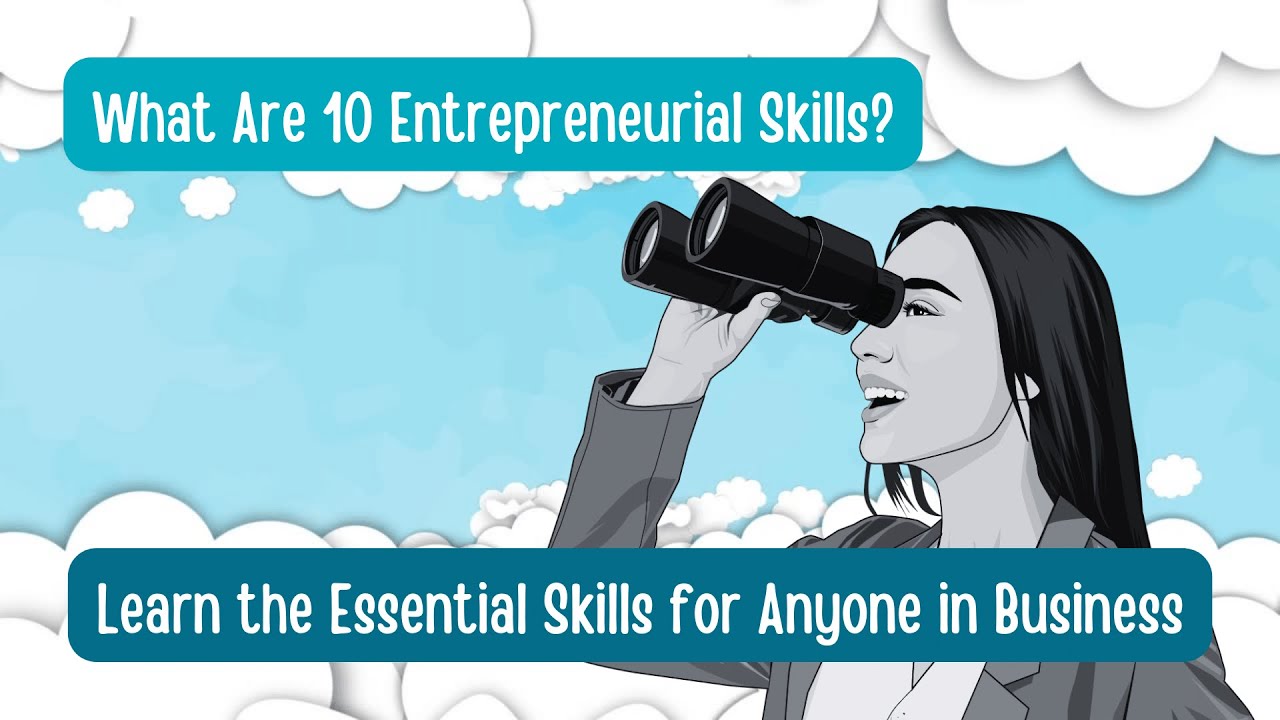
Entrepreneurial Success: 10 Essential Skills in Business

Entrepreneurship is a dynamic journey, one that demands constant learning and an insatiable curiosity. In this ever-evolving landscape, there’s so much we don’t know, and the key to success lies in recognizing this and seeking knowledge relentlessly. As an entrepreneur myself, I’ve navigated through these challenges and have identified ten pivotal skills that have shaped my journey. Let’s delve into them.

  1. Manage your money.You need to know how to handle your money. If you’ve struggled with personal finances in the past, now is the time to learn. Understanding debits and credits, how money flows in and out of your business, is essential. I know someone who used to use their credit card to withdraw cash all the time, not realizing the implications. After dedicating time to learn about business finances, she transformed her financial habits and is now a boss with her money.  
  1. Learn how to read spreadsheets. Business is about money and that is tracked in spreadsheets. You need to get comfortable with spreadsheets. There are many free resources. You can check out organizations like SCORE and Business Impact Northwest to get started. I  can’t tell you how many times I made a near catastrophic mistake with my calculations and knowing how to read my spreadsheet saved me.  
  1. Listen to understand. You have to do a lot of listening as an entrepreneur–to your customers, employees, and partners. Listen to their needs, their concerns, their dreams and aspirations. Understand them.
  1. Ask questions, even when you think you know. Even if you believe you have the answer, ask for clarity, because it’s not about the answer itself. It’s about the perspective that it reveals. At CuriosityBased, we’ve crafted a learning experience centered on asking questions to clarify, underscoring the importance of this skill. I might think I know an answer, but not from that person’s perspective. I might be right about what they want, but wrong about why they want it. Understanding the “why” is often more important than the “what”. 
  1. Connect the dots (be strategic) When you’re able to listen and ask questions, you’ll build your capacity to connect the dots and be strategic. You’ll be scrapping together limited resources. For example, when I was running my Vietnamese newspaper, I heard from other community newspapers that they were struggling and from organizations who had a hard time reaching out to our communities. I was able to connect the dots.
  1. Share your story and your why. A lot of people want to start their own businesses and they lack the courage. When you tell your story, you’re including them in your journey and you’re inspiring them. It can be super hard to talk about yourself. It might even feel like you’re bragging. You need to get clear about your “why”. I often tell people the only reason I left the best job I ever had was so I could get to own my work and have freedom, which is a big part of my identity as a Vietnamese refugee.
  1. Share your expertise. This can be hard to do, but show off what you know. You might feel like a show off. You might worry that if you share this, then people will steal all your secrets. In most cases, though, your customers will pay you to do this work for them. They will rarely use it to do the work themselves. Don’t worry about sharing your expertise. Also, what is obvious to you is not obvious to other people. 
  1. Ask for business. This is super hard. I have to give myself a little pep talk every time I do it. “Let me know if I can provide you with any services or help your team.” Swallow your pride and do it. 
  1. Delegate/outsource some of your work. There is endless work for an entrepreneur to do. You have to know what to outsource. I don’t create agendas for internal meetings. I don’t look for tech solutions or do video editing. I delegate and outsource, so I can focus on what gives me energy.
  1. Repress your inner critic. You will have so many doubts. I call my doubting voice “Insecure Julie”. You have to learn to shut that person down so that you can move forward. It’s a skill to know the difference between your gut warning you not to do something and your inner critic telling you you’re not good enough to do something. You’ve got to differentiate the two. 

Embarking on the entrepreneurial journey is both challenging and rewarding. By honing these skills and continuously seeking knowledge, you pave the way for success. Remember, it’s about the journey, the continuous learning, and most importantly, believing in yourself.

Self Facilitate or Hire a Facilitator? 10 Questions to Guide Your Decision

Deciding whether to self-facilitate a meeting or hire a professional facilitator is a crucial decision that can impact the effectiveness of your meeting. This guide will walk you through 10 key questions to consider before making your decision.

These questions are based on the assumption that you have a budget allocated for hiring a facilitator, but are uncertain if it is the best way to utilize your funds. If you do not have a budget specifically for hiring an external facilitator, you could consider requesting someone affiliated with the organization to volunteer their services, or perhaps offer their services in exchange for other services.

Self Facilitate or Hire a Facilitator? 10 Key Questions 

Understanding the Meeting Requirements

  1. What kind of meeting is this? 

Is this an information gathering session? Or a nuanced discussion that needs the skill of a facilitator? If it’s a simple information gathering session, self-facilitation might be sufficient. However, if the discussion involves nuances and requires skilled facilitation to navigate, it’s important to assess whether there is someone in-house capable of managing this.

Evaluating the In-house Facilitator

  1. Is there someone on your team who is good at facilitating and willing to do it? 

Assess the skills and willingness of your team members. Being good at facilitation is one thing, but the person also needs to be willing to take on the role.

  1. If you’re considering using someone in-house to facilitate, is that the best use of that person’s time? 

Consider the other responsibilities and tasks of the potential in-house facilitator. Will facilitating the meeting take them away from other important work?

  1. If you’re considering asking someone in-house to facilitate, how will it benefit them and/or hurt them? 

Consider the potential benefits, such as skill development and leadership growth, against potential drawbacks, such as added stress or workload.

  1. If you’re considering using someone in-house to facilitate, how important would it be to get that person’s opinion in the conversation? 

If the potential in-house facilitator has valuable insights to contribute to the discussion, it might be more beneficial for them to participate as a team member rather than as a facilitator.

Considering Neutrality and Impartiality

  1. Do you have someone in-house who is perceived as neutral? 

If not, it might be best to hire an outside facilitator who is perceived to be neutral. Neutrality is important for managing group dynamics and facilitating difficult conversations.

  1. If you’re considering using someone in-house to facilitate, how realistic is it that the person can stay impartial to the topic? 

Impartiality is key to effective facilitation. If there is a concern that the in-house facilitator might not be able to stay impartial, it might be better to hire an outside facilitator.

Weighing the Costs and Benefits

  1. What can you learn from hiring an outside facilitator that you can use to build up the capacity on your own team?

Hiring an outside facilitator can provide valuable insights and skills that can be used to build up the capacity of your own team.

  1. Does your facilitator need to have specialized knowledge? 

If so, it might be best to get the in-house or make sure that you hire someone who’s an outsider who has specialized knowledge.

  1. Considering all of the above, is this a good use of your budget? 

Weigh the costs and benefits of hiring a facilitator versus self-facilitating. Consider the impact on the effectiveness of the meeting, the development of your team, and the overall success of your organization.
Considering these questions will help you make an informed decision about whether to self-facilitate or hire a professional facilitator. Remember, the goal is to have the most effective meeting possible, so choose the option that best suits your needs and budget.

In-Person or Online Retreat? Key Questions to Guide Your Decision

In the modern business landscape, the decision between in-person or online staff retreats and workshops is more relevant than ever. Whether you’re a small business owner, a corporate leader, or a team manager, understanding the advantages and disadvantages of different facilitation methods is essential. Let’s explore the pros and cons of online, in-person, and hybrid retreats and workshops.

Questions for Consideration

Before diving into the specifics, ask yourself these crucial questions to better understand your needs: 

1️. What is the main purpose of the retreat or workshop? Is it to connect on a personal level, create a detailed work plan, or brainstorm innovative ideas? 

2️. What unique activities or exercises can you conduct in-person that might be challenging or impossible online? Conversely, are there virtual tools or methods that can’t be replicated in a physical setting? 

3️. What does your budget allow for? Consider costs related to travel, venue, technology, and facilitation. 

4. How do you envision attendance and participation? Would an in-person event lead to higher engagement, or would an online format allow for broader participation?

With these questions in mind, let’s explore the pros and cons of online, in-person, and hybrid retreats and workshops.

Online Retreats and Workshops: The Future of Collaboration

Pros:

  • Cost-Effective: Save on travel and venue expenses.
  • Global Reach: Include team members from all over the world.
  • High Capacity: More attendees without space constraints.
  • Record & Replay: Record sessions for future reference.
  • Efficiency: Less transition time between activities.
  • Engagement Tools: Utilize chat, polling, games, and more.
  • Inclusivity: Ideal for those who prefer not to speak aloud.
  • Accessibility: Enhanced tools for viewing slides and presentations.
  • Quick Grouping: Faster to assign participants to breakout sessions.

Cons:

  • Limited Physical Interaction: Some exercises may not be feasible.
  • Distractions: Easier for attendees to multitask.
  • Tech Challenges: Varying proficiency and potential tech issues.
  • Engagement Design: Requires careful planning for virtual participation.
  • Audience Dynamics: Larger groups may limit individual interaction.
  • Expertise Needed: A facilitator skilled in virtual environments is essential.

In-Person Retreats and Workshops: The Human Touch

Pros:

  • Physical Activities: Enables hands-on exercises and activities.
  • Human Connection: Opportunities for small talk and bonding.
  • Mood Gauge: Easier to sense the audience’s feelings.
  • Adaptability: Quick adjustments to the flow and structure.
  • Tangible Tools: Whiteboarding and sticky exercises are more straightforward.

Cons:

  • Space Limitations: Venue size dictates participant count.
  • Higher Costs: Venue, travel, and accommodation expenses.
  • Travel Constraints: Potential challenges for distant team members.
  • Environmental Concerns: Travel may not be eco-friendly.
  • Health Risks: Potential exposure to illnesses.

Hybrid Retreats and Workshops: A Balanced Approach

Pros:

  • Inclusivity: Combines online and offline participation.
  • Accessibility: Meets diverse needs of participants.

Cons:

  • Isolation Risk: Remote participants may feel left out.
  • Additional Costs: Requires extra tech or facilitation.
  • Varied Experience: Can lead to inconsistent participant experiences.

Conclusion

Choosing the right format for your staff retreats and workshops requires a thoughtful analysis of your team’s needs, budget, and goals. By weighing the pros and cons of each method, you can make the right decision that fosters collaboration, creativity, and connection within your organization.

Curiosity: More Than Just a Trait, It’s a Practice

Curiosity – we often think of it as something innate, a trait you’re either born with or without. But what if I told you curiosity is more like meditation, a practice that can be honed and developed? Join me as we dive into the extraordinary world of curiosity, exploring how it can be cultivated, challenged, and used to enrich every aspect of our lives.

3 Situations to Practice Curiosity

  1. Learning Something New: When I explore new subjects and ideas, curiosity guides me to understand different perspectives and trying new things, even when I’m outside my comfort zone.
  2. Not Having Expectations Met: Life has taught me that things don’t always go as planned. When this happens, practicing curiosity helps me be open to things I didn’t expect. 
  3. Disagreeing with Someone: I’ve found that disagreements can be hard, but they are also opportunities to learn. By practicing curiosity, I’ve been able to listen deeply and wholly, build relationships and foster clear communication.

Two Essential Questions I Ask Myself

In my journey of practicing curiosity, I’ve come to realize that two questions consistently guide my thinking and interactions. These questions are foundational principles that shape my approach to learning, communication, and relationship-building.

  1. Do I want them to learn from me? Do I want them to be open to changing their mind to what I have to say?
  • This question challenges me to consider my intentions in a conversation or debate. Am I seeking to impose my views, or am I genuinely interested in fostering understanding? It reminds me that true dialogue requires openness and a willingness to influence and be influenced.
  1. Am I willing to learn from them? Am I open to possibly changing my mind based on what they have to say?
  • This second question is a mirror to the first, turning the focus inward. It prompts me to reflect on my own openness and willingness to learn from others. Am I entering a conversation with a fixed mindset, or am I prepared to grow and change my views based on new insights?

Why These Questions Matter

These questions are more than just rhetorical; they are tools for self-awareness and growth. They encourage me to:

  • Embrace Humility: Recognizing that I don’t have all the answers and that others may offer valuable perspectives.
  • Foster Genuine Dialogue: Creating a space where ideas can be shared and explored without judgment or defensiveness.
  • Cultivate Empathy: Understanding others’ viewpoints, even if I disagree, and finding common ground.
  • Enhance Learning: Opening myself to new ideas and allowing them to challenge and enrich my thinking.

By continually asking myself these questions, I’ve been able to deepen my practice of curiosity, engage more meaningfully with others, and enhance my personal and professional relationships. They are a compass that guides me towards a more thoughtful, empathetic, and curious way of living.

3 Elements I Focus on When Practicing Curiosity

  1. Self-awareness: Understanding my feelings, thoughts, and patterns has been the first step towards cultivating curiosity.
  2. Relationship Building: Connecting with others and letting them get curious about me has fostered a sense of community and shared learning.
  3. Clear Communication: Listening to understand, asking questions when I don’t understand, and sharing my own specific examples and stories.  Asking questions with curiosity and listening actively has helped me explore new ideas and understand different viewpoints.

Conclusion

Practicing curiosity is not just a skill; it’s a way of life for me. It’s about being open to change, exploring new ideas, and building relationships. I also admit that there are times when I don’t practice curiosity because it can be so difficult and my emotions get in the way.  I hope my insights into practicing curiosity can be a guide to anyone looking to enhance their personal and professional life.

Promote Professional Development in the Workplace: 7 Free Strategies! 

7 Free Professional Development Strategies for the Workplace

In the quest to foster growth and improve productivity, many companies overlook the power of professional development. Yet, offering opportunities to learn and grow benefits both employees and organizations. Below are seven free, but highly effective, strategies to promote professional development in the workplace.

1. In-House Knowledge Sharing

Leverage the expertise within your team. By encouraging employees to share knowledge during lunch-and-learn sessions or internal workshops, you not only create a culture of continuous learning but also give employees leadership opportunities. For instance, a session on basic Excel skills can dramatically boost efficiency for those unfamiliar with the tool.

2. Knowledge Exchanges

Create a platform where employees can share favorite tech hacks and productivity tips. At CuriosityBased, we recently held a session where one employee demonstrated how to use mail merge and “snooze” in email, while another showcased the benefits of using ChatGPT. Consequently, these peer-led exchanges can lead to surprising improvements in efficiency.

3. Practice Time

Allocate dedicated time for employees to practice new skills together. For example, after an elevator pitch training session, the following meeting could be devoted to practicing in front of colleagues. As a result, this simple strategy can lead to major improvements in public speaking and confidence.

4. Mentoring Programs

Establish mentoring programs within your company. When employees are paired intentionally, both the mentor and mentee benefit. Furthermore, consider reverse mentoring, where junior employees coach senior staff on emerging trends or technologies. Recognition for participants reinforces the value of the program.

5. Lending Library

Set up a lending library where employees can share professional development books, articles, and resources they’ve found useful. This trust-based system encourages collaboration and, over time, contributes to meaningful professional growth.

6. Pro Bono Coaching

Many individuals pursuing executive or leadership coaching certifications must complete pro bono hours. By connecting with them, your employees can access professional coaching at no cost. This approach creates a win-win: coaches gain experience, while employees receive valuable guidance.

7. Volunteer Experts

Invite volunteer experts to speak and share their knowledge. For instance, we once hosted a Toastmasters champion who offered practical tips on delivering an effective elevator pitch. Such sessions provide fresh perspectives and can inspire employees to elevate their skills.

Professional development doesn’t have to strain budgets. With creativity and intentionality, these seven free strategies can cultivate learning, build stronger teams, and significantly improve workplace productivity. By embracing these approaches, organizations show commitment to growth and demonstrate curiosity in action.

Practicing Curiosity: How to Ask Questions at Work Without Fear

8 Common Fears That Stop People From Asking Questions at Work

Many people struggle with practicing curiosity, especially when it comes to asking questions in the workplace. Leaders need to understand what prevents employees from asking before they can foster a culture of curiosity. Often, it is fear. Employees hesitate to ask clarifying questions like “What does that acronym mean?”, “Could you explain why we’re taking this approach?”, or “What do you mean by that?” because of how they worry others will perceive them.

Based on insights from hundreds of workshop participants and audience members, I’ve identified eight common fears that stop people from asking questions at work—and how to reframe them safely.

1. Fear of Appearing Inattentive or Unprepared

  • Concern: People worry that their lack of knowledge suggests they weren’t listening or didn’t prepare.
  • Reframe: “I apologize if this was addressed earlier and I missed it. Could you please clarify (insert question)?”

2. Fear of Being Perceived as a Time-Waster

  • Concern: Employees fear that asking questions will slow down the meeting or disrupt the flow.
  • Reframe: “Could you please explain what (insert question) means? I want to ensure I fully understand.”

3. Fear of Appearing Incompetent

  • Concern: People worry that admitting they don’t know something will make others doubt their ability.
  • Reframe: “I know I should probably know this, but I’m still not clear. Could you please explain (insert question)?”

4. Fear of Reflecting Poorly on a Manager or Team

  • Concern: Employees fear that admitting uncertainty will make their manager or team look unprepared.
  • Reframe: “My team and I had a productive conversation on this. I’d like to ask a clarifying question: (insert question).”

5. Fear of Sounding Confrontational

  • Concern: People worry their question will come across as a challenge, especially to authority figures.
  • Reframe: “I appreciate your perspective and want to understand it better. Please don’t take this as a challenge. (Insert question).”

6. Fear of Appearing Passive

  • Concern: Employees believe others expect them to state opinions, not ask questions. They worry questions make them look indirect.
  • Reframe: “I’m still processing this matter. Could you clarify (insert question)?”

7. Fear of Seeming Indecisive

  • Concern: Asking questions may make people worry they’ll be seen as unable to make decisions.
  • Reframe: “I need more information before making a decision. Could you explain (insert question)?”

8. Fear of Discouragement From Past Experiences

  • Concern: Employees may have asked many questions before and felt discouraged. That hesitation lingers.
  • Reframe: “I know I ask a lot of questions, so please let me know if you’d prefer me to save this for later. (Insert question).”

Final Thoughts

Curiosity thrives in environments where questions are welcomed, not dismissed. By recognizing these fears and reframing your approach, you can ask with confidence, gain clarity, and strengthen workplace communication.

Which of these fears do you recognize in yourself? Share your thoughts in the comments. If this post helped you, please pass it along to a friend or share it on social media.

You can read the complete version of this article on my LinkedIn newsletter.

Professional Networking Strategies: Three Approaches for Engaging Conversations

When engaging in professional networking, you may encounter conversations that seem boring. Here are three professional networking strategies you can use to make the conversation more engaging and beneficial.

Learn about their field/industry (Build basic knowledge)

Start by gaining basic knowledge about their field or industry. Treat the person as a subject matter expert and a personal tutor on the topic. Ask questions like: What does your work entail? What’s the business model? Who are the different players in your field? What does an average day of work look like for you? Don’t hesitate to ask for explanations of any acronyms they use.

Learn about their opinion of their field/industry (Build your understanding of different perspectives)

Dive deeper into their opinions and perspectives related to their work. This approach helps you develop a broader understanding of the topic. Make comparisons to check your understanding. For example, you could ask: Is having a personal wealth manager like having a general contractor who finds subcontractors for you, while managing your investments with online brokerages is more like shopping online and reading reviews yourself? This approach allows you to expand your knowledge and seek clarification on specific aspects.

Learn why they care about their field/industry (Understand their motivations)

Explore the personal motivations behind their work. This approach is useful when you genuinely want to understand their perspective or when you are not particularly interested in the topic itself. Ask questions like: How did you get into wealth management? Have you always been interested in money? What makes you stay in this field? What are some of your favorite customer success stories? Understanding what underlies someone’s passion and motivation might be more interesting than the work itself.

During the conversation, try to refer to your own experiences or opinions on related matters. This may prompt them to ask you follow-up questions. If they don’t, continue asking questions to gain useful knowledge from the conversation. People generally enjoy talking about their passions, so by showing interest in their field and making them feel good about themselves, you leave a favorable impression.

Regarding which approach you naturally gravitate towards, it depends on your personal preferences and the specific situation. Some individuals may find themselves naturally inclined towards one approach over the others. However, it’s beneficial to be adaptable and use a combination of these approaches based on the context and the person you are engaging with.

Which of these professional networking approaches do you think that you naturally gravitate towards? If this post was helpful, please share it with a friend or post it on social media. You can also check out these tips on how to make networking less stressful or these on how to grow your professional network.

How to Grow Your Professional Network in 3 Steps

Building a strong professional network is crucial for career advancement and business growth. In this article, I will discuss two important categories of people to grow your professional network: peer mentors and referral partners

Peer mentors are individuals with specific knowledge or expertise who can coach you, while you have different knowledge or expertise to offer in return. 

Referral partners are valuable for sales roles and entrepreneurship, as they help each other find opportunities and expand their networks.

To increase your peer mentors and referral partners, follow these three steps:

  1. Identify the people you want to connect with:

Consider individuals whom you believe you can add value to, and who can add value to you based on your own definition of “value.” You can connect with people through introductions from friends, engagement on social media, or virtual networking spaces such as breakout rooms. When approached to pitch a service, respond by suggesting a conversation to learn about each other’s offerings and potential customers, offering mutual advice.

  1. Reach out:

This step is critical to expanding your network. If you’re good at starting conversations, make sure to follow up and pursue them actively. If reaching out with a cold call, take action rather than just planning. Use email or LinkedIn to send messages, including the following templates:

Peer mentoring:

“We met through this group/at this event, and I appreciated your insights on (fill in the blank). As you are an expert in (fill in the blank), I was wondering if I could seek your advice. I would be happy to share my expertise on (fill in the blank) and address any questions you may have. If you’re interested, let’s schedule a virtual meeting where we can help each other out.”

Referral partner call:

“While there are many things I do, there are also many things I don’t do. I always strive to be a resource for my clients, even if I’m not the solution provider. Would you be interested in a 30-minute call to learn about each other’s businesses and explore potential client referrals?”

Always include a scheduling tool to facilitate the next steps, as some recipients may immediately schedule the session.

  1. Get what you need out of the call:

Don’t hesitate to be clear about your expectations regarding time and value sharing. If someone agrees to a call focused on sharing leads, they expect this arrangement. Clearly define the agenda for the call. After a brief introduction, divide the remaining time to address each person’s needs. Peer coaching calls can be 30-60 minutes, while referral partner calls can be 20-30 minutes. Stick to the intentions you expressed in your outreach message.

During the call, feel free to ask for what you need without hesitation. Use peer coaching calls for role-playing difficult conversations, getting feedback on presentations, or conducting user tests. Referral partner calls should primarily focus on understanding each other’s businesses and potential client referrals.

By following these steps and maintaining clear expectations, you can make the most out of your connections and build a strong network of peer mentors and referral partners.

Are you inspired to expand your network now?  If this post was helpful, please share it with a friend or post it on social media. You can also check out these professional networking strategies to make any conversation more engaging.

Daisy Jones & the Six: Lessons on Love, Respect & Learning (Spoilers)

I don’t watch many shows and I don’t own a TV, so I surprised myself with how obsessed I became with Amazon Prime’s new series, “Daisy Jones and the Six.” The show depicts the rise and fall of a fictional rock band that achieved great fame in the 1970s.

I found myself re-watching episodes, searching for interviews with the actors, and even reading the original book by Taylor Jenkins Reid, on which the series is based. I decided to explore why I became so engrossed, embracing curiosity.

Here’s what watching Daisy Jones taught me about love, respect, and learning. Please note that this discussion contains spoilers, including the ending. If you haven’t seen the series yet, you may want to pause here and watch it first.

Lessons on Love

The show demonstrates that people are capable of loving multiple individuals simultaneously. It’s not about loving someone more or less, but rather about loving them differently because they resonate with different aspects of who we are. The central plot revolves around the love triangle between Daisy Jones, Billy Dunn (the two lead singers), and Billy’s wife, Camlia. While some fans may interpret this differently, I firmly believe that Billy loves both women equally, albeit in different ways. They each connect with different parts of his complex self.

Lessons on Respect

To make the best choices for themselves, individuals must possess self-respect. I particularly appreciated the portrayal in the Amazon Prime version compared to the book. In the book, Camilla tells Daisy to stay away, and Daisy complies. However, in the show, Camilla tells Billy that he must choose whether to remain in their relationship or not. This act demonstrates self-respect. Camilla doesn’t approach Daisy with a possessive stance. Similarly, Daisy respects herself by realizing that she can’t simply stay in the band, hoping for a romantic relationship with Billy. She understands that she needs to leave the band, enter rehab, and regain control of her own life. Her decision is not influenced by Camilla’s request, as depicted in the book. Billy also exhibits self-respect by striving to be a faithful partner and father, contrary to his own father’s behavior. He understands the importance of making difficult choices to align with the best version of himself. As they all respect themselves and set boundaries, they are able to pursue their own best lives.

Lessons on Lifelong Learning

The series teaches us that it’s never too late to learn something new, regardless of our age. The actors Sam Clafin and Riley Keough learned how to sing and perform as a band in just a year and a half, and they excel at it! They even became the first fictionalized band to reach number one on the Billboard charts. The behind-the-scenes story of the show’s production has inspired me to contemplate my own potential for learning. It’s impressive that all the actors are singing and playing their instruments, without the use of voiceovers. The music is undeniably catchy.

If you’ve watched the series, I’d love to hear if you agree with any of my observations. Which of these three lessons resonates with you the most? If you found this post helpful, please consider sharing it with a friend or on social media.