
banner

Self Facilitate or Hire a Facilitator? 10 Questions to Guide Your Decision

Deciding whether to self-facilitate a meeting or hire a professional facilitator is a crucial decision that can impact the effectiveness of your meeting. This guide will walk you through 10 key questions to consider before making your decision.

These questions are based on the assumption that you have a budget allocated for hiring a facilitator, but are uncertain if it is the best way to utilize your funds. If you do not have a budget specifically for hiring an external facilitator, you could consider requesting someone affiliated with the organization to volunteer their services, or perhaps offer their services in exchange for other services.

Self Facilitate or Hire a Facilitator? 10 Key Questions 

Understanding the Meeting Requirements

  1. What kind of meeting is this? 

Is this an information gathering session? Or a nuanced discussion that needs the skill of a facilitator? If it’s a simple information gathering session, self-facilitation might be sufficient. However, if the discussion involves nuances and requires skilled facilitation to navigate, it’s important to assess whether there is someone in-house capable of managing this.

Evaluating the In-house Facilitator

  1. Is there someone on your team who is good at facilitating and willing to do it? 

Assess the skills and willingness of your team members. Being good at facilitation is one thing, but the person also needs to be willing to take on the role.

  1. If you’re considering using someone in-house to facilitate, is that the best use of that person’s time? 

Consider the other responsibilities and tasks of the potential in-house facilitator. Will facilitating the meeting take them away from other important work?

  1. If you’re considering asking someone in-house to facilitate, how will it benefit them and/or hurt them? 

Consider the potential benefits, such as skill development and leadership growth, against potential drawbacks, such as added stress or workload.

  1. If you’re considering using someone in-house to facilitate, how important would it be to get that person’s opinion in the conversation? 

If the potential in-house facilitator has valuable insights to contribute to the discussion, it might be more beneficial for them to participate as a team member rather than as a facilitator.

Considering Neutrality and Impartiality

  1. Do you have someone in-house who is perceived as neutral? 

If not, it might be best to hire an outside facilitator who is perceived to be neutral. Neutrality is important for managing group dynamics and facilitating difficult conversations.

  1. If you’re considering using someone in-house to facilitate, how realistic is it that the person can stay impartial to the topic? 

Impartiality is key to effective facilitation. If there is a concern that the in-house facilitator might not be able to stay impartial, it might be better to hire an outside facilitator.

Weighing the Costs and Benefits

  1. What can you learn from hiring an outside facilitator that you can use to build up the capacity on your own team?

Hiring an outside facilitator can provide valuable insights and skills that can be used to build up the capacity of your own team.

  1. Does your facilitator need to have specialized knowledge? 

If so, it might be best to get the in-house or make sure that you hire someone who’s an outsider who has specialized knowledge.

  1. Considering all of the above, is this a good use of your budget? 

Weigh the costs and benefits of hiring a facilitator versus self-facilitating. Consider the impact on the effectiveness of the meeting, the development of your team, and the overall success of your organization.

Considering these questions will help you make an informed decision about whether to self-facilitate or hire a professional facilitator. Remember, the goal is to have the most effective meeting possible, so choose the option that best suits your needs and budget.
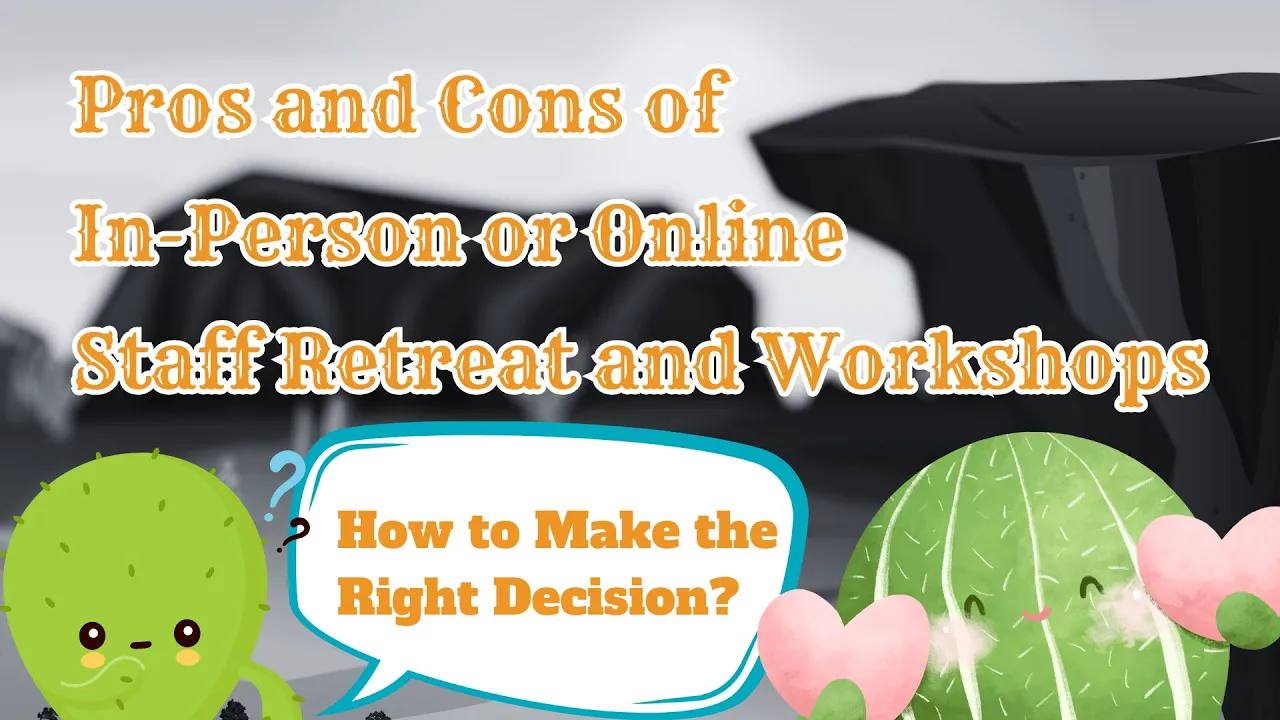
In-Person or Online Retreat? Key Questions to Guide Your Decision

In the modern business landscape, the decision between in-person or online staff retreats and workshops is more relevant than ever. Whether you’re a small business owner, a corporate leader, or a team manager, understanding the advantages and disadvantages of different facilitation methods is essential. Let’s explore the pros and cons of online, in-person, and hybrid retreats and workshops.

Questions for Consideration

Before diving into the specifics, ask yourself these crucial questions to better understand your needs: 

1️. What is the main purpose of the retreat or workshop? Is it to connect on a personal level, create a detailed work plan, or brainstorm innovative ideas? 

2️. What unique activities or exercises can you conduct in-person that might be challenging or impossible online? Conversely, are there virtual tools or methods that can’t be replicated in a physical setting? 

3️. What does your budget allow for? Consider costs related to travel, venue, technology, and facilitation. 

4. How do you envision attendance and participation? Would an in-person event lead to higher engagement, or would an online format allow for broader participation?

With these questions in mind, let’s explore the pros and cons of online, in-person, and hybrid retreats and workshops.

Online Retreats and Workshops: The Future of Collaboration

Pros:

  • Cost-Effective: Save on travel and venue expenses.
  • Global Reach: Include team members from all over the world.
  • High Capacity: More attendees without space constraints.
  • Record & Replay: Record sessions for future reference.
  • Efficiency: Less transition time between activities.
  • Engagement Tools: Utilize chat, polling, games, and more.
  • Inclusivity: Ideal for those who prefer not to speak aloud.
  • Accessibility: Enhanced tools for viewing slides and presentations.
  • Quick Grouping: Faster to assign participants to breakout sessions.

Cons:

  • Limited Physical Interaction: Some exercises may not be feasible.
  • Distractions: Easier for attendees to multitask.
  • Tech Challenges: Varying proficiency and potential tech issues.
  • Engagement Design: Requires careful planning for virtual participation.
  • Audience Dynamics: Larger groups may limit individual interaction.
  • Expertise Needed: A facilitator skilled in virtual environments is essential.

In-Person Retreats and Workshops: The Human Touch

Pros:

  • Physical Activities: Enables hands-on exercises and activities.
  • Human Connection: Opportunities for small talk and bonding.
  • Mood Gauge: Easier to sense the audience’s feelings.
  • Adaptability: Quick adjustments to the flow and structure.
  • Tangible Tools: Whiteboarding and sticky exercises are more straightforward.

Cons:

  • Space Limitations: Venue size dictates participant count.
  • Higher Costs: Venue, travel, and accommodation expenses.
  • Travel Constraints: Potential challenges for distant team members.
  • Environmental Concerns: Travel may not be eco-friendly.
  • Health Risks: Potential exposure to illnesses.

Hybrid Retreats and Workshops: A Balanced Approach

Pros:

  • Inclusivity: Combines online and offline participation.
  • Accessibility: Meets diverse needs of participants.

Cons:

  • Isolation Risk: Remote participants may feel left out.
  • Additional Costs: Requires extra tech or facilitation.
  • Varied Experience: Can lead to inconsistent participant experiences.

Conclusion

Choosing the right format for your staff retreats and workshops requires a thoughtful analysis of your team’s needs, budget, and goals. By weighing the pros and cons of each method, you can make the right decision that fosters collaboration, creativity, and connection within your organization.

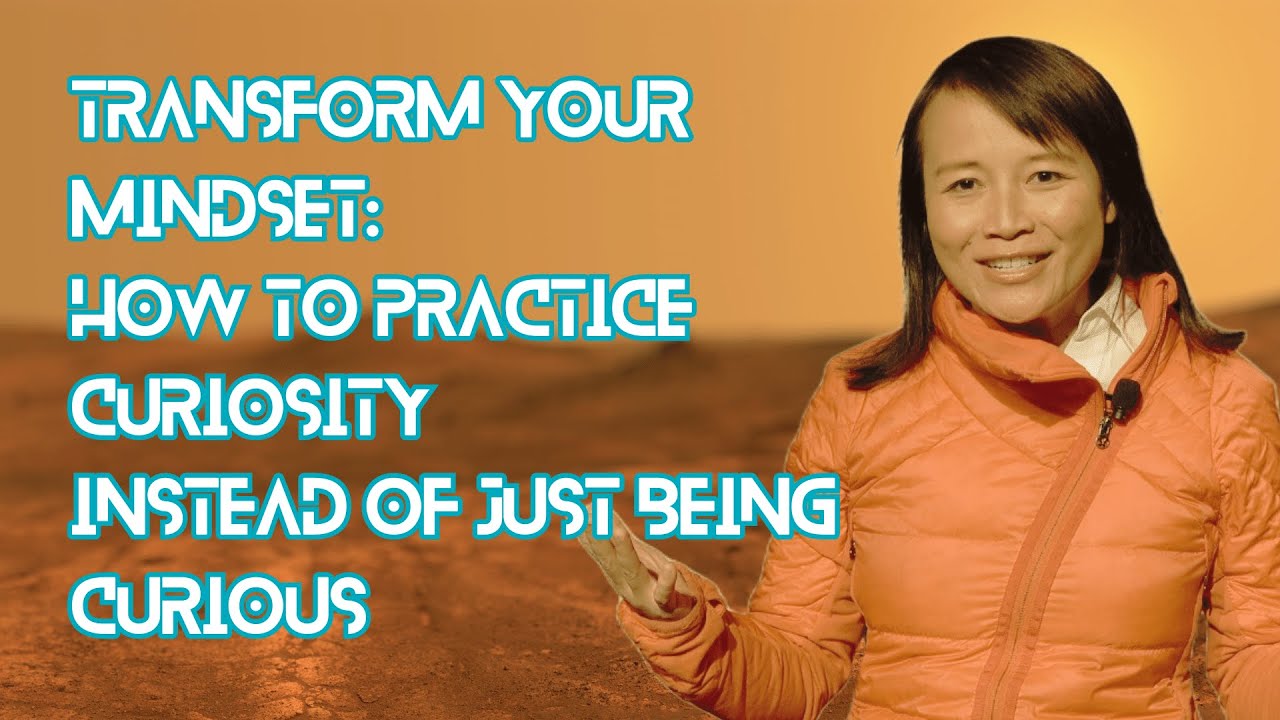
Curiosity: More Than Just a Trait, It’s a Practice

Curiosity – we often think of it as something innate, a trait you’re either born with or without. But what if I told you curiosity is more like meditation, a practice that can be honed and developed? Join me as we dive into the extraordinary world of curiosity, exploring how it can be cultivated, challenged, and used to enrich every aspect of our lives.

3 Situations to Practice Curiosity

  1. Learning Something New: When I explore new subjects and ideas, curiosity guides me to understand different perspectives and trying new things, even when I’m outside my comfort zone.
  2. Not Having Expectations Met: Life has taught me that things don’t always go as planned. When this happens, practicing curiosity helps me be open to things I didn’t expect. 
  3. Disagreeing with Someone: I’ve found that disagreements can be hard, but they are also opportunities to learn. By practicing curiosity, I’ve been able to listen deeply and wholly, build relationships and foster clear communication.

Two Essential Questions I Ask Myself

In my journey of practicing curiosity, I’ve come to realize that two questions consistently guide my thinking and interactions. These questions are foundational principles that shape my approach to learning, communication, and relationship-building.

  1. Do I want them to learn from me? Do I want them to be open to changing their mind to what I have to say?
  • This question challenges me to consider my intentions in a conversation or debate. Am I seeking to impose my views, or am I genuinely interested in fostering understanding? It reminds me that true dialogue requires openness and a willingness to influence and be influenced.
  1. Am I willing to learn from them? Am I open to possibly changing my mind based on what they have to say?
  • This second question is a mirror to the first, turning the focus inward. It prompts me to reflect on my own openness and willingness to learn from others. Am I entering a conversation with a fixed mindset, or am I prepared to grow and change my views based on new insights?

Why These Questions Matter

These questions are more than just rhetorical; they are tools for self-awareness and growth. They encourage me to:

  • Embrace Humility: Recognizing that I don’t have all the answers and that others may offer valuable perspectives.
  • Foster Genuine Dialogue: Creating a space where ideas can be shared and explored without judgment or defensiveness.
  • Cultivate Empathy: Understanding others’ viewpoints, even if I disagree, and finding common ground.
  • Enhance Learning: Opening myself to new ideas and allowing them to challenge and enrich my thinking.

By continually asking myself these questions, I’ve been able to deepen my practice of curiosity, engage more meaningfully with others, and enhance my personal and professional relationships. They are a compass that guides me towards a more thoughtful, empathetic, and curious way of living.

3 Elements I Focus on When Practicing Curiosity

  1. Self-awareness: Understanding my feelings, thoughts, and patterns has been the first step towards cultivating curiosity.
  2. Relationship Building: Connecting with others and letting them get curious about me has fostered a sense of community and shared learning.
  3. Clear Communication: Listening to understand, asking questions when I don’t understand, and sharing my own specific examples and stories.  Asking questions with curiosity and listening actively has helped me explore new ideas and understand different viewpoints.

Conclusion

Practicing curiosity is not just a skill; it’s a way of life for me. It’s about being open to change, exploring new ideas, and building relationships. I also admit that there are times when I don’t practice curiosity because it can be so difficult and my emotions get in the way.  I hope my insights into practicing curiosity can be a guide to anyone looking to enhance their personal and professional life.

Promote Professional Development in the Workplace: 7 Free Strategies! 

7 Free Professional Development Strategies for the Workplace

In the quest to foster growth and improve productivity, many companies overlook the power of professional development. Yet, offering opportunities to learn and grow benefits both employees and organizations. Below are seven free, but highly effective, strategies to promote professional development in the workplace.

1. In-House Knowledge Sharing

Leverage the expertise within your team. By encouraging employees to share knowledge during lunch-and-learn sessions or internal workshops, you not only create a culture of continuous learning but also give employees leadership opportunities. For instance, a session on basic Excel skills can dramatically boost efficiency for those unfamiliar with the tool.

2. Knowledge Exchanges

Create a platform where employees can share favorite tech hacks and productivity tips. At CuriosityBased, we recently held a session where one employee demonstrated how to use mail merge and “snooze” in email, while another showcased the benefits of using ChatGPT. Consequently, these peer-led exchanges can lead to surprising improvements in efficiency.

3. Practice Time

Allocate dedicated time for employees to practice new skills together. For example, after an elevator pitch training session, the following meeting could be devoted to practicing in front of colleagues. As a result, this simple strategy can lead to major improvements in public speaking and confidence.

4. Mentoring Programs

Establish mentoring programs within your company. When employees are paired intentionally, both the mentor and mentee benefit. Furthermore, consider reverse mentoring, where junior employees coach senior staff on emerging trends or technologies. Recognition for participants reinforces the value of the program.

5. Lending Library

Set up a lending library where employees can share professional development books, articles, and resources they’ve found useful. This trust-based system encourages collaboration and, over time, contributes to meaningful professional growth.

6. Pro Bono Coaching

Many individuals pursuing executive or leadership coaching certifications must complete pro bono hours. By connecting with them, your employees can access professional coaching at no cost. This approach creates a win-win: coaches gain experience, while employees receive valuable guidance.

7. Volunteer Experts

Invite volunteer experts to speak and share their knowledge. For instance, we once hosted a Toastmasters champion who offered practical tips on delivering an effective elevator pitch. Such sessions provide fresh perspectives and can inspire employees to elevate their skills.

Professional development doesn’t have to strain budgets. With creativity and intentionality, these seven free strategies can cultivate learning, build stronger teams, and significantly improve workplace productivity. By embracing these approaches, organizations show commitment to growth and demonstrate curiosity in action.

Practicing Curiosity: How to Ask Questions at Work Without Fear

8 Common Fears That Stop People From Asking Questions at Work

Many people struggle with practicing curiosity, especially when it comes to asking questions in the workplace. Leaders need to understand what prevents employees from asking before they can foster a culture of curiosity. Often, it is fear. Employees hesitate to ask clarifying questions like “What does that acronym mean?”, “Could you explain why we’re taking this approach?”, or “What do you mean by that?” because of how they worry others will perceive them.

Based on insights from hundreds of workshop participants and audience members, I’ve identified eight common fears that stop people from asking questions at work—and how to reframe them safely.

1. Fear of Appearing Inattentive or Unprepared

  • Concern: People worry that their lack of knowledge suggests they weren’t listening or didn’t prepare.
  • Reframe: “I apologize if this was addressed earlier and I missed it. Could you please clarify (insert question)?”

2. Fear of Being Perceived as a Time-Waster

  • Concern: Employees fear that asking questions will slow down the meeting or disrupt the flow.
  • Reframe: “Could you please explain what (insert question) means? I want to ensure I fully understand.”

3. Fear of Appearing Incompetent

  • Concern: People worry that admitting they don’t know something will make others doubt their ability.
  • Reframe: “I know I should probably know this, but I’m still not clear. Could you please explain (insert question)?”

4. Fear of Reflecting Poorly on a Manager or Team

  • Concern: Employees fear that admitting uncertainty will make their manager or team look unprepared.
  • Reframe: “My team and I had a productive conversation on this. I’d like to ask a clarifying question: (insert question).”

5. Fear of Sounding Confrontational

  • Concern: People worry their question will come across as a challenge, especially to authority figures.
  • Reframe: “I appreciate your perspective and want to understand it better. Please don’t take this as a challenge. (Insert question).”

6. Fear of Appearing Passive

  • Concern: Employees believe others expect them to state opinions, not ask questions. They worry questions make them look indirect.
  • Reframe: “I’m still processing this matter. Could you clarify (insert question)?”

7. Fear of Seeming Indecisive

  • Concern: Asking questions may make people worry they’ll be seen as unable to make decisions.
  • Reframe: “I need more information before making a decision. Could you explain (insert question)?”

8. Fear of Discouragement From Past Experiences

  • Concern: Employees may have asked many questions before and felt discouraged. That hesitation lingers.
  • Reframe: “I know I ask a lot of questions, so please let me know if you’d prefer me to save this for later. (Insert question).”

Final Thoughts

Curiosity thrives in environments where questions are welcomed, not dismissed. By recognizing these fears and reframing your approach, you can ask with confidence, gain clarity, and strengthen workplace communication.

Which of these fears do you recognize in yourself? Share your thoughts in the comments. If this post helped you, please pass it along to a friend or share it on social media.

You can read the complete version of this article on my LinkedIn newsletter.