banner

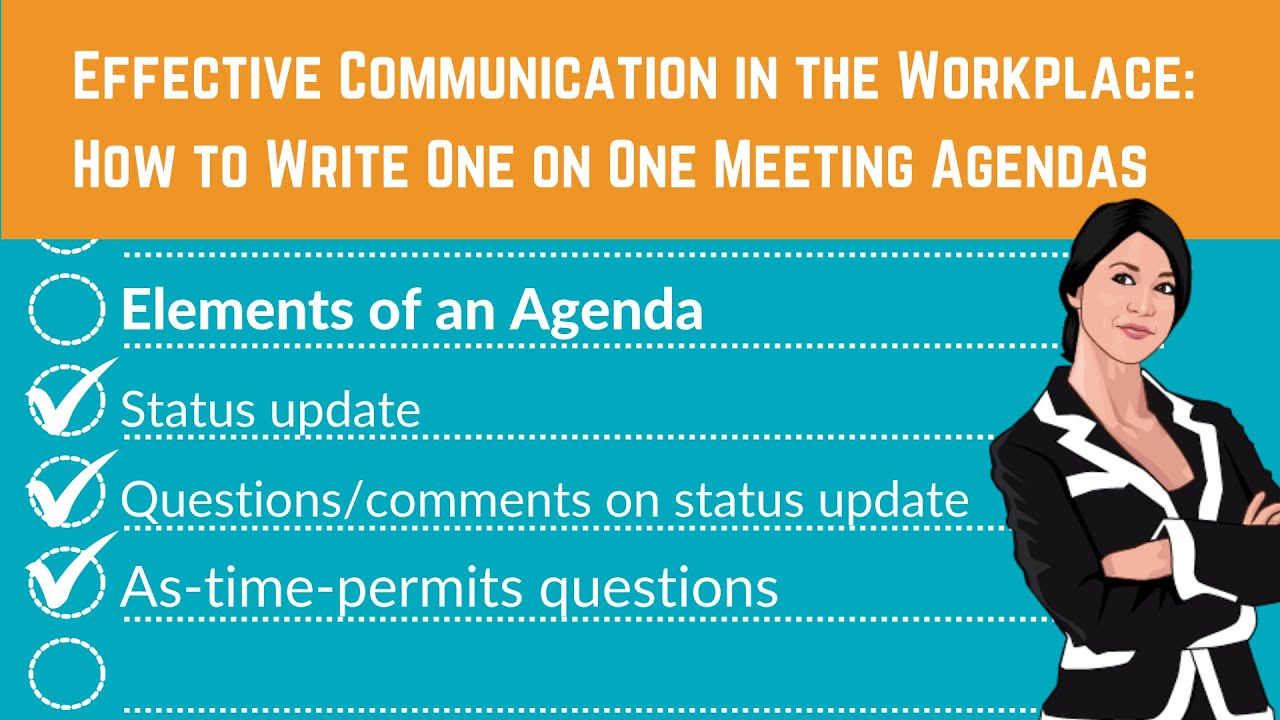
Effective Communication at Work: One-on-One Meeting Agendas

How to Craft an Effective Agenda for One-on-One (1:1) Meetings

Effective communication in the workplace is essential, especially during one-on-one (1:1) meetings between managers and team members. These meetings are opportunities to foster productivity, clarify goals, and build stronger working relationships. However, without a structured agenda, a 1:1 meeting can easily lose focus. Here’s how to craft one-on-one meeting agendas to make your 1:1 meetings more productive and impactful.

A) Start with a Status Update

Kick off the meeting with a status update to set the tone for the conversation. This demonstrates that you’re organized and prepared. Organize your tasks into three categories:

  • Backlog/Not Yet Started
  • In Progress
  • Finalizing

This simple structure makes it easier to track progress, identify areas that need attention, and keep the discussion on track.

B) Questions and Comments on Status Update

After the status update, dive into specific questions or comments related to your progress. Use this time to address any current challenges or roadblocks you’re facing. For example, if you’ve encountered a problem with code, ask, “Who can assist with code-related issues?” Or if you’re planning an event, inquire, “Are there any dietary restrictions, or should I survey the guests?”

Additionally, share your discoveries and challenges:

  • “Here’s what I found…”
  • “I could use some help with…”
  • “This is how I plan to apply what I’ve learned toward my goals…”

This allows for open communication and collaboration, ensuring any issues are resolved promptly.

C) Seek Feedback for Improvement

This section is crucial for personal and professional growth. Ask for feedback to ensure you’re meeting expectations and identify areas for improvement:

  • “Am I meeting expectations?”
  • “What can I improve?”

This helps foster a culture of continuous improvement, making it easier to align with team goals and organizational standards.

D) As-Time-Permits Questions

If there’s still time left in the meeting, use it to explore broader or open-ended questions. These can be questions you’ve prepared in advance for a deeper discussion. Examples include:

  • “Why do we approach this task in this particular way?”
  • “Considering today’s discussion, how should I approach similar tasks in the future?”

These questions encourage a reflective discussion that can lead to deeper insights and better decision-making.

This agenda structure is more than just a guideline; it’s a tool to facilitate engaging, insightful dialogues tailored to your professional growth. It aims to maximize every moment of the 1:1 meeting, turning the interaction into a platform for better understanding and actionable insights. As you prepare for your next 1:1, a well-crafted agenda will be your stepping stone towards a more meaningful and productive discussion.


How to Be Proactive at Work

Being proactive is more than just taking the initiative. It reflects a deep-rooted care for your work, your teammates, and the overarching success of your organization. Especially for individuals new to a team or the workforce, sh14 Actionable Tips to Be More Proactive at Work and Boost Your Career

Being proactive isn’t just about taking the initiative—it’s about demonstrating a deep care for your work, teammates, and the overall success of your organization. For those new to a team or the workforce, adopting a proactive attitude is a gateway to growth and career stability. However, it’s equally important for seasoned employees, especially during times of organizational shifts or potential layoffs. Being perceived as a proactive asset can significantly enhance job security and make you an invaluable member of your team.

If you’re on a performance improvement plan, these tips can help shift perceptions and show your commitment to enhancing productivity and collaboration. By embodying proactivity, you demonstrate your genuine care for your work and your desire to contribute to your organization’s success.

Here are 14 actionable tips to help you be more proactive at work:

1. Prepare for Your Meetings

Thoroughly review pre-reads, previous meeting notes, and the agenda. This shows that you’re prepared and ready to contribute, earning the respect of the meeting organizer and making you a valuable participant.

2. Volunteer as the Note-Taker

Taking notes isn’t just a task; it’s an opportunity to show attentiveness. By volunteering, you demonstrate care and attention to detail, becoming a resource for your team.

3. Ask Clarifying Questions

By asking insightful questions, you show attentiveness and help improve clarity for everyone in the meeting. This fosters a productive, collaborative environment where everyone is on the same page.

4. Confirm Understanding

After key points are made, paraphrase them and seek confirmation. This ensures that there are no misunderstandings and shows your commitment to ensuring clarity for yourself and others.

5. Get to Know Your Team

Building strong professional relationships is essential. Take time to learn your team’s preferences, priorities, and challenges. This will help you collaborate better and foster a supportive work environment.

6. Shadow Another Team

Expand your understanding of the organization by shadowing other teams. This broadens your perspective, fosters cross-functional knowledge, and helps you contribute to the organization’s overall success.

7. Network Across Departments

Especially during organizational changes, networking across departments is crucial. Cultivating relationships across teams ensures you have advocates and collaborators throughout the company.

8. Reschedule Canceled Meetings

When a meeting gets canceled, take the initiative to reschedule. This shows that regular interactions matter to you and that you’re committed to staying engaged and visible.

9. Offer Solutions, Not Just Problems

Instead of simply pointing out issues, focus on proposing solutions. Being a problem-solver makes you more valuable to your team and demonstrates a proactive mindset.

10. Do Additional Research

Show your interest in your work by conducting research on topics relevant to your role or your manager’s interests. Sharing your findings demonstrates initiative and a willingness to go above and beyond.

11. Mention Your Work

Keep people updated on your projects, especially when you accomplish something significant. Regularly sharing your progress ensures your hard work is recognized.

12. Show Your Ambition

Align your daily tasks with your long-term career goals. Demonstrating how your work ties into your career growth shows that you’re committed to the future and continuously striving for success.

13. Take Charge of Your Learning

Show initiative by suggesting books, courses, or learning opportunities to your manager. This demonstrates a keen interest in developing your skills and growing professionally.

14. Advocate for Yourself

Constructively express concerns and offer potential solutions. Advocating for yourself in a positive, solution-oriented way shows maturity, initiative, and a commitment to making the workplace better for everyone.

For a more detailed exploration of these strategies, watch our informative video and check out some of our other resources.

Managing Up: Smart Questions to Ask Your New Boss

StartingManaging Up: Essential Questions to Ask Your New Boss

Starting a new job or working under a new manager can be both exciting and nerve-wracking. One of the best ways to ease into your new role and build a strong relationship with your boss is by asking the right questions. In this blog post, I’ll guide you through managing up by suggesting key questions to ask your new boss. These questions aren’t just random—they are strategic tools designed to help you understand your manager’s expectations, align your goals, and foster effective communication.

Basic Get-to-Know-You Questions

Let’s start with the basics. These questions help you understand your manager’s communication style and expectations. Here’s why they matter:

1. How long have you been with the company?

Why ask: Knowing your boss’s tenure gives you insights into their experience and understanding of the company culture. This helps you understand their perspective and how they might approach challenges.

2. What do you like most about your job?

Why ask: Understanding what motivates your manager will help you align your contributions with what drives them. This insight can help you better support their goals.

3. What do you find most challenging about your job?

Why ask: Knowing what challenges your boss faces provides an opportunity for you to become a problem-solver on your team. It shows initiative and a willingness to help.

4. What are the main responsibilities of our team?

Why ask: This question sets the stage for understanding what is expected from the team as a whole, ensuring you align your work with team goals.

5. What are my main responsibilities on our team?

Why ask: Clarifying your role helps you focus on what truly matters, ensuring you’re aligned with your manager’s expectations.

6. How do you see me supporting our team’s objectives?

Why ask: This question ensures your actions align with your manager’s goals. It shows initiative and a commitment to contributing to team success.

Going Deeper: Questions for Alignment

Once you’ve established the basics, it’s time to dig deeper. These questions help you understand your manager’s goals, values, and priorities:

7. How have past career experiences influenced what you do today?

Why ask: Understanding how your manager’s career experiences shape their decision-making provides valuable context for how they approach their role and guide the team.

8. What do you value most (personally and professionally)?

Why ask: Knowing what your manager values can help guide your actions and decisions, ensuring you contribute in a way that aligns with their priorities.

9. What are you ultimately trying to accomplish at this organization?

Why ask: This question helps you align your goals with your manager’s long-term vision for the organization. It gives you clarity on how your role fits into the bigger picture.

10. How can I support your vision?

Why ask: This shows your willingness to be a team player and contribute to shared goals. It also positions you as someone eager to help your manager succeed.

Conclusion: Building a Strong Relationship Through Effective Communication

Asking the right questions isn’t just about gathering information; it’s about building a strong relationship with your new boss. By asking thoughtful questions, you show initiative, curiosity, and a genuine desire to align with your manager’s expectations and the organization’s objectives. The more you understand your manager’s values and goals, the more effectively you can contribute to team success and grow in your role.

Mastering Workplace Communication with Effective Verbal Skills

The Four Pillars of Effective Verbal Communication

Over the years, I’ve seen that the foundation of every strong professional relationship is effective verbal communication. It is, in fact, one of the three essential elements of practicing curiosity: self-awareness, relationship-building, and clear communication. Because misunderstandings in the workplace happen frequently—and can be costly both in resources and relationships—it is critical to communicate with clarity and purpose.

That’s why I want to share a structured approach that has been a game-changer in my professional journey: The Four Pillars of Effective Communication.

Why a Structure Matters

When you need to raise a difficult topic at work, the natural impulse is to over-explain. Many people give long introductions, adding multiple layers of context, and end up burying their main point. By contrast, a simple four-step framework keeps your message focused, concise, and impactful.

The Four Pillars of Effective Communication

  1. The Point: Begin with your main idea or question. This is the heart of your message. Aim to state it in fewer than 10 words.
  2. Context: Next, set the stage by reminding your listener of the background or your role in the issue.
  3. Significance: Then, explain why you’re raising the issue now. Highlight its urgency or importance.
  4. Possible Consequence: Finally, outline what might happen if the issue is not addressed. Showing consequences clarifies the stakes and encourages action.

Applying the Pillars in Real-World Scenarios

  • Team Priorities
    • The Point: I need clarity on our team’s priorities.
    • Context: I’m shaping our project plan around them.
    • Significance: A clear plan prevents confusion.
    • Possible Consequence: Ambiguity will hurt productivity.
  • Project Timelines
    • The Point: I think we should request an extension.
    • Context: Delays from another team pushed back our schedule.
    • Significance: Our client expects quality results.
    • Possible Consequence: Rushing may compromise quality.
  • Resource Allocation
    • The Point: We need additional support for this project.
    • Context: Right now, I’m the only contributor.
    • Significance: Timely delivery is critical to our client.
    • Possible Consequence: Missing the deadline could damage trust.

Effective verbal communication is both an art and a science. By practicing this four-pillar strategy, you’ll deliver messages that are clear, actionable, and respected. In professional relationships, where curiosity and clarity matter most, every conversation is an opportunity to build trust and drive results.