banner

131 Leadership Books Written by Hispanic/Latino/Latinx Authors 2024

We created this list of 131 Leadership Books Written by Hispanic/Latino/Latinx Authors to promote leadership narratives written by the Hispanic/Latino/Latinx community. This list is meant to be a resource, not an official endorsement. The books are not ranked or listed in any particular order.

  1. Me by Ricky Martin
  2. And A Voice to Sing With: A Memoir by Joan Baez
  3. The Gloria Anzaldúa Reader (Latin America Otherwise) by Gloria Anzaldúa
  4. Borderlands / La Frontera: The New Mestiza by Gloria Anzaldúa
  5. Almost a Woman by Esmeralda Santiago
  6. In the Time of the Butterflies by Julie Alvarez
  7. Farmworker’s Daughter: Growing up Mexican American by Rose Castillo Guilbault
  8. The Power of Latino Leadership: Culture, Inclusion, and Contribution by Juana Bordas
  9. When I was Puerto Rican by Esmeralda Santiago
  10. Salsa, Soul, and Spirit: Leadership for a Multicultural Age by Juana Bordas
  11. Autentíco: The definitive guide to Latino Career Success by Robert Rodriguez
  12. Brown Church: Five Centuries of Latina/o Social Justice, Theology, and Identity by Robert Chao Romero
  13. Hermanas: Deepening Our Identity and Growing Our Influence by Natalia Kohn Rivera
  14. Isabel’s Hand-Me-Down Dreams by Isabel Lopez
  15. Leaving Little Havana: A Memoir of Miami’s Cuban Ghetto by Cecilia M. Fernandez
  16. Gmorning, Gnight!: Little Pep Talks for Me & You by Lin-Manuel Miranda
  17. [Un]framing the “Bad Woman”:Sor Juana, Malinche, Coylxauhqui, and other rebels with a cause by Alicia Gaspar de Alba
  18. Always Running: La Vida Loca – Gang Days in L.A. by Luis J. Rodriguez
  19. Cruz: A Cross-Border Memoir by Jean Guerrero
  20. Dear America: Notes of an Undocumented Citizen by Jose Antonio Vargas
  21. Undocumented: A Dominican Boy’s Odyssey from a Homeless Shelter to the Ivy League by Dan-el Padilla Peralta
  22. The Far Away Brothers: Two Young Migrants and the Making of an American Life by Lauren Markham
  23. My Beloved World by Sonia Sotomayor
  24. Latina Empowerment Through Leadership: Mindful Stories from Inspiring Women by Catherine Munos Garces, Monica Rivera, et al
  25. An Organizer’s Tale by Cesar Chavez
  26. My Time to Speak: Reclaiming Ancestry and Confronting Race by Ilia Calederon
  27. Rita Moreno: A Memoir by Rita Moreno
  28. American Poison: How Racial Hostility Destroyed Our Promise by Eduardo Porter
  29. My (Underground) American Dream: My True Story as an Undocumented Immigrant Who Became a Wall Street Executive by Julissa Arce
  30. The Virtuous Circle: Restore Your Confidence, Bounce Back, and Emerge Stronger by Gaby Natale
  31. Self Made: Become Empowered, Self Reliant and Rich in Every Way by Nely Galán
  32. Latino Leaders Speak: Personal Stories of Struggle and Triumph edited by Micky Ibarra and Maria Pérez-Brown
  33. Leapfrog: The New Revolution for Women Entrepreneurs by Nathalie Molina Niño
  34. The Soul of a Woman by Isabel Allende
  35. In the Dream House: A Memoir by Carmen Maria Machado
  36. Once I was You: A Memoir of Love and Hate in a Torn America by María Hinojosa
  37. More than Ready: Be Strong and Be You…and Other Lessons for Women of Color on the Rise by Cecilia Muñoz
  38. Perfectly You: Embracing the Power of Being Real by Mariana Atencio
  39. Take Charge of Your Brand: Quick and Simple Techniques to Help You Own and Manage Your Personal Brand for Professional and Personal Success by Guisselle Nuñez
  40. In the Country We Love: My Family Divided by Diane Guerrero
  41. Frida by Barbara Mujica
  42. Finding Latinx: In Search of the Voices Redefining Latino Identity by Paolo Ramos
  43. The Undocumented Americans by Karla Conejo Villavicenci
  44. AOC: The Fearless Rise and Powerful Resonance of Alexandria Ocasio-Cortes by Lynda Lopez
  45. Latinx: The New Force in American Politics by Ed Morales
  46. Mexican Enough: My Life Between the Borderlines by Stephanie Elizondo Griest
  47. Being Brown: Sonia Sotomayer and the Latino Question by Lázaro Lima
  48. An Unlikely Journey: Waking up from My American Dream by Julián Castro
  49. Hispanic Women Seeking Higher Leadership Roles in Business by Sylvia C. Motta, PhD
  50. Wild Tongues Can’t be Tamed: 15 Voices from the Latinx Diaspora edited by Saraciea J. Fennell
  51. The Leadership Shift: The Strategic Positioning of Latino Business Leaders by Dr. Nilda Perez
  52. ¡Rise up, Mi Gente! A Roadmap for Latinos to Achieve Success in Corporate America by Jesse A Mejia
  53. Inventing Latinos: A New Story of American Racism by Laura E. Gómez
  54. The 5 Disciplines of Inclusive Leaders: Unleashing the Power of Us All coauthored by Andrés Tapia
  55. When We Make It by Elisabeth Velasquez
  56. I am Not Your Perfect Mexican Daughter by Erika L. Sanchéz
  57. Latino Talent: Effective Strategies to Recruit, Retain, and Develop Hispanic Professionals by Robert Rodriguez
  58. Silencing Gender, Age, Ethnicity, and Cultural Biases in Leadership by Camilla A. Montoya, Julieta V. García. et al.
  59. Inclusion Revolution: The Essential Guide to Dismantling Racial Inequity in the Workplace by Daisy Auger-Dominguez
  60. Latinas Rising Up in HR: Inspirational Stories of Human Resources Professional Leading, Thriving, and Breaking Barriers by Priscilla Guasso
  61. The Secret Principles of Genius: The Key to Unlocking Your Hidden Genius Potential by I.C. Robledo
  62. I Got This: To Gold and Beyond by Lauren Hernandez
  63. The Engine of America: The Secrets to Small Business Success from Entrepreneurs Who Have Made It by Jane Delgado
  64. The Latina Guide to Health: Consejos and Caring Answers by Jane Delgado
  65. Field Mice: Memoirs of a Migrant Child by Emma Gonzalez
  66. Los Amos del Mundo Están al Acecho by Cristina Martin Jimenez
  67. Growing American Roots by Bob Menendez
  68. Dream in Color: How the Sánchez Sisters are Making History in Congress by Linda Sánchez
  69. Healing Journey: Surviving Domestic Violence by Lupe Valdez
  70. La Nueva California: Latinos from Pioneers to Post-Millennials by David Hayes-Bautista
  71. El Cinco de Mayo: An American Tradition by David Hayes-Bautista
  72. Latinas in Aviation by Jacqueline S. Ruiz
  73. Becoming Dr. Q: My Journey from a Migrant Farm Worker to brain Surgeon by Alfredo Quinones-Hinjosa
  74. The Universal Tone: Bringing My Story to Light by Carlos Santana
  75. Take a Stand: Lessons from Rebels by Jorge Ramos
  76. The Injustice Never Leaves You: Anti-Mexican Violence in Texas by Monica Muñoz Martinez
  77. Powerhouse Principles: The Ultimate Blueprint for Real Estate Success in an Ever-Changing Market by Jorge Perez
  78. The Buena Salud Guide to Understanding Depression and Enjoying Life by Jane Delgado
  79. Leadership Lessons of the White House Fellows: Learn How to Inspire Others, Achieve Greatness , and Find Success in Any Organization by Charles P. Garcia
  80. Persevere with Power: What Heaven Starts, Hell Cannot Stop by Samuel Rodriguez
  81. In Defense of Our America: The Fight for Civil Liberties in the Age of Terror by Anthony D. Romero
  82. One Vote Away: How a Single Supreme Court Seat Can Change History by Ted Cruz
  83. Still Dreaming: My Journey from the Barrio to Capitol Hill by Luis Gutiérrez
  84. An American Son: A Memoir by Marco Rubio
  85. The Undocumented Americans by Karla Cornejo Villavicencio
  86. A House of My Own: Stories from My Life by Sandra Cisneros
  87. Spirit Run: A 6000 Mile Marathon Through America’s Stolen Land by Noe Alvarez
  88. Dirty Girls Social Club by Alisa Valdes-Rodriguez
  89. Woven in Moonlight by Isabel Ibañez
  90. The Latino Advantage in the Workplace by Mariela Dabbah and Arturo Poiré
  91. Dream Big by Deborah Rosado Shaw
  92. Youth, Identity, Power: The Chicano Movement by Carlos Munoz Jr.
  93. Mean by Myriam Gurba
  94. Presumed Incompetent: The Intersections of Race and Class for Women in Academia by Gabriella Gutiérrez y Muhs, Yolanda Flores Niemann, and Carmen G. González
  95. Enrique’s Journey: The Story of a Boy’s Dangerous Odyssey to Reunite with his Mother by Sonia Nazarrio
  96. A Passion for Politics (Mission Bells) by Anita Perez Ferguson
  97. Latinos in American Society: Families and Communities in Transition by Dr. Ruth Enid Zambrana
  98. Journey to the Future: A Roadmap for Success for Youth by Ltc. Consuelo Castillo Kickbusch
  99. Homeless my Choice by Roy Juarez Jr.
  100. The Story of Latinos and Education in American History by Dr. Abdín Noboa-Ríos
  101. A Long Petal of the Sea by Isabel Allende
  102. The Deepest Roots: Finding Food and Community on a Pacific Northwest Island by Kathleen Alcalá
  103. Más Allá de la Justicia by Maria de lourdes Victoria
  104. The Likeability Trap: How to Break Free and Succeed as You Are by Alicia Menendez
  105. Ready, Set, Manifest!: A Handbook for the In-betweens and Leaps in Life by Debbie Lacey
  106. Hurdles in the Dark by Elvira K. Gonzalez
  107. In the Shadow of the Mountain: A Memoir of Courage by Silvia Vasquez-Lavado
  108. Through the Dark by Yolanda Nava
  109. Thriving in the Fight: A Survival Manual for Latinas on the Front Lines of Change by Denise Padin Collazo
  110. Justice & Space Matter in a Strong, Unified Latino Community by Kathy Bussert-Web, Maria Eugenia Diaz, Krystal A Yanez
  111. Breaking Ground and Barriers: Hispanic Women Developing Effective Leadership by Gloria Bonilla-Santiago, Ph.D.
  112. Latinization and the Latino Leader: How to Value, Develop, and Advance Latino Professionals by Cristina Benitez & Marlene Gonzalez
  113. Latino and Latina Leaders of the 21st Century: Ordinary Beginnings, Extraordinary Outcomes by Kay (Kayla) S. Garcia
  114. Latina Empowerment Through Leadership: Mindful Stories from Inspiring Women by Catherine Munoz-Garces, Monica Rivera, Lizza Monet Morales, Celia Garcia, Veronica Corona, Maggie Antillon Mathews, Roxana Damas, and Jennifer Ibarra
  115. The More or Less Definitive Guide to Self Care by Anna Borges
  116. Act Like a Leader, Think Like a Leader by Hermina Ibarra
  117. You Don’t Have to Like Me: Essays on Growing Up, Speaking Out, and Finding Feminism by Alida Nugent
  118. Children of the Land: A Memoir by Marcelo Hernandez Castillo
  119. Wealth Warrior: 8 Steps for Communities of Color to Conquer the Stock Market by Linda Garcia
  120. Solito: A Memoir by Javier Zamora
  121. Living Beyond Borders: Growing Up Mexican in America by Margarita Longoria
  122. Chinoga: Owning Your Inner Badass for Healing and Justice by Alma Zaragoza-Petty
  123. A Woman of Endurance by Dahlma Llanos-Figueroa
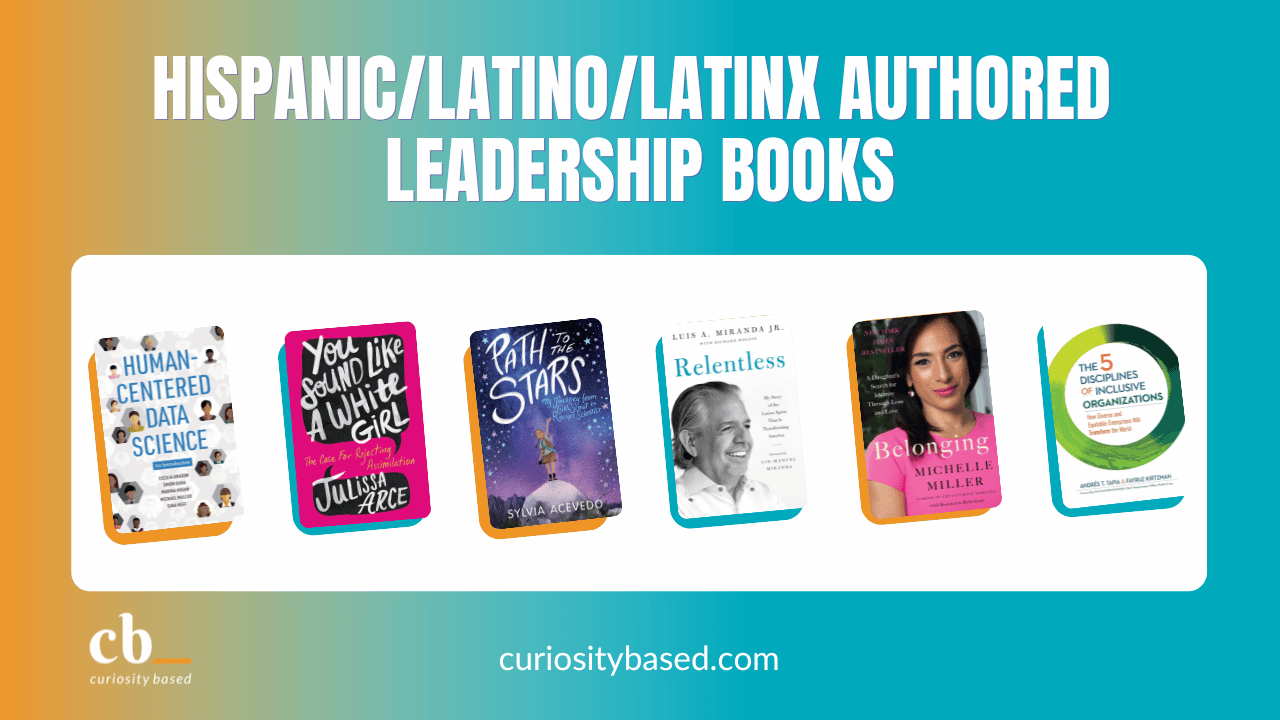
  124. Human-Centered Data Science: An Introduction by Cecilia Aragon
  125. In the Shadow of the Mountain: A Memoir of Courage by Silvia Vasquez-Lavado
  126. You Sound Like A White Girl: The Case for Rejecting Assimilation by Julissa Arce
  127. Path to the Stars: My Journey from Girl Scout to Rocket Scientist by Sylvia Acevedo
  128. Relentless: My Story of the Latino Spirit That Is Transforming America by Luis A. Miranda Jr.
  129. Mother Island: A Daughter Claims Puerto Rico by Jamie Figueroa
  130. Belonging: A Daughter’s Search for Identity Through Loss and Love by Michelle Miller
  131. The 5 Disciplines of Inclusive Organizations: How Diverse and Equitable Enterprises will Transform the World by Andrés T. Tapia, Fayruz Kirtzman

Why Learning Someone’s Intent Matters

When someone hurts, disappoints, or frustrates you, it’s easy to assume you know their intentions and motives. This assumption can prevent you from truly understanding their actual intentions and can lead to denial, passiveness, misunderstanding, and resentment. Taking the time to understand why learning someone’s intent matters allows you to build trust, foster empathy, and strengthen relationships.

Some people say, “Just assume good intent,” but this approach can sometimes hinder our efforts to understand the real intent behind someone’s actions. The difference between good and bad intent often depends on whether we like or trust the person involved.

For example, let’s consider Bob and John. If Bob, whom I like, uses a term I find hurtful, I might assume he had good intentions and choose not to address it. However, if John, whom I don’t like, uses the same term, I might assume he had bad intentions and complain about him to others. In both cases, I’m not making an effort to understand their actual intentions.

If I took the time to understand their intentions, I could deepen our relationships and learn from one another. Often, people aren’t aware of their own intentions and act automatically. Engaging in a conversation helps them become more self-aware and helps us understand our own reactions better.

To start understanding someone’s intentions, use clarifying questions. 

Here’s how to approach it:

  1. Recap the Situation: Explain what happened and how it affected you. It doesn’t matter if you assume their intentions are good or bad; the approach remains the same. For instance, you could say, “I noticed you used a term to describe Asians that I find hurtful due to its negative connotation.”
  2. Ask Clarifying Questions:
    • “Are you open to having a discussion about this?”
    • “I’d really like to understand where you learned that word.”
    • “I’d like to understand why you chose to use that word.”

Instead of reacting with anger or judgment, practice curiosity to better understand the person’s intentions.

I hope these strategies help you enhance your personal growth, emotional intelligence, and interpersonal skills. If so, please like it and share on social media.

How to Give Constructive Feedback More Effectively

How to Give Constructive Feedback with Curiosity: The CAFA Conversation Structure

Providing feedback is crucial for personal and professional development, but it can often be challenging. We’re often concerned about how the other person will react or whether they might become defensive. At CuriosityBased, we approach constructive feedback with curiosity. Our goal isn’t to change the person but to better understand their actions and help them see our perspective.

The CAFA Feedback Structure

At CuriosityBased, we use a simple conversation structure called CFA CAA. This framework helps ensure that feedback is specific, behavior-focused, and invites a productive conversation. CFA CAA stands for:

  • Context: Describe the situation.
  • Action: Explain what the person did.
  • Feeling: Share how their actions made you feel.
  • Ask: Pose questions to initiate a conversation and gain further understanding.

Example of Giving Constructive Feedback

Here’s an example of how to apply the CFA CAA structure:

  • Context: “I was giving a presentation.”
  • Action: “You were checking your phone the entire time.”
  • Feeling: “I felt self-conscious and insecure, worried that my presentation wasn’t engaging enough.”
  • Ask: “Did you realize you were checking your phone throughout? What did you think about my presentation? I know your mom is sick—were you checking in on her or waiting for an update?”

The “Ask” in CAFA is a key step. It’s about initiating a dialogue to better understand the other person’s actions. Asking, “Did you realize you were checking your phone?” helps ensure shared understanding of the behavior. Asking, “I know your mom is sick; were you checking in on her?” adds empathy and opens the door for deeper conversation.

Why Curiosity Matters in Feedback

By using the CAFA structure, you can foster a feedback environment where both parties feel heard and understood. Curiosity transforms feedback from a one-sided critique into a collaborative conversation that promotes growth and strengthens relationships.

By giving specific constructive feedback with the goal of understanding, you make the process less intimidating and model how to give feedback with curiosity. You can also check out our video on How to Give Positive Feedback More Effectively.

I hope you find these tips useful! If so, please like and share it.

How to Receive Feedback with Curiosity 

Receiving constructive feedback can be challenging. But approaching it with curiosity can transform the experience into a valuable learning opportunity. By applying curiosity to feedback, you can gain deeper insights, improve your performance, and build stronger relationships. 

Here are five ways you can practice curiosity to feedback both inwardly and outwardly:

1. Take Time to Process
Often, we react too quickly, either with immediate apologies or defensiveness. Instead, acknowledge the feedback with a simple “Thank you for the feedback. I need some time to think about this. Let me get back to you,” and specify when you’ll follow up. This shows that you’re not brushing off the feedback but need time to process it.

2. Recognize and Name Your Emotions
It’s important to identify and articulate the emotions you feel when receiving feedback. Whether you feel confused, surprised, hurt, angry, or frustrated, being able to name these emotions helps you practice inward curiosity before addressing them with others.

3. Ask Clarifying Questions
Once you’ve practiced inward curiosity, shift to outward curiosity. Ask the feedback provider for specific examples if none were given. Clarifying questions can help ensure you both understand the feedback in the same way and prevent miscommunication.

4. Understand the Impact
Determine whether the feedback pertains to one person or affects many. Understanding if your actions impact a single individual or a broader group can help you gauge the magnitude of the issue.

5. Explore the Emotional Impact on Others
Just as you experience emotions from receiving feedback, the feedback giver has their own emotional response. Prompt them by asking, “Did this make you feel angry, hurt, or confused?” This demonstrates emotional intelligence and active listening, and can help build deeper relationships.

By handling feedback with curiosity, you can turn it into an opportunity for self-improvement and growth. For more insights, check out my other video on how to respond to constructive feedback.

If you found these tips helpful, please like our post and share it.

Tips to Organize a Low Cost Team Retreat 

Setting aside time for a team retreat is crucial for boosting morale, employee engagement, and workplace culture. While there’s always the cost of employee time, event planning can also be expensive. 

Here are five tips on how you can organize an affordable team retreat:

Tip #1: Find a Free or Low-Cost Venue
Consider hosting the retreat at your own home. Or, if you have a team member with access to a condo building or community space, you might use their amenities room. You can also book a free space at your local library or community center. If you can offer something in exchange, like trade with an organization that has a nice office space, that’s another option. For example, one of our clients, a Performing Arts Center, traded tickets for office space to host their retreat.

Tip #2: Cook a Meal
Prepare a meal yourself instead of catering. This not only saves money but can also be a fun team-building activity. At CuriosityBased, we had a pizza-making competition that everyone enjoyed.

Tip #3: Use In-House Facilitation
Instead of hiring an outside facilitator, ask team members if anyone wants to lead different parts of the retreat. This approach helps build leadership skills and empowers team members. If you’re still considering whether to hire an outside facilitator, check out our video on Self-facilitate or Hire a Facilitator? 10 Key Questions to Guide Your Decision

Tip #4: Get a Volunteer Facilitator
You might be surprised by who’s willing to volunteer their time to facilitate your retreat. Volunteers could be looking to practice their skills, fulfill pro bono hours, or earn a good testimonial. Julie used to offer facilitation services for free early in her career when she was learning.

Tip #5: Use AI to Take Notes
Leverage technology to handle note-taking, so you don’t have to hire someone or assign a team member to the task. Make technology work for you.

These tips are geared towards in-person retreats. If you’re considering an online retreat, you can save even more money. For more guidance, check out our video on In-Person or Online Retreat: Making the Choice.

We hope you find these tips useful! If you found this video helpful, please like and share it.

Rubber Band Rule: Recognize when your boundaries are being pushed

Understanding the Rubber Band Rule: How to Recognize When Your Boundaries Are Being Pushed Too Far

Think of your boundaries as a rubber band. You might feel proud of how far you can stretch to accommodate others. However, if you stretch them too often, they can snap. We call this the Rubber Band Rule, which helps you recognize when your boundaries are stretched too thin.

4 Signs That Your Boundaries Are Being Pushed Too Far

Here are four clear signs that your boundaries are nearing their breaking point:

  1. Physical Symptoms
    You may notice physical discomfort, such as headaches or stomach aches. These symptoms often signal that your body is reacting to the strain on your boundaries.
  2. Emotional Symptoms
    When you start feeling anxious, depressed, or have low morale, it may mean your emotional boundaries are being tested. These feelings often occur when you overextend yourself without proper boundaries.
  3. Frequent Complaints
    If you catch yourself frequently complaining to others, it’s a clear sign that something isn’t right. Complaining often indicates frustration and a lack of boundaries.
  4. Resentment
    You might feel resentment toward all requests, even those you once found fulfilling. Resentment is a strong indicator that your boundaries have been pushed too far, and you need to reclaim them.

Protecting Your Boundaries

Recognizing these signs early helps you prevent your rubber band from snapping. By setting and respecting healthy boundaries, you protect your emotional and physical well-being. Practice recognizing when your limits are being tested, and take action to restore balance.event your rubber band from snapping. Setting clear, healthy boundaries is essential for maintaining your well-being and emotional health. Stay tuned for more tips on how to safeguard your personal boundaries and avoid burnout.

Knowing your limits is crucial. I hope you find this video helpful. If so, please like and share it!