5 Simple Ways to Build Strong Relationships at Work
Building strong relationships at work is essential for creating a positive environment and enhancing collaboration. Whether you’re new to your workplace or looking to deepen existing connections, Dr. Julie Pham shares these 5 simple ways to build strong relationships at work that will help foster a supportive and productive work atmosphere. These strategies are effective regardless of your role in the organization—whether you’re a leader, manager, or a team member.
5 Simple Ways to Build Strong Relationships at Work
1. Make Time for Connection
To strengthen your relationships, prioritize making time for connection. Ask open-ended questions instead of closed ones. For example, instead of asking, “How was your weekend?” you could ask, “What did you do over the weekend?” This encourages your colleagues to share specific experiences, fostering a more engaging conversation. For more tips on effective communication, check out our video on five proven icebreakers for team building.
2. Celebrate the Wins
It’s easy to get caught up in the daily grind, but don’t forget to celebrate your wins. Take the time to congratulate and acknowledge your colleagues for a job well done. Be specific in your praise, as this makes your acknowledgment more meaningful.
3. Ask for Help
Don’t hesitate to ask for help, especially from those who aren’t obligated to assist you. This can increase opportunities for collaboration and shows that you are willing to be vulnerable. It can be difficult to ask for help, but doing so can strengthen your relationships. For additional insights, check out our video on reframing asking for help as a way to deepen relationships.
4. Share What Influences You
Whenever relevant, share what influences your approach to work. For instance, you might say, “I grew up in an immigrant household where wasting resources was discouraged.” This context can help your team understand your perspective, especially during discussions like budgeting season.
5. Give Constructive Feedback
While it may seem counterintuitive, giving constructive feedback can actually strengthen relationships. When delivered with the intention of improvement, feedback shows that you care about your colleagues and want everyone to succeed.
We hope you find these tips helpful in building stronger relationships at work. If you did, please click like and share this post!
The Easy Guide to Hosting a Memorable Dinner Party
I love hosting dinner parties for people who don’t know each other and who I also might not know very well. This is a really great way to get to know people better, and to build new relationships
I define a dinner party that is limited to the number of people who can sit around one table. Otherwise, I think of it as just a party where dinner is served. I’ve been to dinner parties that are as large as 30 people around a cluster of tables and I’ve also been to dinner parties as small as three people.
Some people think you need to have a fancy home to host. You don’t. You just have to focus on giving people a memorable experience through what is shared. My preference is 6 to 8 people, which is the number of people who can sit around my dining room table.
Some people think that the food is the most important thing for a dinner party and I disagree. I think it’s actually the conversation and who you bring together. Before the pandemic, I hosted about 10-15 dinner parties with guests who didn’t know each other each year at my home.
The following advice is based on my experience, which is for a dinner party among acquaintances.
Brainstorm the invite list
The first priority for a dinner party is to figure out who you want to invite and think on why these people might have something in common that they will enjoy talking to one another about. Create a primary and secondary invite list.
Secure a time/date
Then think about the first 30 to 50 percent of guests who you definitely want to attend and find out their availability. Once you secure their availability, then start to reach out to other people on the list to see when they’re available. Now you may want to wait until everyone is available, but that can be really hard to do.
Send out your invites
It doesn’t matter if it’s email, text, or phone. Unless it’s a very special occasion, I wouldn’t invite via snail mail. I like to invite those on your primary list out 4-8 weeks ahead of time. Definitely let them know when you need to hear from them by. If people on your primary list don’t respond by the RSVP deadline, you can move on to ask those on your secondary list. Ask for dietary restrictions and accessibility needs. You might feel awkward asking people to bring things. Yet I find if I don’t specify, people will bring random things. So, I usually say, “No need to bring anything but if you would like to, a bottle of wine is appreciated.”
Create the menu based on dietary needs
I usually cook to save money. If you can afford to cater, go for it. I try, whenever possible, not to have to create multiple versions of menu items. So to simplify things, I’ll cook to accommodate whoever has the most dietary restrictions or do a mix of dishes. If someone’s vegan, the whole meal will be vegan.
Design discussion prompts
The worst dinner parties are when people are just talking in pairs around a dinner table. That’s not the point of bringing people together. Yet you have to be intentional about facilitating a conversation. So I like to have two rounds of prompts–a quick one and a deeper one.
Examples of quick openers: What’s the origin story behind your first name? What do you spend most of your time doing? What is one thing you’d like this group to know about you? And my personal favorite: What are three communities you belong to?
Examples of deep questions: What advice would you tell your 18 year old self? When is a time you’ve asked for help? Who is a role model in your life and why?
If there’s a common thread across the group, design some prompts that reflect that. I’ve often hosted dinner parties just for entrepreneurs. For the opener you could ask, “who is an entrepreneur you admire?” and for the deeper question, “What is something in your business that keeps you up at night?
Send out a reminder email 1 to 2 week before your dinner party
Let people know what to expect, including all the directions, the menu, and the prompt questions. This is also enough time to see if there are any drop offs. And you can remind them to tell you if they can’t make it after all
Enjoy the conversation!
Focus on bringing people together. Remember what Maya Angelou said, “I’ve learned that people will forget what you said, people will forget what you did, but people will never forget how you made them feel.” My dinner party twist on this is, “People will forget what you fed them, how you decorated, but they will never forget the dinner conversation.”
LinkedIn has been a game-changer for me, opening doors to countless professional opportunities and connections, and allowing me to trade ideas and resources with my network. But let’s be honest, with its vast user base comes an inevitable downside: the relentless wave of LinkedIn spam. From eager sales pitches to random connection requests, I’ve seen it all. If you’re active on LinkedIn, chances are that you’ve experienced this as well. Over time, I’ve developed some strategies to handle these with grace and poise. Here’s my personal guide to managing unsolicited, spammy requests and messages on LinkedIn.
Ignore the request: Ever received a connection request without any message? I get them all the time. If they didn’t take a moment to introduce themselves or give a reason for why they’d like to connect, I usually move on without feeling guilty.
Give a clear response to requests accompanied by messages: When a message accompanies a request, I give it a read. If it’s genuine, I’m all ears. Or if they’d like to connect to grow their network, I might say yes because it’s not hurting anyone and I’ve gained a connection.
Practice reciprocity: I occasionally get requests to follow someone’s page. If it resonates with my interests, I’m on board. But networking is about mutual growth, right? So I’ll usually ask them to follow my company page in return.
Respond with a question: Sometimes, I’m curious. Why did they reach out? Asking, “What about my profile stood out to you?” not only satisfies my curiosity but also helps me understand my online presence better. Oftentimes when I ask questions, they don’t respond at all.
Be direct about the sales pitch: If they’re giving you an offer that straight up sales pitch be direct about if you’re interested or not. It’s ok to politely decline. And while I”m at it, I might suggest they check out my company page. Who knows, they might find something they like or there could be an opportunity for us to connect in the future. To their sales pitch, you can say something like “No thank you. By the way, would you consider following my company page?”
Get clarity on their ask: Some messages are just… vague. I often get messages like “I have a podcast where I interview the best leaders” or “This service I offer has benefitted companies similar to yours”, without a clear proposition. In such cases, I ask outright “Are you asking me to be on your podcast?” or “Are you asking me to buy your service?”. It’s surprising how many times I don’t get a response.
Use it as an opportunity for mutual growth: If someone is keen on offering a service, I suggest a mutual learning call. We spend time understanding each other’s services. It’s less about purchasing and more about learning. Most of the time, people ignore the request, but I still feel good about responding in this way. In the few times people have said yes, I’ve gotten to learn about their services and industry and they ask me questions about mine, which has helped me get better at selling.
LinkedIn is a treasure trove of opportunities, but it’s essential to sift through the noise. With these strategies, I’ve managed to turn potential distractions into meaningful interactions. And who knows? The next random message might just be the opportunity you’ve been waiting for.
Building a strong professional network is crucial for career advancement and business growth. In this article, I will discuss two important categories of people to grow your professional network: peer mentors and referral partners.
Peer mentors are individuals with specific knowledge or expertise who can coach you, while you have different knowledge or expertise to offer in return.
Referral partners are valuable for sales roles and entrepreneurship, as they help each other find opportunities and expand their networks.
To increase your peer mentors and referral partners, follow these three steps:
Identify the people you want to connect with:
Consider individuals whom you believe you can add value to, and who can add value to you based on your own definition of “value.” You can connect with people through introductions from friends, engagement on social media, or virtual networking spaces such as breakout rooms. When approached to pitch a service, respond by suggesting a conversation to learn about each other’s offerings and potential customers, offering mutual advice.
Reach out:
This step is critical to expanding your network. If you’re good at starting conversations, make sure to follow up and pursue them actively. If reaching out with a cold call, take action rather than just planning. Use email or LinkedIn to send messages, including the following templates:
Peer mentoring:
“We met through this group/at this event, and I appreciated your insights on (fill in the blank). As you are an expert in (fill in the blank), I was wondering if I could seek your advice. I would be happy to share my expertise on (fill in the blank) and address any questions you may have. If you’re interested, let’s schedule a virtual meeting where we can help each other out.”
Referral partner call:
“While there are many things I do, there are also many things I don’t do. I always strive to be a resource for my clients, even if I’m not the solution provider. Would you be interested in a 30-minute call to learn about each other’s businesses and explore potential client referrals?”
Always include a scheduling tool to facilitate the next steps, as some recipients may immediately schedule the session.
Get what you need out of the call:
Don’t hesitate to be clear about your expectations regarding time and value sharing. If someone agrees to a call focused on sharing leads, they expect this arrangement. Clearly define the agenda for the call. After a brief introduction, divide the remaining time to address each person’s needs. Peer coaching calls can be 30-60 minutes, while referral partner calls can be 20-30 minutes. Stick to the intentions you expressed in your outreach message.
During the call, feel free to ask for what you need without hesitation. Use peer coaching calls for role-playing difficult conversations, getting feedback on presentations, or conducting user tests. Referral partner calls should primarily focus on understanding each other’s businesses and potential client referrals.
By following these steps and maintaining clear expectations, you can make the most out of your connections and build a strong network of peer mentors and referral partners.
Are you inspired to expand your network now? If this post was helpful, please share it with a friend or post it on social media. You can also check out these professional networking strategies to make any conversation more engaging.
5 Strategies to Reduce Stress at Networking Events
Even though I attend many networking events, they still make me nervous. Over time, I’ve found a few strategies that help me feel less stressed and more intentional. Here are five tricks to make networking events less stressful. These tips are ones I use myself, and they can help you approach networking with confidence.
1. Set a Realistic Goal
Don’t expect to make ten new friends at one event. That goal will likely leave you disappointed. Instead, I aim to meet one to three people I’d genuinely like to follow up with. This shift helps me focus on building quality relationships, not just chatting with as many people as possible.
2. Pretend You’re a Journalist
If talking about yourself feels intimidating, flip the script. Ask people questions, just as a journalist would. Most people enjoy sharing their stories. By approaching conversations this way, you’ll not only ease your nerves but also walk away with interesting insights.
3. Bring a Buddy
Invite a friend to attend the event with you. Agree to approach people together so that you both engage in conversations. The key is not to hide in the corner and only talk to each other. Having a buddy makes networking less intimidating, especially when you feel awkward standing alone.
4. Treat Conversations as Practice
Think of networking as practice, not performance. Each interaction is a chance to test new stories, jokes, or even your elevator pitch. Go in seeking feedback and accept whatever you get. With this mindset, every conversation becomes an opportunity to improve.
5. Remember You’re Not Alone
You may think you’re the only one feeling stressed, but that’s rarely true. Many people get anxious at networking events. Some are just better at hiding it. Keeping this in mind makes the experience less isolating.
Networking doesn’t have to feel overwhelming. By setting realistic goals, asking questions, and shifting your perspective, you can reduce stress and build stronger connections.
Which of these strategies resonates with you? Share your thoughts in the comments. If you found this helpful, pass it along to a friend or share it on social media.
How to Help People Get What They Need: Become a Resource Connector
Many people, including myself, want to be helpful, although oftentimes we cannot help others directly because we don’t have the exact resources they need. The second best thing is to help connect people to the resources they need with those who have the resources to give.
Years ago, I went to a conference where the keynote speaker talked about how Oprah doesn’t promote herself, she promotes other people. She’s constantly uplifting and recommending other people. And in that way, she is a connector. That lesson has stuck with me. I’ve been able to build an extensive network in Seattle. It’s because I’m always just trying to connect people to the resources they need and to the people they should get to know.
I realize that I don’t need to be the center and have all the answers and provide all the resources myself if I can just be someone who helps connect people. When I ran a cross-sector fellowship, we focused on helping people learn how to be resource connectors. We asked this question: “What is something that you want to give? What is something that you need?” What people shared was very powerful.
You can be a resource connector.
It requires seeing everyone as having resources and also having needs.
It doesn’t matter how little money or little time you think someone has. Everyone has something to offer. And everyone has needs. Sometimes what they need and what they have to offer are the same thing.
What you’re really doing is connecting the dots. It requires a lot of asking questions and listening to people.
Here are the 6 steps to becoming a resource connector:
Ask people if they have any particular resource that they want to share with others. You can ask, “Is there anything you want me to spread the word about or any resource you have to share?” Oftentimes the thing they’re asking for help from is the same thing that they are offering. For example, they may need help spreading the word about a special program that they lead. They’re also offering the resource of their program. So you may not even need to ask them if they have something that they want to share because they may have answered it within their ask for help. Sometimes people don’t like to ask for help, so they will just frame it as something that they are offering. I remember talking to a coding school founder who wanted to help people with their career transitions into tech.
Ask those same people, “Is there anything I can help you with? I might not be able to help you directly, though I might know someone who can.” Sometimes they only want to offer help and yet their offer of help is actually an ask. In this case, offering to teach coding is also an ask for help with recruiting students.
See if there’s anything that they need that is related to something someone else offered. As you talk to other people, look for opportunities to connect resources with the people who might be good candidates for them. For example, someone may say that they are looking for a way to learn how to code and you just met someone who runs a coding program and is looking for students.
Before you make the connection, reaffirm with the person who is offering the resource that they are still offering it. So, I asked the coding school founder, “Are you still looking for students?” She was.
Make the connection. It can be as simple as an email.
Bonus: Follow-up and check on if a connection was made. Sometimes I find out that one party never replied and I might nudge the to reply. At the very least, I know who is good to follow through and who isn’t and who I should and shouldn’t make connections for in the future.
Your efforts will generate goodwill and perpetuate a spirit of generosity. When people are helped, they will want to help others. And even if it doesn’t turn out exactly as people hoped, they were further along than before.
For example, I talked to a friend, “Alex”, who is looking for a job as a project manager at a biotech and then I asked another friend who founded biotech if he would be willing to chat with this friend. It turns out that he was looking for a project manager and he interviewed my friend for the role. Although it didn’t work out, my friend got a lot further than he would’ve before.
6 Tips on How to Make the Most of Informational Interviews When You’re Looking For A Job
How to Make the Most of Informational Interviews
If you’re looking for a job, you might think the best strategy is to apply everywhere and talk to anyone who can help. However, in my experience, what I thought I wanted was not always what I truly wanted. Informational interviews helped me gain clarity.
What Is an Informational Interview?
An informational interview gives you insight into a job, company, or industry—and helps you get advice from someone already in that field. It’s a chance to make a strong impression on someone who might later connect you with others.
Importantly, an informational interview is not a job interview. Don’t treat it like one. If you do, you’ll likely feel disappointed. The goal is to learn, not to get hired immediately.
My Experience with Informational Interviews
I’ve done many informational interviews throughout my career. When I transitioned from working at my family’s newspaper to big tech, I spoke with five new people each week for eight weeks—forty interviews total.
These conversations helped me refine what kind of career I wanted. They also gave me new language to describe my skills. For example, someone might tell you that what you call a “coordinator” role is known as a “project manager” in their industry. Small insights like that help you talk about your goals more clearly and discover roles you didn’t even know existed.
Make a Positive Impression
An informational interview is also your chance to leave a good impression. Show that you’re smart, articulate, and curious. Ask thoughtful questions and listen closely.
If you come across as pushy or unprepared, people will hesitate to introduce you to others. But if you’re engaged and attentive, you’re more likely to expand your network naturally.
How to Get Informational Interviews
Start with your network. Reach out to friends, volunteers, mentors, and colleagues for introductions. Form a small group of accountability partners who can help you find connections.
I rarely do cold outreach, so I focus on referrals and warm introductions. If you want more strategies, check out my blog post on Six Tips to Get a Job You Love.
Tips for a Successful Informational Interview
1. Do Your Research
Before the conversation, spend a few minutes learning about the person. Review their LinkedIn profile, company website, or recent talks. Mention something specific—like “I watched your panel discussion on career growth”—so they know you came prepared.
Avoid basic questions such as “What do you do?” That shows you didn’t prepare and wastes valuable time. Doing your homework signals professionalism and helps you ask more meaningful questions.
2. Prepare Three Specific Questions
Some informational interviews last an hour, but others might be just 15 minutes. Prepare for the shorter version. Think of three focused questions that are relevant to your interviewee.
For example: “Since you’ve worked in corporate settings for years, what advice would you give to someone transitioning from nonprofit work?”
When I once asked a Director-level professional a question like that, he later referred me for a job. His recruiter note said, “She’s a precise, concise communicator and a clear thinker.” That’s the impression you want to make.
3. Ask for Referrals
If the conversation goes well, ask whether they can recommend anyone else you should talk to. They may not think of someone right away, so follow up later.
To make it easier, write an introductory blurb they can forward. Many people forget this step, but it’s crucial. If you’re not willing to write your own blurb, it’s harder for them to use their social capital to connect you.
4. Offer to Help Them
At the end of the interview, ask if there’s anything you can do to help them. Even small offers matter and show that you were listening.
For instance, if they mention their child plays in a youth symphony, you could share information about a music program. Or if they love a certain cuisine, you might offer restaurant recommendations.
I always appreciate when people ask this question—it shows generosity. Personally, I often suggest they subscribe to the CuriosityBased newsletter or follow our social channels.
5. Follow Up with a Thank-You Email
Always send a thank-you email after your interview. Reference something they said to show you listened. If you forget, don’t worry—it’s never too late. A quick note such as, “I’ve been meaning to thank you for our conversation last month” still makes a great impression.
6. Keep Them Updated
If they introduce you to someone, follow up to let them know how it went. A short message like, “Thank you again for the introduction. We spoke last week, and it was a great conversation,” helps strengthen the relationship.
And when you eventually land a job—even if it’s in a different field—send an update. People appreciate knowing their effort made a difference.
Final Thoughts
Informational interviews are one of the most effective ways to explore careers and build meaningful professional relationships. When you approach them with curiosity, preparation, and gratitude, they can open doors you didn’t even know existed.
I hope you’ve had these tips helpful. If you did, please share on social media and with your friends.
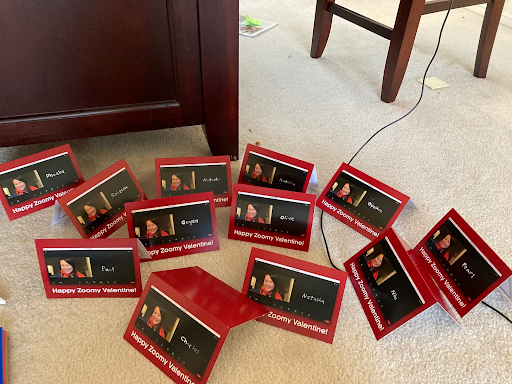
My 2021 Valentine Card concept. To capture the spirit of 2020, the theme was “silver linings.” The front of the card is a Zoom frame and the right square is black. I personalized each card by writing the recipient’s name in with white ink. The inside had the design of a Zoom chat window with a standard message sharing some silver linings I experienced in 2020. Below the fold was space for me to handwrite a personal message. I sent the card in a white envelope lined in silver, to add to the “silver lining” theme.
I get energy from interacting with other people. I organize social gatherings. I love meeting new people. In many ways, I’m a classic extrovert. When the quarantine started, I wondered how I would survive.
My social schedule went from 4-8 in-person meetings on any given day to none. For the first 5 month, because I lived alone, I didn’t see anyone, not my family, not my boyfriend through June. What surprised me was how some of my more introverted friends went stir crazy from the lack of human interaction and I was actually doing pretty okay.
I thought I’d be the one feeling super isolated. It has been the opposite. I do acknowledge that my lowest-scoring Love Language is touch, so I don’t actually need to physically be with people to feel connected to them.
While the rate of making new relationships has dropped a lot, I have deepened existing relationships exponentially.
There are many friends I would only see 1-2x a year who I now talk to regularly on the phone.
Although I appreciate large gatherings to increase the chances of meeting a stranger who might become a lifelong friend, my favorite form of connecting is 1:1 conversations, which I am still able to have virtually. And because I don’t have to worry about commute time, I’m actually able to connect socially with more people 1:1 on any given day than ever before.
So here are some tips for deepening relationships remotely. The quarantine amplified their impact.
Text message. I send a text to at least 5 acquaintances/casual friends a week. Send a text to say “happy birthday” or a “checking in…how are you?” I use Facebook to get reminders of people’s birthdays and updates on their lives. When I see a reminder, I check to see if I have that person’s phone number and if I do, I text message a happy birthday wish or a congratulations because it is so much more personal. It has sometimes led to long text exchange or even phone conversations to catch up. Most of the time, it just reminds people, “Someone is thinking about you.”
Email update. Once a year, I send out a long email update that I personalize with mail merge. My rule of thumb is if I can’t refer to a specific detail about that person’s life or the last time we interacted, I shouldn’t be emailing them. And to be real in the email, I include the happy and the hard stuff. I will usually include a small request, like check out a free workshop I’m piloting or an essay I just wrote to give me feedback. It’s my way of asking people to be part of my journey. I have gotten detailed responses from people, telling me about their lives.
Phone calls. I have regular weekly, monthly, and quarterly phone calls with friends now. I often take calls while I’m stretching or walking. I am on video conferencing so much that I love an old fashioned phone call and I know others often appreciate it too. I’ve said to people, “Hey, want to make this a regular thing?” Many are also ad hoc phone calls. There are some days I can reconnect with 4-7 different friends and acquaintances this way. I have one friend who I only met 2-3 times over two years before the quarantine and now we talk once a month. Another friend refers to our now monthly calls as “therapy.”
Send cards when people don’t expect them. Most people send their cards out in December. Since I was in high school, I have sent out Valentine cards because most adults don’t get Valentines. I express appreciation for friends who supported me during the previous year. I design each year’s card to recap the theme of the previous year and I’m particularly proud of this year’s concept. I still write at least 3-5 lines of a personal message in each card. Since I started using EE Printing ten years ago, I can send out about a 100 a year, limited by my ability to write personal messages. These have been great ways to reconnect with people.
I heard a great interview with Morra Aarons-Mele of Women Online by Guy Raz with more tips.