banner

Being Rude Can Help Deepen Relationships

Even before the pandemic, I heard people complain about how difficult it is to develop new friendships or deepen existing ones, especially as an adult. People can act as if others are withholding friendship from them.

If you’re struggling to build or deepen relationships, it might be because you’re too polite.

Relationship building requires risk-taking. One person must initiate. You can wait around for other people, or do it yourself. I prefer to initiate. Sometimes my actions might be interpreted as rude. I’d rather take the risk that someone will perceive me as rude than do nothing at all. I’ve been turned down before, and I’m grateful I found out sooner rather than later that the person didn’t want to reciprocate.

Here are some tips that can help you deepen your relationships. Warning: They might be perceived as rude.

Just say “no” (instead of saying nothing of all)

It can be hard to say “no.” But there is something worse. And that’s not saying anything at all. 

Think about how you feel when someone doesn’t respond to an invitation or request. I’ve sometimes asked for something from someone I know, and that person said nothing, even after a reminder. I wondered, did he or she think less of me? Did I ask too much? Did I cross a line? Some people think saying no is rude. I think it’s ruder to ignore someone.

That’s why when I can’t say “yes” to an invitation, I strive to decline as soon as possible. I don’t want to keep anyone waiting or guessing. Whenever someone says no to me, I immediately thank the person.

Yes, we’re all busy. That is not an excuse. Some of the best examples of a quick, firm, and kind decline came from some seriously busy people, including a Fortune 500 CEO and a county court judge. If they can take the time to say no, so can I. And the way they said no made me feel safe, as if I could still ask for something later, which I did and received a yes. “No” just means “not this time.” Silence often implies I shouldn’t have asked.

Takeaway: The next time a friend or an acquaintance asks you for something, and you know you can’t help, send a quick and kind decline instead of silence or pushing it off.

Ask for help (don’t just offer it)

It’s easy to offer help. It probably makes you feel good or helpful. When you are the one offering help, you have power. You determine how you will help. Most people often feel good about being asked for help.

Think about how you feel when you ask for help. If you are like most people I’ve talked to, you don’t like asking for help. You might even think it’s rude.

And yet asking for help is more likely to make someone feel connected to you than offering help. For example, I have developed deep friendships with people I asked for a ride to or from an event when they never offered.

Asking for something signals you want to continue the conversation with this person. I’m really testing to see how this person responds—will it be yes, no, or nothing at all? When the person doesn’t reply or deflects, even after I nudge a few times, then I’ve discovered an unspoken boundary.

When you attempt to deepen a relationship by asking for help, you may quickly learn the other person’s limits. At least you gave him or her a chance and now you know.

Takeaway: Think of what you can ask for from others. Try asking someone you want to have a deeper relationship with.

Ask that overly personal question (skip the small talk)

I hate small talk, especially if the conversation never moves beyond it.

If you like small talk, and it works for you, you might want to skip this tip.

Lately, I’ve been thinking about class-based assumptions (I’ve done a lot of research on assumptions). A meeting I planned to attend was canceled at the last minute. I decided to email the other person who I knew was attending. I asked to connect by phone so we could use the time we had already set aside. He sent me his number and I called him. After about five minutes, I decided to cut off the small talk and take a risk. I asked him how he would feel talking about his class background. As a result, we got into a deep conversation on a topic that he told me he hadn’t really talked about before, and we did become closer.

I tried the same question on another acquaintance a few months earlier. Once she realized I was asking her what she personally thought about class, she mumbled an answer and then told me she had to get off the phone to deal with an emergency. I suspect she thought I was rude.

In both cases, I took a risk with an acquaintance. Deepening one out of two relationships is pretty good odds. It was worthwhile to test my limits.

Takeaway: Try skipping the small talk and ask something that’s mildly overpersonal and see how the other person responds.

Invite yourself over

You’ve probably heard people say, “I’ll have to have you over some time.” You may have even said it yourself.

Consider inviting yourself as a way to take someone up on their explicit or implicit offer.

The other day, I decided to invite myself to a friend’s house. Once when we were at an Indian restaurant, he mentioned he makes good paneer and casually said I should come over sometime to try it out. So, I text messaged him, “My boyfriend and I would love to come over for that homemade paneer you mentioned.” He immediately asked me when I was free and set a date. We ended up having a great three-hour conversation, and he said we should get together again.

When you invite yourself, it signals, “I believe your offer was sincere, and I want to spend time with you.” It’s a bold move, some might even say rude. I’ve done this with people who have offered and even those who haven’t. For example, I asked a friend who I know often hosts friends and family from out of state if I could have a “staycation” with her for a few nights. She agreed and we talked late into the night about many things we usually can’t squeeze into our regular phone calls. She offered to host again.

If you invite yourself and the person hesitates or deflects your invitation, you might realize it was just a polite but superficial offer to begin with. You can gently retract by not pushing the issue further.

Takeaway: Think about someone who has offered hospitality to you that you genuinely want to get to know better. Try inviting yourself over.

What some people consider rude, I see as taking a risk. And if someone really wants to reciprocate and deepen a relationship with you, he or she will recognize your effort.

So, risk getting rude. Let me know how it goes.

This post was based on my LinkedIn Newsletter, “Being a bit rude can help deepen relationships,” which was originally posted on April 8, 2022. Please subscribe.

rude

Diversify both the writers and performers of our leadership narratives

Many companies claim they support diversity and want to increase the number of women and people of color in their leadership ranks. 

Saying is easy. Doing is hard. 

Imagine hearing an all-white, mostly male executive team espouse the value of diversity. Yet, no one on the team voluntarily gave up their seat to make room for a more “diverse” candidate? In many cases, diversification requires structural and organizational change and financial investment. It can mean replacing the people who fill a limited number of roles.

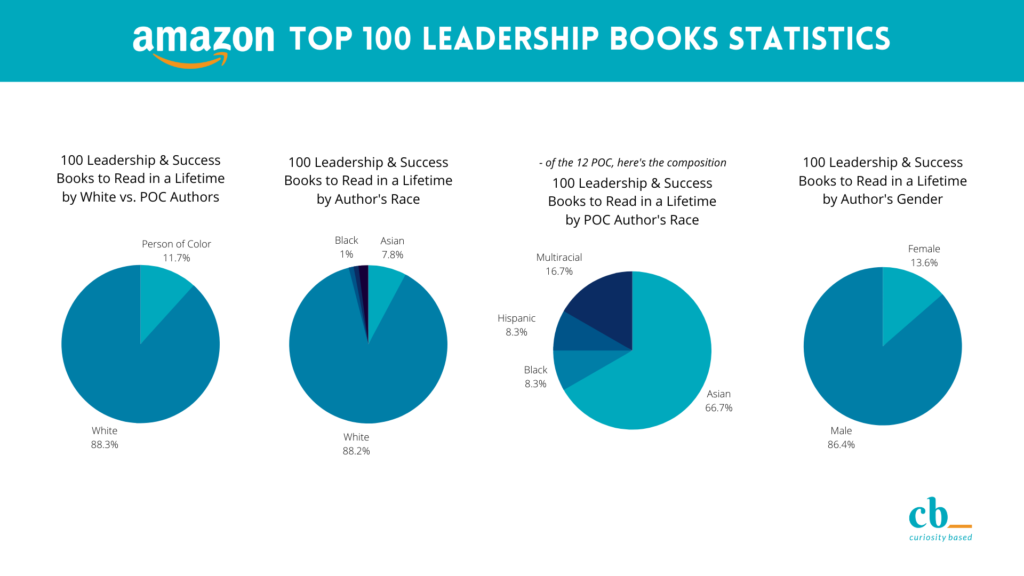
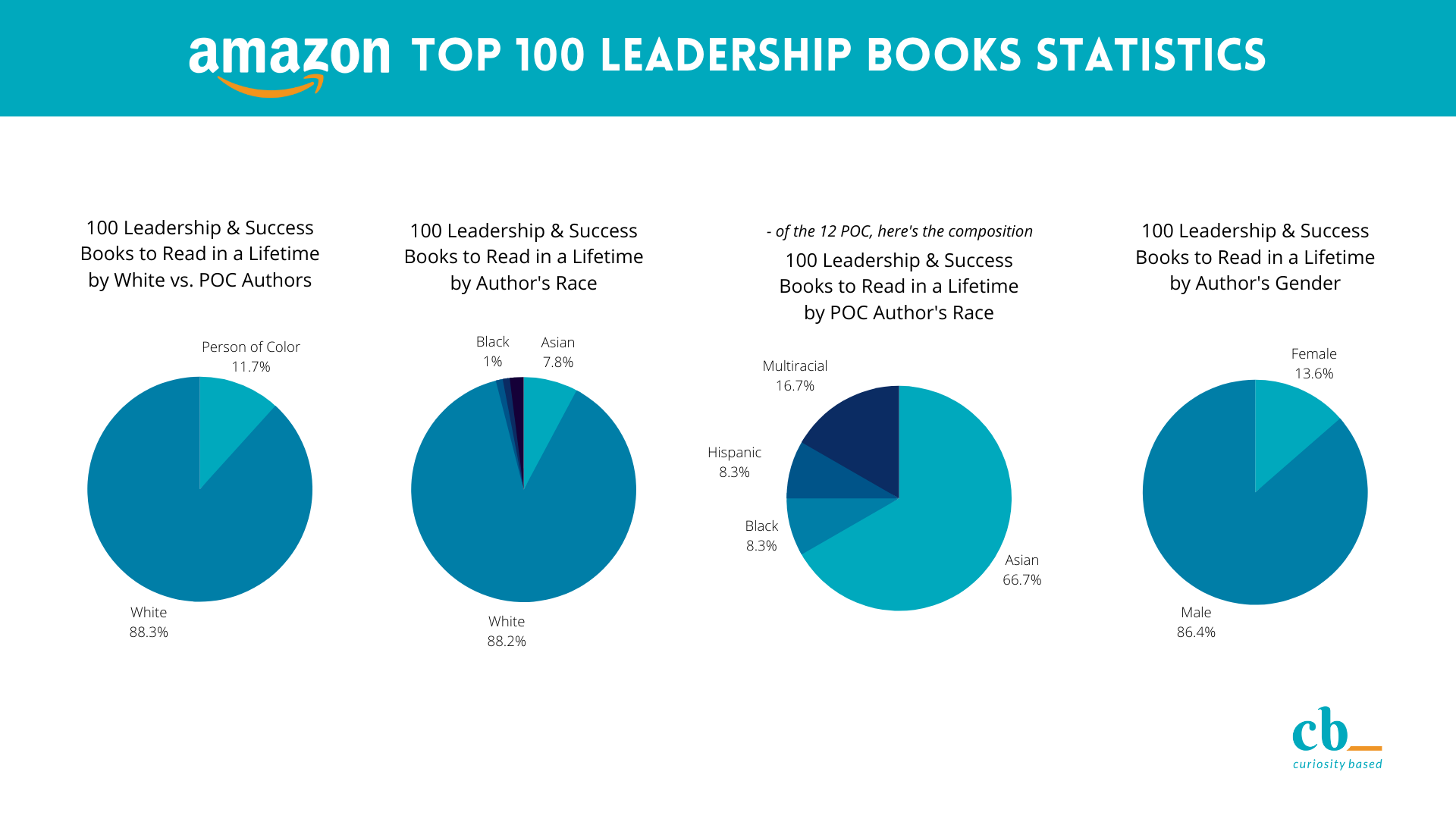
Meanwhile, most of the top ranked leadership and management books are written by white men. Of Amazon’s top 100 recommended books on leadership, only 12 were written by a woman or person of color. Only 18% of business books are written by women. Society is demanding a change in representation, yet the leadership playbooks haven’t kept up. 

Amazon Top 100 Leadership Books Statistics

I’ll liken this to movies and plays. While the actors are changing, they are still performing the same scripts. We’re not diversifying the pool of the screenwriters and plays. 

We don’t have to wait for the infrastructure change required to increase diverse representation before we start exposing ourselves to underrepresented leadership perspectives. 

These are parallel and complementary efforts. The former requires structurally making space for new people. The latter asks people to expand their minds. You can still read Adam Grant and Patrick Lencioni. You can also read Adrienne Maree Brown and Dr. Laura Huang. The virtual bookshelf and podcast library aren’t limited in the way seats on a corporate board or executive team may be.

There are issues on the supply side. Dr. Richard Jean So and Gus Wezerek found that most books since 1950, both fiction and nonfiction, are written by white people. They attributed this to structural barriers in traditional publishing. Not surprising that leadership narratives largely reflect a white male experience. 

Here’s the thing—leadership books by underrepresented authors exist though they rarely make it to the recommended book lists. My company started to create lists of books authored by different communities: women, Black Americans, LGBTQ, authors with disabilities, etc. Based on our research, we compiled 100+ books per group, and we know there are many missing. Many of the books on these lists were self-published. The lists include memoirs and social commentary. We expand what “leadership narrative” means.

On the demand side, we, as the readers, the audience, and consumers, have influence. 

We can consult existing leadership narratives written by underrepresented authors and find ways to integrate relevant philosophies that align with and support our mission. Many authors, like Ruchika Tulyshan, Mikaela Kiner, Cindi Bright, and Dr. Marie Gervais, share useful strategies and tactics to foster inclusion at work. We can also validate those authors by promoting their work. 

Clearly, books by underrepresented authors are not always about race and diversity. Some books address race and gender; most do not. It shows that books by underrepresented authors don’t just have to focus on their identity. 

Women and people of color who are in leadership roles were hired for their expertise. Their diverse perspectives are a bonus. That’s how we should approach leadership books. Just as we don’t expect white male authors to write about their race and gender, underrepresented leadership authors shouldn’t need to focus on their race and gender.

Designers use a concept called the curb cut effect: if you design something for those with special needs, it may actually end up benefiting more people. A common example of this is when curb cuts were made into sidewalks for wheelchair users and ended up helping many others, like those with baby strollers and luggage. The idea here is when someone writes from a minority perspective, that perspective will end up helping and benefiting others too. 

An excellent example of this is Stacey Abram’s book, Lead from the Outside, which was originally titled Minority Leader. Each chapter has practical worksheets and frameworks that everyone, including white men who are not in the minority, would also find helpful. 

As consumers, we should evaluate our expectations for what counts as credible. Many popular leadership books are written by academics or those with corporate experience. White men dominate both academia and the corporate world, so leadership books also follow suit. It’s a vicious cycle. We think we need authors to have those credentials, so publishers only publish authors with those credentials, which reinforces the belief that we should only read those with these credentials.

Large corporation CEOs already author many books. Many fewer books are written by small business owners, who also are much more diverse. Moreover, small businesses account for nearly 99.75% of all companies, and they are responsible for 66% of new job creation. So why are we looking for the small minority of leaders at large companies to teach us? How is their experience more applicable or relevant?

When I read leadership books by white men, especially in business, they often cite their leadership roles in major organizations and relationships with billionaires. I just can’t relate. 

We lament the lack of diversity in leadership as a way to advocate for systemic change. 

As individuals, we may not have the power, position, or capacity to influence who is represented in our boardroom and executive teams. 

We do have the choice to start reading, supporting, and consuming leadership narratives by underrepresented authors.

This post was based on my LinkedIn Newsletter post, “Enrich how you lead by expanding who you read,” which was originally posted on June 2, 2022. Please subscribe.

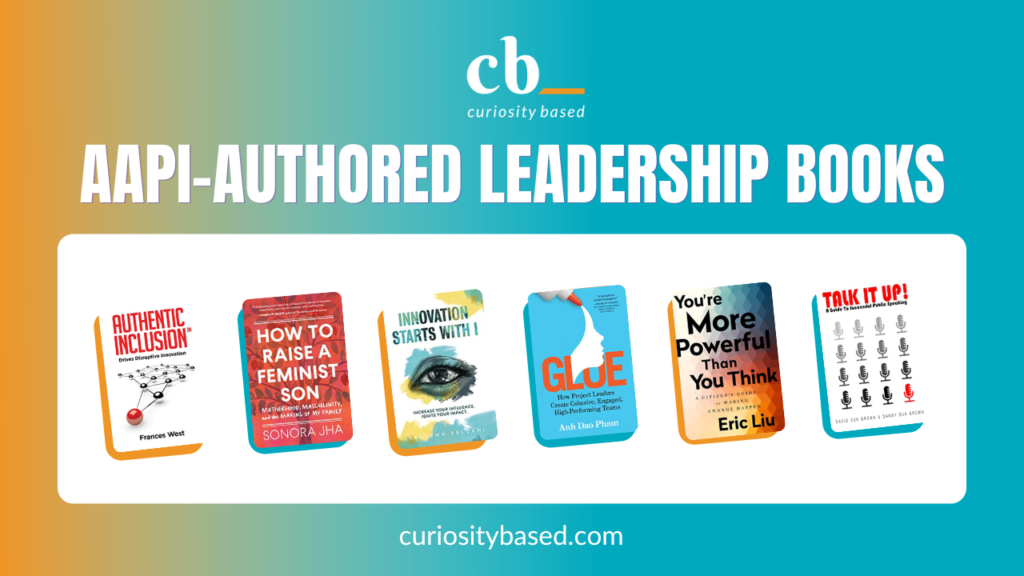
2022 AAPI-Authored Leadership Books

We created this list to promote leadership narratives written by Americans of Asian Pacific Islander (API) heritage. This list is meant to be a resource, not an official endorsement. The books are not ranked or listed in any particular order. 

  1. This Is One Way to Dance by Sejal Shah
  2. My Unforgotten Seattle by Ron Chew
  3. Sigh, Gone: A Misfits Memoir of Great Books, Punk Rock, and the Fight to Fit In by Phuc Tran
  4. Crying in H Mart: A Memoir by Michelle Zauner
  5. Living for Change by Grace Boggs
  6. Where the Past Begins: Memory & Imagination by Amy Tan
  7. Fresh Off the Boat: A Memoir by Eddie Huang
  8. The Cooked Seed: A Memoir by Anchee Min
  9. Out of the Gobi: My Story of China & America by Weijian Shan
  10. Love, Loss, and What We Ate: A Memoir by Padma Lakshmi
  11. Mixed Plate: Chronicles of an All-American Combo by Jo Koy
  12. An American Family: A Memoir of Hope & Sacrifice by Khizr Khan
  13. Brotherhood: Dharma, Destiny, and the American Dream by Deepak Chopra & Sanjiv Chopra
  14. Hawaii’s Story by Liliuokalani
  15. Nisei Radicals: The Feminist Poetics and Transformative Ministry of Mitsuye Yamada and Michael Yasutake by Diane C. Fujino
  16. See No Stranger: A Memoir and Manifesto of Revolutionary Love by Valarie Kaur
  17. Heart of Fire: An Immigrant Daughter’s Story by Mazie K. Hirono
  18. How to Raise a Feminist Son: Motherhood, Masculinity, and the Making of my Family by Sonora Jha
  19. Empress: The Astonishing Reign of Nur Jahan by Ruby Lal
  20. The Souls of Yellow Folk: Essays by Wesley Yang
  21. Dear Girls: Intimate Tales, Untold Secrets, & Advice for Living Your Best Life by Ali Wong
  22. Fault Lines: A Memoir by Meena Alexander
  23. Eat a Peach: A Memoir by David Chang
  24. Reset: My Fight for Inclusion and Lasting Change by Ellen Pao
  25. Grit: The Power of Passion and Perseverance by Angela Duckworth
  26. The Art of Stillness: Adventures in Going Nowhere (TED Books) by Pico Iyer
  27. The Art of Strategy: A Game Theorist’s Guide to Success in Business and Life by Avinash K. Dixit
  28. The Art of the Start 2.0: The Time-Tested, Battle-Hardened Guide for Anyone Starting Anything by Guy Kawasaki
  29. The Seven Spiritual Laws of Success: A Practical Guide to the Fulfillment of Your Dreams by Deepak Chopra
  30. The Checklist Manifesto: How to Get Things Right by Atul Gawande
  31. Limitless: Upgrade Your Brain, Learn Anything Faster, and Unlock Your Exceptional Life by Jim Kwik
  32. Postcolonial Leadership, A: Asian Immigrant Christian Leadership and Its Challenges by Hee An Choi
  33. Enough About Me: The Unexpected Power of Selflessness by Richard Lui
  34. Legal Heroes in the Trump Era: Be Inspired, Expand Your Impact, Change the World by Tahima Watson
  35. Hit Refresh: The Quest to Rediscover Microsoft’s Soul and Imagine a Better Future for Everyone by Satya Nadella
  36. All In by Jerry Yang
  37. Radical: Fighting to Put Students First by Michelle Rhee
  38. My Life in Full: Work, Family, and Our Future by Indra Nooyi
  39. Unprecedented: The Masters and Me by Tiger Woods
  40. Delivering Happiness by Tony Hsieh
  41. Be Water, My Friend: The Teachings of Bruce Lee by Sharon Lee
  42. Unsung Hero: The Col. Young O. Kim Story by Woo Sung Han
  43. You’re More Powerful Than You Think: A Citizen’s Guide to Making Change Happen by Eric Liu
  44. Holding Serve: Preserving on and Off the Court by Michael Chang
  45. Great Asian Americans: Michelle Kwan by Stephanie Cham
  46. Great Asian Americans: Ellison Onizuka by Stephanie Cham
  47. Great Asian Americans: Tammy Duckworth by Stephanie Cham
  48. Great Asian Americans: Patsy Mink by Stephanie Cham
  49. Great Asian Americans: Yo-Yo Ma by Stephanie Cham
  50. To The Stars: The Autobiography of George Takei by George Takei
  51. Big Little Man: In Search of My Asian Self by Alex Tizon
  52. I love a Broad Margin to My Life by Maxine Hong Kingston
  53. Dat: Tackling Life and the NFL by Dat Nguyen
  54. Courage: The backbone of Leadership by Gus Lee and Diane Elliott-Lee
  55. Madame Wu Chien-shiung: The First lady of Physics Research by Tsai-chien Chiang
  56. It Takes Moxie by Maureen Francisco
  57. Finding the Edge: My Life On The Ice by Karen Chen
  58. Rich Dad Poor Dad: What the Rich Teach Their Kids About Money That the Poor and Middle Class Do Not! by Robert T. Kiyosaki
  59. Still Life with Rice by Helie Lee
  60. I’m the One That I Want by Margaret Cho
  61. When Invisible Children Sing by Chi Cheng Huang
  62. Creating the Digital Future: The Secrets of Consistent Innovation at Intel by Albert T.c. Yu
  63. Boundaries by Maya Lin
  64. The War on Normal People by Andrew Yang
  65. Blue Ocean Strategy: How to Create Uncontested Market Space and Make the Competition Irrelevant by W. Chan Kim
  66. Leadership and Crisis by Bobby Jindal
  67. Enduring Conviction: Fred Korematsu and His Quest for Justice by Lorraine K. Bannai
  68. A Principled Stand: The Story of Hirabayashi v. United States by Gordon K. Hirabayashi
  69. Growing Up Brown: Memoirs of a Filipino American by Peter M. Jamero
  70. The Silent Master: Awakening the Power Within by Tae Yun Kim
  71. The Black Widow’s Guide to Killer Pool: Become the Player to Beat by Jeanette Lee
  72. My Forty years as a Diplomat by Feng-Shan Ho
  73. You Can’t Be Serious by Kal Penn
  74. Behind Deep Blue: Building the Computer that Defeated the World Chess Champion by Feng-Hsiung Hsu
  75. Not Nice: Stop People Pleasing, Staying Silent, & Feeling Guilty…And Start Speaking Up, Saying No, Asking Boldly, & Unapologetically Being Yourself by Dr. Aziz Gazupura
  76. The Truths We Hold: An American Journey by Kamala Harris
  77. Impressive First Impressions: A Guide to the Most Important 30 Seconds (And 30 Years) of Your Career by Vu H. Pham
  78. With Schwarzkopf: Life Lessons of the Bear by Gus Lee
  79. Purpose Mindset by Akhtar Badshah
  80. You Are A Mogul: How to Do the Impossible, Do It Yourself, and Do it Now by Tiffany Pham
  81. The Diversity Advantage: Fixing Gender Inequality in the Workplace by Ruchika Tulshyan
  82. Shorter: Work Better, Smarter, and Less – Here’s How by Alex Soojung-Kim Pang
  83. Minor Feelings: An Asian American Reckoning by Cathy Park Hong
  84. Come into my Office: Stories from an HR Leader in Silicon Valley by Mai Ton
  85. AugmentAsian: Strategies and Tools for Asian Pacific American Professional & Leadership Success by Asian Upward & Elevate Teams
  86. Edge: Turning Adversity Into Advantage by Laura Huang
  87. American Dreamer: How I Escaped Communist Vietnam and Built a Successful Life in America by Tim Tran
  88. Glue: How Project Leaders Create Cohesive, Engaged, High-Performing Teams by Anh Dao Pham
  89. Thick Face, Black Heart: The Warrior Philosophy for Conquering The Challenges of Business and Life by Chin-Ning Chu
  90. Uplifted: Journeys of Abundance, Community, and Identity by Geena Chen
  91. Sheer Determination: Swimming Upstream in a Downstream World by Kay Hire
  92. Reflections of Seattle’s Chinese Americans: The First 100 Years by Ron Chew
  93. Show Your Worth: 8 Intentional Strategies for Women to Emerge as Leaders at Work by Shelmina Babai Abri
  94. Inclusion on Purpose: An Intersectional Approach to Create a Culture of Belonging at Work by Ruchika Tulshyan
  95. Invitation to Lead: Guidance for Emerging Asian American Leaders by Paul Tokunaga
  96. The Making of Asian America: A History by Erika Lee
  97. World of Wonders: In Praise of Fireflies, Whale Sharks, and Other Astonishments by Aime Nezhukamatahil
  98. The Visibility Mindset: How Asian American Leaders Create Opportunities and Push Past Barriers by Bernice M Chao & Jessalin Lam
  99. This is Not a T-Shirt: A Brand, A Culture, A Community – A Life in Streetwear by Bobby Hundreds
  100. It’s Always Sunny Above the Clouds: Getting the Next Generation Into the Cockpit by Nick Tran
  101. Journey for Justice: The Life of Larry Itliong by Dawn B. Mabalon, PhD & Gayle Romas 
  102. Lions and Tigers and Bears: The Internet Strikes Back (Oh Myyy!) by George Takei
  103. Every Day is a Gift: A Memoir by Tammy Duckworth
  104. Fierce and Fearless: Patsy Takemoto Mink, First Woman of Color in Congress by Judy Tzu-hun Wu & Gwendolyn Mink
  105. The Next American Revolution: Sustainable Activism for the Twenty-First Century by Grace Lee Boggs
  106. 7 Forms of Respect: A Guide to Transforming Your Communication and Relationships at Work by Julie Pham, PhD
  107. The Death of Truth: Notes on Falsehoods in the Age of Trump by Michiko Kakutani
  108. The Woman Warrior: Memoirs of a Girlhood Among Ghosts by Maxine Hong Kingston
  109. America for Americans: A History of Xenophobia in the United States by Erika Lee
  110. Somewhere Inside: One Sister’s Captivity In North Korea and the Other’s Fight to Bring Her Home by Laura Ling & Lisa Ling
  111. Power Your Purpose: A Leader’s Guide to Creating a Better Life and a Better World by Shian Chuan 
  112. The Asian American Achievement Paradox by Jennifer Lee & Min Zhou 
  113. I Still Haven’t Found What I’m Looking For: Now What? 21 Days to Confidence and Clarity by Dr. Sweta Chawla 
  114. Energize: Make the Most of Every Moment by Simon Alexander Ong 
  115. The Art of Gathering: How We Come Together and Why it Matters by Priya Parker 
  116. Breaking the Bamboo Ceiling: Career Strategies for Asians by Jane Hyun 
  117. Perfect Enough: How to Be Happier and More Productive by Letting Go of Perfectionism by Judy t. Dang
  118. The Wake Up: Closing the Gap Between Good Intentions and Real Change by Michelle MiJung Kim 
  119. The Loneliest Americans by Jay Caspian Kang 
  120. Why Not Me? By Mindy Kaling
  121. Healing Resistance: A RAdically Different Response to Harm by Kazu Haga 
  122. The Things You Can See Only When You Slow Down by Haemin Sunim 
  123. Love For Imperfect Things: How to Accept Yourself in a World Striving for Perfectionism by Haemin Sunim 
  124. Being Mortal: Medicine and What Matters in the End by Atul Gawande
  125. When Breath Becomes Air by Paul Kalanithi
  126. Bitter Fruit: The Politics of Korean-Black Conflict in New York City by Claire Jean Kim 
  127. Racial Melancholia, Racial Dissociation: On the Social and Psychic Liv es of Asian Americans by David Eng 
  128. Authentic Inclusion: Drives Disruptive Innovation by Frances West
  129. Innovation Starts with I: Increase Your Influence. Ignite Your Impact. By Saleema Vellani
  130. Talk it Up! A Guide to Successful Public Speaking by Mr. David Suk Brown
  131. Conquering the Chaos by Ravi Venkatesan
  132. Women Who Lead: Timeless Life, Career, and Business Secrets from Inspiring Women Around the World by Izdihar Jamil
  133. The Confidence of Yes: How to Harness the Energy of Opportunity by Izdihar Jamil

We are continually adding to this list. If you have any recommended additions please send us an email at info@curiositybased.com so we can add it here.

Interested in reading more? Check out our Leadership Books Authored by Women booklist! 

Read our other leadership booklists too!