banner

Who taught you how to be a friend?

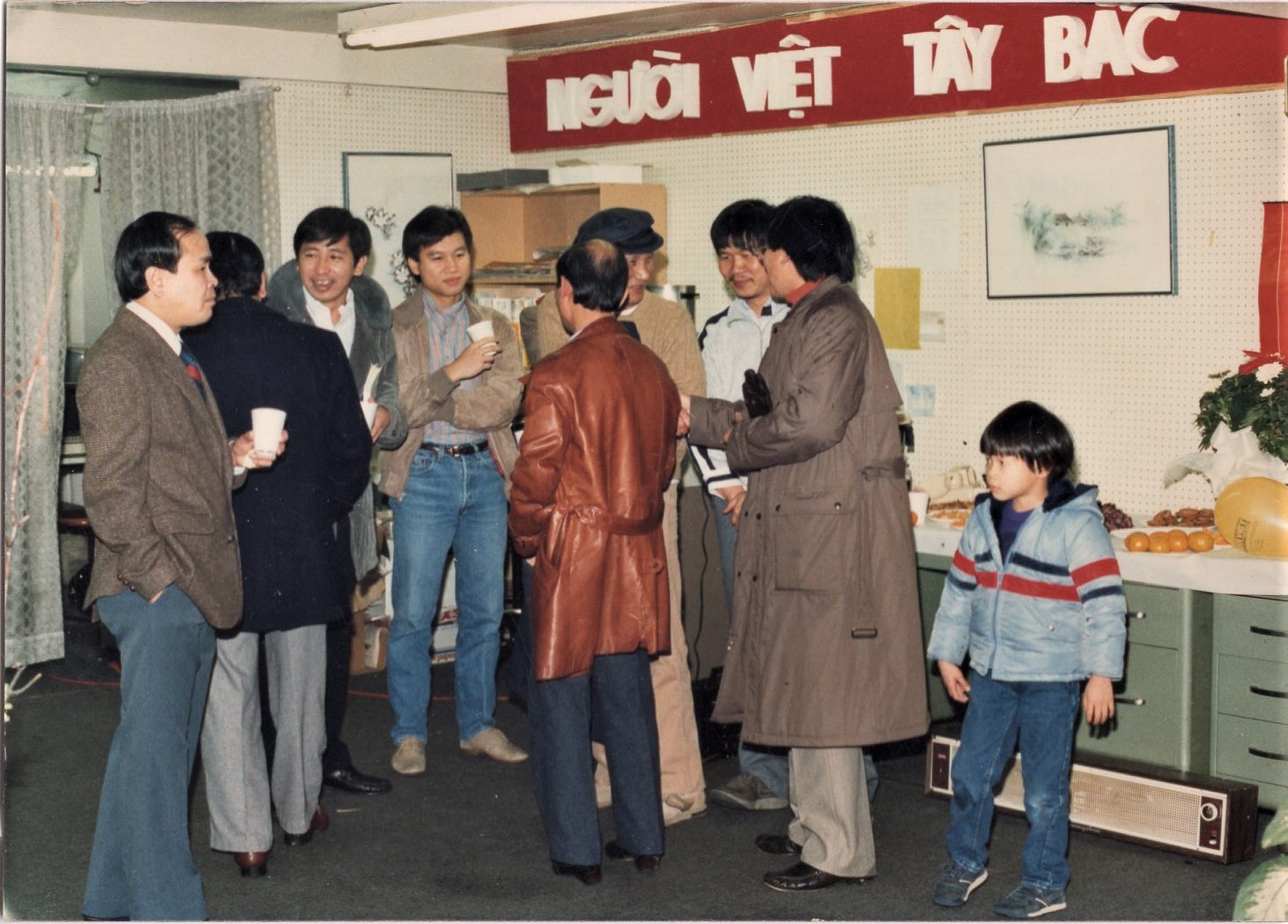
Julie’s father, Kim Pham, standing third from the right with his friends and supporters of their family newspaper, Nguoi Viet Tay Nac (Northwest Vietnamese News), circa 1988.

Did you observe the kinds of friendships that your parents, or whomever raised you, had while you were growing up? What did you learn from them about how to treat your own friends? My next book will focus on respect in friendships. As part of my research, I ask people these questions.

While some say their caregivers explicitly taught them how to treat their friends, most say they learned through observations. There was a mix of positive and negative models of friendship. Some said their parents didn’t have friends and, as a result, they themselves didn’t learn how to form friendships until well into adulthood. Many say they had never thought about their parents’ friendships before. 

I hadn’t made the connection between my parents’ friendships and my own until I asked myself these questions. As the co-founders of the local Vietnamese newspaper, they were very involved in our immediate Vietnamese community. The line between personal and professional was thin. Many of my parents’ friends were entrepreneurs. Even the doctors and lawyers owned their own practices that served others in our refugee community. Being a friend meant supporting each other’s businesses. My brothers and I were always reminded when we went to a shop or a restaurant that it was owned by someone who advertised in the newspaper.

My parents taught me that friendship means helping each other out with whatever resources we have. This may include giving advice, making key introductions and referrals, and whenever possible, being customers. Many of my friends today are other entrepreneurs, creatives, founders, or have leadership roles at their organizations. We talk about work in the same way others talk about their hobbies or vacations. When it comes to other friends who don’t want to talk about work outside of work, I try to show respect by asking about their families and hobbies. Still, I like to be asked about CuriosityBased because my work is a core part of who I am.

What did you learn about friendship from those who raised you? How is that showing up in your expectations of respect in your own friendships now?

I’d love to hear from you. If you’re interested in having a one on one interview or participating in a focus group, please let me know.

Best,

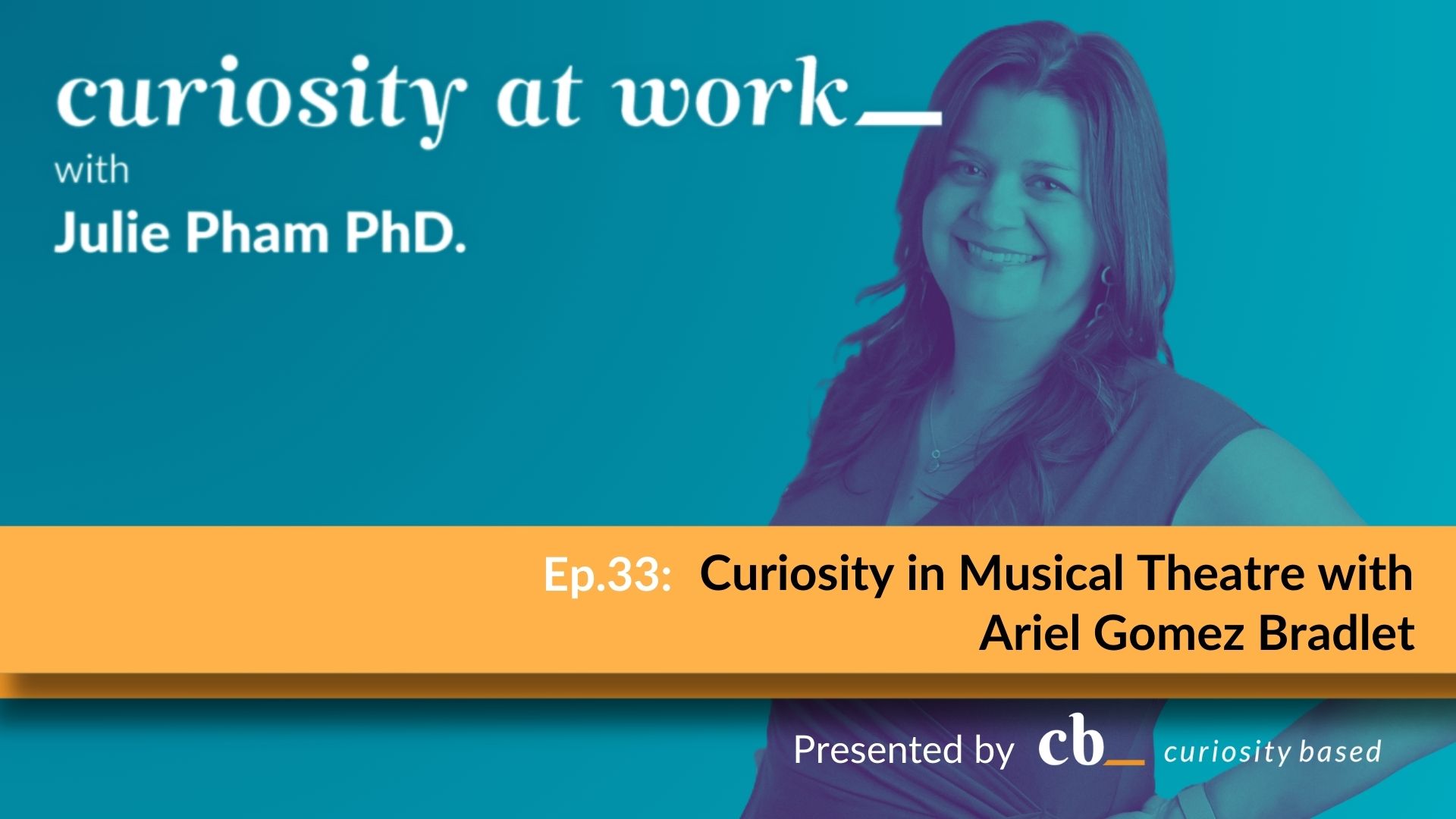
#33: Curiosity in Musical Theater with Ariel Gomez-Bradler

#33: Curiosity in Musical Theater with Ariel Gomez-Bradler

In Curiosity at Work podcast episode 33: Curiosity in Musical Theater with Ariel Gomez-Bradler, Julie speaks with Ariel who is the Managing Director of The 5th Avenue Theatre, about curiosity in musical theater and the arts.

Theater is more than what happens on stage. It is production teams, designers, technicians, administrators, musicians, and countless behind-the-scenes roles working together to create something ephemeral and unforgettable.

In this conversation, they explore:

• How curiosity fuels creativity in theater production
• The many roles that bring a live performance to life
• The financial and operational challenges facing theaters post-pandemic
• Why supporting local theaters strengthens the entire community
• How family influences can spark a lifelong practice of curiosity

One line that captures the spirit of the episode:
“Curiosity is built into our practice.”

Live theater asks us to be present. It invites us into shared stories. It depends on local talent and community support.

When we support the arts, we are investing in connection, creativity, and community vitality.

Check out Episode 33 of Curiosity at Work and go behind the scenes to explore how curiosity shapes musical theater leadership.

More Curiosity at Work podcast episodes can be found here: https://curiositybased.com/podcast

#CuriosityAtWork #CuriosityBased #ArtsLeadership #TheaterArts #MusicalTheater #CreativeLeadership #CommunityEngagement #SupportLocalArts #SeattleArts #OrganizationalLeadership #PracticeCuriosity #LiveTheater

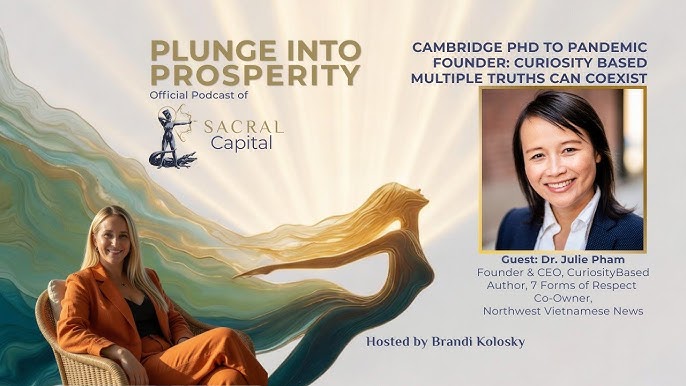
Plunge into Prosperity

What if prosperity isn’t about having more — but having more freedom?

On the Plunge into Prosperity podcast hosted by Brandi Kolosky, Julie shares her journey from arriving in the U.S. as a Vietnamese refugee to earning a PhD at Cambridge, running her family’s newspaper through the Great Recession, and founding CuriosityBased during the pandemic.

In this conversation, they explore:
• Why freedom is her definition of prosperity
• How curiosity evolved from gathering knowledge to a daily practice
• How the 7 Forms of Respect® can strengthen relationships at work and beyond

This is a thoughtful conversation about leadership, resilience, and building a life aligned with your values. It is thought-provoking on many deep levels and not to be missed.

#CuriosityAtWork #LeadershipDevelopment #RespectAtWork #WorkplaceCulture #Entrepreneurship #CuriosityBased

Low-context and high-context communication

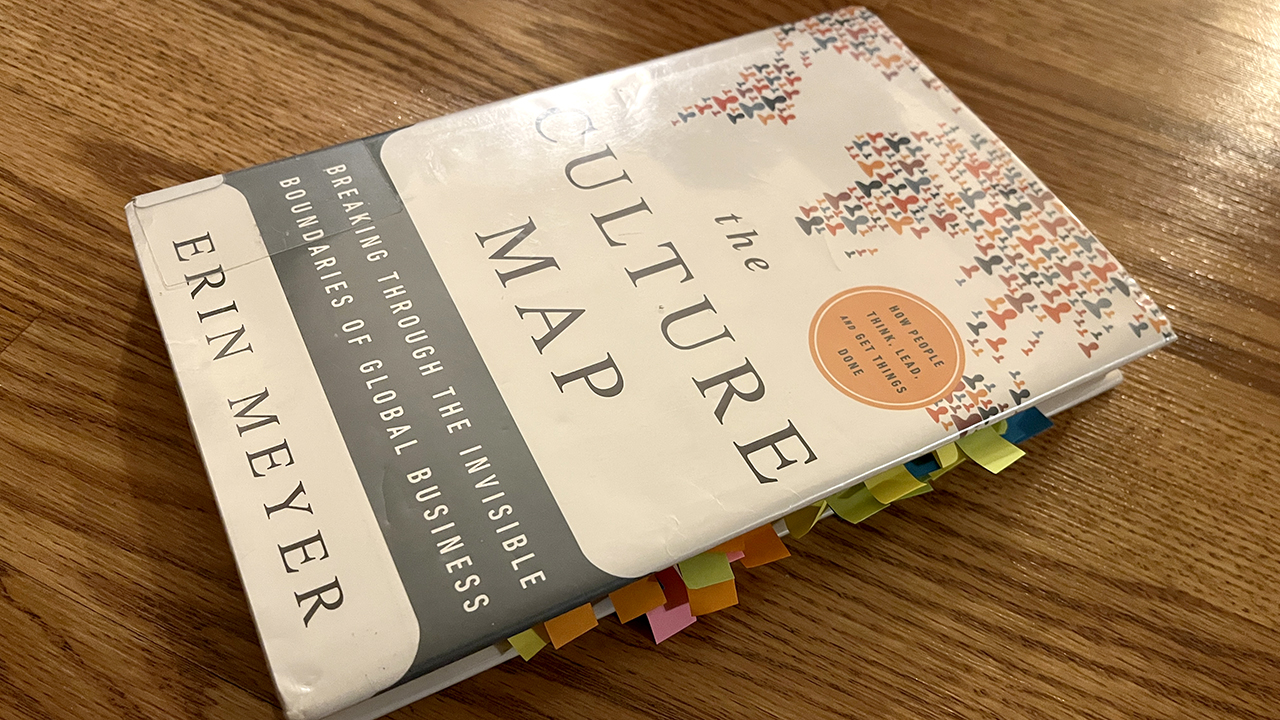
Erin Meyer’s book, The Culture Map, with many sticky notes marking passages Julie found interesting.

Low-context and high-context communication

Listen to Julie read this newsletter on YouTube

I often get asked about the different ways that different cultures define respect. While I can share examples from lived experience, they are anecdotal. The 7 Forms of Respect® as a framework is ultimately about having curiosity around what respect means to you and others, so I avoid making any universal claims about how certain cultures define respect.

After having read Erin Meyer’s The Culture Map: Breaking Through the Invisible Boundaries of Global Business, I now have a book recommendation for those who want to understand how culture shows up in our interactions. Meyer shows how cultural differences exist along “eight scales that map the worlds’ cultures.” These scales are: communicating, evaluating, persuading, leading, deciding, trusting, disagreeing, and scheduling.

In the “communicating” scale, the two extremes are “low-context” and “high context,” which Meyers describes as:

Low-context: Good communication is precise, simple, and clear. Messages are expressed and understood at face value. Repetition is appreciated if it helps clarify the communication.

High-context: Good communication is sophisticated, nuanced, and layered. Messages are both spoken and read between the lines. Messages are often implied but not plainly expressed.

Meyers points out that the US has the lowest-context culture in the world, followed by Australia and Canada. The highest-context country is Japan, followed by Indonesia and Korea.

Whether a country is low context or high context is influenced by its history, population, and geography. The US is only a few hundred years old, geographically very expansive, and made up of immigrants from around the world. Low-context culture helps people communicate across such diversity. Japan is a largely homogenous, small island country with thousands of years of history. 

Low context culture prefers written documentation and visualizations to reinforce information communicated verbally. High context cultures assume shared understanding and deep listening, so someone from a high context culture may react to a written recap of a conversation by thinking, “Why are you writing this out? Do you not trust that I can remember?” If you’re interacting with someone from a high context culture, you have to listen much more carefully for what is not said. 

While my parents grew up in a high context culture (Vietnam), I realize my approach to communication is very low-context, a reflection of my American childhood. 

Where does your communication style fall on the spectrum of low to high context? I’d love to hear from you.

Best,