Low-context and high-context communication
Listen to Julie read this newsletter on YouTube
I often get asked about the different ways that different cultures define respect. While I can share examples from lived experience, they are anecdotal. The 7 Forms of Respect® as a framework is ultimately about having curiosity around what respect means to you and others, so I avoid making any universal claims about how certain cultures define respect.
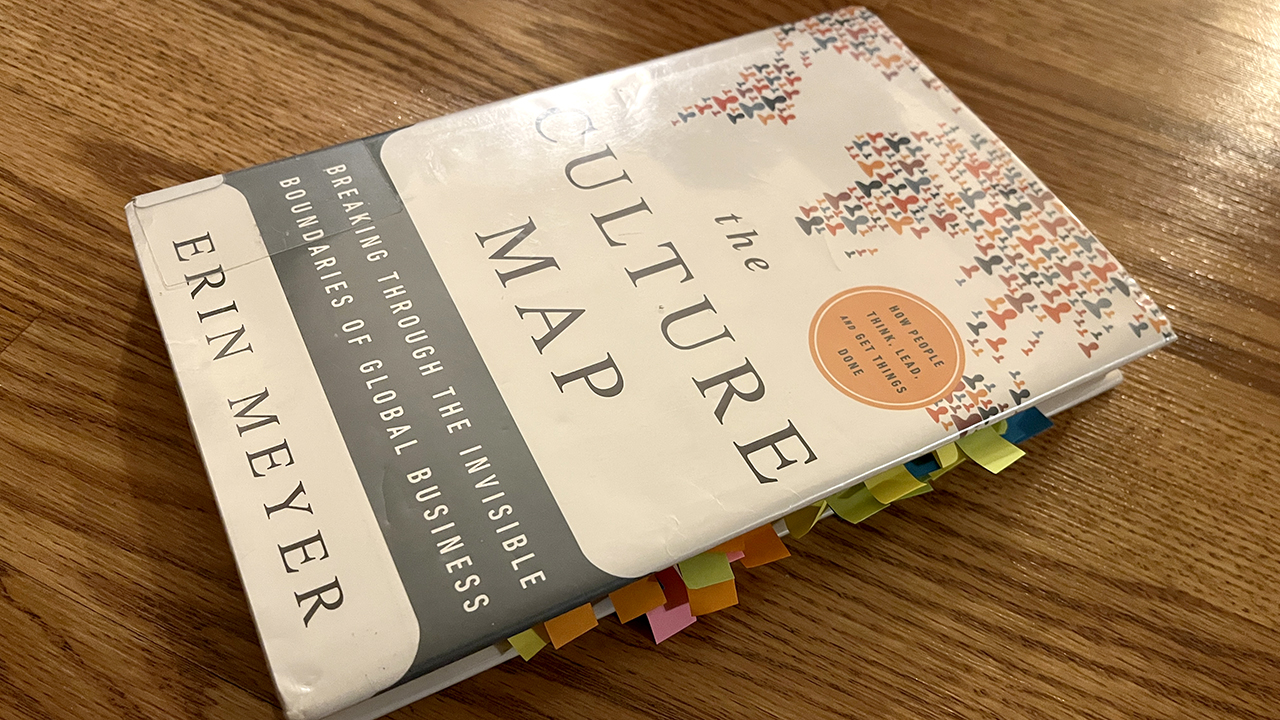
After having read Erin Meyer’s The Culture Map: Breaking Through the Invisible Boundaries of Global Business, I now have a book recommendation for those who want to understand how culture shows up in our interactions. Meyer shows how cultural differences exist along “eight scales that map the worlds’ cultures.” These scales are: communicating, evaluating, persuading, leading, deciding, trusting, disagreeing, and scheduling.
In the “communicating” scale, the two extremes are “low-context” and “high context,” which Meyers describes as:
Low-context: Good communication is precise, simple, and clear. Messages are expressed and understood at face value. Repetition is appreciated if it helps clarify the communication.
High-context: Good communication is sophisticated, nuanced, and layered. Messages are both spoken and read between the lines. Messages are often implied but not plainly expressed.
Meyers points out that the US has the lowest-context culture in the world, followed by Australia and Canada. The highest-context country is Japan, followed by Indonesia and Korea.
Whether a country is low context or high context is influenced by its history, population, and geography. The US is only a few hundred years old, geographically very expansive, and made up of immigrants from around the world. Low-context culture helps people communicate across such diversity. Japan is a largely homogenous, small island country with thousands of years of history.
Low context culture prefers written documentation and visualizations to reinforce information communicated verbally. High context cultures assume shared understanding and deep listening, so someone from a high context culture may react to a written recap of a conversation by thinking, “Why are you writing this out? Do you not trust that I can remember?” If you’re interacting with someone from a high context culture, you have to listen much more carefully for what is not said.
While my parents grew up in a high context culture (Vietnam), I realize my approach to communication is very low-context, a reflection of my American childhood.
Where does your communication style fall on the spectrum of low to high context? I’d love to hear from you.
Best,