Have you ever been part of a long conversation with a group of people that was so good that, by the end, you felt like you had created new meaning together, and that everyone felt seen and heard?
In my experience, such conversations are difficult to achieve without having an assigned facilitator. That’s why I believe for lengthy group discussions, someone should assume the facilitator role to invite everyone to contribute and to identify and summarize themes.
Understanding what needs to happen to create good self-facilitated conversations eluded me.
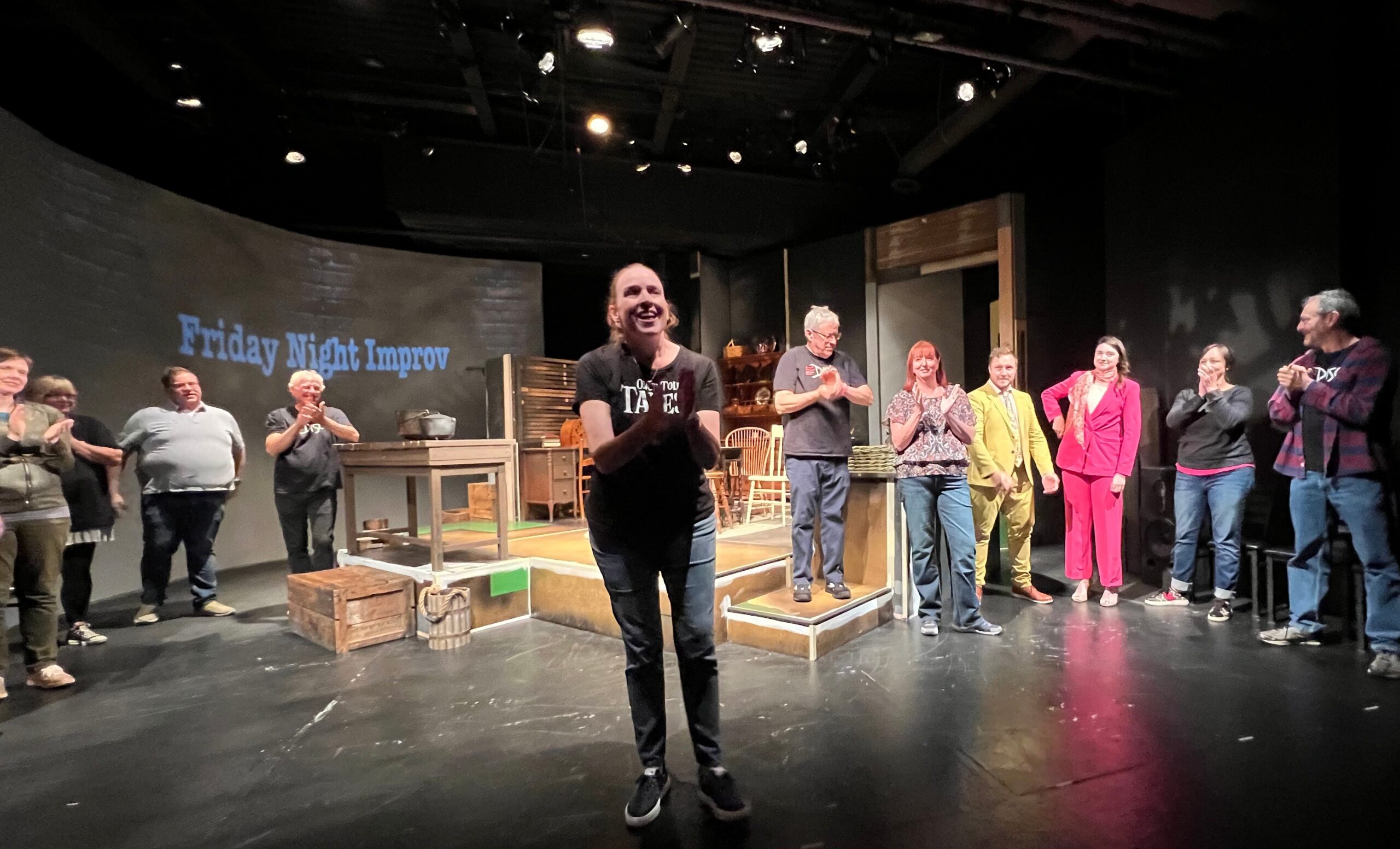
That is, until I recently discovered long-form improv at Lumora, a nonprofit theater space founded by my friend Heath Hollensbee.
“Improv” is short for improvisation and it refers to an unscripted style of theater. Because there is no director, or designated facilitator, I liken it to a self-facilitated conversation. Many people are more familiar with short form improv, in which 2 to 5 min scenes are created based on audience prompts. Actors listen just enough to deliver quick punchy jokes.
In long form improv, an ensemble of actors gets their prompt from a single source at the beginning of a 20 to 45 min set. During the set, a few actors at a time take turns at center stage
to perform scenes that are developed in real time.
Over the course of time, all of the actors listen carefully for what is said and not said, even when it isn’t their turn to act. This allows them to reference earlier scenes in a way that contributes to the overall story. At Lumora, I got to watch and compare two different long form improv ensembles. The first group was good. The second was great. I got the impression the second ensemble listened to each other better. As a result, their scenes felt more connected and the overall story, by the end of the set, was more cohesive.
Back to how this relates to lengthy self-facilitated group conversations. I realized the reason so many of these conversations fall flat is that people don’t listen to each other deeply. They are too busy thinking about what they want to say. While having a conversation facilitator can improve the chances of a good conversation, long form improv has convinced me it’s deep listening, intense curiosity, and active reflection by everyone involved that can transform a conversation into something memorable and unique.
For your next group conversation, pay special attention to how much people are listening and reflecting on what others are saying, instead of just focusing on what they will say when it’s their turn to speak.
I’d love to hear what you notice. And please consider sharing this email with anyone who wants to have more effective group discussions.
Best,

Check out more CuriosityBased newsletters