In honor of Women’s History Month, we created this list of 500+ 2025 leadership books written by women, and by people who identify as women. This list is meant to be a resource, not an official endorsement. The books are not ranked in any particular order.
- [Un]framing the “Bad Woman”: Sor Juana, Malinche, Coyolxauhqui, and othe rebels with a cause by Alicia Gaspar de Alba
- #Not Your Princess: Voices of Native American Women by Lisa Charleyboy, Mary Beth Leatherdale (editors)
- 50 Billion Dollar Boss: African American Women Sharing Stories of Success in Entreprenuership and Leadership by Kathey Porter
- A House of My Own: Stories From My Life by Sandra Cisneros
- A Mythic Life: Learning to live our greater story by Jean Houston
- A Passion for the Possible: A guide to realizing your true potential by Jean Houston
- Abandon Me: Memoirs by Melissa Febos
- After the Rain: Gentle Reminders for Healing, Courage, and Self-Love by Alexandra Elle
- Ain’t I a Woman: Black Women and Feminism by Bell Hooks
- All Bout Love by Bell Hooks
- All In: An Autobiography by Billie Jean King
- Almost a Woman by Esmeralda Santiago
- American Indian Stories by Zitkala-Sa
- And A Voice to Sing With: A Memoir by Joan Baez
- And Now We Are Going to Have a Party: Liner Notes to a Writer’s Early Life by Nicola Griffith
- Annapurna: A woman’s place by Arlene Blum
- AOC: The Fearless Rise and Powerful Resonance of Alexandria Ocasio-Cortes by Lynda Lopez
- Apocalyptic Best Practices: A unique approach to fear and change by Elisebeth VanderWeil
- As Long As Grass Grows: The Indigenous Fight for Environmental Justice, from Colonization to Standig Rock by Dina Gilio-Whitaker
- As We Have Always Done: Indigenous Freedom Through Radical Resistance by Laeanne Betasamosake Simpson
- Ask For It: How women can use the power of negotiation to get what they really want by Linda Babcock & Sara Laschever
- ASL Saved My Life…Until it didn’t by Jenni Kleinman Berebitsky
- Atlas of the Heart: Mapping Meaningful Connection and the Language of Human Experience by Brene Brown
- Bad Indians: A Tribal Memoir by Deborah Miranda
- Balancing Work and Life: The Nia guide for Black Women by Sheryl Huggins, Cherly Mayberry McKissack
- Bamboozled: How God Tricked Me inot the Life of My Dreams by Yvonne Orji
- Be Water, My Friend: The Teachings of Bruce Lee by Sharon Lee
- Becoming by Michelle Obama
- Being Heumann: an unrepentent memoir of a disability rights activist by Judith E. Heumann
- Believe Bigger: Discover the Path to Your Life Purpose by Marshawn Evans Daniels
- Biased: Uncovering the hidden prejudice that shapes what we see, think, and do by Jennifer Eberhardt
- Big Magic: Creative Living Beyond Fear by Elizabeth Gilbert
- Bird of Paradise: How I became a Latina by Raquel Cepeda
- Black Futures by Kimberly Drew, Jenna Wortham
- Black Indian: A memoir by Shonda Buchanan
- Black Power Inc.: The New Voices of Success by Cora Daniels
- Blood, Bones & Butter: The Inadvertent Education of a Reluctant Chef by Gabrielle Hamilton
- Borderlands / La Frontera: The New Mestiza by Gloria Anzaldúa
- Boss Bride: The Powerful Woman’s Playbook for Love and Success by Charreah Jackson
- Boundaries by Maya Lin (artist)
- Braiding Sweetgrass: Indigenous wisdom, scientific knowledge, and the teachings of plants by Robin Wall Kimmerer
- Bridges to Heal US: Stories and Strategies for Racial Healing by Erin Jones
- Brotopia: Breaking Up the Boy’s Club of Silicon Valley by Emily Chang
- Caring: A feminine apporach to ethics and moral education by Nel Noddings
- Climb: Taking Every Step with Conviction,Courage, and Calculated Risk to Achieve a Thriving Career and a Successful Life by Michelle Gadsden-Williams, Carolyn M. Brown
- Come into My Office: Stories from an HR Leader in Silicon Valley by Mai Ton
- Common Fire: Leading lives of commitment in a complex world by Sharon Parks, et. al.
- Courage: The Backbone of Leadership by Gus Lee, Diane Elliott-Lee
- Crazy Brave: A Memoir by Joy Harjo
- Critically Sovereign: Indigenous Gender, Sexuality, and Feminist Studies by Joanne Barker
- Crux: A cross-border memoir by Jean Guerrero
- Crying in H Mart: A Memoir by Michelle Zauner
- Dancing at the Edge of the World: thoughts on words, woment, places by Ursula LeGuin
- Dare to Lead: Brave Work. Tough Conversations. Whole Hearts. by Brene Brown
- Dear Female Founder: 66 Letters of Advice from Women Entrepreneurs Who Have Made $1 Billion in Revenue by Lu Li
- Dear Girls: Intimate Tales, Untold Secrets & Advice for Living Your Best Life by Ali Wong
- Disability Visibility: First-Person Stories from the Twenty-First Century by Alice Wong
- Disarm Your Limits: The flight formula to lift you to success and propel you to the next horizon by Jessica Cox
- Dog Flowers: A Memoir by Danielle Geller
- Double Down: Bet on Yourself and Scuceed on Your Own Terms by Antionette M. Clarke, Tricia Clarke-Stone
- Dream Big by Deborah Rosado Shaw
- Dream in Color: How the Sánchez Sisters are Making History in Congress by Linda Sánchez
- Driven by Intention: Own Your Purpose, Gain Power, and Pursue Your Passion as a Woman at Work by Michelle Gadsden-Williams
- Drop the Ball: Achieving more by doing less by Tiffany Dufu
- Dwellings: A Spiritual History of the Living World by Linda Hogan
- Eat, Pray, Love: One woman’s search for everything across Italy, India, and Indonesisa by Elizabeth Gilbert
- Edge: Turning Adversity Into Advantage by Laura Huang
- Elegy for a Disease: A Personal and Cultural History of Polio by Anne Finger
- Emergent Strategy: Shaping Change, Changing Worlds by adrienne maree brown
- Empress: The Astonishing Reign of Nur Jahan by Ruby Lal
- Enduring Conviction: Fred Korematsu and His Quest for Justice by Lorraine K. Bannai
- Entrepreneurial You: Monetize Your Expertise, Create Multiple Income Streams, and Thrive by Dorie Clark
- Everybody’s Got Something by Robin Roberts & Veronica Chambers
- Expect to Win: Proven Strategies for Success Froma a Wall Street Vet by Carla A. Harris
- Extraordinary Bodies: Figuring Physical Disability in American Culture and Literature by Rosemarie Garland-Thomson
- Farmworker’s Daughter: Growing up Mexican American by Rose Castillo Guilbault
- Fault Lines: A Memoir by Meena Alexander
- Feeling Power: Emotions and education by Megan Boler
- Feminist Queer Crip by Alison Kafer
- Field Mice: Memoirs of a Migrant Child by Emma Gonzalez
- Fierce Conversations: Achieving success at work & in life, one conversation at a time by Susan Scott
- Find Another Dream by Maysoon Zayid
- Finding Beauty in a Broken World by Terry Tempest Williams
- Finding Latinx: In Search of the Voices Redefining Latino Identity by Paola Ramos
- Finding Me: A Memoir by Viola Davis
- Finding My Voice: My Journey to the West Wing and the Path Forward by Valarie Jarret
- Finding Our Way: Leadership for uncertain times by Margaret Wheatley
- Finding the Edge: My Life on the Ice by Karen Chen
- Frida by Barbara Mujica
- FutureProofed: How to Navigate Disruptive Change, Find Calm in Chaos, and Succeed in Work & Life by Natalia Peart
- Gathering Moss: A Natural and Cultural History of Mosses by Robin Wall Kimmerer
- Girl Code: Unlocking the Secrets to Success, Sanity, and Happiness for the Female Entrepreneur by Cara Alwill Leyba
- God is Red: A Native View of Religion by Vine deLoria, Jr.
- Great Asian Americans: Ellison Onizuka by Stephanie Cham
- Great Asian Americans: Michelle Kwan by Stephanie Cham
- Great Asian Americans: Patsy Mink by Stephanie Cham
- Great Asian Americans: Tammy Duckworth by Stephanie Cham
- Great Asian Americans: Yo-Yo Ma by Stephanie Cham
- Grit: The power of passion and perseverence by Angela Duckworth
- Haben: The deafblind woman who conquered Harvard Law by Haben Girma
- Hawaii’s Story by Liliuokalani, Queen of Hawaii
- Heart Berries by Terese Marie Mailhot
- Heart of Fire: An Immigrant Daughter’s Story by Mazie K. Hirono (politician)
- Hermanas: Deepening our identity and growing our influence by Natialia Kohn Rivera
- Hidden Figures: The American Dream and the Untold Story of the Black Women Mathematicians Who Helped Win the Space Race by Margot Lee Shetterly
- Hispanic Women Seeking Higher Leadership Roles in Business by Syliva C. Motta, PhD
- Hood Feminist: Notes from the Women that a Movement Forgot by Mikki Kendall
- How Remarkable Women Lead: The Breakthrough Model for Work and Life by Joanna Barsh
- How to Get Stupid White Men Out of Office: The Anti-Politics, Un-Boring Guide to Power by adrienne maree brown (eds)
- How to Raise a Feminist Son: Motherhood, Masculinity, and the Making of My Family by Sonora Jha
- Deborah Smith Pegues by Sally Helgesen (& Marshall Goldsmith)
- Hunger: A Memoir of (My) Body by Roxane Gay
- I Am Schizophrenic: Poetry from a beautiful brain by Kerenza Ryan
- I Got This: To Gold and Beyond by Lauren Hernandez
- I Love a Broad Margin to My Life by Maxine Hong Kingston (author)
- I Shouldn’t Be Telling You This: How to Ask for the Money, Snag the Promotion, and Create the Career You Deserve by Kate White
- I’m Judging You: The do-better manual by Luvvie Ajayi
- I’m the One That I Want by Margaret Cho
- In a Different Voice: Psychological theory and women’s development by Carol Gilligan
- In Search of Our Mothers’ Gardens: Womanist prose by Alice Walker
- In the Company of Women: Inspiration and Advice from over 100 Makers, Artists, and Entrepreneurs by Grace Bonney
- In the Country We Love: My Family Divided by Diane Guerrero
- In The Dream House: A Memoir by Carmen Maria Machado
- In the Shadow of the Eagle: A Tribal Representative in Maine by Donna M. Loring
- Inclusion Revolution: The Essential Guide to Dismantling Racial Inequity in the Workplace by Daisy Auger-Dominguez
- Inclusion: Diversity, the New Workplace, & The Will To Change by Jennifer Brown
- Inventing Latinos: A New Story of American Racism by Laura E. Gómez
- Isabel’s Hand-Me-Down Dreams by Isabel Lopez
- It Takes Moxie by Maureen Francisco
- It’s About Damn Time by Arlan Hamilton
- It’s About Time: The Art of Choosing the Meaningful Over the Urgent by Valorie Burton
- Journey to the Future: A Roadmap for Success for Youth by Ltc. Consuelo Castillo Kickbusch
- Just as I am by Cicely Tyson
- Know What Makes Them Tick: How to successfully negotiate almost any situation by Shonda Rhimes
- Know Your Value: Women, Money, and Genting What You’re Worth by Mika Brzezinski
- Lakota Woman by Mary Brave Bird
- Latina Empowerment Through Leadership: Mindful Stories from Inspiring Women by Catherine Munos Garces, Monica Rivera, et al
- Latinas in Aviation by Jacqueline S. Ruiz
- Latinas Rising Up in HR: Inspirational Stories of Human Resources Professionals Leading, Thriving, and Breaking Barriers by Priscilla Guasso
- Latinos in American Society: Families and Communities in Transition by Dr. Ruth Enid Zambrana
- Lead from the Outside: How to Build Your Future and Make Real Change by Stacey Abrams
- Leadershp the Eleanor Roosevelt Way: Timeless strategies from the first lady of courage by Robin Gerber
- Lean In: Women, Work, and the Will to Lead by Sheryl Sandberg
- Leapfrog: The New Revolution for Women Entrepreneuers by Nathalie Molina Niño
- Leaving Isn’t the Hardest Thing: Essays by Lauren Hough
- Leaving Little Havana: A memoir of Miami’s Cuban ghetto by Cecilia M. Fernandez
- Legal Heroes in the Trump Era: Be Inspired. Expand Your Impact. Change the World. by Tahmina Watson
- Life in Motion: An Unlikely Ballerina by Misty Copeland
- Limitless: The Power of Hope and Resilience to Overcome Circumstances by Mallory Weggemann
- Little Black Book: A Toolkit for Working Women by Otegha Uwagba
- Living for Change by Grace Boggs
- Love, Loss, and What We Ate: A Memoir by Padma Lakshmi
- Mad at School: Rhetorics of Mental Disability and Academic Life by Margaret Price
- Madame Wu Chien-shiung: The First Lady Of Physics Research by Tsai-chien Chiang
- Marbles: Mainia, Depession Michelangelo, and Me by Ellen Forney
- Martina by Martina Navratilova
- Mean by Myriam Gurba
- Men Explain Things to Me by Rebecca Solnit
- Men We Reaped: A Memoir by Jesmyn Ward
- Mexican Enough: My Life Between the Borderlines by Stephanie Elizondo Griest
- Million Dollar Women: The Essential Guide for Female Entreprenuers Who Want to Go Big by Julia Pimsleur
- Mindset: The new psychology of success by Carol Dweck
- Minor Feelings: An Asian American Reckoning by Cathy Park Hong
- Miss Jessie’s: Creating a Successful Business From Scratch — Naturally by Micho Branch
- More Myself: A Journey by Alicia Keys
- More than Enough: Claiming Space for Who You Are (No Matter What They Say) by Elaine Welteroth
- More Than Pretty: Doing the Sould Work that Uncovers Your True Beauty by Erica Campbell
- More than Ready: Be Strong and Be You… and Other Lessons for Women of Color on the Rise by Cecilia Muñoz
- Multipliers: How the best leaders make everyone smarter by Liz Wiseman
- Muscogee Daughter: My sojourn to the Miss America Pageant by Susan Supernaw
- My (Underground) American Dream: My True Story as an Undocumented Immigrant Who Became a Wall Street Executive by Julissa Arce
- My Beloved World by Sonia Sotomayor
- My Life in Full: Work, Family, and Our Future by Indra Nooyi (business)
- My Life: Queen of the Court by Serena Williams
- My Own Words by Ruth Bader Ginsburg, Mary Hartnett, Wendy Williams
- My Time to Speak: Reclaiming Ancestry and Confronting Race by Ilia Calederon
- Nice Girls Don’t Get the Corner Office: Unonscious Mistakes Women Make that Sabotage Their Careers by Lois P. Frankel, PhD
- Night Flying Woman: An Ojibway Narrative by Ignatia Broker
- Nisei Radicals: The Feminist Poetics and Transformative Ministry of Mitsuye Yamada and Michael Yasutake by Diane C. Fujino
- Nooping: The Cure for White Ladies by Leanne Betasamosake Simpson
- Octavia’s Brood: Science Fiction from Social Justice Movements by adrienne maree brown (eds)
- Once I Was You: A Memoir of Love and Hate in a Torn America by María Hinojosa
- One Life by Megan Rapinoe and Emma Brockes
- Own It: The Power of Women at Work by Sallie Krawcheck
- Own Your Phenomenal Self: A Guide on Character, Success, & Leadership by Rita P. Mitchell
- Perfectly You: Embracing the Power of Being Real by Mariana Atencio
- Pleasure Activism: The Politics of Feeling Good by adrienne maree brown
- Poet Warrior: A Memoir by Joy Harjo
- Portage Lake: Memories of an Ojibwe Childhood by Maude Kegg
- Postcolonial Leadership, A: Asian Immigrant Christian Leadership and Its Challenges by Hee An Choi
- Power Moves: How Women Can Pivot, Reboot, and Build a Career of Purpose by Lauren McGoodwin
- Presence: Bringing your boldest self to your biggest challenges by Amy Cuddy
- Pressure is a Privilege: Lessons I’ve Learned from Life and the Battle of the Sexes by Billie Jean King
- Presumed Incompetent: The Intersections of Race and Class for Women in Academia by Gabriella Gutiérrez y Muhs, Yolanda Flores Niemann, Carment G. González
- Professional Troublemaker: The Fear-Fighter Manual by Luvvie Ajayi Jones
- Purpose Driven Leadership: Building and fostering effective teams by Brigette Tasha Hyacinth
- Radical : Fighting to Put Students First by Michelle Rhee
- Radical Candor: Be a kick-ass boss without losing your humanity by Kim Scott
- Radical Dharma: Talking Race, Love and Liberation by Rev Angel Kyodo Williams
- Reality Is Broken: Why games make us better and how they can change the world by Jane McGonigal
- Recovering the Sacred: The power of naming and claiming by Winona LaDuke
- Redefining Realness: My Path To Womanhood, Identity, Love & So Much More by Janet Mock
- Representation Matters: How Victory Fund, Victory Institute, and LGBT Leaders are Transforming America by Karen Ocamb
- Reset: My Fight for Inclusion and Lasting Change by Ellen Pao
- Right Within: How to Heal From Racial Trauma in the Workplace by Minda Harts
- Rising Strong: How the ability to reset transforms the way we live, love, prent, and lead by Brene Brown
- Rita Moreno: A Memoir by Rita Moreno
- Run to Win: Lessons in Leadership for Women Changing the World by Stephanie Schriock & Christina Reynolds
- Salsa, Soul, and Spirit: Leadership for a multicultural age by Juana Bordas
- See No Stranger: A Memoir and Manifesto of Revolutionary Love by Valarie Kaur
- Self Made: Becoming Empowered, Self Reliant and Rich in Every Way by Nely Galán
- Seriously…I’m Kidding by Ellen Degeneres
- Serving in Silence by Margarethe Cammermeyer
- Silencing Gender, Age, Ethnicity and Cultural Biases in Leadership by Camilla A. Montoya, Julieta V. García. et al.
- Sister Outsider: Essays and Speeches by Audre Lorde
- Sitting Pretty: The View from My Oridinary Resilient Disabled Body by Rebekah Taussig
- Small Doses: Potent Truths for Everyday Use by Amanda Seales
- Small Victories: Spotting Improbable Moments of Grace by Anne Lamott
- So You Want to Talk About Race by Ijeoma Oluo
- Speedbumps: Flooring it through Hollywood by Teri Garr
- Stand Out: How to find your breakthrough idea and build a following around it by Dorie Clark
- Staring: How We Look by Rosemarie Garland-Thomson
- Still life with Rice by Helie Lee
- Strategize to Win: The New Way to Star Out, Step Up, or Start Over in Your Career by Carla Harris
- Successful Women Think Differently: 9 Habits to Make You Happier, Healthier & More Resilient by Valorie Burton
- Surviving Autocracy by Masha Gessen
- Swimming with Sharks in Dark Waters by Athene Brinson
- Take Charge of your Brand: Quck and simple techniques to help you own and manage your personal brand for professional and personal success by Guisselle Nuñez
- Teaching to Transgress: Education as the practice of freedom by bell hooks
- That’s What She Said: What Men Need to Know (And Women Need to Tell Them) About Working Together by Joanne Lipman
- The 1619 Project: A New Origin Story by Nikole Hannah-Jones
- The 9 Steps to Financial Freedom: Practical and Spiritual Steps So You Can Stop Worrying by Suze Orman
- The Art of Gathering: How We Meet and Why it Matters by Priya Parker
- The Black Widow’s Guide to Killer Pool: Become the Player to Beat by Jeanette Lee
- The Book of Awesome Black Americans: cientific Pioneers Trailblazing Entrepreneuers, Barrier-Breaking Activists and AFro-Futurists by Monique jones
- The Buena Salud Guide to Understanding Depression and Enjoying Life by Jane Delgado
- The Confidence Code: The Science and Art of Self-Assurance – What Women Should Know by Katty Kay & Claire Shipman
- The Cooked Seed: A Memoir by Anchee Min
- The Disability Experience: Working Toward Belonging by Hannalora Leavitt
- The Diversity Advantage: Fixing Gender Inequality In The Workplace by Ruchika Tulshyan
- The Education of an Idealist: A Memoir by Samantha Power
- The Far Away Brothers: Two young migrants and the making of an American life by Lauren Markham
- The Gloria Anzaldúa Reader (Latin America Otherwise) by Gloria Anzaldua
- The Hill We Climb by Amanda Gorman
- The Holly Woodlawn Story: A Low Life in High Heels by Holly Woodlawn
- The Holy Intimacy of Strangers by Sarah York
- The Injustice Never Leaves You: Anti-Mexican Violence in Texas by Monica Muñoz Martinez
- The Latina Guide to Health: Consejos and Caring Answers by Jane Delgado
- The Leadership Shift: The strategic Positioning of Latino Business Leaders by Dr. Nilda Perez
- The Likeability Trap: How to Break Free and Succeed As You Are by Alicia Menendez
- The Little Black Book of Success: Laws of Leadership for Black Women by Elaine Meryl Brown; Marsha Haygood; Angela Burt-Murray
- The Making of a Manager: What to Do When Everyone Looks To You by Julie Zhuo
- The Man Without a Face: The Unlikely Rise of Vladimir Putin by Masha Gessen
- The Memo: What Women of Color Need to Know to Secure a Seat at the Table by Minda Harts
- The Misadventures of Awkward Black Girl by Issa Rae
- The Next Generation of Women Leaders: What You Need to Lead but Won’t Learn in Business School by Selena Rezvani
- The Obsessive Joy of Autism by Julia Bascom
- The One Week Budget by Tiffany Aliche
- The Power of Latino Leadership: Culture, inclusion, and contribution by Juana Bordas
- The pretty one: on life, pop cultue, disability, and other reasons to fall in love with me by Keah Brown
- The Race Whisperer: Barack Obama and the political uses of race by Melanye Price
- The Road to Someplace Better: From the Segregated South to Harvard Business School and Beyond by Lillian Lincoln Lambert
- The Sacred Hoop: Recovering the Feminine in American Indian Traditions by Paula Gunn Allen
- The School Days of an Indian Girl, and an Indian Teacher Among Indians by Zitkala-Sa
- The Silent Master: Awakening the Power Within by Tae Yun Kim (martial artist)
- The Soul of a Woman by Isabel Allende
- The Tao of Raven: An Alaska Native Memoir by Ernestine Hayes
- The Transformational Consumer: Fuel a lifelong love affair with your customers by helping them get healthier, wealthier, and wiser by Tara-Nicholle Nelson
- The Truths We Hold: An American Journey by Kamala Harris
- The Turquoise Ledge by Leslie Silko
- The Undocumented Americans by Karla Conejo Villavicencio
- The Virtuous Circle: Restore Your Confidence, Bounce Back, and Emerge Stronger by Gaby Natale
- The White Album by Joan Didion
- The World I Live In by Helen Keller
- Thick Face, Black Heart: The warrior philosophy for conquering the challenges of business and life by Chin-Ning Chu
- Thrive: The Thrid Metric to Redefining Success and Creating a Life of Well-Being, Wisdom, and Wonder by Arianna Huffington
- Too Late to Die Young: Nearly True Tales from a Life by Harriet McBryde Johnson
- Truth or Dare: Encounters with power, authority, and mystery by Starhawk
- Unwritten Rules of Social Relationships: Decoding social mysteries theough autism’s unique perspectives by Temple Grandin
- Upper Hand: The Future of Work for the Rest of Us by Sherrell Dorsey
- Waist-High in the World: A Life Among the Nondisabled by Nancy Mairs
- We Should All Be Feminists by Chimamanda Ngozi Adichie
- We Will Not Cancel Us by adrienne maree brown
- Werk 101: Get Your Life Together Guide by Koereyelle DuBose
- What I Know for Sure by Oprah Winfrey
- What Will it Take to Make a Woman President? by Marianne Schnall
- When I Was Puerto Rican by Esmeralda Santiago
- When Things Fall Apart by Pema Chodron
- Where the Past Begins: Memory and Imagination by Amy Tan
- Whiteness Visible: The meaning of whiteness in American literature and culture by Valerie Babb
- Wiping the War Paint off the Lens: Nativve American Film and Video by Beverly Singer
- Wishful Drinking by Carrie Fisher
- WOLFPACK: How to Come Together, Unleash Our Power, and Change the Game by Abby Wambach
- Women and Leadership: Real Lives, Real Lessons by Julia Gillard & Ngozi Okonjo-Iweala
- Women of Color in Tech: A Bluepring for Inspiing and Menotring the Next Generation of Technology Innovators by Susanne Tedrick
- Women’s Ways of Knowing (10th Anniversary Edition): The Development of Self, Voice, and Mind by Mary Field Belenky, et. al.
- You Are a Mogul: How to Do the Impossible, Do It Yourself, and Do It Now by Tiffany Pham
- Your Next Level Life: 7 Rules of Power, Confidence, and Opportunity for Black Women in America by Karen Arrington
- Force Majeure: A Futurist’s Guide to Boldly Thriving on Your Terms in the Future of Work by Dr. Terri Horton
- Blue Ocean Strategy by Renee Mauborgne
- 101 Reasons to Get Out of Bed by Natasha Milne
- In-N-Out Burger: A Behind-the-Counter Look at the Fast-Food Chain That Breaks All the Rules by Stacy Perman
- Option B by Sheryl Sandberg
- The Change Masters by Rosabeth Moss Kanter
- Confidence by Rosabeth Moss Kanter
- Groundswell by Charlene Li
- Open Leadership by Charlene Li
- Leadereship and the new Science: Discovering Order in a Chaotic World by Margaret Wheatley
- Nimble, Focused, Feisty: Organizational Cultures that Win in the New Era and How to Create Them by Sara Roberts
- Key to Yourself by Dr. Venice Bloodworth
- Quiet: The Power of Introverts in a World That Can’t Stop Talking by Susan Cain
- Slide-ology by Nancy Duarte
- Resonate by Nancy Duarte
- The Shift by Lynda Gratton
- Hot Sports by Lynda Gratton
- The 100 Year Life by Lynda Gratton
- The Signals are Talking by Amy Webb
- Weapons of Math Destruction by Cathy O’Neil
- The Confidence Game by Maria Konnikova
- The Moonshot Effect by Kate Purmal & Lisa Goldman
- Branding Pays by Karen Kang
- The End of Competative Advantage by Rita Gunther McGrath
- Invent It, Sell It, Bank It!: Make Your Million-Dollar Idea into a Reality by Lori Greiner
- I’d Rather Be In Charge by Charlotte Beers
- Think Like a Negotiator by Eldonna Lewis Fernandez
- ROAR: How to Build a Resilient Organization by Sandy Asch
- Bridge Builders by Maria Keckler
- #Values by Dr. Betty Uribe
- Leading by My Ponytail by Karen M. Walker & Judy Ducharme
- Business as Unusual by Anita Roddick
- Thanks for the Feedback by Sheila Heen & Douglas Stone
- The New Social Learning by Marcia Conner
- Show Your Work by Jane Bozarth
- Darling, You Can’t Do Both by Janet Kestin & Nancy Vonk
- How to Wow by Francsis Cole Jones
- All the Leader You Can Be by Suzanne Bates
- Profit from the Positive by Senia Maymin & Margaret H. Greenberg
- Awakening Compassion at Work by Jane Dutton & Monica Worline
- Leading so People Will Follow by Erika Andersen
- It’s Not Rocket Science: 7 Game Changing Traints for Uncommon Success by Mary Spio
- Unfinished Business by Anne-Marie Slaughter
- A to Z: Your Navigator to Success by Chin-Ning Chu
- Rising to the Challenge, My Leadership Journey by Carly Fiorina
- Rookie Smarts by Liz Wiseman
- The Theat and Life of Great American Cities by Jane Jacobs
- Engaging Emergence: Turning Upheaval into Opportunity by Peggy Holman
- Hiding in the Bathroom: An Introvert’s Roadmap to Getting Out There by Morra Aarons-Mele
- Notorious BIG: The Life and Times of Ruth Bader Ginsburg by Irin Carmon & Shana Knizhnik
- The New IT: How Technology are Enabling Business Strategy in the Digital Age by Jill Dyche
- A Room of One’s Own by Virginia Woolf
- Female Firebrands: Stories and Techniques to Ignite Change, Take Control, and Succeed in the Workplace by Mikaela Kiner
- Blaze Your Own Trail: An Interactive Guide to Navigating Life with Confidence, Solidarity, and Compassion by Rebekah Bastian
- Inclusion on Purpose: An Intersectional Approach to Creating of Culture of Belonging at Work by Ruchika Tulshyan
- The No Club: Putting a Stop to Women’s Dead End-Work by Linda Babcock, Brenda Peyser, Lise Vesterlund, and Laurie Weingart
- Show Your Worth: 8 Intention Strategies for Women to Emerge as Leaders at Work by Shelmina Babai Abji
- Humor, Seriously: Why Humor is a Secret Weapon in Business and Life by Jennifer Aaker & Naomi Bagdonas
- Somebody’s Daughter: A Memoir by Ashley C. Ford
- 7 Forms of Respect: A Guide to Transforming Your Communication and Relationships at Work by Julie Pham, PhD
- Power Your Purpose: A Leader’s Guide to Creating a Better Life and a Better World by Shian Chuan
- Red Paint: The Ancestral Autobiography of a Coast Salish Punk by Sasha Lapointe
- Black and Blue: A Memoir of Racism and Resilience by Veronica Gorrie
- Spílexm: A Weaving of Recovery, Resilience, and Resurgence by Nicola I. Campbell
- White Magic by Elissa Wshuta
- An Indian Among Los Indígenas: A Native Travel Memoir by Ursula Pike
- Carry: A Memoir of Survival on Stolen Land by Toni Jensen
- A Mind Spread Out on the Ground by Alicia Elliott
- Native American DNA by Kim TallBear
- Raising Ourselves: A Gwitch’in Coming of Age Story from the Yukon River by Velma Wallis
- Blonde Indian: an Alaska Native Memoir by Ernestine Hayes
- Cormorant Hunter’s Wife by Joan Naviyuk Kane
- Roughly for the North by Carrie Ayagduk Ojanen
- Tales of Ticasuk: Eskimo Legends & Stories by Ticasuk Emily Ivanoff Brown
- Our Brave Foremothers: Celebrating 100 Black, Brown, Asian & Indigenous Women Who Changed the Course of History by Rozella Kennedy
- Black Fatigue: How Racism Erodes the Mind, Body, and Spirit by Mary-Francis Winters
- Year of Yes: How to Dance it Out, Stand in the Sun, and Be Your Own Person by Shonda Rhimes
- How Boards Work and How They Can Work Better in a Chaotic World by Dambisa Moyo
- Chasing Youth Culture and Getting it Right: How Your Business Can Profit by Tapping Today’s Most Powerful Trendsetters and Tastemakers by Tina Wells
- Unapologetically Ambitious: Take Risks, Break Barriers, and Create Success on Your Own Terms by Shellye Archambeau
- The Rise: Creativity, the Gift of Failure, and the Search for Mastery by Sarah Lewis
- Black Entrepreneuer Survival Guide: The complete guide to becoming a successful African American entrepreneuer by Dunneille D. Anderson
- CEO of My Soul: The Self-Love Journey of a Small Business Owner by Nic Cober Esquire
- Success Never Smelled So Sweet: How I Followed My Nose and Found My Passion by Lisa Price & Hilary Beard
- We Should All Be Millionaires: A Woman’s Guide to Earning More, Building Wealth, and Gaining Economic Power by Rachel Rodgers
- 9 Laws of Success: Attracting the Life, Love, Health & Success You Want! by Stormy Wellington
- Self-Esteem is the New Black: How to become the confident woman you have always wanted to be! by Monique Mays
- Get Good with Money: Ten Simple Steps to Becoming Financially Whole by Tiffany “The Budgetnista” Aliche
- How We Show Up: Reclaiming Family, Friendshop, and Community by Mia Birdsong
- Bad Feminist by Roxane Gay
- Eloquent Rage: A Black Feminist Discovers Her Superpower by Brittney Cooper
- Mom and Me and Mom by Maya Angelou
- The Black Woman Millionaire: A Revolutionary Act that DEFIES Impossible by Dr. Venus Opal Reese
- When the Miracle Drops: How Instagram Helped Turn a Quick Fix Into a Million-Dollar Product by Jessica Dupart
- The Path Made Clear: Discovering Your Life’s Direction and Purpose by Oprah Winfrey
- Mental Detox: The Power and Guidance to Implement Peace, Joy, Balance, and Financial Abundance in Your Life by Cheyenne Bryant
- Quantam Leaps: 10 Steps to Help You Soar by Gloria Mayfield Bangs
- Meaty: Essays by Smantha Irby
- Where You Are is Not Who You Are by Ursula Burns
- Set Boundaries, Find Peace: A guide to reclaiming yourself by Nedra Glover Tawwab
- I’m Not Yelling by Elizabeth Leiba
- Responsible Marketing by Lola Bakare
- Feeding the Soul by Tabitha Brown
- Ready, Set, Manifest: A Handbook for the in-between and leaps in life by Debbie Lacey
- In the Shadow of the Mountain: A Memoir of Courage by Silvia Vasquez-Lavado
- Through the Dark by Yolanda Nava
- Thriving in the Fight: A Survival Manual for Latinas on the Front Lines of Change by Denise Padin Collazo
- Justice & Space Matter in a Strong, Unified Latino Community by Kathy Bussert-Web, Maria Eugenia Diaz, Krystal A Yanez
- Breaking Ground and Barriers: Hispanic Women Developing Effective Leadership by Gloria Bonilla-Santiago, Ph.D.
- Latinization and the Latino Leader: How to Value, Develop, and Advance Latino Professionals by Cristina Benitez & Marlene Gonzalez
- Latino and Latina Leaders of the 21st Century: Ordinary Beginnings, Extraordinary Outcomes by Kay (Kayla) S. Garcia
- The More or Less Definitive Guide to Self Care by Anna Borges
- Act Like a Leader, Think Like a Leader by Hermina Ibarra
- You Don’t Hae to Like Me: Essays on Growing Up, Speaking Out, and Finding Feminism by Alida Nugent
- Demystifying Disability: What to Know, What to Say, and How to Be an Ally by Emily Ladau
- Year of the Tiger: An Activists Life by Alice Wong
- What Doesn’t Kill You: A Life with Chronic Illness – Lessons from a Body in Revolt by Tessa Miller
- Resistance and Hope: Essays by Disabled People by edited by Alice Wong
- A Face for Picasso: Coming of Age with Crouzon Syndrome by Ariel Henley
- Just Human: The Quest for Disability Wisdom, Respect, and Inclusion by Arielle Silverman, PhD
- How I See It: A Personal and Historical View of Disability by H Penny Mishkin
- Successfull to Burnt Out: Experiences of Women on the Autism Spectrum by Karletta Abianac
- More the Same than Different: What I Wish People Knew About Respecting and Including People with Disabilities by Lorraine Cannistra
- Not a Poster Child: Living Well with a Disability – A Memoir by Francine Falk-Allen
- My Body is Not a Prayer Request: Disability Justice in the Church by Amy Kenny
- Glue: How Project Leaders Create Cohesive, Engaged, High-Performing Teams by Anh Dao Pham
- Uplifted: Journeys of Abundance, Community, and Identity by Geena Chen
- Sheer Determination: Swimming Upstream in a Downstream World by Kay Hirai
- Fierce and Fearless: Patsy Takemoto Mink, First Woman of Color in Congress by Judy Tzu-Chun Wu & Gwendolyn Mink
- The Next American Revolution: Sustainable Activism for the Twenty-First Century by Grace Lee Boggs
- The Death of Truth: Notes on Falsehood in the Age of Trump by Michiko Kakutani
- The Woman Warrior: Memoirs of a Girlhood Among Ghosts by Maxine Hong Kingston
- America for Americans: A History of Xenophobia in the United States by Erika Lee
- Somewhere Inside: One Sister’s Captivity in North Korea and the Other’s Fight to Bring Her Home by Laura Ling & Lisa Ling
- I Still Haven’t Found What I’m Looking For: Now What? 21 Days to Confidence and Clarity by Dr. Sweta Chawla
- The Asian American Achievement Paradox by Jennifer Lee, Min Zhou
- Breaking the Bamboo Ceiling: Career Strategies for Asians by Jane Hyun
- Perfect Enough: How to be happier and more productive by letting go of perfectionism by Judy T. Dang
- The Wake Up: Closing the Gap Between Good Intentions and Real Change by Michelle Mijung Kim
- Why Not Me? by Mindy Kaling
- Innovation Starts With I: Increase Your Influence. Ignite Your Impact. by Saleema Vellani
- Sound Is Not Enough: The Art of Captioning for Universal Access by Svetlana Kouznetsova
- I’m Speaking: Every Woman’s Guide for Finding Your Voice and Using It Fearlessly by Jessica Doyle-Mekkes
- Back to Business: Finding Your Confidence, Embracing Your Skills, and Landing Your Dream Job After a Career Pause by Nancy McSharry Jensen & Sarah Duenwald
- Insight by Tasha Eurich
- Build your dream team: Leadership based on a passion for people by Candela Iglesis
- Conversational Intelligence: How great leaders build trust and get extraordinary results by Judith Glaser
- Dare to Inspire by Allison Holzer
- Disrupt it Yourself by Simone Ahuja
- Disrupters: Success strategies from women who break the mold by Patti Fletcher
- Fearless Growth by Amanda Setili
- Managing Up by Mary Abbajay
- Power Your Tribe by Christine Comaford
- Teaming: How organizations learn, innovate and compete in the knowledge economy by Amy Edmondson
- The Future Workplace Experience by Jeanne Meister and Karen Mulcahy
- The myth of the nice girl by Fran Hauser
- Brave Leadership: Unleash your most confident, powerful and authentic self by Kimberly Davis
- Emotional agility by Susan David
- Fierce Leadership by Susan Scott
- Leading gracefully: A women’s guide to confident, authentic and effective leadership by Monique Tallon
- The Fearless Organization by Amy C. Edmondson
- The Insiders guide to culture change by Siobhan McHale
- Thinking in Bets: Making smarter decisions when you don’t have al the facts by Anne Duke
- The Good Boss: 9 Ways Every Manager Can Support Women at Work by Kate Eberle Walker
- The Gray Rhino by Michele Wucker
- The Long Game: How to Be a Long-Term Thinker in a Short-Term World by Dorie Clark
- The Art of Change Leadership: Driving Transformation In a Fast-Paced World by Cheryl Cran
- What I Wish I Knew When I Was 20: A Crash Course on Making Your Place in the World by Tina Seelig
- Quirky: the remarkable story of how traits, foibles and genius of breakthrough innovators who changed the world by Mellisa Schilling
- The 9 types of leadership by Beatrice Chestnut
- How Innovation Really Works by Ann Knott
- How Women Decide by Therese Huston
- The Culture Map by Erin Meyer
- The Managers Path by Camille Fournier
- Jennifer Riel & Roger Marting by Elizabeth Shassere
- Build an A team: Play to their strengths and lead them up the learning curve by Whitney Johnson
- From Supervisor to Super Leader by Shanda Miller
- Leading with grit by Laurie Sudbrink
- Know My Name by Chanel Miller
- Open Leadership: How Social Technology Can Transform the Way You Lead by Charlene Li
- Powerful: Building a culture of freedom & responsibility by Patty McCord
- The Art of Authenticity by Karissa Thacker
- The Art of Quiet Influence by Jocelyn Davis
- The Female Advantage: Women’s Ways of Leadership by Sally Helgesen
- The influence effect: A new path to power for women leaders by Kathryn Heath, Jill Flynn and Mary Davis Holt
- Women Make Great Leaders by Jill Griffin
- Leadership Unchained: Defy Conventional wisdom for breakthrough performance by Sara Canady
- Move: How decisive leaders execute strategy despite obstacles, set backs and stalls by Patti Azzarello
- The language of emotional intelligence by Jeanne Segal
- Rule Makers, Rule Breakers by Michele Gelfand
- The Hope Driven Leader by Libby Gill
- Bad leadership: What it is how it happens why it matters by Barbara Kellerman
- The Secret Thoughts of Successful Women by Valerie Young
- Creating Great Choices by Jennifer Riel & Roger Martin
- Counter Mentor Leadership by Kelly Riggs & Robby Riggs
- How to Work With and Lead People Not Like You by Kelly McDonald & Teri Schmidt
- The Art of Caring Leadership by Heather Younger
- The Inspiration Code by Kristi Hedges
- The Leader of the Future 2 by Frances Hesselbein & Marshall Goldsmith
- Unleashed by Frances Frei & Anne Morriss
- I Wish I’d Known This: 6 Career-Accelerating Secrets for Women Leaders by Brenda Wensil & Kathryn Heath
- The Leadership Gap: What Gets Between You and Your Greatness by Lolly Daskal
- Who Thought This Was a Good Idea?: And Other Questions You Should Have When You Work in the White House by Alyssa Mastromonaco
- The Most Powerful Woman in the Room is You by Lydia Fenet
- The Making of a Manager: What to Do When Everyone Looks Like You by Julie Zhuo
- She Thinks Like a Boss: Leadership by Jemma Roedel
- Lead Like a Woman by Deborah Smith Pegues
- When Women Lead by Julie Boorstin
- Becoming by Michelle Obama
- The Female Vision: Women’s Real Power at Work by Sally Helgesen & Julie Johnson
- The Black Woman in Leadership’s Survival Guide by Becca Bakre & Ashley Gray
- The Manicurist’s Daughter: A Memoir by Susan Lieu
- In Her Own Voice: A Woman’s Rise to CEO: Overcoming Hurdles to Change the Face of Leadership by Jennifer McCollum
- Sit Down to Rise Up by Shelly Tygielski
- The Boldly Inclusive Leader by Minette Norman
- Unlearning Silence: How to Speak Your Mind, Unleash Talent, and Live More Fully by Elaine Lin Hering
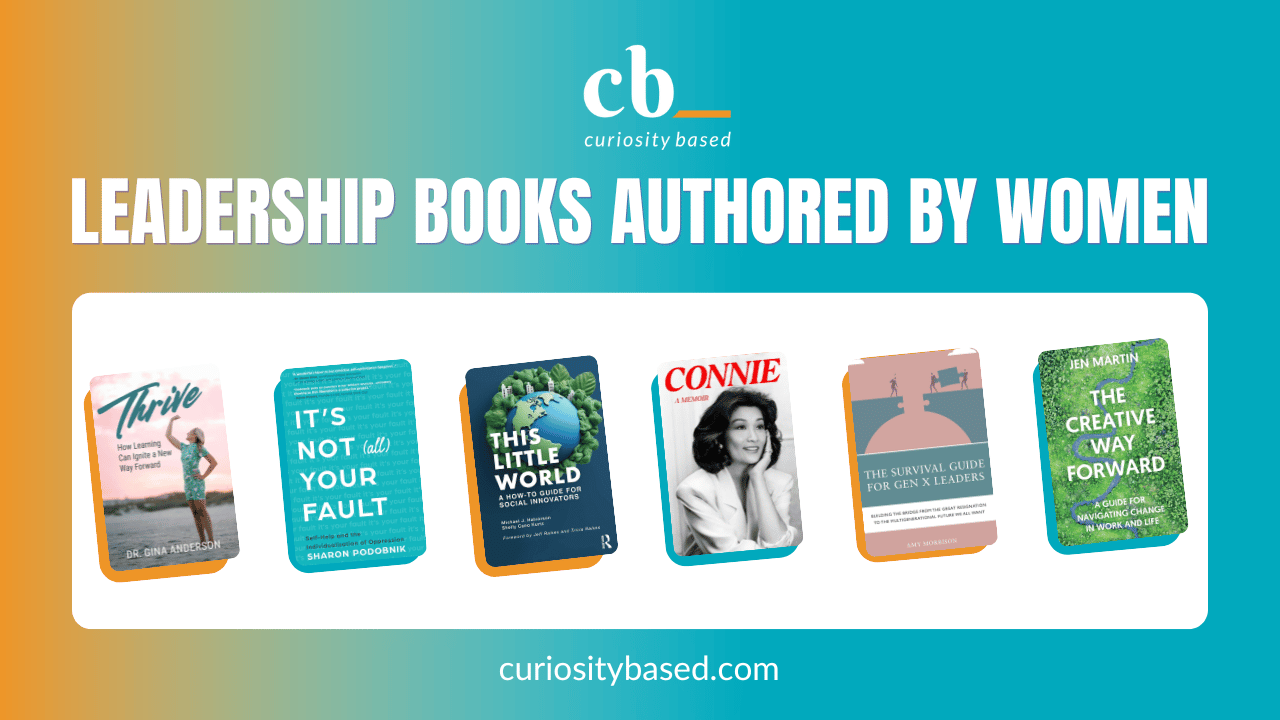
- The Creative Way Forward: A Guide for Navigating Change in Work and Life by Jen Martin
- Building a Life Worth Living: A Memoir by Marsha M. Linehan
- Connie: A Memoir by Connie Chung
- The Survival Guide for Gen X Leaders: Building the Bridge from the Great Resignation to the Multigenerational Future We All Want by Amy Morrison
- Creating Equity with Gracious Space: Applications in Inclusion and Belonging by Patricia Hughes
- Bird by Bird: Some Instructions on Writing and Life by Anne Lamott
- Be BOLD Today: Unleash Your Potential, Master Your Mindset, and Achieve Success by Leigh Burgess
- A Writer’s Diary by Virginia Woolf
- Chinese Cinderella:The true story of an unwanted daughter by Adeline Yen Mah
- Dust track on a road by Zora Neale Hurston
- Blackbird:A childhood lost and found by Jennifer Lauck
- Falling Leaves by Adeline Yen Mah
- Desert Flower by Cathleen Miller and Waris Dirie
- Female Innovators at Work: women on top of tech by Danielle Newnham
- Sharing Space: An Astronaut’s Guide to Mission, Wonder, and Making Change by Cady Coleman
- It’s Not (All) Your Fault: Self-Help and the Individualization of Oppression by Sharon Podobnik
- This Little World: A How-To Guide for Social Innovators by Shelly Kurtz
- Joyful Living: Find Joy in the Journey by Lien Ngu
- Budding Lotus in the West: Buddhism from an Immigrant’s Feminist Perspective by Nhi Yến Đỗ Trần
- The Let Them Theory by Mel Robbins
- Thrive: How Learning Can Ignite a New Way Forward by Gina Anderson
- Beyond Inclusion, Beyond Empowerment A Developmental Strategy to Liberate Everyone by Leticia Nieto
- Get Up And Get On It: A Black Entrepreneur’s Lessons on Creating Legacy and Wealth by Dana Frank
- DEI-ing: A Guide to Navigating the Gotdamn Mess They’ve Made of Diversity, Equity, and Inclusion by Dr. Cheryl Ingram
- Purple Harvest: Planting Goals, Growing Truths by Dr. Rashonda Harris
- Incidents in the life of a slave girl by Harriot Jacobs
- Death of Innocence by Christopher Benson and Mamie Till-Mobley
- We are bridges by Cassandra lane
- Singing away the hunger by Mpho ‘M’atsepo Nthunya
- Calling In: How to Start Making Change with Those You’d Rather Cancel by Loretta Ross
- Men we reaped by Jesmyn Ward
- Lovely One: A Memoir by Ketanji Brown Jackson
- All that she carried by Tiya Miles
- Constructing a nervous system by Margo Jefferson
- Zami:A new spelling of my name by Audre Lorde
- The source of self-regard by Tony Morrison
- The light we carry by Michelle Obama
- Barracoon “The story of The last Black Cargo by Zora Neale Hurston
- Black Women Taught Us: An Intimate History of Black Feminism by Jenn M. Jackson, PhD
- On Thriving: Harnessing Joy Through Life’s Great Labors by Brandi Sellerz-Jackson
- Madness: Race and Insanity in a Jim Crow Asylum by Anotonia Hylton
- First Things First: Hip-Hop Ladies Who Changed the Game by Nadirah Simmons
- Ida B. Wells Marches for the Vote by Dinah Johnson
- Praiseong for the Kitchen Ghosts: Stories and Recipes from Five Generations of Black Country Cooks by Crystal Wilkinson
- I Did a New Thing: 30 Days to Living Free by Tabitha Brown
- Nothing is Missing: A Memoir of Living Bodly by Nicole Walters
- The Elevation Approach by Tina Wells
- Black Titan: A.G. Gaston and the Making of a Black American Millionaire by Carol Jenkins & Elizabeth Gardner Hines
- Black, White, and The Grey by Mashama Bailey & John O. Morisano
- Bee Fearless: Dream Like a Kid by Mikaila Ulmer
- Wildflower: A Memoir by Aurora James
- Please Don’t Sit On My Bed In Your Outside Clothes by Phoebe Robinson
- The Black Girl’s Guide to Financial Freedom: Build Wealth, Retire Early, and Live the Life of Your Dreams by Paris Woods
- Life Coaching for Successful Women: Powerful Questions, Practical Answers by Valorie Burton
- Of Greed and Glory: In Pursuit of Freedom for All by Deborah G. Plant
- Worthy by Jada Pinkett Smith
- Leslie F*cking Jones: A Memoir by Leslie Jones
- Eartha & Kitt: A Daughter’s Love Story in Black and White by Kitt Shapiro
- I Saw Death Coming: A History of Terror and Survival in the War Against Reconstruction by Kidada E. Williams
- Inside Out: The Equity Leader’s Guide to Undoing Institutional Racism by Caprice D. Hollins
- The Urgent Life: My Story of Love, Loss, and Survival by Bozoma Saint John
- Unbowed by Wangari Maathai
- Acting Up: Winning in Business and in Life Using Down-Home Wisdom by Janice Bryant Howroyd
- The Extraordinary Power of Leader Humility by Marilyn Gist
- I’m Still Here: Black Dignity in a World Made for Whiteness by Austin Channing Brown
- The Purpose of Power: How We Come Together When We Fall Apart by Alicia Garza
- A Good Cry, What we Learn from Tears and Laughter by Nikki Giovanni
- Speaking Truth to Power by Anita Hill
- Good Night Sotries for Rebel Girls: 100 Real-Life Tales of Black Girl Magic by Sonja Thomas, Lilly Workneh
- Undrowned: Black Feminist Lessons from Marine Mammals by Alexis Pauline Gumbs
- Impolite Conversations: On Race, Politics, Sex, Moneu, and Religion by Cora Daniels & John L. Jackson Jr.
- You Got This!: Unleash Your Awesomness, Find Your Path, and Change Your World by Maya Penn
- Black Girls Rock!: Owning Our Magic, Rocking Our Truth by Beverly Bond
- The Last Black Unicorn by Tiffany Haddish
We hope that you enjoyed exploring our 2025 leadership books written by women and those that identify as women. You can check out our other leadership book lists by authors who identify as Black,Hispanic/Latino/Latinx, AANHPI, Native American, and those who identify as having disabilities.