banner

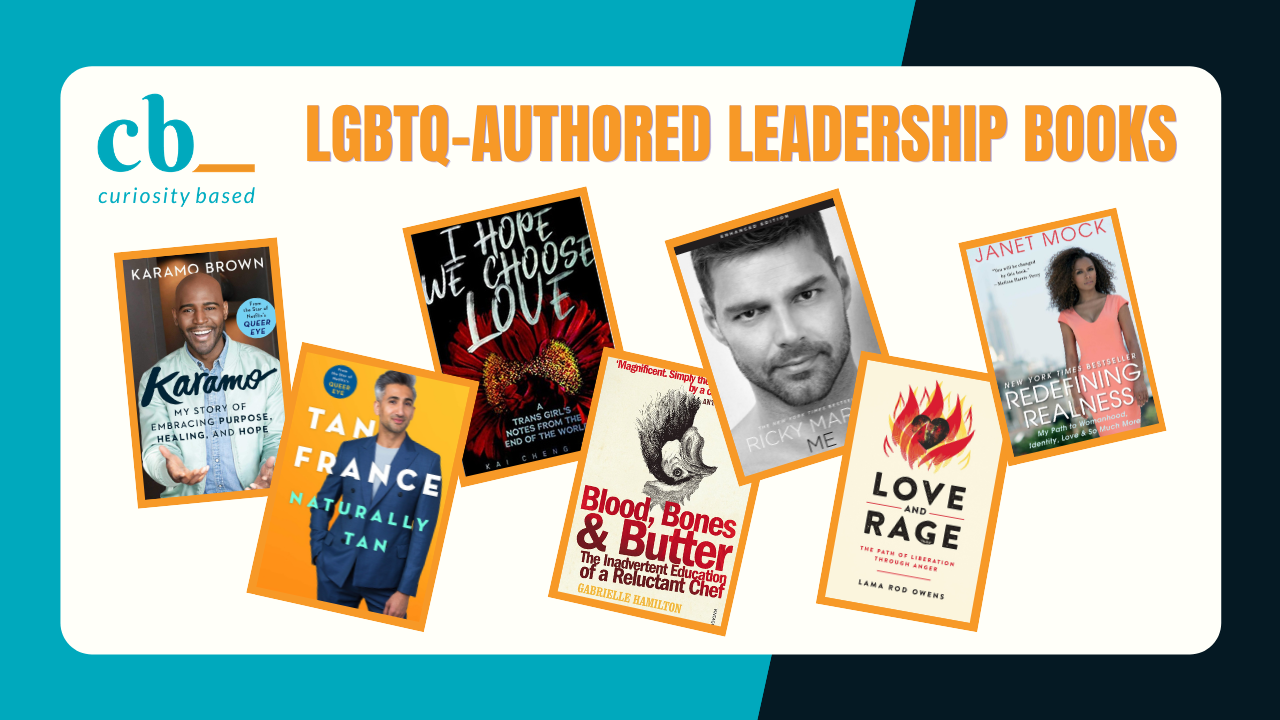
2021 LGBTQ-Authored Leadership Books

We created this list to promote leadership narratives written by those who identify as lesbian, gay, bisexual, transgender, and queer (LGBTQ). This list is meant to be a resource, not an official endorsement. The books are not ranked or listed in any particular order. 

(Download the PDF version of this list in the link above)

  1. The Fire Next Time by James Baldwin
  2. Entrepreneurial You: Monetize Your Expertise, Create Multiple Income Streams, and Thrive by Dorie Clark
  3. Seriously…I’m Kidding by Ellen Degeneres
  4. Shut Up, I’m Talking!: Coming Out in Hollywood and Making It to the Middle by Jason Stuart
  5. All In: An Autobiography by Billie Jean King
  6. An Archive of Hope: Harvey Milk’s Speeches and Writings by Harvey Milk
  7. Rainbow Warrior: My Life in Color by Gilbert Baker
  8. The Normal Heart by Larry Kramer
  9. Freddie Mercury: A Life, In His Own Words by Freddie Mercury
  10. GuRu by RuPaul
  11. The Rainbow Comes and Goes: A Mother and Son on Life, Love, and Loss by Anderson Cooper & his mom Gloria Vanderbilt
  12. Redefining Realness: My Path to Womanhood, Identity, Love & So Much More by Janet Mock
  13. Untamed by Glennon Doyle
  14. Punch Me Up to the Gods: A Memoir by Brian Broome
  15. Leaving Isn’t the Hardest Thing: Essays by Lauren Hough
  16. Pride Leadership: Strategies for the LGBTQ+ Leader to be the King or Queen of Their Jungle by Steven Yacovelli
  17. Fit to Serve: Reflections on a Secret Life, Private Struggle, and Public Battle to Become the First Openly Gay U.S. Ambassador by James C. Hormel & Erin Martin
  18. Sister Outsider: Essays and Speeches by Audre Lorde
  19. In Defense of Our America: The Fight for Civil Liberties in the Age of Terror by Anthony D. Romero
  20. Beautiful on the Outside: A Memoir by Adam Rippon
  21. Tim Cook: The Genius Who Took Apple to the Next Level by Leander Kahney
  22. The Path Forward: Rethinking Federal Marijuana Policy by Rep. Earl Blumenauer and Rep. Jared Polis
  23. Forever Young: The Story of Troye Sivan by Alana Wulff
  24. The Man Without a Face: The Unlikely Rise of Vladimir Putin by Masha Gessen
  25. Surviving Autocracy by Masha Gessen
  26. Raf Simons by Sunny Chanday
  27. Hunger: A Memoir of (My) Body by Roxane Gay
  28. Everybody’s Got Something by Robin Roberts & Veronica Chambers
  29. Dear White People by Justin Simien
  30. Michael Kors by Sunny Chanday
  31. This is the Fire: What I say to My Friends About Racism by Don Lemon
  32. Binge by Tyler Oakley
  33. Tom Ford by Tom Ford
  34. On the Other Side of Freedom: The Case for Hope by DeRay Mckesson
  35. Blood, Bones, & Butter: The Inadvertent Education of a Reluctant Chef by Gabrielle Hamilton
  36. White Girls by Hilton Als
  37. Oh Myyy!: There Goes the Internet by George Takei
  38. They Called Us Enemy: Expanded Edition by George Takei
  39. The 9 Steps to Financial Freedom: Practical and Spiritual Steps to You Can Stop Worrying by Suze Orman
  40. Zero to One: Notes on Startups, or How to Build the Future by Peter Thiel & Blake Masters
  41. Trust: America’s Best Chance by Pete Buttigieg
  42. Shortest Way Home: One Mayor’s Challenge and a Model for America’s Future by Pete Buttigieg
  43. Nothing Personal by James Baldwin
  44. Revelations: The Autobiography of Alvin Ailey by Alvin Ailey & A. Peter Bailey
  45. In the Shadow of the Eagle: A Tribal Representative in Maine by Donna M. Loring
  46. Me by Ricky Martin
  47. And a Voice to Sing With: A Memoir by Joan Baez
  48. The Holly Woodlawn Story: A Low Life in High Heels by Holly Woodlawn
  49. The Gloria Anzaldúa Reader (Latin America Otherwise) by Gloria Anzaldúa
  50. I’m the One That I Want by Margaret Cho
  51. WOLFPACK: How to Come Together, Unleash Our Power, and Change the Game by Abby Wambach
  52. A Room of One’s Own by Virginia Woolf
  53. Emergent Strategy: Shaping Change, Changing Worlds edited by Adrienne Maree Brown
  54. We Will Not Cancel Us edited by Adrienne Maree Brown
  55. Love and Rage by Lama Rod Owens
  56. I Hope We Choose Love: A Trans Girl’s Notes from the End of the World by Kai Cheng Thom
  57. Martina by Martina Navratilova
  58. Pleasure Activism: The Politics of Feeling Good edited by Adrienne Maree Brown
  59. Octavia’s Brood: Science Fiction from Social Justice Movements edited by Adrienne Maree Brown
  60. How to Get Stupid White Men Out of Office: The Anti-Politics, Un-Boring Guide to Power edited by Adrienne Maree Brown
  61. The Children of Harvey Milk: How LGBTQ Politicians Changed the World by Andrew Reynolds
  62. Representation Matters: How Victory Fund, Victory Institute, and LGBT Leaders are Transforming America by Karen Ocamb
  63. Serving in Silence by Margarethe Cammermeyer
  64. Frank: A Life in Politics from the Great Society to Same-Sex Marriage by Barney Frank
  65. Pressure is a Privilege: Lessons I’ve Learned from Life and the Battle of the Sexes by Billie Jean King
  66. Gunn’s Golden Rules: Life’s Little Lessons for Making it Work by Tim Gunn
  67. Queer Eye: Love Yourself, Love Your Life by Antoni Porowski, Tan France, Jonathan Van Ness, Bobby Berk & Karamo Brown
  68. My Story of Embracing Purpose, Healing, and Hope by Karamo Brown
  69. Naturally Tan by Tan France
  70. Over The Top by Jonathan Van Ness
  71. 71. One life by Megan Rapinoe & Emma Brockes
  72. It’s About Damn Time by Arlan Hamilton
  73. Inclusion: Diversity, the New Workplace, & The Will to Change by Jennifer Brown
  74. Sissy: A Coming-of-Gender Story by Jacob Tobia
  75. Borderlands/ La Frontera: The New Mestiza by Gloria Anzaldúa

We are continually adding to this list. If you have any recommended additions please send us an email at info@curiositybased.com so we can add it here.

Interested in reading more? Check out our AAPI-Authored Leadership Booklist!

Read our other leadership booklists too!
Creating new relationships through peer coaching calls

As an entrepreneur who started my business during the pandemic, enlarging my network presents special challenges. I’ve found the pandemic also present opportunities. I’ve learned the value of the peer coaching call.

When I talked to Christy Johnson, founder of Artemis Connection, about joining her Project Ascendance for women launching new programs, I told her I wanted to be part of a cohort. I knew the value of the cohort model having created and led other cohort- based learning opportunities.

Halfway through the two-month program, I got an email from a classmate, Lizzie Mintus of Here’s Waldo Recruiting, asking to connect. As part of the program, we were given a database of our classmates’ names, phone numbers, specific asks for help as well as skills they could offer to others. We were encouraged to reach out. I hadn’t found the time to reach out to anyone up until  Lizzie reached out. We ended up talking for an hour on Mother’s Day morning about her website and my new communication tool

I was so inspired by our conversation that  I reached out to five other women from the class who I’d worked with in breakout groups. Almost all of them responded to my Calendly to set up a time within the next two weeks. After that I decided to reach out to another five women from the class. And then to the remaining four women who I didn’t have any direct contact with. Most of the women responded. Each classmate thanked me for reaching out first.  Someone has to be the first to ask for a connection in a new relationship. 

As we are slowly emerging and preparing for post-pandemic life, I don’t want to go back to my old life of running from meeting to meeting. While I still have to expand my network, I realize that a phone call or a Zoom meeting are great substitutes for in-person meetings. I also realized having a few 1:1 meetings that are meaningful is better than going to meetings with one big meeting where I don’t get to actually know anyone. 

Tips on reaching out

I’ve previously written about the value of deepening relationships during the pandemic because I felt like strengthening already existing ties was much easier than creating new connections without the serendipity of chance meetings at in-person events. This recent experience changed my mind. Virtual networking works.

Here are some tips:

  • Follow-up and ask for a meeting. I have been part of so-many meet and greets and networks where no one follows up. Here’s a template:  We met through this group_ (in case you think they might not remember). Would you be interested in having a follow-up conversation about (whatever you talked about) or I would like to talk to you about (name a topic that you anticipate but will be mutually beneficial)
  • Offer a variety of times to meet. Some people are working full-time jobs, so have evening and weekend times available as well as daytime spots. Link to a self-scheduling tool (Calendly is my favorite) to make it easy to identify  a time. 
  • Have a clear ask. Strangers may want to know, “What do you want? Are you trying to sell something to me?” Alleviate their concerns by making it clear what you want. “I’d like your advice on… “ and also make it clear that you’d like to  help them as well.  

Setting the agenda

With Lizzie, I suggested we schedule an hour, half of the time for her questions and the other half for mine. We got to practice our elevator pitches and give each other feedback. The format worked so well that  I made the same suggestion to others in the class. I got to review pitch decks, talk through business structures, and discuss how to prototype products. I asked my classmates to do a user test of a new assessment tool I was refining. 

The format makes the purpose of the conversation very clear. Some might not like the transactional nature of it. As someone who spends a lot of time relationship building, I see this particular format as a fair way to determine if there’s chemistry and potential for future conversation . It’s refreshing to know that each person gets half the time and there is no trying to politely segue to another topic. It has reduced the instances when I listen to someone talk for 50 min about their problems and I get 10 min to talk. This happens because I like to think of myself as a good listener and I don’t want to interrupt someone. This format helps me express my needs.

I find people appreciate  simple directness. You get time and I get time. We help each other by listening. Sometimes, people may hesitate to ask for help because they feel they have nothing to offer in response. I’ve been surprised by how helpful I can be to those in totally different fields. Don’t underestimate the power your fresh perspective can bring to someone else’s problem.

This agenda reduces the stress of ambiguity. People generally want to be polite. We don’t always come to the conversation with the same expectations. Stating the intention for the conversation takes the guesswork out of trying to read facial expressions and verbal cues. Mind you, I do this for strangers or new acquaintances, not with established relationships. To be honest, I think if I had started some relationships off this way, there would be more reciprocity in conversation.

I think this explicitly reciprocal approach can protect yourself from “takers”. Some people, particularly over LinkedIn, want to arrange a time to chat with me about something they’re working on. I now suggest this reciprocal agenda, which shifts it to a peer- coaching session. Some people never respond to this suggestion. I  protect myself from pure takers who aren’t willing to give me some of their time in exchange for theirs. 

Decide who to contact

After successfully using this approach, I want to bring this model to another  circle of entrepreneurs I will join this summer. I might even reach out to my older networks. 

People will either want to participate or they won’t. You won’t know until you try. 

I’ve really valued hearing from different perspectives. Whenever I ask for someone to react to something I’m working through, I get to learn about how someone thinks and approaches things, often very differently from how I do it. Instead of small talk, which is often trying to find points of consensus, I’m looking for something I don’t know yet and I’m explicit in asking for that. While validation is nice, I would rather learn about my blind spots. 

I am interested to see if this model will help me  engage with  groups of people I never truly tapped into. To see if I can create new relationships from old networks of acquaintances. I’ll let you know how it goes.

Tahmina Watson’s Legal Heroes in the Trump Era

As a nonlawyer, I didn’t know if Legal Heroes in the Trump Era by Tahmina Watson, Alex Stonehill (Editor), Caroline Doughty (Editor) would resonate with me. To my surprise, I thoroughly enjoyed the slim book packed with stories of mostly ordinary lawyers stepping up to do extraordinary things.

Disclaimer: I first met the author in 2015 when we collaborated to advocate for more visas for immigrant startup founders. Considering our previous relationship, I’m putting extra effort in highlighting not only the strengths, but also the weaknesses, of the book. Watson didn’t ask me to do a review and I first purchased the book as a regular consumer, with no intention of reviewing it.

Back to the review. The book highlights the stories of 14 lawyers, all “legal heroes”, who have “responded to the crisis of the Trump era in innovative and inspiring ways.” Many are ordinary lawyers working in private practice, though she also includes the stories of the head of Washington state ACLU, a retired judge, and the Washington state Attorney General Bob Ferguson, who also introduces the book. Watson herself is an immigration lawyer with her own private practice. Watson also shares her own story of feeling moved to cofound a nonprofit, Washington Immigrant Defense Network (WIDEN). She is passionate about both immigration policy and her legal profession.

Here’s what I particularly enjoyed about the book:

The personal stories of each Legal Hero Watson goes into each person’s family background, what inspired them to go into law, and the event that sparked them to take action. I got a sense of not just what these legal heroes do, but who they are as people. The 14 individuals represented a diversity of approaches to activism, including writing a children’s book about immigration and creating a multilingual website to identify lawyers in case they get detained at the airport. Each story was just 5 to 6 pages long, which meant 14 stories did not feel tedious. 

Talking about the law in simple English I appreciated the absence of legalese. Watson writes in a clear, engaging manner and explained the world of lawyers to a nonlawyer. In the process, I got to learn about interesting policies without getting bogged down in the details. I particularly enjoyed being introduced to different legal cases, such “as a class action suit challenging the secret federal program called controlled application review and resolution program (CARRP), which blocks certain immigrant application through malevolent stalling.” (22) I felt more informed. 

The evolution of a grassroots movement told from the perspective of lawyersI got to see the mobilization of activists entirely through the eyes of lawyers. In an effort to be inclusive in recounting history, many writers try to capture the multitude of different perspectives and angles and the result is a thin spread of everything and little depth anywhere. Watson has a refreshingly unapologetic passion for her fellow lawyers and pride in what the profession can do to help the world. 

Here’s what I the book could have done differently:

The author’s story is absent Considering the richness of the personal details in the profiles, there is a surprising lack of information on the author herself in the book. The rare glimpses are buried in a few mentions and in the acknowledgment section. I want to have a better understanding of Watson as a person, perhaps revealing some of the same kinds of details that she shared about the legal heroes themselves, especially since she is not just a writer, but one of the key instigators. 

Needs less “Trump,” more “Trump era” For the most part, Watson focused on describing “Trump administration” policy but there are times that she slips into criticizing Trump himself, assuming the readers are also anti-Trump. It would have been more true to the title to refer to the deep political rifts that the Trump administration symbolized but did not entirely cause. The book could have acknowledged of how the policies the legal heroes fought against reflected growing anti-immigrant sentiment in the US and around the world, not just the views of the Trump administration.

Focus on immigration stories With the exception of the profile on the environmental justice lawyer, all of the stories are around those lawyers focused on immigration or civil rights with a strong connection to immigration. The environmental justice work deserves to be acknowledged, but in this context, the one outlier felt distracting. Or the book could have been enlarged to include more stories of environmental justice and civil rights lawyers to have a more even distribution of topics.

I also got three insights from the book that I can apply to life in general.

The private sector can contribute to social change I’ve talked to many well meaning people working in the private sector who believe that positive social change is limited to government or nonprofits and that their role is limited to providing funding, through taxes and philanthropy. I appreciated the profiles of those who were able to create change from within the private sector, such as the Lawyers for Racial Justice Initiative, as well as those who volunteered working for nonprofits or ended up creating their own, like Lawyers for Good Government. The profiles demonstrate that there is a meaningful, non transactional, role for the private sector to contribute to social change.

Innovation can be approaching something from a different angles There are many examples of innovative approaches and new partnerships and only one example using technology. I loved the example about Margaret O’Donnell who created legal dramas out of Powerpoint workshop presentations to build empathy for those going through immigration court. It gave me ideas for communicating differently.

Curiosity enabled resourcefulness Lawyers, like doctors, specialize in different aspects of the law and usually don’t venture outside their traditional practice areas. The premise for WIDEN was there weren’t enough immigration lawyers to give pro bono services and there were thousands of non-immigration lawyers who wanted to be able to help. Those non-immigration lawyers had to be curious enough to learn from immigration lawyers so that they could be sufficiently trained to meet the demand for legal aid. 

This is inspirational, quick read not just for lawyers but for anyone asking, “What can i do to help?”, not just now, but in the future as well. Be wowed by those stories of those who asked the question and then answered it with their own form of activism.

Interested in reading more? Check out our Women in Political Leadership Series.

Making the Moment Matter: How Anti-Asian Hate Surfaces Perceptions of Asians Inside and Outside the Asian Community

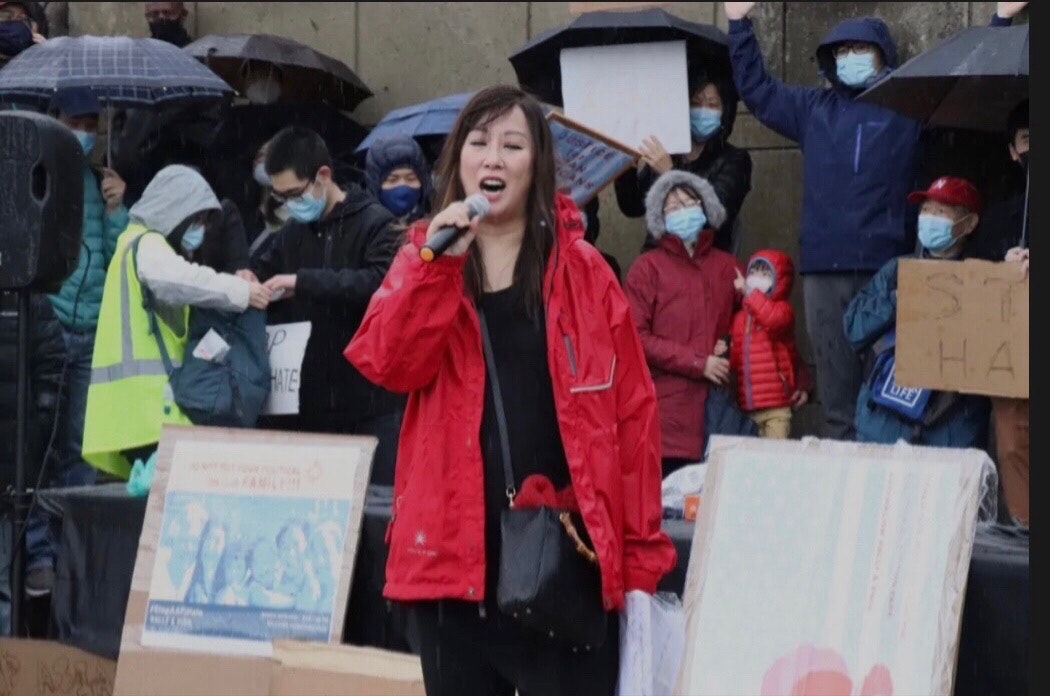
Our nation has seen a marked increase in anti-Asian hate crimes and violence, especially against Asian women, with the recent killings in Atlanta as the most heart-breaking example. 

This is a personal matter for me as an Asian woman leading a team of all-Asian women. Though we come from different parts of Asia – Vietnam, China, Myanmar and Korea – many people don’t understand those distinctions. “Asians” are seen as a monolithic group.  This inability to recognize our individual cultures stems from a lack of exposure to Asians – of knowing us and understanding our communities. Instead, we are known as, and resented for, being the “model minority.” This stereotype casts Asians as high achieving, hard working minorities who won’t complain and will passively accept abuse. What’s more, some might say, we have suffered far less than Black and Brown people, so what do Asians really have to complain about? 

How can we use this current moment to challenge this perception? And how do Asians also change this sentiment among ourselves? 

I talked to an Asian American girlfriend recently about people reaching out to check in. “I know it’s bad, but what we are experiencing isn’t as bad as what Black people have suffered,” she said. 

I understood what she meant. I have felt this guilt myself. As if I don’t deserve to feel bad, so I should not say anything. That’s part of our problem.

Last month, I facilitated numerous workshops on Exploring Race-Related Assumptions. In one session, an Asian American man told me he’d assumed  the facilitator was going to be white or Black –  he was surprised I was Asian. He shared that he’d been taught not to initiate hard conversations or create controversy by Asian elders. I so appreciated his candor. His comment reinforces how Asians, particularly women, are seen as not willing to speak out and how this perception is internalized even within our Asian communities. 

His comment also underlines why we must challenge assumptions of what leaders look like. We must see Asian women beyond the stereotypes of the silent work horses, tigers moms or submissive sexual objects. 

Aside from wanting to foster more curiosity in the world, I founded my company to celebrate and contribute to the diversification of leadership – to challenge how we lead and provide an alternative to the dominant narratives that are largely constructed by white men in the US. I respect many of those men.  I also think there’s room for other voices. Increasing exposure for Asians is  critical to fighting stereotypes and expectations of passiveness. 

America has a short attention span. That means the mic is being passed around to raise awareness to any given cause. It was #metoo movement yesterday, it could be Black Lives Matter again tomorrow. Today it’s anti-Asian hate. 

Asians have to take the mic when it’s given to us. If we don’t, we reinforce the perception that even Asians don’t think our pain matters or at least, that it matters less than the pain of others who face prejudice based on the color of their skin. We then perpetuate the idea that we are a stoic, model minority willing to take the blows. And we don’t give others a chance to stand in solidarity with us, to console us, when we need them. 

I appreciate all of my non-Asian friends who have reached out to check in on me and who are standing in solidarity with my community. The first friend to let me know he was thinking about me was a Black man from the American South. It was through our friendship he started understanding the different Asian cultures; he said he grew up referring to all Asians as “Chinese.” Through exposure, our perceptions of one another changed. I am also grateful I have my team and other Asian friends to commiserate with. I feel seen and heard.

I know that Chung Park, Hyun Jung Grant, Suncha Kim, Yong Ae Yue, Delaina Ashley Yaun, Xiaojie Tan, Daoyou Feng, and Paul Andre Michels did not die in Atlanta in vain. Their lives will serve as a reminder that even Asians need to step up and take the mic to loudly and publicly decry hate. And a reminder that we won’t be standing alone when we do.

What’s Next?

Interested in reading more? Check out our AAPI-Authored Leadership Booklist!

Stacey Abrams’ leadership manual is for all leaders

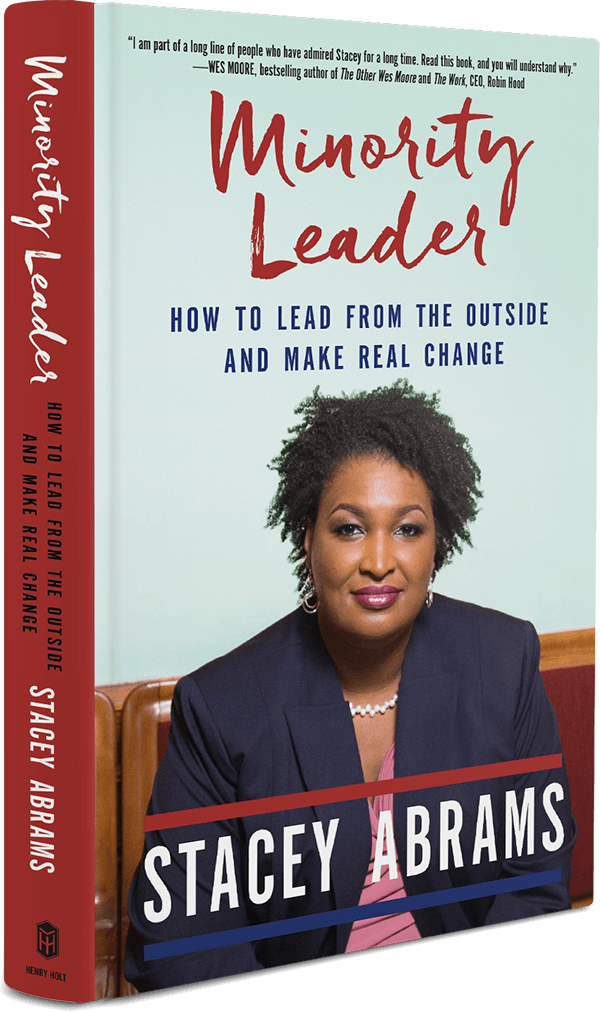
I am in awe whenever I hear US politician and voting rights advocate Stacey Abrams speak. I knew I’d be inspired before I even started Abrams’ Lead from the Outside: How to Build Your Future and Make Real Change. But, I didn’t expect the part-memoir, part- leadership manual to be so practical, approachable, and relatable. Despite our very different backgrounds and life experiences, I could strongly identify with Abrams’ stories of self-doubt and anxiety. 

There are few “how-to guides” to help those of us who are “other” or in the minority to become the ones in charge. She defines “minority leader” as “anyone who exists outside the structure of traditional white male power.” “Power and leadership are hard, and it’s especially difficult for those who start out weighed down by stereotypes and lack of access,” Abrams wrote in the introduction of the book. She goes on to say  this is “a handbook written for our experiences and challenges -a means to become the minority leaders who own our power and change our worlds.” 

There are topics and aspects of the book that  have universal appeal and leadership application, not just for minority leaders. I’ll quote liberally from Abrams’ book to spare you from my paraphrasing. 

Work Sheets

Every chapter ends with a worksheet of questions to answer. My favorite is the worksheet entitled “trying again” in which you have to note “when you have been tempted to pretend you know the answer.” The worksheets pose probing  questions that make people reflect deeply on what they want.

Money Matters – 

I found the chapter where Abrams shares how much she didn’t understand about managing her finances, even after graduating from law school and earned a high salary to be  vulnerable and relatable. . In a country where most people don’t have more than $400 in savings, it’s not just Abrams’ advice that is valuable. Her admission of shame about money also matters. She wrote, “To get ahead of the problem, explore your personal relationship with money and the explicit and silent claims made on your resources.”

Limited resources

Abrams encourages creativity when faced with limited resources. I call this being “scrappy.” Abrams turns the lack of resources into an advantage: “one of the best things about being in the minority is the fact that limited resources often lead to extensive creativity.” “We can become conditioned to believe we must have the same assets, or worse, that whatever we have at hand is inherently inferior. But the creative ability of minority leaders lies in excavating the valuable in what is available.”  No matter who you are, you can feel like you don’t have enough or you could use more. This lesson can apply to anyone, regardless of their resources. 

Aside from these universal lessons, I found the book refreshing and deeply relevant to my own experience as a “minority leader.” As a Vietnamese-American woman and a refugee, there were so many parts that resonated with me deeply. I keep rereading passages because Abrams  articulated how I and so many of my minority leader friends feel, in such clear, jargon-free prose. 

Acknowledging ambitions

The need to express our ambitions is a constant theme of the book. Abrams writes, “It’s crucial to understand and internalize our very right to even be ambitious. Because, for too many of us, we are stopped in our tracks before we begin because we don’t believe we deserve to want more. And it is by wanting that we begin.” Abrams keeps her goals on a spreadsheet, as a way of “acknowledging in print.” Abrams talked about being asked about her future political aspirations by a reporter while running for governor in 2017. She knew she wasn’t “supposed” to openly say she aspired to become president and yet she decided to say it aloud. There was initial backlash about her audacity, but it was followed by public support. This chapter made me reflect on how often I refrain from saying what I want aloud out of fear I will sound too audaciously ambitious.

Minority fear– I have read a lot of good leadership books by white men and they don’t address or acknowledge what Abrams refers to as “minority fear,” presumably because it doesn’t exist for the majority of these writers. Abrams writes, “Fears about how our differences are perceived, about stereotypes that kept us back, about how our success begets more responsibility will never die. But once we are aware of them, we can work with them” (48). These words felt especially true: “the complexity of minority fear cannot be dismissed by saying ‘don’t be afraid’ or ‘let it go.’ Our trepidation is often grounded in stories we’ve heard (35).” There were so many times that all my other minority leader friends and I could do was commiserate and comfort one another in this shared fear. Even Abrams admits that she encourages people to be fearless in inspirational speeches. In this chapter, she fully acknowledges the  normalcy  of minority fear instead of being  swept away as if it were trivial. The fear is the “permanent companion eating away at confidence, ambition, relationships, and dreams.” 

Let your-light shine-Abrams writes about minority leaders having to “confront..a tacit call for meekness, to hide our light lest we become too noticeable and change the discussion” (135). To fit in, I have had to dim my light so that others don’t feel threatened, I’ve had to shrink unconsciously. I’ve talked to many friends who were the “only” or the “minority” in their workplace who had to dim their light to make other people feel comfortable. Abrams talked about an Advanced Placement English teacher who didn’t want her to use advanced vocabulary words in class, even though she was using the words correctly, lest it make other students feel bad. 

Abram’s book shows how when you build something for a minority group, it can actually benefit the majority. Her book is an example of the curb cut effect, in which features designed for a minority then benefit a much larger group than the people they were designed for. The “curb cut” refers to how ramps were cut into the sidewalk for wheelchairs and now these curb cuts are part of standard sidewalk design.

The book was originally titled “Minority Leader” in the first edition. It makes a lot of sense that it was renamed to” Lead from the Outside” in the later edition. Even though it was built for “outsiders”, I can imagine insiders and those within the majority will find valuable leadership lessons and insight into what those who are outsiders have to face. 

I hope Abrams’ book also inspires other “outsiders” to share their leadership lessons so that the general public can benefit.

Interested in reading more? Stacey Abrams is featured on our Women-Authored Leadership Booklist.

Stacey Abrams is featured on our Black-Authored Leadership Booklist!