banner

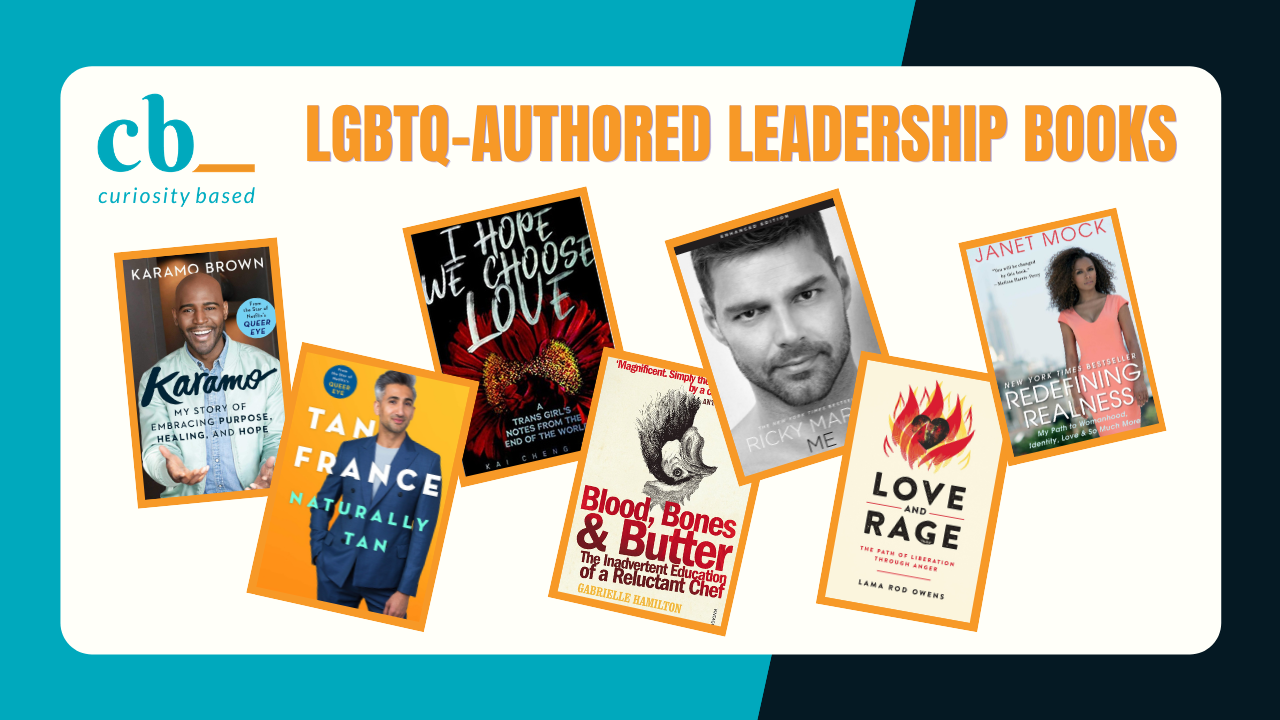
2021 LGBTQ-Authored Leadership Books

We created this list to promote leadership narratives written by those who identify as lesbian, gay, bisexual, transgender, and queer (LGBTQ). This list is meant to be a resource, not an official endorsement. The books are not ranked or listed in any particular order. 

(Download the PDF version of this list in the link above)

  1. The Fire Next Time by James Baldwin
  2. Entrepreneurial You: Monetize Your Expertise, Create Multiple Income Streams, and Thrive by Dorie Clark
  3. Seriously…I’m Kidding by Ellen Degeneres
  4. Shut Up, I’m Talking!: Coming Out in Hollywood and Making It to the Middle by Jason Stuart
  5. All In: An Autobiography by Billie Jean King
  6. An Archive of Hope: Harvey Milk’s Speeches and Writings by Harvey Milk
  7. Rainbow Warrior: My Life in Color by Gilbert Baker
  8. The Normal Heart by Larry Kramer
  9. Freddie Mercury: A Life, In His Own Words by Freddie Mercury
  10. GuRu by RuPaul
  11. The Rainbow Comes and Goes: A Mother and Son on Life, Love, and Loss by Anderson Cooper & his mom Gloria Vanderbilt
  12. Redefining Realness: My Path to Womanhood, Identity, Love & So Much More by Janet Mock
  13. Untamed by Glennon Doyle
  14. Punch Me Up to the Gods: A Memoir by Brian Broome
  15. Leaving Isn’t the Hardest Thing: Essays by Lauren Hough
  16. Pride Leadership: Strategies for the LGBTQ+ Leader to be the King or Queen of Their Jungle by Steven Yacovelli
  17. Fit to Serve: Reflections on a Secret Life, Private Struggle, and Public Battle to Become the First Openly Gay U.S. Ambassador by James C. Hormel & Erin Martin
  18. Sister Outsider: Essays and Speeches by Audre Lorde
  19. In Defense of Our America: The Fight for Civil Liberties in the Age of Terror by Anthony D. Romero
  20. Beautiful on the Outside: A Memoir by Adam Rippon
  21. Tim Cook: The Genius Who Took Apple to the Next Level by Leander Kahney
  22. The Path Forward: Rethinking Federal Marijuana Policy by Rep. Earl Blumenauer and Rep. Jared Polis
  23. Forever Young: The Story of Troye Sivan by Alana Wulff
  24. The Man Without a Face: The Unlikely Rise of Vladimir Putin by Masha Gessen
  25. Surviving Autocracy by Masha Gessen
  26. Raf Simons by Sunny Chanday
  27. Hunger: A Memoir of (My) Body by Roxane Gay
  28. Everybody’s Got Something by Robin Roberts & Veronica Chambers
  29. Dear White People by Justin Simien
  30. Michael Kors by Sunny Chanday
  31. This is the Fire: What I say to My Friends About Racism by Don Lemon
  32. Binge by Tyler Oakley
  33. Tom Ford by Tom Ford
  34. On the Other Side of Freedom: The Case for Hope by DeRay Mckesson
  35. Blood, Bones, & Butter: The Inadvertent Education of a Reluctant Chef by Gabrielle Hamilton
  36. White Girls by Hilton Als
  37. Oh Myyy!: There Goes the Internet by George Takei
  38. They Called Us Enemy: Expanded Edition by George Takei
  39. The 9 Steps to Financial Freedom: Practical and Spiritual Steps to You Can Stop Worrying by Suze Orman
  40. Zero to One: Notes on Startups, or How to Build the Future by Peter Thiel & Blake Masters
  41. Trust: America’s Best Chance by Pete Buttigieg
  42. Shortest Way Home: One Mayor’s Challenge and a Model for America’s Future by Pete Buttigieg
  43. Nothing Personal by James Baldwin
  44. Revelations: The Autobiography of Alvin Ailey by Alvin Ailey & A. Peter Bailey
  45. In the Shadow of the Eagle: A Tribal Representative in Maine by Donna M. Loring
  46. Me by Ricky Martin
  47. And a Voice to Sing With: A Memoir by Joan Baez
  48. The Holly Woodlawn Story: A Low Life in High Heels by Holly Woodlawn
  49. The Gloria Anzaldúa Reader (Latin America Otherwise) by Gloria Anzaldúa
  50. I’m the One That I Want by Margaret Cho
  51. WOLFPACK: How to Come Together, Unleash Our Power, and Change the Game by Abby Wambach
  52. A Room of One’s Own by Virginia Woolf
  53. Emergent Strategy: Shaping Change, Changing Worlds edited by Adrienne Maree Brown
  54. We Will Not Cancel Us edited by Adrienne Maree Brown
  55. Love and Rage by Lama Rod Owens
  56. I Hope We Choose Love: A Trans Girl’s Notes from the End of the World by Kai Cheng Thom
  57. Martina by Martina Navratilova
  58. Pleasure Activism: The Politics of Feeling Good edited by Adrienne Maree Brown
  59. Octavia’s Brood: Science Fiction from Social Justice Movements edited by Adrienne Maree Brown
  60. How to Get Stupid White Men Out of Office: The Anti-Politics, Un-Boring Guide to Power edited by Adrienne Maree Brown
  61. The Children of Harvey Milk: How LGBTQ Politicians Changed the World by Andrew Reynolds
  62. Representation Matters: How Victory Fund, Victory Institute, and LGBT Leaders are Transforming America by Karen Ocamb
  63. Serving in Silence by Margarethe Cammermeyer
  64. Frank: A Life in Politics from the Great Society to Same-Sex Marriage by Barney Frank
  65. Pressure is a Privilege: Lessons I’ve Learned from Life and the Battle of the Sexes by Billie Jean King
  66. Gunn’s Golden Rules: Life’s Little Lessons for Making it Work by Tim Gunn
  67. Queer Eye: Love Yourself, Love Your Life by Antoni Porowski, Tan France, Jonathan Van Ness, Bobby Berk & Karamo Brown
  68. My Story of Embracing Purpose, Healing, and Hope by Karamo Brown
  69. Naturally Tan by Tan France
  70. Over The Top by Jonathan Van Ness
  71. 71. One life by Megan Rapinoe & Emma Brockes
  72. It’s About Damn Time by Arlan Hamilton
  73. Inclusion: Diversity, the New Workplace, & The Will to Change by Jennifer Brown
  74. Sissy: A Coming-of-Gender Story by Jacob Tobia
  75. Borderlands/ La Frontera: The New Mestiza by Gloria Anzaldúa

We are continually adding to this list. If you have any recommended additions please send us an email at info@curiositybased.com so we can add it here.

Interested in reading more? Check out our AAPI-Authored Leadership Booklist!

Read our other leadership booklists too!
Creating new relationships through peer coaching calls

As an entrepreneur who started my business during the pandemic, enlarging my network presents special challenges. I’ve found the pandemic also present opportunities. I’ve learned the value of the peer coaching call.

When I talked to Christy Johnson, founder of Artemis Connection, about joining her Project Ascendance for women launching new programs, I told her I wanted to be part of a cohort. I knew the value of the cohort model having created and led other cohort- based learning opportunities.

Halfway through the two-month program, I got an email from a classmate, Lizzie Mintus of Here’s Waldo Recruiting, asking to connect. As part of the program, we were given a database of our classmates’ names, phone numbers, specific asks for help as well as skills they could offer to others. We were encouraged to reach out. I hadn’t found the time to reach out to anyone up until  Lizzie reached out. We ended up talking for an hour on Mother’s Day morning about her website and my new communication tool

I was so inspired by our conversation that  I reached out to five other women from the class who I’d worked with in breakout groups. Almost all of them responded to my Calendly to set up a time within the next two weeks. After that I decided to reach out to another five women from the class. And then to the remaining four women who I didn’t have any direct contact with. Most of the women responded. Each classmate thanked me for reaching out first.  Someone has to be the first to ask for a connection in a new relationship. 

As we are slowly emerging and preparing for post-pandemic life, I don’t want to go back to my old life of running from meeting to meeting. While I still have to expand my network, I realize that a phone call or a Zoom meeting are great substitutes for in-person meetings. I also realized having a few 1:1 meetings that are meaningful is better than going to meetings with one big meeting where I don’t get to actually know anyone. 

Tips on reaching out

I’ve previously written about the value of deepening relationships during the pandemic because I felt like strengthening already existing ties was much easier than creating new connections without the serendipity of chance meetings at in-person events. This recent experience changed my mind. Virtual networking works.

Here are some tips:

  • Follow-up and ask for a meeting. I have been part of so-many meet and greets and networks where no one follows up. Here’s a template:  We met through this group_ (in case you think they might not remember). Would you be interested in having a follow-up conversation about (whatever you talked about) or I would like to talk to you about (name a topic that you anticipate but will be mutually beneficial)
  • Offer a variety of times to meet. Some people are working full-time jobs, so have evening and weekend times available as well as daytime spots. Link to a self-scheduling tool (Calendly is my favorite) to make it easy to identify  a time. 
  • Have a clear ask. Strangers may want to know, “What do you want? Are you trying to sell something to me?” Alleviate their concerns by making it clear what you want. “I’d like your advice on… “ and also make it clear that you’d like to  help them as well.  

Setting the agenda

With Lizzie, I suggested we schedule an hour, half of the time for her questions and the other half for mine. We got to practice our elevator pitches and give each other feedback. The format worked so well that  I made the same suggestion to others in the class. I got to review pitch decks, talk through business structures, and discuss how to prototype products. I asked my classmates to do a user test of a new assessment tool I was refining. 

The format makes the purpose of the conversation very clear. Some might not like the transactional nature of it. As someone who spends a lot of time relationship building, I see this particular format as a fair way to determine if there’s chemistry and potential for future conversation . It’s refreshing to know that each person gets half the time and there is no trying to politely segue to another topic. It has reduced the instances when I listen to someone talk for 50 min about their problems and I get 10 min to talk. This happens because I like to think of myself as a good listener and I don’t want to interrupt someone. This format helps me express my needs.

I find people appreciate  simple directness. You get time and I get time. We help each other by listening. Sometimes, people may hesitate to ask for help because they feel they have nothing to offer in response. I’ve been surprised by how helpful I can be to those in totally different fields. Don’t underestimate the power your fresh perspective can bring to someone else’s problem.

This agenda reduces the stress of ambiguity. People generally want to be polite. We don’t always come to the conversation with the same expectations. Stating the intention for the conversation takes the guesswork out of trying to read facial expressions and verbal cues. Mind you, I do this for strangers or new acquaintances, not with established relationships. To be honest, I think if I had started some relationships off this way, there would be more reciprocity in conversation.

I think this explicitly reciprocal approach can protect yourself from “takers”. Some people, particularly over LinkedIn, want to arrange a time to chat with me about something they’re working on. I now suggest this reciprocal agenda, which shifts it to a peer- coaching session. Some people never respond to this suggestion. I  protect myself from pure takers who aren’t willing to give me some of their time in exchange for theirs. 

Decide who to contact

After successfully using this approach, I want to bring this model to another  circle of entrepreneurs I will join this summer. I might even reach out to my older networks. 

People will either want to participate or they won’t. You won’t know until you try. 

I’ve really valued hearing from different perspectives. Whenever I ask for someone to react to something I’m working through, I get to learn about how someone thinks and approaches things, often very differently from how I do it. Instead of small talk, which is often trying to find points of consensus, I’m looking for something I don’t know yet and I’m explicit in asking for that. While validation is nice, I would rather learn about my blind spots. 

I am interested to see if this model will help me  engage with  groups of people I never truly tapped into. To see if I can create new relationships from old networks of acquaintances. I’ll let you know how it goes.