banner

5 Tricks to Make Networking Events Less Stressful

5 Strategies to Reduce Stress at Networking Events

Even though I attend many networking events, they still make me nervous. Over time, I’ve found a few strategies that help me feel less stressed and more intentional. Here are five tricks to make networking events less stressful. These tips are ones I use myself, and they can help you approach networking with confidence.

1. Set a Realistic Goal

Don’t expect to make ten new friends at one event. That goal will likely leave you disappointed. Instead, I aim to meet one to three people I’d genuinely like to follow up with. This shift helps me focus on building quality relationships, not just chatting with as many people as possible.

2. Pretend You’re a Journalist

If talking about yourself feels intimidating, flip the script. Ask people questions, just as a journalist would. Most people enjoy sharing their stories. By approaching conversations this way, you’ll not only ease your nerves but also walk away with interesting insights.

3. Bring a Buddy

Invite a friend to attend the event with you. Agree to approach people together so that you both engage in conversations. The key is not to hide in the corner and only talk to each other. Having a buddy makes networking less intimidating, especially when you feel awkward standing alone.

4. Treat Conversations as Practice

Think of networking as practice, not performance. Each interaction is a chance to test new stories, jokes, or even your elevator pitch. Go in seeking feedback and accept whatever you get. With this mindset, every conversation becomes an opportunity to improve.

5. Remember You’re Not Alone

You may think you’re the only one feeling stressed, but that’s rarely true. Many people get anxious at networking events. Some are just better at hiding it. Keeping this in mind makes the experience less isolating.

Networking doesn’t have to feel overwhelming. By setting realistic goals, asking questions, and shifting your perspective, you can reduce stress and build stronger connections.

Which of these strategies resonates with you? Share your thoughts in the comments. If you found this helpful, pass it along to a friend or share it on social media.
How to Say “No” to a Friend or Acquaintance

How do you say “no” to a friend or acquaintance when they ask you for help? It can be really hard to ask for help, even from your friends. When someone asks me for help, I’m thinking about how difficult it must’ve been for them to ask for help. I naturally want to say yes not because I want to do the thing but because I want to reward them for having the courage to ask for help. Even though you’re compassionate, it doesn’t mean you have to say yes. I think this leads to more people who say yes than they should.

It’s important to recognize the way we say no to our coworkers will be different from the way that we say no to our friends or acquaintances.

Here are 8 tips for saying “no” to your a friend’s or acquaintance’s request:

  1. Try to understand the request.

    Take the time to ask questions. At least making the effort to consider the request. When you ask questions about their ask, you may find out they actually need something else or you may be able to think of another solution.

  2. If you need more time or information, tell them when you can give them an answer by.

    Think about how you feel when you ask someone for help over email or text message and they don’t respond. Do you get worried about how they might be thinking about you? I’ve experienced times where friends have totally ignored me when I’ve asked for help and I was left worrying about how my request made them feel. So when you need more time to think about something, it’s important to just respond to say that. You could say, “I’ll let you know at the end of the week if I can do it.”

  3. If the request is easy to understand and for you it’s a clear-cut “no,” respond as soon as you can.

    They might be worried and wondering how you’re feeling about their request. If you can’t do it, just let them know the sooner the better. A lot of people, if they don’t want to say yes, or if they can’t say yes, then they just don’t say anything at all. I think if you know it’s something you can’t do, just say that immediately. It’s better than dragging it out.

  4. Say “no and offer an alternative solution.

    “I can’t do that, however, I can do this.” I’ve been asked to attend fundraising events and to make cash donations. Instead, I have offered to donate my services so they can auction them off. When you asked questions about their request, you may have come up with alternative solutions, so share them. You do want to be helpful, even if you’re not the one who can directly help them.

  5. Share why you need to say no and what your priorities are.

    It could be helpful for the person to understand why you were saying no. This doesn’t require a long, apologetic explanation. In fact, the shorter the better. I’ve shared “It’s really difficult for me to meet up in person, so I will have to say no.” or “I won’t be able to make a donation because my priority giving areas are this and this” or “All of my resources are dedicated to my family right now.” 

  6. Don’t give them hope if this is something you’ll never do.

    Think about if this is something you’d ever be willing to do or not. For example, some people have asked me to pet sit and I know I will never pet sit. In this case, I just let them know I have no experience with pets and I would not be a good candidate for pet sitting.

  7. Welcome them to ask you again if you do want to be asked.

    Sometimes you have to say no because you’re not available to help them out. If that’s the case, you can let them  know by saying “I can’t help this time, please do ask again though.” It lets them know that even though you can’t do it now, it lets them know they can still ask you again in the future. 

  8. Wish them good luck.

    Even if you can’t help them and you don’t know anyone who can, wish them some luck so they can get the help they need. 

If you can say no to your friends and acquaintances more easily, then you will be practicing setting your boundaries and limiting how many things you do out of a self imposed sense of obligation versus out of true desire.

Which of these strategies resonates with you? I’d love for you to share your thoughts in the comments section. If this was helpful, please share it with a friend or post it on social media.

How to Say No Professionally to Your Boss or Co-worker

“How can I say no to extra work from my boss or colleague professionally and without making enemies?”

We’ve all been in situations where a coworker or our manager or even our manager’s manager has asked us for help to do something that we don’t want to do or that we don’t have the capacity to do. It could be very difficult considering the power dynamics. It’s important to recognize that the way we say no to our friends/acquaintances will be different from the way that we say no at work.

The first stage is to demonstrate that you’re trying to understand and consider their request with these four steps:

1. Paraphrase the request to confirm understanding.

You could say something like “just to make sure I understand your request, is this what you’re saying…?” You may even find out what you think they’re asking for is different from what they think they’re asking for.

2. Try to determine if you’re the only one who can do it the extra work.

Determine if there’s someone else on the team who could help you with the extra work. You may feel you are deflecting on work if you do that, but think of it as you are sharing the responsibility and opportunity for exposure. Perhaps your coworker hadn’t thought about asking certain people because they just don’t have as much exposure to them. There’s an opportunity for you to play “connect the dots” and you can say “I think so-and-so can help you.” 

3. Try to understand if their deadline is fixed or flexible.

If you’re willing to do it, yet you need more time, try to see if you can negotiate the deadline. Sometimes people feel more urgency than is actually needed. Try to understand what they’re thinking about by determining this deadline.

4. If you need time to process and let them know when you’ll get back to them.

People often just want to hear a response, whether that is in the affirmative or negative. Yet so often, if we can’t respond in the affirmative, we don’t even respond in the negative. You will earn a lot of goodwill if you respond as soon as possible and offer when you can get back to them.

In the second stage, decide if you still want to say no. If you still want to say no after you have discussed the request, take these five steps to say no professionally:

1. Share what you have to give up doing if you fulfill their request.

Oftentimes when people are asking for help, they don’t think about what you might have to give up in order for you to accommodate the request. You just have to tell them.

2. Ask them what they think you should give up or delay to fulfill their request.

After you tell them what you’re working on, you can turn the question onto them and ask what they think you should give up. This also signals you do have to give something up in order to fulfill their request and it will make them rethink their request. Sometimes people make requests that are not thought out because they just want to get some relief.

3. Share alternative solutions to get their needs addressed.

You may know other people or resources in the department that they don’t know about and  they could actually use to fulfill their request. Even if you just say “you may want to check with so-and-so, you will start to be seen as helpful.

4. If the request makes you uncomfortable, say that.

If you’re not sure how to explain why, just say, “I don’t know why, I just don’t feel comfortable doing this.” There could be so many different reasons for why you don’t want to say yes to this request. If it makes you uncomfortable, share that. 

5. Reinforce your desire to be helpful and that you want to focus on doing your current job/task well.

You want to end the conversation on a positive note. Let them know you do want to be helpful, and yet there’s just so much other work, and no relief in sight, so you have to say no.

Which of these strategies on how to say no professionally resonates with you? I’d love for you to share your thoughts in the comments section. If this was helpful, please share it with a friend or post it on social media.

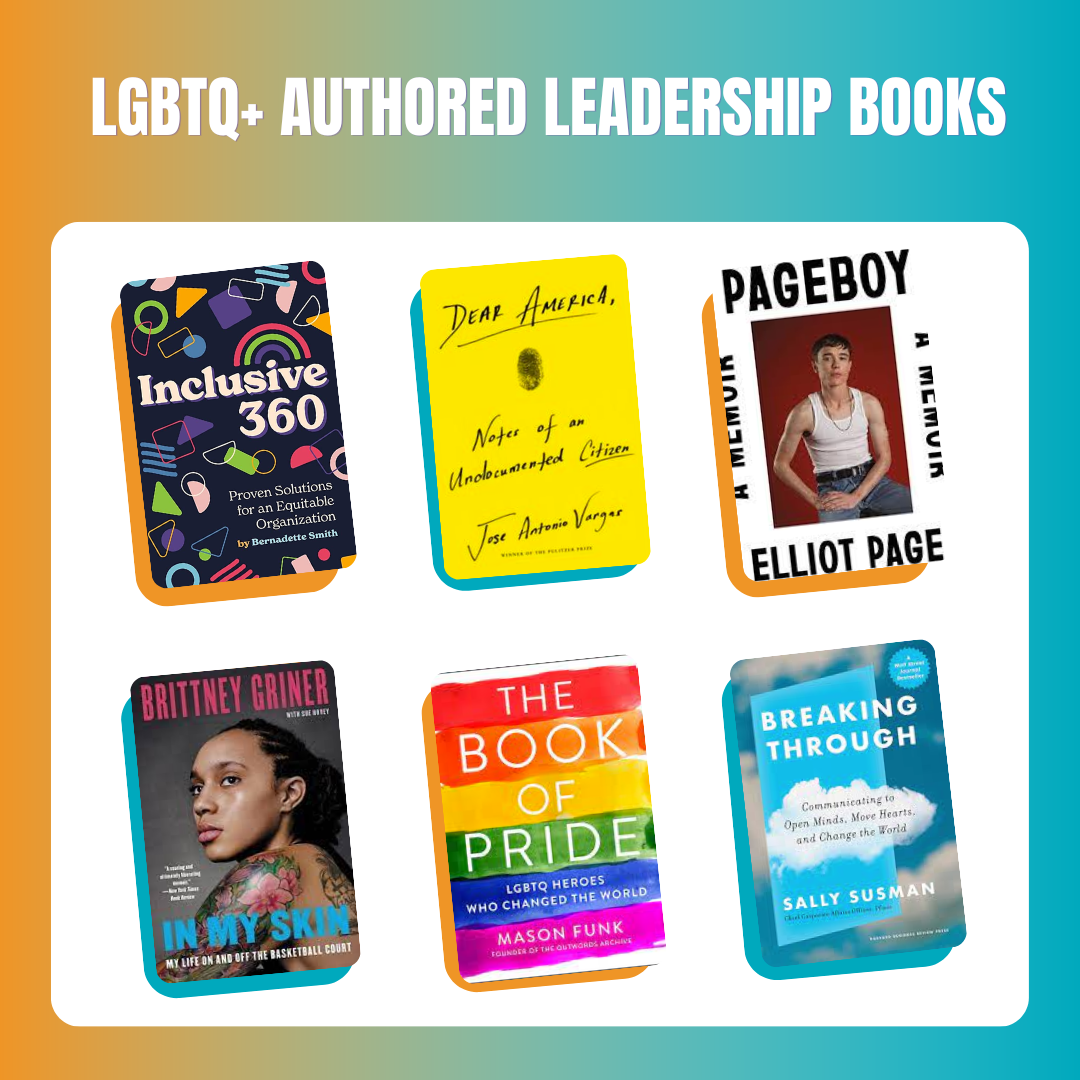
150 Leadership Books Written by LGBTQ+ Authors (2023)

We created this list to promote leadership narratives written by the LGBTQ+ community. This list is meant to be a resource, not an official endorsement. The books are not ranked or listed in any particular order.

Check out our other leadership book lists by authors who identify as LGBTQIA+, AANHPI, Native American, women, and those who identify as having disabilities.

  1. The Fire Next Time by James Baldwin
  2. Entrepreneurial You: Monetize Your Expertise, Create Multiple Income Streams, and Thrive by Dorie Clark
  3. Seriously…I’m Kidding by Ellen Degeneres
  4. Shut Up, I’m Talking!: Coming Out in Hollywood and Making It to the Middle by Jason Stuart
  5. All In: An Autobiography by Billie Jean King
  6. An Archive of Hope: Harvey Milk’s Speeches and Writings by Harvey Milk
  7. Rainbow Warrior: My Life in Color by Gilbert Baker
  8. The Normal Heart by Larry Kramer
  9. Freddie Mercury: A Life, In His Own Words by Freddie Mercury
  10. GuRu by RuPaul
  11. The Rainbow Comes and Goes: A Mother and Son on Life, Love, and Loss by Anderson Cooper & his mom Gloria Vanderbilt
  12. Redefining Realness: My Path to Womanhood, Identity, Love & So Much More by Janet Mock
  13. Untamed by Glennon Doyle
  14. Punch Me Up to the Gods: A Memoir by Brian Broome
  15. Leaving Isn’t the Hardest Thing: Essays by Lauren Hough
  16. Pride Leadership: Strategies for the LGBTQ+ Leader to be the King or Queen of Their Jungle by Steven Yacovelli
  17. Fit to Serve: Reflections on a Secret Life, Private Struggle, and Public Battle to Become the First Openly Gay U.S. Ambassador by James C. Hormel & Erin Martin
  18. Sister Outsider: Essays and Speeches by Audre Lorde
  19. In Defense of Our America: The Fight for Civil Liberties in the Age of Terror by Anthony D. Romero
  20. Beautiful on the Outside: A Memoir by Adam Rippon
  21. Tim Cook: The Genius Who Took Apple to the Next Level by Leander Kahney
  22. The Path Forward: Rethinking Federal Marijuana Policy by Rep. Earl Blumenauer and Rep. Jared Polis
  23. Forever Young: The Story of Troye Sivan by Alana Wulff
  24. The Man Without a Face: The Unlikely Rise of Vladimir Putin by Masha Gessen
  25. Surviving Autocracy by Masha Gessen
  26. Raf Simons by Sunny Chanday
  27. Hunger: A Memoir of (My) Body by Roxane Gay
  28. Everybody’s Got Something by Robin Roberts & Veronica Chambers
  29. Dear White People by Justin Simien
  30. Michael Kors by Sunny Chanday
  31. This is the Fire: What I Say to My Friends About Racism by Don Lemon
  32. Binge by Tyler Oakley
  33. Tom Ford by Tom Ford
  34. On the Other Side of Freedom: The Case for Hope by DeRay Mckesson
  35. Blood, Bones, & Butter: The Inadvertent Education of a Reluctant Chef by Gabrielle Hamilton
  36. White Girls by Hilton Als
  37. Oh Myyy!: There Goes the Internet by George Takei
  38. They Called Us Enemy: Expanded Edition by George Takei
  39. The 9 Steps to Financial Freedom: Practical and Spiritual Steps to You Can Stop Worrying by Suze Orman
  40. Zero to One: Notes on Startups, or How to Build the Future by Peter Thiel & Blake Masters
  41. Trust: America’s Best Chance by Pete Buttigieg
  42. Shortest Way Home: One Mayor’s Challenge and a Model for America’s Future by Pete Buttigieg
  43. Nothing Personal by James Baldwin
  44. Revelations: The Autobiography of Alvin Ailey by Alvin Ailey & A. Peter Bailey
  45. In the Shadow of the Eagle: A Tribal Representative in Maine by Donna M. Loring
  46. Me by Ricky Martin
  47. And a Voice to Sing With: A Memoir by Joan Baez
  48. The Holly Woodlawn Story: A Low Life in High Heels by Holly Woodlawn
  49. The Gloria Anzaldúa Reader (Latin America Otherwise) by Gloria Anzaldúa
  50. I’m the One That I Want by Margaret Cho
  51. WOLFPACK: How to Come Together, Unleash Our Power, and Change the Game by Abby Wambach
  52. A Room of One’s Own by Virginia Woolf
  53. Emergent Strategy: Shaping Change, Changing Worlds edited by Adrienne Maree Brown
  54. We Will Not Cancel Us edited by Adrienne Maree Brown
  55. Love and Rage by Lama Rod Owens
  56. I Hope We Choose Love: A Trans Girl’s Notes from the End of the World by Kai Cheng Thom
  57. Martina by Martina Navratilova
  58. Pleasure Activism: The Politics of Feeling Good edited by Adrienne Maree Brown
  59. Octavia’s Brood: Science Fiction from Social Justice Movements edited by Adrienne Maree Brown
  60. How to Get Stupid White Men Out of Office: The Anti-Politics, Un-Boring Guide to Power edited by Adrienne Maree Brown
  61. The Children of Harvey Milk: How LGBTQ Politicians Changed the World by Andrew Reynolds
  62. Representation Matters: How Victory Fund, Victory Institute, and LGBT Leaders are Transforming America by Karen Ocamb
  63. Serving in Silence by Margarethe Cammermeyer
  64. Frank: A Life in Politics from the Great Society to Same-Sex Marriage by Barney Frank
  65. Pressure is a Privilege: Lessons I’ve Learned from Life and the Battle of the Sexes by Billie Jean King
  66. Gunn’s Golden Rules: Life’s Little Lessons for Making it Work by Tim Gunn
  67. Queer Eye: Love Yourself, Love Your Life by Antoni Porowski, Tan France, Jonathan Van Ness, Bobby Berk & Karamo Brown
  68. My Story of Embracing Purpose, Healing, and Hope by Karamo Brown
  69. Naturally Tan by Tan France
  70. Over The Top by Jonathan Van Ness
  71. 71. One Life by Megan Rapinoe & Emma Brockes
  72. It’s About Damn Time by Arlan Hamilton
  73. Inclusion: Diversity, the New Workplace, & The Will to Change by Jennifer Brown
  74. Sissy: A Coming-of-Gender Story by Jacob Tobia
  75. Borderlands/ La Frontera: The New Mestiza by Gloria Anzaldúa
  76. Ma and Me: A Memoir by Putsata Reang
  77. In Search of Our Mothers’ Gardens: Womanist prose by Alice Walker
  78. Eat, Pray, Love: One woman’s search for everything across Italy, India, and Indonesia by Elizabeth Gilbert
  79. Truth or Dare: Encounters with power, authority, and mystery by Starhawk
  80. Stand Out: How to find your breakthrough idea and build a following around it by Dorie Clark
  81. Feeling Power: Emotions and education by Megan Boler
  82. And Now We Are Going to Have a Party by Nichola Griffith
  83. Marbles: Mania, Depression, Michelangelo, and Me by Ellen Forney
  84. All Boys Aren’t Blue: A Memoir-Manifesto by George M. Johnson
  85. Fairest: A Memoir by Meredith Talusan
  86. Hola Papi: How to Come Out in a Walmart Parking Lot and Other Life Lessons by John Paul Brammer
  87. Long Live the Tribe of Fatherless Girls: A Memoir by T Kira Madden
  88. People Change by Vivek Shraya
  89. I’m Afraid of Men by Vivek Shraya
  90. We Have Always Been Here: A Queer Muslim Memoir by Samra Habib
  91. Boy Erased: A Memoir of Identity, Faith, and Family by Garrard Conley
  92. Surpassing Certainty: What My Twenties Taught Me by Janet Mock
  93. Warrior Princess: A US Navy SEAL’s Journey to Coming Out Transgender by Kristen Beck & Anne Speckhard
  94. Virtually Human by Martine Rothblatt, PhD
  95. Zami: A New Spelling of My Name: A Biomythography by Audre Lorde
  96. I Can’t Date Jesus: Love, Sex, Family, Race, and Other Reasons I’ve Put My Faith in Beyonce by Michael Arceneaux
  97. I Don’t Want to Die Poor: Essays by Michael Arceneaux
  98. Unapologetic: A Black, Queer, and Feminist Mandate by Charlene Carruthers
  99. The Queer Advantage: Conversations with LGBTQ+ Leaders on Power of Identity by Andrew Gelwicks
  100. The G Quotient: Why Gay Executives are Excelling as Leaders… and What Every Manager Needs to Know by Kirk Snyder
  101. Gender Outlaw: On Men, Women, and the Rest of Us by Kate Bornstein
  102. No Ashes in the Fire: Coming of Age Black & Free in America by Darnell L Moore
  103. All The Things She Said: Everything I Know About Modern Lesbian and Bi Culture by Daisy Jones
  104. The Queering of Corporate America by Carlos A. Ball
  105. Inclusive 360: Proven Solutions for an Equitable Organization by Bernadette Smith
  106. My Greatest Save by Brianna Scurry 
  107. In My Skin by Brittney Griner
  108. Fun Home by Alison Bechdel 
  109. Gender Magic: Live Shamelessly, Reclaim Your Joy, & Step into Your Most Authentic Self by Rae McDaniel
  110. The Educator’s Guide to LGBT+ Inclusion: A Practical Resource for K-12 Teachers, Administrators, and School Support Staff by Kryss Shane
  111. Creating an LGBT+ Inclusive Workplace: The Practical Resource Guide for Business Leaders by Kryss Shane
  112. The Glass Closet: Why Coming Out is Good for Business by John Browne
  113. Straight Jacket: Overcoming Society’s Legacy of Gay Shame by Matthew Todd
  114. Stonewall: The Definitive Story of the LGBTQ Rights Uprising that Changed America by Martin Duberman
  115. Trailblazer: Lighting the Path for Transgender Equality in Corporate America by Mary Ann Horton
  116. A Burst of Light: and Other Essays by Audre Lorde
  117. Banned from California: – Jim Foshee – Persecution, Redemption, Liberation… and the Gay Civil Rights Movement by Robert C. Steele
  118. Body Becoming: A Path to Our Liberation by Robyn Henderson-Espinoza
  119. In Transit: Being Non-Binary in a World of Dichotomies by Dianne. E. Anderson
  120. We Are Everywhere: Protest, Power, and Pride in the History of Queer Liberation by Matthew Reimer
  121. Pageboy: A Memoir by Elliot Page
  122. Diary of a Misfit: A Memoir and a Mystery by Casey Parks
  123. A Place for Us: A Memoir by Brandon J. Wolf
  124. The Lie: A Memoir of Two Marriages, Catfishing & Coming Out by William Dameron
  125. You’re That Bitch: & Other Cute Lessons About Being Unapologetically Yourself by Bretman Rock
  126. The One You Want to Marry (And Other Identities I’ve Had): A Memoir by Sophie Santos
  127. Black Boy Out of Time by Hari Ziyad
  128. This Time for Me: A Memoir by Alexandra Billings
  129. Ten Steps to Nanette: A Memoir Situation by Hannah Gadsby
  130. All Down Darkness Wide: A Memoir by Sean Hewitt
  131. In the Dream House: A Memoir by Carmen Maria Machado
  132. The Best Strangers in the World: Stories from a Life Spent Listening by Ari Shapiro
  133. Deaf Utopia: A Memoir – and a Love Letter to a Way of Life by Nyle DiMarco
  134. We Can Be Heroes: A Survivor’s Story by Paul Burston
  135. Horse Barbie: A Memoir by Geena Rocero
  136. Baggage: Tales from a Fully Packed Life by Alan Cumming
  137. A Queer History of the United States by Michael Bronski
  138. The Velvet Rage: Overcoming the Pain of Growing Up Gay in a Straight Man’s World by Alan Downs, PhD
  139. Refusing Compulsory Sexuality: A Black Asexual Lens on Our Sex-Obsessed Culture by Sherronda J. Brown
  140. The Male Gazed: On Hunks, Heartthrobs, and What Pop Culture Taught Me About (Desiring) Men by Manuel Betancourt
  141. The Book of Pride: LGBTQ Heroes Who Changed the World by Mason Funk
  142. Lesbian Love Story: A Memoir in Archives by Amelia Possanza
  143. Secret City: The Hidden History of Gay Washington by James Kirchick
  144. Before We Were Trans: A New History of Gender by Dr. Kit Heyam
  145. Dear America: Notes of an Undocumented Citizen by Jose Antonio Vargas
  146. Is It Hot in Here (Or Am I Suffering for All Eternity for the Sins I Committed on Earth)? by Zach Zimmerman
  147. The Apartheid of Sex: A Manifesto on the Freedom of Gender by Martine Rothblatt, PhD
  148. Your First Million: Building a Path to Generational Wealth by Arlan Hamilton
  149. Breaking Through: Communicating to Open Minds, Move Hearts, and Change the World by Sally Susman
  150. How We Fight for Our Lives by Saeed Jones

View all of our leadership book lists here.

Revealing the 7 Signs of Passiveness

We often discuss other people’s passivity or passive-aggressive behavior, but we hesitate to acknowledge that we ourselves may exhibit passiveness or conflict avoidance. This is a broad category, so to better understand what we mean by “passive,” I have analyzed various actions and behaviors and categorized them into these seven forms of passiveness:

1. Non-response:

When you receive an invitation via email, text, or social media and choose not to respond at all if you can’t accept. Example: Chris emails me an invitation to their social function, but I never respond. This is a form of “non-response.”

2. Non-acknowledgment:

When someone makes a comment that goes unacknowledged, usually because it expresses an unpopular view and people want to avoid conflict. Example: Chris says, “I don’t think that (issue) is so bad,” after others have complained about it. Instead of addressing Chris, people pretend they didn’t hear and change the subject.

3. Not saying what you want to say:

When you have something to say but choose not to express it to avoid seeming aggressive. Example: Chris is playing loud music in an open space, and I’m annoyed, but I don’t say anything.

4. Deflection (the “yes-no”):

This occurs in situations similar to “non-response”, but the invitation is given in person, necessitating an immediate response. To avoid disappointing the other person or creating conflict or awkwardness, the recipient deflects the inquiry by not giving a direct answer. Example: Chris asks, “Do you want to get coffee sometime?” and I respond, “There are some great coffee shops in Seattle.” I neither say “no” nor “yes.”

5. Saying “yes” when you mean “no”:

When you decide to say “yes” even though you don’t mean it, just to avoid hurting the inquirer’s feelings. If the invitation was genuine, this can give false hope and lead to stringing the person along. Example: Chris suggests, “We should get coffee sometime,” and I respond, “Yes, let’s get coffee,” even though I have no intention of making time for it.

6. Talking behind someone’s back:

When you have negative feedback for someone but choose not to share it directly with them. Instead, you share it with others, often justifying it as “venting.” You may even feel like you’re being direct because you have voiced your feedback, even though you haven’t communicated it to the person concerned. Example: Chris does something that annoys me, but instead of addressing it directly with Chris, I decide to discuss it with our mutual acquaintances.

7. Ghosting:

When you commit to participating in something with a group of people but later decide you no longer want to be involved. Instead of informing the group, you choose not to respond to their communication or show up, essentially “disappearing” or “ghosting” them. Example: I was volunteering with Chris on a project, but they do something I disagree with. Instead of discussing it with Chris, I choose to “ghost” them.

I hope that by examining these examples, you will realize that we are all guilty of some form of passivity. If this post has been helpful, please share it with a friend or post it on social media.

If you are curious about your own passive nature and wondering if it is causing problems in your life, check out this blog post. You can also read my original article on the forms of passiveness here.

Is Your Passive Behavior a Problem?

I often hear from individuals who exhibit what could be perceived as passive behavior, claiming they don’t have the time or energy to address things directly. While that may be true in some cases, I believe it’s not the case for those who spend significant time contemplating the issue at hand. To help people determine whether their passiveness is truly a problem, I’ve devised a formula.

Consider “emotional time” (ET), which refers to the time spent thinking and ruminating about something—a measure of mental energy devoted to the issue. Then there’s “actual time” (AT), which represents the time it would take to change behavior. Actual time encompasses both the time required for action and the time taken to actually act.

To assess the significance of the issue, divide emotional time by actual time. If the quotient exceeds 5X, it suggests that you’re investing far more time and energy in thinking about something than it deserves.

Let’s consider an example: You’re sitting on a bus, and someone opens the window, leaving you shivering.

ET = 80 min (20 min of sitting resentfully in the cold on the bus + 60 min spent recounting the incident to 10 people, emphasizing the audacity of the person not closing the window)

AT = 5 min (thinking of how to politely ask the person to shut the window and actually uttering the words)

ET/AT quotient = 16x

If you value your time and frequently mention being busy, a 16x factor should prompt you to take action.

One important aspect of emotional time is that it can escalate over time. Currently, it might be 80 minutes, but it could increase to 100 minutes. Alternatively, you might only spend 20 minutes dwelling on the incident and never think about it again, resulting in a quotient of 4X, which is not problematic.

I hope this formula assists you in determining whether your passive behavior regarding an issue is indeed a problem or not. If this post was helpful, please share it with a friend or post it on social media.

You can read the 7 Signs of Passiveness blog post here as well as my original article on this topic.