5 Simple Ways to Build Strong Relationships at Work
Building strong relationships at work is essential for creating a positive environment and enhancing collaboration. Whether you’re new to your workplace or looking to deepen existing connections, Dr. Julie Pham shares these 5 simple ways to build strong relationships at work that will help foster a supportive and productive work atmosphere. These strategies are effective regardless of your role in the organization—whether you’re a leader, manager, or a team member.
5 Simple Ways to Build Strong Relationships at Work
1. Make Time for Connection
To strengthen your relationships, prioritize making time for connection. Ask open-ended questions instead of closed ones. For example, instead of asking, “How was your weekend?” you could ask, “What did you do over the weekend?” This encourages your colleagues to share specific experiences, fostering a more engaging conversation. For more tips on effective communication, check out our video on five proven icebreakers for team building.
2. Celebrate the Wins
It’s easy to get caught up in the daily grind, but don’t forget to celebrate your wins. Take the time to congratulate and acknowledge your colleagues for a job well done. Be specific in your praise, as this makes your acknowledgment more meaningful.
3. Ask for Help
Don’t hesitate to ask for help, especially from those who aren’t obligated to assist you. This can increase opportunities for collaboration and shows that you are willing to be vulnerable. It can be difficult to ask for help, but doing so can strengthen your relationships. For additional insights, check out our video on reframing asking for help as a way to deepen relationships.
4. Share What Influences You
Whenever relevant, share what influences your approach to work. For instance, you might say, “I grew up in an immigrant household where wasting resources was discouraged.” This context can help your team understand your perspective, especially during discussions like budgeting season.
5. Give Constructive Feedback
While it may seem counterintuitive, giving constructive feedback can actually strengthen relationships. When delivered with the intention of improvement, feedback shows that you care about your colleagues and want everyone to succeed.
We hope you find these tips helpful in building stronger relationships at work. If you did, please click like and share this post!
Drawing from her experience running her family’s newspaper during the Great Recession, to managing her own small business with a remote team, Dr. Julie Pham knows how to make the most of limited resources. Here she shares 5 budget-friendly gift-giving ideas at work.
The spirit of gift-giving during the holiday season is all about demonstrating appreciation for employees’ hard work. Gifts can also strategically reinforce company culture and values, foster a sense of belonging, encourage curiosity, and facilitate sharing.
However, for many small business owners, company-branded swag, big bonuses, and fully catered meals are often out of reach. If you have a limited budget, here are 5 budget-friendly gift-giving ideas at work to support your team, regardless of its size.
5 Budget-Friendly Gift-Giving Ideas at Work
1. Make Time for Intentional Connection
Set aside time during the workweek for team members to connect. This is particularly effective for remote teams or as an alternative to an in-person holiday party. Consider sending gift cards so everyone can grab something to eat or drink during this time together. A simple 60-minute virtual session with breakout rooms can prompt deep discussions and meaningful connections.
2. Host a Potluck
If you prefer an in-person meal, organize a potluck. Sponsor the drinks and the main dish, and ask everyone else to contribute other items based on their budget. This not only showcases culinary skills but also sparks conversations around the dishes brought. Be sure to welcome store-bought contributions as well.
3. Organize a Stuff Swap
Instead of Secret Santa or White Elephant exchanges, which require employees to spend their own money, consider a stuff swap. Employees can bring new or gently used items that their coworkers might enjoy. Any unclaimed items can be donated to charity, making it a great green gift-giving strategy.
4. Donate to Charity
Make a donation to a charity of each employee’s choice. Instead of providing a list of charities, allow them to decide where their dollar goes. This can be any amount, as every contribution is meaningful. Encourage employees to share their chosen charity, helping you learn what matters to them, whether it’s the Humane Society, their temple, or their children’s PTSA.
5. Use Credit Card Points for Gifts
Utilize your credit card points to purchase gift cards. This method can reinforce company values. For instance, Dr. Julie uses her points to give Amazon gift cards, allowing team members to support something they want to try out or learn. One team member even used hers to buy calligraphy materials for practicing lettering.
6. Ask Your Team for Ideas
Don’t feel you have to come up with all the solutions alone. Share your budget with your team and ask for their input. When Dr. Julie did this, one team member suggested organizing a virtual escape room and took care of the research and booking.
We hope you find these simple, budget-friendly work gift ideas helpful. If you did, please click like and share this video!
#8 How do you lead with curiosity in a fast-growing nonprofit?
Subscribe Now!
In this episode of Curiosity at Work, Dr. Julie Pham chats with Joe Sky-Tucker, CEO of Business Impact Northwest, to explore how curiosity shapes leadership and culture in the nonprofit world. Joe shares stories from his journey—moving from a micromanager to a leader who deeply listens to his team and finds creative ways to say “yes” whenever possible.
Joe talks about the power of promoting from within, trusting people to step into leadership roles, and why it’s important to admit when we don’t have all the answers. Julie and Joe also dive into the challenges of maintaining curiosity when everyone is swamped with deadlines and how finding time to pause and reflect can make all the difference.
If you’re interested in creating a workplace where everyone feels seen, heard, and valued, you’ll want to listen in. This conversation is full of practical advice and real talk on how to lead with empathy, especially when things get tough.
Listen to this episode and let us know in the comments: How do you keep curiosity alive in your work? Don’t forget to like, subscribe, and share with anyone who could use a dose of inspiration.
#7 Harnessing Storytelling and Curiosity in a Remote Culture with Jennifer Strachan
Subscribe Now!
Curiosity at Work: Jennifer Strachan on Storytelling, Organizational Culture, and Remote Work Transformation
In this episode of Curiosity at Work, Dr. Julie Pham is joined by Jennifer Strachan, CEO of inReach, a nonprofit that uses the power of storytelling to reshape cultural narratives. With a 25-year career in public and commercial media, including her experience as an Emmy Award-winning producer, Jennifer shares valuable insights into her journey and the work of inReach.
Embracing Remote Work and Organizational Change
Jennifer discusses how inReach navigated a major organizational shift by embracing a fully remote work model. She explains the challenges and opportunities that come with leading a remote team and fostering curiosity within a diverse group. Her approach emphasizes how curiosity can be a catalyst for transformation in both storytelling and organizational culture.
The Role of Communication and Values in Remote Settings
Jennifer highlights the importance of understanding individual communication styles in remote settings. She underscores how recognizing different styles can improve collaboration and strengthen team dynamics. She also discusses how values play a crucial role in shaping workplace culture, especially in a remote environment. By aligning values with communication practices, inReach has created a positive, inclusive, and productive work culture.
Building Connections through Storytelling and Creativity
One of the most creative ways in which Jennifer fosters connection within her team is by encouraging the sharing of personal stories and images. She believes that storytelling is not just for external audiences but is also a powerful tool for building internal relationships. These creative practices help build joy and strengthen bonds, even in a remote work environment.
How Curiosity Drives Organizational Culture and Transformation
Jennifer’s leadership philosophy is centered around curiosity as a transformative force. She believes that curiosity fuels innovation and helps organizations adapt to change. In this episode, Jennifer explains how curiosity drives both the storytelling work of inReach and the evolution of its internal culture. Tune in to learn how curiosity can lead to positive change and drive growth in nonprofit organizations.
We created this list to promote leadership books by disabled authors. This list is meant to be a resource, not an official endorsement. The books are not ranked or listed in any particular order.
1. A Body, Undone: Living On After Great Pain — Christina Crosby
2. A Face for Picasso: Coming of Age with Crouzon Syndrome — Ariel Henley
3. Adult ADHD: How to Succeed as a Hunter in a Farmer’s World — Thom Hartmann
4. An Unquiet Mind: A Memoir of Moods and Madness — Kay Redfield Jamison
5. And Now We Are Going to Have a Party: Liner Notes to a Writer’s Early Life — Nicola Griffith
6. Apocalyptic Best Practices: A unique approach to fear and change — Elisebeth VanderWeil
7. ASL Saved My Life…Until it didn’t — Jenni Kleinman Berebitsky
8. Authentic: The Myth of Bringing Your Full Self to Work — Jodi Ann Burey
9. Be Different — John Elder Robison
10. Being Heumann: an unrepentent memoir of a disability rights activist — Judith E. Heumann
11. Black, Blind, In Charge: A Story of Visionary Leadership and Overcoming Adversity — David A Paterson
12. Blind: A Memoir — Belo Cipriani
13. Body, Remember: A memoir — Kenny Fries
14. Brain on Fire: My Month of Madness — Susannah Cahalan
15. Brilliant Imperfection: Grappling With Cure — Eli Clare
16. Calling all Minds: How to Think and Create Like an Inventor — Temple Grandin
17. Care Work: Dreaming Disability Justice — Leah Lakshmi Piepzna-Samarasinha
18. Chef Interrupted — Trevis Gleason
19. Claiming Disability: Knowledge and Identity — Simi Linton
20. Count Us In: Growing Up with Down Syndrome — Jason Kingsley (Author), Mitchell Levitz (Author)
21. Crazy, Who Me?: My Journey as a Leader Overcoming Depression — John Panigas
22. Deaf in Japan: Signing and the Politics of Identity — Karen Nakamura
23. Deaf Utopia: A Memoir―and a Love Letter to a Way of Life — Coauthored by Nyle DiMarco
24. Defiant — Michael Scott Monje Jr.
25. Demystifying Disability: What to Know, What to Say, and How to Be an Ally — Emily Ladau
26. Disability Incarcerated: Imprisonment and Disability in the United States and Canada — Liat Ben-moshe (editor), Allison C. Carey (Editor), Chris Chapman (Editor), Angela Y. Davis (Foreword)
27. Disability Visibility: First-Person Stories from the Twenty-First Century — Alice Wong
28. Disabled Leadership — Dr. Tom A. Wiggins
29. Disarm Your Limits: The flight formula to lift you to success and propel you to the next horizon — Jessica Cox
30. Disfigured: On Fairy Tales, Disabiity and Making Space — Amanda Leduc
31. Dissonant Disabilities: Women With Chronic Illness Explore Their Lives — Michelle Owen, Diane Driedger (Editor)
32. Don’t Worry, He Won’t Get Far on Foot — John Callahan
33. Elegy for a Disease: A Personal and Cultural History of Polio — Anne Finger
34. Exile and Pride: Disability, Queerness, and Liberation — Eli Clare
35. Extraordinary Bodies: Figuring Physical Disability in American Culture and Literature — Rosemarie Garland-Thomson
36. Fading Scars: My Queer Disability History — Corbett O’Toole
37. Fall Down, Laughing: How Squiggy caught multiple sclerrosis and didn’t tell nobody — David Lander
38. Fearlessly Different: An Autistic Actor’s Journey to Broadway’s Biggest Stage — Mickey Rowe
39. Feminist Queer Crip — Alison Kafer
40. Find Another Dream — Maysoon Zayid
41. Gaby Brimmer: An Autobiography in Three Voices — Gaby Brimmer (Author), Elena Poniatowska
42. Goalkeeper: Memoir of Poet Peter Street — Peter Street, Lorraine Worsley-Carter (Foreword)
43. Golem Girl — Riva Lehrer
44. Haben: The deafblind woman who conquered Harvard Law — Haben Girma
45. Holding Change: The Way of Emergent Strategy Facilitation and Mediation — Adrienne Maree Brown
46. House of Prayer No. 2 — Mark Richard
47. How I Became a Human Being: A Disabled Man’s Quest for Independence — Mark O’Brien, Gillian Kendall (Contributor)
48. How I See It: A Personal and Historical View of Disability — H Penny Mishkin
49. How to Live Free in a Dangerous World: A Decolonial Memior — Shayla Lawson
50. I Am Not a Label — Cerrie Burnell
51. I Am Schizophrenic: Poetry from a beautiful brain — Kerenza Ryan
52. I Live a Life Like Yours: A Memoir — Jan Grue
53. I’ll Scream Later — Marlee Matlin
54. If at Birth You Don’t Succeed: My Adventures with Disaster and Destiny — Zach Anner
55. In the Province of Gods — Kenny Fries
56. Just Human: The Quest for Disability Wisdom, Respect, and Inclusion — Arielle Silverman, PhD
57. Laughing at My Nightmare — Shane Burcaw
58. Life in the Mind Interrupted: Essays on Mental Health and Disability in Higher Education — Katie Rose Guest Pryal
59. Limitless: The Power of Hope and Resilience to Overcome Circumstances — Mallory Weggemann
60. Look Me in the Eye: My Life with Asperger’s — John Elder Robison
61. Loud Hands: Autistic People, Speaking — Julia Bascom
62. Mad at School: Rhetorics of Mental Disability and Academic Life — Margaret Price
63. Madness: A Bipolar Life — Marya Hornbacher
64. Marbles: Mainia, Depession Michelangelo, and Me — Ellen Forney
65. Mean Baby: A Memoir of Growing Up — Selma Blair
66. Mean Little Deaf Queer: A Memoir — Terry Galloway
67. More the Same than Different: What I Wish People Knew About Respecting and Including People with Disabilities — Lorraine Cannistra
68. Moving Violations: Warzones, Wheelchairs, and Declarations of Independence — John Hockenberry
69. My Body is Not a Prayer Request: Disability Justice in the Church — Amy Kenny
70. Not a Poster Child: Living Well with a Disability – A Memoir — Francine Falk-Allen
71. Nothing about us without us: disability oppression and empowerment — James I. Charlton
72. On the Spectrum: Autism, Faith, and the Gifts of Neurodiversity — Daniel Bowman Jr.
73. Planet of the Blind — Stephen Kuusisto
74. Poster Child: A Memoir — Emily Rapp Black
75. Resistance and Hope: Essays by Disabled People — edited by Alice Wong
76. Rolling Warrior: The Incredible, Sometimes Awkward, True Sotry of a Rebel Girl on Wheels Who Helped Spark a Revolution — Judith Heumann
77. Rough Waters: From Surviving to Thriving with a Progressive Muscular Dystrophy — Heather C. Markham
78. Sick: A Memoir — Porochista Khakpour
79. Sitting Pretty: The View from My Oridinary Resilient Disabled Body — Rebekah Taussig
80. Songs of the Gorilla Nation: My Journey Through Autism — Dawn Prince-Hughes
81. Speedbumps: Florring it through Hollywood — Teri Garr
82. Staring: How We Look — Rosemarie Garland-Thomson
83. Still Me — Christopher Reeve
84. Strangers Assume My Girlfriend Is My Nurse — Shane Burcaw
85. Successfull to Burnt Out: Experiences of Women on the Autism Spectrum — Karletta Abianac
86. Switched On: A Memoir of Brain Change and Emotional Awakening — John Elder Robison
87. The ADHD Advantage: What You Thought Was a Diagnosis May Be Your Greatest Strength — Dale Archer, MD
88. The Body Silent: The Different World of the Disabled — Robert Francis Murphy
89. The Difference That Disability Makes — Rod Michalko
90. The Disability Experience: Working Toward Belonging — Hannalora Leavitt
91. The Essential Franklin Delano Roosevelt — Franklin Roosevelt
92. The Fully Recovered Mindset — Maddie Neibanck
93. The Ghost in My Brain: How a Concussion Stole My Life and How the New Science of Brain Plasticity Helped Me Get It Back — Clark Elliott
94. The History of My Shoes and the Evolution of Darwin’s Theory — Kenny Fries
95. The Obsessive Joy of Autism — Julia Bascom
96. The pretty one: on life, pop cultue, disability, and other reasons to fall in love with me — Keah Brown
97. The Story of My Life — Helen Keller
98. The Way I See It: A Personal Look at Autism and Asperger’s — Temple Grandin
99. The White Album — Joan Didion
100. The World I Live In — Helen Keller
101. Thinking in Pictures: My Life with Autism — Temple Grandin
102. To Know As We Are Known: Education as spiritual journey — Parker Palmer
103. Too Late to Die Young: Nearly True Tales from a Life — Harriet McBryde Johnson
104. Typed Words, Loud Voices — Various (Author), Amy Sequenzia (Editor), Elizabeth Grace (Editor)
105. Unleash Different: Achieving Business Success Through Disability — Rich Donovan
106. Unwritten Rules of Social Relationships: Decoding social mysteries theough autism’s unique perspectives — Temple Grandin
107. Waist-High in the World: A Life Among the Nondisabled — Nancy Mairs
108. Walking Papers: The Accident that Changed My Life, and the Business that Got Me Back on My Feet — Francesco Clark
109. We Are Never Meeting in Real Life — Smantha Irby
110. What Doesn’t Kill You: A Life with Chronic Illness – Lessons from a Body in Revolt — Tessa Miller
111. When the Chant Comes — Kay Ulanday Barrett
112. Why I Burned My Book and Other Essays on Disability — Paul K. Longmore
113. Wishful Drinking — Carrie Fisher
114. Year of the Tiger: An Activists Life — Alice Wong
115. You Don’t Have to Say You Love Me — Sherman Alexie
#6 Fostering Curiosity in Public Housing with Rachael Steward
Subscribe Now!
Curiosity at Work: Rachael Steward on Fostering Curiosity and Continuous Improvement in Public Housing
In this episode of Curiosity at Work, Dr. Julie Pham sits down with Rachael Steward, Deputy Director of Housing Operations at Seattle Housing Authority. With 20 years of experience in public service, including roles in higher education and public housing, Rachael shares valuable insights on fostering curiosity and continuous learning in a diverse and dynamic workplace.
Rachael Steward’s Role at Seattle Housing Authority
As the largest affordable housing provider in Seattle, the Seattle Housing Authority houses around 37,000 people across 9,000 units. Rachael provides an in-depth look at the operational challenges and opportunities involved in managing a workforce of nearly 900 employees. Many of these employees work on-site, performing hands-on roles in property management, maintenance, and community services. Rachael discusses the unique dynamics of managing such a large and diverse team while delivering critical housing services.
Cultivating Curiosity and Continuous Learning in Public Housing
Throughout the episode, Rachael emphasizes the importance of continuous learning and curiosity as practices she instills in her team. She shares a personal story highlighting the value of self-awareness and admitting mistakes to foster a culture of mutual learning. Rachael discusses how creating an environment where curiosity is encouraged helps her team innovate and improve the services they provide to the community.
Overcoming Challenges in Bureaucratic Environments
Rachael also addresses the difficulties of practicing curiosity in a bureaucratic setting. She shares her strategies for overcoming these challenges, particularly by understanding and valuing the diverse backgrounds of team members. This understanding, she believes, helps bridge communication gaps and creates a more effective, cohesive team.
Insights on Leadership and Improving Public Housing
Join us for this enlightening conversation as Rachael Steward shares her journey in public service and offers practical tips on cultivating curiosity, fostering continuous improvement, and leading with empathy in the public housing sector. Whether you’re in public service, leadership, or community development, Rachael’s insights provide valuable lessons on how curiosity can drive positive change in the workplace.
Making a Lasting Impression: Unique Ice Breaker Questions
There’s a common misconception that making a lasting impression requires talking a lot. However, asking meaningful questions encourages others to open up and share their stories. This can have a far greater impact than what we say about ourselves. Check out our video on “Making a Lasting Impression: Unique Ice Breaker Questions.”
Our favorite icebreaker questions fall into three categories: past, present, and future. These categories help us explore who people were, who they are, and who they aspire to be.
Past Questions:
What family traditions did you have growing up?
How would your school friends describe you?
Who were your early heroes?
What experiences influenced your views on success and respect?
Present Questions:
How would your friends and family describe you today?
Who is your best friend right now?
What’s a perfect day like for you?
What does success look and feel like to you?
Future Questions:
When you pass, how would you like your friends and family to describe you?
If money were no object, what would you do with your life?
What are your favorite icebreakers? We hope you find this video useful. If you do, please click like and share it with others.
Gossip can undermine a workplace leading to toxic environments, lower morale, and decreased productivity. At CuriosityBased, we maintain a zero-tolerance policy for gossip. Here are five proven strategies strategies to stop gossip at work:
1. Don’t Participate
If you catch someone gossiping, set a clear boundary by saying something like, “I don’t feel comfortable discussing that person when they’re not here.” This response discourages further gossip and reinforces a respectful atmosphere.
2. Verify the Information
Encourage open communication by asking the gossiping individual if they’ve checked with the person they’re talking about. You might suggest, “Let’s go talk to them to see if it’s true,” or simply ask, “Did you talk to the person directly?” This promotes accountability and helps prevent misunderstandings.
3. Acknowledge Rumors Publicly
Gossip often thrives in private conversations. By acknowledging rumors in a public setting, you can diminish their power. For example, stating, “We’re aware of these rumors and are looking into them,” lets everyone know that gossip won’t be ignored.
4. Encourage Collective Responsibility
Bring the issue of gossip up in group settings to foster a sense of shared responsibility. For instance, you might say, “What are we going to do about this?” This encourages the team to recognize the need for collective action and helps build a supportive environment.
5. Expose the Gossip
While it can be challenging, exposing gossip in a group setting can be very effective. For example, during a facilitated feedback session, if someone is called out for gossiping, it allows everyone, including the gossiping individual, to acknowledge the behavior. This clarity reinforces that gossip will not be tolerated.
Using these strategies can help prevent gossip from turning into a toxic work culture. We hope you find these tips helpful! If you do, please click like and share this post.
4 Leadership Lessons from Family-Owned Businesses: Insights from Dr. Julie Pham
We often seek business advice from CEOs of large companies, assuming that their revenue and employee numbers add credibility. However, there are valuable leadership lessons from family-owned businesses. These businesses often boast decades of experience, high employee retention, and loyal customers, providing a wealth of insights.
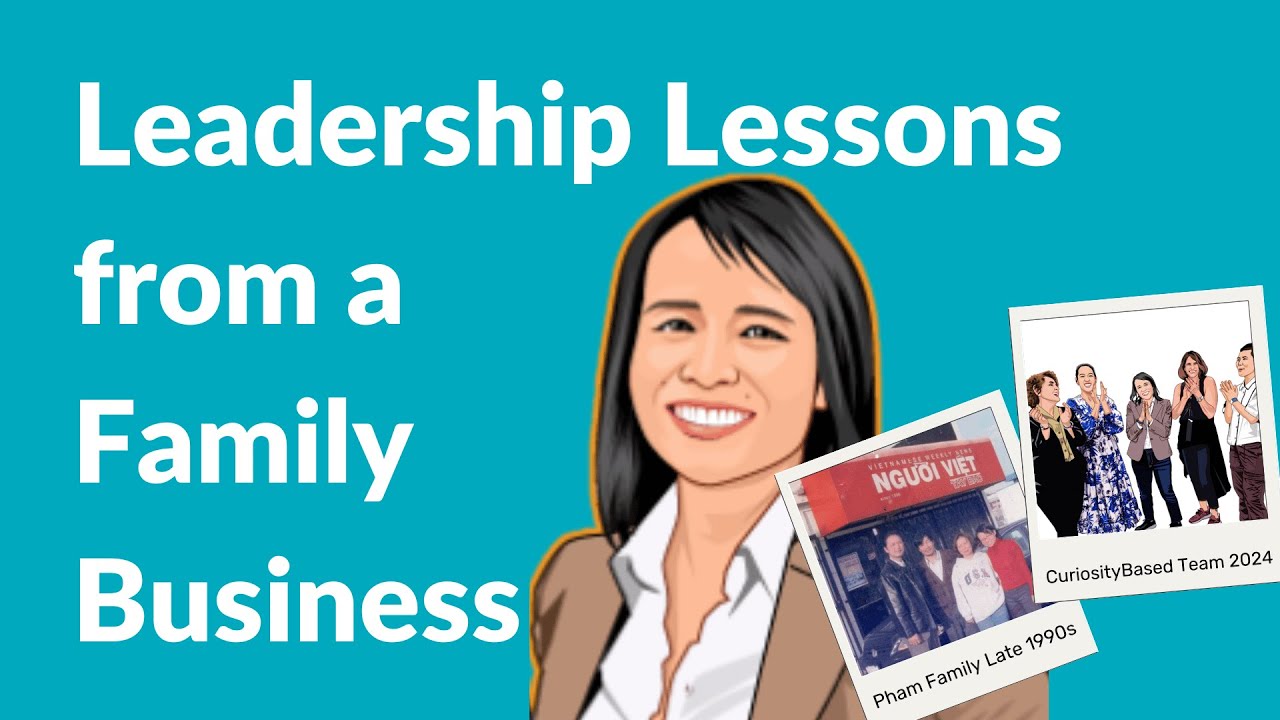
In this video, Dr. Julie Pham shares four leadership lessons she learned from running her family’s Vietnamese language newspaper. These principles have shaped her approach at CuriosityBased, and they can work for any organization, large or small.
1. Prioritize the Collective Over the Individual
In family-owned businesses, owners often make sacrifices for the team, especially during tough times. Unlike large company CEOs, who might avoid salary cuts during layoffs, family business owners ensure the team’s well-being, sometimes at their own expense. Dr. Julie witnessed her parents forgo their salaries to make payroll. Reflect on whether you’d be willing to make similar sacrifices. How would you feel working in a place where the collective is prioritized over the individual?
2. Do Work You Love
Many family business founders blend their passions with their work, often making it a natural part of their daily lives. Dr. Julie frequently discussed community service with her parents over meals. Ask yourself if you’re doing work you love—work that doesn’t feel like a chore, but something you’re passionate about.
3. Give and Expect Loyalty
Loyalty is foundational in family-owned businesses. It fosters trust, stability, and safety within the organization. Supporting each other through challenges and helping underperformers improve is crucial. Loyalty doesn’t mean neglecting performance standards but creating a supportive environment for growth. Do you prioritize giving and receiving loyalty in your workplace?
4. Take Pride in Your Work
Family-owned businesses take immense pride in their work, often seeing it as a part of their identity. It’s concerning when people hesitate to discuss their work outside their field. Consider whether you’re doing work you’re proud of, work you’d happily share with others.
These leadership lessons are not strict rules but guiding principles that can help you foster a strong company culture. If you found this post helpful, please like and share it.
#5 Practicing Curiosity in Hunger Relief with Amythst Shipman
Subscribe Now!
In this episode of Curiosity at Work, Dr. Julie Pham sits down with Amythst Shipman, Director of Project Management at Food Lifeline, Western Washington’s largest hunger relief organization. Amy shares her experiences and insights on how curiosity plays a vital role in their mission to fight hunger.
Learn about the diverse roles within Food Lifeline, from warehouse employees to grant writers, and how they manage a hybrid work environment. Discover the challenges and creativity involved in coordinating a workforce of 120 staff and over 17,000 volunteers annually.
Amy emphasizes the importance of fostering self-awareness, building relationships, and clear communication within the organization. She shares stories of how bringing people along in her learning journey has led to shared insights and improved processes. Listen as she discusses the significance of passion and curiosity in their work, especially during the hiring process.
Explore how Amy navigates the complexities of hunger relief work, balancing immediate needs with long-term goals, and the continuous practice of curiosity. This episode offers valuable lessons for anyone interested in enhancing their workplace culture and leadership approach through curiosity.
#4 Embracing Curiosity and Building Connections with Mikaela Kiner
Subscribe Now!
Curiosity at Work: Mikaela Kiner on Cultivating Curiosity, Self-Awareness, and Clear Communication in the Workplace
Join Dr. Julie Pham in this episode of Curiosity at Work as she sits down with Mikaela Kiner, founder of Reverb, a people operations consulting firm. With a wealth of experience in HR and entrepreneurship, Mikaela shares key insights on cultivating curiosity, self-awareness, and clear communication in the workplace.
Mikaela Kiner’s Career and the Founding of Reverb
Mikaela discusses her career journey and how she founded Reverb. With a deep background in people operations, she offers a unique perspective on using curiosity to shape workplace culture and leadership practices.
Practical Tips for Giving and Receiving Feedback
Mikaela offers practical tips for giving and receiving feedback, which she believes are essential for self-awareness. She explains how effective feedback enhances communication, helps teams grow, and boosts leadership effectiveness.
Building Relationships in a Hybrid Work Setting
Mikaela explores how to build and maintain strong relationships in a hybrid work environment. She explains how curiosity and clear communication are essential for keeping remote teams connected and engaged.
Creating Psychological Safety for Open Communication
The episode highlights the importance of psychological safety. Mikaela explains how fostering a safe environment allows employees to speak openly, share ideas, and engage in meaningful discussions without fear of judgment.
Leadership Insights from Mikaela’s Remote Work Experience
Mikaela shares her experiences with remote work and how they shape her leadership style. She offers actionable advice for leaders navigating the challenges of hybrid work while maintaining strong team dynamics and high performance.
Actionable Advice for HR Professionals and Leaders
This episode is packed with actionable insights for leaders and HR professionals looking to create a connected and dynamic workplace. Mikaela’s approach to curiosity, feedback, and relationship-building can inspire you to lead with empathy and clarity.
#3 Curiosity for tech startup innovators with Elizabeth Scallon
Subscribe Now!
Join Dr. Julie Pham in an enlightening conversation with Elizabeth Scallon, a dynamic leader in the tech world. Elizabeth has an impressive background spanning higher education, startups, industry, and funding. Currently, she holds the title of Director of Corporate Incubation at HP, where she helps bring innovative ideas to life and make a significant impact.
In this episode, Elizabeth discusses her role in fostering curiosity at work, emphasizing the importance of self-awareness, relationship building, and clear communication. She shares her experiences in the tech startup world, the value of early customer feedback, and the challenges of managing expectations.
This episode is packed with valuable lessons on leadership, the role of curiosity in innovation, and the continuous journey of professional growth. Don’t miss this chance to learn from Elizabeth’s wealth of experience and apply her insights to your own work environment.
About Elizabeth Scallon:
Elizabeth Scallon is the Director of Corporate Incubation at HP. With a rich career that includes roles at the University of Washington, Amazon’s corporate venture arm, and WeWork, Elizabeth has a deep understanding of the tech startup ecosystem. She also founded Find Ventures, a nonprofit supporting entrepreneurs from underrepresented backgrounds with early-stage funding.
131 Leadership Books Written by Hispanic/Latino/Latinx Authors 2024
We created this list of 131 Leadership Books Written by Hispanic/Latino/Latinx Authors to promote leadership narratives written by the Hispanic/Latino/Latinx community. This list is meant to be a resource, not an official endorsement. The books are not ranked or listed in any particular order.
Me by Ricky Martin
And A Voice to Sing With: A Memoir by Joan Baez
The Gloria Anzaldúa Reader (Latin America Otherwise) by Gloria Anzaldúa
Borderlands / La Frontera: The New Mestiza by Gloria Anzaldúa
Almost a Woman by Esmeralda Santiago
In the Time of the Butterflies by Julie Alvarez
Farmworker’s Daughter: Growing up Mexican American by Rose Castillo Guilbault
The Power of Latino Leadership: Culture, Inclusion, and Contribution by Juana Bordas
When I was Puerto Rican by Esmeralda Santiago
Salsa, Soul, and Spirit: Leadership for a Multicultural Age by Juana Bordas
Autentíco: The definitive guide to Latino Career Success by Robert Rodriguez
Brown Church: Five Centuries of Latina/o Social Justice, Theology, and Identity by Robert Chao Romero
Hermanas: Deepening Our Identity and Growing Our Influence by Natalia Kohn Rivera
Isabel’s Hand-Me-Down Dreams by Isabel Lopez
Leaving Little Havana: A Memoir of Miami’s Cuban Ghetto by Cecilia M. Fernandez
Gmorning, Gnight!: Little Pep Talks for Me & You by Lin-Manuel Miranda
[Un]framing the “Bad Woman”:Sor Juana, Malinche, Coylxauhqui, and other rebels with a cause by Alicia Gaspar de Alba
Always Running: La Vida Loca – Gang Days in L.A. by Luis J. Rodriguez
Cruz: A Cross-Border Memoir by Jean Guerrero
Dear America: Notes of an Undocumented Citizen by Jose Antonio Vargas
Undocumented: A Dominican Boy’s Odyssey from a Homeless Shelter to the Ivy League by Dan-el Padilla Peralta
The Far Away Brothers: Two Young Migrants and the Making of an American Life by Lauren Markham
My Beloved World by Sonia Sotomayor
Latina Empowerment Through Leadership: Mindful Stories from Inspiring Women by Catherine Munos Garces, Monica Rivera, et al
An Organizer’s Tale by Cesar Chavez
My Time to Speak: Reclaiming Ancestry and Confronting Race by Ilia Calederon
Rita Moreno: A Memoir by Rita Moreno
American Poison: How Racial Hostility Destroyed Our Promise by Eduardo Porter
My (Underground) American Dream: My True Story as an Undocumented Immigrant Who Became a Wall Street Executive by Julissa Arce
The Virtuous Circle: Restore Your Confidence, Bounce Back, and Emerge Stronger by Gaby Natale
Self Made: Become Empowered, Self Reliant and Rich in Every Way by Nely Galán
Latino Leaders Speak: Personal Stories of Struggle and Triumph edited by Micky Ibarra and Maria Pérez-Brown
Leapfrog: The New Revolution for Women Entrepreneurs by Nathalie Molina Niño
The Soul of a Woman by Isabel Allende
In the Dream House: A Memoir by Carmen Maria Machado
Once I was You: A Memoir of Love and Hate in a Torn America by María Hinojosa
More than Ready: Be Strong and Be You…and Other Lessons for Women of Color on the Rise by Cecilia Muñoz
Perfectly You: Embracing the Power of Being Real by Mariana Atencio
Take Charge of Your Brand: Quick and Simple Techniques to Help You Own and Manage Your Personal Brand for Professional and Personal Success by Guisselle Nuñez
In the Country We Love: My Family Divided by Diane Guerrero
Frida by Barbara Mujica
Finding Latinx: In Search of the Voices Redefining Latino Identity by Paolo Ramos
The Undocumented Americans by Karla Conejo Villavicenci
AOC: The Fearless Rise and Powerful Resonance of Alexandria Ocasio-Cortes by Lynda Lopez
Latinx: The New Force in American Politics by Ed Morales
Mexican Enough: My Life Between the Borderlines by Stephanie Elizondo Griest
Being Brown: Sonia Sotomayer and the Latino Question by Lázaro Lima
An Unlikely Journey: Waking up from My American Dream by Julián Castro
Hispanic Women Seeking Higher Leadership Roles in Business by Sylvia C. Motta, PhD
Wild Tongues Can’t be Tamed: 15 Voices from the Latinx Diaspora edited by Saraciea J. Fennell
The Leadership Shift: The Strategic Positioning of Latino Business Leaders by Dr. Nilda Perez
¡Rise up, Mi Gente! A Roadmap for Latinos to Achieve Success in Corporate America by Jesse A Mejia
Inventing Latinos: A New Story of American Racism by Laura E. Gómez
The 5 Disciplines of Inclusive Leaders: Unleashing the Power of Us All coauthored by Andrés Tapia
When We Make It by Elisabeth Velasquez
I am Not Your Perfect Mexican Daughter by Erika L. Sanchéz
Latino Talent: Effective Strategies to Recruit, Retain, and Develop Hispanic Professionals by Robert Rodriguez
Silencing Gender, Age, Ethnicity, and Cultural Biases in Leadership by Camilla A. Montoya, Julieta V. García. et al.
Inclusion Revolution: The Essential Guide to Dismantling Racial Inequity in the Workplace by Daisy Auger-Dominguez
Latinas Rising Up in HR: Inspirational Stories of Human Resources Professional Leading, Thriving, and Breaking Barriers by Priscilla Guasso
The Secret Principles of Genius: The Key to Unlocking Your Hidden Genius Potential by I.C. Robledo
I Got This: To Gold and Beyond by Lauren Hernandez
The Engine of America: The Secrets to Small Business Success from Entrepreneurs Who Have Made It by Jane Delgado
The Latina Guide to Health: Consejos and Caring Answers by Jane Delgado
Field Mice: Memoirs of a Migrant Child by Emma Gonzalez
Los Amos del Mundo Están al Acecho by Cristina Martin Jimenez
Growing American Roots by Bob Menendez
Dream in Color: How the Sánchez Sisters are Making History in Congress by Linda Sánchez
Healing Journey: Surviving Domestic Violence by Lupe Valdez
La Nueva California: Latinos from Pioneers to Post-Millennials by David Hayes-Bautista
El Cinco de Mayo: An American Tradition by David Hayes-Bautista
Latinas in Aviation by Jacqueline S. Ruiz
Becoming Dr. Q: My Journey from a Migrant Farm Worker to brain Surgeon by Alfredo Quinones-Hinjosa
The Universal Tone: Bringing My Story to Light by Carlos Santana
Take a Stand: Lessons from Rebels by Jorge Ramos
The Injustice Never Leaves You: Anti-Mexican Violence in Texas by Monica Muñoz Martinez
Powerhouse Principles: The Ultimate Blueprint for Real Estate Success in an Ever-Changing Market by Jorge Perez
The Buena Salud Guide to Understanding Depression and Enjoying Life by Jane Delgado
Leadership Lessons of the White House Fellows: Learn How to Inspire Others, Achieve Greatness , and Find Success in Any Organization by Charles P. Garcia
Persevere with Power: What Heaven Starts, Hell Cannot Stop by Samuel Rodriguez
In Defense of Our America: The Fight for Civil Liberties in the Age of Terror by Anthony D. Romero
One Vote Away: How a Single Supreme Court Seat Can Change History by Ted Cruz
Still Dreaming: My Journey from the Barrio to Capitol Hill by Luis Gutiérrez
An American Son: A Memoir by Marco Rubio
The Undocumented Americans by Karla Cornejo Villavicencio
A House of My Own: Stories from My Life by Sandra Cisneros
Spirit Run: A 6000 Mile Marathon Through America’s Stolen Land by Noe Alvarez
Dirty Girls Social Club by Alisa Valdes-Rodriguez
Woven in Moonlight by Isabel Ibañez
The Latino Advantage in the Workplace by Mariela Dabbah and Arturo Poiré
Dream Big by Deborah Rosado Shaw
Youth, Identity, Power: The Chicano Movement by Carlos Munoz Jr.
Mean by Myriam Gurba
Presumed Incompetent: The Intersections of Race and Class for Women in Academia by Gabriella Gutiérrez y Muhs, Yolanda Flores Niemann, and Carmen G. González
Enrique’s Journey: The Story of a Boy’s Dangerous Odyssey to Reunite with his Mother by Sonia Nazarrio
A Passion for Politics (Mission Bells) by Anita Perez Ferguson
Latinos in American Society: Families and Communities in Transition by Dr. Ruth Enid Zambrana
Journey to the Future: A Roadmap for Success for Youth by Ltc. Consuelo Castillo Kickbusch
Homeless my Choice by Roy Juarez Jr.
The Story of Latinos and Education in American History by Dr. Abdín Noboa-Ríos
A Long Petal of the Sea by Isabel Allende
The Deepest Roots: Finding Food and Community on a Pacific Northwest Island by Kathleen Alcalá
Más Allá de la Justicia by Maria de lourdes Victoria
The Likeability Trap: How to Break Free and Succeed as You Are by Alicia Menendez
Ready, Set, Manifest!: A Handbook for the In-betweens and Leaps in Life by Debbie Lacey
Hurdles in the Dark by Elvira K. Gonzalez
In the Shadow of the Mountain: A Memoir of Courage by Silvia Vasquez-Lavado
Through the Dark by Yolanda Nava
Thriving in the Fight: A Survival Manual for Latinas on the Front Lines of Change by Denise Padin Collazo
Justice & Space Matter in a Strong, Unified Latino Community by Kathy Bussert-Web, Maria Eugenia Diaz, Krystal A Yanez
Breaking Ground and Barriers: Hispanic Women Developing Effective Leadership by Gloria Bonilla-Santiago, Ph.D.
Latinization and the Latino Leader: How to Value, Develop, and Advance Latino Professionals by Cristina Benitez & Marlene Gonzalez
Latino and Latina Leaders of the 21st Century: Ordinary Beginnings, Extraordinary Outcomes byKay (Kayla) S. Garcia
Latina Empowerment Through Leadership: Mindful Stories from Inspiring Women by Catherine Munoz-Garces, Monica Rivera, Lizza Monet Morales, Celia Garcia, Veronica Corona, Maggie Antillon Mathews, Roxana Damas, and Jennifer Ibarra
The More or Less Definitive Guide to Self Care by Anna Borges
Act Like a Leader, Think Like a Leader by Hermina Ibarra
You Don’t Have to Like Me: Essays on Growing Up, Speaking Out, and Finding Feminism by Alida Nugent
Children of the Land: A Memoir by Marcelo Hernandez Castillo
Wealth Warrior: 8 Steps for Communities of Color to Conquer the Stock Market by Linda Garcia
Solito: A Memoir by Javier Zamora
Living Beyond Borders: Growing Up Mexican in America by Margarita Longoria
Chinoga: Owning Your Inner Badass for Healing and Justice by Alma Zaragoza-Petty
A Woman of Endurance by Dahlma Llanos-Figueroa
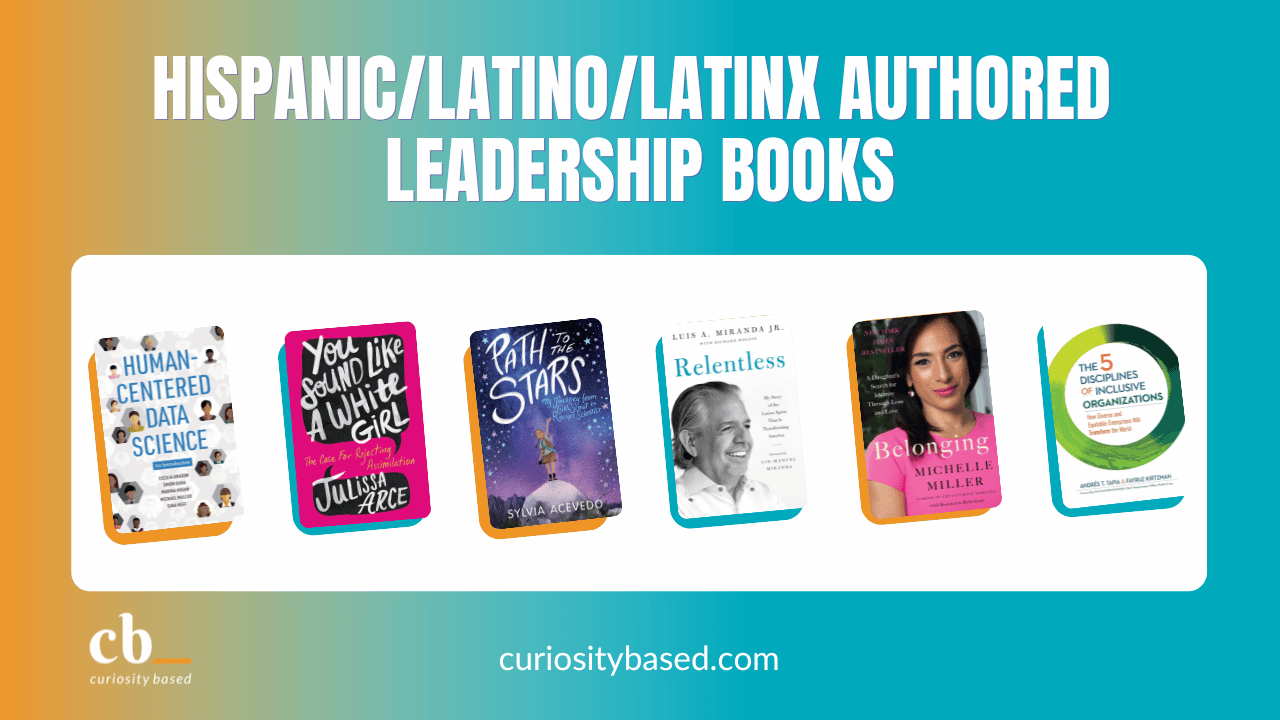
Human-Centered Data Science: An Introduction by Cecilia Aragon
In the Shadow of the Mountain: A Memoir of Courage by Silvia Vasquez-Lavado
You Sound Like A White Girl: The Case for Rejecting Assimilation by Julissa Arce
Path to the Stars: My Journey from Girl Scout to Rocket Scientist by Sylvia Acevedo
Relentless: My Story of the Latino Spirit That Is Transforming America by Luis A. Miranda Jr.
Mother Island: A Daughter Claims Puerto Rico by Jamie Figueroa
Belonging: A Daughter’s Search for Identity Through Loss and Love by Michelle Miller
The 5 Disciplines of Inclusive Organizations: How Diverse and Equitable Enterprises will Transform the World by Andrés T. Tapia, Fayruz Kirtzman
When someone hurts, disappoints, or frustrates you, it’s easy to assume you know their intentions and motives. This assumption can prevent you from truly understanding their actual intentions and can lead to denial, passiveness, misunderstanding, and resentment. Taking the time to understand why learning someone’s intent matters allows you to build trust, foster empathy, and strengthen relationships.
Some people say, “Just assume good intent,” but this approach can sometimes hinder our efforts to understand the real intent behind someone’s actions. The difference between good and bad intent often depends on whether we like or trust the person involved.
For example, let’s consider Bob and John. If Bob, whom I like, uses a term I find hurtful, I might assume he had good intentions and choose not to address it. However, if John, whom I don’t like, uses the same term, I might assume he had bad intentions and complain about him to others. In both cases, I’m not making an effort to understand their actual intentions.
If I took the time to understand their intentions, I could deepen our relationships and learn from one another. Often, people aren’t aware of their own intentions and act automatically. Engaging in a conversation helps them become more self-aware and helps us understand our own reactions better.
To start understanding someone’s intentions, use clarifying questions.
Here’s how to approach it:
Recap the Situation: Explain what happened and how it affected you. It doesn’t matter if you assume their intentions are good or bad; the approach remains the same. For instance, you could say, “I noticed you used a term to describe Asians that I find hurtful due to its negative connotation.”
Ask Clarifying Questions:
“Are you open to having a discussion about this?”
“I’d really like to understand where you learned that word.”
“I’d like to understand why you chose to use that word.”
Instead of reacting with anger or judgment, practice curiosity to better understand the person’s intentions.
I hope these strategies help you enhance your personal growth, emotional intelligence, and interpersonal skills. If so, please like it and share on social media.
How to Give Constructive Feedback More Effectively
How to Give Constructive Feedback with Curiosity: The CAFA Conversation Structure
Providing feedback is crucial for personal and professional development, but it can often be challenging. We’re often concerned about how the other person will react or whether they might become defensive. At CuriosityBased, we approach constructive feedback with curiosity. Our goal isn’t to change the person but to better understand their actions and help them see our perspective.
The CAFA Feedback Structure
At CuriosityBased, we use a simple conversation structure called CFA CAA. This framework helps ensure that feedback is specific, behavior-focused, and invites a productive conversation. CFA CAA stands for:
Context: Describe the situation.
Action: Explain what the person did.
Feeling: Share how their actions made you feel.
Ask: Pose questions to initiate a conversation and gain further understanding.
Example of Giving Constructive Feedback
Here’s an example of how to apply the CFA CAA structure:
Context: “I was giving a presentation.”
Action: “You were checking your phone the entire time.”
Feeling: “I felt self-conscious and insecure, worried that my presentation wasn’t engaging enough.”
Ask: “Did you realize you were checking your phone throughout? What did you think about my presentation? I know your mom is sick—were you checking in on her or waiting for an update?”
The “Ask” in CAFA is a key step. It’s about initiating a dialogue to better understand the other person’s actions. Asking, “Did you realize you were checking your phone?” helps ensure shared understanding of the behavior. Asking, “I know your mom is sick; were you checking in on her?” adds empathy and opens the door for deeper conversation.
Why Curiosity Matters in Feedback
By using the CAFA structure, you can foster a feedback environment where both parties feel heard and understood. Curiosity transforms feedback from a one-sided critique into a collaborative conversation that promotes growth and strengthens relationships.
By giving specific constructive feedback with the goal of understanding, you make the process less intimidating and model how to give feedback with curiosity. You can also check out our video on How to Give Positive Feedback More Effectively.
I hope you find these tips useful! If so, please like and share it.
Receiving constructive feedback can be challenging. But approaching it with curiosity can transform the experience into a valuable learning opportunity. By applying curiosity to feedback, you can gain deeper insights, improve your performance, and build stronger relationships.
Here are five ways you can practice curiosity to feedback both inwardly and outwardly:
1. Take Time to Process Often, we react too quickly, either with immediate apologies or defensiveness. Instead, acknowledge the feedback with a simple “Thank you for the feedback. I need some time to think about this. Let me get back to you,” and specify when you’ll follow up. This shows that you’re not brushing off the feedback but need time to process it.
2. Recognize and Name Your Emotions It’s important to identify and articulate the emotions you feel when receiving feedback. Whether you feel confused, surprised, hurt, angry, or frustrated, being able to name these emotions helps you practice inward curiosity before addressing them with others.
3. Ask Clarifying Questions Once you’ve practiced inward curiosity, shift to outward curiosity. Ask the feedback provider for specific examples if none were given. Clarifying questions can help ensure you both understand the feedback in the same way and prevent miscommunication.
4. Understand the Impact Determine whether the feedback pertains to one person or affects many. Understanding if your actions impact a single individual or a broader group can help you gauge the magnitude of the issue.
5. Explore the Emotional Impact on Others Just as you experience emotions from receiving feedback, the feedback giver has their own emotional response. Prompt them by asking, “Did this make you feel angry, hurt, or confused?” This demonstrates emotional intelligence and active listening, and can help build deeper relationships.
By handling feedback with curiosity, you can turn it into an opportunity for self-improvement and growth. For more insights, check out my other video on how to respond to constructive feedback.
If you found these tips helpful, please like our post and share it.
Setting aside time for a team retreat is crucial for boosting morale, employee engagement, and workplace culture. While there’s always the cost of employee time, event planning can also be expensive.
Here are five tips on how you can organize an affordable team retreat:
Tip #1: Find a Free or Low-Cost Venue Consider hosting the retreat at your own home. Or, if you have a team member with access to a condo building or community space, you might use their amenities room. You can also book a free space at your local library or community center. If you can offer something in exchange, like trade with an organization that has a nice office space, that’s another option. For example, one of our clients, a Performing Arts Center, traded tickets for office space to host their retreat.
Tip #2: Cook a Meal Prepare a meal yourself instead of catering. This not only saves money but can also be a fun team-building activity. At CuriosityBased, we had a pizza-making competition that everyone enjoyed.
Tip #3: Use In-House Facilitation Instead of hiring an outside facilitator, ask team members if anyone wants to lead different parts of the retreat. This approach helps build leadership skills and empowers team members. If you’re still considering whether to hire an outside facilitator, check out our video onSelf-facilitate or Hire a Facilitator? 10 Key Questions to Guide Your Decision
Tip #4: Get a Volunteer Facilitator You might be surprised by who’s willing to volunteer their time to facilitate your retreat. Volunteers could be looking to practice their skills, fulfill pro bono hours, or earn a good testimonial. Julie used to offer facilitation services for free early in her career when she was learning.
Tip #5: Use AI to Take Notes Leverage technology to handle note-taking, so you don’t have to hire someone or assign a team member to the task. Make technology work for you.
These tips are geared towards in-person retreats. If you’re considering an online retreat, you can save even more money. For more guidance, check out our video on In-Person or Online Retreat: Making the Choice.
Rubber Band Rule: Recognize when your boundaries are being pushed
Understanding the Rubber Band Rule: How to Recognize When Your Boundaries Are Being Pushed Too Far
Think of your boundaries as a rubber band. You might feel proud of how far you can stretch to accommodate others. However, if you stretch them too often, they can snap. We call this the Rubber Band Rule, which helps you recognize when your boundaries are stretched too thin.
4 Signs That Your Boundaries Are Being Pushed Too Far
Here are four clear signs that your boundaries are nearing their breaking point:
Physical Symptoms You may notice physical discomfort, such as headaches or stomach aches. These symptoms often signal that your body is reacting to the strain on your boundaries.
Emotional Symptoms When you start feeling anxious, depressed, or have low morale, it may mean your emotional boundaries are being tested. These feelings often occur when you overextend yourself without proper boundaries.
Frequent Complaints If you catch yourself frequently complaining to others, it’s a clear sign that something isn’t right. Complaining often indicates frustration and a lack of boundaries.
Resentment You might feel resentment toward all requests, even those you once found fulfilling. Resentment is a strong indicator that your boundaries have been pushed too far, and you need to reclaim them.
Protecting Your Boundaries
Recognizing these signs early helps you prevent your rubber band from snapping. By setting and respecting healthy boundaries, you protect your emotional and physical well-being. Practice recognizing when your limits are being tested, and take action to restore balance.event your rubber band from snapping. Setting clear, healthy boundaries is essential for maintaining your well-being and emotional health. Stay tuned for more tips on how to safeguard your personal boundaries and avoid burnout.
Knowing your limits is crucial. I hope you find this video helpful. If so, please like and share it!
How to Start a Good Habit and Make It Stick: Tips and Tricks
Adopting good habits can significantly enhance your life. Dr. Julie Pham shares nine tips and tricks to help you start and maintain good habits.
Nine Tips to Start and Maintain Good Habits
Developing good habits is essential for personal growth and long-term success. Here are nine effective tips to help you start and maintain positive habits:
1. Keep It Simple
A habit should be easy to manage. Start small and make it achievable. For example, I make it a habit to move after a meal to support my health goals. By keeping it simple, you increase the likelihood of success.
2. Identity-Based Habit
As James Clear, author of Atomic Habits, suggests, think of yourself as the person you want to become. I identify as someone who is pre-diabetic and actively work to avoid diabetes. This identity shift helps reinforce my commitment to healthier habits.
3. Tell Others
Boost accountability by sharing your new habit with others. I tell my friends about my progress and ask them to check in on me. When others are involved, it’s easier to stay committed.
4. Make the Habit Social
Engage in your new habit with others to make it more enjoyable. For example, I talk to a friend on the phone while walking after a meal. Adding a social aspect can help make the habit more sustainable.
5. Attach the Habit to an Existing Routine
Integrate your new habits into your current routine. For example, I keep herbal supplements on the dining table to remember to take them with meals. This helps make the new habit feel like a natural part of your day.
6. Track Your Progress
Track your habit progress to stay motivated. I mark it on my calendar whenever I complete a habit. Tracking your progress increases your chances of sticking to it by providing visible reminders of your success.
7. Reframe Resistance
Understand why you resist a habit and reframe it positively. For instance, I changed “knowledge is scary” to “knowledge is power” to overcome my fear of checking blood glucose levels. Reframing resistance helps shift your mindset and makes habits more approachable.
8. Understand the Habit Loop
Replace bad habits with good ones. Charles Duhigg’s The Power of Habit explains that the habit loop consists of a cue, routine, and reward. I identified my boredom as a trigger and replaced snacking with brewing tea. This helped me maintain the reward of not feeling bored.
9. Remember You’re in Control
You have the power to choose your actions when a trigger arises. I remind myself that I can make positive decisions, which empowers me to take control over my habits and actions.
I hope these nine tips help you start and maintain good habits. If you found this post useful, please like and share it.
Craft the Perfect Answer: How to Respond When Someone Asks You ‘What Do You Do for a Living?’
How to Answer “What Do You Do for a Living?” in Different Situations
When someone asks, “What do you do for a living?” it’s an opportunity to share who you are and what you do. Your answer can vary depending on the situation and context. Whether you’re speaking to a potential employer, a friend, or a stranger, here are five ways to respond based on the situation.
1. Straightforward Answer: Keep It Simple
If you think the person will understand your occupation, simply state it plainly. For example, you might say:
“I’m a writer.”
“I’m a journalist.”
“I’m a doctor.”
“I’m a retail salesperson.”
This approach is clear and concise, making it easy for others to understand your job.
2. Expressing Pride and Excitement: Highlight Your Impact
If you’re excited and proud of your work, use the opportunity to talk about the impact you make. Sharing your enthusiasm can lead to a more engaging conversation. For instance:
Accountant: “I help people feel less stressed about their taxes and finances.”
Retail Worker: “I help people find clothing that makes them feel special every day.”
This response emphasizes the value you bring to others, making your job sound more meaningful and rewarding.
3. When You Don’t Like Your Job: Separate Passion from Work
If you’re not thrilled with your current job, it’s okay to distinguish between your work and your true passion. For example:
“Well, there’s what I do for a living, and then there’s what I actually do that makes life worth living. I’m really passionate about [your passion].”
This response allows you to acknowledge your job while staying true to your personal interests.
4. In Between Jobs: Share Your Aspirations
If you’re looking for your next job, focus on your past work and future aspirations. For example:
“This is what I used to do for work, and what I’d really like to do is [your desired job].”
This approach keeps the conversation positive and forward-thinking, helping others understand your goals.
5. Not Working by Choice: Explain How You Spend Your Time
If you’re not currently working and have chosen not to, simply explain how you spend your days. For example:
“I don’t work, but this is how I spend my days.”
This response offers insight into your current lifestyle and interests, and can lead to a deeper conversation about personal pursuits.
I hope you found these tips helpful for answering the question, “What do you do for a living?” Happy networking!
Being vulnerable at work can help build trust and strengthen connections with colleagues. However, it’s important to strike the right balance between sharing and over-sharing. Here are some tips to help you navigate vulnerability at work.
Tips for Those Who Dislike Sharing
1. Be Vulnerable About Work
Share a challenging work experience and focus on what you learned from it. By keeping the conversation centered on professional growth, you can build trust and connect with others without crossing personal boundaries.
2. Share Personal, Not Private
Talk about aspects of your personal life that aren’t too intimate. For example, sharing volunteer experiences or discussing your participation in team sports can create connections without delving into deeply private matters.
Tips for Those Who Might Over-Share
3. Consider Public Recounting
Before sharing, ask yourself if you’d be comfortable with strangers hearing the story. If not, it might be too personal to discuss at work. Keeping it professional and appropriate ensures you maintain a comfortable environment for everyone.
4. Gauge Reactions
Pay attention to your colleagues’ reactions. If they seem uncomfortable or distant, it could be a sign that you’re over-sharing. Positive reactions, such as nodding or asking follow-up questions, generally indicate that your level of vulnerability is well-received.
5. Look for Reciprocation
If your colleagues begin to share their own stories, your vulnerability has likely served its purpose. However, if others remain quiet or avoid sharing, it might be time to adjust how much you share in the future.
6. Understand Different Standards
Remember that everyone has different comfort levels when it comes to vulnerability. While it’s important to be true to yourself, being mindful of others’ boundaries is key to creating a respectful, open environment.
I hope these tips help make opening up at work a bit easier and help you find the right balance. If you found this post helpful, please like and share it.
People want to feel valued and know that they matter at work. For employers, managers, and leaders, here are eight organizational strategies of ways to increase mattering at work, to boost retention and job satisfaction. Even if you’re not a manager, you can contribute to a positive work environment with these tips.
Here are eight strategies to increase mattering at work
Ask People What They Need to Succeed Find out what resources or support they need to do their best work.
Offer Support Beyond Basic Requirements Take time to help colleagues with their tasks, showing that you care about their success.
Invest in Skill Development and Growth Provide opportunities for training and professional development.
Inquire About Future Aspirations Ask employees what they want to do next and explore opportunities within the organization.
Reference Their Input Show that you’ve been paying attention by referencing things they’ve said or written.
Notice Their Absence Acknowledge when they’re not present in meetings where they were expected. A simple, “I was hoping to see you there,” shows you care.
Compliment Their Approach Recognize not just the outcome but the way they completed their work.
Evaluate and Redistribute Work Based on Energy Ask employees which tasks energize them and which drain them. Redistribute tasks to maximize engagement and productivity.
For more on increasing mattering at work and it’s powerful impact, check out my video.
Setting and expressing boundaries is crucial for maintaining healthy relationships and ensuring your well-being. Here are five practical strategies to help you communicate your boundaries clearly:
Be Proactive: Inform others of your boundaries before they are tested. For example, you might say, “I don’t check email at night.”
Explain Why: People are more likely to respect your boundaries if they understand the reasons behind them. For instance, “I don’t check email at night because I’m focusing on my family.”
Share the Impact: Describe the consequences when your boundaries are not respected. “I don’t check email at night to spend time with my family. When I’m working instead, they feel neglected.”
Understand Why: Sometimes, people push boundaries for reasons unrelated to you. Ask clarifying questions like, “I’ve noticed you email me a lot at night. Is this because you expect a response, or is it just your working hours?”
Express Discomfort: As a last resort, communicate your discomfort directly. Use phrases like, “I’m uncomfortable,” rather than “You make me uncomfortable,” to avoid making others defensive. If asked, you can explain why or simply acknowledge your discomfort.
Mattering vs. Belonging vs. Inclusion: What’s the Difference?
Mattering vs. Belonging vs. Inclusion: What’s the Difference?
People often use the terms mattering, belonging, and inclusion interchangeably when discussing organizational culture. While they’re related, they each have distinct meanings. Here’s a breakdown of each term, with a focus on the newer concept of mattering.
Understanding Inclusion
Inclusion refers to the policies and actions employers use to help employees feel accepted at work. Examples include acknowledging and celebrating cultural holidays like Lunar New Year, Juneteenth, or Cinco de Mayo. These policies create an environment where diverse individuals feel they are a valued part of the organization.
Understanding Belonging
Belonging is the feeling of acceptance that results from successful inclusion policies. When employees feel they belong, they experience a sense of connection and acceptance within the workplace.
Understanding Mattering
Mattering occurs when employees feel their work is valued and that they would be missed if they weren’t there. According to Dr. Zach Mercurio’s research, mattering has three primary drivers:
Feeling Noticed The employee feels seen and heard within the organization.
Feeling Affirmed The employee understands that their unique strengths make a significant difference.
Feeling Needed The employee believes they are indispensable to the organization’s mission and purpose.
The Interplay Between Inclusion, Belonging, and Mattering
While inclusion efforts are essential, they don’t automatically guarantee belonging or mattering. Employees must desire to belong and feel that their strengths align with the organization’s needs. For example, if an organization needs data collection, but an employee excels in data visualization, there may be a mismatch, preventing the employee from feeling valued.
Aligning for Success
Employers and employees must work together to create a sense of mattering and belonging. Both parties need to ensure that the employee’s unique strengths align with the organization’s needs.
I hope this post clarifies these important terms and their roles in enhancing workplace well-being, employee engagement, and job satisfaction. If you found this post useful, please like and share it.
#2 Curiosity in municipal information technology with Jim Loter
Subscribe Now!
In this episode of Curiosity at Work, Dr. Julie Pham chats with Jim Loter, Deputy Chief Technology Officer at Seattle IT, about how curiosity drives innovation and fosters a positive workplace culture. With a rich background in higher education, local government, and libraries, Jim shares valuable lessons from his career.
Jim discusses the importance of self-awareness, his journey from self-criticism to recognizing strengths, and the power of one-on-one coaching. He emphasizes relationship building in a hybrid work environment, advocating for psychological safety and debunking myths about productivity and employee well-being. Learn about the strategies Seattle IT uses to create a supportive workplace, including their innovative annual learning conference.
Why Watch: Get inspired by Jim Loter’s insights on leadership, self-awareness, and fostering a culture of curiosity and innovation.
Guest Information: Jim Loter is the Deputy Chief Technology Officer at Seattle IT with extensive experience in technology leadership and public service.