Women in Political Leadership: Interview with Redmond Mayor Angela Birney

Curiosity, Representation, and Leadership: A Conversation with a Redmond Councilmember

What Sparked Your Interest in Public Office

I’ve always been interested in politics, housing, and how local systems work. Running for office wasn’t something I had planned. In 2014, the mayor of Redmond asked if I had ever considered it. I said no—most people don’t. He encouraged me to follow the city council and see if it sparked my interest.

At that time, only one woman served on the seven-member council. That imbalance didn’t sit right with me, especially since there were no people of color either. As I began following council meetings, I realized I could contribute meaningfully. Local politics felt like the right place to make an impact. I decided to run—and I won.

Representation matters deeply to me. I believe people should see themselves reflected in their government, and that belief continues to motivate my public service.

Being a Woman in Public Office

When I first won my election, I attended Leadership Eastside’s mayor’s lunch. There was only one female mayor there—Amy Walen. That moment struck me as concerning. Now, years later, most Eastside mayors are women. The shift has been inspiring.

More women and people of color are running and winning seats. I’ve been fortunate to work alongside remarkable female leaders. I think of Patty Murray and Chris Gregoire—women who led with strength and vision. Their success motivates me to keep pushing for progress.

Women bring their lived experiences into policymaking. For instance, I used to teach middle-school science, and that background helps me relate to educators and families. Many of my colleagues do the same, applying lessons from their own lives to serve their communities.

The Most Pressing Issue: Affordable Housing

Affordable housing remains the most critical issue facing our region. Its absence affects nearly everything—commutes, family time, and community stability. As costs rise, people move farther from jobs and spend more hours traveling. The ripple effects are enormous.

We need to build denser, well-planned urban environments. That’s the only sustainable way to create homes people can actually afford. Continued collaboration and innovative policy are essential to reach that goal.

Policy Solutions and Collaboration

As the legislative session wraps up, several bills focus on affordable housing. I’m eager to work with lawmakers on effective solutions. My focus is on collaboration—cities, counties, and the state must align their efforts.

King County intersects with many others. While borders exist on paper, housing challenges cross them easily. By combining our different experiences, we can find smarter, lasting solutions. I often remind colleagues of the proverb: “To go fast, go alone. To go far, go together.” That’s how real progress happens.

The Role of Curiosity in Policymaking

Curiosity drives my leadership. I always want to understand how people arrive at decisions and what long-term impacts those choices may have. I ask questions such as: What don’t I know yet? Who else should I talk to? What are the unintended consequences?

That mindset helps me grow as a policymaker. I’m aware of what I know—and even more aware of what I don’t. Staying curious keeps me learning, connecting, and improving how I serve my community.

Continue reading our Women in Political Leadership Series:

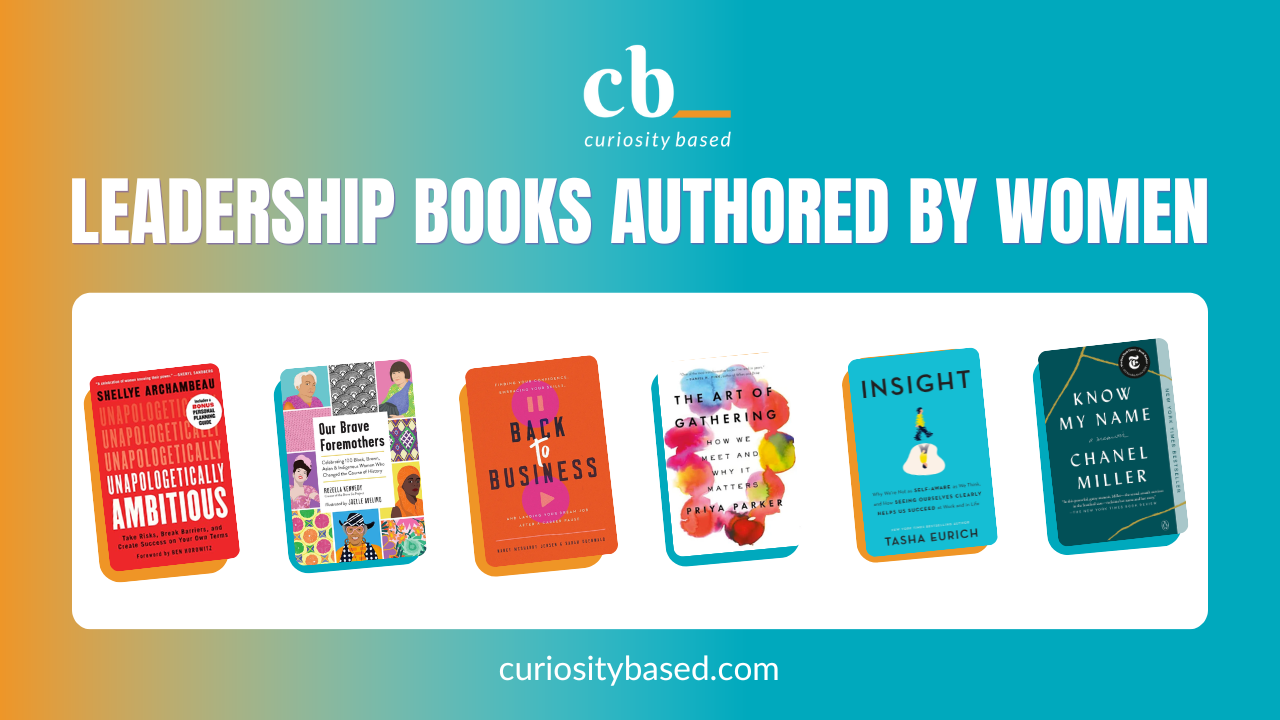
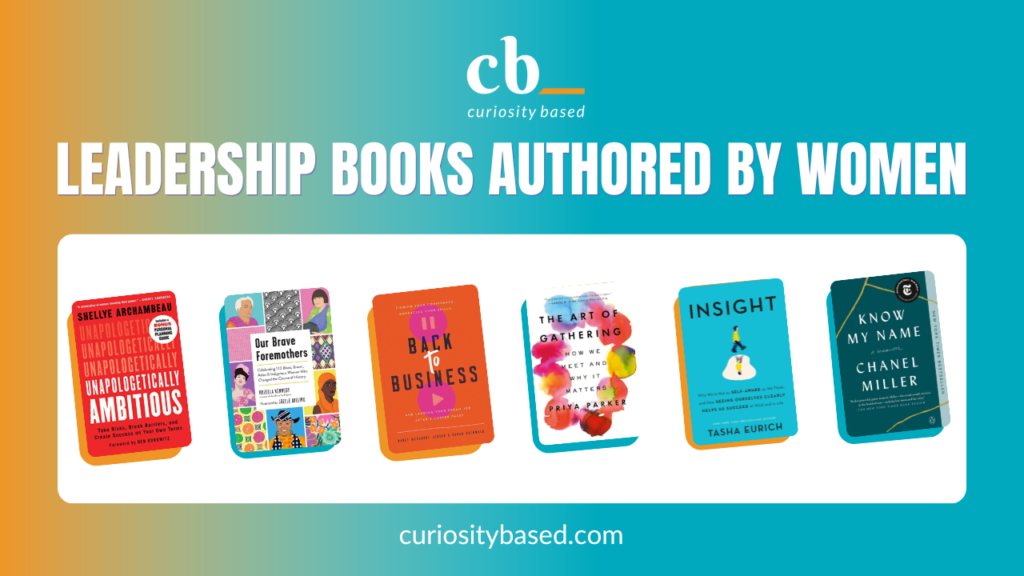
Interested in learning more from women in leadership? Check out our Leadership Book List, where we have compiled 350+ books written by women in leadership.

Women in Political Leadership: Interview with Seattle Deputy Mayor Kendee Yamaguchi

What sparked your interest in serving in public office?

My interest in public service stems from my family’s experience being placed in a Japanese Internment camp during World War II. Early on in school, I felt that history may have looked different if it included the representation of policy decision makers at the table raising issues and concerns during critical moments of decision making. The impact policy decisions had on my community and the generations that followed fueled my passion to work in this area. I learned firsthand the importance of representation and how the absence of it impacts society. In memory of my grandparents and family, I have worked for over two decades in all levels of government to contribute my skills to building a better community, nation, and world.

What is it like being a woman in public office? What are some strengths and challenges you experience that might be unique for women in policy making spaces?

As the first person and woman in my family to go to college, I had many firsts in my personal and professional life. I was fortunate to become one of the youngest AAPI women to work at the White House, be appointed a state agency cabinet member, and serve on several executive management teams in government. Breaking through glass ceilings for others and paving paths for future generations helps give me the strength to face challenges. There are many challenges that come with breaking new ground, to name a few — gender bias, discrimination, age bias, etc. When I first started out in my career being one of the “firsts,” I had fail and learn as there was no  “manual” or role model to look up to in some situations. These experiences later in my life have been critical to my success as it ultimately prepared me to navigate situations. Without being forced to exercise this muscle, I would not have the foundation, resiliency, and confidence to take on almost anything. 

From your perspective, what are the most pressing issues to our region?

Public Safety, homelessness, COVID recovery, and a restoration of trust and belief in government.

In my position, I have a focus on supporting a robust and equitable recovery from the pandemic for our City’s small businesses and working families, arts and entertainment organizations, and communities across our City — helping rebuild and restore our City. We have an opportunity to come back from this pandemic stronger than ever, leading with innovation and equity, community voices and new ideas.

Just as important is the restoration of improving trust in our government. Mayor Harrell has made it a priority for the City of Seattle to get ‘back to the basics’ of good governance — serving the people and communities of our City well, and stressing what we have in common and instead of what separates us. Getting back to our residents, meeting their immediate needs, and showing the kind of action that leads to tangible, sustainable results in everyday neighbors’ lives. In my role, that means ensuring our government is a conduit for community organizations and small businesses to thrive — helping get support when they need it, attracting and putting on world class events, and uniting our City together to show what we can accomplish when we share our common values and goals.

What are some policy solutions that you’re particularly passionate about?

Our Office of Economic Development (OED) which is under new leadership is going to play a key role in getting recovery dollars out into the community for small businesses most impacted. I believe, as does the mayor, that we can supercharge our OED office to drive a new level of economic development and investment in our community. That means making it a hub for small businesses in need of support, a leader on workforce development, and a leader in supporting women and minority owned businesses.  

I also believe collaboration locally and regionally — public, private, and philanthropic — is going to be an important difference maker. For example, the mayor is building new systems to address the homelessness crisis that lead to a more coordinated and effective response. This includes a recently announced collaboration between the City, County, Regional Homelessness Authority, and major businesses and philanthropic leaders to address the homelessness crisis downtown. When we reduce silos and work together, we can do so much more — I have hope for our future given the potential opportunities to partner with organizations and community groups.

How does curiosity aid the policymaking and decision-making process?

Curiosity is critical to decision-making. Being able to raise questions, be creative, and innovative allow us to reach the best results. Having diverse opinions, representation and critical thinking brings about better policies. If we approach challenges in the same ways, we inevitably get the same results. Our present-day world requires us to be curious and creative to solve some of the complex problems that face us.  We need leaders that can think “out of the box” and collaborate with partners to achieve positive results for our City.

Continue reading our Women in Political Leadership Series:

Interested in learning more from women in leadership? Check out our Leadership Book List, where we have compiled 350+ books written by women in leadership.

Honoring Women in Political Leadership

In honor of Women’s History Month, CuriosityBased interviewed six local female leaders who hold public office in the Pacific Northwest. 

We asked about their motivations for pursuing work in policy and their experiences being women in their positions, about their perspectives on current challenges to our region, and about policy solutions that they’re passionate about. We also asked them how curiosity is used in their policymaking and decision-making processes.  

We interviewed:

The women highlighted here each hold a different title, but one that they all share is leader. You can read more about each leader by clicking on their name.

From the interviews, it’s clear that each woman brings a diversity of perspective to her role through an intersection of identities. One thought shared by all the leaders interviewed is that collaboration through diverse perspectives (using curiosity) only leads to better policies and outcomes. As the saying goes, “If you want to go fast, go alone. If you want to go far, go together.”

Join us in honoring these women as they lead us towards their visions of a just and equitable region for the Pacific Northwest.

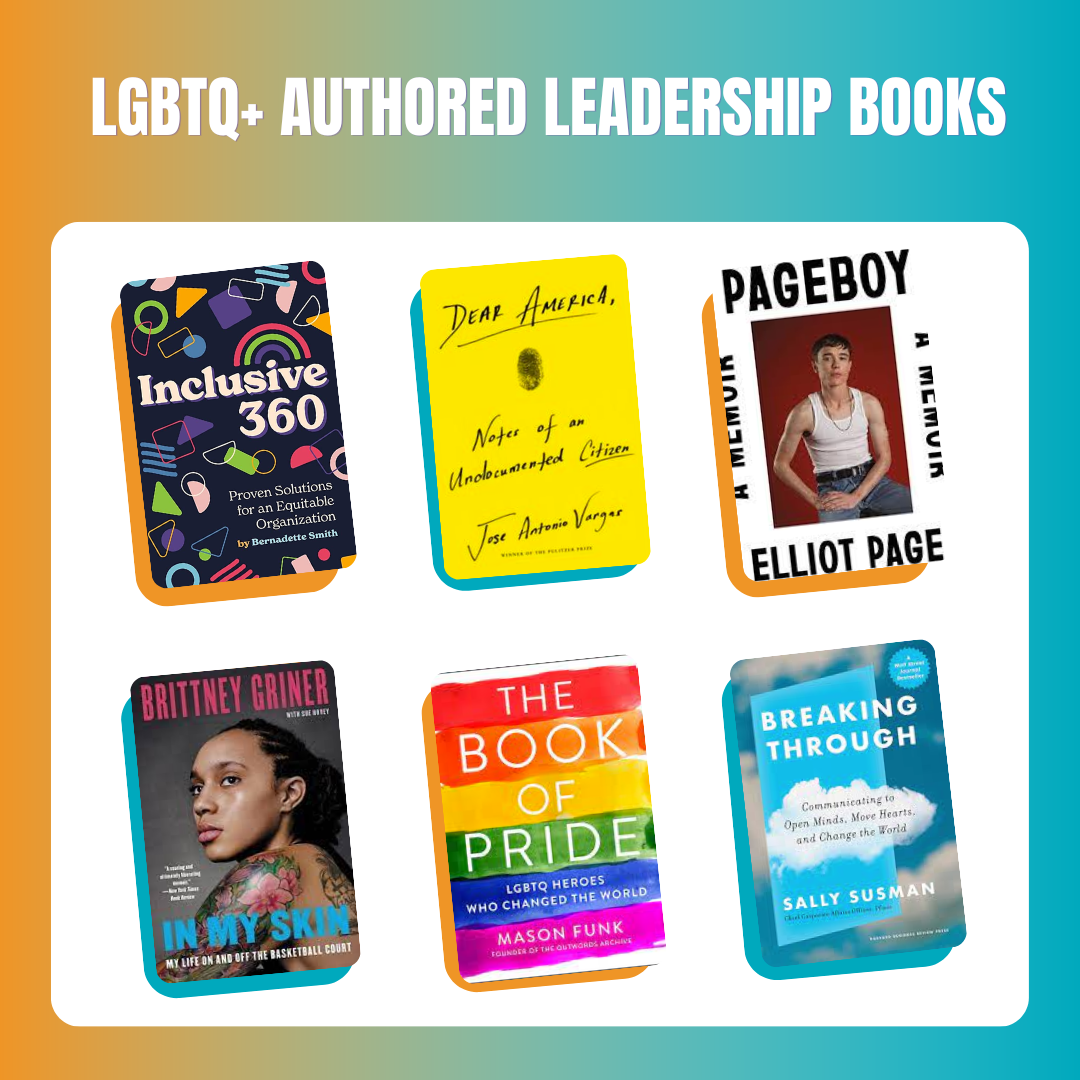
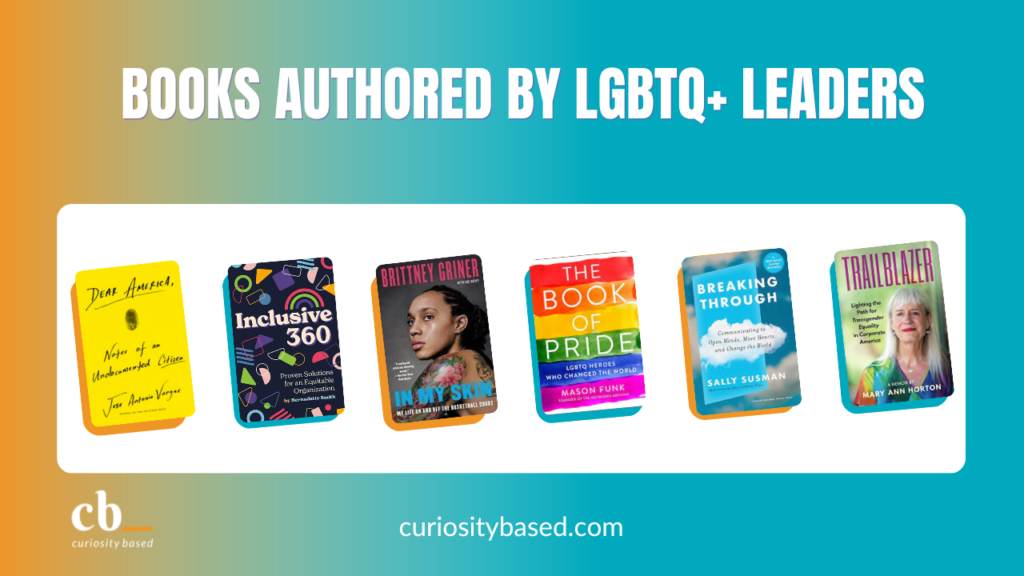
Interested in reading more? Check out our list of Leadership Books Authored by Women!

2022 Leadership Books Authored by Women

In honor of Women’s History Month, we created this list of books authored by people who identify as women. This list is meant to be a resource, not an official endorsement. The books are not ranked and are listed alphabetically.

  1. [Un]framing the “Bad Woman”: Sor Juana, Malinche, Coyolxauhqui, and other rebels with a cause by Alicia Gaspar de Alba
  2. #Not Your Princess: Voices of Native American Women by Lisa Charleyboy & Mary Beth Leatherdale
  3. #Values by Dr. Betty Uribe
  4. 101 Reasons to Get Out of Bed by Natasha Mine 
  5. 50 Billion Dollar Boss: African American Women Sharing Stories of Success in Entrepreneurship and Leadership by Kathey Porter
  6. A House of My Own: Stories From My Life by Sandra Cisneros
  7. A Mythic Life: Learning to live our greater story by Jean Houston
  8. A Passion for the Possible: A guide to realizing your true potential by Jean Houston
  9. A to Z: Your Navigator to Success by Chin-Ning Chu
  10. Abandon Me: Memoirs by Melissa Febos
  11. Act Like a Leader, Think Like a Leader by Herminia Ibarra
  12. After the Rain: Gentle Reminders for Healing, Courage, and Self-Love by Alexandra Elle
  13. Ain’t I a Woman: Black Women and Feminism by Bell Hooks
  14. All Bout Love by Bell Hooks
  15. All In: An Autobiography by Billie Jean King
  16. All the Leader You Can Be by Suzanne Bates
  17. Almost a Woman by Esmerelda Santiago
  18. American Indian Stories by Zitkala-Sa
  19. And A Voice to Sing With: A Memoir by Joan Baez
  20. And Now We Are Going to Have a Party: Liner Notes to a Writer’s Early Life by Nicola Griffith 
  21. Annapurna: A Woman’s place by Arlene Blum
  22. AOC: The Fearless Rise and Powerful Resonance of Alexandria Ocasio-Cortes by Lynda Lopez
  23. Apocalyptic Best Practices: A unique approach to fear and change by Dr. Elisebeth VanderWeil 
  24. As Long As Grass Grows: The Indigenous Fight for Environmental Justice, from Colonization to Standing Rock by Dina Gilio-Whitaker
  25. As We Have Always Done: Indigenous Freedom Through Radical Resistance by Leanne Betasamosake Simpson
  26. Ask For It: How women can use the power of negotiation to get what they really want by Linda Babcock & Sara Aslchever
  27. ASL Saved My Life… Until it Didn’t by Jenni Kleinman Berebitsky 
  28. Atlas of the Heart: Mapping Meaningful Connection and the Language of Human Experience by Brene Brown
  29. Awakening Compassion at Work by Jane Dutton & Monica Worline
  30. Bad Indians: A Tribal Memoir by Debora Miranda
  31. Balancing Work and Life: The Nia Guide for Black Women by Sheryl Huggins & Cherly Mayberry McKissack
  32. Bamboozled: How God Tricked Me into the Life of My Dreams by Yvonne Orji
  33. Be Water, My Friend: The Teachings of Bruce Lee by Sharon Lee
  34. Becoming by Michelle Obama
  35. Believe Bigger: Discover the Path to Your Life Purpose by Marshawn Evans Daniels
  36. Being Heumann: an unrepentant memoir of a disability rights activist by Judith E. Heumann
  37. Biased: Uncovering the hidden prejudice that shapes what we see, think, and do by Jennifer Eberhardt
  38. Big Magic: Creative Living Beyond Fear by Elizabeth Gilbert
  39. Bird of Paradise: How I became a Latina by Raquel Cepeda
  40. Black Futures by Kimberly Drew, Jenna Wortham
  41. Black Indian: A memoir by Shonda Buchanan
  42. Black Power Inc.: The New Voices of Success by Cora Daniels
  43. Blaze Your Own Trail: An Interactive Guide to Navigating Life with Confidence, Solidarity, and Compassion by Rebekah Bastian
  44. Blood, Bones & Butter: The Inadvertent Education of a Reluctant Chef by Gabrielle Hamilton
  45. Blue Ocean Strategy by Renee Mauborgne
  46. Borderlands / La Frontera: The New Mestiz by Gloria Anzaldúa
  47. Boss Bride: The Powerful Woman’s Playbook for Love and Success by Charreah Jackson
  48. Boundaries by Maya Lin 
  49. Braiding Sweetgrass: Indigenous wisdom, scientific knowledge, and the teachings of plants by Robin Wall Kimmerer
  50. Branding Pays by Karen Kang
  51. Bridge Builders by Maria Keckler
  52. Bridges to Heal US: Stories and Strategies for Racial Healing by Erin Jones
  53. Brotopia: Breaking Up the Boy’s Club of Silicon Valley by Emily Chang
  54. Business as Unusual by Anita Roddick
  55. Caring: A feminine approach to ethics and moral education by Nel Noddings
  56. Climb: Taking Every Step with Conviction,Courage, and Calculated Risk to Achieve a Thriving Career and a Successful Life by Michelle Gadsden-Williams & Carolyn M. Brown
  57. Come into My Office: Stories from an HR Leader in Silicon Valley by Mai Ton
  58. Common Fire: Leading lives of commitment in a complex world by Sharon Parks, et. al.
  59. Confidence by Rosabeth Moss Kanter
  60. Courage: The Backbone of Leadership by Gus Lee & Diane Elliott-Lee
  61. Crazy Brave: A Memoir by Joy Harjo
  62. Critically Sovereign: Indigenous Gender, Sexuality, and Feminist Studies by Joanne Barker
  63. Crux: A cross-border memoir by Jean Guerrero
  64. Crying in H Mart: A Memoir by Michelle Zauner
  65. Dancing at the Edge of the World: thoughts on words, women, place by Ursula LeGuin
  66. Dare to Lead: Brave Work. Tough Conversations. Whole Hearts. by Brene Brown
  67. Darling, You Can’t Do Both by Janet Kestin & Nancy Vonk
  68. Dear Female Founder: 66 Letters of Advice from Women Entrepreneurs Who Have Made $1 Billion in Revenue by Lu Li
  69. Dear Girls: Intimate Tales, Untold Secrets & Advice for Living Your Best Life by Ali Wong
  70. Disability Visibility: First-Person Stories from the Twenty-First Century by Alice Wong
  71. Disarm Your Limits: The flight formula to lift you to success and propel you to the next horizon by Jessica Cox
  72. Dog Flowers: A Memoir by Danielle Geller
  73. Double Down: Bet on Yourself and Succeed on Your Own Terms by Antionette M. Clarke, Tricia Clarke-Stone
  74. Dream Big by Deborah Rosado Shaw
  75. Dream in Color: How the Sánchez Sisters are Making History in Congress by Linda Sánchez
  76. Driven by Intention: Own Your Purpose, Gain Power, and Pursue Your Passion as a Woman at Work by Michelle Gadsden-Williams
  77. Drop the Ball: Achieving more by doing less by Tiffany Dufu
  78. Dwellings: A Spiritual History of the Living World by Linda Hogan
  79. Eat, Pray, Love: One woman’s search for everything across Italy, India, and Indonesia by Elizabeth Gilbert
  80. Edge: Turning Adversity Into Advantage by Laura Huang
  81. Elegy for a Disease: A Personal and Cultural History of Polio by Anne Finger
  82. Emergent Strategy: Shaping Change, Changing Worlds by adrienne maree brown
  83. Empress: The Astonishing Reign of Nur Jahan by Ruby Lal
  84. Enduring Conviction: Fred Korematsu and His Quest for Justice by Lorraine K. Bannai
  85. Engaging Emergence: Turning Upheaval into Opportunity by Peggy Holman
  86. Entrepreneurial You: Monetize Your Expertise, Create Multiple Income Streams, and Thrive by Dorie Clark
  87. Everybody’s Got Something by Robin Roberts & Veronica Chambers
  88. Expect to Win: Proven Strategies for Success From a Wall Street Vet by Carla A. Harris
  89. Extraordinary Bodies: Figuring Physical Disability in American Culture and Literature by Rosemarie Garland-Thomson
  90. Farmworker’s Daughter: Growing up Mexican American by Rose Castillo Guilbault
  91. Fault Lines: A Memoir by Meena Alexander
  92. Feeling Power: Emotions and education by Megan Boler
  93. Female Firebrands: Stories and Techniques to Ignite Change, Take Control, and Succeed in the Workplace by Mikaela Kiner
  94. Feminist Queer Crip by Alison Kafer
  95. Field Mice: Memoirs of a Migrant Child by Emma Gonzalez
  96. Fierce Conversations: Achieving success at work & in life, one conversation at a time by Susan Scott
  97. Find Another Dream by Maysoon Zayid
  98. Finding Beauty in a Broken World by Terry Tempest Williams
  99. Finding Latinx: In Search of the Voices Redefining Latino Identity by Paola Ramos
  100. Finding Me: A Memoir by Viola Davis
  101. Finding My Voice: My Journey to the West Wing and the Path Forward by Valarie Jarret
  102. Finding Our Way: Leadership for uncertain times by Margaret Wheatley
  103. Finding the Edge: My Life on the Ice by Karen Chen (sports)
  104. Force Majeure: A Futurist’s Guide to Boldly Thriving on Your Terms in the Future of Work by Dr. Terri Horton
  105. Frida by Barbara Mujica
  106. FutureProofed: How to Navigate Disruptive Change, Find Calm in Chaos, and Succeed in Work & Life by Natalia Peart
  107. Gathering Moss: A Natural and Cultural History of Mosses by Robin Wall Kimmerer
  108. Girl Code: Unlocking the Secrets to Success, Sanity, and Happiness for the Female Entrepreneur by Cara Alwill Leyba
  109. God is Red: A Native View of Religion by Vine deLoria, Jr.
  110. Great Asian Americans: Ellison Onizuka by Stephanie Cham
  111. Great Asian Americans: Michelle Kwan by Stephanie Cham
  112. Great Asian Americans: Patsy Mink by Stephanie Cham
  113. Great Asian Americans: Tammy Duckworth by Stephanie Cham
  114. Great Asian Americans: Yo-Yo Ma by Stephanie Cham
  115. Grit: The power of passion and perseverance by Angela Duckworth
  116. Groundswell by Charlene Li
  117. Haben: The deafblind woman who conquered Harvard Law by Haben Girma
  118. Hawaii’s Story by Liliuokalani 
  119. Heart Berries by Terese Marie Mailhot
  120. Heart of Fire: An Immigrant Daughter’s Story by Mazie K. Hirono 
  121. Hermanas: Deepening our identity and growing our influence by Natialia Kohn Rivera
  122. Hidden Figures: The American Dream and the Untold Story of the Black Women Mathematicians Who Helped Win the Space Race by Margot Lee Shetterly
  123. Hiding in the Bathroom: An Introvert’s Roadmap to Getting Out There by Morra Aarons-Mele
  124. Hispanic Women Seeking Higher Leadership Roles in Business by Syliva C. Motta, PhD
  125. Hood Feminist: Notes from the Women that a Movement Forgot by Mikki Kendall
  126. Hot Sports by Lynda Gratton
  127. How Remarkable Women Lead: The Breakthrough Model for Work and Life by Joanna Barsh
  128. How to Get Stupid White Men Out of Office: The Anti-Politics, Un-Boring Guide to Power by adrienne maree brown
  129. How to Raise a Feminist Son: Motherhood, Masculinity, and the Making of My Family by Sonora Jha
  130. How to Wow by Francsis Cole Jones
  131. How Women Rise: Break the 12 habits holding you back from your next raise, promotion, or job by Sally Helgesen (& Marshall Goldsmith)
  132. Humor, Seriously: Why Humor is a Secret Weapon in Business and Life by Jennifer Aaker & Naomi Bagdonas
  133. Hunger: A Memoir of (My) Body by Roxane Gay
  134. I Am Schizophrenic: Poetry from a beautiful brain by Kerenza Ryan
  135. I Got This: To Gold and Beyond by Lauren Hernandez
  136. I Love a Broad Margin to My Life by Maxine Hong Kingston 
  137. I Shouldn’t Be Telling You This: How to Ask for the Money, Snag the Promotion, and Create the Career You Deserve by Kate White
  138. I’d Rather Be In Charge by Charlotte Beers
  139. I’m Judging You: The do-better manual by Luvvie Ajayi
  140. I’m the One That I Want by Margaret Cho 
  141. In a Different Voice: Psychological theory and women’s development by Carol Gilligan
  142. In Search of Our Mothers’ Gardens: Womanist prose by Alice Walker
  143. In the Company of Women: Inspiration and Advice from over 100 Makers, Artists, and Entrepreneurs by Grace Bonney
  144. In the Country We Love: My Family Divided by Diane Guerrero
  145. In The Dream House: A Memoir by Carmen Maria Machado
  146. In the Shadow of the Eagle: A Tribal Representative in Maine by Donna M. Loring
  147. In-N-Out Burger: A Behind-the-Counter Look at the Fast-Food Chain That Breaks All the Rules by Stacy Perman
  148. Inclusion on Purpose: An Intersectional Approach to Creating of Culture of Belonging at Work by Ruchika Tulshyan
  149. Inclusion Revolution: The Essential Guide to Dismantling Racial Inequity in the Workplace by Daisy Auger-Dominguez
  150. Inclusion: Diversity, the New Workplace, & The Will To Change by Jennifer Brown
  151. Invent It, Sell It, Bank It!: Make Your Million-Dollar Idea into a Reality by Lori Greiner
  152. Inventing Latinos: A New Story of American Racism by Laura E. Gómez
  153. Isabel’s Hand-Me-Down Dreams by Isabel Lopez
  154. It Takes Moxie by Maureen Francisco
  155. It’s About Damn Time by Arlan Hamilton
  156. It’s About Time: The Art of Choosing the Meaningful Over the Urgent by Valorie Burton
  157. It’s Not Rocket Science: 7 Game Changing Traits for Uncommon Success by Mary Spio
  158. Journey to the Future: A Roadmap for Success for Youth by Ltc. Consuelo Castillo Kickbusch
  159. Just as I am by Cicely Tyson
  160. Key to Yourself by Dr. Venice Bloodworth
  161. Know What Makes Them Tick: How to successfully negotiate almost any situation by Shonda Rhimes
  162. Know Your Value: Women, Money, and Genting What You’re Worth by Mika Brzezinski
  163. Lakota Woman by Mary Brave Bird
  164. Latina Empowerment Through Leadership: Mindful Stories from Inspiring Women by Catherine Munos Garces, Monica Rivera, et al
  165. Latinas in Aviation by Jacqueline S. Ruiz
  166. Latinas Rising Up in HR: Inspirational Stories of Human Resources Professionals Leading, Thriving, and Breaking Barriers by Priscilla Guasso
  167. Latinos in American Society: Families and Communities in Transition by Dr. Ruth Enid Zambrana
  168. Lead from the Outside: How to Build Your Future and Make Real Change by Stacey Abrams
  169. Leadership and the new Science: Discovering Order in a Chaotic World by Margaret Wheatley
  170. Leadership the Eleanor Roosevelt Way: Timeless strategies from the first lady of courage by Robin Gerber
  171. Leading by My Ponytail by Karen M. Walker & Judy Ducharme
  172. Leading so People Will Follow by Erika Andersen
  173. Lean In: Women, Work, and the Will to Lead by Sheryl Sandberg
  174. Leapfrog: The New Revolution for Women Entrepreneurs by Nathalie Molina Niño
  175. Leaving Isn’t the Hardest Thing: Essays by Lauren Hough
  176. Leaving Little Havana: A memoir of Miami’s Cuban ghetto by Cecilia M. Fernandez
  177. Legal Heroes in the Trump Era: Be Inspired. Expand Your Impact. Change the World. by Tahmina Watson (lawyer, writer)
  178. Life in Motion: An Unlikely Ballerina by Misty Copeland
  179. Limitless: The Power of Hope and Resilience to Overcome Circumstances by Mallory Weggemann
  180. Little Black Book: A Toolkit for Working Women by Otegha Uwagba 
  181. Living for Change by Grace Boggs
  182. Love, Loss, and What We Ate: A Memoir by Padma Lakshmi 
  183. Mad at School: Rhetorics of Mental Disability and Academic Life by Margaret Price
  184. Madame Wu Chien-shiung: The First Lady Of Physics Research by Tsai-chien Chiang
  185. Marbles: Mania, Depression Michelangelo, and Me by Ellen Forney
  186. Martina by Martina Navratilova
  187. Mean by Myriam Gurba
  188. Men Explain Things to Me by Rebecca Solnit
  189. Men We Reaped: A Memoir by Jesmyn Ward
  190. Mexican Enough: My Life Between the Borderlines by Stephanie Elizondo Griest
  191. Million Dollar Women: The Essential Guide for Female Entrepreneurs Who Want to Go Big by Julia Pimsleur
  192. Mindset: The new psychology of success by Carol Dweck
  193. Minor Feelings: An Asian American Reckoning by Cathy Park Hong
  194. Miss Jessie’s: Creating a Successful Business From Scratch — Naturally by Micho Branch
  195. More Myself: A Journey by Alicia Keys
  196. More than Enough: Claiming Space for Who You Are (No Matter What They Say) by Elaine Welteroth
  197. More Than Pretty: Doing the Soul Work that Uncovers Your True Beauty by Erica Campbell
  198. More than Ready: Be Strong and Be You… and Other Lessons for Women of Color on the Rise by Cecilia Muñoz
  199. Multipliers: How the best leaders make everyone smarter by Liz Wiseman
  200. Muscogee Daughter: My sojourn to the Miss America Pageant by Susan Supernaw
  201. My (Underground) American Dream: My True Story as an Undocumented Immigrant Who Became a Wall Street Executive by Julissa Arce
  202. My Beloved World by Sonia Sotomayor
  203. My Life in Full: Work, Family, and Our Future by Indra Nooyi (business)
  204. My Life: Queen of the Court by Serena Williams
  205. My Own Words by Ruth Bader Ginsburg, Mary Hartnett, Wendy Williams
  206. My Time to Speak: Reclaiming Ancestry and Confronting Race by Ilia Calederon
  207. Nice Girls Don’t Get the Corner Office: Unconscious Mistakes Women Make that Sabotage Their Careers by Lois P. Frankel, PhD
  208. Night Flying Woman: An Ojibway Narrative by Ignatia Broker
  209. Nimble, Focused, Feisty: Organizational Cultures that Win in the New Era and How to Create Them by Sara Roberts
  210. Nisei Radicals: The Feminist Poetics and Transformative Ministry of Mitsuye Yamada and Michael Yasutake by Diane C. Fujino
  211. Nooping: The Cure for White Ladies by Leanne Betasamosake Simpson
  212. Notorious BIG: The Life and Times of Ruth Bader Ginsburg by Irin Carmon & Shana Knizhnik
  213. Octavia’s Brood: Science Fiction from Social Justice Movements by adrienne maree brown
  214. Once I Was You: A Memoir of Love and Hate in a Torn America by María Hinojosa
  215. One Life by Megan Rapinoe & Emma Brockes 
  216. Open Leadership by Charlene Li
  217. Option B by Sheryl Sandberg
  218. Own It: The Power of Women at Work by Sallie Krawcheck
  219. Own Your Phenomenal Self: A Guide on Character, Success, & Leadership by Rita P. Mitchell
  220. Perfectly You: Embracing the Power of Being Real by Mariana Atencio
  221. Pleasure Activism: The Politics of Feeling Good by adrienne maree brown
  222. Poet Warrior: A Memoir by Joy Harjo
  223. Portage Lake: Memories of an Ojibwe Childhood by Maude Kegg
  224. Postcolonial Leadership, A: Asian Immigrant Christian Leadership and Its Challenges by Hee An Choi
  225. Power Moves: How Women Can Pivot, Reboot, and Build a Career of Purpose by Lauren McGoodwin
  226. Presence: Bringing your boldest self to your biggest challenges by Amy Cuddy
  227. Pressure is a Privilege: Lessons I’ve Learned from Life and the Battle of the Sexes by Billie Jean King
  228. Presumed Incompetent: The Intersections of Race and Class for Women in Academia by Gabriella Gutiérrez y Muhs, Yolanda Flores Niemann, Carmen G. González
  229. Professional Troublemaker: The Fear-Fighter Manual by Luvvie Ajayi Jones
  230. Profit from the Positive by Senia Maymin & Margaret H. Greenberg
  231. Purpose Driven Leadership: Building and fostering effective teams by Brigette Tasha Hyacinth
  232. Quiet: The Power of Introverts in a World That Can’t Stop Talking by Susan Cain
  233. Radical : Fighting to Put Students First by Michelle Rhee 
  234. Radical Candor: Be a kick-ass boss without losing your humanity by Kim Scott
  235. Radical Dharma: Talking Race, Love and Liberation by Rev Angel Kyodo Williams
  236. Reality Is Broken: Why games make us better and how they can change the world by Jane McGonigal
  237. Recovering the Sacred: The power of naming and claiming by Winona LaDuke
  238. Redefining Realness: My Path To Womanhood, Identity, Love & So Much More by Janet Mock
  239. Representation Matters: How Victory Fund, Victory Institute, and LGBT Leaders are Transforming America by Karen Ocamb
  240. Reset: My Fight for Inclusion and Lasting Change by Ellen Pao
  241. Resonate by Nancy Duarte
  242. Right Within: How to Heal From Racial Trauma in the Workplace by Minda Harts
  243. Rising Strong: How the ability to reset transforms the way we live, love, prent, and lead by Brene Brown
  244. Rising to the Challenge, My Leadership Journey by Carly Fiorina
  245. Rita Moreno: A Memoir by Rita Moreno
  246. ROAR: How to Build a Resilient Organization by Sandy Asch
  247. Rookie Smarts by Liz Wiseman
  248. Run: Lessons in Leadership for Women Changing the World by Stephanie Schriock & Christina Reynolds
  249. Salsa, Soul, and Spirit: Leadership for a multicultural age byJuana Bordas
  250. See No Stranger: A Memoir and Manifesto of Revolutionary Love by Valarie Kaur
  251. Self Made: Becoming Empowered, Self Reliant and Rich in Every Way by Nely Galán
  252. Seriously…I’m Kidding by Ellen Degeneres
  253. Serving in Silence by Margarethe Cammermeyer
  254. Show Your Work by Jane Bozarth
  255. Show Your Worth: 8 Intention Strategies for Women to Emerge as Leaders at Work by Shelmina Babai Abji
  256. Silencing Gender, Age, Ethnicity and Cultural Biases in Leadership by Camilla A. Montoya, Julieta V. García. et al.
  257. Sissy: A Coming-of-Gender Story by Jacob Tobia
  258. Sister Outsider: Essays and Speeches by Audre Lorde
  259. Sitting Pretty: The View from My Ordinary Resilient Disabled Body by Rebekah Taussig
  260. Slide-ology by Nancy Duarte
  261. Small Doses: Potent Truths for Everyday Use by Amanda Seales
  262. Small Victories: Spotting Improbable Moments of Grace by Anne Lamott
  263. So You Want to Talk About Race by Ijeoma Oluo
  264. Speedbumps: Flooring it through Hollywood by Teri Garr
  265. Stand Out: How to find your breakthrough idea and build a following around it by Dorie Clark
  266. Staring: How We Look by Rosemarie Garland-Thomson
  267. Still Life with Rice by Helie Lee
  268. Strategize to Win: The New Way to Star Out, Step Up, or Start Over in Your Career by Carla Harris
  269. Successful Women Think Differently: 9 Habits to Make You Happier, Healthier & More Resilient by Valorie Burton
  270. Surviving Autocracy by Masha Gessen
  271. Swimming with Sharks in Dark Waters by Athene Brinson
  272. Take Charge of your Brand: Quick and simple techniques to help you own and manage your personal brand for professional and personal success by Guisselle Nuñez
  273. Teaching to Transgress: Education as the practice of freedom by Bell Hooks
  274. Thanks for the Feedback by Sheila Heen & Douglas Stone
  275. That’s What She Said: What Men Need to Know (And Women Need to Tell Them) About Working Together by Joanne Lipman
  276. The 100 Year Life by Lynda Gratton
  277. The 1619 Project: A New Origin Story by Nikole Hannah-Jones
  278. The 9 Steps to Financial Freedom: Practical and Spiritual Steps So You Can Stop Worrying by Suze Orman
  279. The Art of Gathering: How We Meet and Why it Matters by Priya Parker
  280. The Black Widow’s Guide to Killer Pool: Become the Player to Beat by Jeanette Lee 
  281. The Book of Awesome Black Americans: Scientific Pioneers Trailblazing Entrepreneurs, Barrier-Breaking Activists and AFro-Futurists by Monique jones
  282. The Buena Salud Guide to Understanding Depression and Enjoying Life by Jane Delgado
  283. The Change Masters by Rosabeth Moss Kanter
  284. The Confidence Code: The Science and Art of Self-Assurance – What Women Should Know by Katty Kay & Claire Shipman
  285. The Confidence Game by Maria Konnikova
  286. The Cooked Seed: A Memoir by Anchee Min
  287. The Disability Experience: Working Toward Belonging by Hannalora Leavitt
  288. The Diversity Advantage: Fixing Gender Inequality In The Workplace by Ruchika Tulshyan
  289. The Education of an Idealist: A Memoir by Samantha Power
  290. The End of Competitive Advantage by Rita Gunther McGrath
  291. The Far Away Brothers: Two young migrants and the making of an American life by Lauren Markham
  292. The Gloria Anzaldúa Reader (Latin America Otherwise) by Gloria Anzaldua
  293. The Hill We Climb by Amanda Gorman
  294. The Holly Woodlawn Story: A Low Life in High Heels by Holly Woodlawn
  295. The Holy Intimacy of Strangers by Sarah York
  296. The Injustice Never Leaves You: Anti-Mexican Violence in Texas by Monica Muñoz Martinez
  297. The Latina Guide to Health: Consejos and Caring Answers by Jane Delgado
  298. The Leadership Shift: The Strategic Positioning of Latino Business Leaders by Dr. Nilda Perez
  299. The Likeability Trap: How to Break Free and Succeed As You Are by Alicia Menendez
  300. The Little Black Book of Success: Laws of Leadership for Black Women by Elaine Meryl Brown; Marsha Haygood; Angela Burt-Murray
  301. The Making of a Manager: What to Do When Everyone Looks To You by Julie Zhuo
  302. The Man Without a Face: The Unlikely Rise of Vladimir Putin by Masha Gessen
  303. The Memo: What Women of Color Need to Know to Secure a Seat at the Table by Minda Harts
  304. The Misadventures of Awkward Black Girl by Issa Rae
  305. The Moonshot Effect by Kate Purmal & Lisa Goldman
  306. The New IT: How Technology are Enabling Business Strategy in the Digital Age by Jill Dyche
  307. The New Social Learning by Marcia Conner
  308. The Next Generation of Women Leaders: What You Need to Lead but Won’t Learn in Business School by Selena Rezvani
  309. The No Club: Putting a Stop to Women’s Dead End-Work by Linda Babcock, Brenda Peyser, Lise Vesterlund, and Laurie Weingart
  310. The Obsessive Joy of Autism by Julia Bascom
  311. The One Week Budget by Tiffany Aliche
  312. The Power of Latino Leadership: Culture, inclusion, and contribution by Juana Bordas
  313. The pretty one: on life, pop culture, disability, and other reasons to fall in love with me by Keah Brown
  314. The Race Whisperer: Barack Obama and the political uses of race by Melanye Price
  315. The Road to Someplace Better: From the Segregated South to Harvard Business School and Beyond by Lillian Lincoln Lambert
  316. The Sacred Hoop: Recovering the Feminine in American Indian Traditions by Paula Gunn Allen
  317. The School Days of an Indian Girl, and an Indian Teacher Among Indians by Zitkala-Sa
  318. The Shift by Lynda Gratton
  319. The Signals are Talking by Amy Webb
  320. The Silent Master: Awakening the Power Within by Tae Yun Kim 
  321. The Soul of a Woman by Isabel Allende
  322. The Tao of Raven: An Alaska Native Memoir by Ernestine Hayes
  323. The Death and Life of Great American Cities by Jane Jacobs
  324. The Transformational Consumer: Fuel a lifelong love affair with your customers by helping them get healthier, wealthier, and wiser by Tara-Nicholle Nelson
  325. The Truths We Hold: An American Journey by Kamala Harris
  326. The Turquoise Ledge by Leslie Silko
  327. The Undocumented Americans by Karla Conejo Villavicencio
  328. The Virtuous Circle: Restore Your Confidence, Bounce Back, and Emerge Stronger by Gaby Natale
  329. The White Album by Joan Didion
  330. The World I Live In by Helen Keller
  331. Thick Face, Black Heart: The warrior philosophy for conquering the challenges of business and life by Chin-Ning Chu
  332. Think Like a Negotiator by Eldonna Lewis Fernandez
  333. Thrive: The Third Metric to Redefining Success and Creating a Life of Well-Being, Wisdom, and Wonder by Arianna Huffington
  334. Too Late to Die Young: Nearly True Tales from a Life by Harriet McBryde Johnson
  335. Truth or Dare: Encounters with power, authority, and mystery by Starhawk
  336. Unfinished Business by Anne-Marie Slaughter
  337. Unwritten Rules of Social Relationships: Decoding social mysteries through autism’s unique perspectives by Temple Grandin
  338. Upper Hand: The Future of Work for the Rest of Us by Sherrell Dorsey
  339. Waist-High in the World: A Life Among the Nondisabled by Nancy Mairs
  340. We Should All Be Feminists by Chimamanda Ngozi Adichie
  341. We Will Not Cancel Us by adrienne maree brown
  342. Weapons of Math Destruction by Cathy O’Neil
  343. Werk 101: Get Your Life Together Guide by Koereyelle DuBose
  344. What I Know for Sure by Oprah Winfrey
  345. What Will it Take to Make a Woman President? by Marianne Schnall
  346. When I Was Puerto Rican by Esmeralda Santiago
  347. When Things Fall Apart by Pema Chodron
  348. Where the Past Begins: Memory and Imagination by Amy Tan
  349. Whiteness Visible: The meaning of whiteness in American literature and culture by Valerie Babb
  350. Wiping the War Paint off the Lens: Native American Film and Video by Beverly Singer
  351. Wishful Drinking by Carrie Fisher
  352. WOLFPACK: How to Come Together, Unleash Our Power, and Change the Game by Abby Wambach
  353. Women and Leadership: Real Lives, Real Lessons by Julia Gillard & Ngozi Okonjo-Iweala
  354. Women of Color in Tech: A Blueprint for Inspiring and Mentoring the Next Generation of Technology Innovators by Susanne Tedrick
  355. Women’s Ways of Knowing: The development of self, voice, and mind by Mary Field Belenky, et. al.
  356. Year of Yes: How to dance it out, stand in the sun, and be your own person by Shonda Rhimes
  357. You Are a Mogul: How to Do the Impossible, Do It Yourself, and Do It Now by Tiffany Pham
  358. Your Next Level Life: 7 Rules of Power, Confidence, and Opportunity for Black Women in America by Karen Arrington
  359. The Color of Courage: Crushing Racism in Corporate America by Cindi Bright
  360. The Extraordinary Power of Leader Humility: Thriving Organizations – Great Results by Marilyn Gist, PhD

Interested in learning more from women in leadership? Check out our Women in Political Leadership Series.

Read our other leadership booklists too!

Best Data analytics

Lorem ipsum dolor sit amet, consectetur adipisicing elit, sed do eiusmod temporincididunt ut labore et dolore magnaaliqua. Ut enim ad minim veniam, quis nostrud exercitation ullamco laboris nisi utaliquip ex ea commodo consequat.Duis aute irure dolor in reprehenderit in voluptate velit esse cillum dolore eu fugiatnulla pariatur. Excepteur sintoccaecat cupidatat non proident, sunt in culpa qui officia deserunt.

Sed vehicula odio sed velit volutpat aliquet. Sed dignissim enim et venenatis. – maxin belly
  • Incidunt vitae quae facere
  • Lorem ipsum dolor sit amet
  • Incidunt vitae quae facere
  • Tenetur laborum rutrum

The rutrum ullamcorper mattis

Content is an essential aspect of any digital marketing campaign. The Content Marketing Institute offers some of the best advice around in terms of how content can help your brand. From industry trends to best practices, their posts offer helpful advice on how to create the best strategies for your business and how your content marketing should play a role in the “bigger picture.

The stand Lorem Ipsum passage

Curabitur pulvinar mi in lacinia convallis. Nulla sagittis urna hendrerit metus maximus luctus. Phasellus ac condimentum lacus. Mauris efficitur ultrices augue ut interdum. Aliquam placerat finibus ultrices. Nam pretium fermentum ante, porta luctus eros sodales et. Ut sollicitudin semper elit, vel efficitur justo ultrices quis. Etiam vel tortor rhoncus, malesuada ligula tempus, pulvinar nisi. Cras mi odio, efficitur pharetra lacinia vel, cursus at dolor.
img

Integer sollicitudin libero quam

This live blog allowed people, who may not have been able to make it to the actual event, stay informed and become a part of the discussion even though they were not in attendance. Their blog lets you interact with various industry leaders while providing their audience with content that is engaging and educational.

Pellentesque ultriciesdictum

Nullam commodo sem id mollis pretium. Duis sed aliquam quam, rutrum placerat massa. Etiam nec hendrerit purus, ut laoreet libero. Pellentesque habitant morbi tristique senectus et netus et malesuada fames ac turpis egestas. Donec bibendum cursus mi, in dignissim enim posuere quis. Integer sollicitudin libero quam, id eleifend arcu malesuada vel. Cras justo tortor, mollis eget dapibus in, egestas sed enim. Donec bibendum neque lorem, eget commodo nulla finibus sed. Aliquam erat volutpat. Nullam sed euismod libero, lobortis rutrum urna. Donec et urna tellus.

Why Analytics Succeds

Lorem ipsum dolor sit amet, consectetur adipisicing elit, sed do eiusmod temporincididunt ut labore et dolore magnaaliqua. Ut enim ad minim veniam, quis nostrud exercitation ullamco laboris nisi utaliquip ex ea commodo consequat.Duis aute irure dolor in reprehenderit in voluptate velit esse cillum dolore eu fugiatnulla pariatur. Excepteur sintoccaecat cupidatat non proident, sunt in culpa qui officia deserunt.

Sed vehicula odio sed velit volutpat aliquet. Sed dignissim enim et venenatis. – maxin belly
  • Incidunt vitae quae facere
  • Lorem ipsum dolor sit amet
  • Incidunt vitae quae facere
  • Tenetur laborum rutrum

The rutrum ullamcorper mattis

Content is an essential aspect of any digital marketing campaign. The Content Marketing Institute offers some of the best advice around in terms of how content can help your brand. From industry trends to best practices, their posts offer helpful advice on how to create the best strategies for your business and how your content marketing should play a role in the “bigger picture.

The stand Lorem Ipsum passage

Curabitur pulvinar mi in lacinia convallis. Nulla sagittis urna hendrerit metus maximus luctus. Phasellus ac condimentum lacus. Mauris efficitur ultrices augue ut interdum. Aliquam placerat finibus ultrices. Nam pretium fermentum ante, porta luctus eros sodales et. Ut sollicitudin semper elit, vel efficitur justo ultrices quis. Etiam vel tortor rhoncus, malesuada ligula tempus, pulvinar nisi. Cras mi odio, efficitur pharetra lacinia vel, cursus at dolor.
img

Integer sollicitudin libero quam

This live blog allowed people, who may not have been able to make it to the actual event, stay informed and become a part of the discussion even though they were not in attendance. Their blog lets you interact with various industry leaders while providing their audience with content that is engaging and educational.

Pellentesque ultriciesdictum

Nullam commodo sem id mollis pretium. Duis sed aliquam quam, rutrum placerat massa. Etiam nec hendrerit purus, ut laoreet libero. Pellentesque habitant morbi tristique senectus et netus et malesuada fames ac turpis egestas. Donec bibendum cursus mi, in dignissim enim posuere quis. Integer sollicitudin libero quam, id eleifend arcu malesuada vel. Cras justo tortor, mollis eget dapibus in, egestas sed enim. Donec bibendum neque lorem, eget commodo nulla finibus sed. Aliquam erat volutpat. Nullam sed euismod libero, lobortis rutrum urna. Donec et urna tellus.

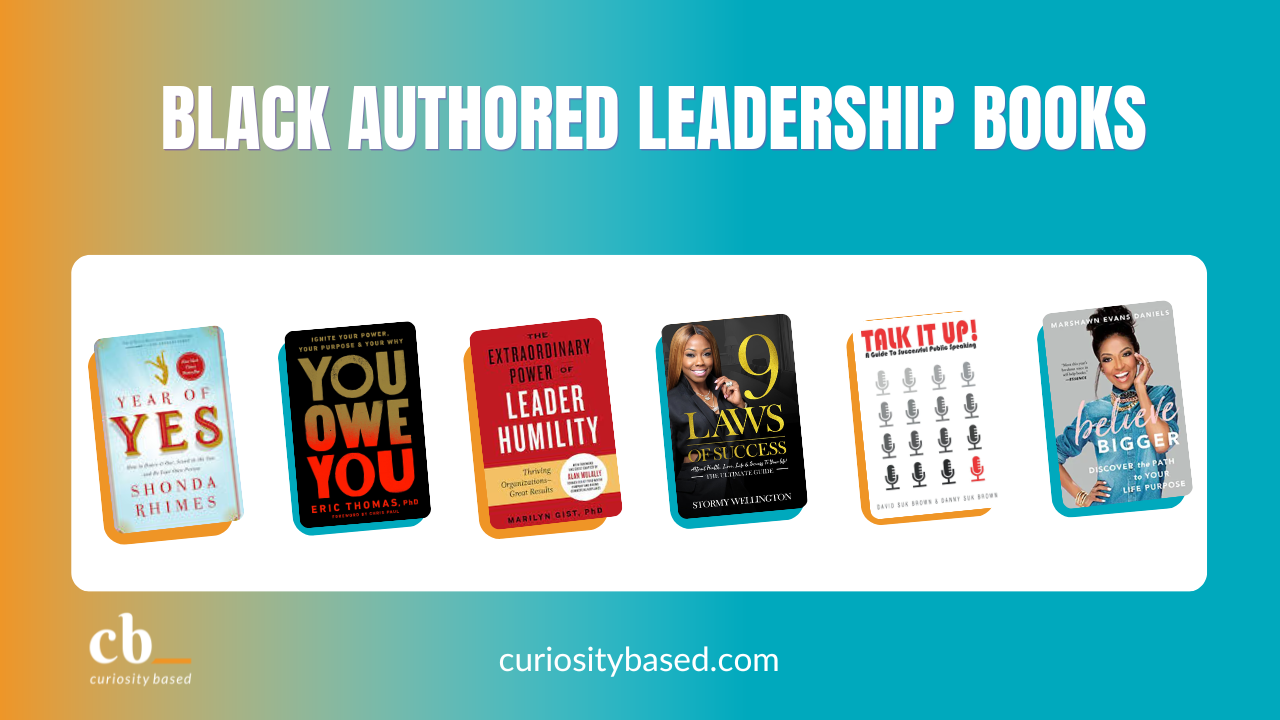
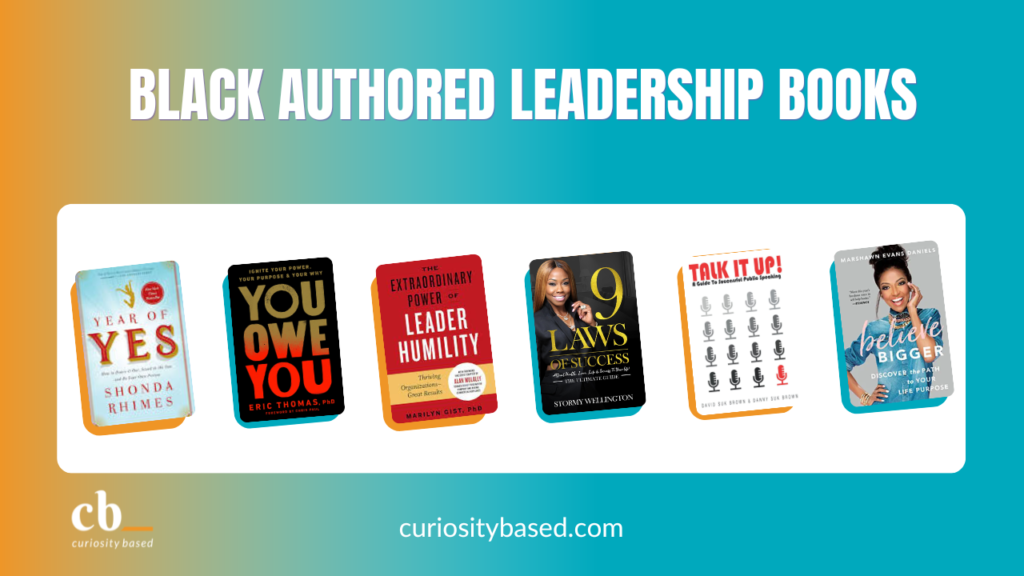
2022 Black Authored Leadership Book List

In support of Black History Month, we’ve compiled a list of leadership books written by Black authors in the United States. This list is meant to be a resource, not an official endorsement. The books are not ranked in any particular order.

Download the full list below.

  1. In Search of Our Mother’s Garden: Womanist Prose by Alice Walker 
  2. Purpose Driven Leadership: Building and fostering effective teams by Bridgette Tasha Hyacinth 
  3. The Transformational Consumer: Fuel a lifelong love affair with your customers by helping them get healthier, wealthier, and wiser by Tara-Nicholle Nelson 
  4. Haben: The Deafblind Woman Who Conquered Harvard Law by Haben Girma
  5. Unprecedented: The Masters and Me by Tiger Woods 
  6. The Truths We Hold: An American Journey by Kamala Harris 
  7. The Fire Next Time by James Baldwin 
  8. Sister Outsider: Essays and Speeches by Audre Lorde 
  9. Hunger: A Memoir of (My) Body by Roxane Gay 
  10. Everybody’s Got Something by Robin Roberts & Veronica Chambers 
  11. This is the Fire: What I say to My Friends About Racism by Don Lemon 
  12. On the Other Side of Freedom: The Case for Hope by DeRay Mckesson 
  13. White Girls by Holton Als 
  14. Nothing Personal by James Baldwin 
  15. Revelations: The Autobiography of Alvin Ailey by Alvin Aily & A. Peter Bailey
  16. Emergent Strategy: Shaping Change, Changing Worlds by Adrienne Maree Brown
  17. We Will Not Cancel Us by Adrienne Maree Brown
  18. Love and Rage by Lama Rod Owens
  19. Pleasure Activism: The Politics of Feeling Good by Adrienne Maree Brown
  20. How to Get Stupid White Men Out of Office: The Anti-Politics, Un-Boring Guide to Power by Adrienne Maree Brown
  21. It’s About Damn Time by Arlan Hamilton
  22. My Story of Embracing Purpose, Healing & Hope by Kamaro Brown
  23. The Mentor Leader by Tony Dungy
  24. Uncommon: Finding Your Path to Significance by Tony Dungy
  25. The Secrets to Success: When you want to Succeed as Bad as You Want to Breath by Eric Thomas
  26. Produced by Faith: Enjoy real success without losing your true self by DeVon Franklin
  27. Super Rich: A guide to having it all by Russell Simmons
  28. It Worked for Me: In life and leadership by Colin Powell
  29. Reach: 40 Black men speak on living, leading, and succeeding by Ben Jealous & Trabian Shorters
  30. Black Faces in White Places: 10 game-changing strategies to achieve success and find greatness by Randal Pinkett & Jeffrey Robinson
  31. The Gatekeepers are Gone: Hustle + Technology = Success by Lamar Tyler 
  32. Know What Makes Them Tick: How to successfully negotiate almost any situation by Shonda Rhimes
  33. The Autobiography of Malcolm X: As told to Alex Haley by Malcolm X & Alex Haley
  34. What I Know for Sure by Oprah Winfrey
  35. Hidden Figures: The American Dream and the Untold Story of the Black Women Mathematicians Who Helped Win the Space Race by Margot Lee Shetterly
  36. The Misadvantures of Awkward Black Girl by Issa Rae
  37. The One Week Budget by Tiffany Aliche
  38. I’m Judging You: The do-better manual by Luvvie Ajayi
  39. We Should All Be Feminists by Chimamanda Ngoni Adichie
  40. The Awkward Thoughts of W. Kamau Bell by W. Kamau Bell
  41. Between the World and Me by Ta-Nehisi Coates
  42. My Bondage and My Freedom by Frederick Douglass
  43. Drop the Ball: Achieving more by doing less by Tiffany Dufu 
  44. Biased: Uncovering the hidden prejudice that shapes what we see, think and do by Jennifer Eberhardt
  45. Stamped from the Beginning: The definitive history of racist ideas in America by Ibram X. Kendi 
  46. Lovesong: Becoming a Jew by Julius Lester
  47. Becoming by Michelle Obama
  48. The Race Whisperer: Barack Obama and the political uses of race by Melayne Price
  49. A Promised Land by Barack Obama
  50. Strength to Love by Martin Luther King, Jr. 
  51. My Grandmother’s Hands: Racialized Trauma and the Pathway to Mending Our Hearts and Bodies by Resmaa Menakem
  52. Just As I Am by Cicely Tyson
  53. Black and White: The Way I See It by Richard Williams
  54. Uncomfortable Conversations With a Black Man by Emmanuel Acho
  55. A Way Out of No Way: A Memoir of Truth, Transformation, and the New American Story by Raphael Warnock
  56. Professional Troublemaker: The Fear Fighter Manual by Luvvie Jayi Jones
  57. Finding Me: A Memoir by Viola Davis 
  58. More than Enough: Claiming Space for Who Your Are (No Matter What They Say) by Elaine Welteroth 
  59. My Life: Queen of the Court by Serena Williams 
  60. Small Doses: Potent Truths for Everyday Use by Amanda Seales 
  61. Bamboozled: How God Tricked Me into the Life of My Dreams by Yvonne Orji 
  62. After the Rain: Gentle Reminders for Healing, Courage, and Self Love by Alexandra Elle
  63. The 1619 Project: A New Origin Story by Nikole Hannah-Jones 
  64. The Mind of a Winner by Steve Canal 
  65. All Bout Love by Bell Hooks 
  66. The Little Black Book of Success: Laws of Leadership for Black Women by Elaine Meryl Brown, Marsha Haygood & Angela Burt-Murray 
  67. Your Next Level Life: 7 Rules of Power, Confidence, and Opportunity for Black Women in America by Karen Arrington 
  68. Playing the Game Without a Coach: How Courage, Resilience and Forgiveness Helped One Man Seize the American Dream by Benjamin Raymond 
  69. The Wealth Choice: Secret Success of Black Millionaires by Dennis Kimbro 
  70. Beating the Odds: Eddie Brown’s Investing and Life Strategies by Eddie Brown 
  71. Strategize to Win: The New Way to Star Out, Step Up, or Start Over Your Career by Carla Harris 
  72. Rise and Grind: Outperform, Outwork, and Outhustle Your Way to a More Successful and Rewarding Life by Daymond John & Daniel Paisner 
  73. Life in Motion: An Unlikely Ballerina by Misty Copeland 
  74. The Work: Searching for a Life that Matters by Wes Moore 
  75. The Last Black Unicorn by Tiffany Haddish 
  76. Lead from the Outside: How to Build Your Future and Make Real Change by Stacey Abrams 
  77. 50 Billion Dollar Boss: African American Women Sharing Stories of Success in Entrepreneurship and Leadership by Kathey Porter 
  78. Black Business Secrets: 500 Tips, Strategies, and Resources for the African American Entrepreneur by Dante Lee 
  79. Black Fortunes: The Story of the First Six African Americans Who Escaped Slavery and Became Millionaires by Shomari Wills 
  80. Black Power Inc.: The New Voices of Success by  Cora Daniels 
  81. Climb: Taking Every Step with Conviction, Courage, and Calculated Risk to Achieve a Thriving Career and a Successful Life by Michelle Gadsden-Williams, Carolyn M. Brown 
  82. Boss Bride: The Powerful Woman’s Playbook for Love and Success by Charreah Jackson 
  83. Conversations in Black: On Power, Politics, and Leadership by  Ed Gordon 
  84. Double Down: Bet on Yourself and Succeed on Your Own Terms by  Antionette M. Clarke & Tricia Clarke-Stone 
  85. Expect to Win: Proven Strategies for Success From a Wall Street Vet by  Carla A. Harris 
  86. It’s About Time: The Art of Choosing the Meaningful Over the Urgent by  Valorie Burton
  87. Little Black Book: A Toolkit for Working Women by  Otegha Uwagba 
  88. Miss Jessie’s: Creating A Successful Business from Scratch – Naturally by Micho Branch 
  89. Mo’s Bows: A Young Person’s Guide to Start-up Success: Measure, Cut, Stitch Your Way to a Great Business by Moziah Bridges & Tramica Morris 
  90. More Than Pretty: Doing the Soul Work that Uncovers Your True Beauty by  Erica Campbell 
  91. The Book of Awesome Black Americans: Scientific Pioneers Trailblazing Entrepreneurs, Barrier-Breaking Activists and Afro-Futurists by Monique Jones 
  92. The Memo: What Women of Color Need to Know to Secure a Seat at the Table by Minda Harts 
  93. The Merchant Prince of Black Chicago: Anthony Overton and the building of a Financial Empire by Robert E. Weems 
  94. Balancing Work and Life: The Nia guide for Black Women by Sherly Huggins & Cheryl Mayberry McKissack 
  95. The Road to Someplace Better: From the Segregated South to Harvard Business School and Beyond by Lillian Lincoln Lambert 
  96. You Got This!: Unleash Your Awesomeness, Find Your Path, and Change Your World By: Maya Penn 
  97. Women of Color in Tech: A Blueprint for Inspiring and Mentoring the Next Generation of Technology Innovators by Susanne Tedrick 
  98. Finding My Voice: My Journey to the West Wing and the Path Forward by Valarie Jarret 
  99. Believe Bigger: Discover the Path to Your Life Purpose by Marshawn Evans Daniels 
  100. Swimming with Sharks in Dark Waters by Athene Brinson 
  101. FutureProofed: How to Navigate Disruptive Change, Find Calm in Chaos, and Succeed in Work & Life by Natalia Peart 
  102. Own Your Phenomenal Self: A Guide on Character, Success, & Leadership by Rita P. Mitchell 
  103. Werk 101: Get Your Life Together Guide by Koereyelle DuBose 
  104. Illogical: Saying Yes to a Life Without Limits by Emmanuel Acho 
  105. Impolite Conversations: On Race, Politics, Sex, Money, and Religion by Cora Daniels & John L. Jackson Jr. 
  106. Driven by Intention: Own Your Purpose, Gain Power, and Pursue Your Passion as a Woman at Work by Michelle Gadsden-Williams 
  107. Right Within: How to Heal From Racial Trauma in the Workplace by Minda Harts
  108. Gracism: The Art of Inclusion by Dr. David A. Anderson 
  109. So You Want to Talk About Race by Ijeoma Oluo 
  110. All Bout Love by Bell Hooks 
  111. Ain’t I a Woman: Black Women and Feminism by Bell Hooks 
  112. You’ve Got to Be Hungry: The Greatness Within to Win by Les Brown 
  113. The Art of Ronin Leadership by Mike Howard 
  114. Hood Feminist: Notes from the Women that a Movement Forgot by Mikki Kendall 
  115. Where Do We Go from Here: Chaos or Community by Dr. Martin Luther King Jr. 
  116. Upper Hand: The Future of Work for the Rest of Us by Sherrell Dorsey 
  117. Will by Will Smith 
  118. More Myself: A Journey by Alicia Keys 
  119. Undrowned: Black Feminist Lessons from Marine Mammals by Alexis Pauline Gumbs 
  120. These Wilds Beyond our Fences: Letters to My Daughter on Humanity’s Search for Home by Bayo Akomolafe 
  121. Black Futures by Kimberly Drew & Jenna Wortham 
  122. Radical Dharma: Talking Race, Love and Liberation by Rev Angel Kyodo Williams 
  123. Just Mercy: A Story of Justice and Redemption by Bryan Stevenson 
  124. Good Night Stories for Rebel Girls: 100 Real-Life Tales of Black Girl Magic by Sonja Thomas & Lilly Workneh 
  125. How to Be an Antiracist byIbram X. Kendi
  126. Bridges to Heal US: Stories and Strategies for Racial Healing by Erin Jones 
  127. The Color of Water: A Black Man’s Tribute to His White Mother by Andre Braugher, James McBride, Lainie Kazan 
  128. The Tipping Point: How Little Things Can Make a Big Difference by Malcolm Gladwell 
  129. David and Goliath: Underdogs, Misfits, and the Art of Battling Giants by Malcolm Gladwell 
  130. Allow Me to Retort: A Black Guy’s Guide to the Constitution by Ellie Mystal 
  131. Fire Shut Up in My Bones by Charles Blow 
  132. The Devil You Know: A Black Power Manifesto by Charles Blow  
  133. Speaking Truth to Power by Anita Hill 
  134. Writings on the Wall: searching for a New Equality Beyond Black and White by Kareem Abdul-Jabbar 
  135. Becoming Kareem: Growing Up On and Off the Court by Kareem Abdul-Jabbar 
  136. Up from Nothing: The Untold Story of How We (All) Succeed by John Hope Bryant 
  137. The Memo: Five Rules for Your Economic Liberation by John Hope Bryant
  138. Love Leadership: The New Way to Lead in A Fear Based World by John Hope Bryant 
  139. The Purpose of Power: How We Come Together When We Fall Apart by Alicia Garza 
  140. I’m Still Here: Black Dignity in a World Made for Whiteness by Austin Channing Brown 
  141. Standing Above the Crowd by James Donaldson
  142. The Extraordinary Power of Leader Humility: Thriving Organizations – Great Results by Marilyn Gist, PhD

Interested in reading more? Check out our American Indian and Native Alaskan Authored Leadership Booklist!

Read our other leadership booklists too!

Showing Respect with Attention

The 7 Forms of Respect (7 FoRs)® tool builds mutual trust and understanding by giving people a vocabulary to describe what matters to themselves and others. Respect is relative. What is important to one person might not be important to someone else.

In this post, we will go in-depth on “Attention” as a form of respect. The 7 Forms of Respect® include procedure, punctuality, information, candor, consideration, acknowledgement and attention. Attention focuses on giving up distractions. 

How Attention shows up in everyday life

Imagine you’ve been invited to attend a special presentation. There are about a dozen people in the room. Just as the presentation is about to start, your boss asks you to read a report and share your initial reactions as soon as possible.

Do you ignore your boss’ message and pay full attention to the presentation? If so, you’ve decided to give Attention to the speaker.

Do you tell your boss you aren’t available because you have another obligation and you need more notice, returning your full attention to the speaker? If so, you gave Candor to your boss and Attention to the speaker.

Do you try to discreetly read ther report on your phone and respond while listening to the presentation? You are giving Procedure to your boss at the expense of Attention to the speaker.

Do you tell others around you that you need to  address an urgent work matter so they know what you are doing while listening to the presentation? If so, you are giving Information to others, Procedure to your boss, but not Attention to the speaker.

This example illustrates the complexity and trade offs of respect. It demonstrates that the ways in which we want to get and give respect are not universal and can change depending on an individual’s preferences and the situation. The degree to which you expect this form of respect may depend on the power dynamics of your relationship.

Attention can look like: 

  • Listening attentively. 
  • Referring back to other people’s comments to indicate you were listening. 
  • Not interrupting except to ask clarifying questions.

Lack of Attention as a form of respect looks like: 

  • Multitasking.
  • Interrupting to comment.
  • Allowing for distractions.

How Attention can be interpreted differently 

There are many different personal and professional reasons why someone would care about giving and/or getting Attention as a form of respect. Understanding your FoRs starts with asking yourself, why does this matter to me? Many people in our research talked about their families and childhood. Others focused on the demands of their current job function and company culture. 

FoR provides a shared language to describe what you need. You’ll be able to use this language to navigate conflict and address misunderstanding. This can come up when you want a particular FoR of respect and you aren’t getting it. You can then share why the FoR matters to you.

Scenario 1:
Sue is a new leader at a company and she noticed that in group meetings, everyone has their laptop open and their phones facing up on the table. The team historically has not given Attention as a form of respect to one another. People openly multi-task. The first few times she leads the meeting she’s distracted by the multi-tasking. At her third meeting, she asks people to close their laptops and turn over their phones. “I know Attention doesn’t matter to most of you. It matters to me. I feel respected when I know you are focused on what I’m saying. For the early part of my career, people regularly couldn’t hear my contributions because they were distracted. They didn’t know I felt disrespected until I said something. The multi-tasking made me feel like whatever else they were working on was more important than me. Once I started asking for respect the way I needed it, they could hear my ideas and that’s how I got to where I am today.”

Scenario 2:
Rosa has a colleague, Ernie, who interrupts her constantly when they are talking. He inserts his own stories and comments. Finally, she tells him, “I need Attention as a form of respect and you constantly interrupt me. I wish you would just listen to me. Ernie is surprised, “In my culture, we
interrupt each other all the time, It’s my way of showing I’m interested and engaged. I didn’t mean to disrespect you and I’ll try to wait until you finish talking before I say something .”

Our preference for certain FoR are rooted in our past experiences. Explaining those experiences builds empathy with others. Use the FoR to find common ground with someone who wants to give or get respect differently than you do. Ask them about their past experiences and who influenced them.

What’s Next

Check out Dr. Julie Pham’s book, 7 Forms of Respect: A Guide to Transforming Your Communication and Relationships at Work.

To learn more, visit our website. CuriosityBased is also available to host workshops for your team or company  so you can  improve communication, collaboration and trust.

Is Attention a form of respect for you? 

Take the free quiz here.
Showing respect with Acknowledgement

In this post, we will be going in-depth on “Acknowledgement” as a form of respect. The 7 FoR include: procedure, punctuality, information, candor, consideration, acknowledgement and attention. Acknowledgement focuses on communicating that you recognize people’s work, talents, and contributions, publicly or privately.

How Acknowledgement shows up in everyday life 

Imagine you work at a company that has a culture of public acknowledgement, which you know makes the top performer on your team cringe. He has told you repeatedly he does not want public recognition for his work. His latest contribution led to one of the biggest innovations at the company in recent history. You are asked to celebrate him at the company-wide meeting.

Do you publicly praise this employee, despite his expressed wishes not to be recognized? If so, you’ll be adhering to a company culture that prefers to demonstrate respect through Acknowledgement.

If you decide not to mention the employee, you are giving him Consideration and also a lack of Acknowledgement, which is what he has asked for in the past.

Reflect on people in your life or past experiences that may have influenced how you prefer to be acknowledged. 

If Acknowledgement is important to you, you will demonstrate respect by verbally and/or in writing express your gratitude. You like to give positive praise and recognize their contributions, publicly and/or privately. Whenever possible, you will acknowledge their requests, even if you can’t fulfill them.

You feel respected when you are thanked for your work and by being recognized and even praised for your specific contributions. When people let you know they received your communication, even if you didn’t ask for confirmation, you feel seen and heard. 

The degree to which you give and expect to get this form of respect may depend on the power dynamics in the relationships.

Acknowledgement can look like: 

  • Giving positive praise and recognizing others’ contributions
  • Thanking people, even if they met minimum expectations 
  • Acknowledge the requests of others, if you can’t fulfill them

Lack of Acknowledgement as a form of respect looks like: 

  • Only thanking people when they have exceeded expectations
  • Only praising people for extraordinary work
  • Not confirming receipt of communication

How Acknowledgement can be interpreted differently 

There are many different personal and professional reasons why someone would care about giving and/or receiving  Acknowledgement as a form of respect. Understanding your preferred forms of respect starts with asking yourself why does this matter to me? Many people in our research talked about their families and childhood. Others focused on the demands of their current job function and company culture. 

FoR provides a shared language to describe what you need. You’ll be able to use this language to navigate conflict and address misunderstanding. This can come up when you want a particular FoR of respect and you aren’t getting it. You can then share why the FoR matters to you.

Scenario 1:

When Yomara, a manager, sends out email instructions to her direct reports, they acknowledge receipt. Thế Anh is the only one who does not. So Yomara asks Thế Anh, “Could you let me know when you get my email? It assures me that you’ve seen it.” Thế Anh’s answer said, “Yes, I can do that. I wasn’t sure how you wanted me to respond because when I send you emails, you don’t acknowledge them. So I assumed you don’t like to receive or send extraneous emails. I also like to have my emails acknowledged.” 

Scenario 2:

Krishneel has just been promoted manager and now has two people on his team, Isabell and Katie. Isabell gets her work done on time and meets Krishneel’s expectations. Katie proactively pushes for opportunities to improve every project that she is given. At meetings, Krishneel praises both Isabell and Katie equally. Over time, Krishneel notices Katie’s performance drops and she is no longer excelling. She only meets minimum expectations. Krishneel asks Katie, “Is something wrong? You don’t seem to be as engaged as before.” Katie explains, “You tell everyone on your team we do ‘amazing’ work all the time. To me, I only want to get Acknowledgement if it feels meaningful. When you give so much of it, I don’t know my true performance.” Krishneel didn’t realize that his liberal use of Acknowledgement could have negative consequences.

Our preference for certain Forms of Respect are rooted in our past experiences. Explaining those experiences builds empathy with others. Whenever you work with someone who doesn’t share your same forms of respect, you can use 7 FoRs to talk about it. Ask them about their past experiences and who influenced them.

Acknowledgement is a form of respect that focuses on expressions of praise and gratitude.

What’s Next

Check out Dr. Julie Pham’s book, 7 Forms of Respect: A Guide to Transforming Your Communication and Relationships at Work.

To learn more, visit our website. CuriosityBased is also available to hold workshops with your company or team about applying the 7 Forms of Respect to improve communication, collaboration and trust.

Is Acknowledgement a form of respect for you? 
Take the free quiz here.
2021 American Indian and Native Alaskan Authored Leadership Books

In celebration of American Indian and Alaskan Native heritage Month, we’ve compiled a list of leadership books written by American Indian and Alaskan Native authors to be read, explored, and studied. This list is meant to be a resource, not an official endorsement. The books are not ranked in any particular order.

Download the full list below.

  1. You Don’t Have to Say You Love Me by Sherman Alexie
  2. Recovering the Sacred: The power of naming and claiming by Winona LaDuke
  3. Braiding Sweetgrass: indigenous wisdom, scientific knowledge, and the teachings of plants by Robin Wall Kimmerer
  4. The Tao of Raven: An Alaska Native Memoir by Ernestine Hayes
  5. Black Indian: A memoir by Shonda Buchanan
  6. Custer Died for Your Sins: An Indian manifesto by Vine deLoria Jr. 
  7. Where White Men Fear to Tread: The autobiography of Russell Means by Russell Means and Marvin J. Means
  8. Prison Writings: My life is my Sun Dance by Leonard Peltier
  9. The School Days of an Indian Girl, and an Indian Teacher Among Indians by Zitkala-Sa
  10. The Man Made of Words: Essays, stories, passages by N. Scott Momaday
  11. Muscogee Daughter: My sojourn to the Miss America Pageant by Susan Supernaw 
  12. Life of Black Hawk, or Ma-ka-tai-me-she-kia-kiak: Dictated by himself by Black Hawk
  13. Our History Is the Future: Standing Rock Versus the Dakota Access Pipeline, and the Long Tradition of Indigenoious Resistance by Nick Estes
  14. Code Talker: The first and only memoir of the original Navajo Code Talkers of WWII by Chester Nez
  15. Abandon Me: Memoirs by Melissa Febos
  16. Heart Berries by Terese Marie Mailhot
  17. As Long As Grass Grows: The Indigenous Fight for Environmental Justice, from Colonization to Standing Rock by Dina Gilio-Whitaker
  18. Crazy Brave: A Memoir by Joy Harjo
  19. Gathering Moss: A Natural and Cultural History of Mosses by Robin Wall Kimmerer
  20. God is Red: A Native View of Religion by Vine deLoria Jr. 
  21. The Heartbeat of Wounded Knee by David Treuer
  22. The Inconvenient Indian: A Curious Account of Native People in North America by Thomas King
  23. Lakota Woman by Mary Brave Bird
  24. #Not Your Princess: Voices of Native American Women by Lisa Charleyboy and Mary Beth Leatherdale (editors)
  25. The Turquoise Ledge by Leslie Silko
  26. Men We Reaped: A Memoir by Jesmyn Ward 
  27. Dwellings: A Spiritual History of the Living World by Linda Hogan
  28. Bad Indians: a Tribal Memoir by Deborah Miranda 
  29. Night Flying Woman: An Ojibway Narrative by Ignatia Broker
  30. Dog Flowers: A Memoir by Danielle Geller
  31. Portage Lake: Memories of an Ojibwe Childhood by Maude Kegg
  32. Everything You Wanted to Know about Indians But Were Afraid to Ask by Anton Treuer
  33. The Assassination of Hole in the Day by Anton Treuer
  34. As We Have Always Done: Indigenous Freedom Through Radical Resistance by Leanne Betasamosake Simpson
  35. Nooping: The Cure for White Ladies by Leanne Betasamosake Simpson
  36. The People and the Word: Reading Native Nonfiction by Robert Warrior
  37. Tribal Secrets: Recovering American Indian Intellectual Traditions by Robert Warrior
  38. Like a Loaded Weapon by Robert A. Williams Jr. 
  39. Bear Island: The War at Sugar Point by Gerald Vizenor
  40. The Third Space of Sovereignty by Kevin Bruyneel
  41. Navajo Courts and Navajo Common Law: A Tradition of Tribal Self-Governance by Raymond D. Austin
  42. Firsting and Lasting: Writing Indians out of Existence in New England by Jean O’Brien
  43. X-Marks by Scott Richard Lyons
  44. Red Skin, White Masks: Rejecting the Colonial Politics of Recognition by Glen Sean Coulthard
  45. The Queerness of Native American Literature by Lisa Tatonetti
  46. Speaking of Indigenout Politics: Conversations with Activists, Scholars, and Tribal Leaders by J. Kehaulani Kauanui and Robert Warrior
  47. Standing with Standing Rock: Voices from the #NoDAPL Movement by Nick Estes and Jaskiran Dhillon
  48. Hungry Listening: Resonant Theory for Indigenous Sound Studies by Dylan Robinson
  49. Written by the Body: Gender Expansiveness and Indigenous Non-Cis Masculinities by Lisa Tatonetti
  50. Remembering Our Intimacies: Mo’olelo, Aloha ‘Aina, and Ea by Jamaica Heolimeleikalani Osario
  51. Everything You Know About Indians is Wrong by Paul Chatt Smith
  52. Red Nation Rising: From Bordertown Violence to Native Liberation by Nick Estes, Melanie K. Yazzi, Jennifer Nez Denetdale, and David Correia
  53. Wiping the War Paint off the Lens: Native American Film and Video by Beverly Singer
  54. The People Shall Continue by Simon Ortiz
  55. Poet Warrior: A Memoir by Joy Harjo
  56. The Four Hills of LIfe: Ojibwe Wisdom by Thomas Peacock and Marlene Wisuri
  57. The Sacred Hoop: Recovering the Feminine in American Indian Traditions by Paula Gunn Allen
  58. Critically Sovereign: Indigenous Gender, Sexuality, and Feminist Studies by Joanne Barker
  59. For indigenous Eyes only: A Decolonization Handbook by Waziyatawin and Michael Yellow Bird
  60. Mark My Words: Native Women Mapping Our Nations by Mishuana Goeman
  61. The Beginning and End of Race: Confronting Sexual Violence in Native America by Sarah Deer
  62. When My Brother Was an Aztec by Natalie Diaz
  63. A History of my Brief Body by Billy-Ray Belcourt
  64. Starvation Mode by Elissa Washuta
  65. The Roots of Ticasuk by Ticasuk (Emily Ivanoff Brown)

We are continually adding to this list. If you have any recommended additions please send us an email at info@curiositybased.com so we can add it here.
Interested in reading more? Check out our Authors with Disabilities Leadership Booklist!

Read our other leadership booklists too! 

Showing respect with Candor

The 7 Forms of Respect (7 FoR).™ tool builds mutual trust and understanding by giving people a vocabulary to describe what matters to themselves and others. Respect is relative. What is important to one person might not be important to someone else. 

In this post, we will be going in-depth on “Candor” as a form of respect. The 7 FoR include: procedure, punctuality, information, candor, consideration, acknowledgement and attention. Candor focuses on asking probing questions, offering constructive feedback (both solicited and unsolicited), bringing up opposing viewpoints, and pointing out mistakes and errors. 

How Candor shows up in everyday life 

Imagine you are in a meeting to review a  colleague’s project. You both report to the same manager. Your colleague has just finished presenting. Your manager  asks you specifically what you think about the presentation. You think there are some flaws in your colleague’s project execution. You know this particular colleague does not like constructive feedback. 

Do you voice this constructive criticism openly at the meeting and respond to your manager? 

If you choose to give feedback on-the-spot, you are giving respect in the form of Candor, which is what your manager wants but your colleague does not like. 

Do you only express the positive aspects of your feedback? If you only give praise, you are showing respect in the form of Acknowledgment to your colleague and not giving respect to your manager in the way he asked for it.

Do you ask for more time to think about it and then share it with your manager later on, so your colleague doesn’t have to hear it? If you choose to defer, you are giving your colleague consideration because you are guessing they would prefer that, though you don’t know. You will still be able to give your manager Candor, though delayed. 

This example illustrates the complexity and trade offs of giving respect to people with different preferences, at the same time. It shows the ways we want to get and give respect are not universal and can change depending on the individual’s preferences. The degree to which you expect this form of respect may depend on the power dynamics of your relationship.

Candor can look like: 

  • Asking probing questions
  • Offering constructive feedback (both solicited and unsolicited)
  • Bringing up opposing viewpoints
  • Pointing out mistakes

Lack of Candor as a form of respect looks like: 

  • Withholding opinions that differ from the others, even when asked
  • Withholding constructive criticism

How Candor can be interpreted differently 

There are many different personal and professional reasons why someone would care about giving and/or getting Candor as a form of respect. Understanding your forms of respect starts with asking yourself, why does this matter to me? Many people in our research talked about their families and childhood. Others focused on the demands of their current job function and company culture. 
The 7 FoR provide a shared language to describe what you need. You’ll be able to use this language to navigate conflict and address misunderstanding. This can come up when you want a particular FoR of respect and you aren’t getting it. You can then share why the FoR matters to you.

Scenario 1:

Kim is a high-performing employee who has been promoted three times in a year. Now she is meeting regularly with the CEO to discuss her work. The CEO likes to adopt the opposing viewpoint to challenge her work, in order to push her thinking. Kim has always appreciated getting Candor as a form of respect. This constant Devil’s Advocate makes her feel anxious. After a month of interrogation meetings with the CEO, she begins to doubt if she wants to stay at the company. Because she knows the CEO appreciates getting Candor, she tells him of her concerns, “I know this is the way you like to give Candor and it makes me feel like I constantly have to prove myself and how much I know.” The CEO was very surprised. “I grew up with lawyers for parents and we constantly debated. No one has ever told me this before, I wonder how many other people I made feel uncomfortable. Thank you for your Candor. I won’t probe in that way anymore and I’ll stick to direct feedback.” Because Kim gave the CEO Candor about his Candor, he was able to adjust how he gave Candor.


Scenario 2:

Travis has been passed over for a promotion twice.  He has asked for feedback on his performance so he knows what to do to improve his work so that he can get promoted. His manager instead tells him he’s doing really well. He even gets an employee recognition award. But this award feels empty because he hasn’t gotten a title promotion nor a pay raise. He finally tells his manager he feels disrespected. He wants to get Candor from her and she gives him Acknowledgement instead. Once he frames it that way, she realizes she does not like to give Candor as a form of Respect because she doesn’t know how to tell Travis about the areas he needs to improve, though she is aware of them. She herself did not have managers who modelled giving constructive feedback effectively. She hadn’t realized her own preferences were hindering his ability to prove he was ready for a promotion. He was not satisfied by just doing his current job well. She started to give him Candor so that he would feel respected,

Our preference for certain Forms of Respect are rooted in our past experiences. Explaining those experiences builds empathy with others. Whenever you work with someone who doesn’t share your same FoR , you can use FoR to talk about it. Ask them about their past experiences and who influenced them.

Candor is a form of respect that focuses on giving information meant to influence an outcome or encourage change.

What’s Next

Check out Dr. Julie Pham’s book, 7 Forms of Respect: A Guide to Transforming Your Communication and Relationships at Work.

To learn more, visit our website. The CuriosityBased staff are  also available to hold workshops with your company or team to learn how to apply  the 7 Forms of Respect to improve communication, collaboration and trust.

Is Candor a form of respect you value? 

Take the free quiz here.

2021 Authors with Disabilities Leadership Book List

In support of National Disability Employment Awareness Month (NDEAM), we’ve compiled a list of leadership books written by authors with disabilities in the United States. This list is meant to be a resource, not an official endorsement. The books are not ranked in any particular order.

Download the full list below.

  1. Disarm Your Limits: The flight formula to lift you to success and propel you to the next horizon by Jessica Cox
  2. The White Album by Joan Didion
  3. Chef Interrupted by Trevis Gleason 
  4. Fall Down, Laughing: How Squiggy caught multiple sclerosis and didn’t tell nobody by David Lander
  5. Speedbumps: Flooring it through Hollywood by Teri Garr
  6. And Now We Are Going to Have a Party: Liner Notes to a Writer’s Early Life by Nicola Griffith
  7. To Know As We Are Known: Education as Spiritual Journey by Parker Palmer
  8. The World I Live In by Helen Keller
  9. Don’t Worry, He Won’t Get Far on Foot  by John Callahan
  10. Haben: The Deafblind Woman who Conquered Harvard Law by Haben Girma
  11. Exile and Pride: Disability, Queerness, and Liberation by Eli Clare
  12. Wishful Drinking by Carrie Fisher
  13. Unwritten Rules of Social Relationships: Decoding Social Mysteries Through Autism’s Unique Perspectives by Temple Grandin
  14. Marbles: Mania, Depression Michelangelo, and Me by Ellen Forney
  15. Strangers Assume My Girlfriend Is My Nurse by Shane Burcaw
  16. I Am Schizophrenic: Poetry from a Beautiful Brain by Kerenza Ryan
  17. Apocalyptic Best Practices: A Unique approach to fear and change by Elisebeth VanderWeil
  18. You Don’t Have to Say You Love Me by Sherman Alexie
  19. Being Huemann: An Unrepentant Memoir of a Disability Rights Activist by Judith E. Heumann
  20. The Pretty One: On life, pop culture, disability, and other reasons to fall in love with my by Keah Brown
  21. Sitting Pretty: The View from My Ordinary Resilient Diabled Body by Rebekah Taussig
  22. Disability Visibility: First-Person Stories from the Twenty-First Century by Alice Wong
  23. Nothing About Us Without Us: Disability Oppression and Empowerment by James I. Charlton
  24. I Am Not a Label by Cerrie Burnell
  25. Limitless: The Power of Hope and Resilience to Overcome Circumstances by Mallory Weggemann
  26. Care Work: Dreaming Disability Justice by Leah Lakshmi Piepzna-Samarasinha
  27. Life in the Mind Interrupted: Essays on Mental Health and Disability in Higher Education by Katie Rose Guest Pryal
  28. Rolling Warrior: The Incredible, Sometimes Awkward, True Story of a Rebel Girl on Wheels Who Helped Spark a Revolution by Judith Heumann
  29. The Disability Experience: Working Toward Belonging by Hannalora Leavitt
  30. When the Chant Comes by Kay Ulanday Barrett
  31. The Story of My Life by Helen Keller
  32. Look Me in the Eye: My Life with Asperger’s by John Elder Robison
  33. Be Different by John Elder Robison
  34. Switched On: A Memoir of Brain Change and Emotional Awakening by John Elder Robison
  35. Moving Violations: Warzones, Wheelchairs, and Declarations of Independence  by John Hockenberry
  36. Disfigured: On Fairy Tales, Disability and Making Space by Amanda Leduc
  37. Thinking in Pictures: My Life with Autism by Temple Grandin
  38. Calling all Minds: How to Think and Create Like an Inventor by Temple Grandin
  39. The Way I See It: A Personal Look at Autism and Asperger’s by Temple Grandin
  40. Unwritten Rules of Social Relationships: Decoding social mysteries through autism’s unique perspectives by Temple Grandin
  41. Golem Girl by Riva Lehrer
  42. Find Another Dream by Maysoon Zayid
  43. Too Late to Die Young: Nearly True Tales from a Life by Harriet McBryde Johnson
  44. If at Birth You Don’t Succeed: My Adventures with Disaster and Destiny by Zach Anner
  45. Fading Scars: My Queer Disability History by Corbett O’Toole
  46. Extraordinary Bodies: Figuring Physical Disability in American Culture and Literature by Rosemarie Garland-Thomson
  47. Staring: How We Look by Rosemarie Garland-Thomson
  48. Elegy for a Disease: A Personal and Cultural History of Polio by Anne Finger
  49. Waist-High in the World: A Life Among the Nondisabled by Nancy Mairs
  50. In the Province of God by Kenny Fries
  51. The History of My Shoes and the Evolution of Darwin’s Theory by Kenny Fries
  52. Body, Remember: A Memoir by Kennie Fries
  53. Mad at School: Rhetorics of Mental Disability and Academic Life by Margaret Price 
  54. The Obsessive Joy of Autism by Julia Bascom 
  55. Blind: A Memoir by Belo Cipriani 
  56. Count Us In: Growing Up with Down Syndrome by Jason Kingley and Mitchell Levitz
  57. Holding Change: The Way of Emergent Strategy Facilitation and Mediation by Adrienne Maree Brown
  58. Pleasure Activism: The Politics of Feeling Good by Adrienne Maree Brown
  59. Brilliant Imperfection: Grappling With Cure by Eli Clare
  60. Feminist Queer Crip by Alison Kafer
  61. ASL Saved My Life…Until it didn’t by Jenni Kleinman Berebitsky

We are continually adding to this list. If you have any recommended additions please send us an email at info@curiositybased.com so we can add it here.

Interested in reading more? Check out our Hispanic/Latino/Latinx-Authored Leadership Booklist!

Read our other leadership booklists too!

Showing respect with Consideration

The 7 Forms of Respect (7 FoR).™ tool builds mutual trust and understanding by giving people a vocabulary to describe what matters to themselves and others. Respect is relative. What is important to one person might not be important to someone else.

In this post, we will be going in-depth on “Consideration” as a form of respect. The 7 forms include: procedure, punctuality, information, candor, consideration, acknowledgement and attention. Consideration focuses on anticipating someone’s needs and wants and acting accordingly.

How Consideration shows up in everyday life 

Imagine you just came back to work after a long family leave. You find it difficult  to adjust to the new schedule. You’re tired, stressed, and overwhelmed and you’re vocal about how you feel with your co-workers. You find out that one of your peers got assigned to an exciting new project and you weren’t asked if you wanted to work on it.

Do you feel relieved that your boss recognized that you are not ready to work on a  time-consuming project even though it would have been fun? 

Or do you wish you’d been given the option to decide for yourself even if you would have most likely said no?

Imagine if you had been asked, would you have felt respected that you had the option to say no? Or would you have felt annoyed that your boss asked you to do something that would have made your already stressful situation more dire? If you wanted your boss to recognize your situation and assume you’d be  unavailable for the project then you prefer respect in the form of Consideration.

If you want your boss to ignore your signs of stress and ask you anyway, assuming that you’d prefer to decide on your own then Consideration is not a form of Respect you prefer.

This example illustrates how the ways we want to get and give respect are not universal and can change depending on the individual’s preferences. 

Consideration can look like: 

  • Anticipating what others want and need and interacting with them based on your beliefs
  • Surprising people with gifts you think they’ll like
  • Avoiding asking them to do things you don’t think they’ll like
  • Avoiding asking questions or bringing up topics you think will be uncomfortable for them to share

Lack of Consideration as a form of respect looks like: 

  • Expecting people to express what they need
  • Asking people what they want instead of surprising them
  • Asking someone to do something they may not like or be capable of because you think it’s up to them to say no
  • Asking them questions and topics that may be viewed as personal or uncomfortable because you believe they will decline if they prefer not to answer

How Consideration can be interpreted differently 

There are many different personal and professional reasons why someone would care about giving and/or getting Consideration as a form of respect. Understanding your forms of respect starts with asking yourself, why does this matter to me? Many people in our research talked about their families and childhood. Others focused on the demands of their current job function and company culture. 

FoR provides a shared language to describe what you need. You’ll be able to use this language to navigate conflict and address misunderstanding. This can come up when you want a particular FoR of respect and you aren’t getting it. You can then share why the FoR matters to you.

Scenario 1:

Susan is in charge of employee engagement at her company. She loves surprising people with special gifts, like meaningful trinkets and tickets to special events that she thinks the team would like. She just found out that there are team members who don’t like to be surprised and they would rather be asked what they’d like. Then there are some colleagues who tell her how much they like her thoughtfulness, even though they don’t personally use the gifts. “Consideration” as a form of respect can include surprising people with the intent to delight them. Susan likes to give consideration. Some people like to get it and some don’t. Susan’s father surprised her with many gifts as a child and Consideration was modeled for her. One person who doesn’t like surprises revealed his parents love giving him gifts that he doesn’t need and he then has to find a way to dispose of them. Two people can have a similar childhood experience and have different reactions. 

Scenario 2:

Casey works at a consulting firm that compensates her for her billable hours. Casey is semi-retired and works for fun, not because she needs the money. She noticed her boss, Evie, assigned more work to two consultants who already have a lot of work to do. She asks her boss, “Why aren’t you giving me more work when I have more availability?” Her boss replies, “Lu is saving to buy a house and Kerry has a family to support.” Casey realized Evie was taking into consideration employees’ personal financial situation in terms of allocating work. Evie also believed that since Casey chose to be semi-retired, Casey didn’t want to work as much. They talked about it. Evie was showing respect to Lu and Kerry with Consideration. Evie explained that as the oldest child in a large family, from a young age, she took care of others. Casey reflected on why she didn’t want Consideration as a form of respect because she preferred to be given the choice. She grew up with parents who made a lot of decisions for her and she didn’t like it.

Our preference for certain Forms of Respect are rooted in our past experiences. Explaining those experiences builds empathy with others. Whenever you work with someone who doesn’t share your same forms of respect, you can use FoR to talk about it. Ask them about their past experiences and who influenced them.

Consideration is a form of respect that anticipates other people’s wants and needs and allows you to interact with them accordingly. 

What’s Next

Check out Dr. Julie Pham’s book, 7 Forms of Respect: A Guide to Transforming Your Communication and Relationships at Work.

To learn more, visit our website. CuriosityBased is also available to hold workshops with your company or team about applying the 7 Forms of Respect to improve communication, collaboration and trust.

Is Consideration a form of respect for you? 

Take the free quiz here.

2021 Hispanic/Latino/Latinx Authored Leadership Books

We created this list to promote leadership narratives written by those who identify as Hispanic, Latino, and/or Latinx. This list is meant to be a resource, not an official endorsement. The books are not ranked or listed in any particular order. 

Download the full list below.

  1. Me by Ricky Martin
  2. And A Voice to Sing With: A Memoir by Joan Baez
  3. The Gloria Anzaldúa Reader (Latin America Otherwise) by Gloria Anzaldúa
  4. Borderlands / La Frontera: The New Mestiza by Gloria Anzaldúa
  5. Almost a Woman by Esmeralda Santiago
  6. In the Time of the Butterflies by Julie Alvarez
  7. Farmworker’s Daughter: Growing up Mexican American by Rose Castillo Guilbault
  8. The Power of Latino Leadership: Culture, Inclusion, and Contribution by Juana Bordas
  9. When I was Puerto Rican by Esmeralda Santiago
  10. Salsa, Soul, and Spirit: Leadership for a Multicultural Age by Juana Bordas
  11. Autentíco: The definitive guide to Latino Career Success by Robert Rodriguez
  12. Brown Church: Five Centuries of Latina/o Social Justice, Theology, and Identity by Robert Chao Romero
  13. Hermanas: Deepening Our Identity and Growing Our Influence by Natalia Kohn Rivera
  14. Isabel’s Hand-Me-Down Dreams by Isabel Lopez
  15. Leaving Little Havana: A Memoir of Miami’s Cuban Ghetto by Cecilia M. Fernandez
  16. Gmorning, Gnight!: Little Pep Talks for Me & You by Lin-Manuel Miranda
  17. [Un]framing the “Bad Woman”:Sor Juana, Malinche, Coylxauhqui, and other rebels with a cause by Alicia Gaspar de Alba
  18. Always Running: La Vida Loca – Gang Days in L.A. by Luis J. Rodriguez
  19. Cruz: A Cross-Border Memoir by Jean Guerrero
  20. Dear America: Notes of an Undocumented Citizen by Jose Antonio Vargas
  21. Undocumented: A Dominican Boy’s Odyssey from a Homeless Shelter to the Ivy League by Dan-el Padilla Peralta
  22. The Far Away Brothers: Two Young Migrants and the Making of an American Life by Lauren Markham
  23. My Beloved World by Sonia Sotomayor
  24. Latina Empowerment Through Leadership: Mindful Stories from Inspiring Women by Catherine Munos Garces, Monica Rivera, et al
  25. An Organizer’s Tale by Cesar Chavez
  26. My Time to Speak: Reclaiming Ancestry and Confronting Race by Ilia Calederon
  27. Rita Moreno: A Memoir by Rita Moreno
  28. American Poison: How Racial Hostility Destroyed Our Promise by Eduardo Porter
  29. My (Underground) American Dream: My True Story as an Undocumented Immigrant Who Became a Wall Street Executive by Julissa Arce
  30. The Virtuous Circle: Restore Your Confidence, Bounce Back, and Emerge Stronger by Gaby Natale
  31. Self Made: Become Empowered, Self Reliant and Rich in Every Way by Nely Galán
  32. Latino Leaders Speak: Personal Stories of Struggle and Triumph edited by Micky Ibarra and Maria Pérez-Brown
  33. Leapfrog: The New Revolution for Women Entrepreneurs by Nathalie Molina Niño
  34. The Soul of a Woman by Isabel Allende
  35. In the Dream House: A Memoir by Carmen Maria Machado
  36. Once I was You: A Memoir of Love and Hate in a Torn America by María Hinojosa
  37. More than Ready: Be Strong and Be You…and Other Lessons for Women of Color on the Rise by Cecilia Muñoz
  38. Perfectly You: Embracing the Power of Being Real by Mariana Atencio
  39. Take Charge of Your Brand: Quick and Simple Techniques to Help You Own and Manage Your Personal Brand for Professional and Personal Success by Guisselle Nuñez
  40. In the Country We Love: My Family Divided by Diane Guerrero
  41. Frida by Barbara Mujica
  42. Finding Latinx: In Search of the Voices Redefining Latino Identity by Paolo Ramos
  43. The Undocumented Americans by Karla Conejo Villavicenci
  44. AOC: The Fearless Rise and Powerful Resonance of Alexandria Ocasio-Cortes by Lynda Lopez
  45. Latinx: The New Force in American Politics by Ed Morales
  46. Mexican Enough: My Life Between the Borderlines by Stephanie Elizondo Griest
  47. Being Brown: Sonia Sotomayer and the Latino Question by Lázaro Lima
  48. An Unlikely Journey: Waking up from My American Dream by Julián Castro
  49. Hispanic Women Seeking Higher Leadership Roles in Business by Sylvia C. Motta, PhD
  50. Wild Tongues Can’t be Tamed: 15 Voices from the Latinx Diaspora edited by Saraciea J. Fennell
  51. The Leadership Shift: The Strategic Positioning of Latino Business Leaders by Dr. Nilda Perez
  52. ¡Rise up, Mi Gente! A Roadmap for Latinos to Achieve Success in Corporate America by Jesse A Mejia
  53. Inventing Latinos: A New Story of American Racism by Laura E. Gómez
  54. The 5 Disciplines of Inclusive Leaders: Unleashing the Power of Us All coauthored by Andrés Tapia
  55. When We Make It by Elisabeth Velasquez
  56. I am Not Your Perfect Mexican Daughter by Erika L. Sanchéz
  57. Latino Talent: Effective Strategies to Recruit, Retain, and Develop Hispanic Professionals by Robert Rodriguez
  58. Silencing Gender, Age, Ethnicity, and Cultural Biases in Leadership by Camilla A. Montoya, Julieta V. García. et al.
  59. Inclusion Revolution: The Essential Guide to Dismantling Racial Inequity in the Workplace by Daisy Auger-Dominguez
  60. Latinas Rising Up in HR: Inspirational Stories of Human Resources Professional Leading, Thriving, and Breaking Barriers by Priscilla Guasso
  61. The Secret Principles of Genius: The Key to Unlocking Your Hidden Genius Potential by I.C. Robledo
  62. I Got This: To Gold and Beyond by Lauren Hernandez
  63. The Engine of America: The Secrets to Small Business Success from Entrepreneurs Who Have Made It by Jane Delgado
  64. The Latina Guide to Health: Consejos and Caring Answers by Jane Delgado
  65. Field Mice: Memoirs of a Migrant Child by Emma Gonzalez
  66. Los Amos del Mundo Están al Acecho by Cristina Martin Jimenez
  67. Growing American Roots by Bob Menendez
  68. Dream in Color: How the Sánchez Sisters are Making History in Congress by Linda Sánchez
  69. Healing Journey: Surviving Domestic Violence by Lupe Valdez
  70. La Nueva California: Latinos from Pioneers to Post-Millennials by David Hayes-Bautista
  71. El Cinco de Mayo: An American Tradition by David Hayes-Bautista
  72. Latinas in Aviation by Jacqueline S. Ruiz
  73. Becoming Dr. Q: My Journey from a Migrant Farm Worker to brain Surgeon by Alfredo Quinones-Hinjosa
  74. The Universal Tone: Bringing My Story to Light by Carlos Santana
  75. Take a Stand: Lessons from Rebels by Jorge Ramos
  76. The Injustice Never Leaves You: Anti-Mexican Violence in Texas by Monica Muñoz Martinez
  77. Powerhouse Principles: The Ultimate Blueprint for Real Estate Success in an Ever-Changing Market by Jorge Perez
  78. The Buena Salud Guide to Understanding Depression and Enjoying Life by Jane Delgado
  79. Leadership Lessons of the White House Fellows: Learn How to Inspire Others, Achieve Greatness , and Find Success in Any Organization by Charles P. Garcia
  80. Persevere with Power: What Heaven Starts, Hell Cannot Stop by Samuel Rodriguez
  81. In Defense of Our America: The Fight for Civil Liberties in the Age of Terror by Anthony D. Romero
  82. One Vote Away: How a Single Supreme Court Seat Can Change History by Ted Cruz
  83. Still Dreaming: My Journey from the Barrio to Capitol Hill by Luis Gutiérrez
  84. An American Son: A Memoir by Marco Rubio
  85. The Undocumented Americans by Karla Cornejo Villavicencio
  86. A House of My Own: Stories from My Life by Sandra Cisneros
  87. Spirit Run: A 6000 Mile Marathon Through America’s Stolen Land by Noe Alvarez
  88. Dirty Girls Social Club by Alisa Valdes-Rodriguez
  89. Woven in Moonlight by Isabel Ibañez
  90. The Latino Advantage in the Workplace by Mariela Dabbah and Arturo Poiré
  91. Dream Big by Deborah Rosado Shaw
  92. Youth, Identity, Power: The Chicano Movement by Carlos Munoz Jr.
  93. Mean by Myriam Gurba
  94. Presumed Incompetent: The Intersections of Race and Class for Women in Academia by Gabriella Gutiérrez y Muhs, Yolanda Flores Niemann, and Carmen G. González
  95. Enrique’s Journey: The Story of a Boy’s Dangerous Odyssey to Reunite with his Mother by Sonia Nazarrio
  96. A Passion for Politics (Mission Bells) by Anita Perez Ferguson
  97. Latinos in American Society: Families and Communities in Transition by Dr. Ruth Enid Zambrana
  98. Journey to the Future: A Roadmap for Success for Youth by Ltc. Consuelo Castillo Kickbusch
  99. Homeless my Choice by Roy Juarez Jr.
  100. The Story of Latinos and Education in American History by Dr. Abdín Noboa-Ríos
  101. A Long Petal of the Sea by Isabel Allende
  102. The Deepest Roots: Finding Food and Community on a Pacific Northwest Island by Kathleen Alcalá
  103. Más Allá de la Justicia by Maria de lourdes Victoria

We are continually adding to this list. If you have any recommended additions please send us an email at info@curiositybased.com so we can add it here.

Interested in reading more? Check out our LGBTQ-Authored Leadership Booklist!

Read our other leadership booklists too! 

Showing respect with Information

This is our third installment of an introduction to the  7 Forms of Respect (FoR),™a tool that provides a vocabulary to describe what matters most to you and others. The 7 FoR tool builds mutual trust and understanding by giving people a vocabulary to describe what matters to you and to others. Respect is relative. What is important to you might not be important to someone else.

In this post, we will be going in-depth on “Information” as a form of respect. The others include: procedure, punctuality, candor, consideration, acknowledgement and attention. Information as a form of respect can be described as access to unedited information.

How Information shows up in everyday life 

Imagine you’re the CEO of a company engaging in discussions about pay equity. You have always prided yourself on fostering a transparent culture. Some of your senior leaders have suggested that the company publish everyone’s salary as a way to help ensure pay equity. You know there are many people uncomfortable with that suggestion.

Do you publish everyone’s salary? Or does that feel like it’s an invasion of privacy? Sharing salary is legal. And, if you publish, you are giving respect in the form of Information to your employees.

If you don’t publish, you are giving Consideration as a form of respect to those employees who you suspect would not  want their salary shared.

This example demonstrates the complexity of creating respectful policies, because people have different expectations or what respect looks like. 

Information can look like: 

  • Offering a lot of extra context and background information 
  • Inviting people to meetings even when they have no clear role to play
  • Copying people on emails just so they are informed, not because they need to do something with the information 
  • Giving people open access to files so they can look through them themselves 

Lack of Information as a form of respect looks like: 

  • Only sharing information on a need to know basis 
  • Only inviting people to meetings who have a clear role to play 
  • Removing people from the copy line of emails if you feel they no longer need to be included 

How Information can be interpreted differently 

There are many different personal and professional reasons why someone would care about giving and/or getting Information as a form of respect. Understanding your forms of respect starts with asking yourself: why does this matter to me? Many people in our research talked about their families and childhood. Others focused on the demands of their current job function and company culture. 

FoR provides a shared language to describe what you need. You’ll be able to use this language to navigate conflict and address misunderstanding. This can come up when you want a particular FoR of respect and you aren’t getting it. You can then share why the FoR matters to you.

Scenario 1:

Mona was a project manager working in small and medium nonprofits before she was offered a job at  a large tech company. Her coworkers started inviting her to so many meetings and adding her to the copy line of their emails. Her Inbox exploded. She thought they were just trying to get her up to speed. After two months, she told her manager  how the volume of emails and meetings made her feel overwhelmed . She was instructed to replicate the behavior. To copy other people on emails even if they were only tangentially related to the project. “Aren’t I wasting people’s time by sending them things to read that aren’t related to the work?” She asked her manager.”  We show respect here by giving Information. We let people decide what to do with the information. It’s important to keep them in the loop,” her manager explained.

Scenario 2:

Eric and Leo are peers on a team together and they report to the same manager. Eric shared  guidance on a project to Leo over email. Leo had some questions about Eric’s guidance and responded over email and copied their manager. Eric got upset that Leo added their manager to the email chain. He answered Leo’s question and removed their manager from the “reply all.” Leo responded and added their manager back on the copy line. Eric then called Leo, “Why do you keep adding our manager on the email? She’s busy and you’re wasting her time and you’re making me look like I don’t know – how to do my job in front of her.” Leo said, “She told us she likes to be given visibility on our communication. She said she likes to get Information as her form of Respect. I’m not trying to get you in trouble. I’m just trying to do what our manager asked for!” Eric then understood Leo was prioritizing their manager’s needs, not trying to disrespect him. 

Our preference for certain Forms of Respect are rooted in our past experiences. Explaining those experiences builds empathy with others. Whenever you work with someone who doesn’t share your same forms of respect, you can use FoR to talk about it. Ask them about their past experiences and who influenced them.

Information is a form of respect focused on offering free access to information and data without the other person having to ask for it. It does not require guiding others to do something with the information. It is giving information for the sake of giving information. If you don’t care about Information as a form of respect, it doesn’t mean you’re disrespectful. It just means you may value privacy and targeted information sharing over transparency. 

What’s Next

Check out Dr. Julie Pham’s book, 7 Forms of Respect: A Guide to Transforming Your Communication and Relationships at Work.

To learn more, visit our website. CuriosityBased is also available to hold workshops with your company or team about applying  the 7 Forms of Respect to improve communication, collaboration and trust.

Is Information a form of respect for you? 

Take the free quiz here.

Showing respect with Punctuality

This is our second installment of an introduction to the  7 Forms of Respect (FoR),™a tool that provides a vocabulary to describe what matters most to you and others.

In this post we will be going in-depth on “Punctuality” as a form of respect. The others include: procedure, information, candor, consideration, acknowledgement and attention. Punctuality as a form of respect is about adherence to deadlines, being on time, staying on schedule, and generally being mindful of time.

How Punctuality shows up in everyday life 

Imagine you’re a mid-level manager and you’re in a one-on-one meeting with executive A at your company. You finished talking about business and now he’s telling you about his views on life (he’s talkative). You have a meeting scheduled with Executive B at 4 pm, and now it’s 3:59 and Executive A is still passionately telling you about his worldviews. Do you interrupt him and let him know you have another meeting with Executive B? Or do you continue to carefully listen to him until he completes his thoughts?

If you chose to interrupt Executive A so you can start your next meeting on time, you are giving respect to Executive B in the form of punctuality and to Executive A by letting him

know you won’t take up more of his time than originally scheduled.

If you chose to continue to listen to Executive A without interrupting him, you chose to give him respect in the form of attention because you stayed focused on the conversation.

And how would your answer change if the Executive A was actually your peer or someone who had less power than you?

Or if Executive B was your peer or someone who had less power than you?

This demonstrates how forms of respect are subtle and present in everyday life.

Punctuality can look like: 

  • Being on time to meetings
  • Adhering to a schedule
  • Meeting deadlines
  • Letting others know beforehand when  you’ll be late

Lack of Punctuality as a form of respect looks like: 

  • Being late to meetings
  • Not adhering to a schedule
  • Missing deadlines
  • Not telling people ahead of time you’ll be late

How Punctuality can be interpreted differently 

There are many different personal and professional reasons why someone would care about giving and/or getting Punctuality as a form of respect. Understanding your forms of respect starts with asking yourself: why does this matter to me? Many people in our research talked about their families and childhood. Others focused on the demands of their current job function and meeting expectations. 

FoR provides a shared language to describe what you need. You’ll be able to use this language to navigate conflict and address misunderstanding. This can come up when you want a particular FoR of respect and you aren’t getting it. You can then share why the FoR matters to you.

scenario 1: 

Cedric is a first-year reporter at a city newspaper. Although his drafts are excellent, he is constantly missing his deadlines, which upsets Thu, his editor. Thu tells Cedric, “I don’t understand why you keep submitting your drafts late. Punctuality is critical to journalism.” After some reflection, Cedric realized he was afraid of turning in essays less than perfect, which made the tight timelines difficult to meet. For Thu, she just expected drafts, not perfection. Hetold her he feared she would question his competency if he didn’t submit the best quality. Throughout his life, this caused him to be late because he prioritized quality over timeliness. Once he told Thu, she reassured him that she knew he was talented. 

scenario 2:

Rachel has a new boss who transferred from one of the company’s international offices. In their first month of working together, he has never been on time to a meeting, and has cancelled six meetings after the meetings were supposed to start. Finally, she told him, “You are often late or reschedule our meetings. Punctuality is an important form of respect to me. I understand you’re busy and many times, you won’t be on time. I was raised to see punctuality as a way to value other people’s time. So your tardiness makes me feel like you don’t value mine.” Chris was surprised. “I didn’t realize you felt disrespected. In my culture, we see time as flexible. At my  office back home, we never really followed the scheduled time. I’ll be more mindful. I realize other people in this office might feel the same way as you and haven’t said anything to me about it.” 

Because Rachel expressed her frustration, she learned Chris was not being disrespectful on purpose and that in fact he was doing it to other people in the office too. Chris was able to prioritize punctuality as a form of respect for all his co-workers in this office.

Our preference for certain Forms of Respect are rooted in our past experiences. Explaining those experiences builds empathy with others. Whenever you work with someone who doesn’t share your same forms of respect, you can use FoR to talk about it. Ask them about their past experiences, who influenced them, and why adhering to the rules is personally important.

Punctuality is a form of respect focused on meeting time constraints. If you don’t care about Punctuality as a form of respect, it doesn’t mean you’re disrespectful. It just means you don’t place as much value or emphasis on meeting time constraints.

What’s Next

Check out Dr. Julie Pham’s book, 7 Forms of Respect: A Guide to Transforming Your Communication and Relationships at Work.

To learn more, you can sign up for a workshop and get access to our full 7 Forms of Respect Assessment. CuriosityBased is also available to consult with your company or team about applying  the 7 Forms of Respect to improve communication, collaboration, and trust.

Is Punctuality a form of respect for you? 

Take the free quiz here.

Showing respect with Procedure

Welcome to the 7 Forms of Respect (FoR)®  Over the next few months, we’ll introduce you to these concepts and give examples of how to apply them to your life to learn more about which forms of respect you like to “give” and which ones you like to “get”. The 7 FoR tool provides a vocabulary to describe what matters to you and to others. Inturn, it builds mutual understanding and trust. Respect is relative. What is important to you might not be important to someone else. The 7 FoR is a framework to describe the different forms of respect.

In this post, we will be going in-depth on “Procedure” as a form of respect. The others include: punctuality, information, candor, consideration, acknowledgement and attention. Procedure as a form of respect is about adherence to and making of rules, clearly stated expectations, and protocol.

How Procedure shows up in everyday life 

Imagine you were invited to speak at an event. After the event, a long line forms of audience members who want to speak with you privately. As the line winds down, acquaintances you know start to exit the room and they come by to say goodbye. Do you put those in the line on hold so you can thank and have a brief conversation with those acquaintances who came to your talk? Or do you wave goodbye to your acquaintance and continue to talk with those who have been waiting in the line?

If you chose to talk to the acquaintances, you gave them respect in the form of Acknowledgement, at the expense of the audience members who were waiting in line.

If you chose to focus on those who are waiting in line, you gave them respect in the form of Procedure by addressing them first since they followed the norms.

Years ago, I was waiting in that line for my turn. The speaker chose to respect his acquaintances. Looking back, I am sure he did not mean to disrespect the audience members waiting in the line. Perhaps other people in the line did not feel disrespected in the way that I did because they don’t place such a high value on Procedure. Because I do, especially from those who have more power than me, I felt disrespected because he was letting people “cut the line.” He chose not to adhere to Procedure.

This demonstrates how forms of respect are subtle and present in everyday life.

Procedure can look like: 

  • Clear expectations of how something needs to be done
  • Detailed written rules and guidelines
  • Honorifics, titles, and salutations to address people
  • Focus on the process

Lack of Procedure as a form of respect looks like: 

  • No or vague expectations of how something needs to be done
  • No or little or vague written rules and guidelines
  • Lack of use of honorifics, titles
  • Focus on the outcome or the relationships

How Procedure can be interpreted differently 

There are many different personal and professional reasons for why someone would care about giving and/or getting Procedure as a form of respect. Understanding your forms of respect starts with asking yourself: why does this matter to me? Many people in our research talked about their families and childhood. Others focused on the demands of their current job function and meeting expectations. 

FoR provides a shared language to describe what you need. You’ll be able to use this language to navigate conflict and address misunderstanding. This can come up when you want a particular FoR of respect and you aren’t getting it. You can then share why the FoR matters to you.

Scenario 1:

Kim and Mike are peers on the same team. Kim asked Mike to help her on a project and she sent him instructions on how to do the work. Mike gets his part done on time. Kim is upset. Mike is unsure why. It turns out Mike didn’t read her instructions and missed a few steps, so the finished project isn’t as she wanted. Kim tells Mike, “I really care about getting Procedure from my peers because it makes me feel like you care enough to read what I took the time to write. Also, many of these instructions are built on my previous experience. When you don’t follow the instructions, you’re not acknowledging my experience and expertise on the topic. I’ve had previous coworkers who underestimate my abilities and didn’t read my instructions.” Kim doesn’t just tell Mike what she needs, she also tells him what past experiences have shaped this need. Mike now understands. Otherwise, he might think Kim is just being too rigid. 

Scenario 2:

Eric always gives precise instructions and reminders on how and when to do things. It makes Ann, his direct report, feel like he doesn’t trust her to do her job. Finally she tells him, “I feel like you tell me what to do all the time. It reminds me of my parents talking to me like I’m a child.” Eric is surprised. He tells her, “I give Procedure as a form of respect because I grew up with parents who spoke limited English and I translated for them. I also had to manage their appointments and schedules. Taking the time to do that for them was a form of respect because I didn’t assume they would understand the English.” Learning that, Ann could understand why Eric did what he did and Eric tried to give Ann less Procedure once he learned it makes her feel like a child. 

Our preference for certain Forms of Respect are rooted in our past experiences. Explaining those experiences builds empathy with others. Whenever you work with someone who doesn’t share your same forms of respect, you can use FoR to talk about it. Ask them about their past experiences, who influenced them, and why adhering to the rules is personally important.

Procedure is a form of respect focused on rules, protocol, clear expectations and structure. If you don’t care about Procedure as a form of respect, it doesn’t mean you’re disrespectful. It just means you don’t place as much value or emphasis on following rules, protocol, clear expectations, and structure.

What’s Next

Check out Dr. Julie Pham’s book, 7 Forms of Respect: A Guide to Transforming Your Communication and Relationships at Work.

To learn more about the 7 Forms of Respect, you can also sign up for a workshop and get access to our full 7 Forms of Respect Assessment. CuriosityBased is also available to consult with your company or team about applying the 7 Forms of Respect to improve communication, collaboration, and trust.

Is Procedure a form of respect for you? 
Take the free quiz here.

2021 LGBTQ-Authored Leadership Books

We created this list to promote leadership narratives written by those who identify as lesbian, gay, bisexual, transgender, and queer (LGBTQ). This list is meant to be a resource, not an official endorsement. The books are not ranked or listed in any particular order. 

(Download the PDF version of this list in the link above)

  1. The Fire Next Time by James Baldwin
  2. Entrepreneurial You: Monetize Your Expertise, Create Multiple Income Streams, and Thrive by Dorie Clark
  3. Seriously…I’m Kidding by Ellen Degeneres
  4. Shut Up, I’m Talking!: Coming Out in Hollywood and Making It to the Middle by Jason Stuart
  5. All In: An Autobiography by Billie Jean King
  6. An Archive of Hope: Harvey Milk’s Speeches and Writings by Harvey Milk
  7. Rainbow Warrior: My Life in Color by Gilbert Baker
  8. The Normal Heart by Larry Kramer
  9. Freddie Mercury: A Life, In His Own Words by Freddie Mercury
  10. GuRu by RuPaul
  11. The Rainbow Comes and Goes: A Mother and Son on Life, Love, and Loss by Anderson Cooper & his mom Gloria Vanderbilt
  12. Redefining Realness: My Path to Womanhood, Identity, Love & So Much More by Janet Mock
  13. Untamed by Glennon Doyle
  14. Punch Me Up to the Gods: A Memoir by Brian Broome
  15. Leaving Isn’t the Hardest Thing: Essays by Lauren Hough
  16. Pride Leadership: Strategies for the LGBTQ+ Leader to be the King or Queen of Their Jungle by Steven Yacovelli
  17. Fit to Serve: Reflections on a Secret Life, Private Struggle, and Public Battle to Become the First Openly Gay U.S. Ambassador by James C. Hormel & Erin Martin
  18. Sister Outsider: Essays and Speeches by Audre Lorde
  19. In Defense of Our America: The Fight for Civil Liberties in the Age of Terror by Anthony D. Romero
  20. Beautiful on the Outside: A Memoir by Adam Rippon
  21. Tim Cook: The Genius Who Took Apple to the Next Level by Leander Kahney
  22. The Path Forward: Rethinking Federal Marijuana Policy by Rep. Earl Blumenauer and Rep. Jared Polis
  23. Forever Young: The Story of Troye Sivan by Alana Wulff
  24. The Man Without a Face: The Unlikely Rise of Vladimir Putin by Masha Gessen
  25. Surviving Autocracy by Masha Gessen
  26. Raf Simons by Sunny Chanday
  27. Hunger: A Memoir of (My) Body by Roxane Gay
  28. Everybody’s Got Something by Robin Roberts & Veronica Chambers
  29. Dear White People by Justin Simien
  30. Michael Kors by Sunny Chanday
  31. This is the Fire: What I say to My Friends About Racism by Don Lemon
  32. Binge by Tyler Oakley
  33. Tom Ford by Tom Ford
  34. On the Other Side of Freedom: The Case for Hope by DeRay Mckesson
  35. Blood, Bones, & Butter: The Inadvertent Education of a Reluctant Chef by Gabrielle Hamilton
  36. White Girls by Hilton Als
  37. Oh Myyy!: There Goes the Internet by George Takei
  38. They Called Us Enemy: Expanded Edition by George Takei
  39. The 9 Steps to Financial Freedom: Practical and Spiritual Steps to You Can Stop Worrying by Suze Orman
  40. Zero to One: Notes on Startups, or How to Build the Future by Peter Thiel & Blake Masters
  41. Trust: America’s Best Chance by Pete Buttigieg
  42. Shortest Way Home: One Mayor’s Challenge and a Model for America’s Future by Pete Buttigieg
  43. Nothing Personal by James Baldwin
  44. Revelations: The Autobiography of Alvin Ailey by Alvin Ailey & A. Peter Bailey
  45. In the Shadow of the Eagle: A Tribal Representative in Maine by Donna M. Loring
  46. Me by Ricky Martin
  47. And a Voice to Sing With: A Memoir by Joan Baez
  48. The Holly Woodlawn Story: A Low Life in High Heels by Holly Woodlawn
  49. The Gloria Anzaldúa Reader (Latin America Otherwise) by Gloria Anzaldúa
  50. I’m the One That I Want by Margaret Cho
  51. WOLFPACK: How to Come Together, Unleash Our Power, and Change the Game by Abby Wambach
  52. A Room of One’s Own by Virginia Woolf
  53. Emergent Strategy: Shaping Change, Changing Worlds edited by Adrienne Maree Brown
  54. We Will Not Cancel Us edited by Adrienne Maree Brown
  55. Love and Rage by Lama Rod Owens
  56. I Hope We Choose Love: A Trans Girl’s Notes from the End of the World by Kai Cheng Thom
  57. Martina by Martina Navratilova
  58. Pleasure Activism: The Politics of Feeling Good edited by Adrienne Maree Brown
  59. Octavia’s Brood: Science Fiction from Social Justice Movements edited by Adrienne Maree Brown
  60. How to Get Stupid White Men Out of Office: The Anti-Politics, Un-Boring Guide to Power edited by Adrienne Maree Brown
  61. The Children of Harvey Milk: How LGBTQ Politicians Changed the World by Andrew Reynolds
  62. Representation Matters: How Victory Fund, Victory Institute, and LGBT Leaders are Transforming America by Karen Ocamb
  63. Serving in Silence by Margarethe Cammermeyer
  64. Frank: A Life in Politics from the Great Society to Same-Sex Marriage by Barney Frank
  65. Pressure is a Privilege: Lessons I’ve Learned from Life and the Battle of the Sexes by Billie Jean King
  66. Gunn’s Golden Rules: Life’s Little Lessons for Making it Work by Tim Gunn
  67. Queer Eye: Love Yourself, Love Your Life by Antoni Porowski, Tan France, Jonathan Van Ness, Bobby Berk & Karamo Brown
  68. My Story of Embracing Purpose, Healing, and Hope by Karamo Brown
  69. Naturally Tan by Tan France
  70. Over The Top by Jonathan Van Ness
  71. 71. One life by Megan Rapinoe & Emma Brockes
  72. It’s About Damn Time by Arlan Hamilton
  73. Inclusion: Diversity, the New Workplace, & The Will to Change by Jennifer Brown
  74. Sissy: A Coming-of-Gender Story by Jacob Tobia
  75. Borderlands/ La Frontera: The New Mestiza by Gloria Anzaldúa

We are continually adding to this list. If you have any recommended additions please send us an email at info@curiositybased.com so we can add it here.

Interested in reading more? Check out our AAPI-Authored Leadership Booklist!

Read our other leadership booklists too!

Creating new relationships through peer coaching calls

As an entrepreneur who started my business during the pandemic, enlarging my network presents special challenges. I’ve found the pandemic also present opportunities. I’ve learned the value of the peer coaching call.

When I talked to Christy Johnson, founder of Artemis Connection, about joining her Project Ascendance for women launching new programs, I told her I wanted to be part of a cohort. I knew the value of the cohort model having created and led other cohort- based learning opportunities.

Halfway through the two-month program, I got an email from a classmate, Lizzie Mintus of Here’s Waldo Recruiting, asking to connect. As part of the program, we were given a database of our classmates’ names, phone numbers, specific asks for help as well as skills they could offer to others. We were encouraged to reach out. I hadn’t found the time to reach out to anyone up until  Lizzie reached out. We ended up talking for an hour on Mother’s Day morning about her website and my new communication tool

I was so inspired by our conversation that  I reached out to five other women from the class who I’d worked with in breakout groups. Almost all of them responded to my Calendly to set up a time within the next two weeks. After that I decided to reach out to another five women from the class. And then to the remaining four women who I didn’t have any direct contact with. Most of the women responded. Each classmate thanked me for reaching out first.  Someone has to be the first to ask for a connection in a new relationship. 

As we are slowly emerging and preparing for post-pandemic life, I don’t want to go back to my old life of running from meeting to meeting. While I still have to expand my network, I realize that a phone call or a Zoom meeting are great substitutes for in-person meetings. I also realized having a few 1:1 meetings that are meaningful is better than going to meetings with one big meeting where I don’t get to actually know anyone. 

Tips on reaching out

I’ve previously written about the value of deepening relationships during the pandemic because I felt like strengthening already existing ties was much easier than creating new connections without the serendipity of chance meetings at in-person events. This recent experience changed my mind. Virtual networking works.

Here are some tips:

  • Follow-up and ask for a meeting. I have been part of so-many meet and greets and networks where no one follows up. Here’s a template:  We met through this group_ (in case you think they might not remember). Would you be interested in having a follow-up conversation about (whatever you talked about) or I would like to talk to you about (name a topic that you anticipate but will be mutually beneficial)
  • Offer a variety of times to meet. Some people are working full-time jobs, so have evening and weekend times available as well as daytime spots. Link to a self-scheduling tool (Calendly is my favorite) to make it easy to identify  a time. 
  • Have a clear ask. Strangers may want to know, “What do you want? Are you trying to sell something to me?” Alleviate their concerns by making it clear what you want. “I’d like your advice on… “ and also make it clear that you’d like to  help them as well.  

Setting the agenda

With Lizzie, I suggested we schedule an hour, half of the time for her questions and the other half for mine. We got to practice our elevator pitches and give each other feedback. The format worked so well that  I made the same suggestion to others in the class. I got to review pitch decks, talk through business structures, and discuss how to prototype products. I asked my classmates to do a user test of a new assessment tool I was refining. 

The format makes the purpose of the conversation very clear. Some might not like the transactional nature of it. As someone who spends a lot of time relationship building, I see this particular format as a fair way to determine if there’s chemistry and potential for future conversation . It’s refreshing to know that each person gets half the time and there is no trying to politely segue to another topic. It has reduced the instances when I listen to someone talk for 50 min about their problems and I get 10 min to talk. This happens because I like to think of myself as a good listener and I don’t want to interrupt someone. This format helps me express my needs.

I find people appreciate  simple directness. You get time and I get time. We help each other by listening. Sometimes, people may hesitate to ask for help because they feel they have nothing to offer in response. I’ve been surprised by how helpful I can be to those in totally different fields. Don’t underestimate the power your fresh perspective can bring to someone else’s problem.

This agenda reduces the stress of ambiguity. People generally want to be polite. We don’t always come to the conversation with the same expectations. Stating the intention for the conversation takes the guesswork out of trying to read facial expressions and verbal cues. Mind you, I do this for strangers or new acquaintances, not with established relationships. To be honest, I think if I had started some relationships off this way, there would be more reciprocity in conversation.

I think this explicitly reciprocal approach can protect yourself from “takers”. Some people, particularly over LinkedIn, want to arrange a time to chat with me about something they’re working on. I now suggest this reciprocal agenda, which shifts it to a peer- coaching session. Some people never respond to this suggestion. I  protect myself from pure takers who aren’t willing to give me some of their time in exchange for theirs. 

Decide who to contact

After successfully using this approach, I want to bring this model to another  circle of entrepreneurs I will join this summer. I might even reach out to my older networks. 

People will either want to participate or they won’t. You won’t know until you try. 

I’ve really valued hearing from different perspectives. Whenever I ask for someone to react to something I’m working through, I get to learn about how someone thinks and approaches things, often very differently from how I do it. Instead of small talk, which is often trying to find points of consensus, I’m looking for something I don’t know yet and I’m explicit in asking for that. While validation is nice, I would rather learn about my blind spots. 

I am interested to see if this model will help me  engage with  groups of people I never truly tapped into. To see if I can create new relationships from old networks of acquaintances. I’ll let you know how it goes.

Tahmina Watson’s Legal Heroes in the Trump Era

As a nonlawyer, I didn’t know if Legal Heroes in the Trump Era by Tahmina Watson, Alex Stonehill (Editor), Caroline Doughty (Editor) would resonate with me. To my surprise, I thoroughly enjoyed the slim book packed with stories of mostly ordinary lawyers stepping up to do extraordinary things.

Disclaimer: I first met the author in 2015 when we collaborated to advocate for more visas for immigrant startup founders. Considering our previous relationship, I’m putting extra effort in highlighting not only the strengths, but also the weaknesses, of the book. Watson didn’t ask me to do a review and I first purchased the book as a regular consumer, with no intention of reviewing it.

Back to the review. The book highlights the stories of 14 lawyers, all “legal heroes”, who have “responded to the crisis of the Trump era in innovative and inspiring ways.” Many are ordinary lawyers working in private practice, though she also includes the stories of the head of Washington state ACLU, a retired judge, and the Washington state Attorney General Bob Ferguson, who also introduces the book. Watson herself is an immigration lawyer with her own private practice. Watson also shares her own story of feeling moved to cofound a nonprofit, Washington Immigrant Defense Network (WIDEN). She is passionate about both immigration policy and her legal profession.

Here’s what I particularly enjoyed about the book:

The personal stories of each Legal Hero Watson goes into each person’s family background, what inspired them to go into law, and the event that sparked them to take action. I got a sense of not just what these legal heroes do, but who they are as people. The 14 individuals represented a diversity of approaches to activism, including writing a children’s book about immigration and creating a multilingual website to identify lawyers in case they get detained at the airport. Each story was just 5 to 6 pages long, which meant 14 stories did not feel tedious. 

Talking about the law in simple English I appreciated the absence of legalese. Watson writes in a clear, engaging manner and explained the world of lawyers to a nonlawyer. In the process, I got to learn about interesting policies without getting bogged down in the details. I particularly enjoyed being introduced to different legal cases, such “as a class action suit challenging the secret federal program called controlled application review and resolution program (CARRP), which blocks certain immigrant application through malevolent stalling.” (22) I felt more informed. 

The evolution of a grassroots movement told from the perspective of lawyersI got to see the mobilization of activists entirely through the eyes of lawyers. In an effort to be inclusive in recounting history, many writers try to capture the multitude of different perspectives and angles and the result is a thin spread of everything and little depth anywhere. Watson has a refreshingly unapologetic passion for her fellow lawyers and pride in what the profession can do to help the world. 

Here’s what I the book could have done differently:

The author’s story is absent Considering the richness of the personal details in the profiles, there is a surprising lack of information on the author herself in the book. The rare glimpses are buried in a few mentions and in the acknowledgment section. I want to have a better understanding of Watson as a person, perhaps revealing some of the same kinds of details that she shared about the legal heroes themselves, especially since she is not just a writer, but one of the key instigators. 

Needs less “Trump,” more “Trump era” For the most part, Watson focused on describing “Trump administration” policy but there are times that she slips into criticizing Trump himself, assuming the readers are also anti-Trump. It would have been more true to the title to refer to the deep political rifts that the Trump administration symbolized but did not entirely cause. The book could have acknowledged of how the policies the legal heroes fought against reflected growing anti-immigrant sentiment in the US and around the world, not just the views of the Trump administration.

Focus on immigration stories With the exception of the profile on the environmental justice lawyer, all of the stories are around those lawyers focused on immigration or civil rights with a strong connection to immigration. The environmental justice work deserves to be acknowledged, but in this context, the one outlier felt distracting. Or the book could have been enlarged to include more stories of environmental justice and civil rights lawyers to have a more even distribution of topics.

I also got three insights from the book that I can apply to life in general.

The private sector can contribute to social change I’ve talked to many well meaning people working in the private sector who believe that positive social change is limited to government or nonprofits and that their role is limited to providing funding, through taxes and philanthropy. I appreciated the profiles of those who were able to create change from within the private sector, such as the Lawyers for Racial Justice Initiative, as well as those who volunteered working for nonprofits or ended up creating their own, like Lawyers for Good Government. The profiles demonstrate that there is a meaningful, non transactional, role for the private sector to contribute to social change.

Innovation can be approaching something from a different angles There are many examples of innovative approaches and new partnerships and only one example using technology. I loved the example about Margaret O’Donnell who created legal dramas out of Powerpoint workshop presentations to build empathy for those going through immigration court. It gave me ideas for communicating differently.

Curiosity enabled resourcefulness Lawyers, like doctors, specialize in different aspects of the law and usually don’t venture outside their traditional practice areas. The premise for WIDEN was there weren’t enough immigration lawyers to give pro bono services and there were thousands of non-immigration lawyers who wanted to be able to help. Those non-immigration lawyers had to be curious enough to learn from immigration lawyers so that they could be sufficiently trained to meet the demand for legal aid. 

This is inspirational, quick read not just for lawyers but for anyone asking, “What can i do to help?”, not just now, but in the future as well. Be wowed by those stories of those who asked the question and then answered it with their own form of activism.

Interested in reading more? Check out our Women in Political Leadership Series.

Making the Moment Matter: How Anti-Asian Hate Surfaces Perceptions of Asians Inside and Outside the Asian Community

Our nation has seen a marked increase in anti-Asian hate crimes and violence, especially against Asian women, with the recent killings in Atlanta as the most heart-breaking example. 

This is a personal matter for me as an Asian woman leading a team of all-Asian women. Though we come from different parts of Asia – Vietnam, China, Myanmar and Korea – many people don’t understand those distinctions. “Asians” are seen as a monolithic group.  This inability to recognize our individual cultures stems from a lack of exposure to Asians – of knowing us and understanding our communities. Instead, we are known as, and resented for, being the “model minority.” This stereotype casts Asians as high achieving, hard working minorities who won’t complain and will passively accept abuse. What’s more, some might say, we have suffered far less than Black and Brown people, so what do Asians really have to complain about? 

How can we use this current moment to challenge this perception? And how do Asians also change this sentiment among ourselves? 

I talked to an Asian American girlfriend recently about people reaching out to check in. “I know it’s bad, but what we are experiencing isn’t as bad as what Black people have suffered,” she said. 

I understood what she meant. I have felt this guilt myself. As if I don’t deserve to feel bad, so I should not say anything. That’s part of our problem.

Last month, I facilitated numerous workshops on Exploring Race-Related Assumptions. In one session, an Asian American man told me he’d assumed  the facilitator was going to be white or Black –  he was surprised I was Asian. He shared that he’d been taught not to initiate hard conversations or create controversy by Asian elders. I so appreciated his candor. His comment reinforces how Asians, particularly women, are seen as not willing to speak out and how this perception is internalized even within our Asian communities. 

His comment also underlines why we must challenge assumptions of what leaders look like. We must see Asian women beyond the stereotypes of the silent work horses, tigers moms or submissive sexual objects. 

Aside from wanting to foster more curiosity in the world, I founded my company to celebrate and contribute to the diversification of leadership – to challenge how we lead and provide an alternative to the dominant narratives that are largely constructed by white men in the US. I respect many of those men.  I also think there’s room for other voices. Increasing exposure for Asians is  critical to fighting stereotypes and expectations of passiveness. 

America has a short attention span. That means the mic is being passed around to raise awareness to any given cause. It was #metoo movement yesterday, it could be Black Lives Matter again tomorrow. Today it’s anti-Asian hate. 

Asians have to take the mic when it’s given to us. If we don’t, we reinforce the perception that even Asians don’t think our pain matters or at least, that it matters less than the pain of others who face prejudice based on the color of their skin. We then perpetuate the idea that we are a stoic, model minority willing to take the blows. And we don’t give others a chance to stand in solidarity with us, to console us, when we need them. 

I appreciate all of my non-Asian friends who have reached out to check in on me and who are standing in solidarity with my community. The first friend to let me know he was thinking about me was a Black man from the American South. It was through our friendship he started understanding the different Asian cultures; he said he grew up referring to all Asians as “Chinese.” Through exposure, our perceptions of one another changed. I am also grateful I have my team and other Asian friends to commiserate with. I feel seen and heard.

I know that Chung Park, Hyun Jung Grant, Suncha Kim, Yong Ae Yue, Delaina Ashley Yaun, Xiaojie Tan, Daoyou Feng, and Paul Andre Michels did not die in Atlanta in vain. Their lives will serve as a reminder that even Asians need to step up and take the mic to loudly and publicly decry hate. And a reminder that we won’t be standing alone when we do.

What’s Next?

Interested in reading more? Check out our AAPI-Authored Leadership Booklist!

Stacey Abrams’ leadership manual is for all leaders

I am in awe whenever I hear US politician and voting rights advocate Stacey Abrams speak. I knew I’d be inspired before I even started Abrams’ Lead from the Outside: How to Build Your Future and Make Real Change. But, I didn’t expect the part-memoir, part- leadership manual to be so practical, approachable, and relatable. Despite our very different backgrounds and life experiences, I could strongly identify with Abrams’ stories of self-doubt and anxiety. 

There are few “how-to guides” to help those of us who are “other” or in the minority to become the ones in charge. She defines “minority leader” as “anyone who exists outside the structure of traditional white male power.” “Power and leadership are hard, and it’s especially difficult for those who start out weighed down by stereotypes and lack of access,” Abrams wrote in the introduction of the book. She goes on to say  this is “a handbook written for our experiences and challenges -a means to become the minority leaders who own our power and change our worlds.” 

There are topics and aspects of the book that  have universal appeal and leadership application, not just for minority leaders. I’ll quote liberally from Abrams’ book to spare you from my paraphrasing. 

Work Sheets

Every chapter ends with a worksheet of questions to answer. My favorite is the worksheet entitled “trying again” in which you have to note “when you have been tempted to pretend you know the answer.” The worksheets pose probing  questions that make people reflect deeply on what they want.

Money Matters – 

I found the chapter where Abrams shares how much she didn’t understand about managing her finances, even after graduating from law school and earned a high salary to be  vulnerable and relatable. . In a country where most people don’t have more than $400 in savings, it’s not just Abrams’ advice that is valuable. Her admission of shame about money also matters. She wrote, “To get ahead of the problem, explore your personal relationship with money and the explicit and silent claims made on your resources.”

Limited resources

Abrams encourages creativity when faced with limited resources. I call this being “scrappy.” Abrams turns the lack of resources into an advantage: “one of the best things about being in the minority is the fact that limited resources often lead to extensive creativity.” “We can become conditioned to believe we must have the same assets, or worse, that whatever we have at hand is inherently inferior. But the creative ability of minority leaders lies in excavating the valuable in what is available.”  No matter who you are, you can feel like you don’t have enough or you could use more. This lesson can apply to anyone, regardless of their resources. 

Aside from these universal lessons, I found the book refreshing and deeply relevant to my own experience as a “minority leader.” As a Vietnamese-American woman and a refugee, there were so many parts that resonated with me deeply. I keep rereading passages because Abrams  articulated how I and so many of my minority leader friends feel, in such clear, jargon-free prose. 

Acknowledging ambitions

The need to express our ambitions is a constant theme of the book. Abrams writes, “It’s crucial to understand and internalize our very right to even be ambitious. Because, for too many of us, we are stopped in our tracks before we begin because we don’t believe we deserve to want more. And it is by wanting that we begin.” Abrams keeps her goals on a spreadsheet, as a way of “acknowledging in print.” Abrams talked about being asked about her future political aspirations by a reporter while running for governor in 2017. She knew she wasn’t “supposed” to openly say she aspired to become president and yet she decided to say it aloud. There was initial backlash about her audacity, but it was followed by public support. This chapter made me reflect on how often I refrain from saying what I want aloud out of fear I will sound too audaciously ambitious.

Minority fear– I have read a lot of good leadership books by white men and they don’t address or acknowledge what Abrams refers to as “minority fear,” presumably because it doesn’t exist for the majority of these writers. Abrams writes, “Fears about how our differences are perceived, about stereotypes that kept us back, about how our success begets more responsibility will never die. But once we are aware of them, we can work with them” (48). These words felt especially true: “the complexity of minority fear cannot be dismissed by saying ‘don’t be afraid’ or ‘let it go.’ Our trepidation is often grounded in stories we’ve heard (35).” There were so many times that all my other minority leader friends and I could do was commiserate and comfort one another in this shared fear. Even Abrams admits that she encourages people to be fearless in inspirational speeches. In this chapter, she fully acknowledges the  normalcy  of minority fear instead of being  swept away as if it were trivial. The fear is the “permanent companion eating away at confidence, ambition, relationships, and dreams.” 

Let your-light shine-Abrams writes about minority leaders having to “confront..a tacit call for meekness, to hide our light lest we become too noticeable and change the discussion” (135). To fit in, I have had to dim my light so that others don’t feel threatened, I’ve had to shrink unconsciously. I’ve talked to many friends who were the “only” or the “minority” in their workplace who had to dim their light to make other people feel comfortable. Abrams talked about an Advanced Placement English teacher who didn’t want her to use advanced vocabulary words in class, even though she was using the words correctly, lest it make other students feel bad. 

Abram’s book shows how when you build something for a minority group, it can actually benefit the majority. Her book is an example of the curb cut effect, in which features designed for a minority then benefit a much larger group than the people they were designed for. The “curb cut” refers to how ramps were cut into the sidewalk for wheelchairs and now these curb cuts are part of standard sidewalk design.

The book was originally titled “Minority Leader” in the first edition. It makes a lot of sense that it was renamed to” Lead from the Outside” in the later edition. Even though it was built for “outsiders”, I can imagine insiders and those within the majority will find valuable leadership lessons and insight into what those who are outsiders have to face. 

I hope Abrams’ book also inspires other “outsiders” to share their leadership lessons so that the general public can benefit.

Interested in reading more? Stacey Abrams is featured on our Women-Authored Leadership Booklist.

Stacey Abrams is featured on our Black-Authored Leadership Booklist!

Leadership lessons disguised as kitchen tales from a self-described asshole

Review of David Chang’s Eat a Peach

Leadership, Identity, and Breaking the Model Minority Myth: Reflections on Eat a Peach by David Chang

I didn’t read David Chang’s memoir, Eat a Peach, because I’m a die-hard fan of Momofuku. I read it because there are so few memoirs by Asian Americans published by major houses. It took Chang four years to finish a book he first thought would be a “self-help manual on leadership.” Only after he accepted that he was writing a memoir could he complete it.

Any memoir written by a leader becomes, by default, a book on leadership. Chang, who helped reshape how Americans eat, stands as a pioneer in a mostly white-led restaurant industry.

This reflection explores the themes in Eat a Peach that resonated with me as an Asian American and the leadership lessons Chang conveys through his story.

Challenging the “Model Minority” Myth

In many ways, Chang’s memoir rejects the stereotype of Asians as “model minorities” — law-abiding, hard-working, highly educated, high-income earners who remain quiet, uncreative, and apolitical. He challenges the belief that Asians excel only as individual contributors or middle managers rather than as leaders.

Throughout the memoir, Chang expresses disbelief at his own success. At first, he thought he was suffering from imposter syndrome. Later, he recognized it as survivor’s guilt — the feeling that he succeeded while others did not. Few survive the brutal restaurant industry. He did, and he built his own platform.

That sense of survivor’s guilt mirrors how many Asian Americans feel after pushing back against parental and cultural expectations. Chang describes his father’s “distinctively conditional” love — a familiar form of tiger parenting that prizes achievement. Surviving both family pressure and systemic barriers makes the phrase “survivor’s guilt” fitting in more ways than one.

Craving More Asian American Voices

As a Vietnamese American, I crave more voices like Chang’s — raw, reflective, and deeply personal. His stories feel both familiar and distinctively Asian American. They evoke pride, yet also raise uncomfortable questions about identity and belonging.

Work as Identity and Addiction

Chang writes openly about workaholism, calling it a “socially acceptable addiction.” His work intertwined with his Korean identity. He admits, “I wanted not to be me… work made me a different person; work saved my life.”

He built Momofuku around challenging how Americans perceive Asian food. Working alongside his father — his first investor and business partner — became “the closest thing to therapy.”

Many Asian Americans can relate. I certainly can. After finishing my PhD, I returned to Seattle to work with my family’s Vietnamese newspaper. Like Chang, I knew working together would mean more time — and deeper connection — with my parents.

When Chang wrote that work saved him, it struck me. Is that passion? Fear? Or healing? Perhaps work, for many Asian Americans, becomes both a burden and a form of therapy.

Authenticity, Racism, and Asian Cuisine

Chang recalls classmates mocking the Korean food he brought to school. He says he’d rather see a white person want to make kimchi than dismiss it as strange.

In the culinary world, debates around authenticity and cultural appropriation appear constantly. Chang dismisses them as “boring,” but he also points out their racial bias. For example, diners may gladly pay $25 for Italian pasta yet refuse to pay the same for Asian noodles — even though they’re essentially the same dish.

That double standard runs deep, even among Asian Americans. Many will pay more for European cuisine but expect Asian food to be cheap. This raises a hard question: is that internalized racism? And do Asians need non-Asians to validate our food before we value it ourselves?

Romantic Relationships and Cultural Expectations

In the chapter “Grace,” Chang explains why he married another Korean American. His explanation made me pause. Why do so many Asian Americans feel the need to justify who they choose as partners?

Within the community, partner choices often become statements of identity. Marrying someone of the same ethnicity signals cultural pride. Dating outside the ethnicity — especially another person of color — can be seen as defiance or solidarity. Meanwhile, choosing a white partner is often viewed as assimilation.

These dynamics reveal the complex expectations Asian Americans face. Personally, when people assume my partner isn’t Asian, I feel a quiet satisfaction correcting them. It’s a small act of reclaiming identity and disrupting assumptions.

Leadership Lessons from Eat a Peach

Beyond identity, Chang models leadership through vulnerability and growth. His memoir offers lessons every leader can use:

  • Apologize with accountability. Chang admits to the anger he directed at his staff. He writes with remorse, acknowledging that forgiveness isn’t owed to him. True leadership accepts that others decide whether to forgive.
  • Be transparent. He doesn’t hide his evolution. Chang includes old correspondence to show how his thinking changed. For example, he admits that most of his references are about men, writing, “It’s my truth… but I wish some of it were different.”
  • Take risks. As a chef and entrepreneur, Chang constantly experimented. When launching a new restaurant, he wrote, “The only unifying thread was that we were nervous about every single dish we served.” Risk fueled innovation.

The Value of Imperfect Role Models

The memoir ends with “33 Rules for Becoming a Chef,” which read like life lessons. Yet what makes Eat a Peach powerful is its imperfection. Chang admits his flaws — his rage, ambition, and contradictions.

I appreciate that honesty. We need Asian American memoirs that allow room for imperfection. Letting Asian American “assholes,” as Chang calls himself, publish their stories expands what audiences see as possible. It opens space for complex, multidimensional portrayals of Asians in America.

In rejecting the model minority myth, Chang proves there are many ways to be a successful Asian American — while still embracing cultural identity.

Final Reflection

Chang never set out to be an Asian American role model. Yet by sharing his life so publicly, he became one. As an Asian in America, I hope my leadership also resonates beyond my community. We need more Asian leaders whom non-Asians look up to as well.

Chang proves that it’s possible — whether he intended it or not.n-Asians look up to as well. 

Chang proves it’s possible, whether he wanted to or not.

Interested in reading more? David Chang is featured on our AAPI-Authored Booklist!

2021 AAPI-Authored Leadership Books

We created this list to promote leadership narratives written by Americans of Asian Pacific Islander (API) heritage. This list is meant to be a resource, not an official endorsement. The books are not ranked or listed in any particular order. 

(Download the PDF version of this list in the link above)

  1. This Is One Way to Dance by Sejal Shah
  2. My Forgotten Seattle by Ron Chew
  3. Sigh, Gone: A Misfits Memoir of Great Books, Punk Rock, and the Fight to Fit In by Phuc Tran
  4. Crying in H Mart: A Memoir by Michelle Zauner
  5. Living for Change by Grace Boggs
  6. Where the Past Begins: Memory & Imagination by Amy Tan
  7. Fresh Off the Boat: A Memoir by Eddie Huang
  8. The Cooked Seed: A Memoir by Anchee Min
  9. Out of the Gobi: My Story of China & America by Weijian Shan
  10. Love, Loss, and What We Ate: A Memoir by Padma Lakshmi
  11. Mixed Plate: Chronicles of an All-American Combo by Jo Koy
  12. An American Family: A Memoir of Hope & Sacrifice by Khizr Khan
  13. Brotherhood: Dharma, Destiny, and the American Dream by Deepak Chopra & Sanjiv Chopra
  14. Hawaii’s Story by Liliuokalani
  15. Nisei Radicals: The Feminist Poetics and Transformative Ministry of Mitsuye Yamada and Michael Yasutake by Diane C. Fujino
  16. See No Stranger: A Memoir and Manifesto of Revolutionary Love by Valarie Kaur
  17. Heart of Fire: An Immigrant Daughter’s Story by Mazie K. Hirono
  18. How to Raise a Feminist Son: Motherhood, Masculinity, and the Making of my Family by Sonora Jha
  19. Empress: The Astonishing Reign of Nur Jahan by Ruby Lal
  20. The Souls of Yellow Folk: Essays by Wesley Yang
  21. Dear Girls: Intimate Tales, Untold Secrets, & Advice for Living Your Best Life by Ali Wong
  22. Fault Lines: A Memoir by Meena Alexander
  23. Eat a Peach: A Memoir by David Chang
  24. Reset: My Fight for Inclusion and Lasting Change by Ellen Pao
  25. Grit: The Power of Passion and Perseverance by Angela Duckworth
  26. The Art of Stillness: Adventures in Going Nowhere (TED Books) by Pico Iyer
  27. The Art of Strategy: A Game Theorist’s Guide to Success in Business and Life by Avinash K. Dixit
  28. The Art of the Start 2.0: The Time-Tested, Battle-Hardened Guide for Anyone Starting Anything by Guy Kawasaki
  29. The Seven Spiritual Laws of Success: A Practical Guide to the Fulfillment of Your Dreams by Deepak Chopra
  30. The Checklist Manifesto: How to Get Things Right by Atul Gawande
  31. Limitless: Upgrade Your Brain, Learn Anything Faster, and Unlock Your Exceptional Life by Jim Kwik
  32. Postcolonial Leadership, A: Asian Immigrant Christian Leadership and Its Challenges by Hee An Choi
  33. Enough About Me: The Unexpected Power of Selflessness by Richard Lui
  34. Legal Heroes in the Trump Era: Be Inspired, Expand Your Impact, Change the World by Tahima Watson
  35. Hit Refresh: The Quest to Rediscover Microsoft’s Soul and Imagine a Better Future for Everyone by Satya Nadella
  36. All In by Jerry Yang
  37. Radical: Fighting to Put Students First by Michelle Rhee
  38. My Life in Full: Work, Family, and Our Future by Indra Nooyi
  39. Unprecedented: The Masters and Me by Tiger Woods
  40. Delivering Happiness by Tony Hsieh
  41. Be Water, My Friend: The Teachings of Bruce Lee by Sharon Lee
  42. Unsung Hero: The Col. Young O. Kim Story by Woo Sung Han
  43. You’re More Powerful Than You Think: A Citizen’s Guide to Making Change Happen by Eric Liu
  44. Holding Serve: Preserving on and Off the Court by Michael Chang
  45. Great Asian Americans: Michelle Kwan by Stephanie Cham
  46. Great Asian Americans: Ellison Onizuka by Stephanie Cham
  47. Great Asian Americans: Tammy Duckworth by Stephanie Cham
  48. Great Asian Americans: Patsy Mink by Stephanie Cham
  49. Great Asian Americans: Yo-Yo Ma by Stephanie Cham
  50. To The Stars: The Autobiography of George Takei by George Takei
  51. Big Little Man: In Search of My Asian Self by Alex Tizon
  52. I love a Broad Margin to My Life by Maxine Hong Kingston
  53. Dat: Tackling Life and the NFL by Dat Nguyen
  54. Courage: The backbone of Leadership by Gus Lee and Diane Elliott-Lee
  55. Madame Wu Chien-shiung: The First lady of Physics Research by Tsai-chien Chiang
  56. It Takes Moxie by Maureen Francisco
  57. Finding the Edge: My Life On The Ice by Karen Chen
  58. Rich Dad Poor Dad: What the Rich Teach Their Kids About Money That the Poor and Middle Class Do Not! by Robert T. Kiyosaki
  59. Still Life with Rice by Helie Lee
  60. I’m the One That I Want by Margaret Cho
  61. When Invisible Children Sing by Chi Cheng Huang
  62. Creating the Digital Future: The Secrets of Consistent Innovation at Intel by Albert T.c. Yu
  63. Boundaries by Maya Lin
  64. The War on Normal People by Andrew Yang
  65. Blue Ocean Strategy: How to Create Uncontested Market Space and Make the Competition Irrelevant by W. Chan Kim
  66. Leadership and Crisis by Bobby Jindal
  67. Enduring Conviction: Fred Korematsu and His Quest for Justice by Lorraine K. Bannai
  68. A Principled Stand: The Story of Hirabayashi v. United States by Gordon K. Hirabayashi
  69. Growing Up Brown: Memoirs of a Filipino American by Peter M. Jamero
  70. The Silent Master: Awakening the Power Within by Tae Yun Kim
  71. The Black Widow’s Guide to Killer Pool: Become the Player to Beat by Jeanette Lee
  72. My Forty years as a Diplomat by Feng-Shan Ho
  73. You Can’t Be Serious by Kal Penn
  74. Behind Deep Blue: Building the Computer that Defeated the World Chess Champion by Feng-Hsiung Hsu
  75. Not Nice: Stop People Pleasing, Staying Silent, & Feeling Guilty…And Start Speaking Up, Saying No, Asking Boldly, & Unapologetically Being Yourself by Dr. Aziz Gazupura
  76. The Truths We Hold: An American Journey by Kamala Harris
  77. Impressive First Impressions: A Guide to the Most Important 30 Seconds (And 30 Years) of Your Career by Vu H. Pham
  78. With Schwarzkopf: Life Lessons of the Bear by Gus Lee
  79. Purpose Mindset by Akhtar Badshah
  80. Conquering the Chaos by Ravi Venkatasan
  81. You Are A Mogul: How to Do the Impossible, Do It Yourself, and Do it Now by Tiffany Pham
  82. The Diversity Advantage: Fixing Gender Inequality in the Workplace by Ruchika Tulshyan
  83. Shorter: Work Better, Smarter, and Less – Here’s How by Alex Soojung-Kim Pang
  84. Minor Feelings: An Asian American Reckoning by Cathy Park Hong
  85. Come into my Office: Stories from an HR Leader in Silicon Valley by Mai Ton
  86. AugmentAsian: Strategies and Tools for Asian Pacific American Professional & Leadership Success by Asian Upward & Elevate Teams
  87. Edge: Turning Adversity Into Advantage by Laura Huang

We are continually adding to this list. If you have any recommended additions please send us an email at info@curiositybased.com so we can add it here.

Interested in reading more? Check out our Leadership Books Authored by Women booklist!

Read our other leadership booklists too!