banner

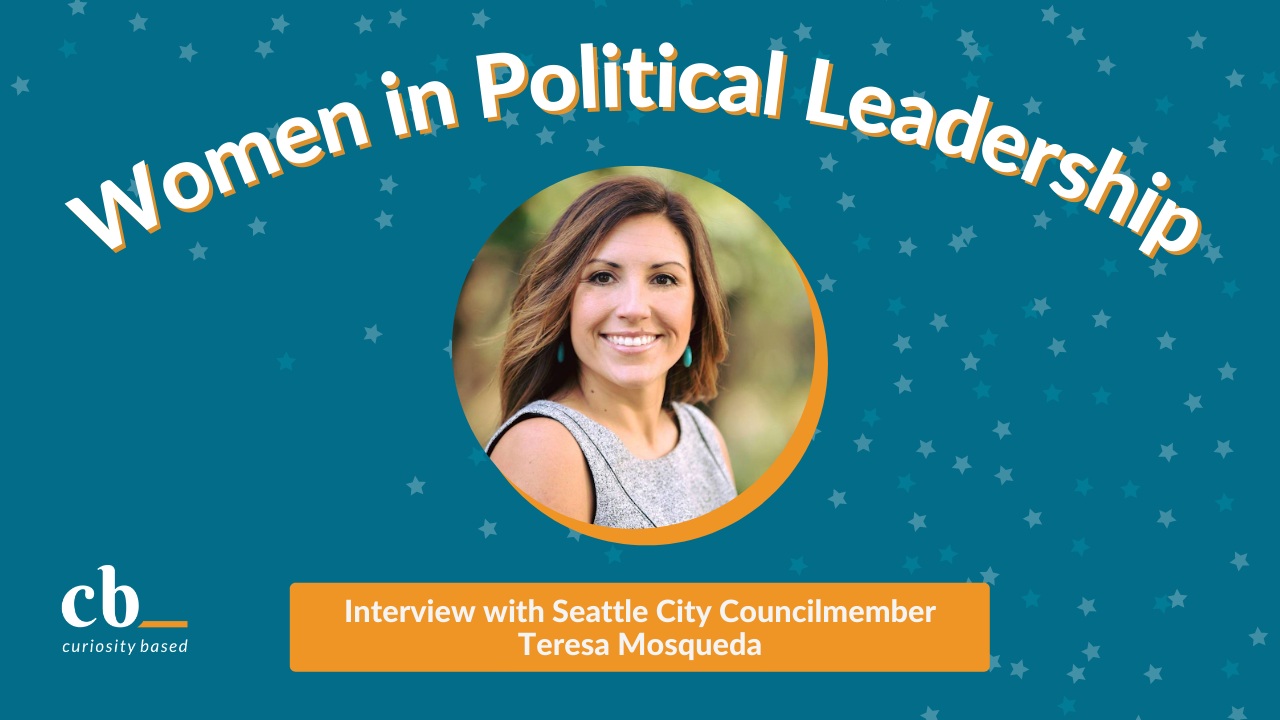
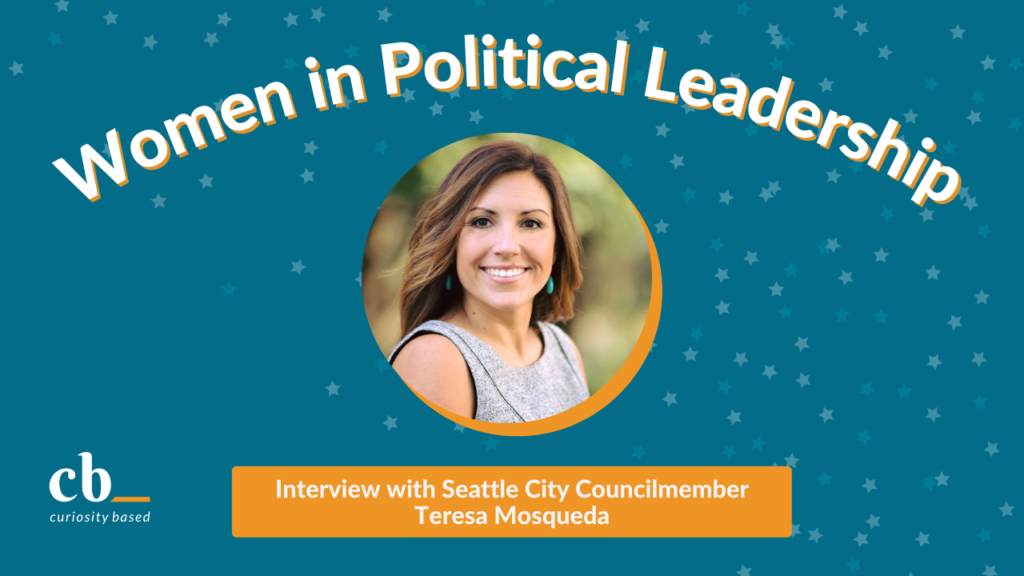
Women in Political Leadership: Interview with Seattle City Councilmember Teresa Mosqueda

What sparked your interest in serving in public office?

I come from a public health advocate perspective and have a history in public health. Social determinants of health predict healthy, safe communities. Ninety-five percent (95%) of things that make people healthy is having stable housing, healthy workplaces, living in toxic free communities, and people being able take leave when they need it. All of those social determinants of health take place in public policy. 

What is it like being a woman in public office? What are some strengths and challenges you experience that might be unique for women in policy making spaces?

Many. Women are often criticized as candidates/elected officials by some who are defining what a woman should be doing if they don’t present with an approachable demeanor. If we’re critical on something or questioning a policy, that approach is not often seen in the same light as a male colleague. There’s a different level of expectation and it’s unfair and unjust. We are able to break away from that perspective more and more, but it’s still pervasive and is critical to policy. Often, you need to work twice as hard to prove yourself. 

Folks who identify as female can help other identifying females by being that support. Speak up, validate ideas, surround individuals and folks who identify as women with people who are lifting those good ideas. Those ideas, if repeated by a man, are given more attention. The anecdote to the sexism is to lift up and support other colleagues and community members who are just and valid in their perspectives and to make sure their voices are heard. 

From your perspective, what are the most pressing issues to our region?

Right now, the biggest pressing issue is lack of access to affordable housing, childcare, and economic instability (especially for sectors who have women/people of color/women of color in lower wage positions). The inequities in each of those categories has been exacerbated by COVID. This has been displayed as those in lower wage jobs were considered essential workers and had to continue to go to work, risking their exposure and family’s exposure to the virus… or pull themselves out of the workforce. There were not accessible places to go. The consequences have been hardest felt by women and women of color, who were disproportionately impacted. 

What are some policy solutions that you’re particularly passionate about?

Directly supporting workers in the childcare industry and making sure that childcare workers are paid living wages, have union representation, and have career ladder opportunities. This actually stabilizes other sectors too. American Rescue Plan dollars are currently being put towards childcare allotments and childcare providers to prop up the childcare sector. 

We also need to create more housing options across the city and region. Creating denser opportunities for people to live near work, places of worship, and community. We are working to have a walkable, livable city, with the majority of funding from the Jumpstart payroll tax. 

How does curiosity aid the policymaking and decision making process?

Curiosity stems from rejecting status quo explanations and recognizing when a public policy is not just. Just because a policy is on the books or hasn’t been addressed before does not make it right. Early in my term, I heard from a handful of workers who were not able to take family leave after the death of a child. These workers were grieving the loss of their child while they had to get paperwork and finances in order. We asked, “why can’t they use their leave?”. Paid family leave is not just for being sick or in need of care. We passed bereavement leave. This is a good example of asking the question “why?”. If I lost a child or parent, I would not be functionally able to go back to work. It’s harmful not only for workers and systems, it’s also bad for the health of women in our country which has a higher infant and maternal mortality rate than any other developed nation. We need to get to the root of that problem. This is how curiosity stems from diverse lived experience, and asking “why is this the status quo?” 

Continue reading our Women in Political Leadership Series:

Interested in learning more from women in leadership? Check out our Leadership Book List, where we have compiled 350+ books written by women in leadership.
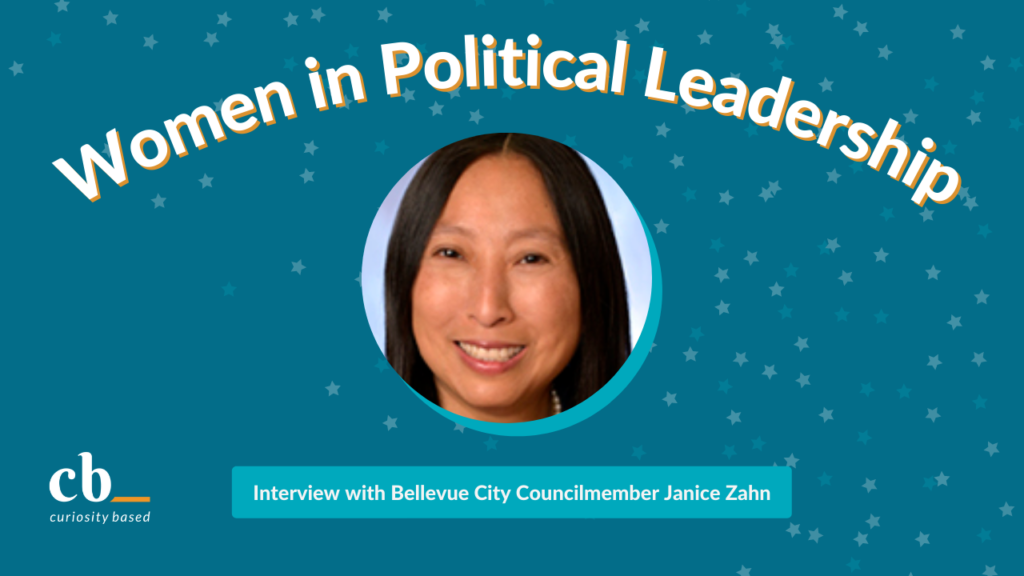
Women in Political Leadership: Interview with Bellevue City Councilmember Janice Zahn

What sparked your interest in serving in public office? 

For me, it’s been a journey. I don’t know that I grew up thinking “I’ll be in public service.” Coming to the US as an immigrant from Hong Kong in the mid-70s, I always felt inherent gratitude that we were sponsored by my uncle to get education in college. In the mid-70s, Vietnamese refugees came to the US and one of my best friends in middle school was from Vietnam. The whole quest or interest in public service, whether volunteering or rolling up sleeves to solve problems, was always a part of me. 

I pivoted from working in private agencies after I left college to the Port of Seattle and it really opened my outlook into what public service looks like. The Port of Seattle is a public government agency that’s baked in economic development with a huge interest in creating an inclusive economy and not leaving people behind as we create opportunities in the region. Along the way, I went back to school and got a public service degree 20 years later from the UW Evans School of Public Administration.

[It sounds like achieving inclusion and belonging are strong motivations for you.]

As a Bellevue Councilmember, a sense of belonging very much resonates. Our motto is “Bellevue welcomes our world and diversity is our strength.” We need to be a place where people feel like they belong. For Asian Americans, if they don’t feel like they belong, they might always feel like a perpetual foreigner. 

What is it like being a woman in public office? What are some strengths and challenges you experience that might be unique for women in policy-making spaces? 

Public office brings challenges and joy as well.  For me, I have to wonder if it is only my perspective as a woman that I have a certain lived experience. Or is it because I am both a woman and person of color, an engineer, and in a biracial marriage? I wonder if it would be different if I was an elected male of color, versus an elected woman of color.  One of the challenges is that we can’t pull apart our identities. We can’t play the “what if” game. When I’m in spaces where there are predominantly men, whether it’s in policy or in my engineering management career, there are not really as many people who look like me. I do believe that women are still treated differently than men from the patriarchy standpoint. We can show up with similar mannerisms, the things we say and how we say them, and we are judged differently. If I say something and don’t get feedback and then have a male colleague who says exactly the same thing, they’re suddenly getting an interactive dialogue. In a way, that’s the most insidious part of the disparities. We may never be able to put our finger on it because bias is so subtle. Lastly, as an Asian, I also wonder if we’re really hard on ourselves because of the “model minority” stereotype and the idea that we don’t want to shame our parents because they sacrificed so much for us to live the American dream. We can show up with perfectionism and are more mindful of how much we lift up our voices. 

There are three different hierarchies: class, gender, and race. I think about the fact that the large parts of my career and ever since I came to the US, my dad had the belief that we need to speak English perfectly and lose our accents. The pathway to success meant to assimilate. When I think about the hierarchy, I find it to be very true. In the male dominated engineer space, I found that I had to put away a part of me to fit in. Later in my life, I shied away from conformity and began to really center the voices who weren’t being heard in public spaces and to lift the voices of women and minorities. It led to innovation with diverse thoughts and new ideas. 

In some regards, our society is a system of systems. The way it works is that if you fit inside the system, you don’t get kicked out as an outlier. It’s a delicate dance. We are trying to change the system from within the system that is kicking us to the curb. For me, I was never someone who felt comfortable being an activist, probably because my dad had the belief that we had to keep our head down and be humble and not make waves. He was born in China and back then if you were a government official or successful in business, you could be sent to a reeducation camp. My whole family fled. The lesson learned was “don’t make waves or bad things will happen to you.” Despite this, we have found a way to change the system from within the system to try and make changes. It can feel slow and frustrating. Often, you’re gas lit and left wondering if your lived experience is valid or not. We don’t talk openly about it enough. 

From your perspective, what are the most pressing issues to our region?

They’re all interrelated. Certainly in our region, in Bellevue and nationwide, affordable housing is huge. That leads to all kinds of various things, including homelessness, or lack of transportation choices for people. It leads to change of our environment and people who are most far from the resources living in spaces where there’s less green space and parks. Those system inequities also play into the broken, underfunded systems – like what we saw with COVID through healthcare access and economic opportunities. 

I believe in inclusive economies. Who is surviving during COVID? – The big companies. Small mom and pop shops are struggling. We’re also seeing a disparity in who has a voice at the table and who’s facilitating the meetings being held at those tables. 

Those pressing issues are grounded in who is in leadership that is willing to make the kind of changes needed to step away from the status quo and to step into that scale. Maybe we have done a little more with homelessness, transportation, economy, etc, but baby steps won’t get us into where we need to go anytime quickly. Instead, we are getting farther and farther behind. In Bellevue, the average price of a home is over $1 million. Rents in some of the smallest rentals are still at $2000. How much money do you need to make to survive on that kind of wage? 

Mental and behavioral health services are also underfunded and part of a broken system. As a society, we have continued to treat the non-profit, community-based organizations as though people should love the work they do so much that they don’t need to have a living wage. That is wrong and unsustainable. We have to reckon with the fact that the very people who are working in these broken systems are not making a living wage yet are doing the hardest work to meet community needs. If we don’t change the ways we think about funding these organizations, we will exacerbate challenges. When you get on an airplane, you put on your own oxygen mask before helping others. Nonprofits are not getting the oxygen masks that they need. 

What are some policy solutions that you’re particularly passionate about?

From a leadership standpoint, we need leaders who have the courage to speak truth to power and state what needs to change. At the same time, we need to give our community a voice and help to let them be advocates. We need more engagement with our youth. We need to lift community voices and organizations so that they understand how budgets are built, where the gaps are, where the changes are needed to make funding.

I’ve heard from others that we need to give people a place at the table. What we really need to do is bring people in to build a table together and engage in co-creation. We need to rethink the very way that government provides services and how we are grounded in “people first” to focus on what people need versus what we think they need. 

The other part is that when we talk about challenges around housing, transportation, environment, and economy – they don’t stop and city borders. We need to get as regional as possible to collaborate and find solutions together.

How does curiosity aid the policymaking and decision making process? 

If we want to have innovative solutions, curiosity is foundational. In addition to that, if we center things from a space of curiosity, it also creates a better entry point for conversation. I was trained as an engineer. I have a lot of curiosity and ask a lot of questions. Asking questions can be perceived as challenging someone’s work. Centering spaces with curiosity can lower the temperature in the room. We want to understand the thinking process behind policies. It’s about centering our ability to learn, versus a perception that we’re just criticizing someone’s sense work. 

I’m naturally curious and it helps me learn and understand. It makes the decisions better. I have to say that it took me a while to get to that space where as a curious person, I didn’t see that there were issues asking questions. Once I got into leadership, management, and then council, I had to start with the framing of natural curiosity so that I was being proactive in explaining the ‘why’ behind my questions. 

If we put out a policy that only addresses the ‘tip of the iceberg’ about what problem we’re trying to solve, you don’t get down to the root causes of the issue. The policy and solution you bring may make underlying causes worse. We can see it played out in homelessness policies. If we ask the ‘why’, it helps us to get more grounded in what problem we’re trying to solve.

Continue reading our Women in Political Leadership Series:

Interested in learning more from women in leadership? Check out our Leadership Book List, where we have compiled 350+ books written by women in leadership.
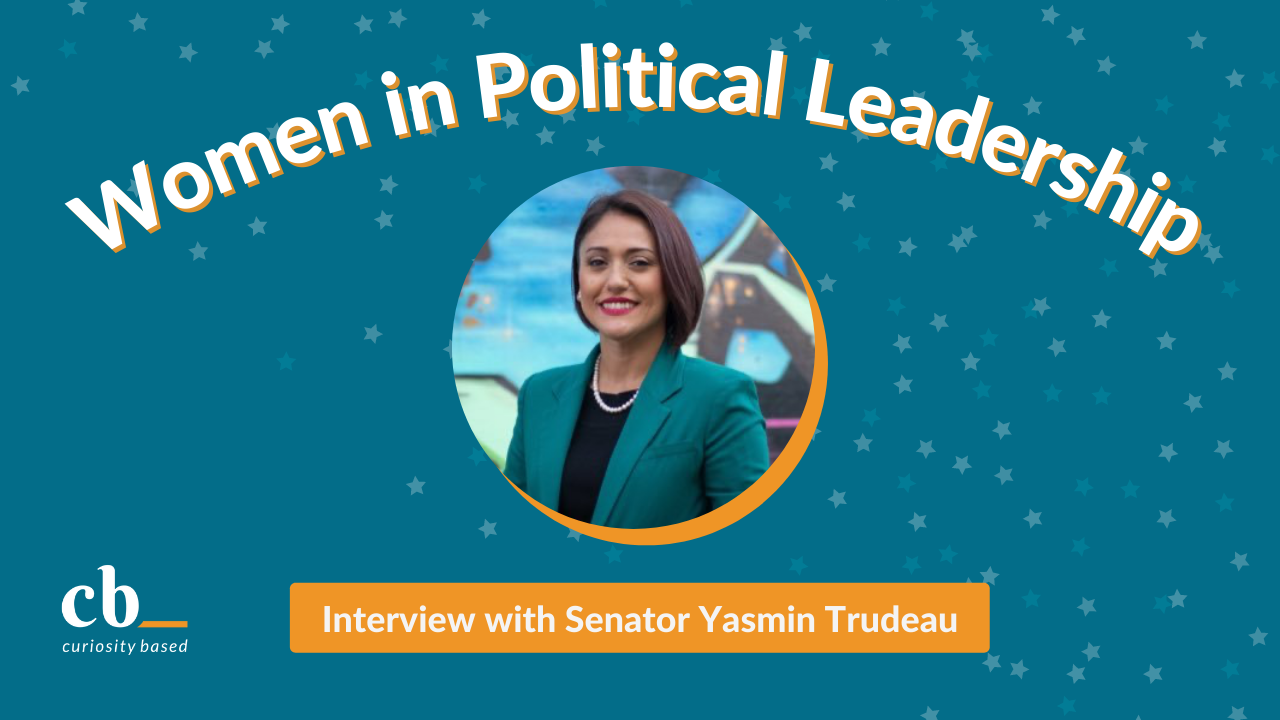
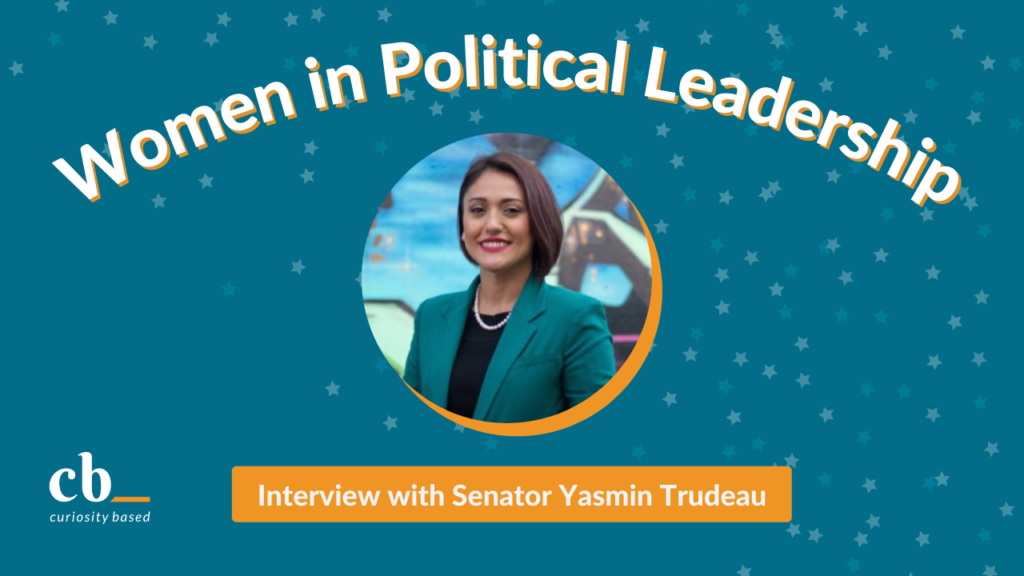
Women in Political Leadership: Interview with Senator Yasmin Trudeau

What sparked your interest in serving in public office? 

What inspired me more broadly is my culmination of lived experience, which made me want to pursue law and policy. I served almost 4 years representing the Office of the Attorney General as legislative director. Roles and openings in the Senate usually only come up every 20 years and there was a surprise announcement that a Senator was retiring. I wanted to take the opportunity to bring my lived experience more to the forefront and use my legal and advocacy experience inside the doors to engage with the public in a different way. My whole career has been focused on public service. 

What is it like being a woman in public office? What are some strengths and challenges you experience that might be unique for women in policy making spaces?

“Mansplaining” happens. That’s being a woman in any setting, but particularly in professional settings, especially as a woman of color. I have a toddler and am also pregnant, so it’s a different culmination of experiences that also shows up. It depends on the day and depends on what takes the lead. I see those challenges as opportunities. Committee meetings happen at 8am and the virtual setting has been helpful. Sometimes my kid will jump on my lap during committee meetings. I have to manage that a lot while still paying attention. It’s also double the pressure. 

[How have you learned to manage those challenges?]

If you’ve grown up in the struggle, you have mastered the “code switch” and fake it ‘til you make it. I always reflect on a professor that I had in law school who was young and looked younger. I am younger than most legislatures and look younger than that.  I learned from her that if you let people speak, you actually find out a lot more than if you stop them. 

From your perspective, what are the most pressing issues to our region? 

Housing and Homelessness. The three committees I requested are: housing, human services, and law and justice (judiciary committee). In all of those, public safety issues are intertwined. Certainly in the minds of the public, there’s lots of confusion on how public safety influences homelessness. There’s also the matter of housing supply.  

What are some policy solutions that you’re particularly passionate about?

The ones that come before those committees – housing in particular. I’m currently working on policy to support low income folks in housing who are double-struggling at the moment and am focused on serving those most vulnerable. I’m also focused on public safety and reclaiming and centering a narrative about what’s really happening regarding public safety. 

How does curiosity aid the policymaking and decision making process? 

I think that all of us should be curious all the time. What I see happen in politics a lot is that people come in with fixed views about the world and other people based on their political party and identities. That interrupts our ability to get to know each other both in the ways that we are distinct and similar from one another. I bring curiosity into every conversation, even if we’re on different pages. I’m curious about what brought them into public service. Was it a call to duty? I think that curiosity is fundamental if you really want to connect beyond our polarized landscape. There’s one book in particular that I read that I bought one month before the appointment process: See No Stranger. It’s about recognizing that there are things in everybody to be curious about. 

Continue reading our Women in Political Leadership Series:

Interested in learning more from women in leadership? Check out our Leadership Book List, where we have compiled 350+ books written by women in leadership.
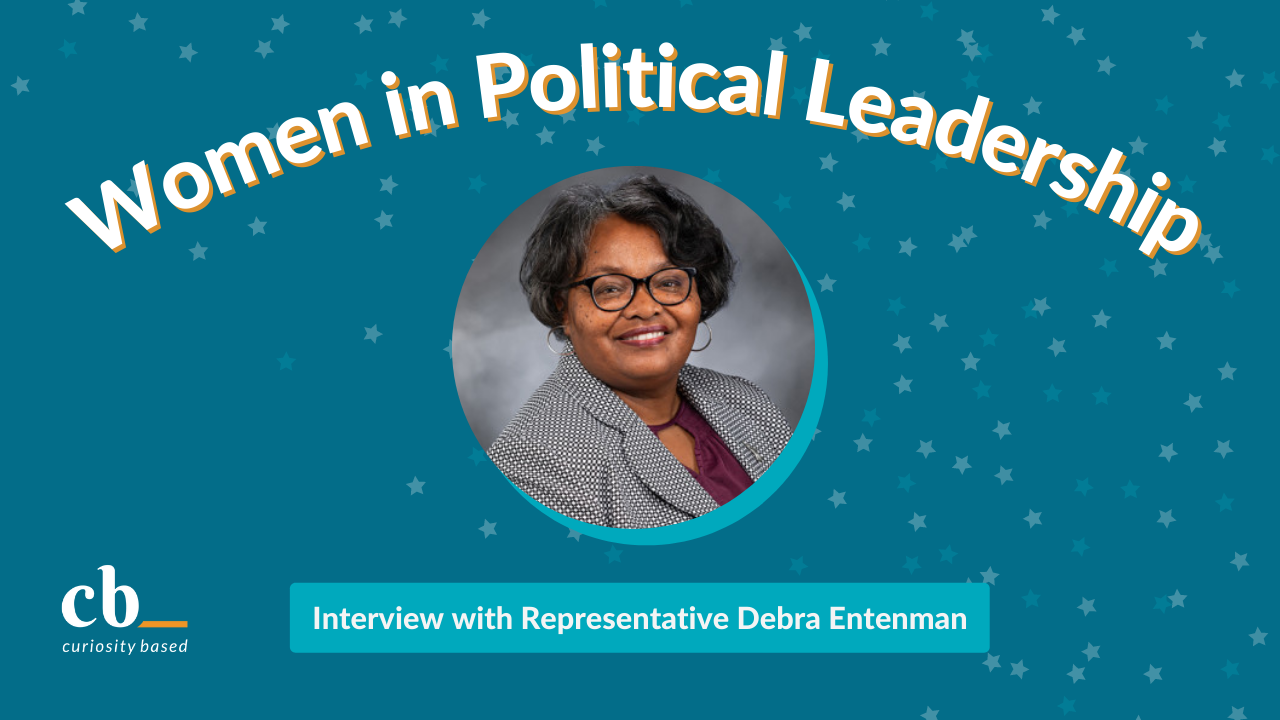
Women in Political Leadership: Interview with Representative Debra Entenman

What sparked your interest in serving in public office? 

Teachers and educators were positive influences and were very encouraging to me as a child. Public policy came to me when I returned to college after a 10 +  year absence. I decided to take a few classes at Highline Community College.  I was considering teaching. In one of the classes we were talking about public policy around high stakes testing. I thought “that’s not what teaching is”. Teaching is helping students to learn something new, to see their reaction  when something clicks, and you know they understand. I began advocating for no high stakes testing and my teacher told me “I think you want to work in public policy.” I knew about policy as a theory, not as a career. I started volunteering with Children’s Alliance and changed my major to political science. 

What is it like being a woman in public office? What are some strengths and challenges you experience that might be unique for women in policy making spaces?

Running as a Black woman and white woman are two different things. I am not here to uphold systems that did not have me in mind when they were established.  I am here to make changes and be honest about the fundamental foundational changes that need to be made in public policy. Things happen differently for white women in this space than happens for me. Most of the time they come because they can afford to be part-time legislators, or to work on one issue that is a passion project for them. They have had the opportunity to be in leadership in a nonprofit and to do other things that some [Black women] haven’t had the opportunity to do. I have made significant sacrifices to become a legislator, significant decrease in family income, changes to how we do things at home and how my retirement fund would be smaller because I decided to leave my job with the federal government.

When running for office and I’m out in public people challenge me on how I look and the tone of voice I use. Consultants who are not used to working with Black women advised me to have a look. Sometimes I will wear my hair in braids or straighten my hair. I was told not to change my look so people will recognize me. I’m not going to behave that way.  

For me, the most challenging thing is that, just like in our society, some people have low expectations of what you want to do as a policy maker as a woman. They think you only want to work on issues for children or don’t want to be on the finance committee. You have to break those barriers and say to people “ Let’s learn together.” We have the capacity. 

From your perspective, what are the most pressing issues to our region? 

What we have learned from COVID is that people need a safe place to live, healthy food to eat,  and to feel like they are contributing to society. For some that means paid work, for others it’s volunteering, and for others it’s simply recognized. Older and younger people (seniors and children) want to be seen more than anything else. We have a society that is set up to value people who work and make money. If you don’t do that you are seen as less valuable. Employment should be fair and ethical, and as a society we should do more. What we don’t have are fundamental protections for shelter, food, healthcare, and education. In this country, those things should be available to everyone.  A lot of the unrest in our country comes from not having basic necessities. Not saying it’s perfect but it is a better living without being worried about food,  healthcare, access to education,  and housing. 

What are some policy solutions that you’re particularly passionate about?

I really think about what we do around support for families. Temporary Aid to Needy Families (TANF) should be reformed . We need to have fundamental changes in our system where we don’t view a person without money as a person without value.  We have fraud prevention measures that are not helpful for families. We need to change the ways we provide assistance to people who are in need. I have worked around TANF reform and not cutting people off from TANF. People often argue that TANF is supposed to be temporary. If I am a parent and have a child, that child will need one caring adult over a period of time. It doesn’t end when that child is 5yo and goes to kindergarten. That child and family still needs assistance. We do little for single men based on their gender. I think that’s wrong. Why prioritize a woman over a man? What if a man has a child?… Does he get the same benefit? We have to ask questions about the system and goals of the system. Are we here to help people from being in poverty, hungry, or houseless or are we here to punish them like it is a moral failing to be poor? In capitalism, we are all part of a system and part of that system says that some people need to be unemployed. Do we take those whom are unemployed and not make sure there’s a safety net? Does work make a person valuable? With COVID, a lot of people lost their jobs and they are no less valuable to society. 

How does curiosity aid the policymaking and decision making process? 

I know when I think about making policy, you usually come with a problem and try to find a solution. I try to ask the question “has somebody tried to solve this before?” As a legislator, there are many ideas that someone has tried to solve before. I ask: What happened? What was their roadblock? Is there more to the system that needs to change before we can have a positive impact? 

I’m always curious as to how we got to where we are now, who tried to change it, what their obstacles were, and if there were unintended consequences of policy. Advice I received  from Congressman Smith is: When you are a legislator, sometimes the goal is to prevent policy that would have a negative impact. Be curious about the impact of policy and ask what the undoing of the policy will mean for the institution and the person who is the beneficiary. 

As an example, I look at my work with police reform. Many people think that means we want to end policing. I am not a person who wants to end policing. I am a person who wants policing to be more effective and less impactive on the people who are interacting with police. I truly believe that an encounter with a police officer should not end in loss of life. We have to think about what is happening in policing now and policing policy. What is the goal of people living in society, the goal of police, and what is the goal of government? Most don’t come in contact with police at all. If they do, they should come out alive. We should all come out alive. Police officers work with prosecutors and have a relationship, biasing outcome. What does it mean for a person accused? Do we truly have independent investigations? What we have learned from doing this work, is as soon as a police officer is involved in a case where use of force occurred, it was all about protecting the police officer. Some people couldn’t see the bias in that. I think about why the incident occurred. Family members want to know what happened. We hear that over and over again.

We kept hearing from many people in policing that if people would comply there wouldn’t be negative outcomes. We have video evidence of people complying and still losing their life. We have to ask what happened in that occurrence, what are the policies and procedures, and what are the unintended consequences?

How did we get to policing to be this way in the first place? Policing came from patrolling and controlling enslaved people. At the foundation, we need to change policing in our country for the outcome to change.

Sometimes poor white people get killed by police but brown and black people are killed no matter their income level. This is an example of how curiosity led me to working on police-reform policy.

People still think that I personally don’t like the police, which is not true, what I want is for policing outcomes to be fair for everyone.

Continue reading our Women in Political Leadership Series:

Interested in learning more from women in leadership? Check out our Leadership Book List, where we have compiled 350+ books written by women in leadership.
Women in Political Leadership: Interview with Redmond Mayor Angela Birney

Curiosity, Representation, and Leadership: A Conversation with a Redmond Councilmember

What Sparked Your Interest in Public Office

I’ve always been interested in politics, housing, and how local systems work. Running for office wasn’t something I had planned. In 2014, the mayor of Redmond asked if I had ever considered it. I said no—most people don’t. He encouraged me to follow the city council and see if it sparked my interest.

At that time, only one woman served on the seven-member council. That imbalance didn’t sit right with me, especially since there were no people of color either. As I began following council meetings, I realized I could contribute meaningfully. Local politics felt like the right place to make an impact. I decided to run—and I won.

Representation matters deeply to me. I believe people should see themselves reflected in their government, and that belief continues to motivate my public service.

Being a Woman in Public Office

When I first won my election, I attended Leadership Eastside’s mayor’s lunch. There was only one female mayor there—Amy Walen. That moment struck me as concerning. Now, years later, most Eastside mayors are women. The shift has been inspiring.

More women and people of color are running and winning seats. I’ve been fortunate to work alongside remarkable female leaders. I think of Patty Murray and Chris Gregoire—women who led with strength and vision. Their success motivates me to keep pushing for progress.

Women bring their lived experiences into policymaking. For instance, I used to teach middle-school science, and that background helps me relate to educators and families. Many of my colleagues do the same, applying lessons from their own lives to serve their communities.

The Most Pressing Issue: Affordable Housing

Affordable housing remains the most critical issue facing our region. Its absence affects nearly everything—commutes, family time, and community stability. As costs rise, people move farther from jobs and spend more hours traveling. The ripple effects are enormous.

We need to build denser, well-planned urban environments. That’s the only sustainable way to create homes people can actually afford. Continued collaboration and innovative policy are essential to reach that goal.

Policy Solutions and Collaboration

As the legislative session wraps up, several bills focus on affordable housing. I’m eager to work with lawmakers on effective solutions. My focus is on collaboration—cities, counties, and the state must align their efforts.

King County intersects with many others. While borders exist on paper, housing challenges cross them easily. By combining our different experiences, we can find smarter, lasting solutions. I often remind colleagues of the proverb: “To go fast, go alone. To go far, go together.” That’s how real progress happens.

The Role of Curiosity in Policymaking

Curiosity drives my leadership. I always want to understand how people arrive at decisions and what long-term impacts those choices may have. I ask questions such as: What don’t I know yet? Who else should I talk to? What are the unintended consequences?

That mindset helps me grow as a policymaker. I’m aware of what I know—and even more aware of what I don’t. Staying curious keeps me learning, connecting, and improving how I serve my community.

Continue reading our Women in Political Leadership Series:

Interested in learning more from women in leadership? Check out our Leadership Book List, where we have compiled 350+ books written by women in leadership.
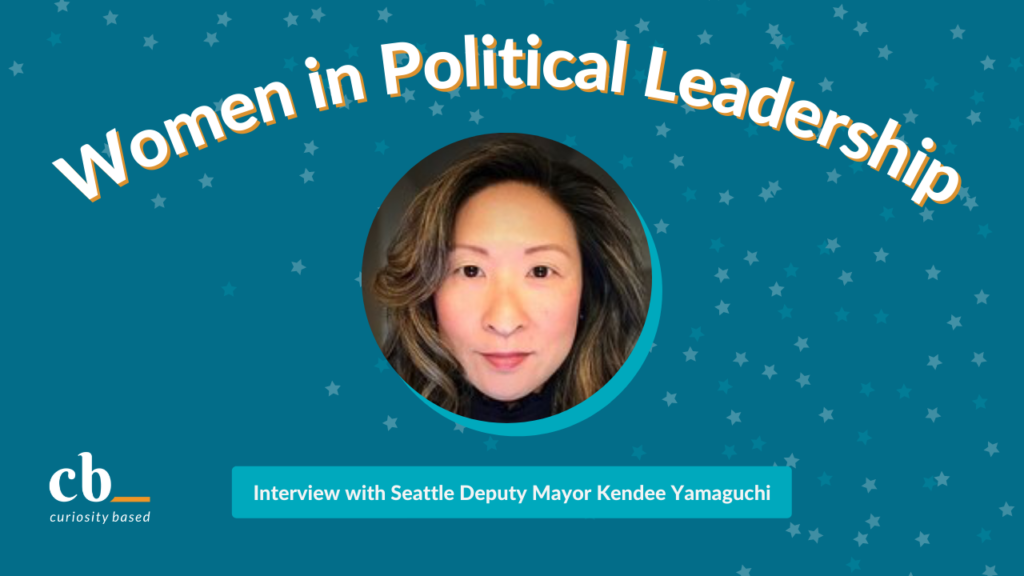
Women in Political Leadership: Interview with Seattle Deputy Mayor Kendee Yamaguchi

What sparked your interest in serving in public office?

My interest in public service stems from my family’s experience being placed in a Japanese Internment camp during World War II. Early on in school, I felt that history may have looked different if it included the representation of policy decision makers at the table raising issues and concerns during critical moments of decision making. The impact policy decisions had on my community and the generations that followed fueled my passion to work in this area. I learned firsthand the importance of representation and how the absence of it impacts society. In memory of my grandparents and family, I have worked for over two decades in all levels of government to contribute my skills to building a better community, nation, and world.

What is it like being a woman in public office? What are some strengths and challenges you experience that might be unique for women in policy making spaces?

As the first person and woman in my family to go to college, I had many firsts in my personal and professional life. I was fortunate to become one of the youngest AAPI women to work at the White House, be appointed a state agency cabinet member, and serve on several executive management teams in government. Breaking through glass ceilings for others and paving paths for future generations helps give me the strength to face challenges. There are many challenges that come with breaking new ground, to name a few — gender bias, discrimination, age bias, etc. When I first started out in my career being one of the “firsts,” I had fail and learn as there was no  “manual” or role model to look up to in some situations. These experiences later in my life have been critical to my success as it ultimately prepared me to navigate situations. Without being forced to exercise this muscle, I would not have the foundation, resiliency, and confidence to take on almost anything. 

From your perspective, what are the most pressing issues to our region?

Public Safety, homelessness, COVID recovery, and a restoration of trust and belief in government.

In my position, I have a focus on supporting a robust and equitable recovery from the pandemic for our City’s small businesses and working families, arts and entertainment organizations, and communities across our City — helping rebuild and restore our City. We have an opportunity to come back from this pandemic stronger than ever, leading with innovation and equity, community voices and new ideas.

Just as important is the restoration of improving trust in our government. Mayor Harrell has made it a priority for the City of Seattle to get ‘back to the basics’ of good governance — serving the people and communities of our City well, and stressing what we have in common and instead of what separates us. Getting back to our residents, meeting their immediate needs, and showing the kind of action that leads to tangible, sustainable results in everyday neighbors’ lives. In my role, that means ensuring our government is a conduit for community organizations and small businesses to thrive — helping get support when they need it, attracting and putting on world class events, and uniting our City together to show what we can accomplish when we share our common values and goals.

What are some policy solutions that you’re particularly passionate about?

Our Office of Economic Development (OED) which is under new leadership is going to play a key role in getting recovery dollars out into the community for small businesses most impacted. I believe, as does the mayor, that we can supercharge our OED office to drive a new level of economic development and investment in our community. That means making it a hub for small businesses in need of support, a leader on workforce development, and a leader in supporting women and minority owned businesses.  

I also believe collaboration locally and regionally — public, private, and philanthropic — is going to be an important difference maker. For example, the mayor is building new systems to address the homelessness crisis that lead to a more coordinated and effective response. This includes a recently announced collaboration between the City, County, Regional Homelessness Authority, and major businesses and philanthropic leaders to address the homelessness crisis downtown. When we reduce silos and work together, we can do so much more — I have hope for our future given the potential opportunities to partner with organizations and community groups.

How does curiosity aid the policymaking and decision-making process?

Curiosity is critical to decision-making. Being able to raise questions, be creative, and innovative allow us to reach the best results. Having diverse opinions, representation and critical thinking brings about better policies. If we approach challenges in the same ways, we inevitably get the same results. Our present-day world requires us to be curious and creative to solve some of the complex problems that face us.  We need leaders that can think “out of the box” and collaborate with partners to achieve positive results for our City.

Continue reading our Women in Political Leadership Series:

Interested in learning more from women in leadership? Check out our Leadership Book List, where we have compiled 350+ books written by women in leadership.
Honoring Women in Political Leadership

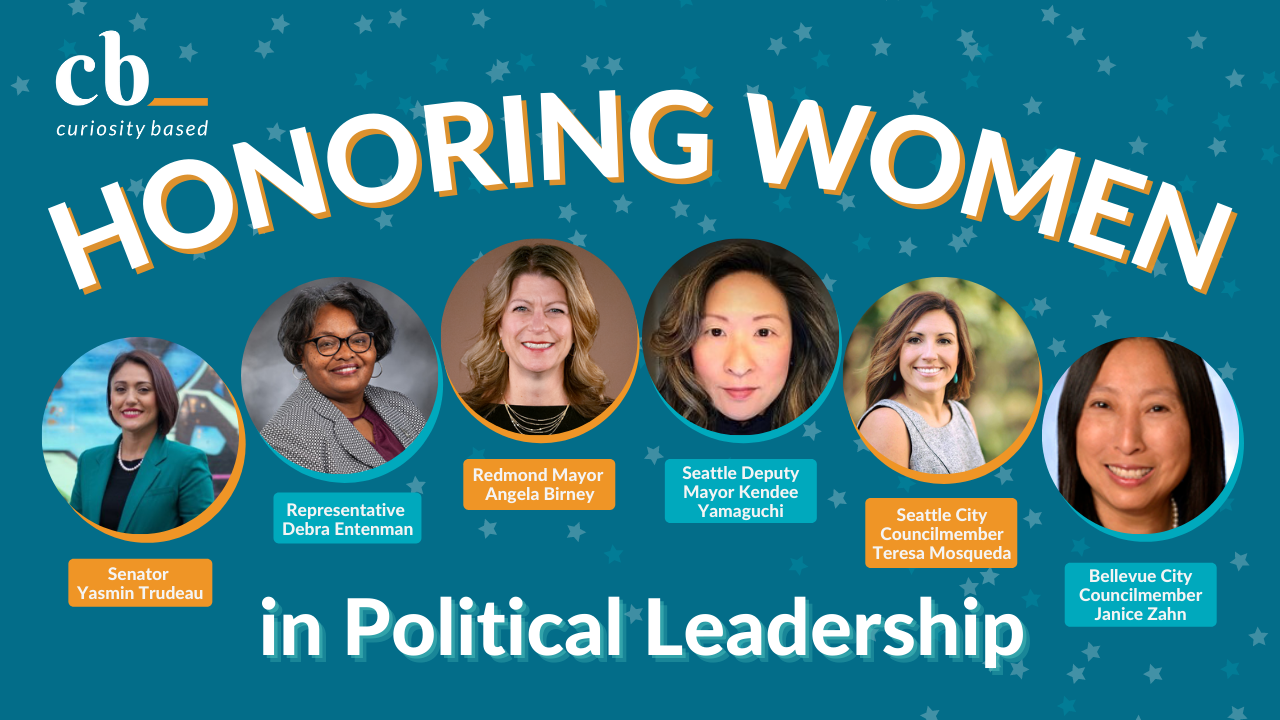
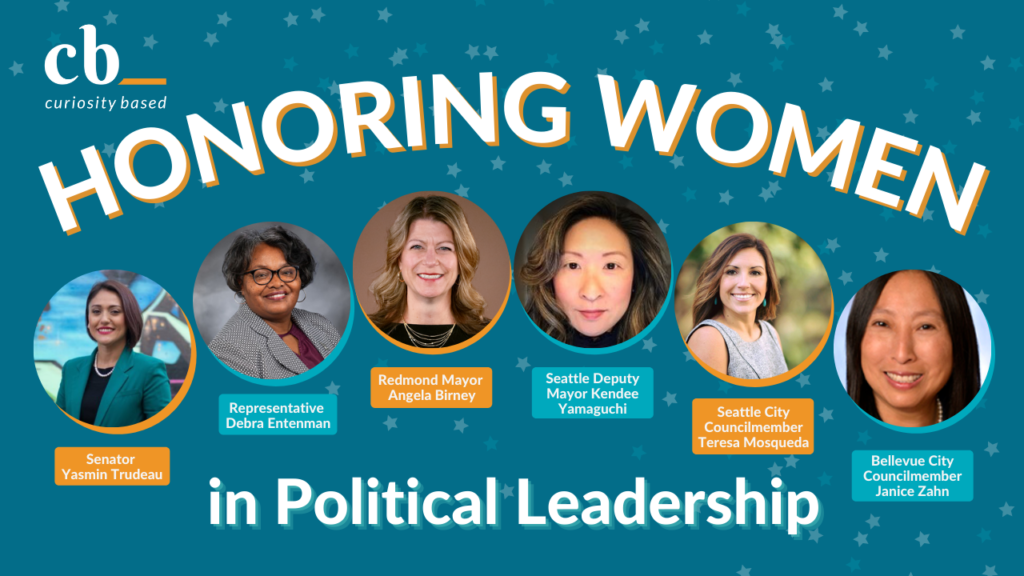
In honor of Women’s History Month, CuriosityBased interviewed six local female leaders who hold public office in the Pacific Northwest. 

We asked about their motivations for pursuing work in policy and their experiences being women in their positions, about their perspectives on current challenges to our region, and about policy solutions that they’re passionate about. We also asked them how curiosity is used in their policymaking and decision-making processes.  

We interviewed:

The women highlighted here each hold a different title, but one that they all share is leader. You can read more about each leader by clicking on their name.

From the interviews, it’s clear that each woman brings a diversity of perspective to her role through an intersection of identities. One thought shared by all the leaders interviewed is that collaboration through diverse perspectives (using curiosity) only leads to better policies and outcomes. As the saying goes, “If you want to go fast, go alone. If you want to go far, go together.”

Join us in honoring these women as they lead us towards their visions of a just and equitable region for the Pacific Northwest.

Interested in reading more? Check out our list of Leadership Books Authored by Women!