Mastering Productivity: How to Write an Effective “To-Don’t” List
In our quest for productivity, we often focus on to-do lists. These are the tasks we need to accomplish, guiding our daily activities. However, there’s another, equally important concept: the ‘to-don’t’ list. This isn’t about piling more tasks onto your already full plate. Instead, it’s about identifying what you should stop doing or avoid, which can significantly boost your time management and productivity.
Here are four practical tips to help you create a powerful to-don’t list:
Transform Your To-Dos into To-Don’ts: Start with your current to-do list. Look at each item and think about how it could be reframed as a to-don’t. For instance, if your to-do is “reach out to 5 new potential clients a week,” your to-don’t might be “don’t connect with fewer than 5 new potential clients per week.”
Identify Obstacles to Your To-Dos: Consider what’s hindering you from accomplishing your tasks. If your to-do is “connect with more people in my community,” reflect on what’s preventing this. Perhaps you’ve been waiting for others to make the first move. Therefore, your to-don’t could be “don’t wait for others to reach out first.”
Address Underlying Barriers: Reflect on the factors like inner criticism, perfectionism, or procrastination that impede your progress. Turn these into to-don’ts such as “don’t listen to my inner critic,” “don’t be a perfectionist,” or “don’t procrastinate.”
Collaborate for Insight: If you’re finding it challenging, brainstorm with someone else. Getting a fresh perspective can be enlightening. Discuss potential to-don’ts in your life and help them identify theirs too.
By shifting focus from what to do to what not to do, you can streamline your efforts towards productivity and efficiency. Try incorporating these tips into your routine and notice the positive changes in your productivity journey.
5 Actionable Tips for Practicing Personal Accountability to Achieve Your Goals
Personal accountability is crucial for our growth and success, whether in our personal lives or professional careers. It’s more than just a concept—when practiced effectively, personal accountability can help you achieve your goals. Here are five actionable tips to help you approach your objectives with greater discipline and determination.
1. Schedule Regular Progress Check-Ins
One of the simplest ways to stay accountable is by having someone in your network regularly check in on your progress. This could be a friend, family member, or colleague. For example, if you’re saving for a special purchase, have them ask you regularly about your savings. Similarly, if you’re learning a new language, ask a family member to inquire about your practice routine. These regular check-ins help keep your goals top of mind and create a sense of responsibility.
2. Partner with a Goal Buddy
Find a friend or colleague who shares a similar goal. This method is like having a workout buddy who motivates you to stay on track. Knowing someone else is counting on you can significantly boost your commitment to your goal. For example, if you’re both studying for an exam or certification, you can schedule regular study sessions together. This accountability boosts focus and helps keep you on target.
3. Set Clear Deadlines
Deadlines are powerful motivators. When I wrote my book, 7 Forms of Respect, I set strict deadlines for each chapter and shared the drafts with peers for feedback. This external accountability pushed me to stay on schedule. You can apply the same method to work projects, such as committing to a colleague to complete a section of a joint presentation by a certain date. Setting clear, firm deadlines creates a sense of urgency that propels you forward.
4. Introduce a Financial Element to Your Goals
Adding a monetary component to your goals can be a strong motivator. For example, if you’re trying to reduce screen time, commit to paying a friend every time you exceed your daily limit. Or, if you’re working on punctuality, pledge a small donation to a charity every time you’re late to a meeting. This financial accountability adds a tangible consequence, making it easier to stay focused on your objectives.
5. Reverse the Financial Incentive for Motivation
Get creative with financial incentives. For example, if you’re trying to quit a bad habit like nail-biting, create a rule where every time you slip up, your accountability partner contributes to your savings fund. This reversal of the financial incentive adds an extra layer of motivation, turning the negative into a positive reinforcement. This approach can help break habits and maintain focus on your goals.
By implementing these strategies, you can enhance your personal accountability in a way that’s both effective and engaging.
Building Your Personal Brand: A Dynamic Approach Rooted in Curiosity and Adaptability
Understanding and shaping your personal brand is essential for standing out based on your unique strengths and values. A strong personal brand helps you communicate your identity effectively, whether in professional or personal settings. Let’s explore a dynamic approach to personal branding, driven by curiosity and adaptability.
Step 1: Brainstorm Your Identity Words
The first step in building your personal brand is to identify the qualities that define you. This might require stepping outside your comfort zone, especially if humility is your default. Take the time to uncover and acknowledge the attributes that make you unique. This exercise can be an eye-opening opportunity to reflect on how you want others to perceive you.
Here’s how to start:
Ask friends and colleagues for words they’d use to describe you.
Think about people you admire—what words would you use to describe them?
List the qualities you aspire to be recognized for.
Step 2: Select Your Three Key Words
From the list you’ve created, choose three words that resonate most with how you want to be known. These words will act as the foundation of your personal brand. They should represent the core aspects of your identity, both personally and professionally.
Step 3: Define Your ‘Why’
Once you’ve chosen your three words, clarify why they are significant to you. Ask yourself, “What do these words represent in the context of my personal and professional life?” Understanding the deeper meaning behind your selected words will help you stay aligned with your personal brand and ensure that it reflects your true values.
Step 4: Find Real-Life Examples
To strengthen your personal brand, identify real-life examples that exemplify your three chosen words. Think about experiences from your life where you’ve demonstrated these traits. For instance, if one of your words is “curious,” reflect on instances where your curiosity led to valuable insights or connections. These examples make your personal brand more tangible and relatable.
Step 5: Communicate Your Brand
Finally, communicate your personal brand to others. In conversations about yourself, strategically reference these examples and words. This will help reinforce your brand in others’ minds. For example, my words are “connector,” “curious,” and “win-win.” I often share stories of how I’ve facilitated connections, engaged in learning, and fostered mutually beneficial partnerships. This reinforces how others see me and strengthens my brand..
I hope these steps inspire you to craft a personal brand that’s not only memorable but also a genuine reflection of your evolving journey.
The Easy Guide to Hosting a Memorable Dinner Party
I love hosting dinner parties for people who don’t know each other and who I also might not know very well. This is a really great way to get to know people better, and to build new relationships
I define a dinner party that is limited to the number of people who can sit around one table. Otherwise, I think of it as just a party where dinner is served. I’ve been to dinner parties that are as large as 30 people around a cluster of tables and I’ve also been to dinner parties as small as three people.
Some people think you need to have a fancy home to host. You don’t. You just have to focus on giving people a memorable experience through what is shared. My preference is 6 to 8 people, which is the number of people who can sit around my dining room table.
Some people think that the food is the most important thing for a dinner party and I disagree. I think it’s actually the conversation and who you bring together. Before the pandemic, I hosted about 10-15 dinner parties with guests who didn’t know each other each year at my home.
The following advice is based on my experience, which is for a dinner party among acquaintances.
Brainstorm the invite list
The first priority for a dinner party is to figure out who you want to invite and think on why these people might have something in common that they will enjoy talking to one another about. Create a primary and secondary invite list.
Secure a time/date
Then think about the first 30 to 50 percent of guests who you definitely want to attend and find out their availability. Once you secure their availability, then start to reach out to other people on the list to see when they’re available. Now you may want to wait until everyone is available, but that can be really hard to do.
Send out your invites
It doesn’t matter if it’s email, text, or phone. Unless it’s a very special occasion, I wouldn’t invite via snail mail. I like to invite those on your primary list out 4-8 weeks ahead of time. Definitely let them know when you need to hear from them by. If people on your primary list don’t respond by the RSVP deadline, you can move on to ask those on your secondary list. Ask for dietary restrictions and accessibility needs. You might feel awkward asking people to bring things. Yet I find if I don’t specify, people will bring random things. So, I usually say, “No need to bring anything but if you would like to, a bottle of wine is appreciated.”
Create the menu based on dietary needs
I usually cook to save money. If you can afford to cater, go for it. I try, whenever possible, not to have to create multiple versions of menu items. So to simplify things, I’ll cook to accommodate whoever has the most dietary restrictions or do a mix of dishes. If someone’s vegan, the whole meal will be vegan.
Design discussion prompts
The worst dinner parties are when people are just talking in pairs around a dinner table. That’s not the point of bringing people together. Yet you have to be intentional about facilitating a conversation. So I like to have two rounds of prompts–a quick one and a deeper one.
Examples of quick openers: What’s the origin story behind your first name? What do you spend most of your time doing? What is one thing you’d like this group to know about you? And my personal favorite: What are three communities you belong to?
Examples of deep questions: What advice would you tell your 18 year old self? When is a time you’ve asked for help? Who is a role model in your life and why?
If there’s a common thread across the group, design some prompts that reflect that. I’ve often hosted dinner parties just for entrepreneurs. For the opener you could ask, “who is an entrepreneur you admire?” and for the deeper question, “What is something in your business that keeps you up at night?
Send out a reminder email 1 to 2 week before your dinner party
Let people know what to expect, including all the directions, the menu, and the prompt questions. This is also enough time to see if there are any drop offs. And you can remind them to tell you if they can’t make it after all
Enjoy the conversation!
Focus on bringing people together. Remember what Maya Angelou said, “I’ve learned that people will forget what you said, people will forget what you did, but people will never forget how you made them feel.” My dinner party twist on this is, “People will forget what you fed them, how you decorated, but they will never forget the dinner conversation.”
5 Practical Icebreakers to Enhance Team Building at Work
5 Effective Icebreakers for Building Strong, Connected Teams
Building strong, connected teams is an ongoing process that requires continuous effort. Even if your team has worked together for a while and knows each other well, team-building exercises are essential for maintaining engagement. The reality is that no matter how long your team has been together, investing time in team building is crucial. At CuriosityBased, we often get asked for effective icebreakers for both virtual and in-person meetings. In this post, we’ll share five simple yet powerful icebreakers to help your team connect and start engaging conversations.
Why Team Building and Icebreakers Matter
Team building isn’t a one-and-done event—it’s an ongoing effort. Icebreakers are a great tool for fostering connections among team members, whether they meet in person or virtually. These activities can boost engagement, encourage communication, and create a supportive atmosphere. Let’s dive into five straightforward icebreakers that can help get your team engaged.
1. Opening Word
Start the meeting by asking everyone to share a word that encapsulates how they’re feeling at the moment, followed by a brief explanation. This simple icebreaker helps gauge the mood and creates an open, supportive atmosphere as the meeting kicks off. It’s a great way to check in with your team and set the tone for the rest of the discussion.
2. Personal High and Low
Encourage your team members to share one good thing (high) and one challenge (low) that has happened since the last meeting. This simple practice not only helps people share their experiences, but it also fosters mutual support. It opens up the floor for both positive and constructive conversations, creating a balanced team dynamic.
3. Rose, Bud, Thorn
Similar to the “Personal High and Low” icebreaker, but with a twist. Have each team member share:
Rose: A positive experience or achievement
Thorn: A challenge or obstacle faced
Bud: Something new or hopeful, whether personal or professional
This icebreaker provides a well-rounded opportunity for personal and professional sharing, making it easier for team members to connect on different levels.
4. PEIS Check-In
This icebreaker asks team members to check in on four areas: Physical, Emotional, Intellectual, and Spiritual (PEIS). Participants can share insights on one or more of these aspects. It’s a well-rounded way to check in with your team, ensuring that everyone feels heard, supported, and understood across multiple dimensions of their well-being.
5. Photo Share
Ideal for teams that meet infrequently, this icebreaker invites team members to share a photo from a recent significant event in their life. Whether it’s a family gathering, vacation, or a personal achievement, sharing photos creates a sense of connection and sparks interesting discussions. This icebreaker works well for both in-person and virtual meetings, bringing a personal touch to team interactions.
Incorporating these icebreakers into your team meetings, be they virtual or in-person, can aid in breaking down communication barriers and fostering a collaborative environment. These simple yet effective conversation starters pave the way for better understanding and stronger relationships within the team.
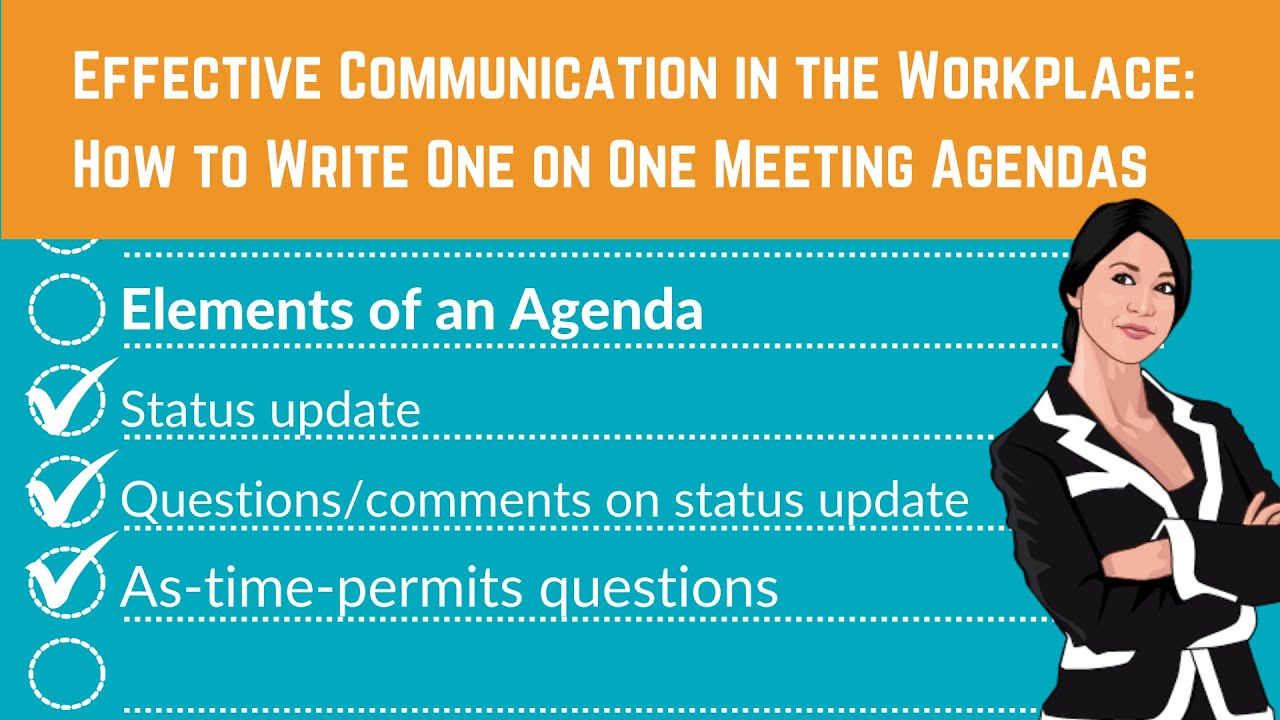
Effective Communication at Work: One-on-One Meeting Agendas
How to Craft an Effective Agenda for One-on-One (1:1) Meetings
Effective communication in the workplace is essential, especially during one-on-one (1:1) meetings between managers and team members. These meetings are opportunities to foster productivity, clarify goals, and build stronger working relationships. However, without a structured agenda, a 1:1 meeting can easily lose focus. Here’s how to craft one-on-one meeting agendas to make your 1:1 meetings more productive and impactful.
A) Start with a Status Update
Kick off the meeting with a status update to set the tone for the conversation. This demonstrates that you’re organized and prepared. Organize your tasks into three categories:
Backlog/Not Yet Started
In Progress
Finalizing
This simple structure makes it easier to track progress, identify areas that need attention, and keep the discussion on track.
B) Questions and Comments on Status Update
After the status update, dive into specific questions or comments related to your progress. Use this time to address any current challenges or roadblocks you’re facing. For example, if you’ve encountered a problem with code, ask, “Who can assist with code-related issues?” Or if you’re planning an event, inquire, “Are there any dietary restrictions, or should I survey the guests?”
Additionally, share your discoveries and challenges:
“Here’s what I found…”
“I could use some help with…”
“This is how I plan to apply what I’ve learned toward my goals…”
This allows for open communication and collaboration, ensuring any issues are resolved promptly.
C) Seek Feedback for Improvement
This section is crucial for personal and professional growth. Ask for feedback to ensure you’re meeting expectations and identify areas for improvement:
“Am I meeting expectations?”
“What can I improve?”
This helps foster a culture of continuous improvement, making it easier to align with team goals and organizational standards.
D) As-Time-Permits Questions
If there’s still time left in the meeting, use it to explore broader or open-ended questions. These can be questions you’ve prepared in advance for a deeper discussion. Examples include:
“Why do we approach this task in this particular way?”
“Considering today’s discussion, how should I approach similar tasks in the future?”
These questions encourage a reflective discussion that can lead to deeper insights and better decision-making.
This agenda structure is more than just a guideline; it’s a tool to facilitate engaging, insightful dialogues tailored to your professional growth. It aims to maximize every moment of the 1:1 meeting, turning the interaction into a platform for better understanding and actionable insights. As you prepare for your next 1:1, a well-crafted agenda will be your stepping stone towards a more meaningful and productive discussion.
Being proactive is more than just taking the initiative. It reflects a deep-rooted care for your work, your teammates, and the overarching success of your organization. Especially for individuals new to a team or the workforce, sh14 Actionable Tips to Be More Proactive at Work and Boost Your Career
Being proactive isn’t just about taking the initiative—it’s about demonstrating a deep care for your work, teammates, and the overall success of your organization. For those new to a team or the workforce, adopting a proactive attitude is a gateway to growth and career stability. However, it’s equally important for seasoned employees, especially during times of organizational shifts or potential layoffs. Being perceived as a proactive asset can significantly enhance job security and make you an invaluable member of your team.
If you’re on a performance improvement plan, these tips can help shift perceptions and show your commitment to enhancing productivity and collaboration. By embodying proactivity, you demonstrate your genuine care for your work and your desire to contribute to your organization’s success.
Here are 14 actionable tips to help you be more proactive at work:
1. Prepare for Your Meetings
Thoroughly review pre-reads, previous meeting notes, and the agenda. This shows that you’re prepared and ready to contribute, earning the respect of the meeting organizer and making you a valuable participant.
2. Volunteer as the Note-Taker
Taking notes isn’t just a task; it’s an opportunity to show attentiveness. By volunteering, you demonstrate care and attention to detail, becoming a resource for your team.
3. Ask Clarifying Questions
By asking insightful questions, you show attentiveness and help improve clarity for everyone in the meeting. This fosters a productive, collaborative environment where everyone is on the same page.
4. Confirm Understanding
After key points are made, paraphrase them and seek confirmation. This ensures that there are no misunderstandings and shows your commitment to ensuring clarity for yourself and others.
5. Get to Know Your Team
Building strong professional relationships is essential. Take time to learn your team’s preferences, priorities, and challenges. This will help you collaborate better and foster a supportive work environment.
6. Shadow Another Team
Expand your understanding of the organization by shadowing other teams. This broadens your perspective, fosters cross-functional knowledge, and helps you contribute to the organization’s overall success.
7. Network Across Departments
Especially during organizational changes, networking across departments is crucial. Cultivating relationships across teams ensures you have advocates and collaborators throughout the company.
8. Reschedule Canceled Meetings
When a meeting gets canceled, take the initiative to reschedule. This shows that regular interactions matter to you and that you’re committed to staying engaged and visible.
9. Offer Solutions, Not Just Problems
Instead of simply pointing out issues, focus on proposing solutions. Being a problem-solver makes you more valuable to your team and demonstrates a proactive mindset.
10. Do Additional Research
Show your interest in your work by conducting research on topics relevant to your role or your manager’s interests. Sharing your findings demonstrates initiative and a willingness to go above and beyond.
11. Mention Your Work
Keep people updated on your projects, especially when you accomplish something significant. Regularly sharing your progress ensures your hard work is recognized.
12. Show Your Ambition
Align your daily tasks with your long-term career goals. Demonstrating how your work ties into your career growth shows that you’re committed to the future and continuously striving for success.
13. Take Charge of Your Learning
Show initiative by suggesting books, courses, or learning opportunities to your manager. This demonstrates a keen interest in developing your skills and growing professionally.
14. Advocate for Yourself
Constructively express concerns and offer potential solutions. Advocating for yourself in a positive, solution-oriented way shows maturity, initiative, and a commitment to making the workplace better for everyone.
For a more detailed exploration of these strategies, watch our informative video and check out some of our other resources.
StartingManaging Up: Essential Questions to Ask Your New Boss
Starting a new job or working under a new manager can be both exciting and nerve-wracking. One of the best ways to ease into your new role and build a strong relationship with your boss is by asking the right questions. In this blog post, I’ll guide you through managing up by suggesting key questions to ask your new boss. These questions aren’t just random—they are strategic tools designed to help you understand your manager’s expectations, align your goals, and foster effective communication.
Basic Get-to-Know-You Questions
Let’s start with the basics. These questions help you understand your manager’s communication style and expectations. Here’s why they matter:
1. How long have you been with the company?
Why ask: Knowing your boss’s tenure gives you insights into their experience and understanding of the company culture. This helps you understand their perspective and how they might approach challenges.
2. What do you like most about your job?
Why ask: Understanding what motivates your manager will help you align your contributions with what drives them. This insight can help you better support their goals.
3. What do you find most challenging about your job?
Why ask: Knowing what challenges your boss faces provides an opportunity for you to become a problem-solver on your team. It shows initiative and a willingness to help.
4. What are the main responsibilities of our team?
Why ask: This question sets the stage for understanding what is expected from the team as a whole, ensuring you align your work with team goals.
5. What are my main responsibilities on our team?
Why ask: Clarifying your role helps you focus on what truly matters, ensuring you’re aligned with your manager’s expectations.
6. How do you see me supporting our team’s objectives?
Why ask: This question ensures your actions align with your manager’s goals. It shows initiative and a commitment to contributing to team success.
Going Deeper: Questions for Alignment
Once you’ve established the basics, it’s time to dig deeper. These questions help you understand your manager’s goals, values, and priorities:
7. How have past career experiences influenced what you do today?
Why ask: Understanding how your manager’s career experiences shape their decision-making provides valuable context for how they approach their role and guide the team.
8. What do you value most (personally and professionally)?
Why ask: Knowing what your manager values can help guide your actions and decisions, ensuring you contribute in a way that aligns with their priorities.
9. What are you ultimately trying to accomplish at this organization?
Why ask: This question helps you align your goals with your manager’s long-term vision for the organization. It gives you clarity on how your role fits into the bigger picture.
10. How can I support your vision?
Why ask: This shows your willingness to be a team player and contribute to shared goals. It also positions you as someone eager to help your manager succeed.
Conclusion: Building a Strong Relationship Through Effective Communication
Asking the right questions isn’t just about gathering information; it’s about building a strong relationship with your new boss. By asking thoughtful questions, you show initiative, curiosity, and a genuine desire to align with your manager’s expectations and the organization’s objectives. The more you understand your manager’s values and goals, the more effectively you can contribute to team success and grow in your role.
Mastering Workplace Communication with Effective Verbal Skills
The Four Pillars of Effective Verbal Communication
Over the years, I’ve seen that the foundation of every strong professional relationship is effective verbal communication. It is, in fact, one of the three essential elements of practicing curiosity: self-awareness, relationship-building, and clear communication. Because misunderstandings in the workplace happen frequently—and can be costly both in resources and relationships—it is critical to communicate with clarity and purpose.
That’s why I want to share a structured approach that has been a game-changer in my professional journey: The Four Pillars of Effective Communication.
Why a Structure Matters
When you need to raise a difficult topic at work, the natural impulse is to over-explain. Many people give long introductions, adding multiple layers of context, and end up burying their main point. By contrast, a simple four-step framework keeps your message focused, concise, and impactful.
The Four Pillars of Effective Communication
The Point: Begin with your main idea or question. This is the heart of your message. Aim to state it in fewer than 10 words.
Context: Next, set the stage by reminding your listener of the background or your role in the issue.
Significance: Then, explain why you’re raising the issue now. Highlight its urgency or importance.
Possible Consequence: Finally, outline what might happen if the issue is not addressed. Showing consequences clarifies the stakes and encourages action.
Applying the Pillars in Real-World Scenarios
Team Priorities
The Point: I need clarity on our team’s priorities.
Context: I’m shaping our project plan around them.
Significance: A clear plan prevents confusion.
Possible Consequence: Ambiguity will hurt productivity.
Project Timelines
The Point: I think we should request an extension.
Context: Delays from another team pushed back our schedule.
Significance: Our client expects quality results.
Possible Consequence: Rushing may compromise quality.
Resource Allocation
The Point: We need additional support for this project.
Context: Right now, I’m the only contributor.
Significance: Timely delivery is critical to our client.
Possible Consequence: Missing the deadline could damage trust.
Effective verbal communication is both an art and a science. By practicing this four-pillar strategy, you’ll deliver messages that are clear, actionable, and respected. In professional relationships, where curiosity and clarity matter most, every conversation is an opportunity to build trust and drive results.
Effective communication is a part of practicing curiosity, which consists of three essential elements: self-awareness, relationship building, and clear communication. It’s important to understand that before we can genuinely resonate with others with our communication, we have to first align with our own thoughts and objectives.
To guide this alignment, I’ll introduce five logical structures. Each structure serves a unique purpose in communication, and requires you to really think about the core message you aim to convey. Recognizing the essence of your message allows you to use the most fitting structure for clarity. To illustrate these structures, I will use a scenario involving a fictional software company facing challenges with its product offerings.
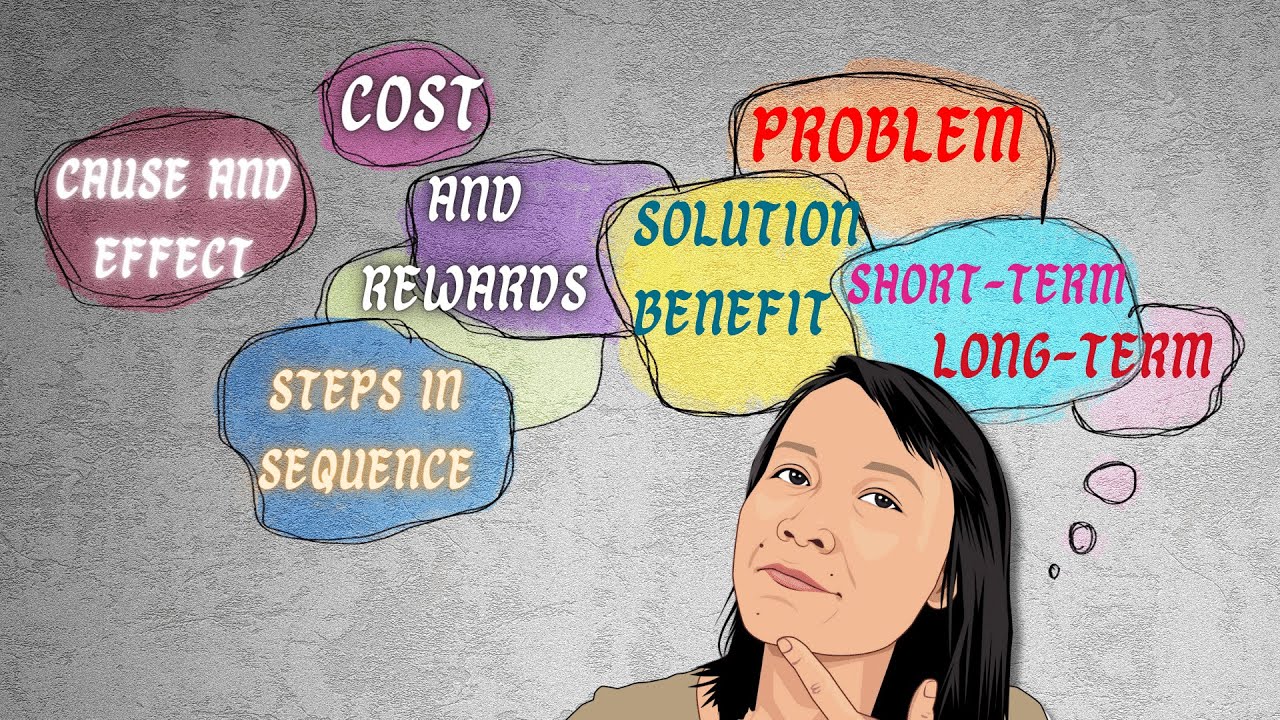
1. Cause and Effect
Effective communication starts with understanding the cause and its subsequent effects. It’s about tracing back to the root of an issue and comprehending its implications.
Logical Structure
Question Addressed
Example
Software Company Scenario
Cause and Effect
What’s the root cause, and what are its consequences?
A neglected core software product leads to unrealized revenue potential.
The company hasn’t maximized the profit of its core software product.
2. Steps in a Sequence
Every situation has a backstory. By breaking down events step by step, we can gain a clearer understanding of how a situation unfolded.
Logical Structure
Question Addressed
Example
Software Company Scenario
Steps in a Sequence
What events led to the current situation?
Sales desires more software features; engineering cites resource constraints; a less profitable product is identified; resources are reallocated.
Sales team wants enhanced features; engineering team flags resource limitations; focus shifts from a low-profit product.
3. Problem-Solution-Benefit
Every challenge presents an opportunity. By identifying problems and crafting solutions, we can unlock potential benefits.
Logical Structure
Question Addressed
Example
Software Company Scenario
Problem-Solution-Benefit
What’s the challenge, the solution, and the resulting benefits?
Customers seek more software features; an underperforming product is discontinued to free up resources; this leads to enhanced customer retention and increased profits.
Addressing customer demands by reallocating resources, leading to higher customer retention and profitability.
4. Short Term vs. Long Term
Immediate actions have both present and future implications. It’s essential to weigh the short-term impacts against the long-term outcomes.
Logical Structure
Question Addressed
Example
Software Company Scenario
Short Term vs. Long Term
What are the immediate implications and the future outcomes?
An engineer’s initial productivity dip during transition, followed by a projected 40% profitability boost within a year.
Initial productivity challenges offset by a long-term rise in profitability.
5. Costs and Rewards
Every decision has its price. By evaluating potential investments against expected returns, we can make informed choices.
Logical Structure
Question Addressed
Example
Software Company Scenario
Costs and Rewards
What are the potential investments and the expected returns?
An engineer’s learning curve with the core product, offset by the potential for maximized company profits.
Investment in training yields potential for significant profit increase.
As you can see with each of these different logic structures, they each have their own function. That’s why understanding what you’re trying to convey is paramount. These logical structures serve as tools to help you communicate effectively by articulating your thoughts with precision. As you move forward, consider employing these structures in your daily communications, be it in professional settings or personal interactions. They can guide you in presenting information clearly, ensuring your message is both understood and impactful. Clarity in communication is a skill, and with the right tools and practice, it can be mastered.
LinkedIn has been a game-changer for me, opening doors to countless professional opportunities and connections, and allowing me to trade ideas and resources with my network. But let’s be honest, with its vast user base comes an inevitable downside: the relentless wave of LinkedIn spam. From eager sales pitches to random connection requests, I’ve seen it all. If you’re active on LinkedIn, chances are that you’ve experienced this as well. Over time, I’ve developed some strategies to handle these with grace and poise. Here’s my personal guide to managing unsolicited, spammy requests and messages on LinkedIn.
Ignore the request: Ever received a connection request without any message? I get them all the time. If they didn’t take a moment to introduce themselves or give a reason for why they’d like to connect, I usually move on without feeling guilty.
Give a clear response to requests accompanied by messages: When a message accompanies a request, I give it a read. If it’s genuine, I’m all ears. Or if they’d like to connect to grow their network, I might say yes because it’s not hurting anyone and I’ve gained a connection.
Practice reciprocity: I occasionally get requests to follow someone’s page. If it resonates with my interests, I’m on board. But networking is about mutual growth, right? So I’ll usually ask them to follow my company page in return.
Respond with a question: Sometimes, I’m curious. Why did they reach out? Asking, “What about my profile stood out to you?” not only satisfies my curiosity but also helps me understand my online presence better. Oftentimes when I ask questions, they don’t respond at all.
Be direct about the sales pitch: If they’re giving you an offer that straight up sales pitch be direct about if you’re interested or not. It’s ok to politely decline. And while I”m at it, I might suggest they check out my company page. Who knows, they might find something they like or there could be an opportunity for us to connect in the future. To their sales pitch, you can say something like “No thank you. By the way, would you consider following my company page?”
Get clarity on their ask: Some messages are just… vague. I often get messages like “I have a podcast where I interview the best leaders” or “This service I offer has benefitted companies similar to yours”, without a clear proposition. In such cases, I ask outright “Are you asking me to be on your podcast?” or “Are you asking me to buy your service?”. It’s surprising how many times I don’t get a response.
Use it as an opportunity for mutual growth: If someone is keen on offering a service, I suggest a mutual learning call. We spend time understanding each other’s services. It’s less about purchasing and more about learning. Most of the time, people ignore the request, but I still feel good about responding in this way. In the few times people have said yes, I’ve gotten to learn about their services and industry and they ask me questions about mine, which has helped me get better at selling.
LinkedIn is a treasure trove of opportunities, but it’s essential to sift through the noise. With these strategies, I’ve managed to turn potential distractions into meaningful interactions. And who knows? The next random message might just be the opportunity you’ve been waiting for.
Entrepreneurial Success: 10 Essential Skills in Business
Entrepreneurship is a dynamic journey, one that demands constant learning and an insatiable curiosity. In this ever-evolving landscape, there’s so much we don’t know, and the key to success lies in recognizing this and seeking knowledge relentlessly. As an entrepreneur myself, I’ve navigated through these challenges and have identified ten pivotal skills that have shaped my journey. Let’s delve into them.
Manage your money.You need to know how to handle your money. If you’ve struggled with personal finances in the past, now is the time to learn. Understanding debits and credits, how money flows in and out of your business, is essential. I know someone who used to use their credit card to withdraw cash all the time, not realizing the implications. After dedicating time to learn about business finances, she transformed her financial habits and is now a boss with her money.
Learn how to read spreadsheets. Business is about money and that is tracked in spreadsheets. You need to get comfortable with spreadsheets. There are many free resources. You can check out organizations like SCORE and Business Impact Northwest to get started. I can’t tell you how many times I made a near catastrophic mistake with my calculations and knowing how to read my spreadsheet saved me.
Listen to understand. You have to do a lot of listening as an entrepreneur–to your customers, employees, and partners. Listen to their needs, their concerns, their dreams and aspirations. Understand them.
Ask questions, even when you think you know. Even if you believe you have the answer, ask for clarity, because it’s not about the answer itself. It’s about the perspective that it reveals. At CuriosityBased, we’ve crafted a learning experience centered on asking questions to clarify, underscoring the importance of this skill. I might think I know an answer, but not from that person’s perspective. I might be right about what they want, but wrong about why they want it. Understanding the “why” is often more important than the “what”.
Connect the dots (be strategic) When you’re able to listen and ask questions, you’ll build your capacity to connect the dots and be strategic. You’ll be scrapping together limited resources. For example, when I was running my Vietnamese newspaper, I heard from other community newspapers that they were struggling and from organizations who had a hard time reaching out to our communities. I was able to connect the dots.
Share your story and your why. A lot of people want to start their own businesses and they lack the courage. When you tell your story, you’re including them in your journey and you’re inspiring them. It can be super hard to talk about yourself. It might even feel like you’re bragging. You need to get clear about your “why”. I often tell people the only reason I left the best job I ever had was so I could get to own my work and have freedom, which is a big part of my identity as a Vietnamese refugee.
Share your expertise. This can be hard to do, but show off what you know. You might feel like a show off. You might worry that if you share this, then people will steal all your secrets. In most cases, though, your customers will pay you to do this work for them. They will rarely use it to do the work themselves. Don’t worry about sharing your expertise. Also, what is obvious to you is not obvious to other people.
Ask for business. This is super hard. I have to give myself a little pep talk every time I do it. “Let me know if I can provide you with any services or help your team.” Swallow your pride and do it.
Delegate/outsource some of your work. There is endless work for an entrepreneur to do. You have to know what to outsource. I don’t create agendas for internal meetings. I don’t look for tech solutions or do video editing. I delegate and outsource, so I can focus on what gives me energy.
Repress your inner critic. You will have so many doubts. I call my doubting voice “Insecure Julie”. You have to learn to shut that person down so that you can move forward. It’s a skill to know the difference between your gut warning you not to do something and your inner critic telling you you’re not good enough to do something. You’ve got to differentiate the two.
Embarking on the entrepreneurial journey is both challenging and rewarding. By honing these skills and continuously seeking knowledge, you pave the way for success. Remember, it’s about the journey, the continuous learning, and most importantly, believing in yourself.
Self Facilitate or Hire a Facilitator? 10 Questions to Guide Your Decision
Deciding whether to self-facilitate a meeting or hire a professional facilitator is a crucial decision that can impact the effectiveness of your meeting. This guide will walk you through 10 key questions to consider before making your decision.
These questions are based on the assumption that you have a budget allocated for hiring a facilitator, but are uncertain if it is the best way to utilize your funds. If you do not have a budget specifically for hiring an external facilitator, you could consider requesting someone affiliated with the organization to volunteer their services, or perhaps offer their services in exchange for other services.
Self Facilitate or Hire a Facilitator? 10 Key Questions
Understanding the Meeting Requirements
What kind of meeting is this?
Is this an information gathering session? Or a nuanced discussion that needs the skill of a facilitator? If it’s a simple information gathering session, self-facilitation might be sufficient. However, if the discussion involves nuances and requires skilled facilitation to navigate, it’s important to assess whether there is someone in-house capable of managing this.
Evaluating the In-house Facilitator
Is there someone on your team who is good at facilitating and willing to do it?
Assess the skills and willingness of your team members. Being good at facilitation is one thing, but the person also needs to be willing to take on the role.
If you’re considering using someone in-house to facilitate, is that the best use of that person’s time?
Consider the other responsibilities and tasks of the potential in-house facilitator. Will facilitating the meeting take them away from other important work?
If you’re considering asking someone in-house to facilitate, how will it benefit them and/or hurt them?
Consider the potential benefits, such as skill development and leadership growth, against potential drawbacks, such as added stress or workload.
If you’re considering using someone in-house to facilitate, how important would it be to get that person’s opinion in the conversation?
If the potential in-house facilitator has valuable insights to contribute to the discussion, it might be more beneficial for them to participate as a team member rather than as a facilitator.
Considering Neutrality and Impartiality
Do you have someone in-house who is perceived as neutral?
If not, it might be best to hire an outside facilitator who is perceived to be neutral. Neutrality is important for managing group dynamics and facilitating difficult conversations.
If you’re considering using someone in-house to facilitate, how realistic is it that the person can stay impartial to the topic?
Impartiality is key to effective facilitation. If there is a concern that the in-house facilitator might not be able to stay impartial, it might be better to hire an outside facilitator.
Weighing the Costs and Benefits
What can you learn from hiring an outside facilitator that you can use to build up the capacity on your own team?
Hiring an outside facilitator can provide valuable insights and skills that can be used to build up the capacity of your own team.
Does your facilitator need to have specialized knowledge?
If so, it might be best to get the in-house or make sure that you hire someone who’s an outsider who has specialized knowledge.
Considering all of the above, is this a good use of your budget?
Weigh the costs and benefits of hiring a facilitator versus self-facilitating. Consider the impact on the effectiveness of the meeting, the development of your team, and the overall success of your organization.
Considering these questions will help you make an informed decision about whether to self-facilitate or hire a professional facilitator. Remember, the goal is to have the most effective meeting possible, so choose the option that best suits your needs and budget.
In-Person or Online Retreat? Key Questions to Guide Your Decision
In the modern business landscape, the decision between in-person or online staff retreats and workshops is more relevant than ever. Whether you’re a small business owner, a corporate leader, or a team manager, understanding the advantages and disadvantages of different facilitation methods is essential. Let’s explore the pros and cons of online, in-person, and hybrid retreats and workshops.
Questions for Consideration
Before diving into the specifics, ask yourself these crucial questions to better understand your needs:
1️. What is the main purpose of the retreat or workshop? Is it to connect on a personal level, create a detailed work plan, or brainstorm innovative ideas?
2️. What unique activities or exercises can you conduct in-person that might be challenging or impossible online? Conversely, are there virtual tools or methods that can’t be replicated in a physical setting?
3️. What does your budget allow for? Consider costs related to travel, venue, technology, and facilitation.
4. How do you envision attendance and participation? Would an in-person event lead to higher engagement, or would an online format allow for broader participation?
With these questions in mind, let’s explore the pros and cons of online, in-person, and hybrid retreats and workshops.
Online Retreats and Workshops: The Future of Collaboration
Pros:
Cost-Effective: Save on travel and venue expenses.
Global Reach: Include team members from all over the world.
High Capacity: More attendees without space constraints.
Record & Replay: Record sessions for future reference.
Efficiency: Less transition time between activities.
Engagement Tools: Utilize chat, polling, games, and more.
Inclusivity: Ideal for those who prefer not to speak aloud.
Accessibility: Enhanced tools for viewing slides and presentations.
Quick Grouping: Faster to assign participants to breakout sessions.
Cons:
Limited Physical Interaction: Some exercises may not be feasible.
Distractions: Easier for attendees to multitask.
Tech Challenges: Varying proficiency and potential tech issues.
Engagement Design: Requires careful planning for virtual participation.
Audience Dynamics: Larger groups may limit individual interaction.
Expertise Needed: A facilitator skilled in virtual environments is essential.
In-Person Retreats and Workshops: The Human Touch
Pros:
Physical Activities: Enables hands-on exercises and activities.
Human Connection: Opportunities for small talk and bonding.
Mood Gauge: Easier to sense the audience’s feelings.
Adaptability: Quick adjustments to the flow and structure.
Tangible Tools: Whiteboarding and sticky exercises are more straightforward.
Cons:
Space Limitations: Venue size dictates participant count.
Higher Costs: Venue, travel, and accommodation expenses.
Travel Constraints: Potential challenges for distant team members.
Environmental Concerns: Travel may not be eco-friendly.
Health Risks: Potential exposure to illnesses.
Hybrid Retreats and Workshops: A Balanced Approach
Pros:
Inclusivity: Combines online and offline participation.
Accessibility: Meets diverse needs of participants.
Cons:
Isolation Risk: Remote participants may feel left out.
Additional Costs: Requires extra tech or facilitation.
Varied Experience: Can lead to inconsistent participant experiences.
Conclusion
Choosing the right format for your staff retreats and workshops requires a thoughtful analysis of your team’s needs, budget, and goals. By weighing the pros and cons of each method, you can make the right decision that fosters collaboration, creativity, and connection within your organization.
Curiosity: More Than Just a Trait, It’s a Practice
Curiosity – we often think of it as something innate, a trait you’re either born with or without. But what if I told you curiosity is more like meditation, a practice that can be honed and developed? Join me as we dive into the extraordinary world of curiosity, exploring how it can be cultivated, challenged, and used to enrich every aspect of our lives.
3 Situations to Practice Curiosity
Learning Something New: When I explore new subjects and ideas, curiosity guides me to understand different perspectives and trying new things, even when I’m outside my comfort zone.
Not Having Expectations Met: Life has taught me that things don’t always go as planned. When this happens, practicing curiosity helps me be open to things I didn’t expect.
Disagreeing with Someone: I’ve found that disagreements can be hard, but they are also opportunities to learn. By practicing curiosity, I’ve been able to listen deeply and wholly, build relationships and foster clear communication.
Two Essential Questions I Ask Myself
In my journey of practicing curiosity, I’ve come to realize that two questions consistently guide my thinking and interactions. These questions are foundational principles that shape my approach to learning, communication, and relationship-building.
Do I want them to learn from me? Do I want them to be open to changing their mind to what I have to say?
This question challenges me to consider my intentions in a conversation or debate. Am I seeking to impose my views, or am I genuinely interested in fostering understanding? It reminds me that true dialogue requires openness and a willingness to influence and be influenced.
Am I willing to learn from them? Am I open to possibly changing my mind based on what they have to say?
This second question is a mirror to the first, turning the focus inward. It prompts me to reflect on my own openness and willingness to learn from others. Am I entering a conversation with a fixed mindset, or am I prepared to grow and change my views based on new insights?
Why These Questions Matter
These questions are more than just rhetorical; they are tools for self-awareness and growth. They encourage me to:
Embrace Humility: Recognizing that I don’t have all the answers and that others may offer valuable perspectives.
Foster Genuine Dialogue: Creating a space where ideas can be shared and explored without judgment or defensiveness.
Cultivate Empathy: Understanding others’ viewpoints, even if I disagree, and finding common ground.
Enhance Learning: Opening myself to new ideas and allowing them to challenge and enrich my thinking.
By continually asking myself these questions, I’ve been able to deepen my practice of curiosity, engage more meaningfully with others, and enhance my personal and professional relationships. They are a compass that guides me towards a more thoughtful, empathetic, and curious way of living.
3 Elements I Focus on When Practicing Curiosity
Self-awareness: Understanding my feelings, thoughts, and patterns has been the first step towards cultivating curiosity.
Relationship Building: Connecting with others and letting them get curious about me has fostered a sense of community and shared learning.
Clear Communication: Listening to understand, asking questions when I don’t understand, and sharing my own specific examples and stories. Asking questions with curiosity and listening actively has helped me explore new ideas and understand different viewpoints.
Conclusion
Practicing curiosity is not just a skill; it’s a way of life for me. It’s about being open to change, exploring new ideas, and building relationships. I also admit that there are times when I don’t practice curiosity because it can be so difficult and my emotions get in the way. I hope my insights into practicing curiosity can be a guide to anyone looking to enhance their personal and professional life.
Promote Professional Development in the Workplace: 7 Free Strategies!
7 Free Professional Development Strategies for the Workplace
In the quest to foster growth and improve productivity, many companies overlook the power of professional development. Yet, offering opportunities to learn and grow benefits both employees and organizations. Below are seven free, but highly effective, strategies to promote professional development in the workplace.
1. In-House Knowledge Sharing
Leverage the expertise within your team. By encouraging employees to share knowledge during lunch-and-learn sessions or internal workshops, you not only create a culture of continuous learning but also give employees leadership opportunities. For instance, a session on basic Excel skills can dramatically boost efficiency for those unfamiliar with the tool.
2. Knowledge Exchanges
Create a platform where employees can share favorite tech hacks and productivity tips. At CuriosityBased, we recently held a session where one employee demonstrated how to use mail merge and “snooze” in email, while another showcased the benefits of using ChatGPT. Consequently, these peer-led exchanges can lead to surprising improvements in efficiency.
3. Practice Time
Allocate dedicated time for employees to practice new skills together. For example, after an elevator pitch training session, the following meeting could be devoted to practicing in front of colleagues. As a result, this simple strategy can lead to major improvements in public speaking and confidence.
4. Mentoring Programs
Establish mentoring programs within your company. When employees are paired intentionally, both the mentor and mentee benefit. Furthermore, consider reverse mentoring, where junior employees coach senior staff on emerging trends or technologies. Recognition for participants reinforces the value of the program.
5. Lending Library
Set up a lending library where employees can share professional development books, articles, and resources they’ve found useful. This trust-based system encourages collaboration and, over time, contributes to meaningful professional growth.
6. Pro Bono Coaching
Many individuals pursuing executive or leadership coaching certifications must complete pro bono hours. By connecting with them, your employees can access professional coaching at no cost. This approach creates a win-win: coaches gain experience, while employees receive valuable guidance.
7. Volunteer Experts
Invite volunteer experts to speak and share their knowledge. For instance, we once hosted a Toastmasters champion who offered practical tips on delivering an effective elevator pitch. Such sessions provide fresh perspectives and can inspire employees to elevate their skills.
Professional development doesn’t have to strain budgets. With creativity and intentionality, these seven free strategies can cultivate learning, build stronger teams, and significantly improve workplace productivity. By embracing these approaches, organizations show commitment to growth and demonstrate curiosity in action.
Practicing Curiosity: How to Ask Questions at Work Without Fear
8 Common Fears That Stop People From Asking Questions at Work
Many people struggle with practicing curiosity, especially when it comes to asking questions in the workplace. Leaders need to understand what prevents employees from asking before they can foster a culture of curiosity. Often, it is fear. Employees hesitate to ask clarifying questions like “What does that acronym mean?”, “Could you explain why we’re taking this approach?”, or “What do you mean by that?” because of how they worry others will perceive them.
Based on insights from hundreds of workshop participants and audience members, I’ve identified eight common fears that stop people from asking questions at work—and how to reframe them safely.
1. Fear of Appearing Inattentive or Unprepared
Concern: People worry that their lack of knowledge suggests they weren’t listening or didn’t prepare.
Reframe: “I apologize if this was addressed earlier and I missed it. Could you please clarify (insert question)?”
2. Fear of Being Perceived as a Time-Waster
Concern: Employees fear that asking questions will slow down the meeting or disrupt the flow.
Reframe: “Could you please explain what (insert question) means? I want to ensure I fully understand.”
3. Fear of Appearing Incompetent
Concern: People worry that admitting they don’t know something will make others doubt their ability.
Reframe: “I know I should probably know this, but I’m still not clear. Could you please explain (insert question)?”
4. Fear of Reflecting Poorly on a Manager or Team
Concern: Employees fear that admitting uncertainty will make their manager or team look unprepared.
Reframe: “My team and I had a productive conversation on this. I’d like to ask a clarifying question: (insert question).”
5. Fear of Sounding Confrontational
Concern: People worry their question will come across as a challenge, especially to authority figures.
Reframe: “I appreciate your perspective and want to understand it better. Please don’t take this as a challenge. (Insert question).”
6. Fear of Appearing Passive
Concern: Employees believe others expect them to state opinions, not ask questions. They worry questions make them look indirect.
Reframe: “I’m still processing this matter. Could you clarify (insert question)?”
7. Fear of Seeming Indecisive
Concern: Asking questions may make people worry they’ll be seen as unable to make decisions.
Reframe: “I need more information before making a decision. Could you explain (insert question)?”
8. Fear of Discouragement From Past Experiences
Concern: Employees may have asked many questions before and felt discouraged. That hesitation lingers.
Reframe: “I know I ask a lot of questions, so please let me know if you’d prefer me to save this for later. (Insert question).”
Final Thoughts
Curiosity thrives in environments where questions are welcomed, not dismissed. By recognizing these fears and reframing your approach, you can ask with confidence, gain clarity, and strengthen workplace communication.
Which of these fears do you recognize in yourself? Share your thoughts in the comments. If this post helped you, please pass it along to a friend or share it on social media.
Professional Networking Strategies: Three Approaches for Engaging Conversations
When engaging in professional networking, you may encounter conversations that seem boring. Here are three professional networking strategies you can use to make the conversation more engaging and beneficial.
Learn about their field/industry(Build basic knowledge)
Start by gaining basic knowledge about their field or industry. Treat the person as a subject matter expert and a personal tutor on the topic. Ask questions like: What does your work entail? What’s the business model? Who are the different players in your field? What does an average day of work look like for you? Don’t hesitate to ask for explanations of any acronyms they use.
Learn about their opinion of their field/industry(Build your understanding of different perspectives)
Dive deeper into their opinions and perspectives related to their work. This approach helps you develop a broader understanding of the topic. Make comparisons to check your understanding. For example, you could ask: Is having a personal wealth manager like having a general contractor who finds subcontractors for you, while managing your investments with online brokerages is more like shopping online and reading reviews yourself? This approach allows you to expand your knowledge and seek clarification on specific aspects.
Learn why they care about their field/industry (Understand their motivations)
Explore the personal motivations behind their work. This approach is useful when you genuinely want to understand their perspective or when you are not particularly interested in the topic itself. Ask questions like: How did you get into wealth management? Have you always been interested in money? What makes you stay in this field? What are some of your favorite customer success stories? Understanding what underlies someone’s passion and motivation might be more interesting than the work itself.
During the conversation, try to refer to your own experiences or opinions on related matters. This may prompt them to ask you follow-up questions. If they don’t, continue asking questions to gain useful knowledge from the conversation. People generally enjoy talking about their passions, so by showing interest in their field and making them feel good about themselves, you leave a favorable impression.
Regarding which approach you naturally gravitate towards, it depends on your personal preferences and the specific situation. Some individuals may find themselves naturally inclined towards one approach over the others. However, it’s beneficial to be adaptable and use a combination of these approaches based on the context and the person you are engaging with.
Which of these professional networking approaches do you think that you naturally gravitate towards? If this post was helpful, please share it with a friend or post it on social media. You can also check out these tips on how to make networking less stressful or these on how to grow your professional network.
Building a strong professional network is crucial for career advancement and business growth. In this article, I will discuss two important categories of people to grow your professional network: peer mentors and referral partners.
Peer mentors are individuals with specific knowledge or expertise who can coach you, while you have different knowledge or expertise to offer in return.
Referral partners are valuable for sales roles and entrepreneurship, as they help each other find opportunities and expand their networks.
To increase your peer mentors and referral partners, follow these three steps:
Identify the people you want to connect with:
Consider individuals whom you believe you can add value to, and who can add value to you based on your own definition of “value.” You can connect with people through introductions from friends, engagement on social media, or virtual networking spaces such as breakout rooms. When approached to pitch a service, respond by suggesting a conversation to learn about each other’s offerings and potential customers, offering mutual advice.
Reach out:
This step is critical to expanding your network. If you’re good at starting conversations, make sure to follow up and pursue them actively. If reaching out with a cold call, take action rather than just planning. Use email or LinkedIn to send messages, including the following templates:
Peer mentoring:
“We met through this group/at this event, and I appreciated your insights on (fill in the blank). As you are an expert in (fill in the blank), I was wondering if I could seek your advice. I would be happy to share my expertise on (fill in the blank) and address any questions you may have. If you’re interested, let’s schedule a virtual meeting where we can help each other out.”
Referral partner call:
“While there are many things I do, there are also many things I don’t do. I always strive to be a resource for my clients, even if I’m not the solution provider. Would you be interested in a 30-minute call to learn about each other’s businesses and explore potential client referrals?”
Always include a scheduling tool to facilitate the next steps, as some recipients may immediately schedule the session.
Get what you need out of the call:
Don’t hesitate to be clear about your expectations regarding time and value sharing. If someone agrees to a call focused on sharing leads, they expect this arrangement. Clearly define the agenda for the call. After a brief introduction, divide the remaining time to address each person’s needs. Peer coaching calls can be 30-60 minutes, while referral partner calls can be 20-30 minutes. Stick to the intentions you expressed in your outreach message.
During the call, feel free to ask for what you need without hesitation. Use peer coaching calls for role-playing difficult conversations, getting feedback on presentations, or conducting user tests. Referral partner calls should primarily focus on understanding each other’s businesses and potential client referrals.
By following these steps and maintaining clear expectations, you can make the most out of your connections and build a strong network of peer mentors and referral partners.
Are you inspired to expand your network now? If this post was helpful, please share it with a friend or post it on social media. You can also check out these professional networking strategies to make any conversation more engaging.
It’s natural to feel defensive or hurt when getting negative or constructive feedback. I know I feel that way. A common mistake I see people make about getting feedback is that they think they automatically had to change or react immediately. We all benefit from taking some time to think about the feedback given to us because it is just one person’s opinion, not a universal truth. Knowing how to respond to constructive feedback takes practice. Here are three different stages that will help you practice how to respond to constructive feedback.
First stage– how to respond when you’re getting the constructive feedback:
Thank the person for the feedback.
Ask clarifying questions, such as the behavior they’re giving you feedback on. Be careful not to sound defensive when you are asking these clarifying questions that you were not being defensive. You are truly trying to understand what they saw. Sometimes people can’t give you examples, and that is telling their feedback might be very subjective. For example, they may say “you’re rude” and they can’t think of any examples of things you’ve said. If you don’t think you can stop yourself from getting defensive, skip to the next step.
Let them know you need some time to process their feedback. We often assume that we have to react right away and I think that’s wrong. We all need some time to process hard news, so give yourself permission to take that time. It will also benefit them because when you respond to them, you will be more calm and have processed what they said.
Second stage, process the constructive feedback by yourself:
Remind yourself that negative feedback isn’t a personal attack.
Ask yourself why you do what you’re being criticized for–is there a purpose?
When you’re processing, it could also be helpful to think about why you do that thing that you do. Perhaps you grew up in a family that was very blunt and direct. You can explain this, not as a way to get them to excuse you, but as a way for them to understand you more. For example, “I grew up in a family that spoke very directly to one another and I guess that has been carried over in how I present myself at work. I will think about making adjustments and I also want you to understand this is where I am familiar and comfortable with.”
Talk to other people about the feedback you received and ask for different interpretations. It’s natural for different people to have different interpretations and reactions to your behavior, which is why it’s important not to let one person’s opinion sway everything. I remember one person was told she was too blunt by a few coworkers, and then she was told by other coworkers she was too indirect and not blunt enough.
Decide if you want to take it or leave it and/or just adjust your behavior with the person giving you that feedback. Remember, this is just one person’s opinion.
Third stage- closing the feedback loop:
After you’ve taken the time to process, then go back to the person and see if you can talk about it. This is the third stage and closes the loop.
Which of these strategies resonates with you? I’d love for you to share your thoughts in the comments section. If this was helpful, please share it with a friend or post it on social media.
5 Strategies to Reduce Stress at Networking Events
Even though I attend many networking events, they still make me nervous. Over time, I’ve found a few strategies that help me feel less stressed and more intentional. Here are five tricks to make networking events less stressful. These tips are ones I use myself, and they can help you approach networking with confidence.
1. Set a Realistic Goal
Don’t expect to make ten new friends at one event. That goal will likely leave you disappointed. Instead, I aim to meet one to three people I’d genuinely like to follow up with. This shift helps me focus on building quality relationships, not just chatting with as many people as possible.
2. Pretend You’re a Journalist
If talking about yourself feels intimidating, flip the script. Ask people questions, just as a journalist would. Most people enjoy sharing their stories. By approaching conversations this way, you’ll not only ease your nerves but also walk away with interesting insights.
3. Bring a Buddy
Invite a friend to attend the event with you. Agree to approach people together so that you both engage in conversations. The key is not to hide in the corner and only talk to each other. Having a buddy makes networking less intimidating, especially when you feel awkward standing alone.
4. Treat Conversations as Practice
Think of networking as practice, not performance. Each interaction is a chance to test new stories, jokes, or even your elevator pitch. Go in seeking feedback and accept whatever you get. With this mindset, every conversation becomes an opportunity to improve.
5. Remember You’re Not Alone
You may think you’re the only one feeling stressed, but that’s rarely true. Many people get anxious at networking events. Some are just better at hiding it. Keeping this in mind makes the experience less isolating.
Networking doesn’t have to feel overwhelming. By setting realistic goals, asking questions, and shifting your perspective, you can reduce stress and build stronger connections.
Which of these strategies resonates with you? Share your thoughts in the comments. If you found this helpful, pass it along to a friend or share it on social media.
How do you say “no” to a friend or acquaintance when they ask you for help? It can be really hard to ask for help, even from your friends. When someone asks me for help, I’m thinking about how difficult it must’ve been for them to ask for help. I naturally want to say yes not because I want to do the thing but because I want to reward them for having the courage to ask for help. Even though you’re compassionate, it doesn’t mean you have to say yes. I think this leads to more people who say yes than they should.
It’s important to recognize the way we say no to our coworkers will be different from the way that we say no to our friends or acquaintances.
Here are 8 tips for saying “no” to your a friend’s or acquaintance’s request:
Try to understand the request.
Take the time to ask questions. At least making the effort to consider the request. When you ask questions about their ask, you may find out they actually need something else or you may be able to think of another solution.
If you need more time or information, tell them when you can give them an answer by.
Think about how you feel when you ask someone for help over email or text message and they don’t respond. Do you get worried about how they might be thinking about you? I’ve experienced times where friends have totally ignored me when I’ve asked for help and I was left worrying about how my request made them feel. So when you need more time to think about something, it’s important to just respond to say that. You could say, “I’ll let you know at the end of the week if I can do it.”
If the request is easy to understand and for you it’s a clear-cut “no,” respond as soon as you can.
They might be worried and wondering how you’re feeling about their request. If you can’t do it, just let them know the sooner the better. A lot of people, if they don’t want to say yes, or if they can’t say yes, then they just don’t say anything at all. I think if you know it’s something you can’t do, just say that immediately. It’s better than dragging it out.
Say “no“ and offer an alternative solution.
“I can’t do that, however, I can do this.” I’ve been asked to attend fundraising events and to make cash donations. Instead, I have offered to donate my services so they can auction them off. When you asked questions about their request, you may have come up with alternative solutions, so share them. You do want to be helpful, even if you’re not the one who can directly help them.
Share why you need to say no and what your priorities are.
It could be helpful for the person to understand why you were saying no. This doesn’t require a long, apologetic explanation. In fact, the shorter the better. I’ve shared “It’s really difficult for me to meet up in person, so I will have to say no.” or “I won’t be able to make a donation because my priority giving areas are this and this” or “All of my resources are dedicated to my family right now.”
Don’t give them hope if this is something you’ll never do.
Think about if this is something you’d ever be willing to do or not. For example, some people have asked me to pet sit and I know I will never pet sit. In this case, I just let them know I have no experience with pets and I would not be a good candidate for pet sitting.
Welcome them to ask you again if you do want to be asked.
Sometimes you have to say no because you’re not available to help them out. If that’s the case, you can let them know by saying “I can’t help this time, please do ask again though.” It lets them know that even though you can’t do it now, it lets them know they can still ask you again in the future.
Wish them good luck.
Even if you can’t help them and you don’t know anyone who can, wish them some luck so they can get the help they need.
If you can say no to your friends and acquaintances more easily, then you will be practicing setting your boundaries and limiting how many things you do out of a self imposed sense of obligation versus out of true desire.
Which of these strategies resonates with you? I’d love for you to share your thoughts in the comments section. If this was helpful, please share it with a friend or post it on social media.
How to Say No Professionally to Your Boss or Co-worker
“How can I say no to extra work from my boss or colleague professionally and without making enemies?”
We’ve all been in situations where a coworker or our manager or even our manager’s manager has asked us for help to do something that we don’t want to do or that we don’t have the capacity to do. It could be very difficult considering the power dynamics. It’s important to recognize that the way we say no to our friends/acquaintances will be different from the way that we say no at work.
The first stage is to demonstrate that you’re trying to understand and consider their request with these four steps:
1. Paraphrase the request to confirm understanding.
You could say something like “just to make sure I understand your request, is this what you’re saying…?” You may even find out what you think they’re asking for is different from what they think they’re asking for.
2. Try to determine if you’re the only one who can do it the extra work.
Determine if there’s someone else on the team who could help you with the extra work. You may feel you are deflecting on work if you do that, but think of it as you are sharing the responsibility and opportunity for exposure. Perhaps your coworker hadn’t thought about asking certain people because they just don’t have as much exposure to them. There’s an opportunity for you to play “connect the dots” and you can say “I think so-and-so can help you.”
3. Try to understand if their deadline is fixed or flexible.
If you’re willing to do it, yet you need more time, try to see if you can negotiate the deadline. Sometimes people feel more urgency than is actually needed. Try to understand what they’re thinking about by determining this deadline.
4. If you need time to process and let them know when you’ll get back to them.
People often just want to hear a response, whether that is in the affirmative or negative. Yet so often, if we can’t respond in the affirmative, we don’t even respond in the negative. You will earn a lot of goodwill if you respond as soon as possible and offer when you can get back to them.
In the second stage, decide if you still want to say no. If you still want to say no after you have discussed the request, take these five steps to say no professionally:
1. Share what you have to give up doing if you fulfill their request.
Oftentimes when people are asking for help, they don’t think about what you might have to give up in order for you to accommodate the request. You just have to tell them.
2. Ask them what they think you should give up or delay to fulfill their request.
After you tell them what you’re working on, you can turn the question onto them and ask what they think you should give up. This also signals you do have to give something up in order to fulfill their request and it will make them rethink their request. Sometimes people make requests that are not thought out because they just want to get some relief.
3. Share alternative solutions to get their needs addressed.
You may know other people or resources in the department that they don’t know about and they could actually use to fulfill their request. Even if you just say “you may want to check with so-and-so, you will start to be seen as helpful.
4. If the request makes you uncomfortable, say that.
If you’re not sure how to explain why, just say, “I don’t know why, I just don’t feel comfortable doing this.” There could be so many different reasons for why you don’t want to say yes to this request. If it makes you uncomfortable, share that.
5. Reinforce your desire to be helpful and that you want to focus on doing your current job/task well.
You want to end the conversation on a positive note. Let them know you do want to be helpful, and yet there’s just so much other work, and no relief in sight, so you have to say no.
Which of these strategies on how to say no professionally resonates with you? I’d love for you to share your thoughts in the comments section. If this was helpful, please share it with a friend or post it on social media.
We often discuss other people’s passivity or passive-aggressive behavior, but we hesitate to acknowledge that we ourselves may exhibit passiveness or conflict avoidance. This is a broad category, so to better understand what we mean by “passive,” I have analyzed various actions and behaviors and categorized them into these seven forms of passiveness:
1. Non-response:
When you receive an invitation via email, text, or social media and choose not to respond at all if you can’t accept. Example: Chris emails me an invitation to their social function, but I never respond. This is a form of “non-response.”
2. Non-acknowledgment:
When someone makes a comment that goes unacknowledged, usually because it expresses an unpopular view and people want to avoid conflict. Example: Chris says, “I don’t think that (issue) is so bad,” after others have complained about it. Instead of addressing Chris, people pretend they didn’t hear and change the subject.
3. Not saying what you want to say:
When you have something to say but choose not to express it to avoid seeming aggressive. Example: Chris is playing loud music in an open space, and I’m annoyed, but I don’t say anything.
4. Deflection (the “yes-no”):
This occurs in situations similar to “non-response”, but the invitation is given in person, necessitating an immediate response. To avoid disappointing the other person or creating conflict or awkwardness, the recipient deflects the inquiry by not giving a direct answer. Example: Chris asks, “Do you want to get coffee sometime?” and I respond, “There are some great coffee shops in Seattle.” I neither say “no” nor “yes.”
5. Saying “yes” when you mean “no”:
When you decide to say “yes” even though you don’t mean it, just to avoid hurting the inquirer’s feelings. If the invitation was genuine, this can give false hope and lead to stringing the person along. Example: Chris suggests, “We should get coffee sometime,” and I respond, “Yes, let’s get coffee,” even though I have no intention of making time for it.
6. Talking behind someone’s back:
When you have negative feedback for someone but choose not to share it directly with them. Instead, you share it with others, often justifying it as “venting.” You may even feel like you’re being direct because you have voiced your feedback, even though you haven’t communicated it to the person concerned. Example: Chris does something that annoys me, but instead of addressing it directly with Chris, I decide to discuss it with our mutual acquaintances.
7. Ghosting:
When you commit to participating in something with a group of people but later decide you no longer want to be involved. Instead of informing the group, you choose not to respond to their communication or show up, essentially “disappearing” or “ghosting” them. Example: I was volunteering with Chris on a project, but they do something I disagree with. Instead of discussing it with Chris, I choose to “ghost” them.
I hope that by examining these examples, you will realize that we are all guilty of some form of passivity. If this post has been helpful, please share it with a friend or post it on social media.
If you are curious about your own passive nature and wondering if it is causing problems in your life, check out this blog post. You can also read my original article on the forms of passiveness here.
I often hear from individuals who exhibit what could be perceived as passive behavior, claiming they don’t have the time or energy to address things directly. While that may be true in some cases, I believe it’s not the case for those who spend significant time contemplating the issue at hand. To help people determine whether their passiveness is truly a problem, I’ve devised a formula.
Consider “emotional time” (ET), which refers to the time spent thinking and ruminating about something—a measure of mental energy devoted to the issue. Then there’s “actual time” (AT), which represents the time it would take to change behavior. Actual time encompasses both the time required for action and the time taken to actually act.
To assess the significance of the issue, divide emotional time by actual time. If the quotient exceeds 5X, it suggests that you’re investing far more time and energy in thinking about something than it deserves.
Let’s consider an example: You’re sitting on a bus, and someone opens the window, leaving you shivering.
ET = 80 min (20 min of sitting resentfully in the cold on the bus + 60 min spent recounting the incident to 10 people, emphasizing the audacity of the person not closing the window)
AT = 5 min (thinking of how to politely ask the person to shut the window and actually uttering the words)
ET/AT quotient = 16x
If you value your time and frequently mention being busy, a 16x factor should prompt you to take action.
One important aspect of emotional time is that it can escalate over time. Currently, it might be 80 minutes, but it could increase to 100 minutes. Alternatively, you might only spend 20 minutes dwelling on the incident and never think about it again, resulting in a quotient of 4X, which is not problematic.
I hope this formula assists you in determining whether your passive behavior regarding an issue is indeed a problem or not. If this post was helpful, please share it with a friend or post it on social media.