banner

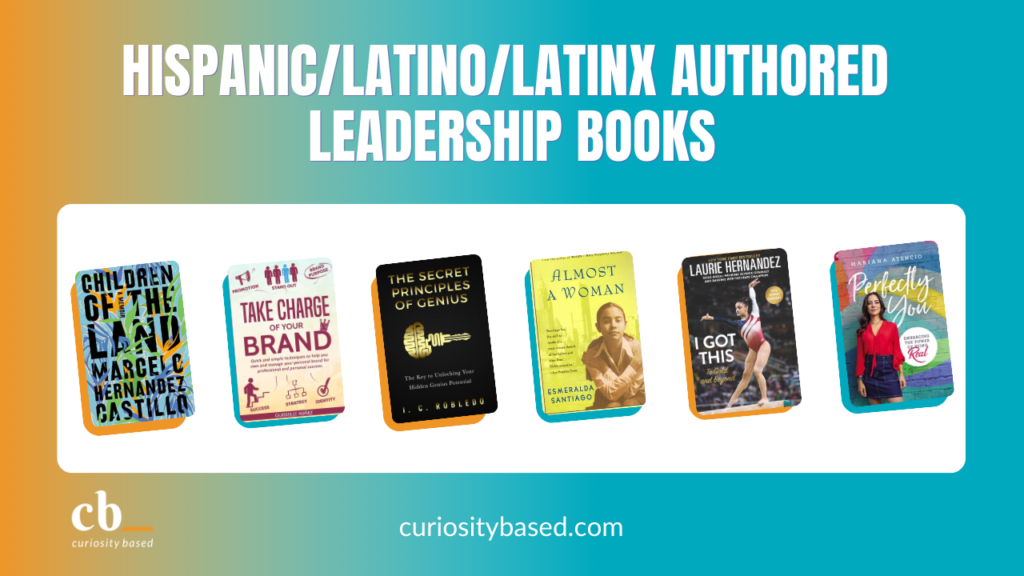
131 Leadership Books Written by Hispanic/Latino/Latinx Authors 2024

We created this list of 131 Leadership Books Written by Hispanic/Latino/Latinx Authors to promote leadership narratives written by the Hispanic/Latino/Latinx community. This list is meant to be a resource, not an official endorsement. The books are not ranked or listed in any particular order.

  1. Me by Ricky Martin
  2. And A Voice to Sing With: A Memoir by Joan Baez
  3. The Gloria Anzaldúa Reader (Latin America Otherwise) by Gloria Anzaldúa
  4. Borderlands / La Frontera: The New Mestiza by Gloria Anzaldúa
  5. Almost a Woman by Esmeralda Santiago
  6. In the Time of the Butterflies by Julie Alvarez
  7. Farmworker’s Daughter: Growing up Mexican American by Rose Castillo Guilbault
  8. The Power of Latino Leadership: Culture, Inclusion, and Contribution by Juana Bordas
  9. When I was Puerto Rican by Esmeralda Santiago
  10. Salsa, Soul, and Spirit: Leadership for a Multicultural Age by Juana Bordas
  11. Autentíco: The definitive guide to Latino Career Success by Robert Rodriguez
  12. Brown Church: Five Centuries of Latina/o Social Justice, Theology, and Identity by Robert Chao Romero
  13. Hermanas: Deepening Our Identity and Growing Our Influence by Natalia Kohn Rivera
  14. Isabel’s Hand-Me-Down Dreams by Isabel Lopez
  15. Leaving Little Havana: A Memoir of Miami’s Cuban Ghetto by Cecilia M. Fernandez
  16. Gmorning, Gnight!: Little Pep Talks for Me & You by Lin-Manuel Miranda
  17. [Un]framing the “Bad Woman”:Sor Juana, Malinche, Coylxauhqui, and other rebels with a cause by Alicia Gaspar de Alba
  18. Always Running: La Vida Loca – Gang Days in L.A. by Luis J. Rodriguez
  19. Cruz: A Cross-Border Memoir by Jean Guerrero
  20. Dear America: Notes of an Undocumented Citizen by Jose Antonio Vargas
  21. Undocumented: A Dominican Boy’s Odyssey from a Homeless Shelter to the Ivy League by Dan-el Padilla Peralta
  22. The Far Away Brothers: Two Young Migrants and the Making of an American Life by Lauren Markham
  23. My Beloved World by Sonia Sotomayor
  24. Latina Empowerment Through Leadership: Mindful Stories from Inspiring Women by Catherine Munos Garces, Monica Rivera, et al
  25. An Organizer’s Tale by Cesar Chavez
  26. My Time to Speak: Reclaiming Ancestry and Confronting Race by Ilia Calederon
  27. Rita Moreno: A Memoir by Rita Moreno
  28. American Poison: How Racial Hostility Destroyed Our Promise by Eduardo Porter
  29. My (Underground) American Dream: My True Story as an Undocumented Immigrant Who Became a Wall Street Executive by Julissa Arce
  30. The Virtuous Circle: Restore Your Confidence, Bounce Back, and Emerge Stronger by Gaby Natale
  31. Self Made: Become Empowered, Self Reliant and Rich in Every Way by Nely Galán
  32. Latino Leaders Speak: Personal Stories of Struggle and Triumph edited by Micky Ibarra and Maria Pérez-Brown
  33. Leapfrog: The New Revolution for Women Entrepreneurs by Nathalie Molina Niño
  34. The Soul of a Woman by Isabel Allende
  35. In the Dream House: A Memoir by Carmen Maria Machado
  36. Once I was You: A Memoir of Love and Hate in a Torn America by María Hinojosa
  37. More than Ready: Be Strong and Be You…and Other Lessons for Women of Color on the Rise by Cecilia Muñoz
  38. Perfectly You: Embracing the Power of Being Real by Mariana Atencio
  39. Take Charge of Your Brand: Quick and Simple Techniques to Help You Own and Manage Your Personal Brand for Professional and Personal Success by Guisselle Nuñez
  40. In the Country We Love: My Family Divided by Diane Guerrero
  41. Frida by Barbara Mujica
  42. Finding Latinx: In Search of the Voices Redefining Latino Identity by Paolo Ramos
  43. The Undocumented Americans by Karla Conejo Villavicenci
  44. AOC: The Fearless Rise and Powerful Resonance of Alexandria Ocasio-Cortes by Lynda Lopez
  45. Latinx: The New Force in American Politics by Ed Morales
  46. Mexican Enough: My Life Between the Borderlines by Stephanie Elizondo Griest
  47. Being Brown: Sonia Sotomayer and the Latino Question by Lázaro Lima
  48. An Unlikely Journey: Waking up from My American Dream by Julián Castro
  49. Hispanic Women Seeking Higher Leadership Roles in Business by Sylvia C. Motta, PhD
  50. Wild Tongues Can’t be Tamed: 15 Voices from the Latinx Diaspora edited by Saraciea J. Fennell
  51. The Leadership Shift: The Strategic Positioning of Latino Business Leaders by Dr. Nilda Perez
  52. ¡Rise up, Mi Gente! A Roadmap for Latinos to Achieve Success in Corporate America by Jesse A Mejia
  53. Inventing Latinos: A New Story of American Racism by Laura E. Gómez
  54. The 5 Disciplines of Inclusive Leaders: Unleashing the Power of Us All coauthored by Andrés Tapia
  55. When We Make It by Elisabeth Velasquez
  56. I am Not Your Perfect Mexican Daughter by Erika L. Sanchéz
  57. Latino Talent: Effective Strategies to Recruit, Retain, and Develop Hispanic Professionals by Robert Rodriguez
  58. Silencing Gender, Age, Ethnicity, and Cultural Biases in Leadership by Camilla A. Montoya, Julieta V. García. et al.
  59. Inclusion Revolution: The Essential Guide to Dismantling Racial Inequity in the Workplace by Daisy Auger-Dominguez
  60. Latinas Rising Up in HR: Inspirational Stories of Human Resources Professional Leading, Thriving, and Breaking Barriers by Priscilla Guasso
  61. The Secret Principles of Genius: The Key to Unlocking Your Hidden Genius Potential by I.C. Robledo
  62. I Got This: To Gold and Beyond by Lauren Hernandez
  63. The Engine of America: The Secrets to Small Business Success from Entrepreneurs Who Have Made It by Jane Delgado
  64. The Latina Guide to Health: Consejos and Caring Answers by Jane Delgado
  65. Field Mice: Memoirs of a Migrant Child by Emma Gonzalez
  66. Los Amos del Mundo Están al Acecho by Cristina Martin Jimenez
  67. Growing American Roots by Bob Menendez
  68. Dream in Color: How the Sánchez Sisters are Making History in Congress by Linda Sánchez
  69. Healing Journey: Surviving Domestic Violence by Lupe Valdez
  70. La Nueva California: Latinos from Pioneers to Post-Millennials by David Hayes-Bautista
  71. El Cinco de Mayo: An American Tradition by David Hayes-Bautista
  72. Latinas in Aviation by Jacqueline S. Ruiz
  73. Becoming Dr. Q: My Journey from a Migrant Farm Worker to brain Surgeon by Alfredo Quinones-Hinjosa
  74. The Universal Tone: Bringing My Story to Light by Carlos Santana
  75. Take a Stand: Lessons from Rebels by Jorge Ramos
  76. The Injustice Never Leaves You: Anti-Mexican Violence in Texas by Monica Muñoz Martinez
  77. Powerhouse Principles: The Ultimate Blueprint for Real Estate Success in an Ever-Changing Market by Jorge Perez
  78. The Buena Salud Guide to Understanding Depression and Enjoying Life by Jane Delgado
  79. Leadership Lessons of the White House Fellows: Learn How to Inspire Others, Achieve Greatness , and Find Success in Any Organization by Charles P. Garcia
  80. Persevere with Power: What Heaven Starts, Hell Cannot Stop by Samuel Rodriguez
  81. In Defense of Our America: The Fight for Civil Liberties in the Age of Terror by Anthony D. Romero
  82. One Vote Away: How a Single Supreme Court Seat Can Change History by Ted Cruz
  83. Still Dreaming: My Journey from the Barrio to Capitol Hill by Luis Gutiérrez
  84. An American Son: A Memoir by Marco Rubio
  85. The Undocumented Americans by Karla Cornejo Villavicencio
  86. A House of My Own: Stories from My Life by Sandra Cisneros
  87. Spirit Run: A 6000 Mile Marathon Through America’s Stolen Land by Noe Alvarez
  88. Dirty Girls Social Club by Alisa Valdes-Rodriguez
  89. Woven in Moonlight by Isabel Ibañez
  90. The Latino Advantage in the Workplace by Mariela Dabbah and Arturo Poiré
  91. Dream Big by Deborah Rosado Shaw
  92. Youth, Identity, Power: The Chicano Movement by Carlos Munoz Jr.
  93. Mean by Myriam Gurba
  94. Presumed Incompetent: The Intersections of Race and Class for Women in Academia by Gabriella Gutiérrez y Muhs, Yolanda Flores Niemann, and Carmen G. González
  95. Enrique’s Journey: The Story of a Boy’s Dangerous Odyssey to Reunite with his Mother by Sonia Nazarrio
  96. A Passion for Politics (Mission Bells) by Anita Perez Ferguson
  97. Latinos in American Society: Families and Communities in Transition by Dr. Ruth Enid Zambrana
  98. Journey to the Future: A Roadmap for Success for Youth by Ltc. Consuelo Castillo Kickbusch
  99. Homeless my Choice by Roy Juarez Jr.
  100. The Story of Latinos and Education in American History by Dr. Abdín Noboa-Ríos
  101. A Long Petal of the Sea by Isabel Allende
  102. The Deepest Roots: Finding Food and Community on a Pacific Northwest Island by Kathleen Alcalá
  103. Más Allá de la Justicia by Maria de lourdes Victoria
  104. The Likeability Trap: How to Break Free and Succeed as You Are by Alicia Menendez
  105. Ready, Set, Manifest!: A Handbook for the In-betweens and Leaps in Life by Debbie Lacey
  106. Hurdles in the Dark by Elvira K. Gonzalez
  107. In the Shadow of the Mountain: A Memoir of Courage by Silvia Vasquez-Lavado
  108. Through the Dark by Yolanda Nava
  109. Thriving in the Fight: A Survival Manual for Latinas on the Front Lines of Change by Denise Padin Collazo
  110. Justice & Space Matter in a Strong, Unified Latino Community by Kathy Bussert-Web, Maria Eugenia Diaz, Krystal A Yanez
  111. Breaking Ground and Barriers: Hispanic Women Developing Effective Leadership by Gloria Bonilla-Santiago, Ph.D.
  112. Latinization and the Latino Leader: How to Value, Develop, and Advance Latino Professionals by Cristina Benitez & Marlene Gonzalez
  113. Latino and Latina Leaders of the 21st Century: Ordinary Beginnings, Extraordinary Outcomes by Kay (Kayla) S. Garcia
  114. Latina Empowerment Through Leadership: Mindful Stories from Inspiring Women by Catherine Munoz-Garces, Monica Rivera, Lizza Monet Morales, Celia Garcia, Veronica Corona, Maggie Antillon Mathews, Roxana Damas, and Jennifer Ibarra
  115. The More or Less Definitive Guide to Self Care by Anna Borges
  116. Act Like a Leader, Think Like a Leader by Hermina Ibarra
  117. You Don’t Have to Like Me: Essays on Growing Up, Speaking Out, and Finding Feminism by Alida Nugent
  118. Children of the Land: A Memoir by Marcelo Hernandez Castillo
  119. Wealth Warrior: 8 Steps for Communities of Color to Conquer the Stock Market by Linda Garcia
  120. Solito: A Memoir by Javier Zamora
  121. Living Beyond Borders: Growing Up Mexican in America by Margarita Longoria
  122. Chinoga: Owning Your Inner Badass for Healing and Justice by Alma Zaragoza-Petty
  123. A Woman of Endurance by Dahlma Llanos-Figueroa
  124. Human-Centered Data Science: An Introduction by Cecilia Aragon
  125. In the Shadow of the Mountain: A Memoir of Courage by Silvia Vasquez-Lavado
  126. You Sound Like A White Girl: The Case for Rejecting Assimilation by Julissa Arce
  127. Path to the Stars: My Journey from Girl Scout to Rocket Scientist by Sylvia Acevedo
  128. Relentless: My Story of the Latino Spirit That Is Transforming America by Luis A. Miranda Jr.
  129. Mother Island: A Daughter Claims Puerto Rico by Jamie Figueroa
  130. Belonging: A Daughter’s Search for Identity Through Loss and Love by Michelle Miller
  131. The 5 Disciplines of Inclusive Organizations: How Diverse and Equitable Enterprises will Transform the World by Andrés T. Tapia, Fayruz Kirtzman
120+ Leadership Books Written by Hispanic/Latino/Latinx Authors

We created this list to promote leadership narratives written by the Hispanic/Latino/Latinx community. This list is meant to be a resource, not an official endorsement. The books are not ranked or listed in any particular order.

Check out our other leadership book lists by authors who identify as LGBTQIA+, AANHPI, Native American, women, and those who identify as having disabilities.

  1. Me by Ricky Martin
  2. And A Voice to Sing With: A Memoir by Joan Baez
  3. The Gloria Anzaldúa Reader (Latin America Otherwise) by Gloria Anzaldúa
  4. Borderlands / La Frontera: The New Mestiza by Gloria Anzaldúa
  5. Almost a Woman by Esmeralda Santiago
  6. In the Time of the Butterflies by Julie Alvarez
  7. Farmworker’s Daughter: Growing up Mexican American by Rose Castillo Guilbault
  8. The Power of Latino Leadership: Culture, Inclusion, and Contribution by Juana Bordas
  9. When I was Puerto Rican by Esmeralda Santiago
  10. Salsa, Soul, and Spirit: Leadership for a Multicultural Age by Juana Bordas
  11. Autentíco: The definitive guide to Latino Career Success by Robert Rodriguez
  12. Brown Church: Five Centuries of Latina/o Social Justice, Theology, and Identity by Robert Chao Romero
  13. Hermanas: Deepening Our Identity and Growing Our Influence by Natalia Kohn Rivera
  14. Isabel’s Hand-Me-Down Dreams by Isabel Lopez
  15. Leaving Little Havana: A Memoir of Miami’s Cuban Ghetto by Cecilia M. Fernandez
  16. Gmorning, Gnight!: Little Pep Talks for Me & You by Lin-Manuel Miranda
  17. [Un]framing the “Bad Woman”:Sor Juana, Malinche, Coylxauhqui, and other rebels with a cause by Alicia Gaspar de Alba
  18. Always Running: La Vida Loca – Gang Days in L.A. by Luis J. Rodriguez
  19. Cruz: A Cross-Border Memoir by Jean Guerrero
  20. Dear America: Notes of an Undocumented Citizen by Jose Antonio Vargas
  21. Undocumented: A Dominican Boy’s Odyssey from a Homeless Shelter to the Ivy League by Dan-el Padilla Peralta
  22. The Far Away Brothers: Two Young Migrants and the Making of an American Life by Lauren Markham
  23. My Beloved World by Sonia Sotomayor
  24. Latina Empowerment Through Leadership: Mindful Stories from Inspiring Women by Catherine Munos Garces, Monica Rivera, et al
  25. An Organizer’s Tale by Cesar Chavez
  26. My Time to Speak: Reclaiming Ancestry and Confronting Race by Ilia Calederon
  27. Rita Moreno: A Memoir by Rita Moreno
  28. American Poison: How Racial Hostility Destroyed Our Promise by Eduardo Porter
  29. My (Underground) American Dream: My True Story as an Undocumented Immigrant Who Became a Wall Street Executive by Julissa Arce
  30. The Virtuous Circle: Restore Your Confidence, Bounce Back, and Emerge Stronger by Gaby Natale
  31. Self Made: Become Empowered, Self Reliant and Rich in Every Way by Nely Galán
  32. Latino Leaders Speak: Personal Stories of Struggle and Triumph edited by Micky Ibarra and Maria Pérez-Brown
  33. Leapfrog: The New Revolution for Women Entrepreneurs by Nathalie Molina Niño
  34. The Soul of a Woman by Isabel Allende
  35. In the Dream House: A Memoir by Carmen Maria Machado
  36. Once I was You: A Memoir of Love and Hate in a Torn America by María Hinojosa
  37. More than Ready: Be Strong and Be You…and Other Lessons for Women of Color on the Rise by Cecilia Muñoz
  38. Perfectly You: Embracing the Power of Being Real by Mariana Atencio
  39. Take Charge of Your Brand: Quick and Simple Techniques to Help You Own and Manage Your Personal Brand for Professional and Personal Success by Guisselle Nuñez
  40. In the Country We Love: My Family Divided by Diane Guerrero
  41. Frida by Barbara Mujica
  42. Finding Latinx: In Search of the Voices Redefining Latino Identity by Paolo Ramos
  43. The Undocumented Americans by Karla Conejo Villavicenci
  44. AOC: The Fearless Rise and Powerful Resonance of Alexandria Ocasio-Cortes by Lynda Lopez
  45. Latinx: The New Force in American Politics by Ed Morales
  46. Mexican Enough: My Life Between the Borderlines by Stephanie Elizondo Griest
  47. Being Brown: Sonia Sotomayer and the Latino Question by Lázaro Lima
  48. An Unlikely Journey: Waking up from My American Dream by Julián Castro
  49. Hispanic Women Seeking Higher Leadership Roles in Business by Sylvia C. Motta, PhD
  50. Wild Tongues Can’t be Tamed: 15 Voices from the Latinx Diaspora edited by Saraciea J. Fennell
  51. The Leadership Shift: The Strategic Positioning of Latino Business Leaders by Dr. Nilda Perez
  52. ¡Rise up, Mi Gente! A Roadmap for Latinos to Achieve Success in Corporate America by Jesse A Mejia
  53. Inventing Latinos: A New Story of American Racism by Laura E. Gómez
  54. The 5 Disciplines of Inclusive Leaders: Unleashing the Power of Us All coauthored by Andrés Tapia
  55. When We Make It by Elisabeth Velasquez
  56. I am Not Your Perfect Mexican Daughter by Erika L. Sanchéz
  57. Latino Talent: Effective Strategies to Recruit, Retain, and Develop Hispanic Professionals by Robert Rodriguez
  58. Silencing Gender, Age, Ethnicity, and Cultural Biases in Leadership by Camilla A. Montoya, Julieta V. García. et al.
  59. Inclusion Revolution: The Essential Guide to Dismantling Racial Inequity in the Workplace by Daisy Auger-Dominguez
  60. Latinas Rising Up in HR: Inspirational Stories of Human Resources Professional Leading, Thriving, and Breaking Barriers by Priscilla Guasso
  61. The Secret Principles of Genius: The Key to Unlocking Your Hidden Genius Potential by I.C. Robledo
  62. I Got This: To Gold and Beyond by Lauren Hernandez
  63. The Engine of America: The Secrets to Small Business Success from Entrepreneurs Who Have Made It by Jane Delgado
  64. The Latina Guide to Health: Consejos and Caring Answers by Jane Delgado
  65. Field Mice: Memoirs of a Migrant Child by Emma Gonzalez
  66. Los Amos del Mundo Están al Acecho by Cristina Martin Jimenez
  67. Growing American Roots by Bob Menendez
  68. Dream in Color: How the Sánchez Sisters are Making History in Congress by Linda Sánchez
  69. Healing Journey: Surviving Domestic Violence by Lupe Valdez
  70. La Nueva California: Latinos from Pioneers to Post-Millennials by David Hayes-Bautista
  71. El Cinco de Mayo: An American Tradition by David Hayes-Bautista
  72. Latinas in Aviation by Jacqueline S. Ruiz
  73. Becoming Dr. Q: My Journey from a Migrant Farm Worker to brain Surgeon by Alfredo Quinones-Hinjosa
  74. The Universal Tone: Bringing My Story to Light by Carlos Santana
  75. Take a Stand: Lessons from Rebels by Jorge Ramos
  76. The Injustice Never Leaves You: Anti-Mexican Violence in Texas by Monica Muñoz Martinez
  77. Powerhouse Principles: The Ultimate Blueprint for Real Estate Success in an Ever-Changing Market by Jorge Perez
  78. The Buena Salud Guide to Understanding Depression and Enjoying Life by Jane Delgado
  79. Leadership Lessons of the White House Fellows: Learn How to Inspire Others, Achieve Greatness , and Find Success in Any Organization by Charles P. Garcia
  80. Persevere with Power: What Heaven Starts, Hell Cannot Stop by Samuel Rodriguez
  81. In Defense of Our America: The Fight for Civil Liberties in the Age of Terror by Anthony D. Romero
  82. One Vote Away: How a Single Supreme Court Seat Can Change History by Ted Cruz
  83. Still Dreaming: My Journey from the Barrio to Capitol Hill by Luis Gutiérrez
  84. An American Son: A Memoir by Marco Rubio
  85. The Undocumented Americans by Karla Cornejo Villavicencio
  86. A House of My Own: Stories from My Life by Sandra Cisneros
  87. Spirit Run: A 6000 Mile Marathon Through America’s Stolen Land by Noe Alvarez
  88. Dirty Girls Social Club by Alisa Valdes-Rodriguez
  89. Woven in Moonlight by Isabel Ibañez
  90. The Latino Advantage in the Workplace by Mariela Dabbah and Arturo Poiré
  91. Dream Big by Deborah Rosado Shaw
  92. Youth, Identity, Power: The Chicano Movement by Carlos Munoz Jr.
  93. Mean by Myriam Gurba
  94. Presumed Incompetent: The Intersections of Race and Class for Women in Academia by Gabriella Gutiérrez y Muhs, Yolanda Flores Niemann, and Carmen G. González
  95. Enrique’s Journey: The Story of a Boy’s Dangerous Odyssey to Reunite with his Mother by Sonia Nazarrio
  96. A Passion for Politics (Mission Bells) by Anita Perez Ferguson
  97. Latinos in American Society: Families and Communities in Transition by Dr. Ruth Enid Zambrana
  98. Journey to the Future: A Roadmap for Success for Youth by Ltc. Consuelo Castillo Kickbusch
  99. Homeless my Choice by Roy Juarez Jr.
  100. The Story of Latinos and Education in American History by Dr. Abdín Noboa-Ríos
  101. A Long Petal of the Sea by Isabel Allende
  102. The Deepest Roots: Finding Food and Community on a Pacific Northwest Island by Kathleen Alcalá
  103. Más Allá de la Justicia by Maria de lourdes Victoria
  104. The Likeability Trap: How to Break Free and Succeed as You Are by Alicia Menendez
  105. Ready, Set, Manifest!: A Handbook for the In-betweens and Leaps in Life by Debbie Lacey
  106. Hurdles in the Dark by Elvira K. Gonzalez
  107. In the Shadow of the Mountain: A Memoir of Courage by Silvia Vasquez-Lavado
  108. Through the Dark by Yolanda Nava
  109. Thriving in the Fight: A Survival Manual for Latinas on the Front Lines of Change by Denise Padin Collazo
  110. Justice & Space Matter in a Strong, Unified Latino Community by Kathy Bussert-Web, Maria Eugenia Diaz, Krystal A Yanez
  111. Breaking Ground and Barriers: Hispanic Women Developing Effective Leadership by Gloria Bonilla-Santiago, Ph.D.
  112. Latinization and the Latino Leader: How to Value, Develop, and Advance Latino Professionals by Cristina Benitez & Marlene Gonzalez
  113. Latino and Latina Leaders of the 21st Century: Ordinary Beginnings, Extraordinary Outcomes by Kay (Kayla) S. Garcia
  114. Latina Empowerment Through Leadership: Mindful Stories from Inspiring Women by Catherine Munoz-Garces, Monica Rivera, Lizza Monet Morales, Celia Garcia, Veronica Corona, Maggie Antillon Mathews, Roxana Damas, and Jennifer Ibarra
  115. The More or Less Definitive Guide to Self Care by Anna Borges
  116. Act Like a Leader, Think Like a Leader by Hermina Ibarra
  117. You Don’t Have to Like Me: Essays on Growing Up, Speaking Out, and Finding Feminism by Alida Nugent
  118. Children of the Land: A Memoir by Marcelo Hernandez Castillo
  119. Wealth Warrior: 8 Steps for Communities of Color to Conquer the Stock Market by Linda Garcia
  120. Solito: A Memoir by Javier Zamora
  121. Living Beyond Borders: Growing Up Mexican in America by Margarita Longoria
  122. Chinoga: Owning Your Inner Badass for Healing and Justice by Alma Zaragoza-Petty

View all of our leadership book lists here.

Tahmina Watson’s Legal Heroes in the Trump Era

As a nonlawyer, I didn’t know if Legal Heroes in the Trump Era by Tahmina Watson, Alex Stonehill (Editor), Caroline Doughty (Editor) would resonate with me. To my surprise, I thoroughly enjoyed the slim book packed with stories of mostly ordinary lawyers stepping up to do extraordinary things.

Disclaimer: I first met the author in 2015 when we collaborated to advocate for more visas for immigrant startup founders. Considering our previous relationship, I’m putting extra effort in highlighting not only the strengths, but also the weaknesses, of the book. Watson didn’t ask me to do a review and I first purchased the book as a regular consumer, with no intention of reviewing it.

Back to the review. The book highlights the stories of 14 lawyers, all “legal heroes”, who have “responded to the crisis of the Trump era in innovative and inspiring ways.” Many are ordinary lawyers working in private practice, though she also includes the stories of the head of Washington state ACLU, a retired judge, and the Washington state Attorney General Bob Ferguson, who also introduces the book. Watson herself is an immigration lawyer with her own private practice. Watson also shares her own story of feeling moved to cofound a nonprofit, Washington Immigrant Defense Network (WIDEN). She is passionate about both immigration policy and her legal profession.

Here’s what I particularly enjoyed about the book:

The personal stories of each Legal Hero Watson goes into each person’s family background, what inspired them to go into law, and the event that sparked them to take action. I got a sense of not just what these legal heroes do, but who they are as people. The 14 individuals represented a diversity of approaches to activism, including writing a children’s book about immigration and creating a multilingual website to identify lawyers in case they get detained at the airport. Each story was just 5 to 6 pages long, which meant 14 stories did not feel tedious. 

Talking about the law in simple English I appreciated the absence of legalese. Watson writes in a clear, engaging manner and explained the world of lawyers to a nonlawyer. In the process, I got to learn about interesting policies without getting bogged down in the details. I particularly enjoyed being introduced to different legal cases, such “as a class action suit challenging the secret federal program called controlled application review and resolution program (CARRP), which blocks certain immigrant application through malevolent stalling.” (22) I felt more informed. 

The evolution of a grassroots movement told from the perspective of lawyersI got to see the mobilization of activists entirely through the eyes of lawyers. In an effort to be inclusive in recounting history, many writers try to capture the multitude of different perspectives and angles and the result is a thin spread of everything and little depth anywhere. Watson has a refreshingly unapologetic passion for her fellow lawyers and pride in what the profession can do to help the world. 

Here’s what I the book could have done differently:

The author’s story is absent Considering the richness of the personal details in the profiles, there is a surprising lack of information on the author herself in the book. The rare glimpses are buried in a few mentions and in the acknowledgment section. I want to have a better understanding of Watson as a person, perhaps revealing some of the same kinds of details that she shared about the legal heroes themselves, especially since she is not just a writer, but one of the key instigators. 

Needs less “Trump,” more “Trump era” For the most part, Watson focused on describing “Trump administration” policy but there are times that she slips into criticizing Trump himself, assuming the readers are also anti-Trump. It would have been more true to the title to refer to the deep political rifts that the Trump administration symbolized but did not entirely cause. The book could have acknowledged of how the policies the legal heroes fought against reflected growing anti-immigrant sentiment in the US and around the world, not just the views of the Trump administration.

Focus on immigration stories With the exception of the profile on the environmental justice lawyer, all of the stories are around those lawyers focused on immigration or civil rights with a strong connection to immigration. The environmental justice work deserves to be acknowledged, but in this context, the one outlier felt distracting. Or the book could have been enlarged to include more stories of environmental justice and civil rights lawyers to have a more even distribution of topics.

I also got three insights from the book that I can apply to life in general.

The private sector can contribute to social change I’ve talked to many well meaning people working in the private sector who believe that positive social change is limited to government or nonprofits and that their role is limited to providing funding, through taxes and philanthropy. I appreciated the profiles of those who were able to create change from within the private sector, such as the Lawyers for Racial Justice Initiative, as well as those who volunteered working for nonprofits or ended up creating their own, like Lawyers for Good Government. The profiles demonstrate that there is a meaningful, non transactional, role for the private sector to contribute to social change.

Innovation can be approaching something from a different angles There are many examples of innovative approaches and new partnerships and only one example using technology. I loved the example about Margaret O’Donnell who created legal dramas out of Powerpoint workshop presentations to build empathy for those going through immigration court. It gave me ideas for communicating differently.

Curiosity enabled resourcefulness Lawyers, like doctors, specialize in different aspects of the law and usually don’t venture outside their traditional practice areas. The premise for WIDEN was there weren’t enough immigration lawyers to give pro bono services and there were thousands of non-immigration lawyers who wanted to be able to help. Those non-immigration lawyers had to be curious enough to learn from immigration lawyers so that they could be sufficiently trained to meet the demand for legal aid. 

This is inspirational, quick read not just for lawyers but for anyone asking, “What can i do to help?”, not just now, but in the future as well. Be wowed by those stories of those who asked the question and then answered it with their own form of activism.

Interested in reading more? Check out our Women in Political Leadership Series.

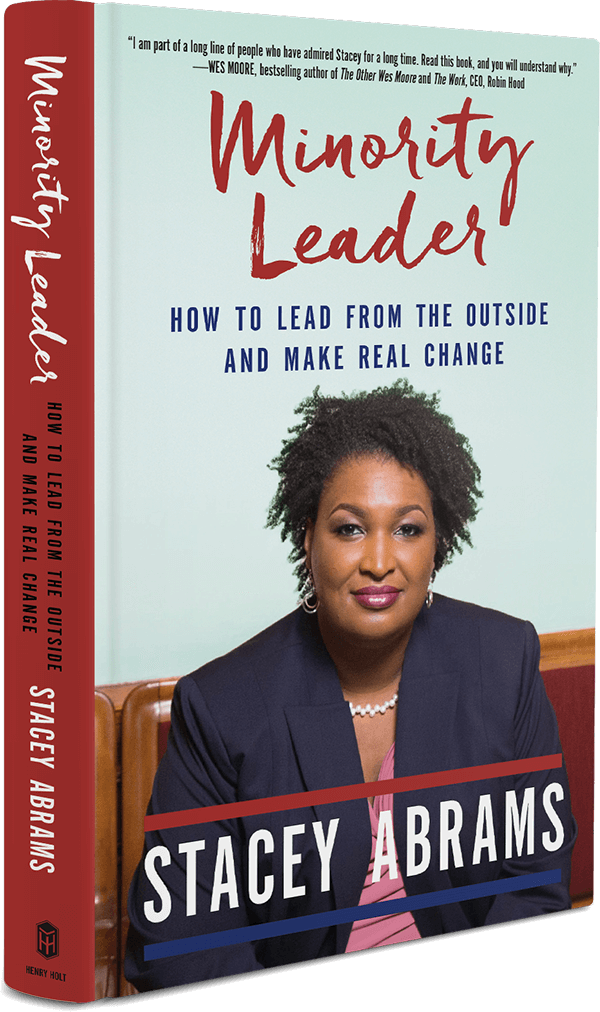
Stacey Abrams’ leadership manual is for all leaders

I am in awe whenever I hear US politician and voting rights advocate Stacey Abrams speak. I knew I’d be inspired before I even started Abrams’ Lead from the Outside: How to Build Your Future and Make Real Change. But, I didn’t expect the part-memoir, part- leadership manual to be so practical, approachable, and relatable. Despite our very different backgrounds and life experiences, I could strongly identify with Abrams’ stories of self-doubt and anxiety. 

There are few “how-to guides” to help those of us who are “other” or in the minority to become the ones in charge. She defines “minority leader” as “anyone who exists outside the structure of traditional white male power.” “Power and leadership are hard, and it’s especially difficult for those who start out weighed down by stereotypes and lack of access,” Abrams wrote in the introduction of the book. She goes on to say  this is “a handbook written for our experiences and challenges -a means to become the minority leaders who own our power and change our worlds.” 

There are topics and aspects of the book that  have universal appeal and leadership application, not just for minority leaders. I’ll quote liberally from Abrams’ book to spare you from my paraphrasing. 

Work Sheets

Every chapter ends with a worksheet of questions to answer. My favorite is the worksheet entitled “trying again” in which you have to note “when you have been tempted to pretend you know the answer.” The worksheets pose probing  questions that make people reflect deeply on what they want.

Money Matters – 

I found the chapter where Abrams shares how much she didn’t understand about managing her finances, even after graduating from law school and earned a high salary to be  vulnerable and relatable. . In a country where most people don’t have more than $400 in savings, it’s not just Abrams’ advice that is valuable. Her admission of shame about money also matters. She wrote, “To get ahead of the problem, explore your personal relationship with money and the explicit and silent claims made on your resources.”

Limited resources

Abrams encourages creativity when faced with limited resources. I call this being “scrappy.” Abrams turns the lack of resources into an advantage: “one of the best things about being in the minority is the fact that limited resources often lead to extensive creativity.” “We can become conditioned to believe we must have the same assets, or worse, that whatever we have at hand is inherently inferior. But the creative ability of minority leaders lies in excavating the valuable in what is available.”  No matter who you are, you can feel like you don’t have enough or you could use more. This lesson can apply to anyone, regardless of their resources. 

Aside from these universal lessons, I found the book refreshing and deeply relevant to my own experience as a “minority leader.” As a Vietnamese-American woman and a refugee, there were so many parts that resonated with me deeply. I keep rereading passages because Abrams  articulated how I and so many of my minority leader friends feel, in such clear, jargon-free prose. 

Acknowledging ambitions

The need to express our ambitions is a constant theme of the book. Abrams writes, “It’s crucial to understand and internalize our very right to even be ambitious. Because, for too many of us, we are stopped in our tracks before we begin because we don’t believe we deserve to want more. And it is by wanting that we begin.” Abrams keeps her goals on a spreadsheet, as a way of “acknowledging in print.” Abrams talked about being asked about her future political aspirations by a reporter while running for governor in 2017. She knew she wasn’t “supposed” to openly say she aspired to become president and yet she decided to say it aloud. There was initial backlash about her audacity, but it was followed by public support. This chapter made me reflect on how often I refrain from saying what I want aloud out of fear I will sound too audaciously ambitious.

Minority fear– I have read a lot of good leadership books by white men and they don’t address or acknowledge what Abrams refers to as “minority fear,” presumably because it doesn’t exist for the majority of these writers. Abrams writes, “Fears about how our differences are perceived, about stereotypes that kept us back, about how our success begets more responsibility will never die. But once we are aware of them, we can work with them” (48). These words felt especially true: “the complexity of minority fear cannot be dismissed by saying ‘don’t be afraid’ or ‘let it go.’ Our trepidation is often grounded in stories we’ve heard (35).” There were so many times that all my other minority leader friends and I could do was commiserate and comfort one another in this shared fear. Even Abrams admits that she encourages people to be fearless in inspirational speeches. In this chapter, she fully acknowledges the  normalcy  of minority fear instead of being  swept away as if it were trivial. The fear is the “permanent companion eating away at confidence, ambition, relationships, and dreams.” 

Let your-light shine-Abrams writes about minority leaders having to “confront..a tacit call for meekness, to hide our light lest we become too noticeable and change the discussion” (135). To fit in, I have had to dim my light so that others don’t feel threatened, I’ve had to shrink unconsciously. I’ve talked to many friends who were the “only” or the “minority” in their workplace who had to dim their light to make other people feel comfortable. Abrams talked about an Advanced Placement English teacher who didn’t want her to use advanced vocabulary words in class, even though she was using the words correctly, lest it make other students feel bad. 

Abram’s book shows how when you build something for a minority group, it can actually benefit the majority. Her book is an example of the curb cut effect, in which features designed for a minority then benefit a much larger group than the people they were designed for. The “curb cut” refers to how ramps were cut into the sidewalk for wheelchairs and now these curb cuts are part of standard sidewalk design.

The book was originally titled “Minority Leader” in the first edition. It makes a lot of sense that it was renamed to” Lead from the Outside” in the later edition. Even though it was built for “outsiders”, I can imagine insiders and those within the majority will find valuable leadership lessons and insight into what those who are outsiders have to face. 

I hope Abrams’ book also inspires other “outsiders” to share their leadership lessons so that the general public can benefit.

Interested in reading more? Stacey Abrams is featured on our Women-Authored Leadership Booklist.

Stacey Abrams is featured on our Black-Authored Leadership Booklist!

Leadership lessons disguised as kitchen tales from a self-described asshole

Review of David Chang’s Eat a Peach

Leadership, Identity, and Breaking the Model Minority Myth: Reflections on Eat a Peach by David Chang

I didn’t read David Chang’s memoir, Eat a Peach, because I’m a die-hard fan of Momofuku. I read it because there are so few memoirs by Asian Americans published by major houses. It took Chang four years to finish a book he first thought would be a “self-help manual on leadership.” Only after he accepted that he was writing a memoir could he complete it.

Any memoir written by a leader becomes, by default, a book on leadership. Chang, who helped reshape how Americans eat, stands as a pioneer in a mostly white-led restaurant industry.

This reflection explores the themes in Eat a Peach that resonated with me as an Asian American and the leadership lessons Chang conveys through his story.

Challenging the “Model Minority” Myth

In many ways, Chang’s memoir rejects the stereotype of Asians as “model minorities” — law-abiding, hard-working, highly educated, high-income earners who remain quiet, uncreative, and apolitical. He challenges the belief that Asians excel only as individual contributors or middle managers rather than as leaders.

Throughout the memoir, Chang expresses disbelief at his own success. At first, he thought he was suffering from imposter syndrome. Later, he recognized it as survivor’s guilt — the feeling that he succeeded while others did not. Few survive the brutal restaurant industry. He did, and he built his own platform.

That sense of survivor’s guilt mirrors how many Asian Americans feel after pushing back against parental and cultural expectations. Chang describes his father’s “distinctively conditional” love — a familiar form of tiger parenting that prizes achievement. Surviving both family pressure and systemic barriers makes the phrase “survivor’s guilt” fitting in more ways than one.

Craving More Asian American Voices

As a Vietnamese American, I crave more voices like Chang’s — raw, reflective, and deeply personal. His stories feel both familiar and distinctively Asian American. They evoke pride, yet also raise uncomfortable questions about identity and belonging.

Work as Identity and Addiction

Chang writes openly about workaholism, calling it a “socially acceptable addiction.” His work intertwined with his Korean identity. He admits, “I wanted not to be me… work made me a different person; work saved my life.”

He built Momofuku around challenging how Americans perceive Asian food. Working alongside his father — his first investor and business partner — became “the closest thing to therapy.”

Many Asian Americans can relate. I certainly can. After finishing my PhD, I returned to Seattle to work with my family’s Vietnamese newspaper. Like Chang, I knew working together would mean more time — and deeper connection — with my parents.

When Chang wrote that work saved him, it struck me. Is that passion? Fear? Or healing? Perhaps work, for many Asian Americans, becomes both a burden and a form of therapy.

Authenticity, Racism, and Asian Cuisine

Chang recalls classmates mocking the Korean food he brought to school. He says he’d rather see a white person want to make kimchi than dismiss it as strange.

In the culinary world, debates around authenticity and cultural appropriation appear constantly. Chang dismisses them as “boring,” but he also points out their racial bias. For example, diners may gladly pay $25 for Italian pasta yet refuse to pay the same for Asian noodles — even though they’re essentially the same dish.

That double standard runs deep, even among Asian Americans. Many will pay more for European cuisine but expect Asian food to be cheap. This raises a hard question: is that internalized racism? And do Asians need non-Asians to validate our food before we value it ourselves?

Romantic Relationships and Cultural Expectations

In the chapter “Grace,” Chang explains why he married another Korean American. His explanation made me pause. Why do so many Asian Americans feel the need to justify who they choose as partners?

Within the community, partner choices often become statements of identity. Marrying someone of the same ethnicity signals cultural pride. Dating outside the ethnicity — especially another person of color — can be seen as defiance or solidarity. Meanwhile, choosing a white partner is often viewed as assimilation.

These dynamics reveal the complex expectations Asian Americans face. Personally, when people assume my partner isn’t Asian, I feel a quiet satisfaction correcting them. It’s a small act of reclaiming identity and disrupting assumptions.

Leadership Lessons from Eat a Peach

Beyond identity, Chang models leadership through vulnerability and growth. His memoir offers lessons every leader can use:

  • Apologize with accountability. Chang admits to the anger he directed at his staff. He writes with remorse, acknowledging that forgiveness isn’t owed to him. True leadership accepts that others decide whether to forgive.
  • Be transparent. He doesn’t hide his evolution. Chang includes old correspondence to show how his thinking changed. For example, he admits that most of his references are about men, writing, “It’s my truth… but I wish some of it were different.”
  • Take risks. As a chef and entrepreneur, Chang constantly experimented. When launching a new restaurant, he wrote, “The only unifying thread was that we were nervous about every single dish we served.” Risk fueled innovation.

The Value of Imperfect Role Models

The memoir ends with “33 Rules for Becoming a Chef,” which read like life lessons. Yet what makes Eat a Peach powerful is its imperfection. Chang admits his flaws — his rage, ambition, and contradictions.

I appreciate that honesty. We need Asian American memoirs that allow room for imperfection. Letting Asian American “assholes,” as Chang calls himself, publish their stories expands what audiences see as possible. It opens space for complex, multidimensional portrayals of Asians in America.

In rejecting the model minority myth, Chang proves there are many ways to be a successful Asian American — while still embracing cultural identity.

Final Reflection

Chang never set out to be an Asian American role model. Yet by sharing his life so publicly, he became one. As an Asian in America, I hope my leadership also resonates beyond my community. We need more Asian leaders whom non-Asians look up to as well.

Chang proves that it’s possible — whether he intended it or not.n-Asians look up to as well. 

Chang proves it’s possible, whether he wanted to or not.

Interested in reading more? David Chang is featured on our AAPI-Authored Booklist!