banner

“Brown Enough” and 181 other books by Latinx leaders

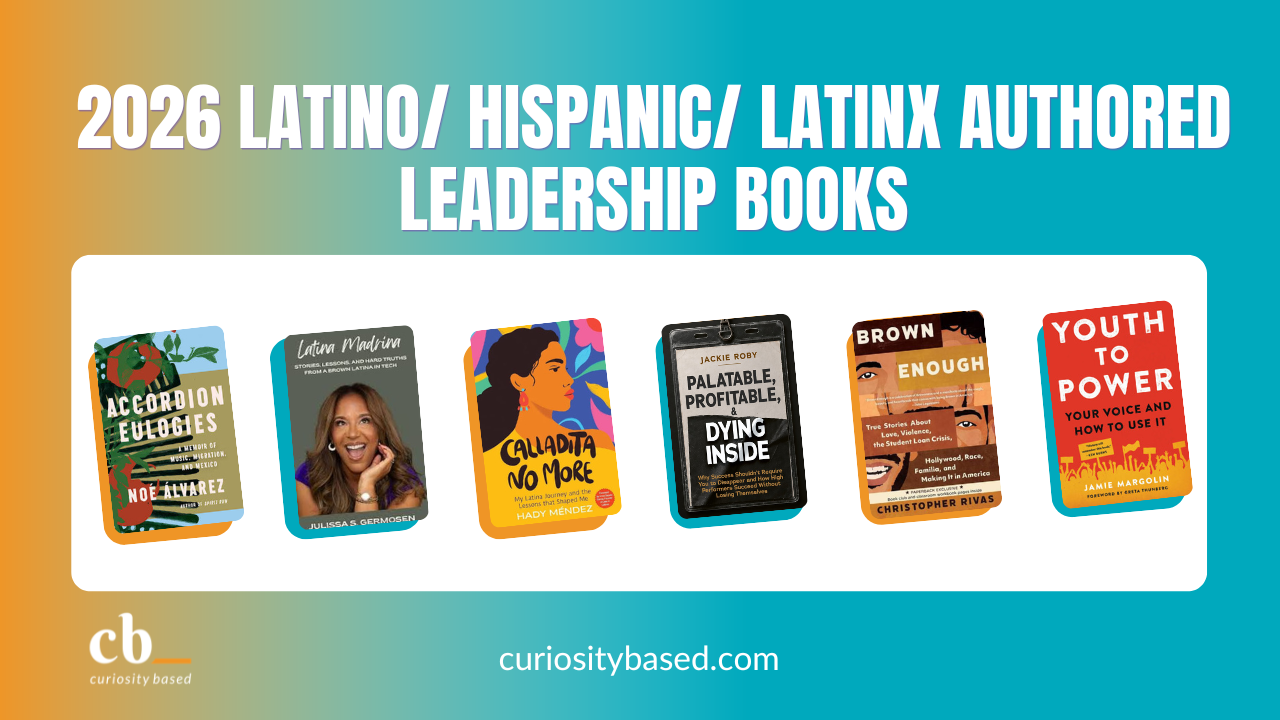
Image caption: The 2026 Leadership Book List by Hispanic/Latino/Latinx authors, curated by CuriosityBased.

In honor of National Hispanic Heritage month, we updated our list of leadership books (including memoirs) written by those who identify as Americans of Hispanic/Latino/Latinx heritage. It now includes 181 titles. 

In honor of National Hispanic Heritage month, we updated our list of leadership books (including memoirs) written by those who identify as Americans of Hispanic/Latino/Latinx heritage. It now includes 182 titles.

I read Christopher Rivas’sBrown Enough: True Stories About Love, Violence, the Student Loan Crisis, Hollywood, Race, Familia, and Making It in America. Rivas is an actor, author, and podcaster who describes himself as “Brown man, a Dominican, Colombian Afro-Latino,” born and raised in New York. The book is part memoir and part social commentary.

Rivas opens the book by recounting a pivotal interaction with renowned race relations scholar Ta-Nehisi Coates. When Rivas asked Coates where his Brown identity lived in conversations on race, Coates replied that Brown was “not in it.” 

It took Rivas a long time to realize Coates was stating a fact of “what is,” not his opinion of, “what should be.” Rivas then understood, “My Brown identity was and often is not pertinent to this conversation in which whiteness and Blackness are seen as polar opposites….” The book retraces Rivas’ subsequent exploration of what Brownness means to him a Black and white world. 

Much of Rivas’ understanding of Browness is rooted in growing up in a multiethnic, 164-unit housing complex where his father worked as the superintendent for decades. He wrote:

That melting pot of a building in Queens was the foundation for….How very different people, from very different backgrounds can love each other, and take care of one another. And that difference is in essence, Brownness….Brownness honors unique identities rooted in race and ethnicity rather than whiteness that embraces assimilation and marginalizes any deviance from a sinisterly crafted default ideal.

To Rivas, Brownness does not exclude white people who celebrated their own culture, as his Russian and Jewish neighbors did. In contrast, whiteness represents monolithism.

Anyone who doesn’t feel like their racial experiences can be easily explained through a Black and white lens should check out Brown Enough. Rivas’ own personal stories will prompt you to get more curious about yourself and others. Whether you agree with Rivas’ opinions on issues like interracial relationships, plastic surgery, and cultural assimilation, you can’t help but reflect on your own beliefs. 

You can check out Rivas’ memoir and others on our updated list. Big thanks to Hady Méndez, author of Calladita No More: My Latina Journey and the Lessons that Shaped Me, for adding so many new titles to this year’s list.

Since we work really hard on these lists, we hope these authors will get the attention they deserve. If you think this list is valuable, please help spread the word by sharing it.

Here’s a sample text you can use when sending this booklist out to your network:

“Want to read leadership narratives written by Hispanic/Latino/Latinx Americans? Check this out! (https://tinyurl.com/2026LatinoLeadershipBooks). #diverseleadershipauthors #latinxleadershipauthors #latinoleadershipauthors #latinaleadershipauthors #hispanicleadershipauthors #latinxandhispanicheritagemonth #expandwhoweread #enrichhowwelead”

You can check out our other leadership book lists by authors who identify as Black, LGBTQIA+, AANHPI, Native American, women, and those who identify as having disabilities. We are always adding to these lists, so please send more recommendations our way.

Best, 

Check out more CuriosityBased newsletters
Leadership Books by Authors with Disabilities (2026)

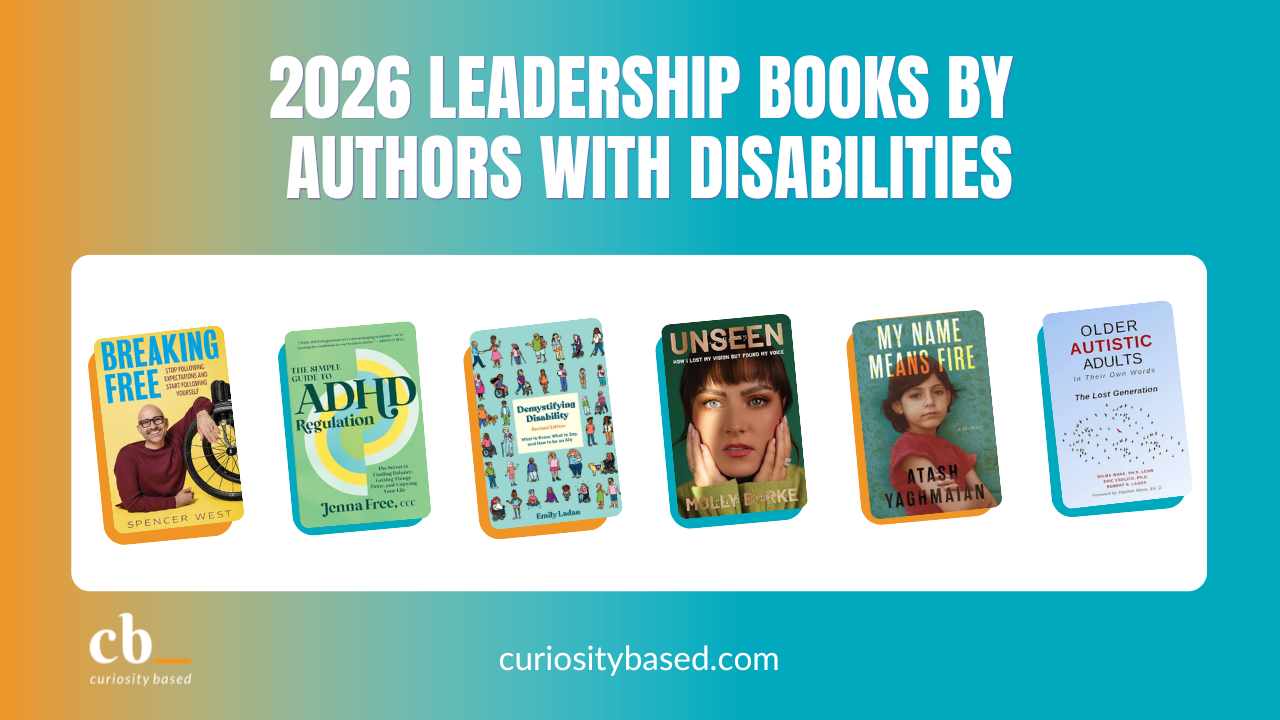
In honor of National Disability Employment Awareness Month (NDEAM), we curated this list to promote leadership books by authors with disabilities. This list is meant to be a resource, not an official endorsement. The books are not ranked or listed in any particular order.

Check out our other leadership book lists by authors who identify as LGBTQIA+, AANHPI, Native American, women, and Hispanic/ Latino/ Latinx.

  1. A Body, Undone: Living On After Great Pain — Christina Crosby
  2. A Face for Picasso: Coming of Age with Crouzon Syndrome — Ariel Henley
  3. ADHD Advantage, The: What You Thought Was a Diagnosis May Be Your Greatest Strength — Dale Archer, MD
  4. Adult ADHD: How to Succeed as a Hunter in a Farmer’s World — Thom Hartmann
  5. Aftershocks — Virginia Eubanks
  6. An Unquiet Mind: A Memoir of Moods and Madness — Kay Redfield Jamison
  7. And Now We Are Going to Have a Party: Liner Notes to a Writer’s Early Life — Nicola Griffith
  8. Apocalyptic Best Practices: A unique approach to fear and change — Elisebeth VanderWeil
  9. Articulate: A Deaf Memoir of Voice — Rachel Kolb
  10. ASL Saved My Life…Until it didn’t — Jenni Kleinman Berebitsky
  11. Authentic: The Myth of Bringing Your Full Self to Work — Judy Ann Burey
  12. Be Different — John Elder Robison
  13. Being Heumann: An unrepentant memoir of a disability rights activist — Judith E. Heumann
  14. Black, Blind, In Charge: A Story of Visionary Leadership — David A Paterson
  15. Bless the Blood: A Cancer Memoir — Walela Nehanda
  16. Blind: A Memoir — Belo Cipriani
  17. Body Silent, The: The Different World of the Disabled — Robert Francis Murphy
  18. Body Weather: Notes on Chronic Illness in the Anthropocene — Lorraine Boissoneault
  19. Body, Remember: A memoir — Kenny Fries
  20. Brain on Fire: My Month of Madness — Susannah Cahalan
  21. Breaking Free: Stop Following Expectations and Start Following Yourself — Spencer West
  22. Brilliant Imperfection: Grappling with Cure — Eli Clare
  23. Calling all Minds: How to Think and Create Like an Inventor — Temple Grandin
  24. Care Work: Dreaming Disability Justice — Leah Lakshmi Piepzna-Samarasinha
  25. Catching Sight: How a Guide Dog Helped Me See Myself — Deni Elliott
  26. Chef Interrupted — Trevis Gleason
  27. Claiming Disability: Knowledge and Identity — Simi Linton
  28. Count Us In: Growing Up with Down Syndrome — Jason Kingsley & Mitchell Levitz
  29. Crazy, Who Me?: My Journey as a Leader Overcoming Depression — John Panigas
  30. Deaf in Japan: Signing and the Politics of Identity — Karen Nakamura
  31. Deaf Utopia: A Memoir―and a Love Letter to a Way of Life — Nyle DiMarco
  32. Defiant — Michael Scott Monje Jr.
  33. Demystifying Disability: What to Know, What to Say, and How to Be an Ally — Emily Ladau
  34. Difference That Disability Makes, The — Rod Michalko
  35. Disability Experience, The: Working Toward Belonging — Hannalora Leavitt
  36. Disability Incarcerated: Imprisonment and Disability in the US and Canada — Liat Ben-moshe, et al.
  37. Disability Visibility: First-Person Stories from the Twenty-First Century — Alice Wong
  38. Disabled Leadership — Dr. Tom A. Wiggins
  39. Disarm Your Limits: The flight formula to lift you to success — Jessica Cox
  40. Disfigured: On Fairy Tales, Disability and Making Space — Amanda Leduc
  41. Dissonant Disabilities: Women With Chronic Illness Explore Their Lives — Michelle Owen & Diane Driedger
  42. Don’t Worry, He Won’t Get Far on Foot — John Callahan
  43. Elegy for a Disease: A Personal and Cultural History of Polio — Anne Finger
  44. Essential Franklin Delano Roosevelt, The — Franklin Roosevelt
  45. Exile and Pride: Disability, Queerness, and Liberation — Eli Clare
  46. Extraordinary Bodies: Figuring Physical Disability in American Culture — Rosemarie Garland-Thomson
  47. Fading Scars: My Queer Disability History — Corbett O’Toole
  48. Fall Down, Laughing: How Squiggy caught multiple sclerosis — David Lander
  49. Fearlessly Different: An Autistic Actor’s Journey to Broadway — Mickey Rowe
  50. Feminist Queer Crip — Alison Kafer
  51. Find Another Dream — Maysoon Zayid
  52. Fully Recovered Mindset, The — Maddie Neibanck
  53. Gaby Brimmer: An Autobiography in Three Voices — Gaby Brimmer & Elena Poniatowska
  54. Ghost in My Brain, The: How a Concussion Stole My Life — Clark Elliott
  55. Goalkeeper: Memoir of Poet Peter Street — Peter Street
  56. Golem Girl — Riva Lehrer
  57. Great and Unfortunate Things — Jason Arday
  58. Haben: The deafblind woman who conquered Harvard Law — Haben Girma
  59. History of My Shoes and the Evolution of Darwin’s Theory, The — Kenny Fries
  60. Holding Change: The Way of Emergent Strategy Facilitation — Adrienne Maree Brown
  61. House of Prayer No. 2 — Mark Richard
  62. How I Became a Human Being: A Disabled Man’s Quest for Independence — Mark O’Brien
  63. How I See It: A Personal and Historical View of Disability — H Penny Mishkin
  64. How to Live Free in a Dangerous World: A Decolonial Memoir — Shayla Lawson
  65. I Am Not a Label — Cerrie Burnell
  66. I Am Schizophrenic: Poetry from a beautiful brain — Kerenza Ryan
  67. I Identify as Blind: A Brazen Celebration of Disability Culture, Identity, and Power — Lachi
  68. I Live a Life Like Yours: A Memoir — Jan Grue
  69. I Would Die If I Were You: Notes on Art and Truth-Telling — Emily Rapp Black
  70. I’ll Scream Later — Marlee Matlin
  71. If at Birth You Don’t Succeed: My Adventures with Disaster — Zach Anner
  72. In the Province of Gods — Kenny Fries
  73. Inspiration Porn: Essays — Ryan O’Connell
  74. Interabled: True Stories About Love and Disability from Squirmy & Grubs and Other Interabled Couples — Shane Burcaw
  75. It Wasn’t Meant to Be Perfect: A Memoir — Gaelynn Lea
  76. Jelly, Baby: Essays on Disability and Vulnerability — Therese Estacion
  77. Just Human: The Quest for Disability Wisdom, Respect, and Inclusion — Arielle Silverman, PhD
  78. Laughing at My Nightmare — Shane Burcaw
  79. Learning from Neurodivergent Leaders: How to Start, Survive and Thrive in Leadership — Nancy Doyle
  80. Life in the Mind Interrupted: Essays on Mental Health — Katie Rose Guest Pryal
  81. Limitless: The Power of Hope and Resilience — Mallory Weggemann
  82. Look Ma, No Hands: A Chronic Pain Memoir — Gabrielle Drolet
  83. Look Me in the Eye: My Life with Asperger’s — John Elder Robison
  84. Loud Hands: Autistic People, Speaking — Julia Bascom
  85. Mad at School: Rhetorics of Mental Disability and Academic Life — Margaret Price
  86. Madness: A Bipolar Life — Marya Hornbacher
  87. Marbles: Mania, Depression, Michelangelo, and Me — Ellen Forney
  88. Mean Baby: A Memoir of Growing Up — Selma Blair
  89. Mean Little Deaf Queer: A Memoir — Terry Galloway
  90. More the Same than Different: What I Wish People Knew — Lorraine Cannistra
  91. Mother Tongue: A Memoir — Sara Nović
  92. Moving Violations: Warzones, Wheelchairs, and Declarations — John Hockenberry
  93. My Body is Not a Prayer Request: Disability Justice in the Church — Amy Kenny
  94. My Name Means Fire — Atash Yaghmaian
  95. Neuroinclusion: A Guide for Managers and Leaders — Liv Blaney and Sam Pringle
  96. Not a Poster Child: Living Well with a Disability – A Memoir — Francine Falk-Allen
  97. Nothing about us without us: disability oppression and empowerment — James I. Charlton
  98. Obsessive Joy of Autism, The — Julia Bascom
  99. Older Autistic Adults: In Their Own Words: The Lost Generation — Robert S. Lagos
  100. On the Move: A Life — Oliver Sacks
  101. On the Spectrum: Autism, Faith, and the Gifts of Neurodiversity — Daniel Bowman Jr.
  102. Planet of the Blind — Stephen Kuusisto
  103. Poster Child: A Memoir — Emily Rapp Black
  104. Pretty One, The: on life, pop culture, disability, and other reasons — Keah Brown
  105. Rare Good: Essays on Art, Autism, and Astonishment — Steve Edwards
  106. Resistance and Hope: Essays by Disabled People — Alice Wong (editor)
  107. Rolling Warrior: A Rebel Girl on Wheels Who Helped Spark a Revolution — Judith Heumann
  108. Rough Waters: From Surviving to Thriving with Muscular Dystrophy — Heather C. Markham
  109. Seeing What Others Cannot See: The Hidden Advantages of Visual Thinkers and Differently Wired Brains — Thomas G. West
  110. Sick: A Memoir — Porochista Khakpour
  111. Sitting Pretty: The View from My Ordinary Resilient Disabled Body — Rebekah Taussig
  112. Songs of the Gorilla Nation: My Journey Through Autism — Dawn Prince-Hughes
  113. Speedbumps: Flooring it through Hollywood — Teri Garr
  114. Staring: How We Look — Rosemarie Garland-Thomson
  115. Still Me — Christopher Reeve
  116. Story of My Life, The — Helen Keller
  117. Strangers Assume My Girlfriend Is My Nurse — Shane Burcaw
  118. Successful to Burnt Out: Experiences of Women on the Autism Spectrum — Karletta Abianac
  119. Switched On: A Memoir of Brain Change and Emotional Awakening — John Elder Robison
  120. The Anti-Ableist Manifesto: Smashing Stereotypes, Forging Change, and Building a Disability-Inclusive World — Tiffany Yu
  121. The Canary Code: A Guide to Neurodiversity, Dignity, and Intersectional Belonging at Work — Ludmila Praslova
  122. The Invisible Kingdom: Reimagining Chronic Illness — Meghan O’Rourke
  123. The Neurodiversity Edge — Maureen Dunne
  124. The Simple Guide to ADHD Regulation: The Secret to Finding Balance, Getting Things Done, and Enjoying Your Life — Jenna Free
  125. Thinking in Pictures: My Life with Autism — Temple Grandin
  126. Too Late to Die Young: Nearly True Tales from a Life — Harriet McBryde Johnson
  127. Typed Words, Loud Voices — Various (Authors), Amy Sequenzia & Elizabeth Grace
  128. Unfit Parent: A Disabled Mother Challenges an Inaccessible World — Jessica Slice
  129. Unleash Different: Achieving Business Success Through Disability — Rich Donovan
  130. Unmasking for Life: The Autistic Person’s Guide to Connecting, Loving, and Living Authentically — Devon Price
  131. Unseen: How I Lost My Vision but Found My Voice — Molly Burke
  132. Unwritten Rules of Social Relationships — Temple Grandin
  133. Waist-High in the World: A Life Among the Nondisabled — Nancy Mairs
  134. Walking Papers: The Accident that Changed My Life — Francesco Clark
  135. Way I See It, The: A Personal Look at Autism and Asperger’s — Temple Grandin
  136. We Are Never Meeting in Real Life — Smantha Irby
  137. What Doesn’t Kill You: A Life with Chronic Illness — Tessa Miller
  138. When the Chant Comes — Kay Ulanday Barrett
  139. White Album, The — Joan Didion
  140. Why I Burned My Book and Other Essays on Disability — Paul K. Longmore
  141. Wishful Drinking — Carrie Fisher
  142. World I Live In, The — Helen Keller
  143. Year of the Tiger: An Activist’s Life — Alice Wong
  144. You Don’t Have to Say You Love Me — Sherman Alexie

View all of our leadership book lists here.

Taking for granted when others stretch for us

Julie at the airport preparing bundles of rubber bands to illustrate the Rubber Band Rule for a keynote talk.
Image caption: Julie at the airport preparing bundles of rubber bands to illustrate the Rubber Band Rule for a keynote talk.

September 18 marks National Respect Day, so I thought I’d share my most current thinking on respect.

When I first started my research on what would become the 7 Forms of Respect®  framework, I asked people what respect looked like to them. Many cited the “Golden Rule: Treat people the way you would want to be treated.” Then I would ask, “What if someone doesn’t want to be treated the way you want to be treated?” The Golden Rule doesn’t always apply.

That’s why I came up with the “Rubber Band Rule” of respect, which reflects how we all intuitively stretch for others because we want to show people respect in the ways that matter to them. Sometimes we stretch so much to accommodate others that we end up snapping and breaking. The Rubber Band Rule is about learning what our breaking points are so that we don’t let ourselves constantly snap as we try to respect others. While the Rubber Band Rule can help us identify our boundaries, the rule reminds us to be aware that respect is dynamic and stretchy.

Here’s the thing: Stretching is good for us. I don’t want to live in a world where no one stretches. Since we all define respect differently, mutual respect requires our willingness to stretch.

Nowadays, there’s so much talk about setting our own boundaries because we’re tired of accommodating others, that we can take for granted how much other people actually stretch for us. 

I experienced that myself recently. Here’s what happened: I had arranged to take my friend, “Pete,” who was visiting Seattle, on a special outing hosted by an acquaintance of mine, “Leslie.” Less than 36 hours before we were scheduled to meet, Pete asked me if I could reschedule with Leslie to later that week. He said, “I can go at the original time, but I will be very tired from working late the night before.” 

At first, I felt my time and effort was disrespected. I hate changing plans with such short notice and felt like I would potentially hurt my relationship with an acquaintance who was doing me a favor. So, I was going to ask Pete to stick to the original plan. But then I realized he was revealing how he needed to prioritize rest. So, I told Pete I didn’t want to impose more on Leslie by asking her to reschedule, so I would apologize on his behalf and cancel. I also said I’d appreciate more notice from him in the future when asking to change our plans.

I could tell Pete was relieved. He apologized profusely the next day. That’s when I recognized how much Pete didn’t want to disappoint me. He had put off asking me to reschedule until he had to be honest with himself about how exhausted he’d be if he tried to stick to the original plan. I’m glad Pete spoke his truth.

Pete and I were in a tough situation where there was no perfect solution to make everyone happy. We were honest about our breaking points. Respect is tested everyday just like this in these seemingly small, unanticipated conflicts.  

When you think about respect, don’t just think about how much you personally stretch. Think about how others might be stretching to show you respect, while also trying to not snap and break themselves.

Respect isn’t always simple and straightforward. The Rubber Band Rule of respect recognizes life’s many unpredictable variables. When did you experience someone not showing you respect in the way you wanted, and then you realized how much they were actually stretching for you? 

I’d love to hear from you. 

Best, 

Check out more CuriosityBased newsletters
JDS Podcast

Julie Pham on the JDS Podcast: Challenging Assumptions to Build Better Teams

How do curiosity and respect — practiced intentionally — change the way we lead, communicate, and collaborate?

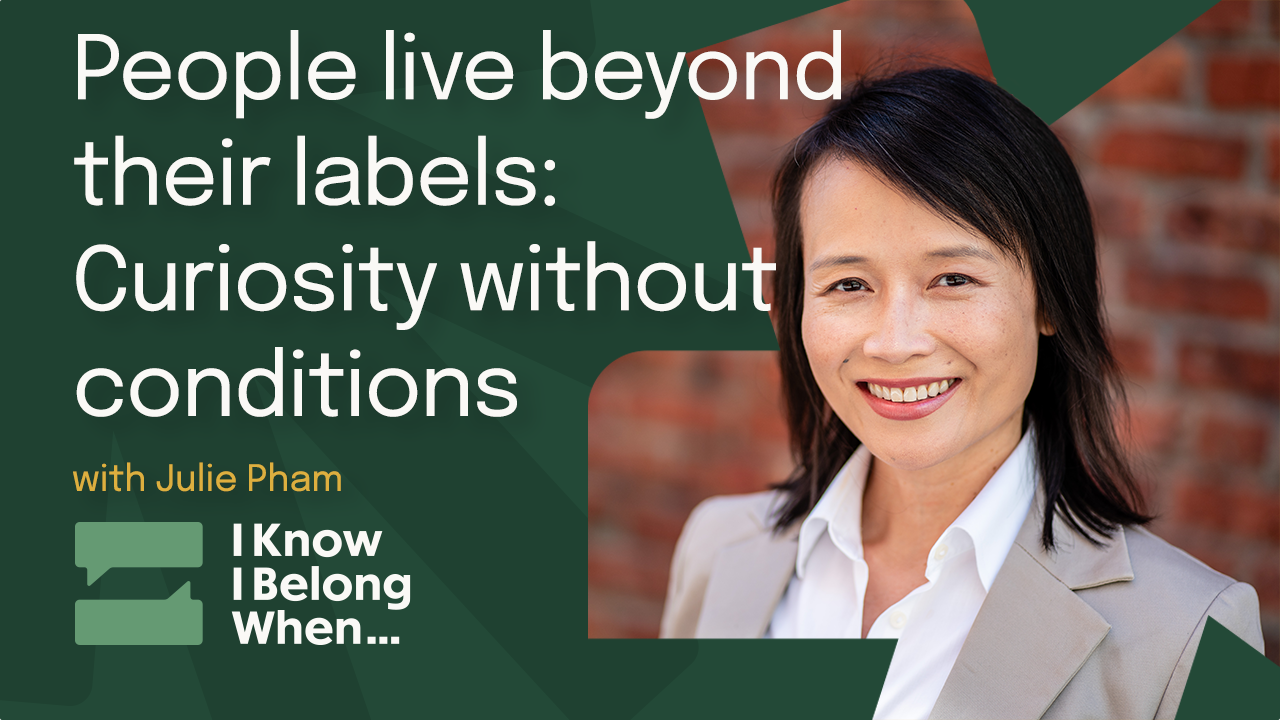
In this episode of the JDS Podcast, host Joshua Agbontaen sits down with CuriosityBased founder and CEO Dr. Julie Pham for a conversation spanning the 7 Forms of Respect® framework, cultural identity, community building, and what it means to think differently about inclusion and leadership.

Julie draws on her full range of experience — Vietnamese refugee, Cambridge-trained historian, community organizer, entrepreneur — to explore how the assumptions embedded in our backgrounds shape the way we show up at work. And why getting curious about those assumptions, rather than acting on them by default, is one of the most practical things a leader can do.

Key themes: The 7 Forms of Respect® · Cultural identity and communication · Curiosity as a leadership practice · Inclusion and collaboration · Community building · Career reinvention

#CuriosityAtWork #RespectAtWork #InclusiveLeadership #WorkplaceCulture #Belonging #CuriosityBased

Explore more podcasts featuring Dr. Julie Pham at https://curiositybased.com/press/

Control or Be Controlled

Julie Pham on Control or Be Controlled podcast: Rethinking Respect, Curiosity, and Assumption

What assumptions are shaping how you lead — without you realizing it?

In this episode of Control or Be Controlled podcast with host Darlington Ogbuka, Julie  explores that question from multiple angles: the 7 Forms of Respect framework, the intercultural experiences that shaped it, and the unconventional path — refugee childhood, Cambridge doctorate, Vietnamese community newspaper, nonprofit leadership — that gave her a different lens on what curiosity actually looks like in practice.

Julie and host Darlington dig into navigating workplace conflict, rethinking diversity and inclusion, making career pivots, and why asking better questions might be the most underrated leadership competency of our time.

Key themes: The 7 Forms of Respect · Cultural assumptions in the workplace · Curiosity as a leadership practice · The Vietnam War’s South Vietnamese perspective · Career reinvention · Communication and conflict

#CuriosityAtWork #RespectAtWork #InclusiveLeadership #WorkplaceCulture #Belonging #CuriosityBased

Explore more podcasts featuring Dr. Julie Pham at https://curiositybased.com/press/

Infinite Dialogs with Oti Jay

In this episode of Infinite Dialogues with Oti Jay, CuriosityBased founder and CEO Dr. Julie Pham joins host Oti Jay for a wide-ranging conversation on respect, identity, culture, curiosity, leadership, and human connection.

At the center of it: the idea that respect isn’t a universal value we all share — it’s a personal and cultural one, shaped by family, upbringing, and lived experience. Understanding that distinction is the foundation of the 7 Forms of Respect framework, and Julie traces it back to her own story of growing up between Vietnamese and American cultures.

The conversation explores what it looks like to lead, communicate, and build relationships across those differences — and why replacing judgment with curiosity is where that work begins.

Key themes: The 7 Forms of Respect · Cultural identity and communication · Curiosity as a leadership practice · Bicultural experience · Human connection in the workplace

Explore more podcasts featuring Dr. Julie Pham at https://curiositybased.com/press/

#35: Curiosity in Hunger Relief with Lianna Olds

#35: Curiosity in Hunger Relief with Lianna Olds

What does curiosity look like in hunger relief?

In Episode 35 of the Curiosity at Work podcast, Dr. Julie Pham speaks with Lianna Olds, Deputy Director of Emergency Food Network, about curiosity in nonprofit leadership and food access.

Food is often described as a unifying topic. Yet behind every meal distributed are complex systems, data decisions, fundraising relationships, and advocacy efforts.

In this episode, they explore:

• Why curiosity is essential for nonprofit leadership
• How data tells stories about community needs
• Moving fundraising beyond transactional relationships
• Navigating advocacy across diverse perspectives
• The role of feedback and trust in effective communication
• How parenting and practicing stillness shape personal growth

One line that stayed with us: “Food is a unifying topic.”

Curiosity helps leaders look beyond numbers to understand the human stories underneath. It builds trust. It strengthens advocacy. It deepens service.

Hunger relief work requires operational excellence. It also requires empathy, interpretation, and the willingness to ask better questions.

More Curiosity at Work episodes at: https://curiositybased.com/category/curiosity-at-work-podcast/

#CuriosityAtWork #CuriosityBased #NonprofitLeadership #FoodAccess #HungerRelief #CommunityLeadership #Advocacy #DataDrivenLeadership #CommunityEngagement #OrganizationalCulture #PracticeCuriosity #TacomaNonprofits

What we want vs. what the world wants for us

During times when so much feels out of our control, reminding ourselves what we can

control is more important than ever. That’s why I really appreciate Aiko Bethea’s new book on self-leadership, Anchored, Aligned, Accountable: A Framework for Transcending Bullsh*t and Transforming Our Lives and Work. It’s packed with self-reflection frameworks to help us stay accountable to ourselves. 

My favorite exercise in the book is called, “Knowing Who We Want to Be … and Realizing Who the Rest of the World Wants Us to Be.” 


In this exercise, Bethea poses these prompts for you to answer based on what you know:
– What I want to be
– Who my family wants me to be
– Who my work wants me to be
– Who the world wants me to be


Try answering these prompts for yourself. This is how I answered the initial set of prompts:
– I want my writing and thinking to have global impact.
– My brothers want me to be happy in whatever I pursue. My mother wants me to be financially successful.
– My co-workers want to lead our company to great success.
– The world wants me to embody the American dream and immigrant success story.


While others in my life may have different aspirations for me, they are generally aligned with my aspirations for myself.


Others may not be so lucky to have aligned aspirations, and may struggle to find their way as a result. This framework may help you recognize when there’s a big gap between what you want for yourself and what others want for you. The differences in expectations might be particularly difficult to bridge if you are a people pleaser. Bethea pointed out that, “we can wind up not showing up as our aspirational selves…when we don’t articulate clearly who we want to be – especially in contrast with the rest of the world’s expectations of who we should be.”


If you know someone who is trying to figure out what they want out of life, share this framework and Bethea’s book with them.


Best,

Check out more CuriosityBased newsletters
Adapting our spaces as we evolve

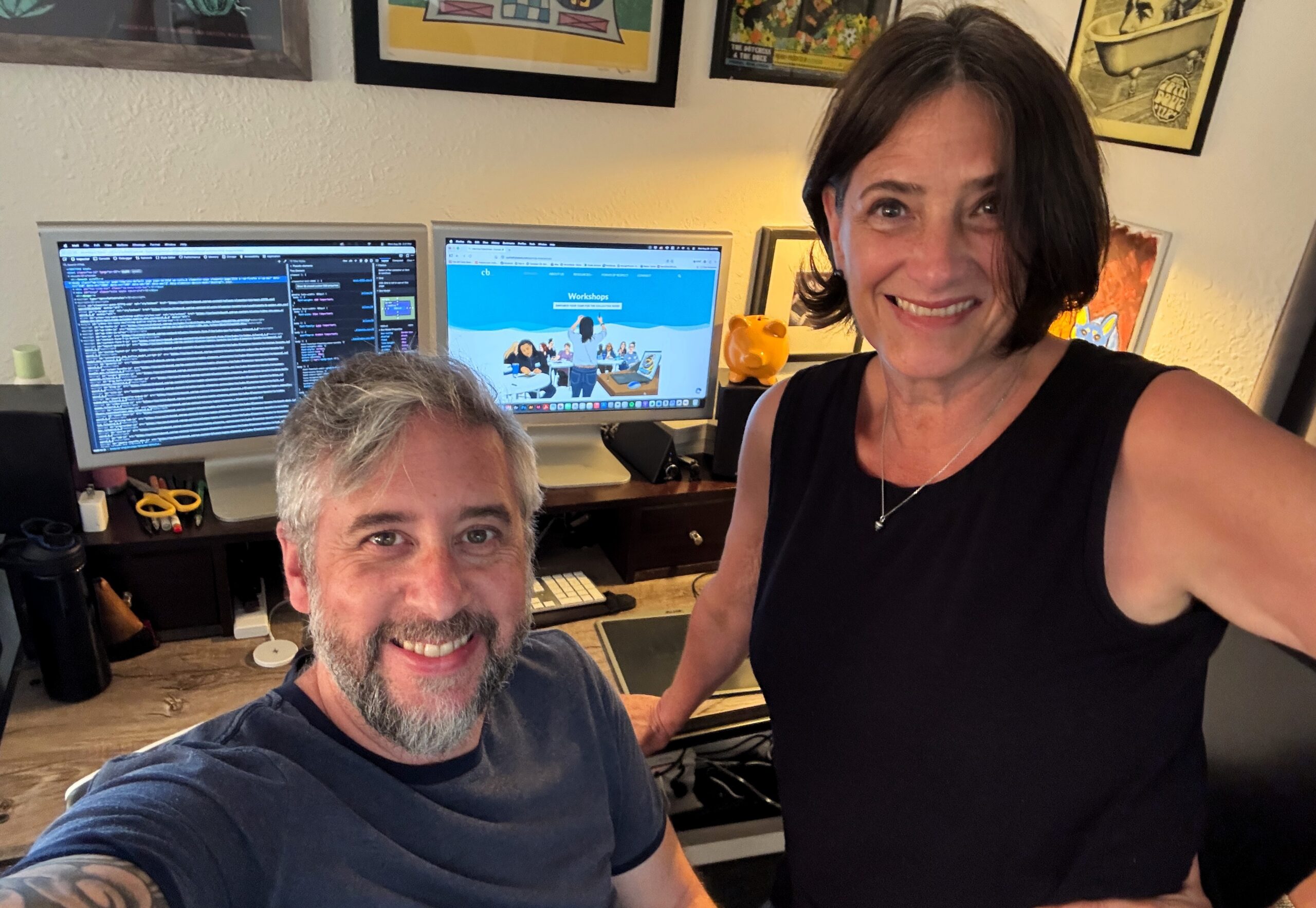
Hello CB newsletter subscribers. I’m Maia Segura, marketing manager at CuriosityBased. Julie invited me to write this week’s newsletter to share the behind-the-scenes thinking for our recently updated website

It’s inevitable that as we grow and change, the spaces that we occupy can feel like they don’t quite fit us any more. When that happens, it’s worthwhile to reevaluate and update these spaces, especially if other people see them, too.


In addition to my work at CuriosityBased, my husband Daimian and I own and operate Creative Catalyst Communications where we spend a lot of time thinking about how organizations use spaces to communicate – including how they express themselves online. 


CuriosityBased went through its last website update in 2023, prior to me joining the team. Over my past two years with the company, I’ve had a front seat to its evolution. The business has grown, offerings have evolved, the team has changed. And the stories we can tell about our work have gotten richer. With this in mind, Daimian and I took a fresh look at how these changes were fitting into the existing web space. It was clear that it was time to tidy up and make room for what’s new. We got to work at the end of 2025 and launched the new site in July.


Reevaluation requires a lot of curiosity. For this project, our driving question was: How can this website represent the CuriosityBased brand today in the most honest and efficient way possible? 


Our approach to updating the CB website could be compared to the decisions you would consider when renovating a physical space, like remodeling your home. As with a home renovation, some people think improving a website is about making it look nicer. While aesthetics are important, function comes first. 


Here are some questions we got curious about while we considered the website’s function:


How do we best convey who we are? 


Think about yourself and what you want to impress upon those who visit you, through things like the art you display or your choice of furnishings.


For this project, we wanted to take an approach that was more “show” than “tell.” We reviewed the existing text, updated our testimonials, and created case studies so website visitors can visualize our approach and hear straight from our clients what they think about our work. We also updated our bios to address the questions people had been asking us over the years – not just what we wanted to share.


How can technology help? 


Think about using new technology to make your space more functional and efficient.


Technology is constantly changing, but it’s important to make sure that we use the right technology to do the right job. Daimian deployed major web development updates to make the website faster so we don’t lose people while they are waiting for the site or content to load. We also added an intentional layer of current best practices for search engine optimization (SEO) to make it easier to find us online.  


What can be re-organized? 


Think about moving items around to ensure you can easily access what you use most frequently.


We reorganized the existing content on the website so that it would be easier for visitors to find. We’re proud of the free resources we provide on our site focusing on the practice of curiosity and promoting other thought leaders, but these resources could be difficult to locate. We’ve now taken our extremely popular leadership book lists and highlighted the most current list on our homepage, while curating all of the lists together on their own page. Also, when we started the Curiosity at Work podcast in 2024 (be sure to check this out! It’s so good!), it was buried under the catch-all “blog” category. Now it is its own item under the “Resources” dropdown menu. 


What can be consolidated? 


Think about what tools and supplies can be consolidated in your home. 


We decided to make the website the hub for all public-facing CuriosityBased content. To reduce brand confusion, we decided to create a dedicated page for the 7 Forms of Respect®  and retire the former stand-alone site. We brought in other content that was created over the years, but only living on our YouTube channel or in the newsletter. In fact, we’ve made a home on our site for this very newsletter, and all of our weekly newsletters, instead of sending folks to MailChimp. 


Please, check out the new CuriosityBased website and let us know what you think.
And, let me know if you know anyone who has a website that could use an update. Daimian and I are happy to provide a fresh perspective. 

Best,

Check out more CuriosityBased newsletters