Years ago, I was having a problem moving past conflict with a colleague, “Ed.” I asked Ed to do something that he felt was unreasonable, but seemed completely reasonable to me. When I tried to discuss this with him, Ed told me, “I’ve told all my friends about you and they’re mad at you.”
My first thought (which I did not express aloud), was: “What are you talking about? I’m not the bad guy here.”
Then I took in what Ed said. The truth was, I had been complaining about Ed to my friends, too. I realized it would make total sense that I’d be the villain in his story.
And if someone from the outside was witnessing us, they could probably see how we were both right and wrong. It’s all a matter of perspective, and from Ed’s perspective, I could appreciate why he thought I was unreasonable.
Look back at the stories in your life when you saw yourself as a hero and someone else as the villain. Now reverse that, and imagine yourself as the villain. How does the story change when you’re the villain?
Here are other examples of questioning who the villain might be in a relationship:
A narcissistic mother or ungrateful daughter?
The spouse who is selfish or the spouse who plays martyr?
Controlling boss or careless employee?
I’d love to hear from you. Please forward this message to anyone who has a lot of people in their life that they see as villains.
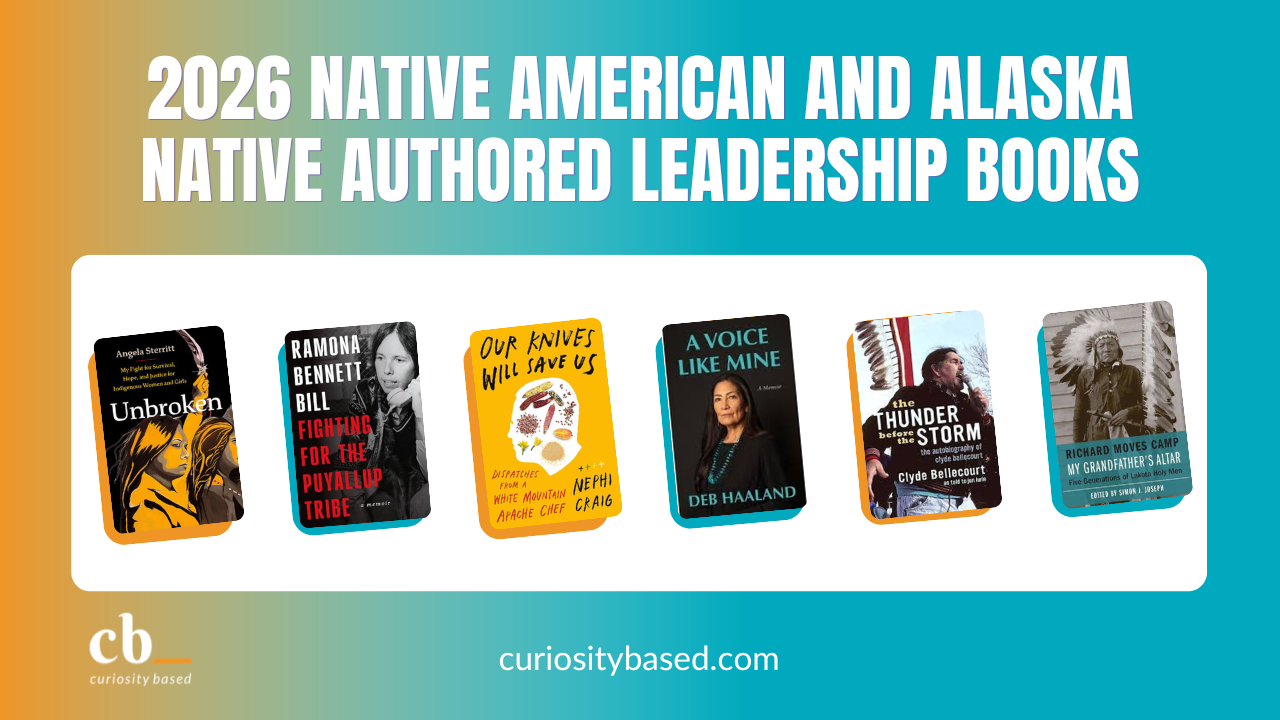
2026 Native American & Alaska Native Authored Leadership Books
In honor of Alaska Native & Native American Month, we’ve updated our 2026 Native American & Alaska Native Authored Leadership Book List to include 166 titles. This list is meant to be a resource, not an official endorsement. The books are not ranked or listed in any particular order.
#Not Your Princess: Voices of Native American Women — Lisa Charleyboy & Mary Beth Leatherdale (editors)
A History of my Brief Body — Billy-Ray Belcourt
A Mind Spread Out on the Ground — Alicia Elliott
A Steady Brightness of Being: Truths, Wisdom, and Love from Celebrated Indigenous Voices — Sara Sinclair & Stephanie Sinclair
A Voice Like Mine: A Memoir — Deb Haaland (Laguna Pueblo)
A Yupiaq Worldview: a Pathway to Ecology and Spirit — Angayuqaq Kawagley
Abandon Me: Memoirs — Melissa Febos
American Indian Stories — Zitkala-Sa
An Indian Among Los Indígenas: A Native Travel Memoir — Ursula Pike
An Ojibwe Home in the City: White Earth Women and Community Organizing in Minneapolis — Sasha Maria Suarez
As Long As Grass Grows: The Indigenous Fight for Environmental Justice — Dina Gilio-Whitaker
As We Have Always Done: Indigenous Freedom Through Radical Resistance — Laeanne Betasamosake Simpson
Bad Girl and the Man who Followed the Sun — Velma Wallis
Bad Indians: A Tribal Memoir — Deborah Miranda
Bead on an Anthill: A Lakota Childhood — Delphine Red Shirt
Bear Island: The War at Sugar Point — Gerald Vizenor
Becoming Kin: An Indigenous Call to Unforgetting the Past — Patty Krawec
Birding While Indian: A Mixed-Blood Memoir — Thomas C. Gannon
Bitterroot: A Salish Memoir of Transracial Adoption — Susan Devan Harness
Black and Blue: A Memoir of Racism and Resilience — Veronica Gorrie
Black Elk Speaks — Black Elk
Black Indian: A memoir — Shonda Buchanan
Blonde Indian: an Alaska Native Memoir — Ernestine Hayes
Bone Dance — Wendy Rose
Books and Islands in Ojibwe Country: Traveling Through the Land of My Ancestors — Louise Erdrich
Braiding Sweetgrass — Robin Wall Kimmerer
Bury My Heart at Chuck E. Cheese’s — Tiffany Midge
Call Me Indian: From the Trauma of Residential School to Becoming the Nhl’s First Treaty Indigenous Player — Fred Sasakamoose
Carry: A Memoir of Survival on Stolen Land — Toni Jensen
Code Talker — Chester Nez
Cold River Spirits — Jan Harper-Haines
Cormorant Hunter’s Wife — Joan Naviyuk Kane
Crazy Brave: A Memoir — Joy Harjo
Critically Sovereign — Joanne Barker
Custer Died for Your Sins: An Indian manifesto — Vine deLoria, Jr.
Decolonizing Pathways towards Integrative Healing in Social Work — Kris Clarke and Michael Yellow Bird
Dog Flowers: A Memoir — Danielle Geller
Dwellings: A Spiritual History of the Living World — Linda Hogan
Everything You Know About Indians is Wrong — Paul Chaat Smith
Everything You Wanted to Know about Indians But Were Afraid to Ask — Anton Treuer
Fifty Miles from Tomorrow: A Memoir of Alaska and the Real People — William Iggiagruk Hensley
Fighting for the Puyallup Tribe — Ramona Bennett
Firsting and Lasting — Jean O’Brien
For Indigenous Eyes Only: A Decolonization Handbook — Waziyatawin and Michael Yellow Bird
Fresh Banana Leaves — Linda Black Elk
Gathering Moss: A Natural and Cultural History of Mosses — Robin Wall Kimmerer
Gichigami Hearts: Stories and Histories from Misaabekong — Linda LeGarde Grover
Girl Warrior: On Coming of Age — Joy Harjo
Girlhood — Melissa Febos
God is Red: A Native View of Religion — Vine deLoria, Jr.
Heart Berries — Terese Marie Mailhot
Hungry Listening — Dylan Robinson
I Love You So Many: A Native Memoir of Adventure, Culture, and Family — Terria Smith
In My Own Moccasins: A Memoir of Resilience — Helen Knott
Indian Stories: Ahtna Indian Stories from Cantwell, Alaska — Jake Tansy
Indigenous Memory, Urban Reality — Michelle R. Jacobs
Keewaydinoquay: Stories from My Youth — Keewaydinoquay
Know We Are Here: Voices of Native California Resistance — Terria Smith
Lakota Woman — Mary Brave Bird
Life Among the Piutes: Their Wrongs and Claims — Sarah Winnemucca
Life of Black Hawk, or Ma-ka-tai-me-she-kia-kiak — Black Hawk
Like a Loaded Weapon — Robert A. Williams Jr.
Making a Difference: My Fight for Native Rights and Social Justice — Ada Deer
Making Love with the Land — Joshua Whitehead
Mamaskatch: A Cree Coming of Age — Darrel McLeod
Mankiller: A Chief and Her People — Wilma Mankiller
Mark My Words: Native Women Mapping Our Nations — Mishuana Goeman
Men We Reaped: A Memoir — Jesmyn Ward
Mourning dove — mourning dove
Muscogee Daughter: My sojourn to the Miss America Pageant — Susan Supernaw
My Grandfather’s Altar: Five Generations of Lakota Holy Men — Richard Moves Camp
Native American DNA — Kim TallBear
Native American Entrepreneurs — Ron P. Sheffield & J. Mark Munoz
Native Writers: Voices of Power — Kim Sigafus & Lyle Ernst
Native: Identity, Belonging, and Rediscovering God — Kaitlin B. Curtice
Navajo Courts and Navajo Common Law — Raymond D. Austin
New Poets of Native Nations — Heidi Erdrich
Night Flying Woman: An Ojibway Narrative — Ignatia Broker
Nooping: The Cure for White Ladies — Leanne Betasamosake Simpson
Notable Native People: 50 Indigenous Leaders, Dreamers, and Changemakers from Past and Present — Adrienne Keene
Nulato: An Indian Life on the Yukon — Poldine Carlo
Our History Is the Future — Nick Estes
Our Knives Will Save Us: Dispatches from a White Mountain Apache Chef — Nephi Craig
People of Kauwerak: Legends of the Northern Eskimo — William A. Oquilluk
Peyakow: Reclaiming Cree Dignity — Darrel McLeod
Pipestone: My Life in an Indian Boarding School — Adam Fortunate Eagle
Plums or Nuts: Ojibwe Stories of Anishinaabe Humor — Larry Amik Smallwood & Michael Migizi Sullivan Sr
Poet Warrior: A Memoir — Joy Harjo
Pollution is Colonialism — Max Liboiron
Portage Lake: Memories of an Ojibwe Childhood — Maude Kegg
Prison Writings: My life is my Sun Dance — Leonard Peltier
Project 562: Changing the Way We See Native America — Matika Wilbur
Qanruyuteput iinruugut: our teachings are medicine — Alice Rearden
Qulirat Qanemcit-Ilu Kinguvarcimalriit: Stories for Future Generations — Paul John
Raising Ourselves — Velma Wallis
Recovering the Sacred: The power of naming and claiming — Winona LaDuke
Red Nation Rising — Nick Estes, et al.
Red Paint: The Ancestral Autobiography of a Coast Salish Punk — Sasha Lapointe
Red Skin, White Masks: Rejecting the Colonial Politics of Recognition — Glen Sean Coulthard
Redbone: The True Story of a Native American Rock Band — Christian Staebler and Sonia Paoloni
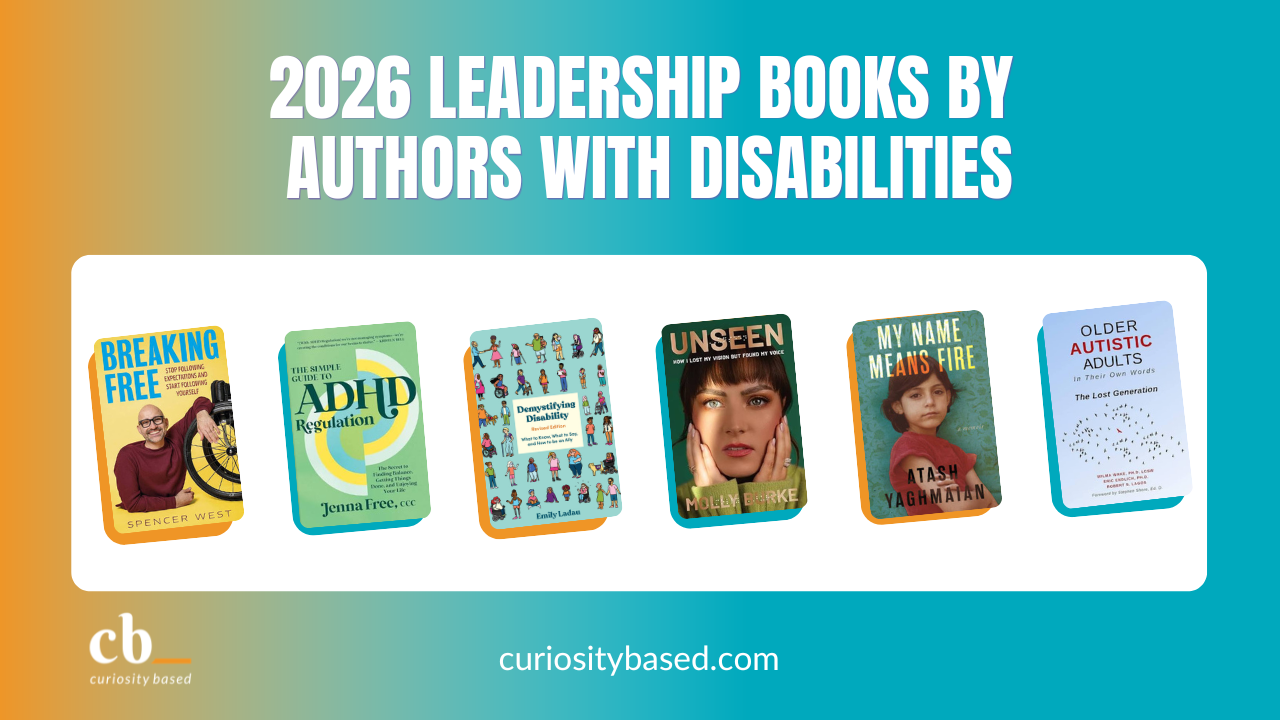
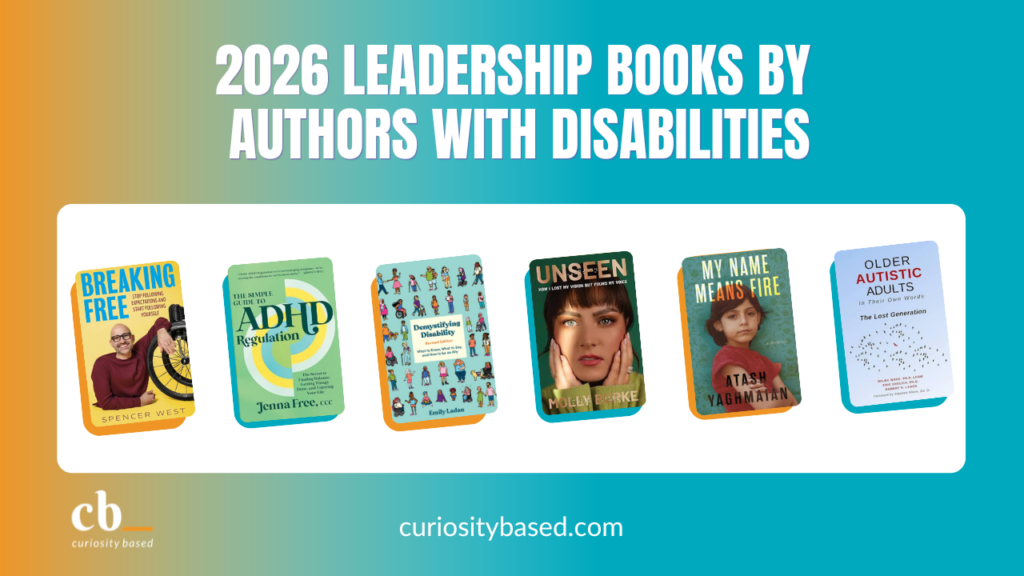
October 20, 2026: “Unseen” and 143 other books by authors with disabilities
Image caption: Julie at the airport preparing bundles of rubber bands to illustrate the Rubber Band Rule for a keynote talk.
In honor of National Disability Employment Awareness Month, we updated our leadership book list and it now have 144 books, including memoirs, written by people who identify as having disabilities.
At age 4, Burke was diagnosed with Retinitis Pigmentosa (RP), a condition that causes slow, progressive vision loss. Growing up, Burke was the cute poster child for a charity that conducted research for curing RP. She described herself as promoting “cure culture,” which aspires to fix people instead of celebrating them the way they are. By age 14, she realized that there was no cure for her and fell into despair. As an adult, she realized:
I was deeply entrenched in the medical model of disability…. It suggests that people with disabilities are broken, and that science and medicine can fix us. They want to heal us, to change us, so that we can fit into society better…. I now follow the social model. I no longer think that I am broken or not enough because of my blindness…My vision loss simply means I perceive the world differently from someone with 20/20 vision.
Burke’s evolution of thinking of herself as someone needing to be cured, versus someone who is blind, made me ask this question: What is something I’ve been thinking I want to fix because it’s different from what is considered “normal”?
My closest experience was in my teens and early 20s when I desperately wanted to be taller. I used to wear 4 inch platform heels, which made me 5’4”. While many people wear high heels because they like the look, I mostly wanted the height. High heels for me were a temporary fix, rather than the cure that I didn’t really need.
What is something you used to do, or perhaps still do, to “fix” or “cure” something about yourself to make you feel “normal”?
You can check out Burke’s memoir and other leadership books by authors with disabilities on our updated list from CuriosityBased. Huge thanks to Dr. Robin Nussbaum of We Do HR Solutions and Vanessa Laughlin of Banister Advisors for recommending many new titles to this list.
If you find this list valuable, please share it and spread the word. We put a lot of effort into these lists, and want the authors to get the recognition they deserve!
Here’s a sample message you can use when sharing this book list with your network:
Want to read leadership narratives written by Americans with disabilities? Check this out! (https://tinyurl.com/2026DisabilitiesBooks). #diverseleadershipauthors #DisabilityAwareness #NDEAM (National Disability Employment Awareness Month) #DisabilityPride #InclusionMatters #DisabilityRights #AccessibilityForAll #InclusionRevolution #DisabilityAdvocacy #DisabilityInclusion #BreakingBarriers #AccessIsLove
You can check out our other leadership book lists by those who identify as Hispanic/Latinx/Latino, Black, LGBTQIA+, AANHPI, Native American, and women.
Also, please send me any other recommendations you have for this list or any of our other lists.
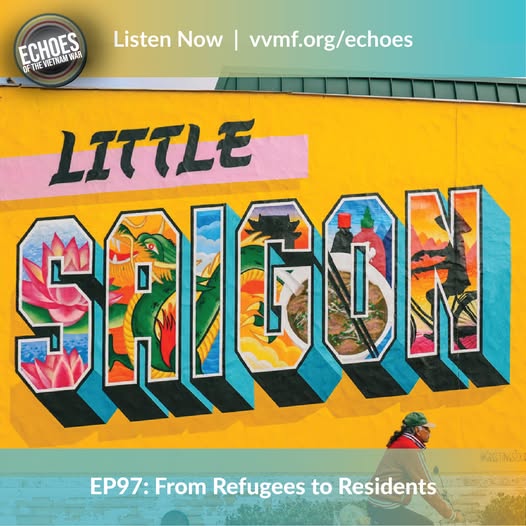
From Refugee Roots to Community Leadership | Dr. Julie Pham Featured onEchoes of the Vietnam War
In this episode of Echoes of the Vietnam War, host Michael Cone dives into the powerful story behind Little Saigon’s rise in Southern California and the Vietnamese immigration experience.
Dr. Julie Pham’s family’s early journey as Vietnamese refugees brought them initially to Florida, but Dr. Julie shares how initial help from Seattle’s Vietnamese community shaped their path. “My parents remember how welcoming the Vietnamese community was in Seattle…they brought food—and energy—that made life really good.” When Florida didn’t feel like home, it was the pull of Seattle, its cultural ties, and a deep sense of belonging that still stands today that brought them back
Growing up as the daughter of founders of the first private Vietnamese‑language newspaper in the Pacific Northwest, Julie witnessed firsthand the difference that community pride and visibility make. She reflects on her own identity journey noting that her parents reinforced in her that, “being a refugee is something to be proud of.” That belief guided her toward studying history in college, and ultimately toward turning curiosity into action.
What stands out for us at CuriosityBased:
Community Matters: Connection shaped Julie’s sense of self and purpose.
Cultural Identity as Power: Embracing heritage opened doors—to history, belonging, and impact.
Curiosity in Action: From family roots to leading a movement for respectful questioning, Julie exemplifies how we can transform curiosity into collective resilience.
Why this matters In today’s culturally diverse workplaces, curiosity isn’t just a soft skill, it’s a superpower. When we open up to learn and to understand and belong, we build bridges across cultures, generations, and even industries. Julie’s journey is a real-world case study in making that shift from individual identity to shared impact.
Tune in to hear Dr. Julie’s story and how curiosity helped build one of America’s most vibrant diasporas:
Curiosity and Respect in the Workplace — Julie Pham on theA Beautiful WorldPodcast
What does it mean to practice curiosity — not as a personality trait, but as an intentional daily discipline? And how does respect show up differently depending on who’s in the room? CuriosityBased founder Dr. Julie Pham joined the A Beautiful World podcast to explore these questions and more.
In the conversation, Julie shares the thinking behind the 7 Forms of Respect® framework, what it means to treat curiosity as a practice, and how her journey — from Vietnam to Seattle to the TEDx stage — shaped her approach to communication and relationships at work.
Whether you’re new to CuriosityBased or have been following Julie’s work for years, this episode is a great entry point into the ideas that drive everything we do.
We, at CuriosityBased, had our annual team retreat last month. For our team-building activity, we wanted to do something low-key yet physical. In the past, we’ve done escape rooms, a cooking contest, a scavenger hunt. In contrast, this year, we walked extra slowly for two miles along a path familiar to all of us at varying degrees – Alki Beach in Seattle.
Maia lived at Alki Beach from the beach in the mid 1990s, and the rest of us have visited there countless times. Maia pointed out the things that changed and what hadn’t, like the “Flowers Houses” nestled between two new condo buildings, famous for being decorated by brightly colored potted flowers.
The walk turned out to be a 75 min exercise in noticing things we would normally miss in our haste, or because we’re distracted by our devices. We each pointed out things that were interesting to us – “Look at that house over there!” and, “Check out that tree!” and, “That’s an interesting…”
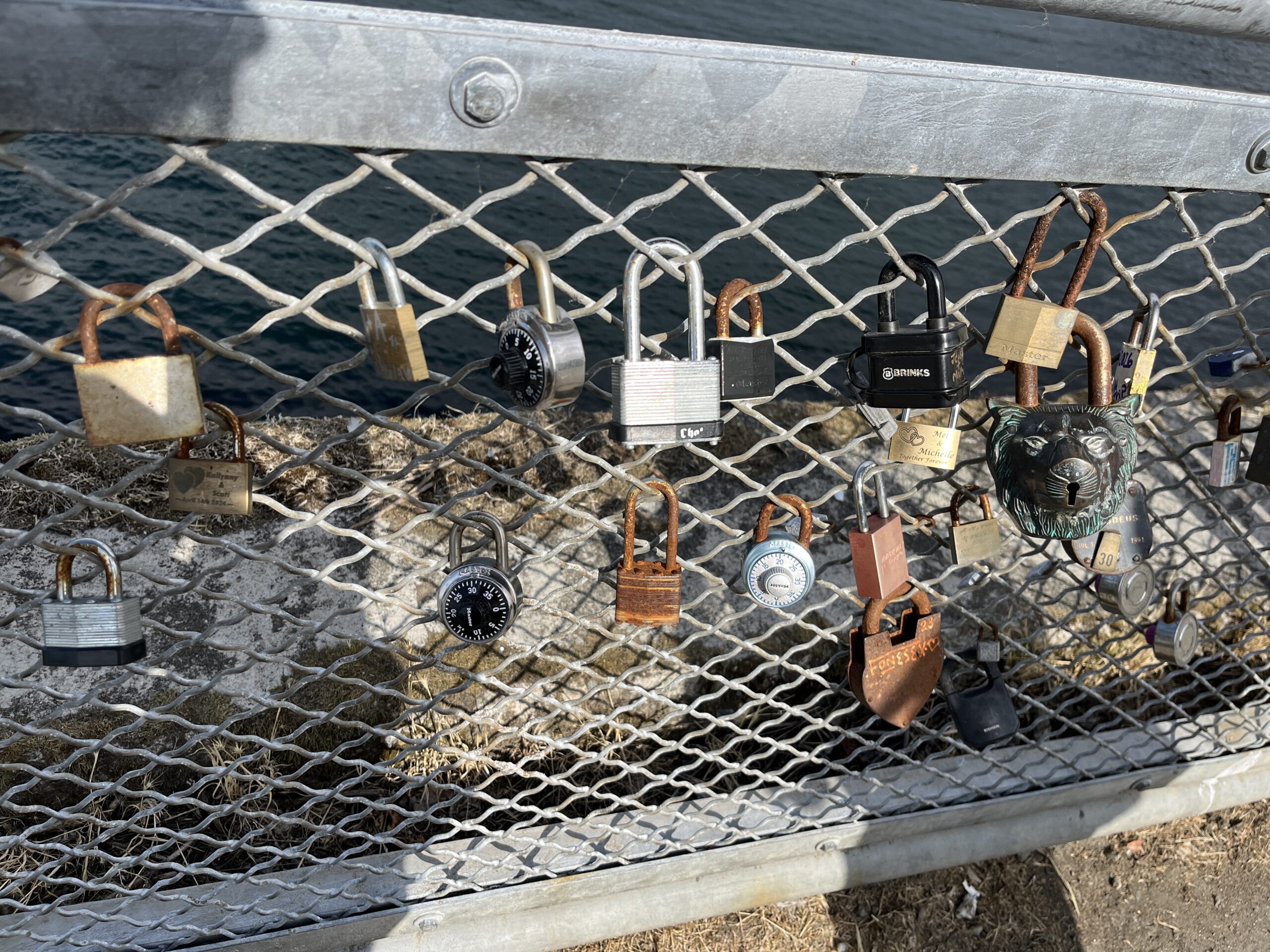
For the first time, I slowed down enough to register the significance of what is referred to as “the love locket fence,” where couples lock padlocks engraved with their initials to a fence and throw the key into the sea, symbolizing their forever love. I noticed how many padlocks there were, some even had special designs.
Noticing what is around us requires intentionally making just a little more time than usual for curiosity and wonder.
As you prepare to finish out the year, please try to set aside some time to slow down and notice your surroundings.
For many organizations, it means starting to plan for next year. But, before you can think ahead, whether it’s for your work or personal life, it can be very helpful to reflect on the goals you set for yourself last year.
It sounds simple. But, because focusing on what’s new is so much more exciting, many of our organizational clients resist this important step. Also, looking at the past can mean admitting we didn’t fulfill our intentions.
Last month, the CuriosityBased team held our annual two-day planning retreat. Because we took the time to review our original goals for the current year, we were able to celebrate how many things we tried wholeheartedly, but decided to stop doing for one reason or another. We also realized that there were a few projects that we never got to.
When we work with our clients, we often document their sessions and are able to pull up their old records to remind them of the commitments they had forgotten after just six or twelve months.
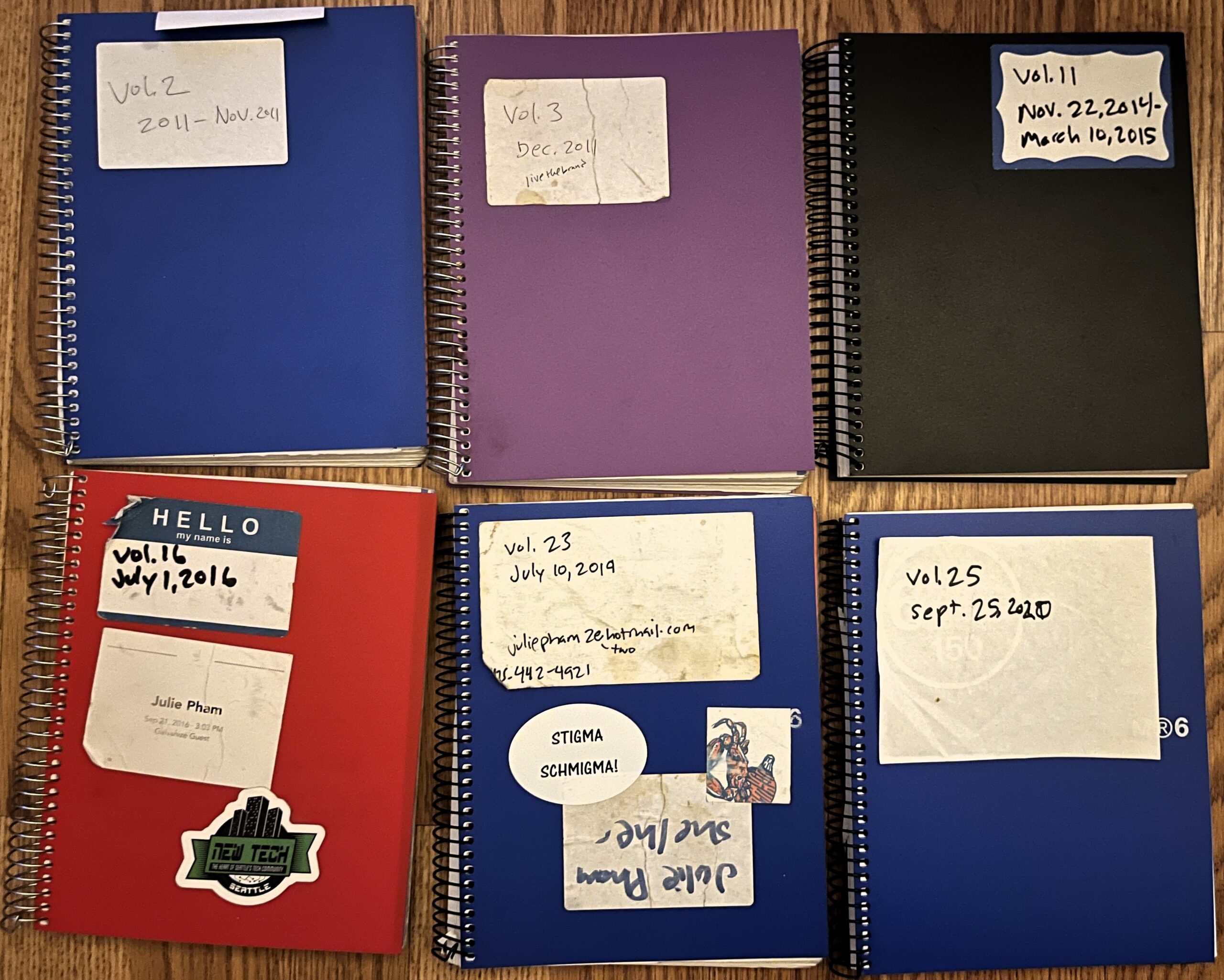
For the rest of us, the personal, non-work version of this reflection might be reading your journals. If you have nothing written anywhere, try asking someone close to you, “Do you remember what I said was important to me last year?”
Let me know what you discover when you revisit the past.