banner

Secret to reducing awkwardness at parties

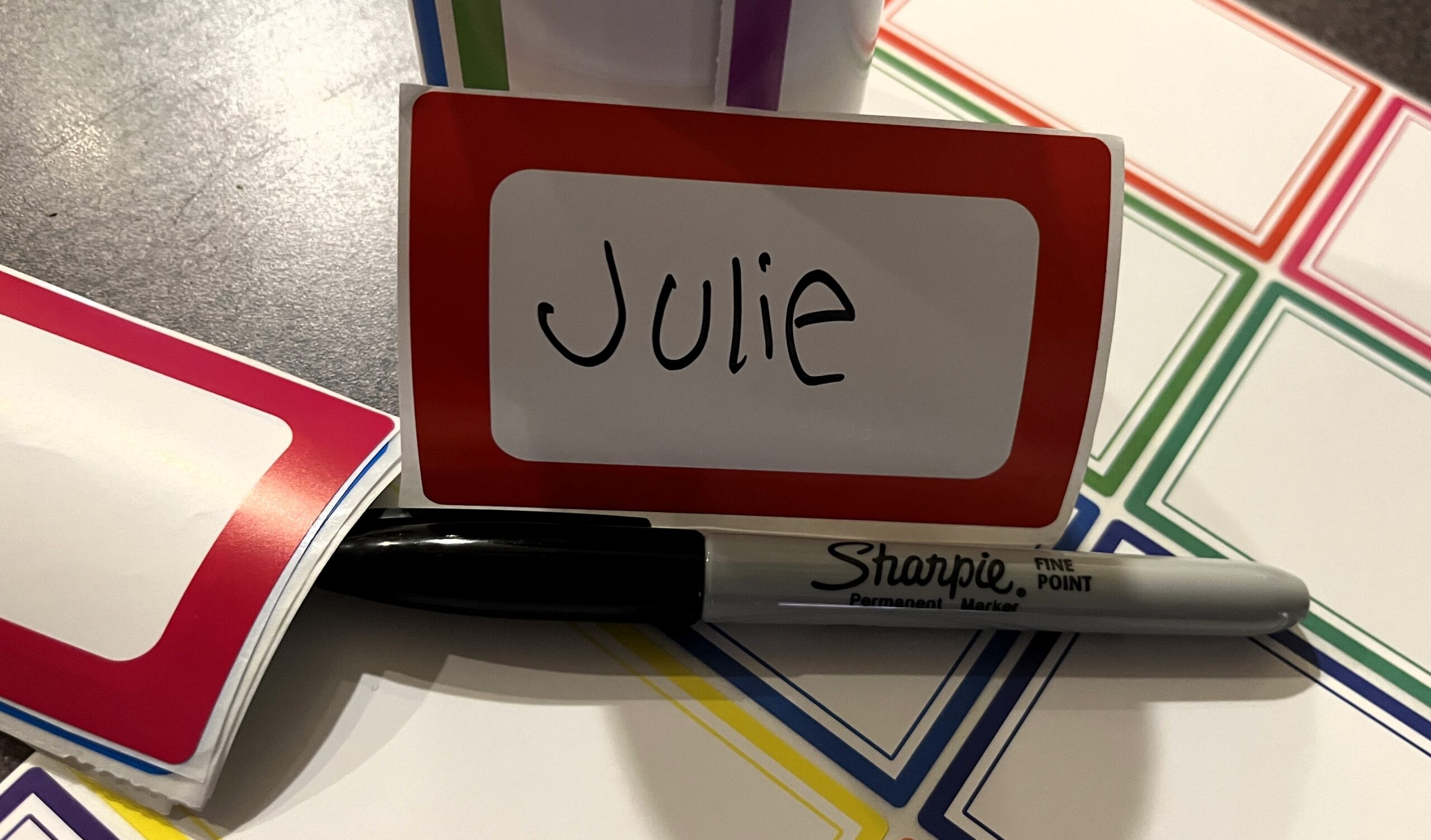
ulie’s stock of sticker name tags and trusty Sharpie pen.

Summer means outdoor gatherings, sometimes with many people who don’t know each other. Whether you’re hosting or attending such a party, I have a tool to reduce awkwardness among guests: name tags. 

I first learned this from organizing formal networking events where name tags are essential to helping people keep track of everyone they meet. I also use them in my workshops for my clients. I bring tags so I can address participants by their name.

While some people like printed out name tags with pins or magnetic backings, I prefer the simple blank sticker so people can hand write their own name (and whatever other details they want to share). Sticker tags adhere to any surface. They’re also inexpensive and easy. As a  result, I always have blank sticker name tags and Sharpie pens on hand.

After seeing the benefits of name tags for work events, I started providing them for my personal social gatherings and my guests really appreciate them.  

While some think name tags feel “too formal,”  I consider them to be an accessibility aid to support those who have less than perfect memory or hearing. For those with difficult to pronounce names, they can even write the phonetic version of their name.

I even bring my own name tag to social gatherings with unfamiliar groups. The most common response when other guests see my name tag is, “Hey, where are the name tags?” Then I tell them I brought my own. If my partner accompanies me as my guest, I bring one for him, too. To help others place him, he usually writes underneath his name, “I’m with Julie”. 

During some events, I’ve had distant acquaintances come up to me and call me by my name.  I’m sure they wouldn’t have been confident in remembering who I am if not for my name tag. One person I met at a mutual friend’s birthday party found me on LinkedIn afterwards and messaged me to say, “I’ve been telling people about your name tag.” 

This past summer, I’ve been invited to birthday parties where I don’t know many of the other guests. I started offering to the host to bring blank sticker name tags for the other guests. The hosts love it because it makes it easier for guests to introduce themselves to each other, lightening the host’s load.  

Social gatherings with strangers can be awkward. Name tags are my trick. What tips do you have to make socializing easier? 

Please consider sharing this email with anyone you know who wants to make socializing easier for themselves or for their guests. 

Best, 

Check out more CuriosityBased newsletters

You don’t have to go far to explore

Image caption: The main street in downtown Tacoma, Pacific Ave, was nearly empty on a Saturday afternoon. The Washington State Historical Museum is on the left.

The word “vacation” often evokes images of exotic, or at least faraway, places. Last month, my partner and I decided to travel to a nearby regional city for our annual summer vacation. 

Even though Tacoma is only 35 miles south of where I live in Seattle, it feels quite different. I love its low-key, chill vibe. It has a quarter of Seattle’s population, half its density, and 70 percent of its median household income.

To experience local living, we rented an AirBnB in a residential neighborhood instead of staying downtown. We visited the city’s history and art museums, parks, and waterfront for the first time. Just as I would when I travel to places a lot farther away, I paid special attention to what looks different from home. 

  • There were a lot fewer people walking on the streets. 
  • I didn’t see any homeless encampments, open drug use, or black markets anywhere – not even downtown or near freeway entrances.
  • The cars people drove are generally much older, gasoline models, rather than electric powered vehicles.
  • There were more families with young children. 
  • There were fewer people of Asian heritage

Here are my two big takeaways: 1) I don’t have to travel far to experience cultural differences, and 2) what I notice says a lot about what I consider to be normal: busy streets; homelessness and open drug use; newer, electric vehicles (Seattle has the third most Tesla owners in the US); more dogs than young children; and a 20% Asian population. 

Practicing curiosity can make any destination feel more exotic. As summer winds down, you may consider “vacationing” nearby. If you do, please share what you notice and what it reveals about what you consider normal. I’d love to hear from you. 

Also, please consider sharing this email with anyone you know who is about to travel near or far. 

Best,

Check out more CuriosityBased newsletters
Acknowledging the bitter and sweet

Julie’s friend’s orange bloom bush is thriving once again after it was moved from a crowded garden and replanted in a more spacious location with more room to grow.

I recently reconnected with my friend, “Colleen,” and was so inspired with how she initiated a major life transition that I asked if I could share her story here.

Colleen spent most of her life building a family and running a business with her husband. Then, about eight years ago, they divorced and ended their business together. After employing sizable teams for years, she had to get a job at a small start-up that shut down shortly thereafter. She went to another company that also had massive layoffs, then another one. After each layoff, it became harder and harder to get the next job. For another 18 months, she tried to find employment with no success. As a woman in her early sixties, she suspected she was dealing with ageism in an expensive city dominated by young professionals. 

Colleen was withering. She was living on her dwindling savings. She began questioning her self-worth. Her kids were grown and didn’t seem to need her anymore, either. The continual rejection exhausted her. 

Earlier this spring, she realized she needed to change her environment, even though it meant leaving behind everything that she knew. So, Colleen rented out her little house, packed her car with a few belongings and moved to a small tourist town in another state where there were more people her age. If it didn’t work out there, she reasoned at least it was a change from stagnating where she was. It was the first time in her life she prioritized her own needs. 

Within a week in the new town, she found a part-time retail job and a one-bedroom apartment. 

Within two months, she secured a good job that made use of leadership experience.

When Colleen recounted her story, what surprised me was her lack of bitterness. “(Seattle) was good to me for a long time. I still love it,” she said. “But it’s not the place for me any more. I had to admit that and move on.” 

I am a big fan of finding the “lessons learned” from bad experiences. But, I realized that focusing on the bad may reduce these experiences to being useful only for what they teach us not to do. Colleen reminded me to acknowledge how many of those same experiences were also once sources of joy.

Honoring the good times doesn’t mean downplaying the bad times. We can accept that our experiences are made up of both “bitter” and “sweet” parts, hence the word “bittersweet.”

The way Colleen uprooted her life and started over in a new environment reminded me of a friend’s once healthy plant that got crowded out by other plants and became sick. Sometimes we also get crowded out and have to transplant ourselves to a place that gives us more space to grow. Many of us will find that we have to re-root ourselves in new environments, workplaces, relationships to continue to thrive. 

When have you had to “re-plant” yourself so that you could thrive again? Have you acknowledged both the bitter and sweet of the former experiences?

I’d love to hear what these reflections brought up for you.

Best,

What I learned by trying to dance like Michael Jackson

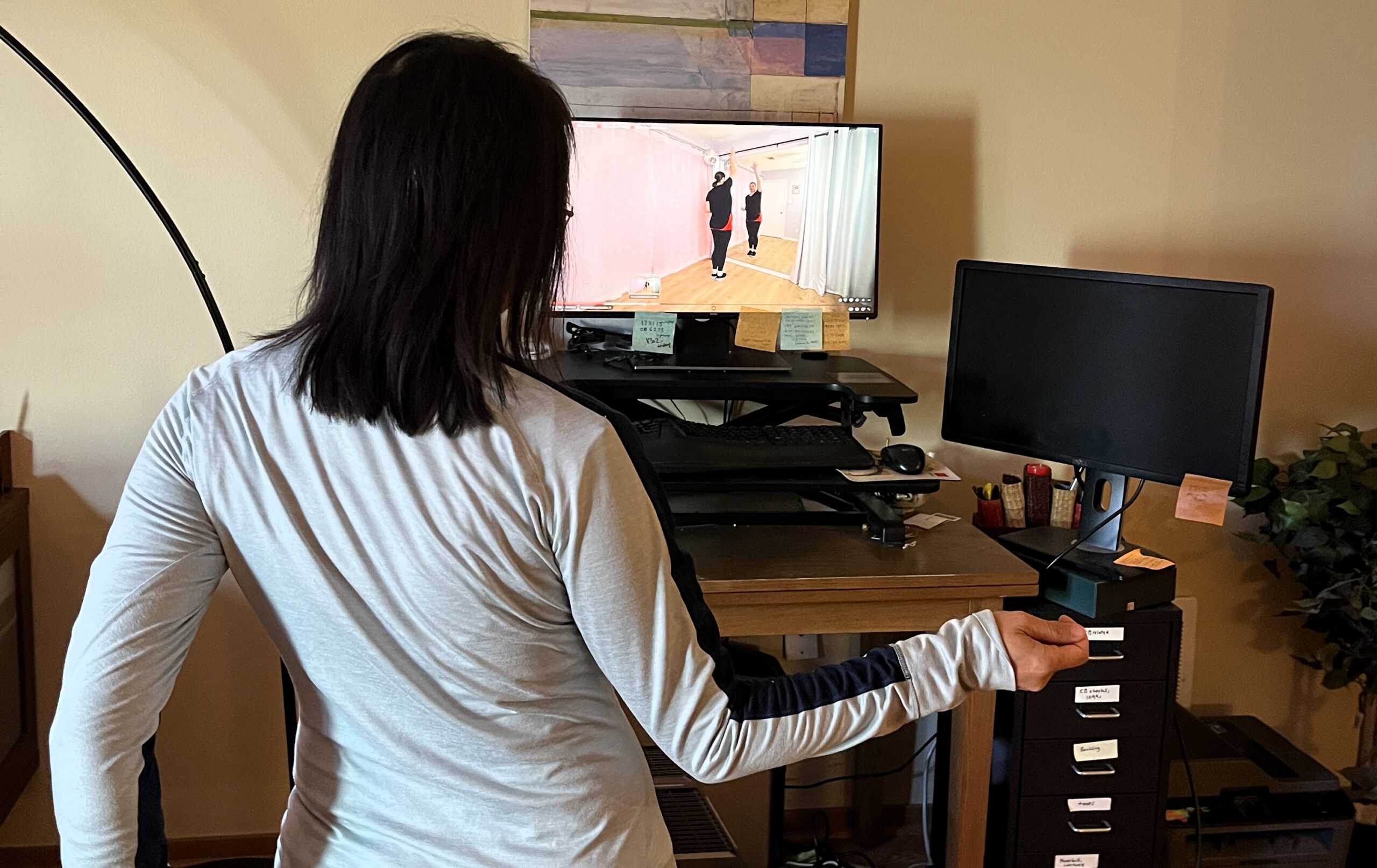
Julie following along to the video, “BEAT IT” Dance ❤️ Michael Jackson ❤️ Beginner Dance Tutorial ❤️ Step-by-Step Choreography.” The instructor has her back to the viewer.

Is there something you’ve been struggling to learn? Maybe you should look at how you’ve been learning it. I just realized this for myself. 

When the biopic of Michael Jackson came out, I went to see it three times. I was inspired by how the lead actor, Jaafar Jackson (Michael’s nephew), took two years to learn how to dance like Michael Jackson. So, I decided to look up tutorials on how to do some “MJ” moves myself.

I’ve always been a big fan of Michael Jackson’s music. Whenever Billie Jean plays at weddings, I’m the first person on the dance floor. What I lack in skills as a dancer, I make up for in enthusiasm. But, when I’ve taken group dance lessons as an adult, I’ve felt frustrated because I couldn’t keep up with the other adult learners. I figured that I must actually be uncoordinated. The movie inspired me to try again, and also to exercise different parts of my brain.

There are a lot of tutorials on how to mimic Michael Jackson’s moves on YouTube. With Carrie and her YouTube channel, Beginning Dance Tutorials, I was able to learn the basic steps of “Beat It” in a 20 min video. I couldn’t believe it. 

What changed? 

After comparing this video to others, I realized that Carrie, the instructor, had her back to me, which meant I was shadowing her as we danced in the same direction. In almost every other tutorial, the teacher is facing the camera, like in a mirror. It made me realize that my real life dance instructors also faced me. This observation gave me an epiphany. What I thought was my own lack of coordination was actually my brain’s inability to make the cognitive flip to translate the instructor’s moves to how I should move because we were facing opposite directions.

I imagine feeling like someone who is diagnosed with dyslexia that comes to understand why it’s hard for them to read in a standard way. Once I learned how I learn differently, I knew I was capable of mimicking moves as long as I shadowed from behind.

As someone who conducts training, it reminds me to try to approach teaching my concepts in a variety of different ways to accommodate different learning styles.

Have you ever had this experience of discovering you just needed a different teaching style? Or is there something with which you’ve been frustrated that you can’t learn? Maybe you just need to explore what is making it difficult for you to learn.

I’d love to hear from you. something because it feels like you risk rejection? If so, please tell me about it, or ask away. I’d love to hear from you. 

Best,

Asking for some help

In preparation for her next book, Julie is ordering many books through her local library, including Jane Friedman’s The Business of Being a Writer.

I’ve written and held workshops about asking for help. But, I realize I could be doing a better job of asking for help myself.

Since last fall, I’ve been focused on conducting research for my next book which will focus on respect in friendships. It’s one thing to write a book. It’s another thing to market and sell one.

While I’m proud that the sales from 7 Forms of Respect®  are in the top 10% of self-published books, I dream this next book will reach many more people. I want total strangers across the country to approach respect with curiosity in everyday conversations. I envision the book being on people’s shelves and coffee tables. I hope it will lead to opportunities to grow CuriosityBased’s business and brand. And sometimes that dream seems so elusive, I wonder if it will ever happen.

Everything we’ve achieved to sell and market the 7 Forms of Respect® thus far has been through word of mouth, earned media, and consistent content creation. I recognize that to get to the next level, I’m going to have to get an agent and a traditional publisher who can distribute my book widely.

Last month, I was sharing my desire for higher distribution with another writer friend. He tried to soothe me by saying, “As long as you’re trying your hardest.” His words made me realize, “I don’t think I am trying my hardest. I don’t actually think I’m doing the things that make me uncomfortable, that risk rejection. I could be asking for a lot more help.”

This is where you come in. I have to strengthen my “platform” to prove to potential agents there’s an existing market for my work on which they can build.  

So, I am asking you for help in three simple ways: 

  1. I want to grow newsletter subscribers by 20% by the end of summer. Could you please recommend to a few people to subscribe to this newsletter?
  2. If you read the book, 7 Forms of Respect®, please review it on GoodReads and/ or Amazon. We have 95 reviews across both platforms and I’d like to get to 200 by the end of the summer. 
  3. Follow us on LinkedIn and Facebook and like or share our content.

Phew. There, I did it. I asked you for help. 

Since that conversation with my friend, I’ve risked rejection daily by directly asking people if I can add them to my newsletter subscriber list. Fortunately, everyone has said, “Yes.”

Are you struggling to ask me for help with something because it feels like you risk rejection? If so, please tell me about it, or ask away. I’d love to hear from you. 

Best,

Who taught you how to be a friend?

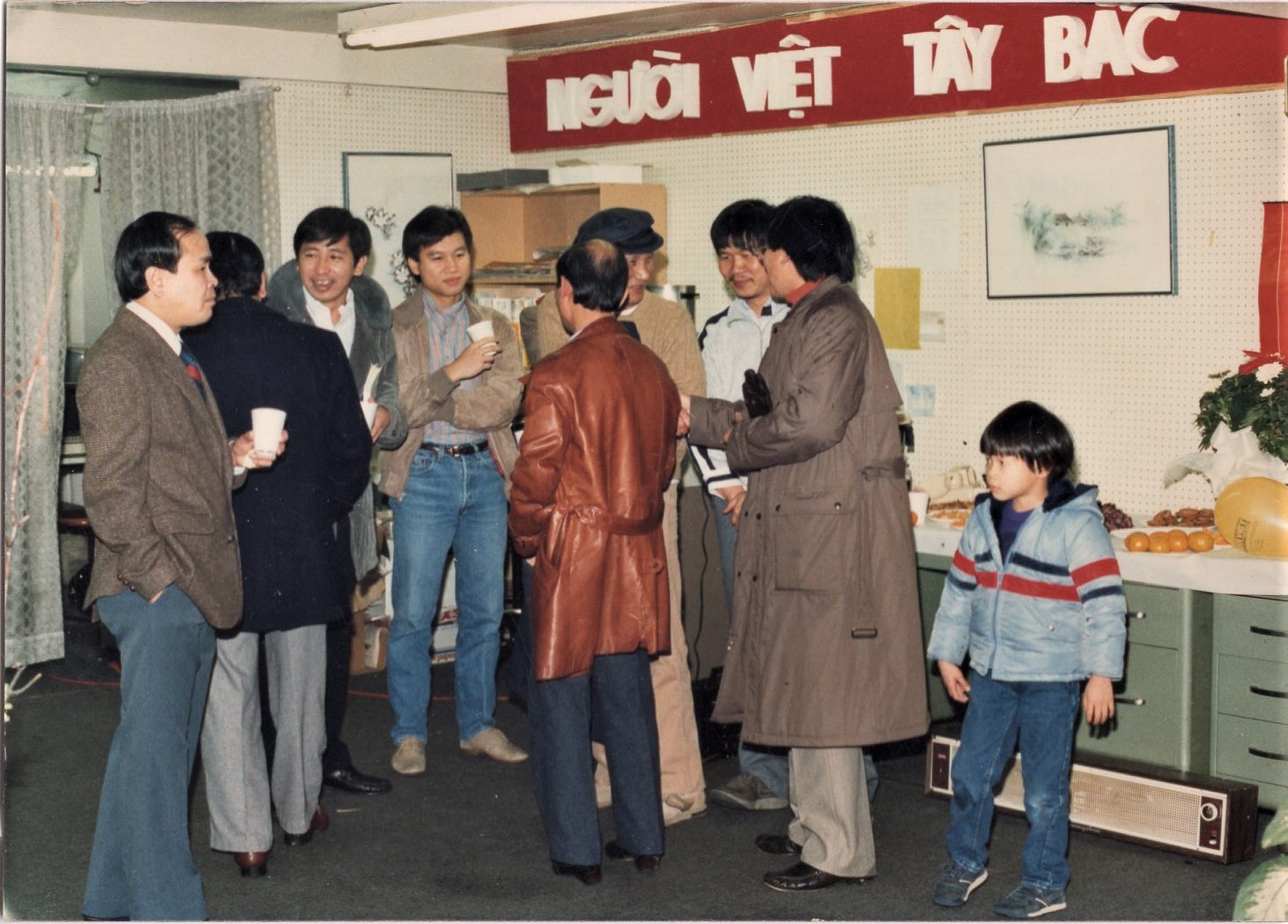
Julie’s father, Kim Pham, standing third from the right with his friends and supporters of their family newspaper, Nguoi Viet Tay Nac (Northwest Vietnamese News), circa 1988.

Did you observe the kinds of friendships that your parents, or whomever raised you, had while you were growing up? What did you learn from them about how to treat your own friends? My next book will focus on respect in friendships. As part of my research, I ask people these questions.

While some say their caregivers explicitly taught them how to treat their friends, most say they learned through observations. There was a mix of positive and negative models of friendship. Some said their parents didn’t have friends and, as a result, they themselves didn’t learn how to form friendships until well into adulthood. Many say they had never thought about their parents’ friendships before. 

I hadn’t made the connection between my parents’ friendships and my own until I asked myself these questions. As the co-founders of the local Vietnamese newspaper, they were very involved in our immediate Vietnamese community. The line between personal and professional was thin. Many of my parents’ friends were entrepreneurs. Even the doctors and lawyers owned their own practices that served others in our refugee community. Being a friend meant supporting each other’s businesses. My brothers and I were always reminded when we went to a shop or a restaurant that it was owned by someone who advertised in the newspaper.

My parents taught me that friendship means helping each other out with whatever resources we have. This may include giving advice, making key introductions and referrals, and whenever possible, being customers. Many of my friends today are other entrepreneurs, creatives, founders, or have leadership roles at their organizations. We talk about work in the same way others talk about their hobbies or vacations. When it comes to other friends who don’t want to talk about work outside of work, I try to show respect by asking about their families and hobbies. Still, I like to be asked about CuriosityBased because my work is a core part of who I am.

What did you learn about friendship from those who raised you? How is that showing up in your expectations of respect in your own friendships now?

I’d love to hear from you. If you’re interested in having a one on one interview or participating in a focus group, please let me know.

Best,

Low-context and high-context communication

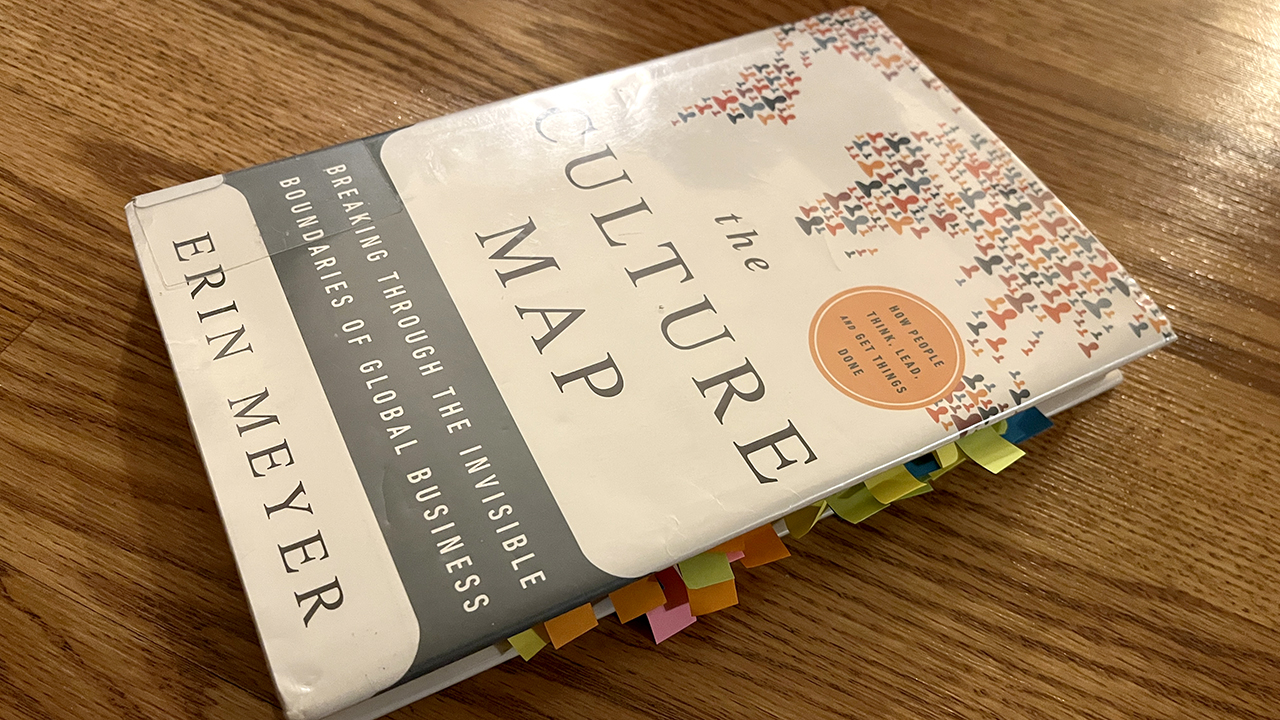
Erin Meyer’s book, The Culture Map, with many sticky notes marking passages Julie found interesting.

Low-context and high-context communication

Listen to Julie read this newsletter on YouTube

I often get asked about the different ways that different cultures define respect. While I can share examples from lived experience, they are anecdotal. The 7 Forms of Respect® as a framework is ultimately about having curiosity around what respect means to you and others, so I avoid making any universal claims about how certain cultures define respect.

After having read Erin Meyer’s The Culture Map: Breaking Through the Invisible Boundaries of Global Business, I now have a book recommendation for those who want to understand how culture shows up in our interactions. Meyer shows how cultural differences exist along “eight scales that map the worlds’ cultures.” These scales are: communicating, evaluating, persuading, leading, deciding, trusting, disagreeing, and scheduling.

In the “communicating” scale, the two extremes are “low-context” and “high context,” which Meyers describes as:

Low-context: Good communication is precise, simple, and clear. Messages are expressed and understood at face value. Repetition is appreciated if it helps clarify the communication.

High-context: Good communication is sophisticated, nuanced, and layered. Messages are both spoken and read between the lines. Messages are often implied but not plainly expressed.

Meyers points out that the US has the lowest-context culture in the world, followed by Australia and Canada. The highest-context country is Japan, followed by Indonesia and Korea.

Whether a country is low context or high context is influenced by its history, population, and geography. The US is only a few hundred years old, geographically very expansive, and made up of immigrants from around the world. Low-context culture helps people communicate across such diversity. Japan is a largely homogenous, small island country with thousands of years of history. 

Low context culture prefers written documentation and visualizations to reinforce information communicated verbally. High context cultures assume shared understanding and deep listening, so someone from a high context culture may react to a written recap of a conversation by thinking, “Why are you writing this out? Do you not trust that I can remember?” If you’re interacting with someone from a high context culture, you have to listen much more carefully for what is not said. 

While my parents grew up in a high context culture (Vietnam), I realize my approach to communication is very low-context, a reflection of my American childhood. 

Where does your communication style fall on the spectrum of low to high context? I’d love to hear from you.

Best,

Newsletter Archive

This image has an empty alt attribute; its file name is Newsletter-Archive-Website-Banner-1-1024x512.png