#3 Curiosity for tech startup innovators with Elizabeth Scallon
Subscribe Now!
Join Dr. Julie Pham in an enlightening conversation with Elizabeth Scallon, a dynamic leader in the tech world. Elizabeth has an impressive background spanning higher education, startups, industry, and funding. Currently, she holds the title of Director of Corporate Incubation at HP, where she helps bring innovative ideas to life and make a significant impact.
In this episode, Elizabeth discusses her role in fostering curiosity at work, emphasizing the importance of self-awareness, relationship building, and clear communication. She shares her experiences in the tech startup world, the value of early customer feedback, and the challenges of managing expectations.
This episode is packed with valuable lessons on leadership, the role of curiosity in innovation, and the continuous journey of professional growth. Don’t miss this chance to learn from Elizabeth’s wealth of experience and apply her insights to your own work environment.
About Elizabeth Scallon:
Elizabeth Scallon is the Director of Corporate Incubation at HP. With a rich career that includes roles at the University of Washington, Amazon’s corporate venture arm, and WeWork, Elizabeth has a deep understanding of the tech startup ecosystem. She also founded Find Ventures, a nonprofit supporting entrepreneurs from underrepresented backgrounds with early-stage funding.
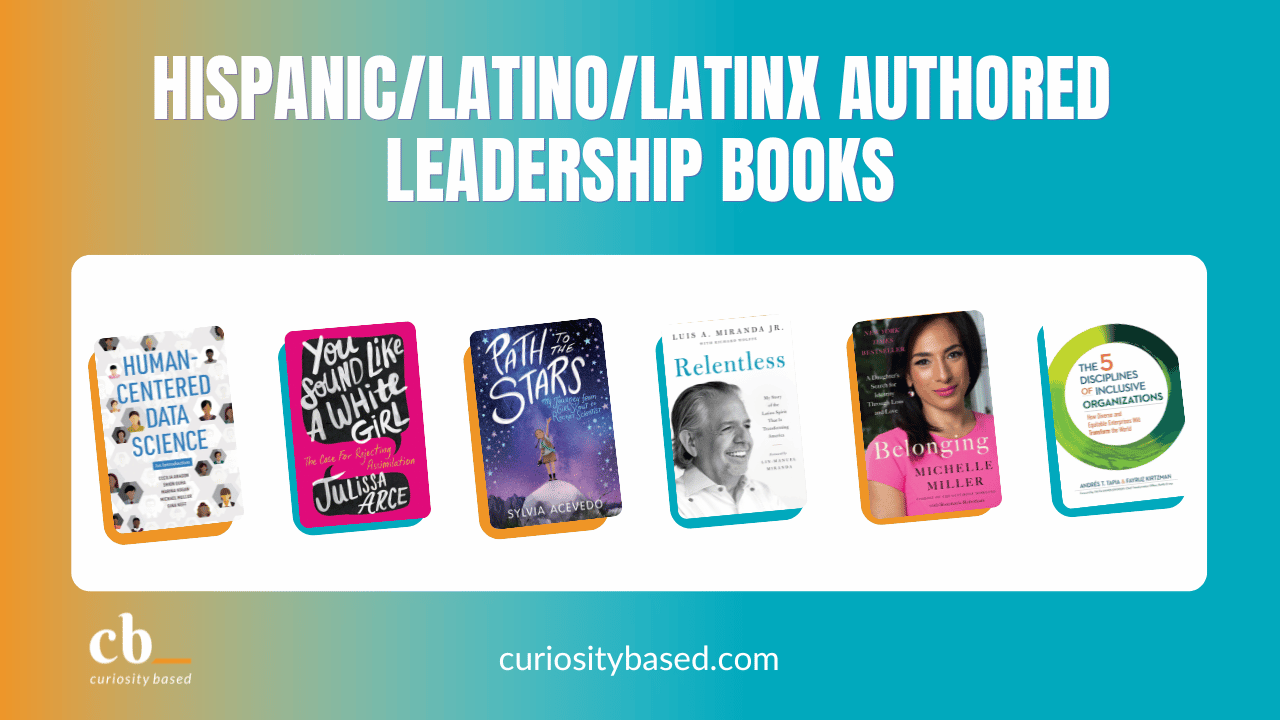
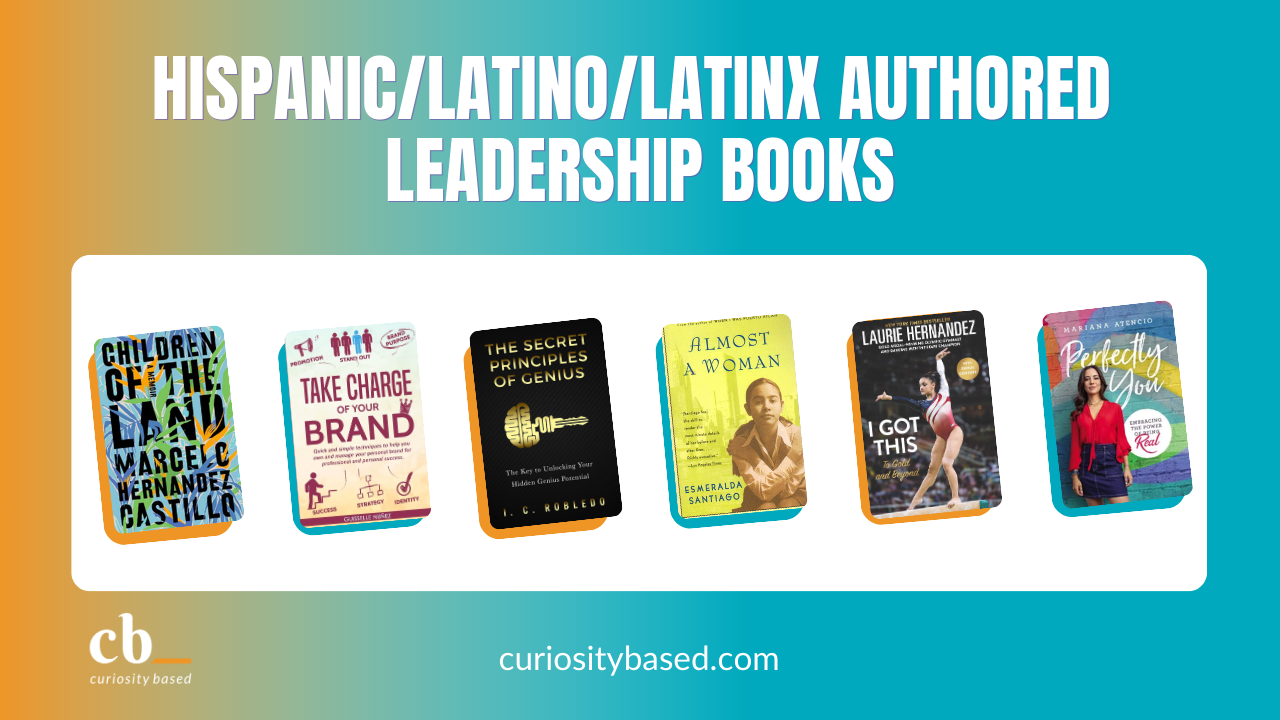
131 Leadership Books Written by Hispanic/Latino/Latinx Authors 2024
We created this list of 131 Leadership Books Written by Hispanic/Latino/Latinx Authors to promote leadership narratives written by the Hispanic/Latino/Latinx community. This list is meant to be a resource, not an official endorsement. The books are not ranked or listed in any particular order.
Me by Ricky Martin
And A Voice to Sing With: A Memoir by Joan Baez
The Gloria Anzaldúa Reader (Latin America Otherwise) by Gloria Anzaldúa
Borderlands / La Frontera: The New Mestiza by Gloria Anzaldúa
Almost a Woman by Esmeralda Santiago
In the Time of the Butterflies by Julie Alvarez
Farmworker’s Daughter: Growing up Mexican American by Rose Castillo Guilbault
The Power of Latino Leadership: Culture, Inclusion, and Contribution by Juana Bordas
When I was Puerto Rican by Esmeralda Santiago
Salsa, Soul, and Spirit: Leadership for a Multicultural Age by Juana Bordas
Autentíco: The definitive guide to Latino Career Success by Robert Rodriguez
Brown Church: Five Centuries of Latina/o Social Justice, Theology, and Identity by Robert Chao Romero
Hermanas: Deepening Our Identity and Growing Our Influence by Natalia Kohn Rivera
Isabel’s Hand-Me-Down Dreams by Isabel Lopez
Leaving Little Havana: A Memoir of Miami’s Cuban Ghetto by Cecilia M. Fernandez
Gmorning, Gnight!: Little Pep Talks for Me & You by Lin-Manuel Miranda
[Un]framing the “Bad Woman”:Sor Juana, Malinche, Coylxauhqui, and other rebels with a cause by Alicia Gaspar de Alba
Always Running: La Vida Loca – Gang Days in L.A. by Luis J. Rodriguez
Cruz: A Cross-Border Memoir by Jean Guerrero
Dear America: Notes of an Undocumented Citizen by Jose Antonio Vargas
Undocumented: A Dominican Boy’s Odyssey from a Homeless Shelter to the Ivy League by Dan-el Padilla Peralta
The Far Away Brothers: Two Young Migrants and the Making of an American Life by Lauren Markham
My Beloved World by Sonia Sotomayor
Latina Empowerment Through Leadership: Mindful Stories from Inspiring Women by Catherine Munos Garces, Monica Rivera, et al
An Organizer’s Tale by Cesar Chavez
My Time to Speak: Reclaiming Ancestry and Confronting Race by Ilia Calederon
Rita Moreno: A Memoir by Rita Moreno
American Poison: How Racial Hostility Destroyed Our Promise by Eduardo Porter
My (Underground) American Dream: My True Story as an Undocumented Immigrant Who Became a Wall Street Executive by Julissa Arce
The Virtuous Circle: Restore Your Confidence, Bounce Back, and Emerge Stronger by Gaby Natale
Self Made: Become Empowered, Self Reliant and Rich in Every Way by Nely Galán
Latino Leaders Speak: Personal Stories of Struggle and Triumph edited by Micky Ibarra and Maria Pérez-Brown
Leapfrog: The New Revolution for Women Entrepreneurs by Nathalie Molina Niño
The Soul of a Woman by Isabel Allende
In the Dream House: A Memoir by Carmen Maria Machado
Once I was You: A Memoir of Love and Hate in a Torn America by María Hinojosa
More than Ready: Be Strong and Be You…and Other Lessons for Women of Color on the Rise by Cecilia Muñoz
Perfectly You: Embracing the Power of Being Real by Mariana Atencio
Take Charge of Your Brand: Quick and Simple Techniques to Help You Own and Manage Your Personal Brand for Professional and Personal Success by Guisselle Nuñez
In the Country We Love: My Family Divided by Diane Guerrero
Frida by Barbara Mujica
Finding Latinx: In Search of the Voices Redefining Latino Identity by Paolo Ramos
The Undocumented Americans by Karla Conejo Villavicenci
AOC: The Fearless Rise and Powerful Resonance of Alexandria Ocasio-Cortes by Lynda Lopez
Latinx: The New Force in American Politics by Ed Morales
Mexican Enough: My Life Between the Borderlines by Stephanie Elizondo Griest
Being Brown: Sonia Sotomayer and the Latino Question by Lázaro Lima
An Unlikely Journey: Waking up from My American Dream by Julián Castro
Hispanic Women Seeking Higher Leadership Roles in Business by Sylvia C. Motta, PhD
Wild Tongues Can’t be Tamed: 15 Voices from the Latinx Diaspora edited by Saraciea J. Fennell
The Leadership Shift: The Strategic Positioning of Latino Business Leaders by Dr. Nilda Perez
¡Rise up, Mi Gente! A Roadmap for Latinos to Achieve Success in Corporate America by Jesse A Mejia
Inventing Latinos: A New Story of American Racism by Laura E. Gómez
The 5 Disciplines of Inclusive Leaders: Unleashing the Power of Us All coauthored by Andrés Tapia
When We Make It by Elisabeth Velasquez
I am Not Your Perfect Mexican Daughter by Erika L. Sanchéz
Latino Talent: Effective Strategies to Recruit, Retain, and Develop Hispanic Professionals by Robert Rodriguez
Silencing Gender, Age, Ethnicity, and Cultural Biases in Leadership by Camilla A. Montoya, Julieta V. García. et al.
Inclusion Revolution: The Essential Guide to Dismantling Racial Inequity in the Workplace by Daisy Auger-Dominguez
Latinas Rising Up in HR: Inspirational Stories of Human Resources Professional Leading, Thriving, and Breaking Barriers by Priscilla Guasso
The Secret Principles of Genius: The Key to Unlocking Your Hidden Genius Potential by I.C. Robledo
I Got This: To Gold and Beyond by Lauren Hernandez
The Engine of America: The Secrets to Small Business Success from Entrepreneurs Who Have Made It by Jane Delgado
The Latina Guide to Health: Consejos and Caring Answers by Jane Delgado
Field Mice: Memoirs of a Migrant Child by Emma Gonzalez
Los Amos del Mundo Están al Acecho by Cristina Martin Jimenez
Growing American Roots by Bob Menendez
Dream in Color: How the Sánchez Sisters are Making History in Congress by Linda Sánchez
Healing Journey: Surviving Domestic Violence by Lupe Valdez
La Nueva California: Latinos from Pioneers to Post-Millennials by David Hayes-Bautista
El Cinco de Mayo: An American Tradition by David Hayes-Bautista
Latinas in Aviation by Jacqueline S. Ruiz
Becoming Dr. Q: My Journey from a Migrant Farm Worker to brain Surgeon by Alfredo Quinones-Hinjosa
The Universal Tone: Bringing My Story to Light by Carlos Santana
Take a Stand: Lessons from Rebels by Jorge Ramos
The Injustice Never Leaves You: Anti-Mexican Violence in Texas by Monica Muñoz Martinez
Powerhouse Principles: The Ultimate Blueprint for Real Estate Success in an Ever-Changing Market by Jorge Perez
The Buena Salud Guide to Understanding Depression and Enjoying Life by Jane Delgado
Leadership Lessons of the White House Fellows: Learn How to Inspire Others, Achieve Greatness , and Find Success in Any Organization by Charles P. Garcia
Persevere with Power: What Heaven Starts, Hell Cannot Stop by Samuel Rodriguez
In Defense of Our America: The Fight for Civil Liberties in the Age of Terror by Anthony D. Romero
One Vote Away: How a Single Supreme Court Seat Can Change History by Ted Cruz
Still Dreaming: My Journey from the Barrio to Capitol Hill by Luis Gutiérrez
An American Son: A Memoir by Marco Rubio
The Undocumented Americans by Karla Cornejo Villavicencio
A House of My Own: Stories from My Life by Sandra Cisneros
Spirit Run: A 6000 Mile Marathon Through America’s Stolen Land by Noe Alvarez
Dirty Girls Social Club by Alisa Valdes-Rodriguez
Woven in Moonlight by Isabel Ibañez
The Latino Advantage in the Workplace by Mariela Dabbah and Arturo Poiré
Dream Big by Deborah Rosado Shaw
Youth, Identity, Power: The Chicano Movement by Carlos Munoz Jr.
Mean by Myriam Gurba
Presumed Incompetent: The Intersections of Race and Class for Women in Academia by Gabriella Gutiérrez y Muhs, Yolanda Flores Niemann, and Carmen G. González
Enrique’s Journey: The Story of a Boy’s Dangerous Odyssey to Reunite with his Mother by Sonia Nazarrio
A Passion for Politics (Mission Bells) by Anita Perez Ferguson
Latinos in American Society: Families and Communities in Transition by Dr. Ruth Enid Zambrana
Journey to the Future: A Roadmap for Success for Youth by Ltc. Consuelo Castillo Kickbusch
Homeless my Choice by Roy Juarez Jr.
The Story of Latinos and Education in American History by Dr. Abdín Noboa-Ríos
A Long Petal of the Sea by Isabel Allende
The Deepest Roots: Finding Food and Community on a Pacific Northwest Island by Kathleen Alcalá
Más Allá de la Justicia by Maria de lourdes Victoria
The Likeability Trap: How to Break Free and Succeed as You Are by Alicia Menendez
Ready, Set, Manifest!: A Handbook for the In-betweens and Leaps in Life by Debbie Lacey
Hurdles in the Dark by Elvira K. Gonzalez
In the Shadow of the Mountain: A Memoir of Courage by Silvia Vasquez-Lavado
Through the Dark by Yolanda Nava
Thriving in the Fight: A Survival Manual for Latinas on the Front Lines of Change by Denise Padin Collazo
Justice & Space Matter in a Strong, Unified Latino Community by Kathy Bussert-Web, Maria Eugenia Diaz, Krystal A Yanez
Breaking Ground and Barriers: Hispanic Women Developing Effective Leadership by Gloria Bonilla-Santiago, Ph.D.
Latinization and the Latino Leader: How to Value, Develop, and Advance Latino Professionals by Cristina Benitez & Marlene Gonzalez
Latino and Latina Leaders of the 21st Century: Ordinary Beginnings, Extraordinary Outcomes byKay (Kayla) S. Garcia
Latina Empowerment Through Leadership: Mindful Stories from Inspiring Women by Catherine Munoz-Garces, Monica Rivera, Lizza Monet Morales, Celia Garcia, Veronica Corona, Maggie Antillon Mathews, Roxana Damas, and Jennifer Ibarra
The More or Less Definitive Guide to Self Care by Anna Borges
Act Like a Leader, Think Like a Leader by Hermina Ibarra
You Don’t Have to Like Me: Essays on Growing Up, Speaking Out, and Finding Feminism by Alida Nugent
Children of the Land: A Memoir by Marcelo Hernandez Castillo
Wealth Warrior: 8 Steps for Communities of Color to Conquer the Stock Market by Linda Garcia
Solito: A Memoir by Javier Zamora
Living Beyond Borders: Growing Up Mexican in America by Margarita Longoria
Chinoga: Owning Your Inner Badass for Healing and Justice by Alma Zaragoza-Petty
A Woman of Endurance by Dahlma Llanos-Figueroa
Human-Centered Data Science: An Introduction by Cecilia Aragon
In the Shadow of the Mountain: A Memoir of Courage by Silvia Vasquez-Lavado
You Sound Like A White Girl: The Case for Rejecting Assimilation by Julissa Arce
Path to the Stars: My Journey from Girl Scout to Rocket Scientist by Sylvia Acevedo
Relentless: My Story of the Latino Spirit That Is Transforming America by Luis A. Miranda Jr.
Mother Island: A Daughter Claims Puerto Rico by Jamie Figueroa
Belonging: A Daughter’s Search for Identity Through Loss and Love by Michelle Miller
The 5 Disciplines of Inclusive Organizations: How Diverse and Equitable Enterprises will Transform the World by Andrés T. Tapia, Fayruz Kirtzman
#2 Curiosity in municipal information technology with Jim Loter
Subscribe Now!
In this episode of Curiosity at Work, Dr. Julie Pham chats with Jim Loter, Deputy Chief Technology Officer at Seattle IT, about how curiosity drives innovation and fosters a positive workplace culture. With a rich background in higher education, local government, and libraries, Jim shares valuable lessons from his career.
Jim discusses the importance of self-awareness, his journey from self-criticism to recognizing strengths, and the power of one-on-one coaching. He emphasizes relationship building in a hybrid work environment, advocating for psychological safety and debunking myths about productivity and employee well-being. Learn about the strategies Seattle IT uses to create a supportive workplace, including their innovative annual learning conference.
Why Watch: Get inspired by Jim Loter’s insights on leadership, self-awareness, and fostering a culture of curiosity and innovation.
Guest Information: Jim Loter is the Deputy Chief Technology Officer at Seattle IT with extensive experience in technology leadership and public service.
#1 Curiosity with managing municipal government with Joe Todd
Subscribe Now!
Join Dr. Julie Pham as she has an insightful conversation with Joe Todd, a longtime public servant and the Deputy City Manager at the City of Bellevue. Joe is also the vice chair of the African American Commission for Washington State. In this episode, Joe shares his journey, experiences, and the values that guide his leadership style.
✨ Episode Highlights:
Building and nurturing enduring relationships at work
The importance of empathy and love in leadership
Navigating challenges as an African-American executive leader
The significance of transparency and clear communication
Fostering a culture of curiosity and continuous improvement
Joe reflects on his career, the influence of his parents, and the importance of being self-aware and authentic in the workplace. He offers valuable insights into how leaders can support their teams and create inclusive environments.
Produced by Titan Media Worx: This episode is part of “Curiosity at Work,” a podcast that delves into the journeys of inspiring leaders and the values that drive them. Stay tuned for more episodes featuring conversations that explore the intersection of leadership, empathy, and curiosity.
We created this list to promote leadership narratives written by the Hispanic/Latino/Latinx community. This list is meant to be a resource, not an official endorsement. The books are not ranked or listed in any particular order.
The Gloria Anzaldúa Reader (Latin America Otherwise) by Gloria Anzaldúa
Borderlands / La Frontera: The New Mestiza by Gloria Anzaldúa
Almost a Woman by Esmeralda Santiago
In the Time of the Butterflies by Julie Alvarez
Farmworker’s Daughter: Growing up Mexican American by Rose Castillo Guilbault
The Power of Latino Leadership: Culture, Inclusion, and Contribution by Juana Bordas
When I was Puerto Rican by Esmeralda Santiago
Salsa, Soul, and Spirit: Leadership for a Multicultural Age by Juana Bordas
Autentíco: The definitive guide to Latino Career Success by Robert Rodriguez
Brown Church: Five Centuries of Latina/o Social Justice, Theology, and Identity by Robert Chao Romero
Hermanas: Deepening Our Identity and Growing Our Influence by Natalia Kohn Rivera
Isabel’s Hand-Me-Down Dreams by Isabel Lopez
Leaving Little Havana: A Memoir of Miami’s Cuban Ghetto by Cecilia M. Fernandez
Gmorning, Gnight!: Little Pep Talks for Me & You by Lin-Manuel Miranda
[Un]framing the “Bad Woman”:Sor Juana, Malinche, Coylxauhqui, and other rebels with a cause by Alicia Gaspar de Alba
Always Running: La Vida Loca – Gang Days in L.A. by Luis J. Rodriguez
Cruz: A Cross-Border Memoir by Jean Guerrero
Dear America: Notes of an Undocumented Citizen by Jose Antonio Vargas
Undocumented: A Dominican Boy’s Odyssey from a Homeless Shelter to the Ivy League by Dan-el Padilla Peralta
The Far Away Brothers: Two Young Migrants and the Making of an American Life by Lauren Markham
My Beloved World by Sonia Sotomayor
Latina Empowerment Through Leadership: Mindful Stories from Inspiring Women by Catherine Munos Garces, Monica Rivera, et al
An Organizer’s Tale by Cesar Chavez
My Time to Speak: Reclaiming Ancestry and Confronting Race by Ilia Calederon
Rita Moreno: A Memoir by Rita Moreno
American Poison: How Racial Hostility Destroyed Our Promise by Eduardo Porter
My (Underground) American Dream: My True Story as an Undocumented Immigrant Who Became a Wall Street Executive by Julissa Arce
The Virtuous Circle: Restore Your Confidence, Bounce Back, and Emerge Stronger by Gaby Natale
Self Made: Become Empowered, Self Reliant and Rich in Every Way by Nely Galán
Latino Leaders Speak: Personal Stories of Struggle and Triumph edited by Micky Ibarra and Maria Pérez-Brown
Leapfrog: The New Revolution for Women Entrepreneurs by Nathalie Molina Niño
The Soul of a Woman by Isabel Allende
In the Dream House: A Memoir by Carmen Maria Machado
Once I was You: A Memoir of Love and Hate in a Torn America by María Hinojosa
More than Ready: Be Strong and Be You…and Other Lessons for Women of Color on the Rise by Cecilia Muñoz
Perfectly You: Embracing the Power of Being Real by Mariana Atencio
Take Charge of Your Brand: Quick and Simple Techniques to Help You Own and Manage Your Personal Brand for Professional and Personal Success by Guisselle Nuñez
In the Country We Love: My Family Divided by Diane Guerrero
Frida by Barbara Mujica
Finding Latinx: In Search of the Voices Redefining Latino Identity by Paolo Ramos
The Undocumented Americans by Karla Conejo Villavicenci
AOC: The Fearless Rise and Powerful Resonance of Alexandria Ocasio-Cortes by Lynda Lopez
Latinx: The New Force in American Politics by Ed Morales
Mexican Enough: My Life Between the Borderlines by Stephanie Elizondo Griest
Being Brown: Sonia Sotomayer and the Latino Question by Lázaro Lima
An Unlikely Journey: Waking up from My American Dream by Julián Castro
Hispanic Women Seeking Higher Leadership Roles in Business by Sylvia C. Motta, PhD
Wild Tongues Can’t be Tamed: 15 Voices from the Latinx Diaspora edited by Saraciea J. Fennell
The Leadership Shift: The Strategic Positioning of Latino Business Leaders by Dr. Nilda Perez
¡Rise up, Mi Gente! A Roadmap for Latinos to Achieve Success in Corporate America by Jesse A Mejia
Inventing Latinos: A New Story of American Racism by Laura E. Gómez
The 5 Disciplines of Inclusive Leaders: Unleashing the Power of Us All coauthored by Andrés Tapia
When We Make It by Elisabeth Velasquez
I am Not Your Perfect Mexican Daughter by Erika L. Sanchéz
Latino Talent: Effective Strategies to Recruit, Retain, and Develop Hispanic Professionals by Robert Rodriguez
Silencing Gender, Age, Ethnicity, and Cultural Biases in Leadership by Camilla A. Montoya, Julieta V. García. et al.
Inclusion Revolution: The Essential Guide to Dismantling Racial Inequity in the Workplace by Daisy Auger-Dominguez
Latinas Rising Up in HR: Inspirational Stories of Human Resources Professional Leading, Thriving, and Breaking Barriers by Priscilla Guasso
The Secret Principles of Genius: The Key to Unlocking Your Hidden Genius Potential by I.C. Robledo
I Got This: To Gold and Beyond by Lauren Hernandez
The Engine of America: The Secrets to Small Business Success from Entrepreneurs Who Have Made It by Jane Delgado
The Latina Guide to Health: Consejos and Caring Answers by Jane Delgado
Field Mice: Memoirs of a Migrant Child by Emma Gonzalez
Los Amos del Mundo Están al Acecho by Cristina Martin Jimenez
Growing American Roots by Bob Menendez
Dream in Color: How the Sánchez Sisters are Making History in Congress by Linda Sánchez
Healing Journey: Surviving Domestic Violence by Lupe Valdez
La Nueva California: Latinos from Pioneers to Post-Millennials by David Hayes-Bautista
El Cinco de Mayo: An American Tradition by David Hayes-Bautista
Latinas in Aviation by Jacqueline S. Ruiz
Becoming Dr. Q: My Journey from a Migrant Farm Worker to brain Surgeon by Alfredo Quinones-Hinjosa
The Universal Tone: Bringing My Story to Light by Carlos Santana
Take a Stand: Lessons from Rebels by Jorge Ramos
The Injustice Never Leaves You: Anti-Mexican Violence in Texas by Monica Muñoz Martinez
Powerhouse Principles: The Ultimate Blueprint for Real Estate Success in an Ever-Changing Market by Jorge Perez
The Buena Salud Guide to Understanding Depression and Enjoying Life by Jane Delgado
Leadership Lessons of the White House Fellows: Learn How to Inspire Others, Achieve Greatness , and Find Success in Any Organization by Charles P. Garcia
Persevere with Power: What Heaven Starts, Hell Cannot Stop by Samuel Rodriguez
In Defense of Our America: The Fight for Civil Liberties in the Age of Terror by Anthony D. Romero
One Vote Away: How a Single Supreme Court Seat Can Change History by Ted Cruz
Still Dreaming: My Journey from the Barrio to Capitol Hill by Luis Gutiérrez
An American Son: A Memoir by Marco Rubio
The Undocumented Americans by Karla Cornejo Villavicencio
A House of My Own: Stories from My Life by Sandra Cisneros
Spirit Run: A 6000 Mile Marathon Through America’s Stolen Land by Noe Alvarez
Dirty Girls Social Club by Alisa Valdes-Rodriguez
Woven in Moonlight by Isabel Ibañez
The Latino Advantage in the Workplace by Mariela Dabbah and Arturo Poiré
Dream Big by Deborah Rosado Shaw
Youth, Identity, Power: The Chicano Movement by Carlos Munoz Jr.
Mean by Myriam Gurba
Presumed Incompetent: The Intersections of Race and Class for Women in Academia by Gabriella Gutiérrez y Muhs, Yolanda Flores Niemann, and Carmen G. González
Enrique’s Journey: The Story of a Boy’s Dangerous Odyssey to Reunite with his Mother by Sonia Nazarrio
A Passion for Politics (Mission Bells) by Anita Perez Ferguson
Latinos in American Society: Families and Communities in Transition by Dr. Ruth Enid Zambrana
Journey to the Future: A Roadmap for Success for Youth by Ltc. Consuelo Castillo Kickbusch
Homeless my Choice by Roy Juarez Jr.
The Story of Latinos and Education in American History by Dr. Abdín Noboa-Ríos
A Long Petal of the Sea by Isabel Allende
The Deepest Roots: Finding Food and Community on a Pacific Northwest Island by Kathleen Alcalá
Más Allá de la Justicia by Maria de lourdes Victoria
The Likeability Trap: How to Break Free and Succeed as You Are by Alicia Menendez
Ready, Set, Manifest!: A Handbook for the In-betweens and Leaps in Life by Debbie Lacey
Hurdles in the Dark by Elvira K. Gonzalez
In the Shadow of the Mountain: A Memoir of Courage by Silvia Vasquez-Lavado
Through the Dark by Yolanda Nava
Thriving in the Fight: A Survival Manual for Latinas on the Front Lines of Change by Denise Padin Collazo
Justice & Space Matter in a Strong, Unified Latino Community by Kathy Bussert-Web, Maria Eugenia Diaz, Krystal A Yanez
Breaking Ground and Barriers: Hispanic Women Developing Effective Leadership by Gloria Bonilla-Santiago, Ph.D.
Latinization and the Latino Leader: How to Value, Develop, and Advance Latino Professionals by Cristina Benitez & Marlene Gonzalez
Latino and Latina Leaders of the 21st Century: Ordinary Beginnings, Extraordinary Outcomes byKay (Kayla) S. Garcia
Latina Empowerment Through Leadership: Mindful Stories from Inspiring Women by Catherine Munoz-Garces, Monica Rivera, Lizza Monet Morales, Celia Garcia, Veronica Corona, Maggie Antillon Mathews, Roxana Damas, and Jennifer Ibarra
The More or Less Definitive Guide to Self Care by Anna Borges
Act Like a Leader, Think Like a Leader by Hermina Ibarra
You Don’t Have to Like Me: Essays on Growing Up, Speaking Out, and Finding Feminism by Alida Nugent
Children of the Land: A Memoir by Marcelo Hernandez Castillo
Wealth Warrior: 8 Steps for Communities of Color to Conquer the Stock Market by Linda Garcia
Solito: A Memoir by Javier Zamora
Living Beyond Borders: Growing Up Mexican in America by Margarita Longoria
Chinoga: Owning Your Inner Badass for Healing and Justice by Alma Zaragoza-Petty
“Can my empathy for others develop as my own life changes?”
Empathy is about being able to share what others feel. Sympathy is understanding someone else is suffering.
It’s easier to notice when other people lack empathy than to acknowledge that we may have less empathy than we think. Our ability to empathize can actually change as we get older. We can have less of it.
Something that feels vulnerable to many people is asking for help. Unless we have to ask others for help, we usually won’t. The more power, wealth, and seniority we gain, the more we are shielded from having to ask. Over time, our ability to empathize with those who do have to ask for help fades. Instead of empathizing, we sympathize.
There are many people in this world who need help and who have to ask for it. When we ask others for help, we can deepen our ability to empathize with those who need help.
I often hear from friends wealthy friends who grew up poor that they worry about their children’s ability to empathize with those who don’t have as much. If you are in this predicament, you can teach your children how to ask for help. Teaching them how to help those who have less than them will teach them sympathy, not empathy.
Having empathy matters. Many studies show empathetic leaders are more effective at increasing trust, collaboration, and productivity.
I share a three-step exercise I created to help people call forward experiences that will enable us to develop more empathy, at least around how vulnerable it can feel to ask for help out of need.
1) Think of what you’re going to ask for help.
The first step is to think of something you personally need. It could be something that would improve your life that you don’t have the resources for or that would be a financial hardship or great inconvenience. It could be asking for someone to take you to the doctor or lend you their vacation home or watch your pet.
This is not about asking for help on behalf of another individual or organization, like fundraising for a nonprofit. Also, this does not include sales transactions. Asking someone to compensate you for something that they will get value from is not the same as you asking for their help.
You might be thinking “There’s nothing I want that I can’t get on my own” or “I don’t want anything that I can’t afford.” Then perhaps your ask is a “nice-to-have”, not a “must-have”.
Until you can think of something, you won’t be able to empathize with people who ask for help when they don’t want to.
2) Think of who you’re going to ask
Could fulfill your request directly, by themselves
Might say no
May change their opinion of you after you ask, whether good or bad
Is not in any way obligated or incentivized to say yes
Don’t consider people who you think are likely to say “yes”. People who have said “yes” in the past or who offered to help you also don’t count. Don’t include people are financially incentivized or who might feel obligated to say yes to you.
3) Make the ask
The third step is to make the ask. Once you do that, you can draw from this experience as a source of empathy.
I have to remind myself to practice this exercise too. I swallowed my pride recently when got invited to a VIP dinner. While I suspected it would be expensive, I still got sticker shock when I received the invoice. I was asked to make another contribution. I struggled over whether I should say something. Remembering this exercise, I decided to admit to the host, who I’ve never met, that I can’t afford the additional gift and asked her to waive the request. She did.
It doesn’t matter what you’re asking for as long as you personally feel vulnerable. We all have different thresholds for what threatens to wound our pride.
When we are able to acknowledge what help we need for ourselves, we’ll develop empathy and not just sympathize with others who ask for help.
Asking for help to build our empathy can’t be a theoretical exercise. You actually have to do it so that you can feel it.
What I learned in managing expectations with others and with myself
Feb 1, 2022 to Jan. 21, 2023 marked the Year of the Tiger. This is a display at Wing Luke Museum.
In my second year as an entrepreneur, I learned a lot about how to manage expectations with others and especially managing my own expectations of myself.
Managing expectation is a never ending exercise in clearly articulating our needs, wants, and hopes. It requires activating all three elements of practicing curiosity: self- awareness, relationship building, and communication.
Here’s what I learned to help me navigate the dynamics of managing expectations that I’ve applied to both my personal and professional life.
Don’t expect people to change, yet believe them if they do change
Changing behavior is difficult for those who want to change, and impossible for those who don’t want to change. I’ve learned not to expect people to change. At the same time, people can change and I have to let go of grudges and old expectations to believe that they have changed. This has been especially true in my personal life. I’ve seen my mom change after my dad passed, in positive ways I didn’t expect. Just as I want others to see that I am capable of change, I have to be willing to believe others can change too, even if I shouldn’t expect it.
Explicitly describe what people can expect from me
I have to constantly remind myself that people can’t read my mind and I have to be more explicit. In regards to their own expectations, some people think in terms of what they will gain and benefit. For my clients, I describe what they will get with specific examples. For my team, I try to anticipate their questions and concerns. This is especially important now as people worry about layoffs. For my friends, I let them know what kind of support I can provide.
Explicitly describe what people shouldn’t expect from me
Other people think in terms of what they might lose or won’t get, so I also list what I won’t be doing and what they will not get, so that I can manage their expectations. For example, I often tell people my 7 Forms of Respect framework will NOT teach them how to be respectful, that it’s not like 7 Habits of Highly Effective People. For my team, I’ve made it clear that until we become consistently profitable, I can’t increase hours or provide more benefits. For my friends, I let them know when I can’t provide support in the ways they asked of me.
Accept that people will have expectations of me I can’t fulfill
It’s natural for people to make assumptions about me that lead to certain expectations. I have found that people often think because I’m a woman of color in leadership development, my work will focus on diversity, equity, and inclusion (DEI) when it doesn’t. I don’t get upset by this expectation; I just explain that I’m not a DEI expert.
Name incorrect expectations
Painful learning experiences made me learn how to name incorrect expectations before I reset their expectations. For example, I now sometimes start workshops with, “You may think this is racial justice training and it’s not. This is what we’ll be doing instead and why.”
Ask people to manage my expectations by managing theirs
In being clear that expenses outpaced revenue this past year, I tell my team that I understand they have to consider their individual financial needs because I don’t know when I can provide higher salaries. I just ask them to keep me updated if they do search for work elsewhere. When a team member left for a great career opportunity, I was not surprised. My expectations were managed.
Differentiate between expectations and hope
Entrepreneurship requires optimism. I was wildly overly optimistic in my revenue projections coming into my second year. I realized expectations should be based on my previous experiences to believe what is realistic and possible, not from strangers’ success stories I read on the Internet!
Don’t compare myself to others in creating expectations for myself
This is a hard one to admit that I do. I constantly have to remind myself not to compare. I have
close friends who are also authors of wildly successful books. As a self-published author without a long track record of prestigious publications or public speaking, I can’t apply the same expectations for success to myself. If I only look at those who I think have more, I will always feel I don’t have enough. So, I can’t compare.
Continue to do things I love even if they don’t meet my expectations
There are so many things I love doing, such as writing essays like this, that don’t meet my expectations of desired outcomes. I often remind myself that I don’t write because I expect a lot of views; I write to have an impact, even if that impact is limited to a few readers. Think about what things you love to do and that you would do no matter what, even if they don’t live up to your expectations. This lesson is also connected to the one on differentiating between expectations and hope (see lesson #7).
Lower my expectations to “good enough” so I can experiment faster
I sometimes slip into perfectionist standards. This past year, I pushed myself to create content with less and sometimes no outside editing before I post. I’ve been surprised by how my raw content can resonate with people, like my 2021 reflections on managing my energy instead of my time or my Instagram reel that went viral when I made fun of myself. This lesson is one I will lean into even more in 2023.
I’ve learned to accept that managing expectations is an iterative process in which I have to be asking questions and listening carefully to both others and to myself.
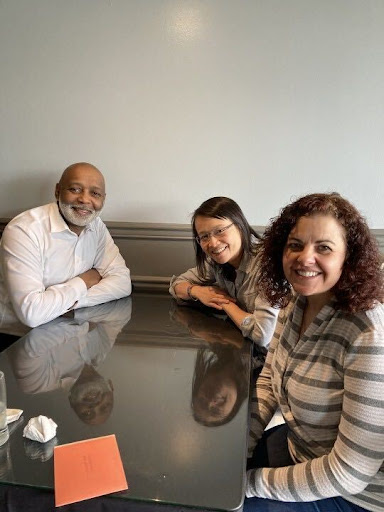
The author sits with two leaders who constantly inspire her with how they practice curiosity: Robert Britten (left), executive director of Equity, Diversity, and Inclusion (EDI) at Lake Washington Institute of Technology, and Dr. Suzy Ames, president of Peninsula College (right).
I liken practicing curiosity to meditation – it looks easy, but it’s really hard. There are some days it’s easier to practice curiosity than other days. And yet when leaders practice curiosity, we can set the conditions for creativity, innovation, resourcefulness, resilience, and empathy for our teams.
I’ve worked in and with companies that ranged from three employees to more than 100,000. Something that any size company has in common is that culture is set from the top. Those in power determine what’s acceptable behavior. Leaders, keep in mind that your team members are watching what you do. They will follow what you do, not what you say you do.
Here are some tips on how leaders can practice curiosity themselves, which will have ripple effects in your organization. These tips are based on mistakes I have made, things I’ve learned in meetings and in everyday interactions.
1. Speak last in meetings
Often a leader’s opinion can have outsized impact, and can influence what other people feel comfortable sharing. I often declare that I’m going to give my opinion last, so that others can share theirs first, especially when we are brainstorming or giving feedback.
2. Let other people facilitate team meetings
There is an expectation that the team leader always has to run the meetings. By accident, I flipped this my first year in business because someone on my team wanted to practice facilitation. I said that she could set the agenda and facilitate our weekly team syncs. Having someone else set the agenda will encourage them to talk to other people on the team to find out what should be discussed. And they get an opportunity to shine. There are actually many meetings I don’t facilitate at all, when I don’t have a discussion topic to lead. I love this! Another approach is rotating the facilitator role, especially among those who might not be in leadership positions.
3. Admit when you’re wrong
When I make a bad decision or mistake, I own up to it. I had to do that recently because a team member wanted to institute a new project management tool. Because I didn’t want to learn a new tech tool, I said I wouldn’t use it but everyone else could. Five months later, only half the team was using the tool. I realized my resistance undermined my colleague’s efforts to streamline work processes. I apologized to her and I committed to using the tool. I could tell she was appreciative that I admitted I was wrong.
4. Show what you don’t know
Leaders don’t have to pretend to have all the answers because, in reality, we don’t. I often get asked, “What should we do?” and I reply, “I’m not sure. What do you think we should do?” Early on in my career, I thought I needed to have all the answers. I was so relieved when a boss modeled for me he didn’t always know and he would ask me to suggest solutions. Asking clarifying questions is also a way for leaders to model that it’s okay not to know the answers. I often ask “Can you give me an example of that?” “What does that word mean?” When you think others don’t know a concept, even if you do, ask for an explanation so that it benefits everyone.
5. Be aware of the possible impact of your questions
Power dynamics means that sometimes people see questions from leaders as directives. A friend of mine told me she serves on a nonprofit board. She described when she asked the executive director (ED) of that nonprofit some questions, that ED responded defensively. I pointed out to her that the ED may have interpreted the question as an order because she as a board member is technically her boss. It can be helpful to preface a question with, “I’m asking this to understand, not because I want you to change anything or do something different.”
6. Make time to care
I talked about this in an earlier essay about managing my energy vs. my time. At the beginning of every meeting, our team members share our personal highs and lows. We get to be curious about others and let them be curious about us; this reciprocity is critical to relationship building. I’ve shared my struggles with maintaining a prediabetic diet, how I miss my late father, and other things that are pulling me down. Studies even show that teams that share their personal lows are able to be more honest with one another when it comes to the work.
7. Ask questions when you’re upset
Feeling anger, resentment, fear, annoyance can become curiosity killers. I have to be extra intentional about asking questions when I’ve got those feelings, because my gut reaction is to assume bad intentions. A friend told me that he was upset with someone on his team for not following his directions. He felt deeply disrespected. I suggested he ask that colleague, “What’s your process for your work?” to understand how they approach work. Then follow up with, “What do you think about the process I’m asking you to do?” Curiosity can be the antidote to assuming bad intentions just perpetuates.
I hope you’ll try some of these tips. Let me know how it goes.
Diversify both the writers and performers of our leadership narratives
Many companies claim they support diversity and want to increase the number of women and people of color in their leadership ranks.
Saying is easy. Doing is hard.
Imagine hearing an all-white, mostly male executive team espouse the value of diversity. Yet, no one on the team voluntarily gave up their seat to make room for a more “diverse” candidate? In many cases, diversification requires structural and organizational change and financial investment. It can mean replacing the people who fill a limited number of roles.
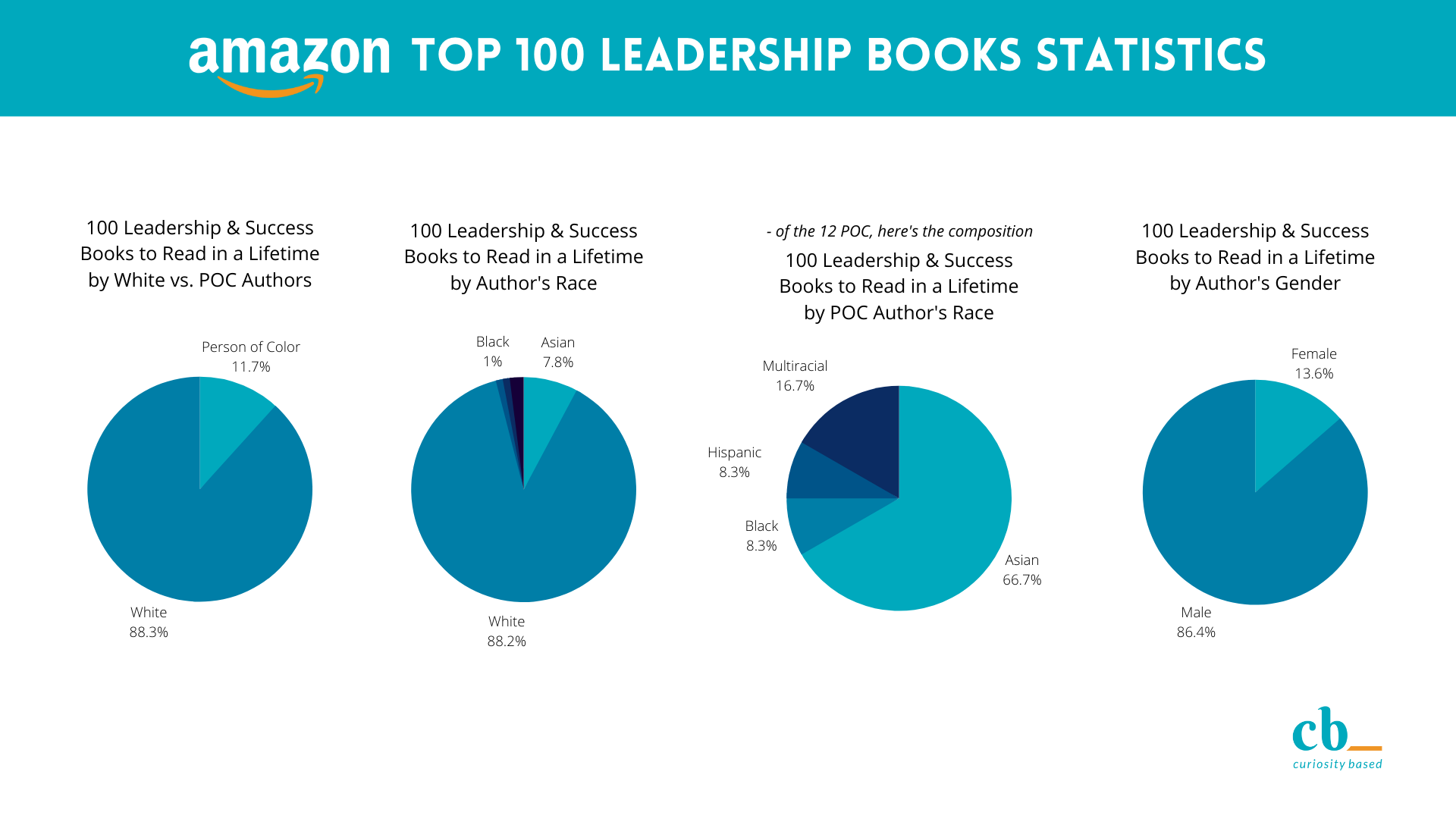
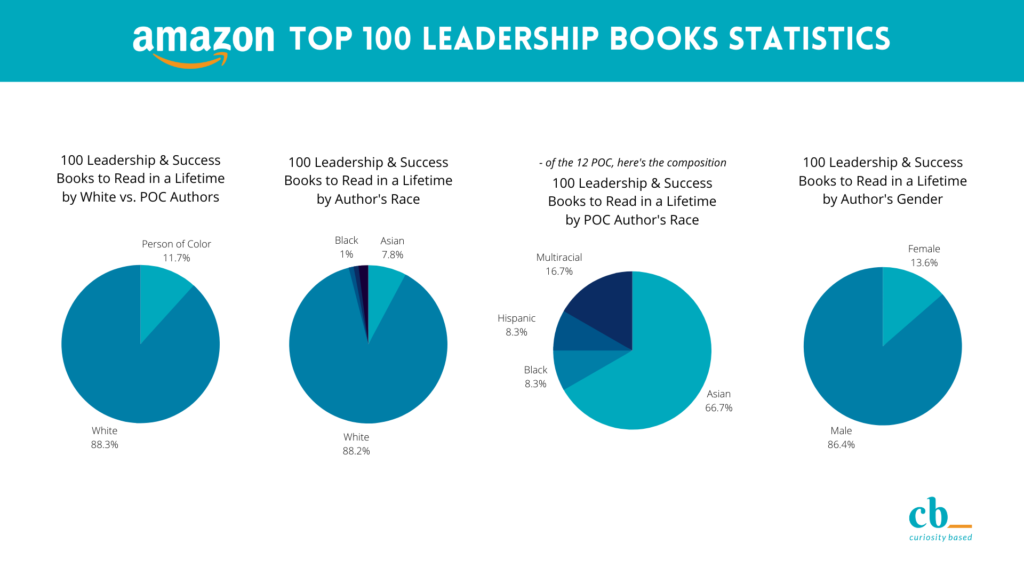
Meanwhile, most of the top ranked leadership and management books are written by white men. Of Amazon’s top 100 recommended books on leadership, only 12 were written by a woman or person of color. Only 18% of business books are written by women. Society is demanding a change in representation, yet the leadership playbooks haven’t kept up.
Amazon Top 100 Leadership Books Statistics
I’ll liken this to movies and plays. While the actors are changing, they are still performing the same scripts. We’re not diversifying the pool of the screenwriters and plays.
We don’t have to wait for the infrastructure change required to increase diverse representation before we start exposing ourselves to underrepresented leadership perspectives.
These are parallel and complementary efforts. The former requires structurally making space for new people. The latter asks people to expand their minds. You can still read Adam Grant and Patrick Lencioni. You can also read Adrienne Maree Brown and Dr. Laura Huang. The virtual bookshelf and podcast library aren’t limited in the way seats on a corporate board or executive team may be.
Here’s the thing—leadership books by underrepresented authors exist though they rarely make it to the recommended book lists. My company started to create lists of books authored by different communities: women, Black Americans, LGBTQ, authors with disabilities, etc. Based on our research, we compiled 100+ books per group, and we know there are many missing. Many of the books on these lists were self-published. The lists include memoirs and social commentary. We expand what “leadership narrative” means.
On the demand side, we, as the readers, the audience, and consumers, have influence.
We can consult existing leadership narratives written by underrepresented authors and find ways to integrate relevant philosophies that align with and support our mission. Many authors, like Ruchika Tulyshan, Mikaela Kiner, Cindi Bright, and Dr. Marie Gervais, share useful strategies and tactics to foster inclusion at work. We can also validate those authors by promoting their work.
Clearly, books by underrepresented authors are not always about race and diversity. Some books address race and gender; most do not. It shows that books by underrepresented authors don’t just have to focus on their identity.
Women and people of color who are in leadership roles were hired for their expertise. Their diverse perspectives are a bonus. That’s how we should approach leadership books. Just as we don’t expect white male authors to write about their race and gender, underrepresented leadership authors shouldn’t need to focus on their race and gender.
Designers use a concept called the curb cut effect: if you design something for those with special needs, it may actually end up benefiting more people. A common example of this is when curb cuts were made into sidewalks for wheelchair users and ended up helping many others, like those with baby strollers and luggage. The idea here is when someone writes from a minority perspective, that perspective will end up helping and benefiting others too.
An excellent example of this is Stacey Abram’s book, Lead from the Outside, which was originally titled Minority Leader. Each chapter has practical worksheets and frameworks that everyone, including white men who are not in the minority, would also find helpful.
As consumers, we should evaluate our expectations for what counts as credible. Many popular leadership books are written by academics or those with corporate experience. White men dominate both academia and the corporate world, so leadership books also follow suit. It’s a vicious cycle. We think we need authors to have those credentials, so publishers only publish authors with those credentials, which reinforces the belief that we should only read those with these credentials.
Large corporation CEOs already author many books. Many fewer books are written by small business owners, who also are much more diverse. Moreover, small businesses account for nearly 99.75% of all companies, and they are responsible for 66% of new job creation. So why are we looking for the small minority of leaders at large companies to teach us? How is their experience more applicable or relevant?
When I read leadership books by white men, especially in business, they often cite their leadership roles in major organizations and relationships with billionaires. I just can’t relate.
We lament the lack of diversity in leadership as a way to advocate for systemic change.
As individuals, we may not have the power, position, or capacity to influence who is represented in our boardroom and executive teams.
We do have the choice to start reading, supporting, and consuming leadership narratives by underrepresented authors.