How do you feel about getting “no” for an answer?
I don’t like to get “no.” And yet not ever getting “no” could be a sign of complacency or lack of self-awareness.
While it’s natural to want to hear yes to the things we ask for, there’s a lot of benefit in getting no’s.
I’m referring to the requests we make that actually matter to us. There is the popular Rejection Therapy game that challenges people to make often ridiculous requests of strangers in order to condition ourselves to accept rejection. I’m not talking about asking a stranger to lend you $100 or knocking on someone’s door and seeing if they’ll host you for a meal.
Instead, think about asking for things you care about.
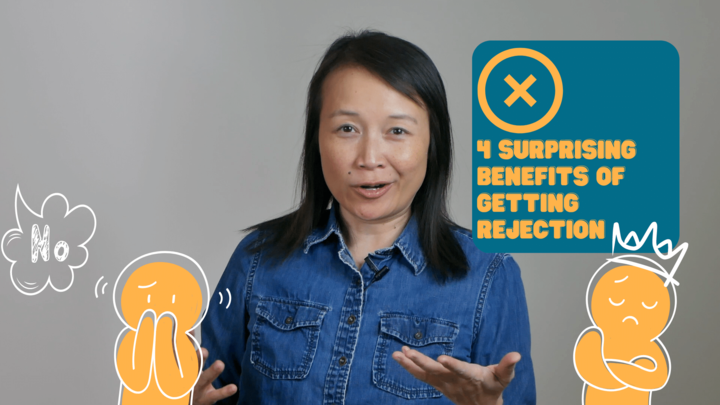
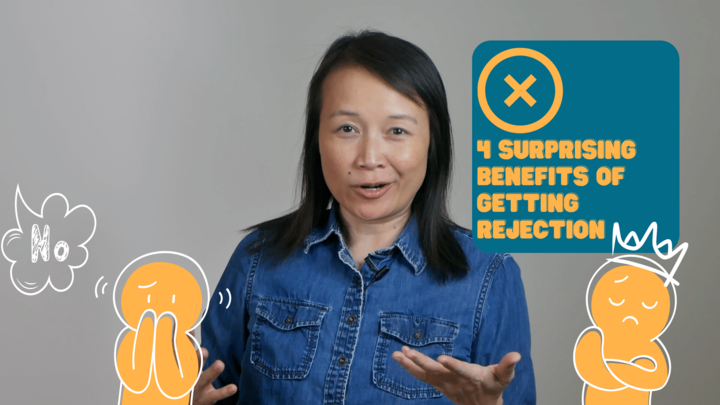
Here are four reasons why getting “no” to the requests that matter to can actually help us:
Ego-check: Getting a “no” keeps our egos in check and helps us understand the goal is not to always get a yes. If I got “yes” all the time, I’d get an inflated sense of self and I’d start to believe I’m invincible. For example, I have a big network of friends, acquaintances, and supporters; I hear people tell me, “You know everyone in Seattle.” In reality, I reach out to a lot of people to reconnect, and some of them say they’re too busy, and many of them just ignore me. Am I disappointed? Yes. I’m always a little disappointed and sometimes, very disappointed. The rejection or lack of response reminds me that there are a lot of people out there who don’t care enough about me and that’s okay. Getting the “no’s” doesn’t detract from those who did say “yes.”.
Empathy: Getting “no” actually can strengthen our ability to empathize with others, who get rejected. For example, I’ve been rejected for jobs I really wanted that I interviewed for, so I can understand and empathize with others who have gotten job rejections. If we’re getting a lot of people saying yes to our asks, one possible reason is because we hold positional power that we might not even recognize. If we have been thinking people don’t say “no” because we’re exceedingly charming or persuasive, it could be because they feel they can’t say no and we may even need to check our ego (see Ego Check). At work, this might happen if we’re in a leadership role. Among our friends, it could be because we have higher social status. In our family, we may have a position of authority or others have financial dependence on us. If we don’t get “no’s” ourselves, we will lose our ability to empathize with those we decline or with those who get rejected.
Push our boundaries– Getting no’s expands our opportunities to learn and push beyond our comfort zone. When I’m selling services for my company, CuriosityBased, I remind myself if I’m not hearing that many no’s, then I’m probably not making enough asks. Hearing “no” tells me I’m out there, asking from people who I don’t know if they will say yes. For example, I could ask 10 people and 8 say yes. If I were to ask 20 people and 10 people said yes, I’ve just pushed my boundaries and I can work on learning from the 10 no’s instead of just the 2 no’s. A high “yes” rate may mean we’re limiting ourselves to those we think will say “yes” to us, which inherently increases our chance of getting a “yes.”
Reinforce your own boundaries– Getting a “no” helps me understand what I’m not willing to do to get someone to say “yes”. It reminds me that I can set my own boundaries too. When someone says no because they don’t agree with me, it pushes me to ask myself, “Is there a need for me to change so I can get them to say yes? What would I be losing if I tried to accommodate them?” In answering these questions, I might realize their “no” means we weren’t a good fit. This recently happened to me when a prospective client said they were “too advanced” and CuriosityBased workshops weren’t helpful to those who were “further along in their equity journey.” They’re spot on. Their “no” reflected how they wanted training workshops, which takes participants through a linear progression of different levels of mastery. CuriosityBased designs experiences to enable people to have vulnerable conversations so they can learn from one another instead of from a single instructor. People have taken the same CuriosityBased workshop over and over again with different people and still learn something new each time. The idea that people can be “being further along” conflicts with my philosophy on learning. (You can read more here). Understanding this potential client’s “no” reminds me it’s okay not to compromise or change myself to get to a yes.
If you realize you seldom get turned down, ask yourself why. Is it because you’re actually not making that many requests? And what would happen if you asked more often, even if it means increasing the risk people will say no.
Try asking those who you’re not sure will say yes to you. See if it changes how you feel about getting your ask rejected by them.