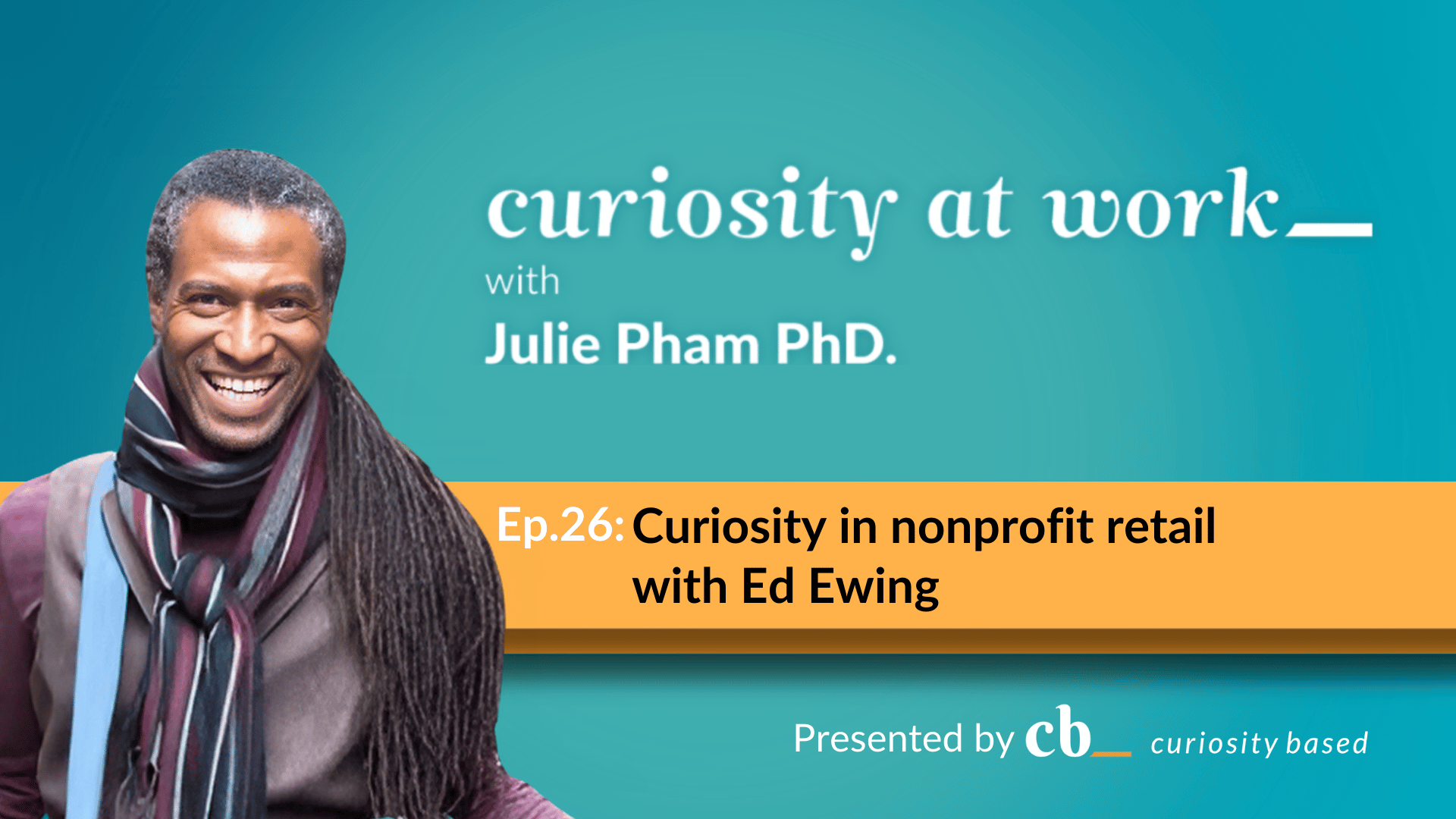
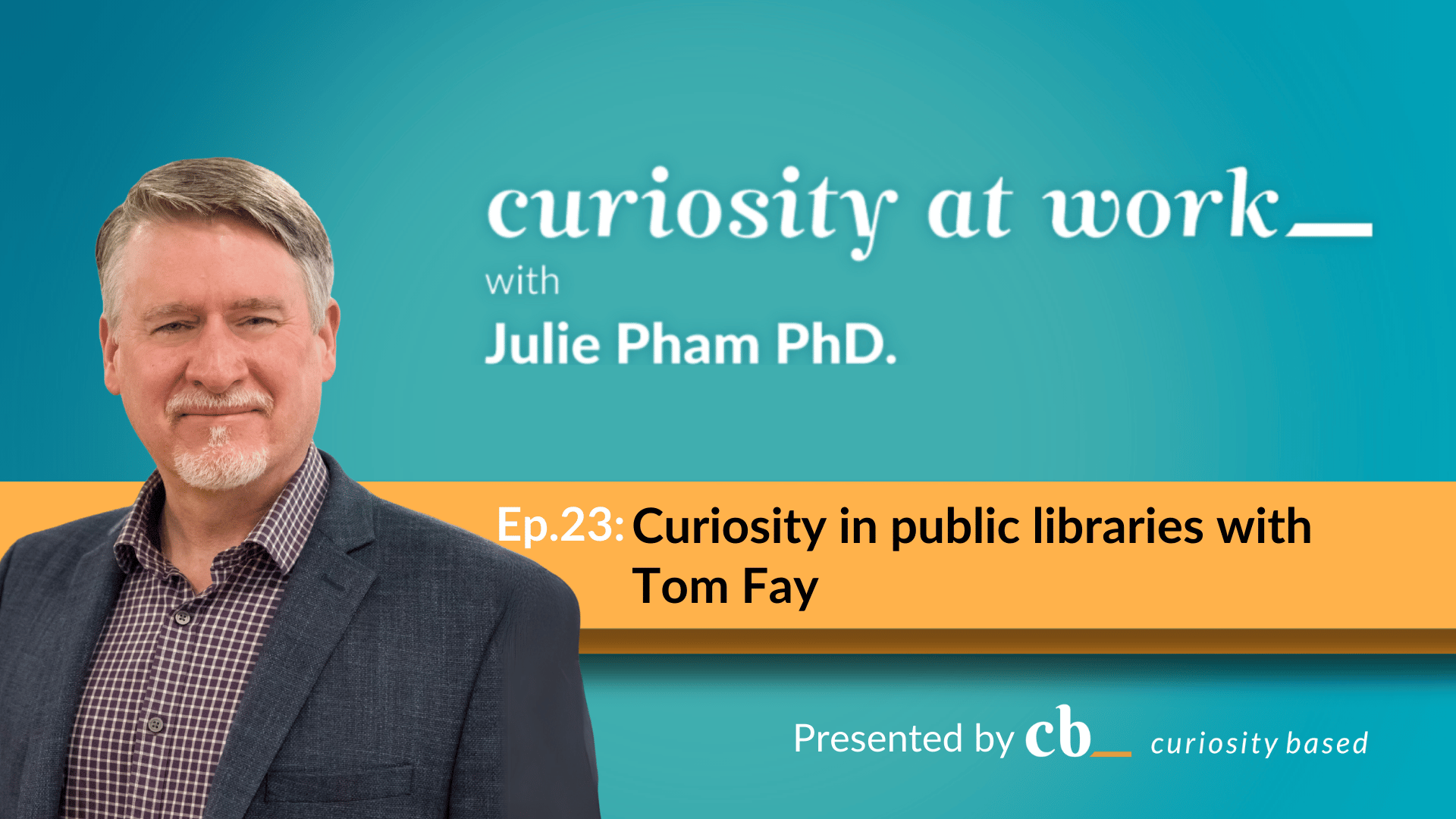
#30 Curiosity in Arts & Lecture with Rebecca Hoogs
#30 Curiosity in Arts & Lecture with Rebecca Hoogs
What does curiosity look like in arts leadership?
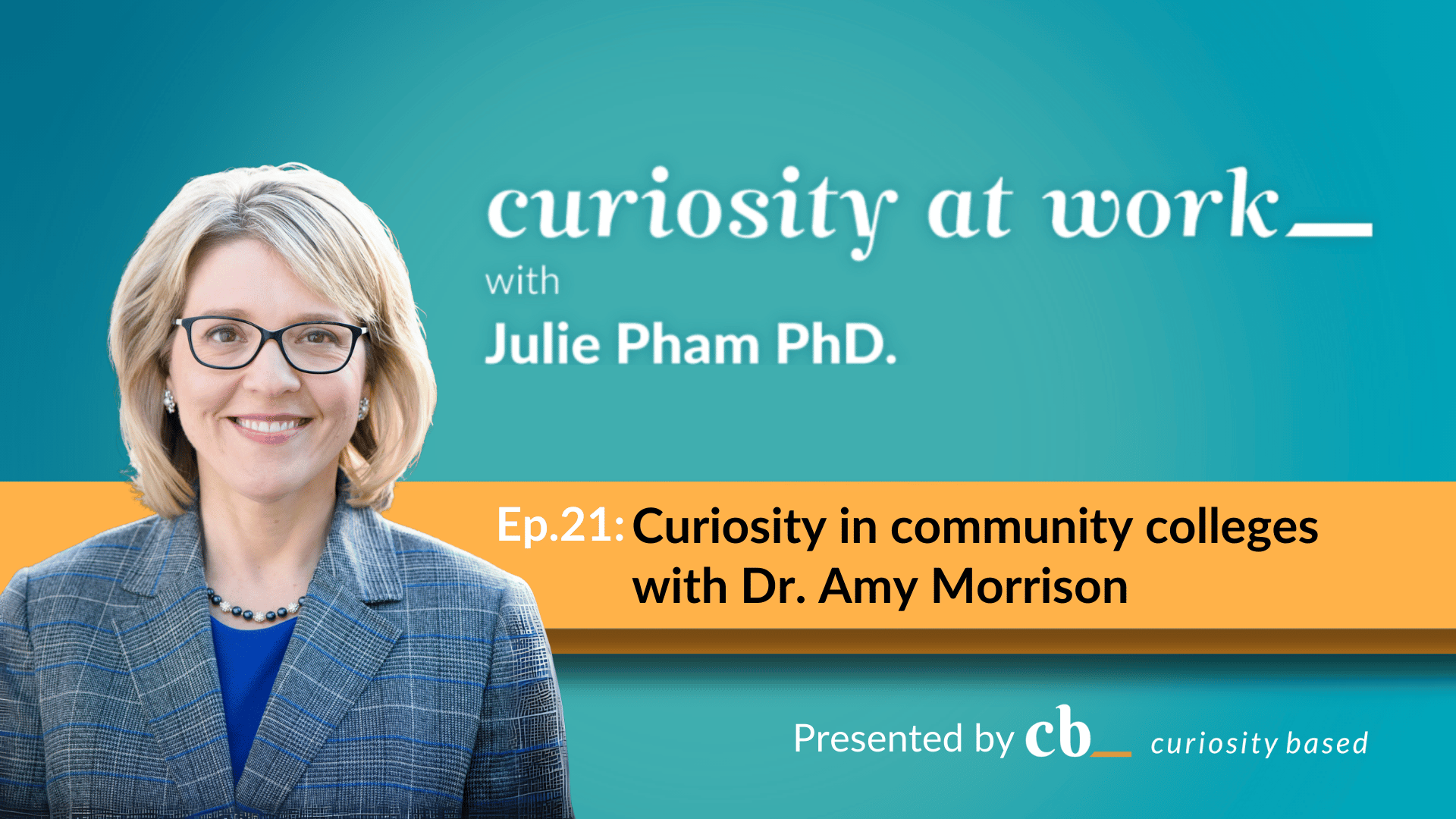
In the Curiosity at Work podcast episode #30 Curiosity in Arts & Lecture with Rebecca Hoogs, Dr. Julie Pham speaks with Rebecca Hoogs, Executive Director of Seattle Arts & Lectures, about curiosity as a core leadership value.
Rebecca’s path through nonprofit management and poetry offers a powerful reminder: curiosity is not just a mindset. It is a practice.
In this conversation, Julie and Rebecca explore:
• Why listening and asking better questions are essential leadership skills • How curiosity shapes community and audience engagement • The tension between problem-solving and staying open • The role of moderation and active listening in public conversations • Why paying writers strengthens the local creative economy • How poetry and creative writing are rooted in curiosity
Leadership is not only about direction. It is about creating space for others to share their stories.
Rebecca reminds us how curiosity fuels arts leadership and helps leaders slow down, listen more deeply, and build stronger communities. What happens when you slow down?
What does curiosity look like inside a healthcare system?
In Episode 29 of the Curiosity at Work podcast, Curiosity in Healthcare IT with Bradd Busick, Dr. Julie Pham sits down with Bradd, Senior Vice President and CIO at MultiCare Health, to explore how curiosity shapes healthcare IT, patient care, and leadership during uncertainty.
From navigating COVID-19 to accelerating telehealth adoption, Bradd shares how technology is not just a support function — it’s part of the care team.
They discuss:
• Why psychological safety is essential for reporting failures • How a questioning mindset improves patient outcomes • The evolving role of the CIO in healthcare • Why investing in IT directly impacts care delivery
One of our favorite lines from the episode: “IT is part of the care team.”
Curiosity isn’t abstract. It changes how we lead, how we respond to uncertainty, and how we care for others.
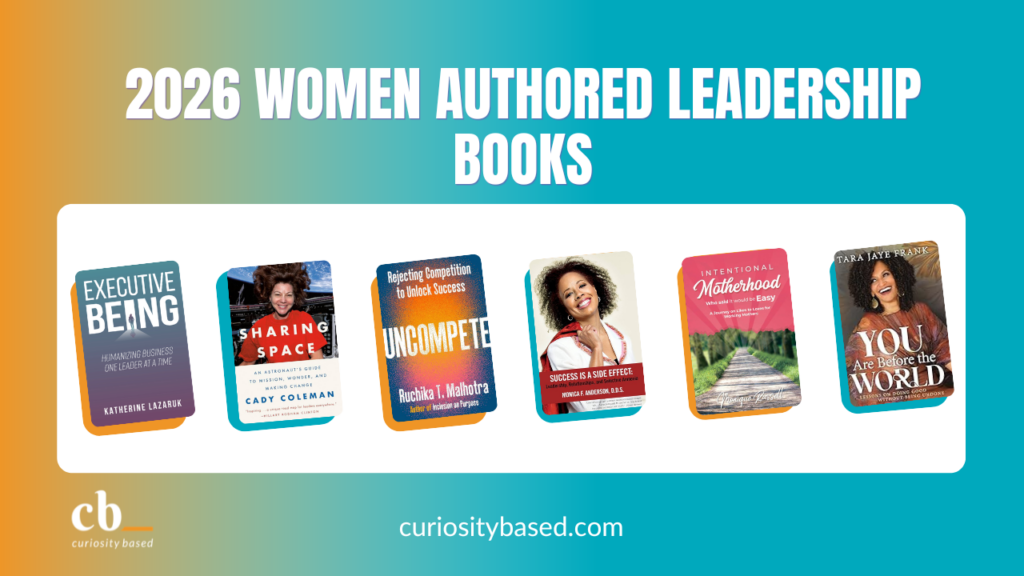
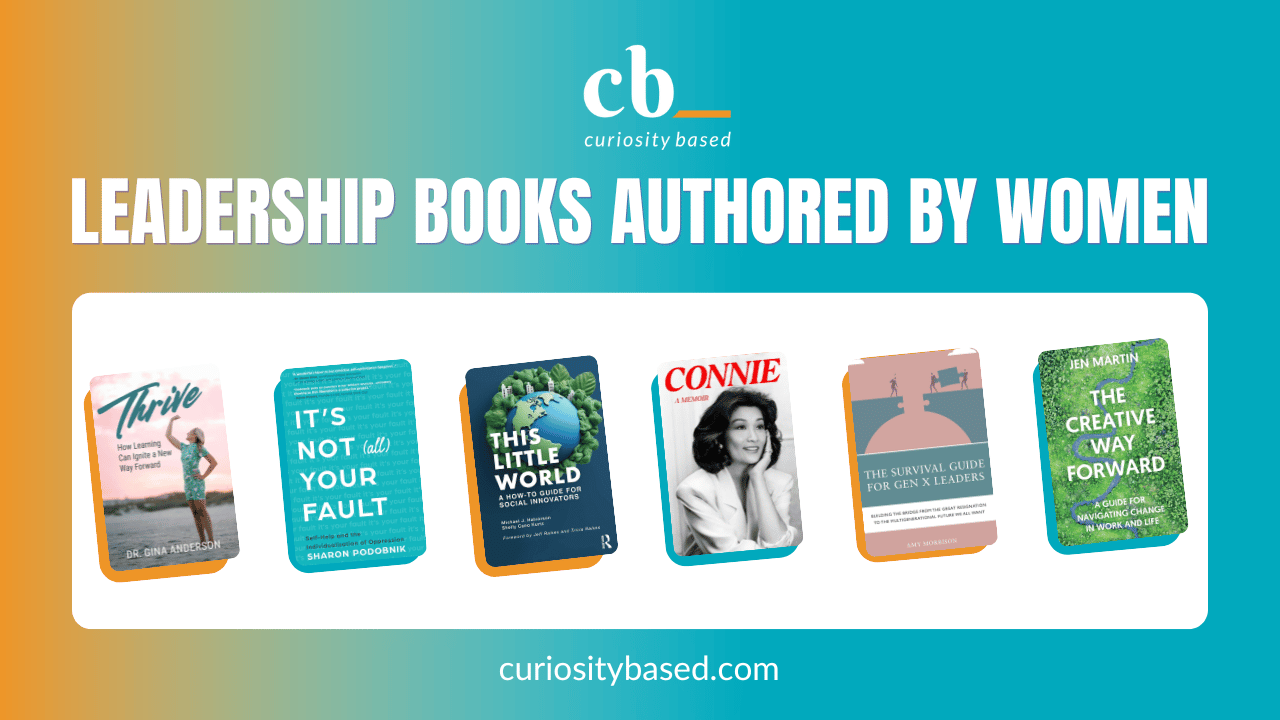
We curated this list 2026 Women Authored Leadership Book List to promote women authored leadership books. This list is meant to be a resource, not an official endorsement and the books listed are in alphabetical order. Check out our other leadership book lists by authors who identify as LGBTQIA+, AANHPI, Native American, Black, and Hispanic/ Latino/ Latinx. View all of our leadership book lists here.
#KeepGoing: From 15-Year-Old Mom to Successful CEO & Entrepreneur – Mari Tautimes
#NotYourPrincess: Voices of Native American Women – Lisa Charleyboy & Mary Beth Leatherdale (eds)
[Un]framing the “Bad Woman” – Alicia Gaspar de Alba
10 New Rules for Women at Work – Deb Liu
101 Reasons to Get Out of Bed – Natasha Milne
12 Tools for Managing a Selfish Leader – Josefine Campbell
3HAG Way – Shannon Byrne Susko
50 Billion Dollar Boss – Kathey Porter
7 Deadly Sins of Women in Leadership – Kate Coleman
7 Forms of Respect – Julie Pham, PhD
A Body, Undone: Living On After Great Pain – Christina Crosby
A CEO for All Seasons – Carolyn Dewar
A Different Kind of Power: A Memoir – Jacinda Ardern
A Face for Picasso – Ariel Henley
A Good Cry, What we Learn from Tears and Laughter – Nikki Giovanni
A House of My Own: Stories From My Life – Sandra Cisneros
A Mind Spread Out on the Ground – Alicia Elliott
A Mythic Life: Learning to live our greater story – Jean Houston
A Passion for the Possible – Jean Houston
A Room of One’s Own – Virginia Woolf
A Writer’s Diary – Virginia Woolf
Abandon Me: Memoirs – Melissa Febos
Act Like a Leader, Think Like a Leader – Hermina Ibarra
Acting Up: Winning in Business and in Life – Janice Bryant Howroyd
After the Idea – Julia Austin
After the Rain – Alexandra Elle
Against White Feminism – Rafia Zakaria
Ain’t I a Woman: Black Women and Feminism – Bell Hooks
All About Love – Bell Hooks
All In: An Autobiography – Billie Jean King
All It Takes Is a Goal – Jon Acuff
All That She Carried – Tiya Miles
All the Leader You Can Be – Suzanne Bates
Ally Leadership – Stephanie Chung
Almost a Woman – Esmeralda Santiago
America for Americans – Erika Lee
American Indian Stories – Zitkala-Sa
An Indian Among Los Indígenas – Ursula Pike
An Overachiever’s Guide to Breaking the Rules – Heather Whelpley
An Unquiet Mind: A Memoir of Moods and Madness – Kay Redfield Jamison
Anchored, Aligned, Accountable – Aiko Bethea
And A Voice to Sing With: A Memoir – Joan Baez
And Now We Are Going to Have a Party – Nicola Griffith
Annapurna: A woman’s place – Arlene Blum
AOC: The Fearless Rise and Powerful Resonance of Alexandria Ocasio-Cortes – Lynda Lopez
Apocalyptic Best Practices – Elisebeth VanderWeil
Are You Mad at Me? – Meg Josephson
As Long As Grass Grows – Dina Gilio-Whitaker
As We Have Always Done – Leanne Betasamosake Simpson
Ask For It – Linda Babcock & Sara Laschever
ASL Saved My Life…Until it didn’t – Jenni Kleinman Berebitsky
Atlas of the Heart – Brene Brown
Audition – Katie Kitamura
Authenticity, Identity, and Being Yourself at Work – Susan David
#28 Curiosity in Community Action with Janice Deguchi
#28 Curiosity in Community Action with Janice Deguchi
In episode #28 of Curiosity at Work podcast: “Curiosity in Community Action with Janice Deguchi,” Dr. Julie Pham interviews Deguchi, executive director of Neighborhood House, a community action organization. They discuss the importance of curiosity in the social service sector, the structure and services of Neighborhood House, and the challenges of practicing curiosity as a leader.
Furthermore, Janice shares insights on the diverse workforce at Neighborhood House, the significance of culturally responsive behavioral health care, and the need for continuous learning in leadership roles.
Key takeaways include:
Curiosity is essential in the social service sector.
Community Action organizations are rooted in the civil rights movement.
Neighborhood House serves a diverse population from birth to end of life.
A significant portion of the workforce is involved in direct services.
Diversity in the workforce enhances community engagement.
Culturally responsive behavioral health care is crucial for immigrant communities.
Practicing curiosity can be challenging for leaders with busy schedules.
Slowing down can lead to better decision-making and understanding.
Peer support and thought partnership are vital for effective leadership.
Continuous learning through podcasts and peer interactions fuels curiosity.
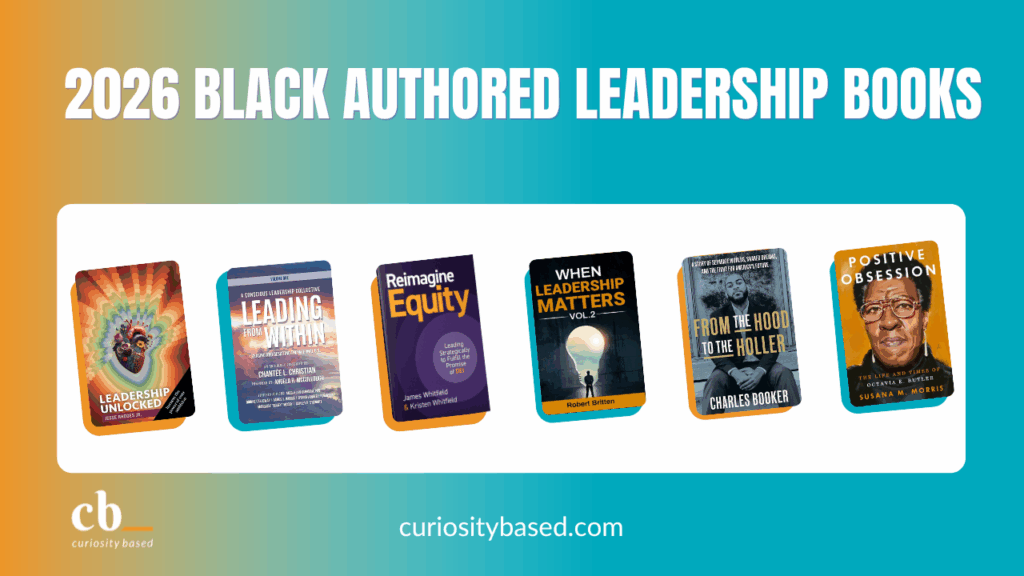
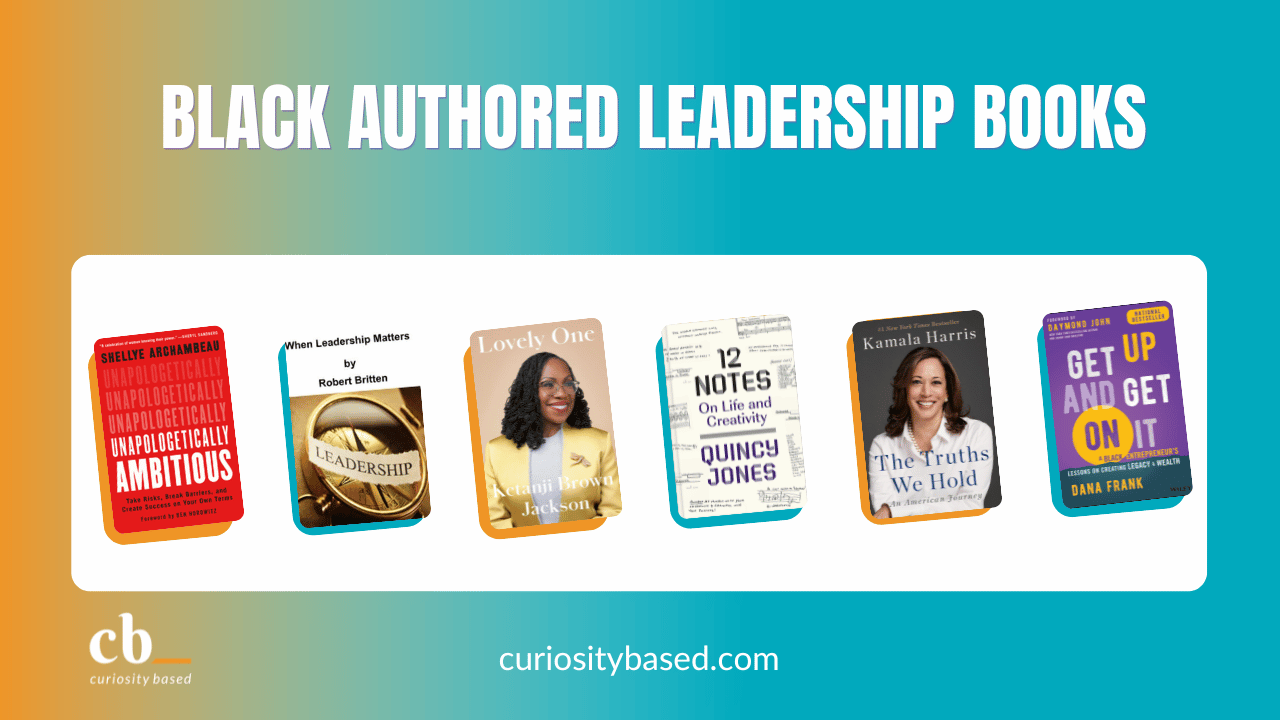
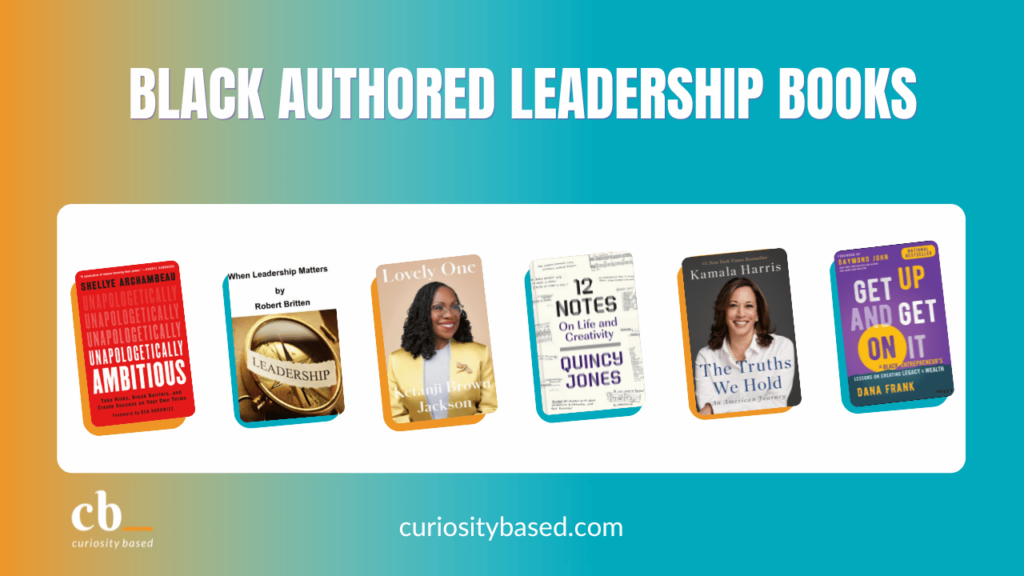
We created this list to promote Black authored leadership books. This list is meant to be a resource, not an official endorsement and the books listed are in alphabetical order. Check out our other leadership book lists by authors who identify as LGBTQIA+, AANHPI, Native American, Women, and Hispanic/ Latino/ Latinx. View all of our leadership book lists here.
12 Notes: On Life and Creativity – Quincy Jones
50 Billion Dollar Boss: African American Women Sharing Stories of Success in Entrepreneurship and Leadership – Kathey Porter
9 Laws of Success: Attracting the Life, Love, Health & Success You Want! – Stormy Wellington
A Conscious Leadership Collective Volume I: Leading From Within: Ceasing and Desisting the Internal BS – Chantée L. Christian (editor)
A Good Cry, What we Learn from Tears and Laughter – Nikki Giovanni
A Lucky Man – Jamel Brinkley
A Promised Land – Barack Obama
A Seat at the C-Suite Table: Insights from the leadership Journeys of African American Executives – Chuck Wallington, PhD
A Way Out of No Way: A Memoir of Truth, Transformation, and the New American Story – Raphael Warnock
Acting Up: Winning in Business and in Life Using Down-Home Wisdom – Janice Bryant Howroyd
After the Rain: Gentle Reminders for Healing, Courage, and Self-Love – Alexandra Elle
Ain’t I a Woman: Black Women and Feminism – Bell Hooks
Air Traffic: A Memoir of Ambition and Manhood in America – Gregory Pardlo
All About Love – Bell Hooks
All That She Carried – Tiya Miles
Allow Me to Retort: A Black Guy’s Guide to the Constitution – Elie Mystal
American Imam: From Pop Stardom to Prison Abolition – Taymullah Abdur-Rahman
Anchored, Aligned, Accountable: A Framework for Transcending Bullsh*t and Transforming Our Lives and Work – Aiko Bethea
And Then We Rise: A Guide to Loving and Taking Care of Self – Common
Authentic: The Myth of Bringing Your Full Self to Work – Jodi-Ann Burey
Bad Feminist – Roxane Gay
Balancing Work and Life: The Nia Guide for Black Women – Sheryl Huggins & Cheryl Mayberry McKissack
Bamboozled: How God Tricked Me into the Life of My Dreams – Yvonne Orji
Barracoon: The Story of the Last “Black Cargo” – Zora Neale Hurston
Be a Revolution: How Everyday People Are Fighting Oppression and Changing the World – Ijeoma Oluo
Beating the Odds: Eddie Brown’s Investing and Life Strategies – Eddie Brown
Becoming – Michelle Obama
Becoming Kareem: Growing Up On and Off the Court – Kareem Abdul-Jabbar
Bee Fearless: Dream Like a Kid – Mikaila Ulmer
Believe Bigger: Discover the Path to Your Life Purpose – Marshawn Evans Daniels
Between the World and Me – Ta-Nehisi Coates
Biased: Uncovering the Hidden Prejudice That Shapes What We See, Think, and Do – Jennifer Eberhardt
Black AF History: The Un-whitewashed Story of America – Michael Harriot
Black and White: The Way I See It – Richard Williams
Black Business Secrets: 500 Tips, Strategies, and Resources for the African American Entrepreneur – Dante Lee
Black Earth Wisdom: Soulful Conversations with Black Environmentalists – Leah Penniman
Black Entrepreneur Survival Guide: The Complete Guide to Becoming a Successful African American Entrepreneur – Dunneille D. Anderson
Black Faces in White Places: 10 Game-Changing Strategies to Achieve Success and Find Greatness – Randal Pinkett & Jeffrey Robinson
Black Fatigue: How Racism Erodes the Mind, Body, and Spirit – Mary-Frances Winters
Black Fortunes: The Story of the First Six African Americans Who Escaped Slavery and Became Millionaires – Shomari Wills
Black Founder: The Hidden Power of Being an Outsider – Stacy Spikes
Black Futures – Kimberly Drew & Jenna Wortham
Black Girls Rock!: Owning Our Magic, Rocking Our Truth – Beverly Bond
Black Power Inc.: The New Voices of Success – Cora Daniels
Black Titan: A.G. Gaston and the Making of a Black American Millionaire – Carol Jenkins & Elizabeth Gardner Hines
Black Wall Street: From Riot to Renaissance in Tulsa’s Historic Greenwood District – Hannibal B. Johnson
Black Women Taught Us: An Intimate History of Black Feminism – Jenn M. Jackson, PhD
Black, White, and The Grey – Mashama Bailey & John O. Morisano
Blink: The Power of Thinking Without Thinking – Malcolm Gladwell
Born a Crime: Stories From a South African Childhood – Trevor Noah
Boss Bride: The Powerful Woman’s Playbook for Love and Success – Charreah Jackson
Bridges to Heal US: Stories and Strategies for Racial Healing – Erin Jones
Building Atlanta: How I Broke Through Segregation to Launch a Business Empire – Herman J. Russell
Burn the Blueprint: Reject the Lies, Embrace the In-Between, and Begin Again – Carlos Whittaker
Calling In: How to Start Making Change with Those You’d Rather Cancel – Loretta Ross
CEO of My Soul: The Self-Love Journey of a Small Business Owner – Nic Cober Esquire
Chasing Youth Culture and Getting it Right: How Your Business Can Profit by Tapping Today’s Most Powerful Trendsetters and Tastemakers – Tina Wells
Climb: Taking Every Step with Conviction, Courage, and Calculated Risk to Achieve a Thriving Career and a Successful Life – Michelle Gadsden-Williams & Carolyn M. Brown
Colorization: One Hundred Years of Black Films in A White World – Wil Haygood
Constructing a Nervous System – Margo Jefferson
Conversations in Black: On Power, Politics, and Leadership – Ed Gordon
Crazy as Hell: The Best Little Guide to Black History – Hoke S. Glover & V. Efua Prince
David and Goliath: Underdogs, Misfits, and the Art of Battling Giants – Malcolm Gladwell
Death of Innocence – Christopher Benson & Mamie Till-Mobley
Decoded – Jay-Z
DEI-ing: A Guide to Navigating the Gotdamn Mess They’ve Made of Diversity, Equity, and Inclusion – Dr. Cheryl Ingram
Display of Power – Daymond John
Double Down: Bet on Yourself and Succeed on Your Own Terms – Antionette M. Clarke & Tricia Clarke-Stone
Driven by Intention: Own Your Purpose, Gain Power, and Pursue Your Passion as a Woman at Work – Michelle Gadsden-Williams
Drop the Ball: Achieving More by Doing Less – Tiffany Dufu
Eartha & Kitt: A Daughter’s Love Story in Black and White – Kitt Shapiro
Eloquent Rage: A Black Feminist Discovers Her Superpower – Brittney Cooper
Emergent Strategy: Shaping Change, Changing Worlds – adrienne maree brown
Everybody’s Got Something – Robin Roberts & Veronica Chambers
Everyday Millionaires: How Ordinary People Built Extraordinary Wealth – And How You Can Too – Chris Hogan
Expect to Win: Proven Strategies for Success From a Wall Street Vet – Carla A. Harris
Feeding the Soul – Tabitha Brown
Finding Me: A Memoir – Viola Davis
Finding My Voice: My Journey to the West Wing and the Path Forward – Valerie Jarrett
Fire Shut Up in My Bones – Charles Blow
First Things First: Hip-Hop Ladies Who Changed the Game – Nadirah Simmons
From the Hood to the Holler: A Story of Separate Worlds, Shared Dreams, and the Fight for America’s Future – Charles Booker
FutureProofed: How to Navigate Disruptive Change, Find Calm in Chaos, and Succeed in Work & Life – Natalia Peart
Get Good with Money: Ten Simple Steps to Becoming Financially Whole – Tiffany “The Budgetnista” Aliche
Get the F Out Your Own Way: A Guide to Letting Go of the Sh*t that’s Holding You Back* – MJ Harris
Get Up And Get On It: A Black Entrepreneur’s Lessons on Creating Legacy and Wealth – Dana Frank
Good Night Stories for Rebel Girls: 100 Real-Life Tales of Black Girl Magic – Sonja Thomas & Lilly Workneh
Gracism: The Art of Inclusion – Dr. David A. Anderson
Green Power: The Successful Way of A.G. Gaston – A.G. Gaston
Haben: The Deafblind Woman Who Conquered Harvard Law – Haben Girma
Heavy: An American Memoir – Kiese Laymon
Hidden Figures: The American Dream and the Untold Story of the Black Women Mathematicians Who Helped Win the Space Race – Margot Lee Shetterly
Hood Feminist: Notes from the Women that a Movement Forgot – Mikki Kendall
How Boards Work and How They Can Work Better in a Chaotic World – Dambisa Moyo
How to Be an Antiracist – Ibram X. Kendi
How to Get Stupid White Men Out of Office: The Anti-Politics, Un-Boring Guide to Power – adrienne maree brown (eds)
How to Live Free in a Dangerous World: A Decolonial Memoir – Shayla Lawson
How to Succeed in Business Without Being White: Straight Talk on Making It in America – Earl G. Graves
How We Show Up: Reclaiming Family, Friendship, and Community – Mia Birdsong
Hunger: A Memoir of (My) Body – Roxane Gay
I Did a New Thing: 30 Days to Living Free – Tabitha Brown
I Saw Death Coming: A History of Terror and Survival in the War Against Reconstruction – Kidada E. Williams
Ida B. Wells Marches for the Vote – Dinah Johnson
Illogical: Saying Yes to a Life Without Limits – Emmanuel Acho
I’m Judging You: The Do-Better Manual – Luvvie Ajayi
I’m Not Yelling – Elizabeth Leiba
I’m Still Here: Black Dignity in a World Made for Whiteness – Austin Channing Brown
I’m That Girl – Jordan Chiles
Impolite Conversations: On Race, Politics, Sex, Money, and Religion – Cora Daniels & John L. Jackson Jr.
In Search of Our Mothers’ Gardens: Womanist Prose – Alice Walker
Incidents in the Life of a Slave Girl – Harriet Jacobs
Inside Out: The Equity Leader’s Guide to Undoing Institutional Racism – Caprice D. Hollins
Invisible Man, Got the Whole World Watching: A Young Black Man’s Education Book – Mychal Denzel Smith
It Worked for Me: In Life and Leadership – Colin Powell
It’s About Damn Time – Arlan Hamilton
It’s About Time: The Art of Choosing the Meaningful Over the Urgent – Valorie Burton
Just As I Am – Cicely Tyson
Just Mercy: A Story of Justice and Redemption – Bryan Stevenson
Know What Makes Them Tick: How to Successfully Negotiate Almost Any Situation – Shonda Rhimes
Lead from the Outside: How to Build Your Future and Make Real Change – Stacey Abrams
Leadership Unlocked: Harness the Power of Your Ambition – Jesse Rhodes
Leslie F*cking Jones: A Memoir – Leslie Jones
Let Love Rule – Lenny Kravitz
Life Coaching for Successful Women: Powerful Questions, Practical Answers – Valorie Burton
Life in Motion: An Unlikely Ballerina – Misty Copeland
Little Black Book: A Toolkit for Working Women – Otegha Uwagba
Locking Up Our Own: Crime and Punishment in Black America – James Forman, Jr.
Love and Rage – Lama Rod Owens
Love Leadership: The New Way to Lead in a Fear Based World – John Hope Bryant
Lovely One: A Memoir – Ketanji Brown Jackson
Lovesong: Becoming a Jew – Julius Lester
Madness: Race and Insanity in a Jim Crow Asylum – Antonia Hylton
Master of Me: The Secret to Controlling Your Narrative – Keke Palmer
Meaty: Essays – Samantha Irby
Men We Reaped – Jesmyn Ward
Mental Detox: The Power and Guidance to Implement Peace, Joy, Balance, and Financial Abundance in Your Life – Cheyenne Bryant
Miles: The Autobiography – Miles Davis
Miss Jessie’s: Creating a Successful Business From Scratch — Naturally – Miko Branch
Mom & Me & Mom – Maya Angelou
More Myself: A Journey – Alicia Keys
More than Enough: Claiming Space for Who You Are (No Matter What They Say) – Elaine Welteroth
More Than Pretty: Doing the Soul Work that Uncovers Your True Beauty – Erica Campbell
Mo’s Bows: A Young Person’s Guide to Start-up Success – Moziah Bridges & Tramica Morris
My Bondage and My Freedom – Frederick Douglass
My Grandmother’s Hands: Racialized Trauma and the Pathway to Mending Our Hearts and Bodies – Resmaa Menakem
My Life: Queen of the Court – Serena Williams
My Story of Embracing Purpose, Healing & Hope – Karamo Brown
Nothing is Missing: A Memoir of Living Boldly – Nicole Walters
Nothing Personal – James Baldwin
Octavia’s Brood: Science Fiction from Social Justice Movements – adrienne maree brown (eds)
Of Greed and Glory: In Pursuit of Freedom for All – Deborah G. Plant
On the Other Side of Freedom: The Case for Hope – DeRay Mckesson
On Thriving: Harnessing Joy Through Life’s Great Labors – Brandi Sellerz-Jackson
Our Brave Foremothers: Celebrating 100 Black, Brown, Asian & Indigenous Women Who Changed the Course of History – Rozella Kennedy
Outliers: The Story of Success – Malcolm Gladwell
Own Your Phenomenal Self: A Guide on Character, Success, & Leadership – Rita P. Mitchell
Playing the Game Without a Coach: How Courage, Resilience and Forgiveness Helped One Man Seize the American Dream – Benjamin Raymond
Please Don’t Sit On My Bed In Your Outside Clothes – Phoebe Robinson
Pleasure Activism: The Politics of Feeling Good – adrienne maree brown
Positive Obsession: The Life and Times of Octavia E. Butler – Susana M. Morris
Praisesong for the Kitchen Ghosts: Stories and Recipes from Five Generations of Black Country Cooks – Crystal Wilkinson
Produced by Faith: Enjoy Real Success Without Losing Your True Self – DeVon Franklin
Professional Troublemaker: The Fear Fighter Manual – Luvvie Ajayi Jones
Purple Harvest: Planting Goals, Growing Truths – Dr. Rashonda Harris
Purpose Driven Leadership: Building and Fostering Effective Teams – Brigette Tasha Hyacinth
Quantum Leaps: 10 Steps to Help You Soar – Gloria Mayfield Banks
Queer Eye: Love Yourself, Love Your Life – Antoni Porowski, Tan France, Jonathan Van Ness, Bobby Berk, & Karamo Brown
Radical Dharma: Talking Race, Love and Liberation – Rev Angel Kyodo Williams
Reach: 40 Black Men Speak on Living, Leading, and Succeeding – Ben Jealous & Trabian Shorters
Reimagine Equity: Leading Strategically to Fulfill the Promise of DEI – James Whitfield & Kristen Whitfield
Responsible Marketing – Lola Bakare
Revelations: The Autobiography of Alvin Ailey – Alvin Ailey & A. Peter Bailey
Right Within: How to Heal From Racial Trauma in the Workplace – Minda Harts
Rise and Grind: Outperform, Outwork, and Outhustle Your Way to a More Successful and Rewarding Life – Daymond John & Daniel Paisner
Self-Esteem is the New Black: How to become the confident woman you have always wanted to be! – Monique Mays
Set Boundaries, Find Peace: A Guide to Reclaiming Yourself – Nedra Glover Tawwab
Singing Away the Hunger – Mpho ‘M’atsepo Nthunya
Sister Outsider: Essays and Speeches – Audre Lorde
Small Doses: Potent Truths for Everyday Use – Amanda Seales
So You Want to Talk About Race – Ijeoma Oluo
Somebody’s Daughter: A Memoir – Ashley C. Ford
Speaking Truth to Power – Anita Hill
Stamped from the Beginning: The Definitive History of Racist Ideas in America – Ibram X. Kendi
Standing Above the Crowd – James Donaldson
Starting at Zero – Jimi Hendrix
Strategize to Win: The New Way to Start Out, Step Up, or Start Over in Your Career – Carla Harris
Strength to Love – Martin Luther King, Jr.
Success Is A Side Effect: Leadership, Relationships, and Selective Amnesia – Moe Anderson
Success Never Smelled So Sweet: How I Followed My Nose and Found My Passion – Lisa Price & Hilary Beard
Successful Women Think Differently: 9 Habits to Make You Happier, Healthier & More Resilient – Valorie Burton
Super Rich: A Guide to Having It All – Russell Simmons
Swimming with Sharks in Dark Waters – Athene Brinson
Talk it Up!: A Guide to Successful Public Speaking – David Suk Brown & Danny Suk Brown
Talk to Me Nice: The Seven Trust Languages for a Better Workplace – Minda Harts
The 1619 Project: A New Origin Story – Nikole Hannah-Jones
The Art of Ronin Leadership – Mike Howard
The Autobiography of Malcolm X – Malcolm X & Alex Haley
The Awkward Thoughts of W. Kamau Bell – W. Kamau Bell
The Beautiful Ones – Prince
The Black Girl’s Guide to Financial Freedom: Build Wealth, Retire Early, and Live the Life of Your Dreams – Paris Woods
The Black Woman Millionaire: A Revolutionary Act that DEFIES Impossible – Dr. Venus Opal Reese
The Body Is Not An Apology: The Power of Radical Self-Love – Sonya Renee Taylor
The Book of Awesome Black Americans – Monique Jones
The Color of Water: A Black Man’s Tribute to His White Mother – James McBride
The Complete Quincy Jones: My Journey & Passions – Quincy Jones
The Dead Don’t Need Reminding – Julian Randall
The Devil You Know: A Black Power Manifesto – Charles Blow
The Elevation Approach – Tina Wells
The Extraordinary Power of Leader Humility – Marilyn Gist
The Fire Next Time – James Baldwin
The Gatekeepers Are Gone: Hustle + Technology = Success – Lamar Tyler
The Hill We Climb – Amanda Gorman
The Last Black Unicorn – Tiffany Haddish
The Light We Carry – Michelle Obama
The Little Black Book of Success: Laws of Leadership for Black Women – Elaine Meryl Brown, Marsha Haygood, & Rhonda Joy McLean
The Memo: Five Rules for Your Economic Liberation – John Hope Bryant
The Memo: What Women of Color Need to Know to Secure a Seat at the Table – Minda Harts
The Mentor Leader – Tony Dungy
The Merchant Prince of Black Chicago: Anthony Overton and the Building of a Financial Empire – Robert E. Weems
The Mind of a Winner – Steve Canal
The Misadventures of Awkward Black Girl – Issa Rae
The One Week Budget – Tiffany Aliche
The Path Made Clear: Discovering Your Life’s Direction and Purpose – Oprah Winfrey
The Perfect Day to Boss Up – Rick Ross & Neil Martinez-Belkin
The Power of Broke – Daymond John
The Purpose of Power: How We Come Together When We Fall Apart – Alicia Garza
The Pursuit of Happyness – Chris Gardner
The Race Whisperer: Barack Obama and the Political Uses of Race – Melanye Price
The Rise: Creativity, the Gift of Failure, and the Search for Mastery – Sarah Lewis
The Road to Someplace Better: From the Segregated South to Harvard Business School and Beyond – Lillian Lincoln Lambert
The Secrets to Success: When You Want to Succeed as Bad as You Want to Breathe – Eric Thomas
The Souls of Queer Folk: How Understanding LGBTQ+ Culture Can Transform Your Leadership Practice – Dr. Joel A. Davis Brown
The Source of Self-Regard – Toni Morrison
The Tipping Point: How Little Things Can Make a Big Difference – Malcolm Gladwell
The Transformational Consumer – Tara-Nicholle Nelson
The Truths We Hold: An American Journey – Kamala Harris
The Urgent Life – Bozoma Saint John
The Wealth Choice: Secret Success of Black Millionaires – Dennis Kimbro
The Work: Searching for a Life that Matters – Wes Moore
These Wilds Beyond Our Fences: Letters to My Daughter on Humanity’s Search for Home – Bayo Akomolafe
Thick: And Other Essays – Tressie McMillan Cottom
This Is the Fire: What I Say to My Friends About Racism – Don Lemon
Transforming Ethnic and Race-Based Traumatic Stress with Yoga: Rest, Reflect, Renew – Gail Parker
Unapologetically Ambitious: Take Risks, Break Barriers, and Create Success on Your Own Terms – Shellye Archambeau
Unbowed – Wangari Maathai
Uncomfortable Conversations with a Black Man – Emmanuel Acho
Undrowned: Black Feminist Lessons from Marine Mammals – Alexis Pauline Gumbs
Unprecedented: The Masters and Me – Tiger Woods & Lorne Rubenstein
Up from Nothing: The Untold Story of How We (All) Succeed – John Hope Bryant
Upper Hand: The Future of Work for the Rest of Us – Sherrell Dorsey
We Are Bridges – Cassandra Lane
We Should All Be Feminists – Chimamanda Ngozi Adichie
We Should All Be Millionaires: A Woman’s Guide to Earning More, Building Wealth, and Gaining Economic Power – Rachel Rodgers
We Will Not Cancel Us – adrienne maree brown
Werk 101: Get Your Life Together Guide – Koereyelle DuBose
What I Know for Sure – Oprah Winfrey
When Leadership Matters – Robert Britten
When the Miracle Drops: How Instagram Helped Turn a Quick Fix Into a Million-Dollar Product – Jessica Dupart
Where Do We Go from Here: Chaos or Community – Dr. Martin Luther King Jr.
Where You Are is Not Who You Are – Ursula Burns
White Girls – Hilton Als
Why Should White Guys Have All the Fun? – Reginald Lewis & Blair S. Walker
Wildflower: A Memoir – Aurora James
Will – Will Smith
Women of Color in Tech: A Blueprint for Inspiring and Mentoring the Next Generation of Technology Innovators – Susanne Tedrick
Worthy – Jada Pinkett Smith
Writing My Wrongs: Life, Death and Redemption in an American Prison – Shaka Senghor
Writings on the Wall: Searching for a New Equality Beyond Black and White – Kareem Abdul-Jabbar
Year of Yes: How to Dance it Out, Stand in the Sun, and Be Your Own Person – Shonda Rhimes
You Are Before the World: Lessons on Doing Good without Being Undone – Tara Jaye Frank
You Got This!: Unleash Your Awesomeness, Find Your Path, and Change Your World – Maya Penn
You Owe You: Ignite Your Power, Your Purpose, and Your Why – Eric Thomas, PhD
Your Next Level Life: 7 Rules of Power, Confidence, and Opportunity for Black Women in America – Karen Arrington
You’ve Got to Be Hungry: The Greatness Within to Win – Les Brown
Zami: A New Spelling of My Name – Audre Lorde
We put a lot of work curating this list. If you appreciate it, please like it and share it with others.
2025 Native American & Alaska Native Authored Leadership Book List
In honor of Alaska Native & Native American Month, we’ve updated our Native American & Alaska Native Authored Leadership Book List. This list is meant to be a resource, not an official endorsement. The books are not ranked or listed in any particular order.
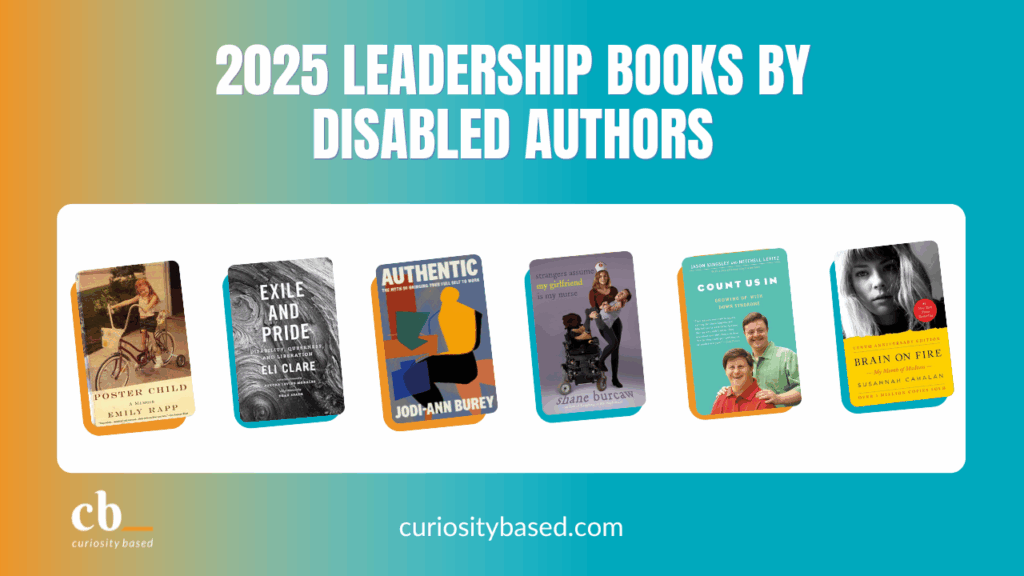
We created this list to promote leadership books by disabled authors. This list is meant to be a resource, not an official endorsement. The books are not ranked or listed in any particular order.
1. A Body, Undone: Living On After Great Pain — Christina Crosby
2. A Face for Picasso: Coming of Age with Crouzon Syndrome — Ariel Henley
3. Adult ADHD: How to Succeed as a Hunter in a Farmer’s World — Thom Hartmann
4. An Unquiet Mind: A Memoir of Moods and Madness — Kay Redfield Jamison
5. And Now We Are Going to Have a Party: Liner Notes to a Writer’s Early Life — Nicola Griffith
6. Apocalyptic Best Practices: A unique approach to fear and change — Elisebeth VanderWeil
7. ASL Saved My Life…Until it didn’t — Jenni Kleinman Berebitsky
8. Authentic: The Myth of Bringing Your Full Self to Work — Jodi Ann Burey
9. Be Different — John Elder Robison
10. Being Heumann: an unrepentent memoir of a disability rights activist — Judith E. Heumann
11. Black, Blind, In Charge: A Story of Visionary Leadership and Overcoming Adversity — David A Paterson
12. Blind: A Memoir — Belo Cipriani
13. Body, Remember: A memoir — Kenny Fries
14. Brain on Fire: My Month of Madness — Susannah Cahalan
15. Brilliant Imperfection: Grappling With Cure — Eli Clare
16. Calling all Minds: How to Think and Create Like an Inventor — Temple Grandin
17. Care Work: Dreaming Disability Justice — Leah Lakshmi Piepzna-Samarasinha
18. Chef Interrupted — Trevis Gleason
19. Claiming Disability: Knowledge and Identity — Simi Linton
20. Count Us In: Growing Up with Down Syndrome — Jason Kingsley (Author), Mitchell Levitz (Author)
21. Crazy, Who Me?: My Journey as a Leader Overcoming Depression — John Panigas
22. Deaf in Japan: Signing and the Politics of Identity — Karen Nakamura
23. Deaf Utopia: A Memoir―and a Love Letter to a Way of Life — Coauthored by Nyle DiMarco
24. Defiant — Michael Scott Monje Jr.
25. Demystifying Disability: What to Know, What to Say, and How to Be an Ally — Emily Ladau
26. Disability Incarcerated: Imprisonment and Disability in the United States and Canada — Liat Ben-moshe (editor), Allison C. Carey (Editor), Chris Chapman (Editor), Angela Y. Davis (Foreword)
27. Disability Visibility: First-Person Stories from the Twenty-First Century — Alice Wong
28. Disabled Leadership — Dr. Tom A. Wiggins
29. Disarm Your Limits: The flight formula to lift you to success and propel you to the next horizon — Jessica Cox
30. Disfigured: On Fairy Tales, Disabiity and Making Space — Amanda Leduc
31. Dissonant Disabilities: Women With Chronic Illness Explore Their Lives — Michelle Owen, Diane Driedger (Editor)
32. Don’t Worry, He Won’t Get Far on Foot — John Callahan
33. Elegy for a Disease: A Personal and Cultural History of Polio — Anne Finger
34. Exile and Pride: Disability, Queerness, and Liberation — Eli Clare
35. Extraordinary Bodies: Figuring Physical Disability in American Culture and Literature — Rosemarie Garland-Thomson
36. Fading Scars: My Queer Disability History — Corbett O’Toole
37. Fall Down, Laughing: How Squiggy caught multiple sclerrosis and didn’t tell nobody — David Lander
38. Fearlessly Different: An Autistic Actor’s Journey to Broadway’s Biggest Stage — Mickey Rowe
39. Feminist Queer Crip — Alison Kafer
40. Find Another Dream — Maysoon Zayid
41. Gaby Brimmer: An Autobiography in Three Voices — Gaby Brimmer (Author), Elena Poniatowska
42. Goalkeeper: Memoir of Poet Peter Street — Peter Street, Lorraine Worsley-Carter (Foreword)
43. Golem Girl — Riva Lehrer
44. Haben: The deafblind woman who conquered Harvard Law — Haben Girma
45. Holding Change: The Way of Emergent Strategy Facilitation and Mediation — Adrienne Maree Brown
46. House of Prayer No. 2 — Mark Richard
47. How I Became a Human Being: A Disabled Man’s Quest for Independence — Mark O’Brien, Gillian Kendall (Contributor)
48. How I See It: A Personal and Historical View of Disability — H Penny Mishkin
49. How to Live Free in a Dangerous World: A Decolonial Memior — Shayla Lawson
50. I Am Not a Label — Cerrie Burnell
51. I Am Schizophrenic: Poetry from a beautiful brain — Kerenza Ryan
52. I Live a Life Like Yours: A Memoir — Jan Grue
53. I’ll Scream Later — Marlee Matlin
54. If at Birth You Don’t Succeed: My Adventures with Disaster and Destiny — Zach Anner
55. In the Province of Gods — Kenny Fries
56. Just Human: The Quest for Disability Wisdom, Respect, and Inclusion — Arielle Silverman, PhD
57. Laughing at My Nightmare — Shane Burcaw
58. Life in the Mind Interrupted: Essays on Mental Health and Disability in Higher Education — Katie Rose Guest Pryal
59. Limitless: The Power of Hope and Resilience to Overcome Circumstances — Mallory Weggemann
60. Look Me in the Eye: My Life with Asperger’s — John Elder Robison
61. Loud Hands: Autistic People, Speaking — Julia Bascom
62. Mad at School: Rhetorics of Mental Disability and Academic Life — Margaret Price
63. Madness: A Bipolar Life — Marya Hornbacher
64. Marbles: Mainia, Depession Michelangelo, and Me — Ellen Forney
65. Mean Baby: A Memoir of Growing Up — Selma Blair
66. Mean Little Deaf Queer: A Memoir — Terry Galloway
67. More the Same than Different: What I Wish People Knew About Respecting and Including People with Disabilities — Lorraine Cannistra
68. Moving Violations: Warzones, Wheelchairs, and Declarations of Independence — John Hockenberry
69. My Body is Not a Prayer Request: Disability Justice in the Church — Amy Kenny
70. Not a Poster Child: Living Well with a Disability – A Memoir — Francine Falk-Allen
71. Nothing about us without us: disability oppression and empowerment — James I. Charlton
72. On the Spectrum: Autism, Faith, and the Gifts of Neurodiversity — Daniel Bowman Jr.
73. Planet of the Blind — Stephen Kuusisto
74. Poster Child: A Memoir — Emily Rapp Black
75. Resistance and Hope: Essays by Disabled People — edited by Alice Wong
76. Rolling Warrior: The Incredible, Sometimes Awkward, True Sotry of a Rebel Girl on Wheels Who Helped Spark a Revolution — Judith Heumann
77. Rough Waters: From Surviving to Thriving with a Progressive Muscular Dystrophy — Heather C. Markham
78. Sick: A Memoir — Porochista Khakpour
79. Sitting Pretty: The View from My Oridinary Resilient Disabled Body — Rebekah Taussig
80. Songs of the Gorilla Nation: My Journey Through Autism — Dawn Prince-Hughes
81. Speedbumps: Florring it through Hollywood — Teri Garr
82. Staring: How We Look — Rosemarie Garland-Thomson
83. Still Me — Christopher Reeve
84. Strangers Assume My Girlfriend Is My Nurse — Shane Burcaw
85. Successfull to Burnt Out: Experiences of Women on the Autism Spectrum — Karletta Abianac
86. Switched On: A Memoir of Brain Change and Emotional Awakening — John Elder Robison
87. The ADHD Advantage: What You Thought Was a Diagnosis May Be Your Greatest Strength — Dale Archer, MD
88. The Body Silent: The Different World of the Disabled — Robert Francis Murphy
89. The Difference That Disability Makes — Rod Michalko
90. The Disability Experience: Working Toward Belonging — Hannalora Leavitt
91. The Essential Franklin Delano Roosevelt — Franklin Roosevelt
92. The Fully Recovered Mindset — Maddie Neibanck
93. The Ghost in My Brain: How a Concussion Stole My Life and How the New Science of Brain Plasticity Helped Me Get It Back — Clark Elliott
94. The History of My Shoes and the Evolution of Darwin’s Theory — Kenny Fries
95. The Obsessive Joy of Autism — Julia Bascom
96. The pretty one: on life, pop cultue, disability, and other reasons to fall in love with me — Keah Brown
97. The Story of My Life — Helen Keller
98. The Way I See It: A Personal Look at Autism and Asperger’s — Temple Grandin
99. The White Album — Joan Didion
100. The World I Live In — Helen Keller
101. Thinking in Pictures: My Life with Autism — Temple Grandin
102. To Know As We Are Known: Education as spiritual journey — Parker Palmer
103. Too Late to Die Young: Nearly True Tales from a Life — Harriet McBryde Johnson
104. Typed Words, Loud Voices — Various (Author), Amy Sequenzia (Editor), Elizabeth Grace (Editor)
105. Unleash Different: Achieving Business Success Through Disability — Rich Donovan
106. Unwritten Rules of Social Relationships: Decoding social mysteries theough autism’s unique perspectives — Temple Grandin
107. Waist-High in the World: A Life Among the Nondisabled — Nancy Mairs
108. Walking Papers: The Accident that Changed My Life, and the Business that Got Me Back on My Feet — Francesco Clark
109. We Are Never Meeting in Real Life — Smantha Irby
110. What Doesn’t Kill You: A Life with Chronic Illness – Lessons from a Body in Revolt — Tessa Miller
111. When the Chant Comes — Kay Ulanday Barrett
112. Why I Burned My Book and Other Essays on Disability — Paul K. Longmore
113. Wishful Drinking — Carrie Fisher
114. Year of the Tiger: An Activists Life — Alice Wong
115. You Don’t Have to Say You Love Me — Sherman Alexie
133 Leadership Books Written by Hispanic/ Latino/ Latinx Authors (2025)
In honor of Latin American History Month, we updated our list of leadership books with 132 leadership books written by Hispanic/ Latino/ Latinx authors. This list is meant to be a resource, not an official endorsement. The books are not ranked or listed in any particular order.
1. Becoming Dr. Q: My Journey from a Migrant Farm Worker to Brain Surgeon by Alfredo Quinones-Hinjosa
2. [Un]framing the “Bad Woman”: Sor Juana, Malinche, Coyolxauhqui, and othe rebels with a cause by Alicia Gaspar de Alba
3. The Likeability Trap: How to Break Free and Succeed As You Are by Alicia Menendez
4. You Don’t Hae to Like Me: Essays on Growing Up, Speaking Out, and Finding Feminism by Alida Nugent
5. Chingona: Owning Your Inner Badass for Healing and Justice by Alma Zaragoza-Petty
6. The 5 Disciplines of Inclusive Leaders: Unleashing the Power of Us All by Andrés Tapia (coauthor)
7. The More or Less Definitive Guide to Self Care by Anna Borges
8. In Defense of Our America: The Fight for Civil LIberties in the Age of Terror by Anthony D. Romero
9. Frida by Barbara Mujica
10. Growing American Roots by Bob Menendez
11. Silencing Gender, Age, Ethnicity and Cultural Biases in Leadership by Camilla A. Montoya, Julieta V. García. et al.
12. Diversity, Equity, and Inclusion: Strategies for Facilitating Conversations on Race by Caprice Hollins and Ilsa Govan
13. Youth, Identity, Power: The Chicano Movement by Carlos Munoz Jr.
14. The Universal Tone: Bringing My Story to Light by Carlos Santana
15. In The Dream House: A Memoir by Carmen Maria Machado
16. Latina Empowerment Through Leadership: Mindful Stories from Inspiring Women by Catherine Munos Garces, Monica Rivera, et al
17. Leaving Little Havana: A memoir of Miami’s Cuban ghetto by Cecilia M. Fernandez
18. More than Ready: Be Strong and Be You… and Other Lessons for Women of Color on the Rise by Cecilia Muñoz
19. An Organizer’s Tale by Cesar Chavez
20. Leadership Lessons of the White House Fellows: Learn How to Inspire Others, Acheive Greatness, and Find Success in Any Organization by Charles P. Garcia
21. Latinization and the Latino Leader: How to Value, Develop, and Advance Latino Professionals by Cristina Benitez & Marlene Gonzalez
22. Dreaming of Home: How We Turn Fear into Pride, Power, and Real Change by Cristina Jiménez
23. The Power Manual: How to Master Complex Power Dynamcis by Cyndi Suarez
24. Burnt out to Lit Up by Daisy Auger-Dominguez
25. Inclusion Revolution: The Essential Guide to Dismantling Racial Inequity in the Workplace by Daisy Auger-Dominguez
26. A Cup of Water Under My Bed: A Memoir by Daisy Hernández
27. Undocumented: A Dominican boy’s odyssey from a homeless shelter to the Ivy League by Dan-el Padilla Peralta
28. El Cinco de Mayo: An American Tradition by David Hayes-Bautista
29. La Nueva California: Latinos from Pioneers to Post-Millenials by David Hayes-Bautista
30. Ready, Set, Manifest: A Handbook for the in-between and leaps in life by Debbie Lacey
31. Dream Big by Deborah Rosado Shaw
32. Latina Leadership Lessons: Fifty Latinas Speak by Delia Garcia (editor)
33. Thriving in the Fight: A Survival Manual for Latinas on the Front Lines of Change by Denise Padin Collazo
34. In the Country We Love: My Family Divided by Diane Guerrero
35. The Story of Latinos and Education in American History by Dr. Abdín Noboa-Ríos
36. The Leadership Shift: The strategic Positioning of Latino Business Leaders by Dr. Nilda Perez
37. Latinos in American Society: Families and Communities in Transition by Dr. Ruth Enid Zambrana
38. Latinx: The New Force in American Politics by Ed Morales
39. American Poison: How Racial Hostility Destroyed Our Promise by Eduardo Porter
40. Dream First: How to Quit Overthinking and Make it Happen by Ellen Marie Bennett
41. Field Mice: Memoirs of a Migrant Child by Emma Gonzalez
42. Almost a Woman by Esmeralda Santiago
43. When I Was Puerto Rican by Esmeralda Santiago
44. In My Own Words: A Memoir by Eva Peron
45. Presumed Incompetent: The Intersections of Race and Class for Women in Academia by Gabriella Gutiérrez y Muhs, Yolanda Flores Niemann, Carment G. González
46. Gaby Brimmer: An Autobiography in Three Voices by Gaby Brimmer (Author), Elena Poniatowska
47. The Virtuous Circle: Restore Your Confidence, Bounce Back, and Emerge Stronger by Gaby Natale
48. Borderlands / La Frontera: The New Mestiza by Gloria Anzaldúa
49. Breaking Ground and Barriers: Hispanic Women Developing Effective Leadership by Gloria Bonilla-Santiago, Ph.D.
50. Take Charge of your Brand: Quck and simple techniques to help you own and manage your personal brand for professional and personal success by Guisselle Nuñez
51. The Engine of America: The Secrets to Small Business Success From Entrepreneurs Who Have Made It! by Hector V. Barreto
52. Act Like a Leader, Think Like a Leader by Hermina Ibarra
53. The Secret Principles of Genius: The Key to Unlocking Your Hidden Genius Potential by I.C. Robledo
54. My Time to Speak: Reclaiming Ancestry and Confronting Race by Ilia Calederon
55. My Invented Country: a Nostalgic Journey Through Chile by Isabel Allende
56. The Soul of a Woman by Isabel Allende
57. Isabel’s Hand-Me-Down Dreams by Isabel Lopez
58. Latinas in Aviation by Jacqueline S. Ruiz
59. Youth to Power: Your Voice and How to Use it by Jamie Margolin
60. The Buena Salud Guide to Understanding Depression and Enjoying Life by Jane Delgado
61. The Latina Guide to Health: Consejos and Caring Answers by Jane Delgado
62. Solito: A Memoir by Javier Zamora
63. Crux: A cross-border memoir by Jean Guerrero
64. ¡Rise up, Mi Gente! A Roadmap for Latinos to Acheive Success in Corporate America by Jesse A. Mejia
65. And A Voice to Sing With: A Memoir by Joan Baez
66. Powerhouse Principles: The Ultimate Bluepring for REal Estate Success in an Ever-Chaning Market by Jorge Perez
67. Take a Stand: Lessons from Rebels by Jorge Ramos
68. Dear America: Notes of an undocumented citizen by Jose Antonio Vargas
69. From Farmworker to Astronaut by Jose Hernandez
70. Salsa, Soul, and Spirit: Leadership for a multicultural age by Juana Bordas
71. The Power of Latino Leadership: Culture, inclusion, and contribution by Juana Bordas
72. An Unlikely Journy: Waking up from My American Dream by Julián Castro
73. My (Underground) American Dream: My True Story as an Undocumented Immigrant Who Became a Wall Street Executive by Julissa Arce
74. The Undocumented Americans by Karla Conejo Villavicencio
75. The Undocumented Americans by Karla Cornejo Villavicencio
76. Justice & Space Matter in a Strong, Unified Latino Community by Kathy Bussert-Web, Maria Eugenia Diaz, Krystal A Yanez
77. Latino and Latina Leaders of the 21st Century: Ordinary Beginnings, Extraordinary Outcomes by Kay (Kayla) S. Garcia
78. Inventing Latinos: A New Story of American Racism by Laura E. Gómez
79. I Got This: To Gold and Beyond by Lauren Hernandez
80. The Far Away Brothers: Two young migrants and the making of an American life by Lauren Markham
81. Being Brown: Sonia Sotomayor and the Latino Question by Lázaro Lima
82. Beyond Inclusion, Beyond Empowerment A Developmental Strategy to Liberate Everyone by Leticia Nieto
83. Wealth Warrior: 8 Steps for Communities of Color to Conquer the Stock Market by Linda Garcia
84. Dream in Color: How the Sánchez Sisters are Making History in Congress by Linda Sánchez
85. Gmorning, Gnight!: Little pep talks for me & you by Lin-Mauel Miranda
86. Journey to the Future: A Roadmap for Success for Youth by Ltc. Consuelo Castillo Kickbusch
87. The Devil’s Highway, A True Story by Luis Alberto Urrea
88. Still Dreaming: My Journey from the Barrio to Capitol Hill by Luis Gutiérrez
89. Always Running: La Vida Loca – gang days in L.A. by Luis J. Rodriguez
90. Healing Journey: Surviving Domestic Violence by Lupe Valdez
91. AOC: The Fearless Rise and Powerful Resonance of Alexandria Ocasio-Cortes by Lynda Lopez
92. Children of the Land: A Memoir by Marcelo Hernandez Castillo
93. An American Son: A Memoir by Marco Rubio
94. Living Beyond Borders: Growing Up Mexican in America by Margarita Longoria
95. Once I Was You: A Memoir of Love and Hate in a Torn America by María Hinojosa
96. Perfectly You: Embracing the Power of Being Real by Mariana Atencio
97. The Latino Advantage in the Workplace by Mariela Dabbah, Arturo Poiré
98. Taking On the System: Rules for Change in a Digital Era by Markos Moulitsas Zuniga
99. From the Texas Cotton Fields to the United States Tax Court, the Life Journey of Juan F. Vasquez by Mary Theresa (Terry) Vasquez, Anthony Head
100. Latino Leaders Speak: Personal Stories of Struggle and Triumph by Mickey Ibarra (editor), Maria Pérez-Brown (Editor)
101. Finding Manana: A Memoir of a Cuban Exodus by Mirta Ojito
102. The Injustice Never Leaves You: Anti-Mexican Violence in Texas by Monica Muñoz Martinez
103. Mean by Myriam Gurba
104. Leapfrog: The New Revolution for Women Entrepreneuers by Nathalie Molina Niño
105. Hermanas: Deepening our identity and growing our influence by Natialia Kohn Rivera
106. Self Made: Becoming Empowered, Self Reliant and Rich in Every Way by Nely Galán
107. Spirit Run: A 6000 Mile Marathon Through America’s Stolen Land by Noe Alvarez
108. Finding Latinx: In Search of the Voices Redefining Latino Identity by Paola Ramos
109. Tias and Primas, On Knowing and Loving the Women Who Raise Us by Prisca Dorcas Mojica Rodriguez
110. Latinas Rising Up in HR: Inspirational Stories of Human Resources Professionals Leading, Thriving, and Breaking Barriers by Priscilla Guasso
111. Bird of Paradise: How I became a Latina by Raquel Cepeda
112. The Prince of Los Cocuyos by Richard Blanco
113. Me by Ricky Martin
114. Rita Moreno: A Memoir by Rita Moreno
115. Brown Church: Five centuries of Latina/o Social justice, theology, and identity by Robert Chao Romero
116. Autentico: The definitive guide to Latino career success by Robert Rodriguez
117. Latino Talent: Effective Strategies to Recruit, Retain, and Develop Hispanic Professionals by Robert Rodriguez
118. Get Rooted: Reclaim Your Soul, Serenity, and Sisterhood Throughthe Healing Medicine of the Grandmothers by Robyn Moreno
119. Farmworker’s Daughter: Growing up Mexican American by Rose Castillo Guilbault
120. Homeless by Choice by Roy Juarez Jr.
121. Presevere with Power: What Heaven Starts, Hell Cannot Stop by Samuel Rodriguez
122. A House of My Own: Stories From My Life by Sandra Cisneros
123. Wild Tongues Can’t Be Tamed: 15 Voices from the Latinx Diaspora by Saraciea J. Fennell (Editor)
124. This Little World: A How-To Guide for Social Innovators by Shelly Kurtz
125. IN THE SHADOW OF THE MOUNTAIN: A MEMOIR OF COURAGE by Silvia Vasquez-Lavado
126. My Beloved World by Sonia Sotomayor
127. Mexican Enough: My Life Between the Borderlines by Stephanie Elizondo Griest
128. Hispanic Women Seeking Higher Leadership Roles in Business by Syliva C. Motta, PhD
129. Path to the Stars: My Journey from Girl Scout to Rocket Scientist―A Latina Engineer’s Odyssey from the Brownies to NASA by Sylvia Acevedo
130. Uncolonized Latinas: Transforming Our Mindsets and Rising Together by Valerie Aloe
131. ¡Ándale, Prieta!: A Love Letter to My Family by Yasmin Ramirez
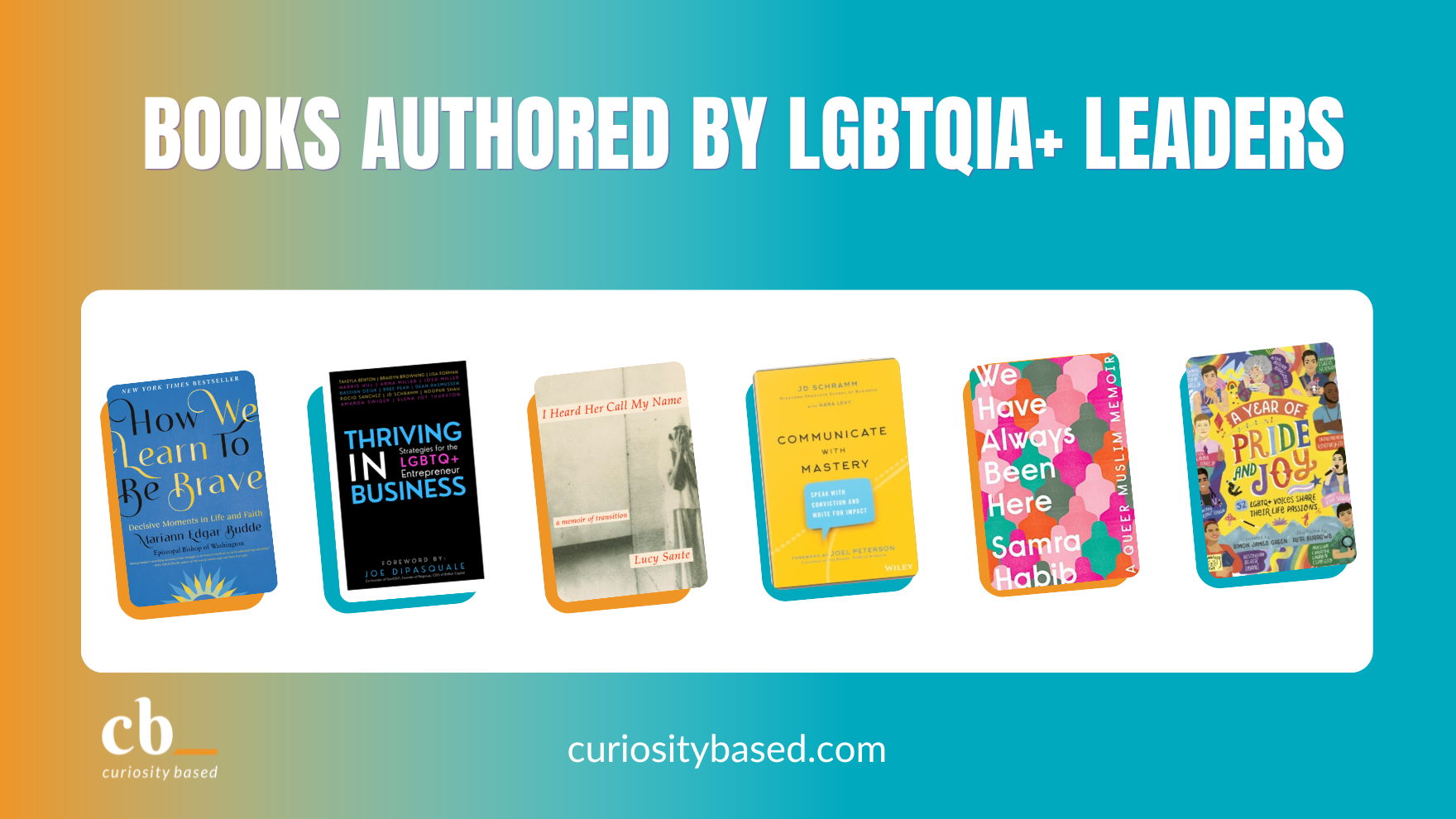
In honor of Pride Month, we created this list of 197 leadership books written by LGBTQIA+ authors. This list is meant to be a resource, not an official endorsement. The books are not ranked in any particular order.
A Queer History of the United States by Michael Bronski
A Year of Pride and Joy by Simon James Green
All Boys Aren’t Blue: A Memoir-Manifesto by George M. Johnson
All Down Darkness Wide: A Memoir by Sean Hewitt
All In: An Autobiography by Billie Jean King
All Pride, No Ego: A Queer Executive’s Journey to Living and Leading Authentically by Jim Fielding
All The Things She Said: Everything I Know About Modern Lesbian and Bi Culture by Daisy Jones
Allies at Work: Creating a Lesbian, Gay, Bisexual and Transgender Inclusive Work Environment by Dr. David M. Hall
Alphabet Soup: The Essential Guide to LGBTQ2+ Inclusion at Work by Michael Bach
An Archive of Hope: Harvey Milk’s Speeches and Writings by Harvey Milk
And A Voice to Sing With: A Memoir by Joan Baez
And Now We Are Going to Have a Party by Nichola Griffith
Another Word for Love by Carvell Wallace
Authentic Leadership: An Engaged Discussion of LGBTQ Work as Culturally Relevant by Lemuel W. Watson and Joshua Moon Johnson (Editors)
Baggage: Tales from a Fully Packed Life by Alan Cumming
Banned from California: Jim Foshee – Persecution, Redemption, Liberation… and the Gay Civil Rights Movement by Robert C. Steele
Beautiful on the Outside: A Memoir by Adam Rippon
Before We Were Trans: A New History of Gender by Dr. Kit Heyam
Beyond The Rainbow: Personal Stories and Practical Strategies to Help your Business & Workplace Connect with the LGBTQ Market by Jenn T Grace
Binge by Tyler Oakley
Black Boy Out of Time by Hari Ziyad
Blood, Bones & Butter: The Inadvertent Education of a Reluctant Chef by Gabrielle Hamilton
Body Becoming: A Path to Our Liberation by Robyn Hnderson-Espinoza
Borderlands / La Frontera: The New Mestiza by Gloria Anzaldúa
Boy Erased: A Memoir of Identity, Faith, and Family by Garrard Conley
Breaking Bias: Where Stereotypes and Prejudices Come From–and the Science-Backed Method to Unravel Them by Anu Gupta
Breaking the Rainbow Ceiling: How LGBTQ+ people can thrive and succeed at work by Layla McCay
Breaking Through: Communicating to Open Minds, Move Hearts, and Change the World by Sally Susman
Business, Not Politics: The Making of the Gay Market (Between Men-Between Women: Lesbian and Gay Studies) by Katherine Sender
Coaching Wisdom: Voices of the Gay Coaches Alliance by Gay Coaching Alliance Contributors
Coming Out of the Closet: Exploring LGBT Issues in Strategic Communication with Theory and Research by Natalie Tindall and Richard D. Waters (Editors)
Communicate with Mastery: Speak With Conviction and Write for Impact by JD Schramm
Creating an LGBT+ Inclusive Workplace: The Practical Resource Guide for Business Leaders by Kryss Shane
Deaf Utopia: A Memoir – and a Love Letter to a Way of Life by Nyle DiMarco
Dear America: Notes of an Undocumented Citizen by Jose Antonio Vargas
Diary of a Misfit: A Memoir and a Mystery by Casey Parks
Eat, Pray, Love: One Woman’s Search for Everything Across Italy, India, and Indonesia by Elizabeth Gilbert
Emergent Strategy: Shaping Change, Changing Worlds by adrienne maree brown
Entrepreneurial You: Monetize Your Expertise, Create Multiple Income Streams, and Thrive by Dorie Clark
Everybody’s Got Something by Robin Roberts & Veronica Chambers
Fairest: A Memoir by Meredith Talusan
Feeling Power: Emotions and Education by Megan Boler
Fit to Serve: Reflections on a Secret Life, Private Struggle, and Public Battle to Become the First Openly Gay U.S. Ambassador by James C. Hormel & Erin Martin
Forever Young: The Story of Troye Sivan by Alana Wulff
Forging Queer Leaders: How the LGBTQIA+ Community Creates Impact from Adversity by Bree Fram & Elizabeth Cavallaro
Frank: A Life in Politics from the Great Society to Same-Sex Marriage by Barney Frank
Freddie Mercury: A Life, In His Own Words by Freddie Mercury
Fun Home by Alison Bechdel
Gay Issues in the Workplace by Brian McNaught
Gender Ambiguity in the Workplace: Transgender and Gender-Diverse Discrimination by Alison Ash Fogarty Ph.D. & Lily Zheng
Gender Magic: Live Shamelessly, Reclaim Your Joy, & Step into Your Most Authentic Self by Rae McDaniel
Gender Outlaw: On Men, Women, and the Rest of Us by Kate Bornstein
Gender Queer: A Memoir by Maia Kobabe
Gmorning, Gnight!: Little Pep Talks for Me & You by Lin-Manuel Miranda
Gunn’s Golden Rules: Life’s Little Lessons for Making It Work by Tim Gunn
GuRu by RuPaul
Handbook of LGBT Tourism and Hospitality: A Guide for Business Practice by Jeff Guaracino, Ed Salvato
Heartbeat: Musings on Leather and Leadership by Thomas Smith
Hola Papi: How to Come Out in a Walmart Parking Lot and Other Life Lessons by John Paul Brammer
Homo Economics: Capitalism, Community, and Lesbian and Gay Life by Amy Gluckman & Betsy Reed (Editors)
Horse Barbie: A Memoir by Geena Rocero
How to Get Stupid White Men Out of Office: The Anti-Politics, Un-Boring Guide to Power by adrienne maree brown (Editor)
How to Learn to Be Brave by Mariann Edgar Budde
How to Live Free in a Dangerous World: A Decolonial Memoir by Shayla Lawson
How We Fight for Our Lives by Saeed Jones
Hunger: A Memoir of (My) Body by Roxane Gay
I Can’t Date Jesus: Love, Sex, Family, Race, and Other Reasons I’ve Put My Faith in Beyoncé by Michael Arceneaux
I Don’t Want to Die Poor: Essays by Michael Arceneaux
I Heard Her Call My Name: A Memoir of Transition by Lucy Sante
I Hope We Choose Love: A Trans Girl’s Notes from the End of the World by Kai Cheng Thom
I’m Afraid of Men by Vivek Shraya
I’m the One That I Want by Margaret Cho
In Defense of Our America: The Fight for Civil Liberties in the Age of Terror by Anthony D. Romero
In My Skin by Brittney Griner
In Search of Our Mothers’ Gardens: Womanist Prose by Alice Walker
In the Dream House: A Memoir by Carmen Maria Machado
In the Shadow of the Eagle: A Tribal Representative in Maine by Donna M. Loring
In Transit: Being Non-Binary in a World of Dichotomies by Dianne E. Anderson Inclusion: Diversity, the New Workplace, & The Will To Change by Jennifer Brown
Inclusion: Diversity, the New Workplace, & The Will To Change by Jennifer Brown
Inclusive 360: Proven Solutions for an Equitable Organization by Bernadette Smith
Is It Hot In Here (Or Am I Suffering for All Eternity for the Sins I Committed On Earth)? by Zach Zimmerman
It’s About Damn Time by Arlan Hamilton
Kissing Girls on Shabbat by Dr. Sara Glass
Lavender Road to Success: The Career Guide for the Gay Community by Kirk Snyder
Leaving Isn’t the Hardest Thing: Essays by Lauren Hough
Lesbian Love Story: A Memoir in Archives by Amelia Possanza
LGBTQ Leadership in Higher Education by Raymond Crossman (Editor)
Liberating Minds: The Stories and Professional Lives of Gay, Lesbian, and Bisexual Librarians and Their Advocates by Norman Kester and Deborah Turner (Editors)
Long Live the Tribe of Fatherless Girls: A Memoir by T Kira Madden
Love and Rage by Lama Rod Owens
Ma and Me by Putsata Reang
Maeve Rising: Coming Out Trans in Corporate America by Maeve Duvally
Marbles: Mania, Depression, Michelangelo, and Me by Ellen Forney
Martina by Martina Navratilova
Me by Ricky Martin
My Greatest Save by Brianna Scurry
My Story of Embracing Purpose, Healing & Hope by Karamo Brown
Naturally Tan by Tan France
Never Silent: ACT UP and My Life in Activism by Peter Staley
No Ashes in the Fire: Coming of Age Black & Free in America by Darnell L. Moore
Nothing Personal by James Baldwin
Octavia’s Brood: Science Fiction from Social Justice Movements by adrienne maree brown (Editor)
Oh Myyy!: There Goes The Internet by George Takei
On the Other Side of Freedom: The Case for Hope by DeRay Mckesson
One Life by Megan Rapinoe and Emma Brockes
Out & Equal at Work: From Closet to Corner Office by Selisse Berry
Out Behind the Desk: Workplace Issues for LGBTQ Librarians by Tracy Marie Nectoux (Editor)
Out in the Field: Reflections of Lesbian and Gay Anthropologists by Ellen Lewin (Editor)
Out of Space: Creating Safe Spaces in Unlikely Places by Julio C. Roman
Out to Lead: Shaping Queer Leadership by Jonathan Dromgoole
Outside the Lines: How Embracing Queerness Will Transform Your Faith by Mihee Kim-Kort
Over the Top by Jonathan Van Ness
Pageboy: A Memoir by Elliot Page
People Change by Vivek Shraya
Pleasure Activism: The Politics of Feeling Good by adrienne maree brown
Pressure is a Privilege: Lessons I’ve Learned from Life and the Battle of the Sexes by Billie Jean King
Pride Leadership: Strategies for the LGBTQ+ Leader to be the King or Queen of Their Jungle by Steven Yacovelli
Punch Me Up to the Gods: A Memoir by Brian Broome
Queer Eye: Love Yourself, Love Your Life by Antoni Porowski, Tan France, Jonathan Van Ness, Bobby Berk, & Karamo Brown
Queer Flourishing: A Guide to Personal Growth and Greater Aliveness for LGBTQ+ Adults by Dominic Longo
Raf Simons by Sunny Chanday
Rainbow Warrior: My Life in Color by Gilbert Baker
Redefining Realness: My Path To Womanhood, Identity, Love & So Much More by Janet Mock
Refusing Compulsory Sexuality: A Black Asexual Lens on Our Sex-Obsessed Culture by Sherronda J. Brown
Representation Matters: How Victory Fund, Victory Institute, and LGBT Leaders are Transforming America by Karen Ocamb
Revelations: The Autobiography of Alvin Ailey by Alvin Ailey & A. Peter Bailey
Say the Right Thing: How to Talk About Identity, Diversity, and Justice by Kenji Yoshino, David Glasgow
Secret City: The Hidden History of Gay Washington by James Kirchick
Seriously…I’m Kidding by Ellen Degeneres
Serving in Silence: Vietnam Nurse, Mother of Four, Highest-Ranking Officer to Challenge the Military’s Antigay Policy by Margarethe Cammermeyer
Serving Lesbian, Gay, Bisexual, Transgender and Questioning Teens: A How-To-Do-it Manual for Librarians by Hillias Martin Jr and James R. Murdock
Shortest Way Home: One Mayor’s Challenge and a Model for America’s Future by Pete Buttigieg
Shut Up, I’m Talking!: Coming Out in Hollywood and Making It to the Middle by Jason Stuart
Sissy: A Coming-of-Gender Story by Jacob Tobia
Sister Outsider: Essays and Speeches by Audre Lorde
Stand Out: How to Find Your Breakthrough Idea and Build a Following Around It by Dorie Clark
Stonewall: The Definitive Story of the LGBTQ Rights Uprising that Changed America by Martin Duberman
Straight Jacket: Overcoming Society’s Legacy of Gay Shame by Matthew Todd
Straight Talk About Gays in the Workplace: Creating an Inclusive, Productive Environment for Everyone in Your Organization by Liz Winfeld, Susan Spielman
Surpassing Certainty: What My Twenties Taught Me by Janet Mock
Surviving Autocracy by Masha Gessen
Ten Steps to Nanette: A Memoir Situation by Hannah Gadsby
The 9 Steps to Financial Freedom: Practical and Spiritual Steps So You Can Stop Worrying by Suze Orman
The Apartheid of Sex: A Manifesto on the Freedom of Gender by Martine Rothblatt, PhD
The Best Strangers in the World: Stories from a Life Spent Listening by Ari Shapiro
The Book of Pride: LGBTQ Heroes Who Changed the World by Mason Funk
The Chiffon Trenches: A Memoir by André Leon Talley
The Children of Harvey Milk: How LGBTQ Politicians Changed the World by Andrew Reynolds
The Complete Guide to Transgender in the Workplace by Vanessa Sheridan
The Dead Don’t Need Reminding by Julian Randall
The Educator’s Guide to LGBT+ Inclusion: A Practical Resource for K-12 Teachers, Administrators, and School Support Staff by Kryss Shane
The Fire Next Time by James Baldwin
The G Quotient: Why Gay Executives are Excelling as Leaders… and What Every Manager Needs to Know by Kirk Snyder
The Glass Closet: Why Coming Out is Good for Business by John Browne
The Gloria Anzaldúa Reader (Latin America Otherwise) by Gloria Anzaldúa
The Holly Woodlawn Story: A Low Life in High Heels by Holly Woodlawn
The Lie: A Memoir of Two Marriages, Catfishing & Coming Out by William Dameron
The Male Gazed: On Hunks, Heartthrobs, and What Pop Culture Taught Me About (Desiring) Men by Manuel Betancourt
The Man Without a Face: The Unlikely Rise of Vladimir Putin by Masha Gessen
The Normal Heart by Larry Kramer
The One You Want to Marry (And Other Identities I’ve Had): A Memoir by Sophie Santos
The Path Forward: Rethinking Federal Marijuana Policy by Rep. Earl Blumenauer, Rep. Jared Polis
The Power of “Out”: LGBT in the Workplace by Sylvia Ann Hewlett, Karen Sumberg
The Queer Advantage: Conversations with LGBTQ+ Leaders on the Power of Identity by Andrew Gelwicks
The Queer Games Avant-Garde: How LGBTQ Game Makers Are Reimagining the Medium of Video Games by Bo Ruberg
The Queering of Corporate America by Carlos A. Ball
The Rainbow Comes and Goes: A Mother and Son on Life, Love, and Loss by Anderson Cooper & Gloria Vanderbilt
The Souls of Queer Folk: How Understanding LGBTQ+ Culture Can Transform Your Leadership Practice by Dr. Joel A. Davis Brown
The Velvet Rage: Overcoming the Pain of Growing Up Gay in a Straight Man’s World by Alan Downs, PhD
They Called Us Enemy: Expanded Edition by George Takei
This Is the Fire: What I Say to My Friends About Racism by Don Lemon
This Time for Me: A Memoir by Alexandra Billings
Thriving in Business: Strategies for the LGBTQ+ Entrepreneur by Elena Joy Thurston (Editor)
Tim Cook: The Genius Who Took Apple to the Next Level by Leander Kahney
Tom Ford by Tom Ford
Trailblazer: Lighting the Path for Transgender Equality in Corporate America by Mary Ann Horton
Trust: America’s Best Chance by Pete Buttigieg
Truth or Dare: Encounters with Power, Authority, and Mystery by Starhawk
Unapologetic: A Black, Queer, and Feminist Mandate for Radical Movements by Charlene Carruthers
Untamed by Glennon Doyle
Virtually Human by Martine Rothblatt, PhD
Warrior Princess: A US Navy SEAL’s Journey to Coming Out Transgender by Kristen Beck & Anne Speckhard
We Are Everywhere: Protest, Power, and Pride in the History of Queer Liberation by Matthew Reimer
We Can Be Heroes: A Survivor’s Story by Paul Burston
We Have Always Been Here: A Queer Muslim Memoir by Samra Habib
We Will Not Cancel Us by adrienne maree brown
White Girls by Hilton Als
Who’s Afraid of Gender? by Judith Butler
WOLFPACK: How to Come Together, Unleash Our Power, and Change the Game by Abby Wambach
You’re That Bitch: & Other Cute Lessons About Being Unapologetically Yourself by Bretman Rock
Your First Million: Building a Path to Generational Wealth by Arlan Hamilton
Your Queer Career: Workplace Advice from “The Gay Leadership Dude” by Dr. Steven R. Yacovelli
Zami: A New Spelling of My Name: A Biomythography by Audre Lorde
Zero to One: Notes on Startups, or How to Build the Future by Peter Thiel & Blake Masters
Transgender Warriors : Making History from Joan of Arc to Dennis Rodman by Leslie Feinberg
Be a Revolution: How Everyday People Are Fighting Oppression and Changing the World by Ijeoma Oluo
#27 Curiosity in pharmaceuticals with Dr. Andrew Robertson
Curiosity at Work: Dr. Andrew Robertson on Fostering Curiosity and Innovation in the Pharmaceutical Industry
In this episode of Curiosity at Work, Dr. Julie Pham talks with Dr. Andrew Robertson, Vice President and Head of Global Regulatory Policy and Innovation at Takeda Pharmaceuticals. With a career spanning science, law, and health policy, Andrew shares how curiosity has driven his success at leading pharmaceutical companies like Merck, Sanofi, and Takeda.
Building a Diverse Global Team at Takeda
At Takeda, Andrew built a diverse, global team from scratch, now spanning eight countries. His team focuses on shaping drug development policy and accelerating innovation. Andrew explains how curiosity plays a central role in driving both short-term problem-solving and long-term transformation in patient access. From regulatory strategies to cloud-based solutions for faster drug approvals, he reveals how curiosity powers progress in the pharmaceutical industry.
Cultivating a Culture of Curiosity in a Complex Industry
One key theme of the conversation is Andrew’s commitment to fostering a culture of curiosity within a highly regulated and complex industry. He empowers his team, which includes scientists, lawyers, and policy experts, to challenge the status quo and ask bold questions. Together, they explore better ways to deliver life-saving therapies. Additionally, Andrew carves out time for “innovative improvements,” encouraging his team to rethink systems like cloud-based regulatory submissions and new biomarkers. His approach integrates practicality with passion, ensuring that policy work directly impacts real-world patient outcomes.
Leadership with Empathy, Innovation, and Strategic Foresight
Andrew’s leadership style is deeply rooted in empathy, innovation, and strategic foresight. Drawing from his experiences as a Gates Cambridge Scholar, a JD/PhD with biochemistry roots, and a father inspired by his children’s curiosity, Andrew’s perspective is shaped by both his professional and personal journey. Whether mentoring future leaders or advocating for regulatory reform, Andrew is driven by one goal: improving patient lives.
This episode offers valuable insights into how curiosity thrives in highly structured environments and how leaders can foster purpose-driven innovation across global teams. Andrew’s story demonstrates how curiosity can be a powerful force for change in the pharmaceutical industry.
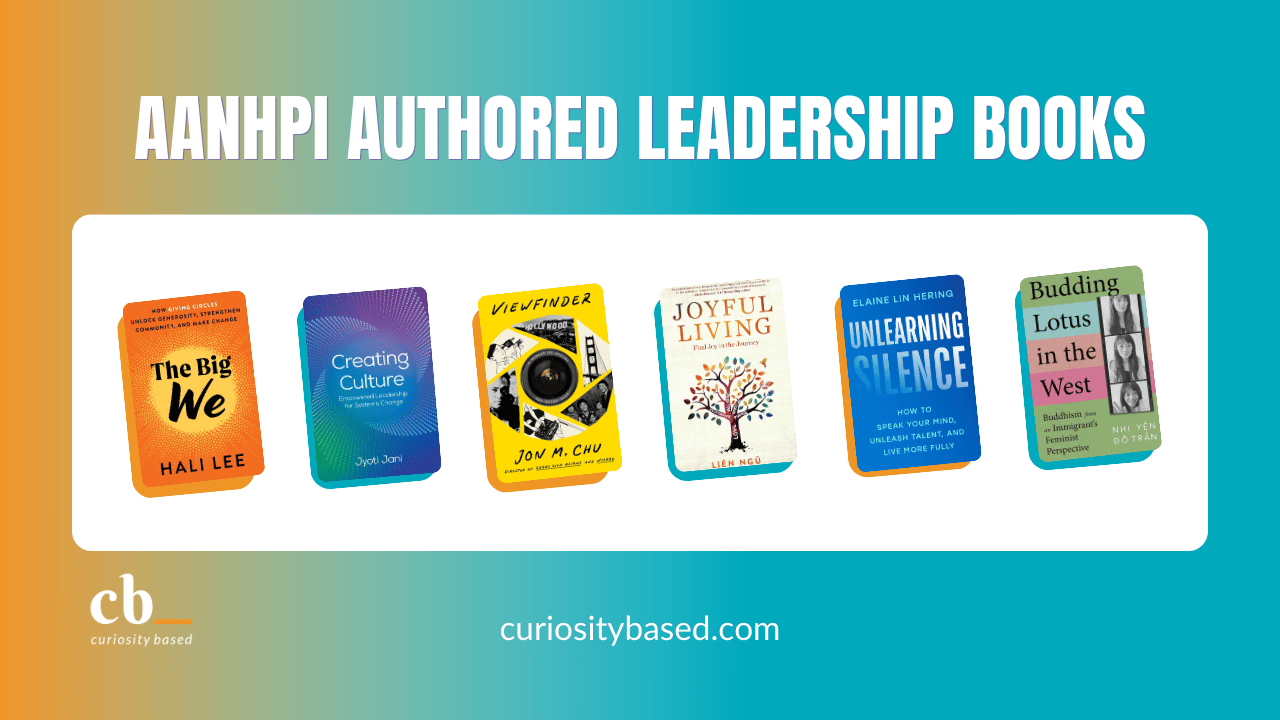
In honor of AANHPI Heritage Month, we created this 2025 AANHPI Authored Leadership Book List of books written by AANHPI authors. This list is meant to be a resource, not an official endorsement. The books are not ranked in any particular order.
Conversations that Change Everything: How to Recognize, Prepare For, and Master the Pivotal Moments That Define Your Success by Dr. Zachary Van Rossum and Dr. Tammy Wang
Bridging the Confidence Gap: How Empowered Women Change the World by Sheena Yap Chan
Creating Culture: Empowered Leadership for Systems Change by Jyoti Jani
SAVING FIVE; A Memoir of Hope by Amanda Nguyen
The Big We by Hali Lee
The Manicurist’s Daughter by Susan Lieu
Budding Lotus in the West: Buddhism from an Immigrant’s Feminist Perspective by Nhi Yến Đỗ Trần
How K-Dramas Can Transform Your Life: Powerful Lessons on Belongingness, Healing, and Mental Health by Jeanie Y. Chang, LMFT
If Lin Can: How Jeremy Lin Inspired Asian Americans to Shoot for the Stars by Richard Ho, Phung Nguyen Quang, Huynh Kim Lien
Joyful Living: Find Joy in the Journey by Lien Ngu
Leadership Toolkit for Asians: The definitive Resource Guide for Breaking the Mamboo Ceiling by Jane Hyun
Moving Beyond Boxes: The Journey to Self-Discovery by Dr. Nhu Truong
Smart, Not Loud: How to Get Noticed at Work for All the Right Reasons by Jessica Chen
Starry Field: A Memoir of Lost History by Margaret Juhae Lee
The Soil of Leadership: Cultivating the Conditions for Transformation by Britt Yamamoto
Unlearning Silence: How to Speak Your Mind, Unleash Talent, and Live More Fully by Elaine Lin Hering
Viewfinder: A Memoir of Seeing and Being Seen by Jon M. Chu
A Living Remedy: A Memoir by Nicole Chung
Falling Back in Love With Being Human: Letters to Lost Souls by Kai Cheng Thom
House Barbie: A Memoir by Geena Rocero
Mott Street: A Chinese American Family’s Story of Exclusion and Homecoming by Ava Chin
My Life: Growing up Asian in America by CAPE (Coalition of Asian Pacifics in Entertainment) and SuChin Pak
Seek: How Curiosity Can Transform Your Life and Change the World by Scott Shigeoka
The Karma of Success: Spiritual Strategies to Free Your Inner Genius by Liz Tran
The Tao of Self-Confidence: A Guide to Moving Beyond Trauma and Awakening the Leader Within by Sheena Yap Chan
What if Pigs Can Fly?: A Practical Guide to Follow Your Curiosities to Achieve Impractical Possibilities by Van Lai-DuMone
Meet Me Tonight in Atlantic City by Jane Wong
7 Forms of Respect: A Guide to Transforming Your Communication and Relationships at Work by Julie Pham, PhD
Acitivites of Daily Living by Lisa Chen
Actions Speak Louder: A Step-By-Step Guide to Becoming an Inclusive Workplace by Deanna Singh
Another Appalachia: Coming Up Queer and Indian In a Mountain Place by Neema Avashia
Asian American Histories of the United States by Catherine Ceniza Choy
Asian Women Trailblazers Who BossUp: Amazing women finding success and never looking back (Women Who BossUp) by Tam Luc, Daphne Kwok, Katie Chin, Sue Ann Hong, Jeanie Chang, Susan Go, Leslie lew, Amy Le, Amy Wayng, Janan, Sarwar, Julie Tran, Cary Kwok, Claudi Chan, Sandy Kusano, Sabrina Li, Mihae Kim Stefani
Behind Deep Blue: Building the Computer that Defeated the World Chess Champion by Feng-Hsiung Hsu
Energize: Make the Most of Every Moment by Simon Alexander Ong
Fatty Fatty Boom Bomm by Rabia Cuadry
FEISTY: Dangerously Amazing Women Using Their Voices & Making An Impact (Brave New Voices) by Dr. Izdihar Jamil
Glue: How Project Leaders Create Cohesive, Engaged, High-Performing Teams by Anh Dao Pham
Go Back to Where You Came From: And Other Helpful Recommendations on How to Become American by Wajahat Ali
In Sensorium: Notes for My People by Tanaïs
Inclusion on Purpose: An Intersectional Approach to Creating a Culture of Belonging at Work by Ruchika Tulshyan
Like Water: A Cultural History of Bruce Lee by Daryl Joji Maeda
Love Your Asian Body: AIDS Activism in Los Angeles by Eric C. Wat
Ma and Me by Putsata Reang
Making a Scene by Constance Wu
Money Makers: The Easist Way to Build A Business WITHOUT Paid Ads Or a Big Following by Dr. Izdihar Jamil
My Money My Way: Taking Back Control of Your Financial Life by Kumiko Love
Novelist as a Vocation by Haruki Murakami
Pay Up: The Future of Women and Work (and Why It’s Different Than You Think) by Reshma Saujani
Perfect Enough: How to be happier and more productive by letting go of perfectionism by Judy T. Dang
Permission to Come Home: Reclaiming Mental Health as Asian Americans by Jenny Wang
Rise: A Pop History of Asian American from the Nineties to Now by Jeff Yang, Phil Yu, Philip Wang
Savor: A Chef’s Hunger for More by Fatima Ali
Show Your Worth: 8 intentional Strategies or Women to Emerge as Leaders at Work by Shelmina Babai Abji
Stay True by Hua Hsu
Talk it Up! A Guide to Successful Public Speaking by Mr. David Suk Brown
The Loneliest Americans by Jay Caspian Kang
The Monsoon Diaries: A Memoir by Calvin D. Sun
The Power of Unwavering Focus by dandapani
The Visibility Mindset: How Asian American Leaders Create Opportunities and Push Past Barriers by Bernice M. Chao & Jessalin Lam
Uncompete: Rejecting Competition to Unlock Success by Ruchika T. Malhotra
We Were Dreamers: An Immigrant Superhero Origin Story by Simu Liu
What My Bones Know: A Memoir of Healing from Complex Trauma by Stephanie Foo
Year of the Tiger: An Activist’s Life by Alice Wong
Yes I Can!: 22 Success Secrets From Inspring People Around the World by Dr. Izdihar Jamil
You Cannot Resist Me When My Hair Is in Braids by Frances Kai-Hwa Wang
Ambitious Women Rise by Dr. Izdihar Jamil
Backable: The Surprising Truth Behind What Makes People Take a Chance on You by Suneel Gupta
Beyond Happiness: How Authentic Leaders Prioritize Purpose and People for Growth and Impact by Jenn Lim
Come into My Office: Stories from an HR Leader in Silicon Valley by Mai Ton
Crying in H Mart: A Memoir by Michelle Zauner
Enough About Me: The Unexpected Power of Selflessness by Richard Lui (journalist)
Every Day Is a Gift by Tammy Duckworth
Heart of Fire: An Immigrant Daughter’s Story by Mazie K. Hirono
House of Sticks: A Memoir by Ly Tran
How to Raise a Feminist Son: Motherhood, Masculinity, and the Making of My Family by Sonora Jha
Innovation Starts With I: Increase Your Influence. Ignite Your Impact. by Saleema Vellani
It Is Done: 15 Secrets to Manifest Your Dream Life From Inspiring Entrepreneurs by Dr. Izdihar Jamil
It’s Always Sunny Above the Clouds: Getting the Next Generation Into the Cockpit by Nick Tran
Mixed Plate: Chronicles of an All-American Combo by Jo Koy
My Life in Full: Work, Family, and Our Future by Indra Nooyi
Power Your Purpose: A Leader’s Guide to Creating a Better Life and a Better World by Shian Chuan
Speak, Okinawa: A Memoir by Elizabeth Miki Brina
The Unspoken Rules: Secrets to Starting Your Career Off Right by Gorrick Ng
The Wake Up: Closing the Gap Between Good Intentions and Real Change by Michelle Mijung Kim
Uplifted: Journeys of Abundance, Community, and Identity by Geena Chen
Wake Up: Closing the Gap Between Good Intentions and Real Change by Michelle Mijung kim
Women Who Lead: Life, Career, and Business Secrets From Inspiring Women Around the World by Dr. Izdihar Jamil
Yes I Can!: 16 Success Secrets From Inspiring Women Around the World by Dr. Izdihar Jamil
You Can’t Be Serious by Kal Penn
American Dreamer: How I Escaped Communist Vietnam and Built a Successful Life in America by Tim Tran
AugmentAsian: Strategies and Tools for Asian Pacific American Professional & Leadership Success by AsianUpward & Elevate Teams
Be Water, My Friend: The Teachings of Bruce Lee by Sharon Lee
Decoding the World: A Roadmap for the Questioner by Arvind Gupta and Po Bronson
Eat a Peach: A Memoir by David Chang
Edge: Turning Adversity Into Advantage by Laura Huang
Fault Lines: A Memoir by Meena Alexander
Healing Resistance: A Radically Different Response to Harm by Kazu Haga
Legal Heroes in the Trump Era: Be Inspired. Expand Your Impact. Change the World. by Tahmina Watson
Limitless: Upgrade Your Brain, Learn Anything Faster, and Unlock Your Exceptional Life by Jim Kwik
Minor Feelings: An Asian American Reckoning by Cathy Park Hong
Muslin Women Are Everything: Stereotype-Shattering Stories of Courage, Inspiraton, and Adventure by Seema Yasmin and Fahmida Azim
My Unforgotten Seattle by Ron Chew
Naturally Tan by Tan France
Nisei Radicals: The Feminist Poetics and Transformative Ministry of Mitsuye Yamada and Michael Yasutake by Diane C. Fujino
Postcolonial Leadership, A: Asian Immigrant Christian Leadership and Its Challenges by Hee An Choi
Purpose Mindset: How Microsoft Inspires Employees and Alumni to Change the World by Akhtar Badshah
See No Stranger: A Memoir and Manifesto of Revolutionary Love by Valarie Kaur
Shorter: Work Better, Smarter, and LessHere’s How by Alex Soojun-Kim Pang
Sigh, Gone: A Misfit’s Memoir of Great Books, Punk Rock, and the Fight to Fit In by Phuc Tran
The Leader’s Guide to Unconsious Bias by Anne Chow
The Magical Language of Others: A Memoir by E.J. Koh
This is Not a T-Shirt: A Brand, a Culture, a Community – a Life in Streetwear by Bobby Hundreds
This Is One Way to Dance: Essays by Sejal Shah
Unrig the Game: What Women of Color Can Teach Everyone About Winning by By Vanessa Priya Daniel
World of Wonders: in Praise of Fireflies, Whale Sharks, and Other Astonishments by Aime Nezhukamatathil
Yes I Can!: 5 Minute Guided Goal Setting Journal to Help You Hit Your Goals by Dr. Izdihar Jamil
13 Key Strategies to Make Money Fast in Business by Dr. Izdihar Jamil
America for Americans: A History of Xenophobia in the United States by Erika Lee
Brave, Not Perfect: How Celevrating Imperfection Helps You Live Your Best, Most Joyful LIfe by Reshma Saujani
Caste Matters by Suraj Yengde
Dear Girls: Intimate Tales, Untold Secrets & Advice for Living Your Best Life by Ali Wong
Good Talk by Mira Jacob
How to Speak Machine: Computational Thinking for the Rest of Us by John Maeda
Inspiring Women of Hawaii by Loretta Chen
Out of the Gobi: My Story of China and America by Weijian Shan
Racial Melancholia, Racial Dissociation: On the Social and Psychic Lives of Asian Americans by David Eng
She Made It Happen: 15 Inspiring Stories from Female Entrepreneurs Around the World by Dr. Izdihar Jamil
The Making of a Manager: What to Do When Everyone Looks At You by Julie Zhuo
The Souls of Yellow Folk: Essays by Wesley Yang
The Truths We Hold: An American Journey by Kamala Harris
All You Can Ever Know: A Memoir by Nicole Chung
Authentic Inclusion: Drives Disruptive Innovation by Frances West
Big Little Man: In Search of My Asian Self by Alex Tizon
Brotopia: Breaking Up the Boys’ Club of Silicon Valley by Emily Chang
Empress: The Astonishing Reign of Nur Jahan by Ruby Lal
Journey for Justice: The Life of Larry Itliong by Dawn B. Mabalon, PhD, Gayle Romasanta
Love for Imperfect Things: How to Accept Yourself in a World Striving for Perfectionism by Haemin Sunim
The Art of Gathering: How We Meet and Why it Matters by Priya Parker
The Death of Truth: Notes on Falsehood in the Age of Trump by Michiko Kakutani
The War on Normal People by Andrew Yang
An American Family: A Memoir of Hope and Sacrifice by Khizr Khan
Finding the Edge: My Life on the Ice by Karen Chen
Hit Refresh: The Quest to Rediscover Microsoft’s Soul and Imagine a Better Future for Everyone by Satya Nadella
Not Nice: Stop People Pleasing, Staying Silent, & Feeling Guilty… And Start Speaking Up, Saying No, Asking Boldly, And Unapologetically Being Yourself by Dr. Aziz Gazipura
Pachinko by Min Jin Lee
Reset: My Fight for Inclusion and Lasting Change by Ellen Pao
Sheer Determination: Swimming Upstream in a Downstream World by Kay Hirai
The Best We Could Do by Thi Bui
The Refugees by Viet Thanh Nguyen
The Things You can See Only When You Slow Down by Haemin Sunim
Unprecedented: The Masters and Me by Tiger Woods
Where the Past Begins: Memory and Imagination by Amy Tan
You’re More Powerful than You Think: A Citizen’s Guide to Making Change Happen by Eric Liu
Grit: The Power of Passion and Perseverance by Angela Duckworth
The Diversity Advantage: Fixing Gender Inequality In The Workplace by Ruchika Tulshyan
When Breath Becomes Air by Paul Kalanithi
You Are a Mogul: How to Do the Impossible, Do It Yourself, and Do It Now by Tiffany Pham
Bengali Harlem and the Lost Histories of South Asian America by by Vivek Bald
Enduring Conviction: Fred Korematsu and His Quest for Justice by Lorraine K. Bannai
The Art of the Start 2.0: The Time-Tested, Battle-Hardened Guide for Anyone Starting Anything by Guy Kawasaki
The Asian American Achievement Paradox by Jennifer Lee, Min Zhou
The Making of Asian America: A History by Erika Lee
The Sympathizer: A Novel by Viet Thanh Nguyen
Why Not Me? by Mindy Kaling
Being Mortal: Medicine and What Matters in the End by Atul Gawande
Fierce and Fearless: Patsy Takemoto Mink, First Woman of Color in Congress by Judy Tzu-Chun Wu & Gwendolyn Mink
I Still Haven’t Found What I’m Looking For: Now What? 21 Days to Confidence and Clarity by Dr. Sweta Chawla
The Art of Stillness: Adventures in Going Nowhere (TED Books) by Pico Iyer
The Color of Success: Asian Americans and the Origins of the Model Minority by Ellen D. Wu
A Principled Stand: The Story of Hirabayashi v. United States by Gordon K. Hirabayashi
Brotherhood: Dharma, Destiny, and the American Dream by Deepak Chopra & Sanjiv Chopra
Fresh Off the Boat: A Memoir by Eddie Huang
It Takes Moxie by Maureen Francisco
Lions and Tigers and Bears: The Internet Strikes Back (Oh Myyy!) by George Takei
Love, Loss, and What We Ate: A Memoir by Padma Lakshmi
Madame Wu Chien-shiung: The First Lady Of Physics Research by Tsai-chien Chiang
Radical : Fighting to Put Students First by Michelle Rhee
The Cooked Seed: A Memoir by Anchee Min
When Invisible Children Sing by Chi Cheng Huang
Woman On Top: The Art of Smashing Stereotypes and Breaking All the Rules by Loretta Chen
The Next American Revolution: Sustainable Activism for the Twenty-First Century by Grace Lee Boggs
All in by Jerry Yang
I Love a Broad Margin to My Life by Maxine Hong Kingston
Unsung Hero: The Col. Young O. Kim Story by Woo Sung Han
Adventures of the Karaoke King by Harold Taw
Delivering Happiness by Tony Hsieh
Impressive First Impressions: A Guide to the Most Important 30 Seconds (And 30 Years) of Your Career by Vu H. Pham
Leadership and Crisis by Bobby Jindal
My Forty Years as a Diplomat by Feng-Shan Ho
Somewhere Inside: One Sister’s Captivity in North Korea and the Other’s Fight to Bring Her Home by Laura Ling & Lisa Ling
The Art of Strategy: A Game Theorist’s Guide to Success in Business and Life by Avinash K. Dixit
I Love Yous Are for White People: A Memoir by Lac Su
The Checklist Manifesto: How to Get Things Right by Atul Gawande
Holding Serve: Persevering on and Off the Court by Michael Chang
The Myth of the Model Minority: Asian Americans Facing Racism by Rosalinda Chou and Joe Feagin
Boundaries by Maya Lin
Breaking the Bamboo Ceiling: Career Strategies for Asians by Jane Hyun
Courage: The Backbone of Leadership by Gus Lee, Diane Elliott-Lee
Growing Up Brown: Memoirs of a Filipino American by Peter M. Jamero
Blue Ocean Strategy: How to Create Uncontested Market Space and Make the Competition Irrelevant by W. Chan Kim
Dat: Tackling Life and the NFL by Dat Nguyen
When Fish Fly: Lessons for Creating a Vital and Energized Workplace from the World Famous Pike Place Fish Market by John Yokoyama
Invitation to Lead: Guidance for Emerging Asian American Leaders by Paul Tokunaga
I’m the One That I Want by Margaret Cho
Bitter Fruit: The Politics of Korean-Black Conflict in New York City by Claire Jean Kim
The Black Widow’s Guide to Killer Pool: Become the Player to Beat by Jeanette Lee
Creating the Digital Future: The Secrets of Consistent Innovation at Intel by Albert Y.c. Yu
Living for Change by Grace Boggs
With Schwarzkopf: Life Lessons of The Bear by Gus Lee
Red Scar Girl: A Memoir of the Cultural Revolution by Ji-li Jiang
Rich Dad Poor Dad: What the Rich Teach Their Kids About Money That the Poor and Middle Class Do Not! by Robert T. Kiyosaki
Still life with Rice by Helie Lee
Reflections of Seattle’s Chinese Americans: The First 100 Years by Ron Chew
The Seven Spiritual Laws of Success: A Practical Guide to the Fulfillment of Your Dreams by Deepak Chopra
The Silent Master: Awakening the Power Within by Tae Yun Kim
Thick Face, Black Heart: The warrior philosophy for conquering the challenges of business and life by Chin-Ning Chu
To The Stars: The Autobiography of George Takei (Star Trek) by George Takei
A Suitable Boy by Vikram Seth
The Woman Warrior: Memoirs of a Girlhood Among Ghosts by Maxine Hong Kingston
Hawaii’s Story by Liliuokalani
The Rise of Chinese American Leaders in U.S. Higher Education: Stories and Roadmaps edited by Honggang Yang, Wenying Xu
Be Your Own Cheerleader: An Asian and South Asian Woman’s Cultural, Psychological, and Spiritual Guide to Self-Promote at Work by Neelu Kaur
In this episode of Curiosity at Work, Dr. Julie Pham explores curiosity in nonprofit retail with Ed Ewing, Executive Director of Bike Works, a Seattle-based nonprofit that empowers youth and builds community through bicycles. With over 30 years of leadership experience, Ed shares his passion for social justice, racial equity, and cycling. These values drive the mission at Bike Works, where all revenue from selling refurbished bikes is reinvested into the community.
Building Access for Underserved Communities
Ed’s visionary leadership focuses on creating access for underserved communities, particularly in Seattle’s South End. By using bicycles as a tool for connection, Bike Works fosters a sense of empowerment and belonging. This episode explores how curiosity plays a central role in guiding Bike Works through challenges.
For instance, when youth programs were shuttered during the pandemic, Ed and his team quickly adapted. They launched the BikeMobile, a mobile shop delivering low-cost and free bike services to neighborhoods in need. This initiative highlights the importance of being open to change and listening to the community’s needs.
Leading with Curiosity
Ed believes that curiosity is key to effective leadership. He encourages his team to ask questions, listen deeply, and challenge assumptions. His mantra, “Be curious and don’t take it personally,” has been vital in navigating uncertainty with clarity and compassion. This mindset fosters a workplace culture where growth and feedback are welcomed.
A Model for Social Justice in Nonprofits
Under Ed’s leadership, Bike Works has become a model for integrating social justice into nonprofit operations. The organization has made strides in expanding wellness time, ensuring pay equity, and supporting staff-led innovation. Ed’s leadership demonstrates how nonprofits can thrive while staying true to their core mission of equity and justice.
Whether mentoring staff, redefining nonprofit success, or sparking joy through cycling, Ed Ewing embodies leadership driven by curiosity and heart. This episode is a reminder that great leadership isn’t about having all the answers. Instead, it’s about asking better questions and leading with empathy.
#25 Curiosity in sustainable cosmetics with Melodie Reynolds
Subscribe Now!
Curiosity at Work: Melodie Reynolds on Revolutionizing the Beauty Industry with Sustainability and Curiosity
In this episode of Curiosity at Work, Dr. Julie Pham interviews Melodie Reynolds, founder and CEO of Elate Beauty, a company transforming the beauty industry with sustainability, ethical sourcing, and conscious capitalism. Melodie shares how curiosity in sustainable cosmetics led her to challenge traditional beauty packaging and develop high-performing, low-waste products.
Revolutionizing the Beauty Industry with Eco-Conscious Cosmetics
With over 25 years of experience in the beauty industry, Melodie recognized a critical gap in the market for eco-conscious, cruelty-free cosmetics. This realization inspired her to launch Elate Beauty, a brand that prioritizes sustainability and ethical sourcing. Melodie discusses how curiosity has driven her to create innovative, sustainable solutions that challenge industry norms. From formulating lipstick in her basement to scaling Elate into an international beauty brand, curiosity has been the key to her success.
Embracing Change in Operations and Team Dynamics
Melodie reflects on the challenges of transitioning from managing in-house production to outsourcing key operations. This shift allowed Elate to focus more on innovation and sustainability. She also discusses the impact of moving to a fully remote team, which transformed collaboration and creativity within the company. By fostering an open, fear-free environment, Melodie encourages her employees to ask bold questions, challenge the status quo, and explore new ideas. This culture of curiosity continues to push boundaries and drive innovation at Elate.
Curiosity Beyond Beauty: Lifelong Learning and Leadership
Melodie believes curiosity fuels both creativity and leadership, helping individuals embrace change and pursue lifelong learning. She shares her personal passion for reading, having read over 70 books a year, and her involvement in a ukulele band. Her love for continuous learning extends beyond her business, influencing how she leads Elate and approaches new challenges.
Melodie’s story offers valuable lessons for entrepreneurs, sustainability advocates, and anyone looking to challenge the status quo with curiosity and purpose. Tune in to learn how embracing curiosity can drive both personal and professional growth.
#24 Curiosity in health and social services with Michael Byun
Subscribe Now!
Curiosity at Work: Michael Byun on Leadership, Curiosity, and Social Change in Health and Social Services
In episode 24 of Curiosity at Work, Dr. Julie Pham interviews Michael Byun, Executive Director of Asian Counseling and Referral Service (ACRS), to explore how curiosity influences leadership in health and social services. Michael shares how curiosity drives effective leadership in complex environments and supports social justice, especially for diverse and underserved communities.
Michael Byun’s Leadership in Health and Social Services
With over 25 years of experience in health disparities, social justice, and immigrant and refugee issues, Michael currently leads over 320 employees at ACRS, Washington’s largest agency serving Asian American, Native Hawaiian, and Pacific Islander (AANHPI) communities. His work centers on supporting diverse populations and multilingual teams while balancing urgent service needs with long-term policy goals.
Curiosity in Leadership: Embracing Complexity and Adaptability
Curiosity plays a critical role in Michael’s leadership approach. It helps him stay open-minded and adaptable, especially when quick decisions and emotional sensitivity are necessary. Michael explains how curiosity fosters reflection, enabling leaders to remain flexible and make better decisions in complex situations.
Supporting Staff Well-Being Through a Hybrid Work Model
To support staff well-being, ACRS has adopted a hybrid work model that addresses the emotional demands placed on their team. Michael describes how curiosity helps create an environment where employees feel safe to ask questions, challenge assumptions, and contribute new ideas. These conversations lead to stronger collaboration and innovation, improving outcomes for both staff and the community.
Intentional Leadership in High-Pressure Environments
In high-pressure environments, Michael emphasizes the importance of intentional leadership. Pausing before making decisions or listening deeply can result in better outcomes. By practicing curiosity and mindfulness, leaders can make thoughtful choices that positively impact their teams and the communities they serve.
Real-World Impact: Curiosity in Action
Throughout the conversation, Michael shares real-world examples of how curiosity has led to positive change. For example, curiosity helped ACRS address community safety concerns, advocate for more equitable services, and push for systemic changes through thoughtful policy engagement.
A Valuable Perspective on Social Change
As a former Obama appointee to the President’s Advisory Commission on Asian Americans and Pacific Islanders, Michael brings a rare and valuable perspective on leadership and social change. His insights demonstrate how curiosity drives grassroots work and fuels broader social change, helping leaders push for more inclusive policies and equitable services.
Valuable Leadership Lessons for Empathy and Purpose
This episode offers meaningful lessons for anyone leading with empathy and purpose. Whether you work in healthcare, nonprofits, or advocacy, curiosity is a powerful and essential tool for making a lasting impact. Michael’s story highlights the transformative power of curiosity in driving social change and creating inclusive, supportive environments.
In honor of Women’s History Month, we created this list of 500+ 2025 leadership books written by women, and by people who identify as women. This list is meant to be a resource, not an official endorsement. The books are not ranked in any particular order.
[Un]framing the “Bad Woman”: Sor Juana, Malinche, Coyolxauhqui, and othe rebels with a cause by Alicia Gaspar de Alba
#Not Your Princess: Voices of Native American Women by Lisa Charleyboy, Mary Beth Leatherdale (editors)
50 Billion Dollar Boss: African American Women Sharing Stories of Success in Entreprenuership and Leadership by Kathey Porter
A House of My Own: Stories From My Life by Sandra Cisneros
A Mythic Life: Learning to live our greater story by Jean Houston
A Passion for the Possible: A guide to realizing your true potential by Jean Houston
Abandon Me: Memoirs by Melissa Febos
After the Rain: Gentle Reminders for Healing, Courage, and Self-Love by Alexandra Elle
Ain’t I a Woman: Black Women and Feminism by Bell Hooks
All Bout Love by Bell Hooks
All In: An Autobiography by Billie Jean King
Almost a Woman by Esmeralda Santiago
American Indian Stories by Zitkala-Sa
And A Voice to Sing With: A Memoir by Joan Baez
And Now We Are Going to Have a Party: Liner Notes to a Writer’s Early Life by Nicola Griffith
Annapurna: A woman’s place by Arlene Blum
AOC: The Fearless Rise and Powerful Resonance of Alexandria Ocasio-Cortes by Lynda Lopez
Apocalyptic Best Practices: A unique approach to fear and change by Elisebeth VanderWeil
As Long As Grass Grows: The Indigenous Fight for Environmental Justice, from Colonization to Standig Rock by Dina Gilio-Whitaker
As We Have Always Done: Indigenous Freedom Through Radical Resistance by Laeanne Betasamosake Simpson
Ask For It: How women can use the power of negotiation to get what they really want by Linda Babcock & Sara Laschever
ASL Saved My Life…Until it didn’t by Jenni Kleinman Berebitsky
Atlas of the Heart: Mapping Meaningful Connection and the Language of Human Experience by Brene Brown
Bad Indians: A Tribal Memoir by Deborah Miranda
Balancing Work and Life: The Nia guide for Black Women by Sheryl Huggins, Cherly Mayberry McKissack
Bamboozled: How God Tricked Me inot the Life of My Dreams by Yvonne Orji
Be Water, My Friend: The Teachings of Bruce Lee by Sharon Lee
Becoming by Michelle Obama
Being Heumann: an unrepentent memoir of a disability rights activist by Judith E. Heumann
Believe Bigger: Discover the Path to Your Life Purpose by Marshawn Evans Daniels
Biased: Uncovering the hidden prejudice that shapes what we see, think, and do by Jennifer Eberhardt
Big Magic: Creative Living Beyond Fear by Elizabeth Gilbert
Bird of Paradise: How I became a Latina by Raquel Cepeda
Black Futures by Kimberly Drew, Jenna Wortham
Black Indian: A memoir by Shonda Buchanan
Black Power Inc.: The New Voices of Success by Cora Daniels
Blood, Bones & Butter: The Inadvertent Education of a Reluctant Chef by Gabrielle Hamilton
Borderlands / La Frontera: The New Mestiza by Gloria Anzaldúa
Boss Bride: The Powerful Woman’s Playbook for Love and Success by Charreah Jackson
Boundaries by Maya Lin (artist)
Braiding Sweetgrass: Indigenous wisdom, scientific knowledge, and the teachings of plants by Robin Wall Kimmerer
Bridges to Heal US: Stories and Strategies for Racial Healing by Erin Jones
Brotopia: Breaking Up the Boy’s Club of Silicon Valley by Emily Chang
Caring: A feminine apporach to ethics and moral education by Nel Noddings
Climb: Taking Every Step with Conviction,Courage, and Calculated Risk to Achieve a Thriving Career and a Successful Life by Michelle Gadsden-Williams, Carolyn M. Brown
Come into My Office: Stories from an HR Leader in Silicon Valley by Mai Ton
Common Fire: Leading lives of commitment in a complex world by Sharon Parks, et. al.
Courage: The Backbone of Leadership by Gus Lee, Diane Elliott-Lee
Crazy Brave: A Memoir by Joy Harjo
Critically Sovereign: Indigenous Gender, Sexuality, and Feminist Studies by Joanne Barker
Crux: A cross-border memoir by Jean Guerrero
Crying in H Mart: A Memoir by Michelle Zauner
Dancing at the Edge of the World: thoughts on words, woment, places by Ursula LeGuin
Dare to Lead: Brave Work. Tough Conversations. Whole Hearts. by Brene Brown
Dear Female Founder: 66 Letters of Advice from Women Entrepreneurs Who Have Made $1 Billion in Revenue by Lu Li
Dear Girls: Intimate Tales, Untold Secrets & Advice for Living Your Best Life by Ali Wong
Disability Visibility: First-Person Stories from the Twenty-First Century by Alice Wong
Disarm Your Limits: The flight formula to lift you to success and propel you to the next horizon by Jessica Cox
Dog Flowers: A Memoir by Danielle Geller
Double Down: Bet on Yourself and Scuceed on Your Own Terms by Antionette M. Clarke, Tricia Clarke-Stone
Dream Big by Deborah Rosado Shaw
Dream in Color: How the Sánchez Sisters are Making History in Congress by Linda Sánchez
Driven by Intention: Own Your Purpose, Gain Power, and Pursue Your Passion as a Woman at Work by Michelle Gadsden-Williams
Drop the Ball: Achieving more by doing less by Tiffany Dufu
Dwellings: A Spiritual History of the Living World by Linda Hogan
Eat, Pray, Love: One woman’s search for everything across Italy, India, and Indonesisa by Elizabeth Gilbert
Edge: Turning Adversity Into Advantage by Laura Huang
Elegy for a Disease: A Personal and Cultural History of Polio by Anne Finger
Emergent Strategy: Shaping Change, Changing Worlds by adrienne maree brown
Empress: The Astonishing Reign of Nur Jahan by Ruby Lal
Enduring Conviction: Fred Korematsu and His Quest for Justice by Lorraine K. Bannai
Entrepreneurial You: Monetize Your Expertise, Create Multiple Income Streams, and Thrive by Dorie Clark
Everybody’s Got Something by Robin Roberts & Veronica Chambers
Expect to Win: Proven Strategies for Success Froma a Wall Street Vet by Carla A. Harris
Extraordinary Bodies: Figuring Physical Disability in American Culture and Literature by Rosemarie Garland-Thomson
Farmworker’s Daughter: Growing up Mexican American by Rose Castillo Guilbault
Fault Lines: A Memoir by Meena Alexander
Feeling Power: Emotions and education by Megan Boler
Feminist Queer Crip by Alison Kafer
Field Mice: Memoirs of a Migrant Child by Emma Gonzalez
Fierce Conversations: Achieving success at work & in life, one conversation at a time by Susan Scott
Find Another Dream by Maysoon Zayid
Finding Beauty in a Broken World by Terry Tempest Williams
Finding Latinx: In Search of the Voices Redefining Latino Identity by Paola Ramos
Finding Me: A Memoir by Viola Davis
Finding My Voice: My Journey to the West Wing and the Path Forward by Valarie Jarret
Finding Our Way: Leadership for uncertain times by Margaret Wheatley
Finding the Edge: My Life on the Ice by Karen Chen
Frida by Barbara Mujica
FutureProofed: How to Navigate Disruptive Change, Find Calm in Chaos, and Succeed in Work & Life by Natalia Peart
Gathering Moss: A Natural and Cultural History of Mosses by Robin Wall Kimmerer
Girl Code: Unlocking the Secrets to Success, Sanity, and Happiness for the Female Entrepreneur by Cara Alwill Leyba
God is Red: A Native View of Religion by Vine deLoria, Jr.
Great Asian Americans: Ellison Onizuka by Stephanie Cham
Great Asian Americans: Michelle Kwan by Stephanie Cham
Great Asian Americans: Patsy Mink by Stephanie Cham
Great Asian Americans: Tammy Duckworth by Stephanie Cham
Great Asian Americans: Yo-Yo Ma by Stephanie Cham
Grit: The power of passion and perseverence by Angela Duckworth
Haben: The deafblind woman who conquered Harvard Law by Haben Girma
Hawaii’s Story by Liliuokalani, Queen of Hawaii
Heart Berries by Terese Marie Mailhot
Heart of Fire: An Immigrant Daughter’s Story by Mazie K. Hirono (politician)
Hermanas: Deepening our identity and growing our influence by Natialia Kohn Rivera
Hidden Figures: The American Dream and the Untold Story of the Black Women Mathematicians Who Helped Win the Space Race by Margot Lee Shetterly
Hispanic Women Seeking Higher Leadership Roles in Business by Syliva C. Motta, PhD
Hood Feminist: Notes from the Women that a Movement Forgot by Mikki Kendall
How Remarkable Women Lead: The Breakthrough Model for Work and Life by Joanna Barsh
How to Get Stupid White Men Out of Office: The Anti-Politics, Un-Boring Guide to Power by adrienne maree brown (eds)
How to Raise a Feminist Son: Motherhood, Masculinity, and the Making of My Family by Sonora Jha
Deborah Smith Pegues by Sally Helgesen (& Marshall Goldsmith)
Hunger: A Memoir of (My) Body by Roxane Gay
I Am Schizophrenic: Poetry from a beautiful brain by Kerenza Ryan
I Got This: To Gold and Beyond by Lauren Hernandez
I Love a Broad Margin to My Life by Maxine Hong Kingston (author)
I Shouldn’t Be Telling You This: How to Ask for the Money, Snag the Promotion, and Create the Career You Deserve by Kate White
I’m Judging You: The do-better manual by Luvvie Ajayi
I’m the One That I Want by Margaret Cho
In a Different Voice: Psychological theory and women’s development by Carol Gilligan
In Search of Our Mothers’ Gardens: Womanist prose by Alice Walker
In the Company of Women: Inspiration and Advice from over 100 Makers, Artists, and Entrepreneurs by Grace Bonney
In the Country We Love: My Family Divided by Diane Guerrero
In The Dream House: A Memoir by Carmen Maria Machado
In the Shadow of the Eagle: A Tribal Representative in Maine by Donna M. Loring
Inclusion Revolution: The Essential Guide to Dismantling Racial Inequity in the Workplace by Daisy Auger-Dominguez
Inclusion: Diversity, the New Workplace, & The Will To Change by Jennifer Brown
Inventing Latinos: A New Story of American Racism by Laura E. Gómez
Isabel’s Hand-Me-Down Dreams by Isabel Lopez
It Takes Moxie by Maureen Francisco
It’s About Damn Time by Arlan Hamilton
It’s About Time: The Art of Choosing the Meaningful Over the Urgent by Valorie Burton
Journey to the Future: A Roadmap for Success for Youth by Ltc. Consuelo Castillo Kickbusch
Just as I am by Cicely Tyson
Know What Makes Them Tick: How to successfully negotiate almost any situation by Shonda Rhimes
Know Your Value: Women, Money, and Genting What You’re Worth by Mika Brzezinski
Lakota Woman by Mary Brave Bird
Latina Empowerment Through Leadership: Mindful Stories from Inspiring Women by Catherine Munos Garces, Monica Rivera, et al
Latinas in Aviation by Jacqueline S. Ruiz
Latinas Rising Up in HR: Inspirational Stories of Human Resources Professionals Leading, Thriving, and Breaking Barriers by Priscilla Guasso
Latinos in American Society: Families and Communities in Transition by Dr. Ruth Enid Zambrana
Lead from the Outside: How to Build Your Future and Make Real Change by Stacey Abrams
Leadershp the Eleanor Roosevelt Way: Timeless strategies from the first lady of courage by Robin Gerber
Lean In: Women, Work, and the Will to Lead by Sheryl Sandberg
Leapfrog: The New Revolution for Women Entrepreneuers by Nathalie Molina Niño
Leaving Isn’t the Hardest Thing: Essays by Lauren Hough
Leaving Little Havana: A memoir of Miami’s Cuban ghetto by Cecilia M. Fernandez
Legal Heroes in the Trump Era: Be Inspired. Expand Your Impact. Change the World. by Tahmina Watson
Life in Motion: An Unlikely Ballerina by Misty Copeland
Limitless: The Power of Hope and Resilience to Overcome Circumstances by Mallory Weggemann
Little Black Book: A Toolkit for Working Women by Otegha Uwagba
Living for Change by Grace Boggs
Love, Loss, and What We Ate: A Memoir by Padma Lakshmi
Mad at School: Rhetorics of Mental Disability and Academic Life by Margaret Price
Madame Wu Chien-shiung: The First Lady Of Physics Research by Tsai-chien Chiang
Marbles: Mainia, Depession Michelangelo, and Me by Ellen Forney
Martina by Martina Navratilova
Mean by Myriam Gurba
Men Explain Things to Me by Rebecca Solnit
Men We Reaped: A Memoir by Jesmyn Ward
Mexican Enough: My Life Between the Borderlines by Stephanie Elizondo Griest
Million Dollar Women: The Essential Guide for Female Entreprenuers Who Want to Go Big by Julia Pimsleur
Mindset: The new psychology of success by Carol Dweck
Minor Feelings: An Asian American Reckoning by Cathy Park Hong
Miss Jessie’s: Creating a Successful Business From Scratch — Naturally by Micho Branch
More Myself: A Journey by Alicia Keys
More than Enough: Claiming Space for Who You Are (No Matter What They Say) by Elaine Welteroth
More Than Pretty: Doing the Sould Work that Uncovers Your True Beauty by Erica Campbell
More than Ready: Be Strong and Be You… and Other Lessons for Women of Color on the Rise by Cecilia Muñoz
Multipliers: How the best leaders make everyone smarter by Liz Wiseman
Muscogee Daughter: My sojourn to the Miss America Pageant by Susan Supernaw
My (Underground) American Dream: My True Story as an Undocumented Immigrant Who Became a Wall Street Executive by Julissa Arce
My Beloved World by Sonia Sotomayor
My Life in Full: Work, Family, and Our Future by Indra Nooyi (business)
My Life: Queen of the Court by Serena Williams
My Own Words by Ruth Bader Ginsburg, Mary Hartnett, Wendy Williams
My Time to Speak: Reclaiming Ancestry and Confronting Race by Ilia Calederon
Nice Girls Don’t Get the Corner Office: Unonscious Mistakes Women Make that Sabotage Their Careers by Lois P. Frankel, PhD
Night Flying Woman: An Ojibway Narrative by Ignatia Broker
Nisei Radicals: The Feminist Poetics and Transformative Ministry of Mitsuye Yamada and Michael Yasutake by Diane C. Fujino
Nooping: The Cure for White Ladies by Leanne Betasamosake Simpson
Octavia’s Brood: Science Fiction from Social Justice Movements by adrienne maree brown (eds)
Once I Was You: A Memoir of Love and Hate in a Torn America by María Hinojosa
One Life by Megan Rapinoe and Emma Brockes
Own It: The Power of Women at Work by Sallie Krawcheck
Own Your Phenomenal Self: A Guide on Character, Success, & Leadership by Rita P. Mitchell
Perfectly You: Embracing the Power of Being Real by Mariana Atencio
Pleasure Activism: The Politics of Feeling Good by adrienne maree brown
Poet Warrior: A Memoir by Joy Harjo
Portage Lake: Memories of an Ojibwe Childhood by Maude Kegg
Postcolonial Leadership, A: Asian Immigrant Christian Leadership and Its Challenges by Hee An Choi
Power Moves: How Women Can Pivot, Reboot, and Build a Career of Purpose by Lauren McGoodwin
Presence: Bringing your boldest self to your biggest challenges by Amy Cuddy
Pressure is a Privilege: Lessons I’ve Learned from Life and the Battle of the Sexes by Billie Jean King
Presumed Incompetent: The Intersections of Race and Class for Women in Academia by Gabriella Gutiérrez y Muhs, Yolanda Flores Niemann, Carment G. González
Professional Troublemaker: The Fear-Fighter Manual by Luvvie Ajayi Jones
Purpose Driven Leadership: Building and fostering effective teams by Brigette Tasha Hyacinth
Radical : Fighting to Put Students First by Michelle Rhee
Radical Candor: Be a kick-ass boss without losing your humanity by Kim Scott
Radical Dharma: Talking Race, Love and Liberation by Rev Angel Kyodo Williams
Reality Is Broken: Why games make us better and how they can change the world by Jane McGonigal
Recovering the Sacred: The power of naming and claiming by Winona LaDuke
Redefining Realness: My Path To Womanhood, Identity, Love & So Much More by Janet Mock
Representation Matters: How Victory Fund, Victory Institute, and LGBT Leaders are Transforming America by Karen Ocamb
Reset: My Fight for Inclusion and Lasting Change by Ellen Pao
Right Within: How to Heal From Racial Trauma in the Workplace by Minda Harts
Rising Strong: How the ability to reset transforms the way we live, love, prent, and lead by Brene Brown
Rita Moreno: A Memoir by Rita Moreno
Run to Win: Lessons in Leadership for Women Changing the World by Stephanie Schriock & Christina Reynolds
Salsa, Soul, and Spirit: Leadership for a multicultural age by Juana Bordas
See No Stranger: A Memoir and Manifesto of Revolutionary Love by Valarie Kaur
Self Made: Becoming Empowered, Self Reliant and Rich in Every Way by Nely Galán
Seriously…I’m Kidding by Ellen Degeneres
Serving in Silence by Margarethe Cammermeyer
Silencing Gender, Age, Ethnicity and Cultural Biases in Leadership by Camilla A. Montoya, Julieta V. García. et al.
Sister Outsider: Essays and Speeches by Audre Lorde
Sitting Pretty: The View from My Oridinary Resilient Disabled Body by Rebekah Taussig
Small Doses: Potent Truths for Everyday Use by Amanda Seales
Small Victories: Spotting Improbable Moments of Grace by Anne Lamott
So You Want to Talk About Race by Ijeoma Oluo
Speedbumps: Flooring it through Hollywood by Teri Garr
Stand Out: How to find your breakthrough idea and build a following around it by Dorie Clark
Staring: How We Look by Rosemarie Garland-Thomson
Still life with Rice by Helie Lee
Strategize to Win: The New Way to Star Out, Step Up, or Start Over in Your Career by Carla Harris
Successful Women Think Differently: 9 Habits to Make You Happier, Healthier & More Resilient by Valorie Burton
Surviving Autocracy by Masha Gessen
Swimming with Sharks in Dark Waters by Athene Brinson
Take Charge of your Brand: Quck and simple techniques to help you own and manage your personal brand for professional and personal success by Guisselle Nuñez
Teaching to Transgress: Education as the practice of freedom by bell hooks
That’s What She Said: What Men Need to Know (And Women Need to Tell Them) About Working Together by Joanne Lipman
The 1619 Project: A New Origin Story by Nikole Hannah-Jones
The 9 Steps to Financial Freedom: Practical and Spiritual Steps So You Can Stop Worrying by Suze Orman
The Art of Gathering: How We Meet and Why it Matters by Priya Parker
The Black Widow’s Guide to Killer Pool: Become the Player to Beat by Jeanette Lee
The Book of Awesome Black Americans: cientific Pioneers Trailblazing Entrepreneuers, Barrier-Breaking Activists and AFro-Futurists by Monique jones
The Buena Salud Guide to Understanding Depression and Enjoying Life by Jane Delgado
The Confidence Code: The Science and Art of Self-Assurance – What Women Should Know by Katty Kay & Claire Shipman
The Cooked Seed: A Memoir by Anchee Min
The Disability Experience: Working Toward Belonging by Hannalora Leavitt
The Diversity Advantage: Fixing Gender Inequality In The Workplace by Ruchika Tulshyan
The Education of an Idealist: A Memoir by Samantha Power
The Far Away Brothers: Two young migrants and the making of an American life by Lauren Markham
The Gloria Anzaldúa Reader (Latin America Otherwise) by Gloria Anzaldua
The Hill We Climb by Amanda Gorman
The Holly Woodlawn Story: A Low Life in High Heels by Holly Woodlawn
The Holy Intimacy of Strangers by Sarah York
The Injustice Never Leaves You: Anti-Mexican Violence in Texas by Monica Muñoz Martinez
The Latina Guide to Health: Consejos and Caring Answers by Jane Delgado
The Leadership Shift: The strategic Positioning of Latino Business Leaders by Dr. Nilda Perez
The Likeability Trap: How to Break Free and Succeed As You Are by Alicia Menendez
The Little Black Book of Success: Laws of Leadership for Black Women by Elaine Meryl Brown; Marsha Haygood; Angela Burt-Murray
The Making of a Manager: What to Do When Everyone Looks To You by Julie Zhuo
The Man Without a Face: The Unlikely Rise of Vladimir Putin by Masha Gessen
The Memo: What Women of Color Need to Know to Secure a Seat at the Table by Minda Harts
The Misadventures of Awkward Black Girl by Issa Rae
The Next Generation of Women Leaders: What You Need to Lead but Won’t Learn in Business School by Selena Rezvani
The Obsessive Joy of Autism by Julia Bascom
The One Week Budget by Tiffany Aliche
The Power of Latino Leadership: Culture, inclusion, and contribution by Juana Bordas
The pretty one: on life, pop cultue, disability, and other reasons to fall in love with me by Keah Brown
The Race Whisperer: Barack Obama and the political uses of race by Melanye Price
The Road to Someplace Better: From the Segregated South to Harvard Business School and Beyond by Lillian Lincoln Lambert
The Sacred Hoop: Recovering the Feminine in American Indian Traditions by Paula Gunn Allen
The School Days of an Indian Girl, and an Indian Teacher Among Indians by Zitkala-Sa
The Silent Master: Awakening the Power Within by Tae Yun Kim (martial artist)
The Soul of a Woman by Isabel Allende
The Tao of Raven: An Alaska Native Memoir by Ernestine Hayes
The Transformational Consumer: Fuel a lifelong love affair with your customers by helping them get healthier, wealthier, and wiser by Tara-Nicholle Nelson
The Truths We Hold: An American Journey by Kamala Harris
The Turquoise Ledge by Leslie Silko
The Undocumented Americans by Karla Conejo Villavicencio
The Virtuous Circle: Restore Your Confidence, Bounce Back, and Emerge Stronger by Gaby Natale
The White Album by Joan Didion
The World I Live In by Helen Keller
Thick Face, Black Heart: The warrior philosophy for conquering the challenges of business and life by Chin-Ning Chu
Thrive: The Thrid Metric to Redefining Success and Creating a Life of Well-Being, Wisdom, and Wonder by Arianna Huffington
Too Late to Die Young: Nearly True Tales from a Life by Harriet McBryde Johnson
Truth or Dare: Encounters with power, authority, and mystery by Starhawk
Unwritten Rules of Social Relationships: Decoding social mysteries theough autism’s unique perspectives by Temple Grandin
Upper Hand: The Future of Work for the Rest of Us by Sherrell Dorsey
Waist-High in the World: A Life Among the Nondisabled by Nancy Mairs
We Should All Be Feminists by Chimamanda Ngozi Adichie
We Will Not Cancel Us by adrienne maree brown
Werk 101: Get Your Life Together Guide by Koereyelle DuBose
What I Know for Sure by Oprah Winfrey
What Will it Take to Make a Woman President? by Marianne Schnall
When I Was Puerto Rican by Esmeralda Santiago
When Things Fall Apart by Pema Chodron
Where the Past Begins: Memory and Imagination by Amy Tan
Whiteness Visible: The meaning of whiteness in American literature and culture by Valerie Babb
Wiping the War Paint off the Lens: Nativve American Film and Video by Beverly Singer
Wishful Drinking by Carrie Fisher
WOLFPACK: How to Come Together, Unleash Our Power, and Change the Game by Abby Wambach
Women and Leadership: Real Lives, Real Lessons by Julia Gillard & Ngozi Okonjo-Iweala
Women of Color in Tech: A Bluepring for Inspiing and Menotring the Next Generation of Technology Innovators by Susanne Tedrick
Women’s Ways of Knowing (10th Anniversary Edition): The Development of Self, Voice, and Mind by Mary Field Belenky, et. al.
You Are a Mogul: How to Do the Impossible, Do It Yourself, and Do It Now by Tiffany Pham
Your Next Level Life: 7 Rules of Power, Confidence, and Opportunity for Black Women in America by Karen Arrington
Force Majeure: A Futurist’s Guide to Boldly Thriving on Your Terms in the Future of Work by Dr. Terri Horton
Blue Ocean Strategy by Renee Mauborgne
101 Reasons to Get Out of Bed by Natasha Milne
In-N-Out Burger: A Behind-the-Counter Look at the Fast-Food Chain That Breaks All the Rules by Stacy Perman
Option B by Sheryl Sandberg
The Change Masters by Rosabeth Moss Kanter
Confidence by Rosabeth Moss Kanter
Groundswell by Charlene Li
Open Leadership by Charlene Li
Leadereship and the new Science: Discovering Order in a Chaotic World by Margaret Wheatley
Nimble, Focused, Feisty: Organizational Cultures that Win in the New Era and How to Create Them by Sara Roberts
Key to Yourself by Dr. Venice Bloodworth
Quiet: The Power of Introverts in a World That Can’t Stop Talking by Susan Cain
Slide-ology by Nancy Duarte
Resonate by Nancy Duarte
The Shift by Lynda Gratton
Hot Sports by Lynda Gratton
The 100 Year Life by Lynda Gratton
The Signals are Talking by Amy Webb
Weapons of Math Destruction by Cathy O’Neil
The Confidence Game by Maria Konnikova
The Moonshot Effect by Kate Purmal & Lisa Goldman
Branding Pays by Karen Kang
The End of Competative Advantage by Rita Gunther McGrath
Invent It, Sell It, Bank It!: Make Your Million-Dollar Idea into a Reality by Lori Greiner
I’d Rather Be In Charge by Charlotte Beers
Think Like a Negotiator by Eldonna Lewis Fernandez
ROAR: How to Build a Resilient Organization by Sandy Asch
Bridge Builders by Maria Keckler
#Values by Dr. Betty Uribe
Leading by My Ponytail by Karen M. Walker & Judy Ducharme
Business as Unusual by Anita Roddick
Thanks for the Feedback by Sheila Heen & Douglas Stone
The New Social Learning by Marcia Conner
Show Your Work by Jane Bozarth
Darling, You Can’t Do Both by Janet Kestin & Nancy Vonk
How to Wow by Francsis Cole Jones
All the Leader You Can Be by Suzanne Bates
Profit from the Positive by Senia Maymin & Margaret H. Greenberg
Awakening Compassion at Work by Jane Dutton & Monica Worline
Leading so People Will Follow by Erika Andersen
It’s Not Rocket Science: 7 Game Changing Traints for Uncommon Success by Mary Spio
Unfinished Business by Anne-Marie Slaughter
A to Z: Your Navigator to Success by Chin-Ning Chu
Rising to the Challenge, My Leadership Journey by Carly Fiorina
Rookie Smarts by Liz Wiseman
The Theat and Life of Great American Cities by Jane Jacobs
Engaging Emergence: Turning Upheaval into Opportunity by Peggy Holman
Hiding in the Bathroom: An Introvert’s Roadmap to Getting Out There by Morra Aarons-Mele
Notorious BIG: The Life and Times of Ruth Bader Ginsburg by Irin Carmon & Shana Knizhnik
The New IT: How Technology are Enabling Business Strategy in the Digital Age by Jill Dyche
A Room of One’s Own by Virginia Woolf
Female Firebrands: Stories and Techniques to Ignite Change, Take Control, and Succeed in the Workplace by Mikaela Kiner
Blaze Your Own Trail: An Interactive Guide to Navigating Life with Confidence, Solidarity, and Compassion by Rebekah Bastian
Inclusion on Purpose: An Intersectional Approach to Creating of Culture of Belonging at Work by Ruchika Tulshyan
The No Club: Putting a Stop to Women’s Dead End-Work by Linda Babcock, Brenda Peyser, Lise Vesterlund, and Laurie Weingart
Show Your Worth: 8 Intention Strategies for Women to Emerge as Leaders at Work by Shelmina Babai Abji
Humor, Seriously: Why Humor is a Secret Weapon in Business and Life by Jennifer Aaker & Naomi Bagdonas
Somebody’s Daughter: A Memoir by Ashley C. Ford
7 Forms of Respect: A Guide to Transforming Your Communication and Relationships at Work by Julie Pham, PhD
Power Your Purpose: A Leader’s Guide to Creating a Better Life and a Better World by Shian Chuan
Red Paint: The Ancestral Autobiography of a Coast Salish Punk by Sasha Lapointe
Black and Blue: A Memoir of Racism and Resilience by Veronica Gorrie
Spílexm: A Weaving of Recovery, Resilience, and Resurgence by Nicola I. Campbell
White Magic by Elissa Wshuta
An Indian Among Los Indígenas: A Native Travel Memoir by Ursula Pike
Carry: A Memoir of Survival on Stolen Land by Toni Jensen
A Mind Spread Out on the Ground by Alicia Elliott
Native American DNA by Kim TallBear
Raising Ourselves: A Gwitch’in Coming of Age Story from the Yukon River by Velma Wallis
Blonde Indian: an Alaska Native Memoir by Ernestine Hayes
Cormorant Hunter’s Wife by Joan Naviyuk Kane
Roughly for the North by Carrie Ayagduk Ojanen
Tales of Ticasuk: Eskimo Legends & Stories by Ticasuk Emily Ivanoff Brown
Our Brave Foremothers: Celebrating 100 Black, Brown, Asian & Indigenous Women Who Changed the Course of History by Rozella Kennedy
Black Fatigue: How Racism Erodes the Mind, Body, and Spirit by Mary-Francis Winters
Year of Yes: How to Dance it Out, Stand in the Sun, and Be Your Own Person by Shonda Rhimes
How Boards Work and How They Can Work Better in a Chaotic World by Dambisa Moyo
Chasing Youth Culture and Getting it Right: How Your Business Can Profit by Tapping Today’s Most Powerful Trendsetters and Tastemakers by Tina Wells
Unapologetically Ambitious: Take Risks, Break Barriers, and Create Success on Your Own Terms by Shellye Archambeau
The Rise: Creativity, the Gift of Failure, and the Search for Mastery by Sarah Lewis
Black Entrepreneuer Survival Guide: The complete guide to becoming a successful African American entrepreneuer by Dunneille D. Anderson
CEO of My Soul: The Self-Love Journey of a Small Business Owner by Nic Cober Esquire
Success Never Smelled So Sweet: How I Followed My Nose and Found My Passion by Lisa Price & Hilary Beard
We Should All Be Millionaires: A Woman’s Guide to Earning More, Building Wealth, and Gaining Economic Power by Rachel Rodgers
9 Laws of Success: Attracting the Life, Love, Health & Success You Want! by Stormy Wellington
Self-Esteem is the New Black: How to become the confident woman you have always wanted to be! by Monique Mays
Get Good with Money: Ten Simple Steps to Becoming Financially Whole by Tiffany “The Budgetnista” Aliche
How We Show Up: Reclaiming Family, Friendshop, and Community by Mia Birdsong
Bad Feminist by Roxane Gay
Eloquent Rage: A Black Feminist Discovers Her Superpower by Brittney Cooper
Mom and Me and Mom by Maya Angelou
The Black Woman Millionaire: A Revolutionary Act that DEFIES Impossible by Dr. Venus Opal Reese
When the Miracle Drops: How Instagram Helped Turn a Quick Fix Into a Million-Dollar Product by Jessica Dupart
The Path Made Clear: Discovering Your Life’s Direction and Purpose by Oprah Winfrey
Mental Detox: The Power and Guidance to Implement Peace, Joy, Balance, and Financial Abundance in Your Life by Cheyenne Bryant
Quantam Leaps: 10 Steps to Help You Soar by Gloria Mayfield Bangs
Meaty: Essays by Smantha Irby
Where You Are is Not Who You Are by Ursula Burns
Set Boundaries, Find Peace: A guide to reclaiming yourself by Nedra Glover Tawwab
I’m Not Yelling by Elizabeth Leiba
Responsible Marketing by Lola Bakare
Feeding the Soul by Tabitha Brown
Ready, Set, Manifest: A Handbook for the in-between and leaps in life by Debbie Lacey
In the Shadow of the Mountain: A Memoir of Courage by Silvia Vasquez-Lavado
Through the Dark by Yolanda Nava
Thriving in the Fight: A Survival Manual for Latinas on the Front Lines of Change by Denise Padin Collazo
Justice & Space Matter in a Strong, Unified Latino Community by Kathy Bussert-Web, Maria Eugenia Diaz, Krystal A Yanez
Breaking Ground and Barriers: Hispanic Women Developing Effective Leadership by Gloria Bonilla-Santiago, Ph.D.
Latinization and the Latino Leader: How to Value, Develop, and Advance Latino Professionals by Cristina Benitez & Marlene Gonzalez
Latino and Latina Leaders of the 21st Century: Ordinary Beginnings, Extraordinary Outcomes by Kay (Kayla) S. Garcia
The More or Less Definitive Guide to Self Care by Anna Borges
Act Like a Leader, Think Like a Leader by Hermina Ibarra
You Don’t Hae to Like Me: Essays on Growing Up, Speaking Out, and Finding Feminism by Alida Nugent
Demystifying Disability: What to Know, What to Say, and How to Be an Ally by Emily Ladau
Year of the Tiger: An Activists Life by Alice Wong
What Doesn’t Kill You: A Life with Chronic Illness – Lessons from a Body in Revolt by Tessa Miller
Resistance and Hope: Essays by Disabled People by edited by Alice Wong
A Face for Picasso: Coming of Age with Crouzon Syndrome by Ariel Henley
Just Human: The Quest for Disability Wisdom, Respect, and Inclusion by Arielle Silverman, PhD
How I See It: A Personal and Historical View of Disability by H Penny Mishkin
Successfull to Burnt Out: Experiences of Women on the Autism Spectrum by Karletta Abianac
More the Same than Different: What I Wish People Knew About Respecting and Including People with Disabilities by Lorraine Cannistra
Not a Poster Child: Living Well with a Disability – A Memoir by Francine Falk-Allen
My Body is Not a Prayer Request: Disability Justice in the Church by Amy Kenny
Glue: How Project Leaders Create Cohesive, Engaged, High-Performing Teams by Anh Dao Pham
Uplifted: Journeys of Abundance, Community, and Identity by Geena Chen
Sheer Determination: Swimming Upstream in a Downstream World by Kay Hirai
Fierce and Fearless: Patsy Takemoto Mink, First Woman of Color in Congress by Judy Tzu-Chun Wu & Gwendolyn Mink
The Next American Revolution: Sustainable Activism for the Twenty-First Century by Grace Lee Boggs
The Death of Truth: Notes on Falsehood in the Age of Trump by Michiko Kakutani
The Woman Warrior: Memoirs of a Girlhood Among Ghosts by Maxine Hong Kingston
America for Americans: A History of Xenophobia in the United States by Erika Lee
Somewhere Inside: One Sister’s Captivity in North Korea and the Other’s Fight to Bring Her Home by Laura Ling & Lisa Ling
I Still Haven’t Found What I’m Looking For: Now What? 21 Days to Confidence and Clarity by Dr. Sweta Chawla
The Asian American Achievement Paradox by Jennifer Lee, Min Zhou
Breaking the Bamboo Ceiling: Career Strategies for Asians by Jane Hyun
Perfect Enough: How to be happier and more productive by letting go of perfectionism by Judy T. Dang
The Wake Up: Closing the Gap Between Good Intentions and Real Change by Michelle Mijung Kim
Why Not Me? by Mindy Kaling
Innovation Starts With I: Increase Your Influence. Ignite Your Impact. by Saleema Vellani
Sound Is Not Enough: The Art of Captioning for Universal Access by Svetlana Kouznetsova
I’m Speaking: Every Woman’s Guide for Finding Your Voice and Using It Fearlessly by Jessica Doyle-Mekkes
Back to Business: Finding Your Confidence, Embracing Your Skills, and Landing Your Dream Job After a Career Pause by Nancy McSharry Jensen & Sarah Duenwald
Insight by Tasha Eurich
Build your dream team: Leadership based on a passion for people by Candela Iglesis
Conversational Intelligence: How great leaders build trust and get extraordinary results by Judith Glaser
Dare to Inspire by Allison Holzer
Disrupt it Yourself by Simone Ahuja
Disrupters: Success strategies from women who break the mold by Patti Fletcher
Fearless Growth by Amanda Setili
Managing Up by Mary Abbajay
Power Your Tribe by Christine Comaford
Teaming: How organizations learn, innovate and compete in the knowledge economy by Amy Edmondson
The Future Workplace Experience by Jeanne Meister and Karen Mulcahy
The myth of the nice girl by Fran Hauser
Brave Leadership: Unleash your most confident, powerful and authentic self by Kimberly Davis
Emotional agility by Susan David
Fierce Leadership by Susan Scott
Leading gracefully: A women’s guide to confident, authentic and effective leadership by Monique Tallon
The Fearless Organization by Amy C. Edmondson
The Insiders guide to culture change by Siobhan McHale
Thinking in Bets: Making smarter decisions when you don’t have al the facts by Anne Duke
The Good Boss: 9 Ways Every Manager Can Support Women at Work by Kate Eberle Walker
The Gray Rhino by Michele Wucker
The Long Game: How to Be a Long-Term Thinker in a Short-Term World by Dorie Clark
The Art of Change Leadership: Driving Transformation In a Fast-Paced World by Cheryl Cran
What I Wish I Knew When I Was 20: A Crash Course on Making Your Place in the World by Tina Seelig
Quirky: the remarkable story of how traits, foibles and genius of breakthrough innovators who changed the world by Mellisa Schilling
The 9 types of leadership by Beatrice Chestnut
How Innovation Really Works by Ann Knott
How Women Decide by Therese Huston
The Culture Map by Erin Meyer
The Managers Path by Camille Fournier
Jennifer Riel & Roger Marting by Elizabeth Shassere
Build an A team: Play to their strengths and lead them up the learning curve by Whitney Johnson
From Supervisor to Super Leader by Shanda Miller
Leading with grit by Laurie Sudbrink
Know My Name by Chanel Miller
Open Leadership: How Social Technology Can Transform the Way You Lead by Charlene Li
Powerful: Building a culture of freedom & responsibility by Patty McCord
The Art of Authenticity by Karissa Thacker
The Art of Quiet Influence by Jocelyn Davis
The Female Advantage: Women’s Ways of Leadership by Sally Helgesen
The influence effect: A new path to power for women leaders by Kathryn Heath, Jill Flynn and Mary Davis Holt
Women Make Great Leaders by Jill Griffin
Leadership Unchained: Defy Conventional wisdom for breakthrough performance by Sara Canady
Move: How decisive leaders execute strategy despite obstacles, set backs and stalls by Patti Azzarello
The language of emotional intelligence by Jeanne Segal
Rule Makers, Rule Breakers by Michele Gelfand
The Hope Driven Leader by Libby Gill
Bad leadership: What it is how it happens why it matters by Barbara Kellerman
The Secret Thoughts of Successful Women by Valerie Young
Creating Great Choices by Jennifer Riel & Roger Martin
Counter Mentor Leadership by Kelly Riggs & Robby Riggs
How to Work With and Lead People Not Like You by Kelly McDonald & Teri Schmidt
The Art of Caring Leadership by Heather Younger
The Inspiration Code by Kristi Hedges
The Leader of the Future 2 by Frances Hesselbein & Marshall Goldsmith
Unleashed by Frances Frei & Anne Morriss
I Wish I’d Known This: 6 Career-Accelerating Secrets for Women Leaders by Brenda Wensil & Kathryn Heath
The Leadership Gap: What Gets Between You and Your Greatness by Lolly Daskal
Who Thought This Was a Good Idea?: And Other Questions You Should Have When You Work in the White House by Alyssa Mastromonaco
The Most Powerful Woman in the Room is You by Lydia Fenet
The Making of a Manager: What to Do When Everyone Looks Like You by Julie Zhuo
She Thinks Like a Boss: Leadership by Jemma Roedel
Lead Like a Woman by Deborah Smith Pegues
When Women Lead by Julie Boorstin
Becoming by Michelle Obama
The Female Vision: Women’s Real Power at Work by Sally Helgesen & Julie Johnson
The Black Woman in Leadership’s Survival Guide by Becca Bakre & Ashley Gray
The Manicurist’s Daughter: A Memoir by Susan Lieu
In Her Own Voice: A Woman’s Rise to CEO: Overcoming Hurdles to Change the Face of Leadership by Jennifer McCollum
Sit Down to Rise Up by Shelly Tygielski
The Boldly Inclusive Leader by Minette Norman
Unlearning Silence: How to Speak Your Mind, Unleash Talent, and Live More Fully by Elaine Lin Hering
The Creative Way Forward: A Guide for Navigating Change in Work and Life by Jen Martin
Building a Life Worth Living: A Memoir by Marsha M. Linehan
Connie: A Memoir by Connie Chung
The Survival Guide for Gen X Leaders: Building the Bridge from the Great Resignation to the Multigenerational Future We All Want by Amy Morrison
Creating Equity with Gracious Space: Applications in Inclusion and Belonging by Patricia Hughes
Bird by Bird: Some Instructions on Writing and Life by Anne Lamott
Be BOLD Today: Unleash Your Potential, Master Your Mindset, and Achieve Success by Leigh Burgess
A Writer’s Diary by Virginia Woolf
Chinese Cinderella:The true story of an unwanted daughter by Adeline Yen Mah
Dust track on a road by Zora Neale Hurston
Blackbird:A childhood lost and found by Jennifer Lauck
Falling Leaves by Adeline Yen Mah
Desert Flower by Cathleen Miller and Waris Dirie
Female Innovators at Work: women on top of tech by Danielle Newnham
Sharing Space: An Astronaut’s Guide to Mission, Wonder, and Making Change by Cady Coleman
It’s Not (All) Your Fault: Self-Help and the Individualization of Oppression by Sharon Podobnik
This Little World: A How-To Guide for Social Innovators by Shelly Kurtz
Joyful Living: Find Joy in the Journey by Lien Ngu
Budding Lotus in the West: Buddhism from an Immigrant’s Feminist Perspective by Nhi Yến Đỗ Trần
The Let Them Theory by Mel Robbins
Thrive: How Learning Can Ignite a New Way Forward by Gina Anderson
Beyond Inclusion, Beyond Empowerment A Developmental Strategy to Liberate Everyone by Leticia Nieto
Get Up And Get On It: A Black Entrepreneur’s Lessons on Creating Legacy and Wealth by Dana Frank
DEI-ing: A Guide to Navigating the Gotdamn Mess They’ve Made of Diversity, Equity, and Inclusion by Dr. Cheryl Ingram
Purple Harvest: Planting Goals, Growing Truths by Dr. Rashonda Harris
Incidents in the life of a slave girl by Harriot Jacobs
Death of Innocence by Christopher Benson and Mamie Till-Mobley
We are bridges by Cassandra lane
Singing away the hunger by Mpho ‘M’atsepo Nthunya
Calling In: How to Start Making Change with Those You’d Rather Cancel by Loretta Ross
Men we reaped by Jesmyn Ward
Lovely One: A Memoir by Ketanji Brown Jackson
All that she carried by Tiya Miles
Constructing a nervous system by Margo Jefferson
Zami:A new spelling of my name by Audre Lorde
The source of self-regard by Tony Morrison
The light we carry by Michelle Obama
Barracoon “The story of The last Black Cargo by Zora Neale Hurston
Black Women Taught Us: An Intimate History of Black Feminism by Jenn M. Jackson, PhD
On Thriving: Harnessing Joy Through Life’s Great Labors by Brandi Sellerz-Jackson
Madness: Race and Insanity in a Jim Crow Asylum by Anotonia Hylton
First Things First: Hip-Hop Ladies Who Changed the Game by Nadirah Simmons
Ida B. Wells Marches for the Vote by Dinah Johnson
Praiseong for the Kitchen Ghosts: Stories and Recipes from Five Generations of Black Country Cooks by Crystal Wilkinson
I Did a New Thing: 30 Days to Living Free by Tabitha Brown
Nothing is Missing: A Memoir of Living Bodly by Nicole Walters
The Elevation Approach by Tina Wells
Black Titan: A.G. Gaston and the Making of a Black American Millionaire by Carol Jenkins & Elizabeth Gardner Hines
Black, White, and The Grey by Mashama Bailey & John O. Morisano
Bee Fearless: Dream Like a Kid by Mikaila Ulmer
Wildflower: A Memoir by Aurora James
Please Don’t Sit On My Bed In Your Outside Clothes by Phoebe Robinson
The Black Girl’s Guide to Financial Freedom: Build Wealth, Retire Early, and Live the Life of Your Dreams by Paris Woods
Life Coaching for Successful Women: Powerful Questions, Practical Answers by Valorie Burton
Of Greed and Glory: In Pursuit of Freedom for All by Deborah G. Plant
Worthy by Jada Pinkett Smith
Leslie F*cking Jones: A Memoir by Leslie Jones
Eartha & Kitt: A Daughter’s Love Story in Black and White by Kitt Shapiro
I Saw Death Coming: A History of Terror and Survival in the War Against Reconstruction by Kidada E. Williams
Inside Out: The Equity Leader’s Guide to Undoing Institutional Racism by Caprice D. Hollins
The Urgent Life: My Story of Love, Loss, and Survival by Bozoma Saint John
Unbowed by Wangari Maathai
Acting Up: Winning in Business and in Life Using Down-Home Wisdom by Janice Bryant Howroyd
The Extraordinary Power of Leader Humility by Marilyn Gist
I’m Still Here: Black Dignity in a World Made for Whiteness by Austin Channing Brown
The Purpose of Power: How We Come Together When We Fall Apart by Alicia Garza
A Good Cry, What we Learn from Tears and Laughter by Nikki Giovanni
Speaking Truth to Power by Anita Hill
Good Night Sotries for Rebel Girls: 100 Real-Life Tales of Black Girl Magic by Sonja Thomas, Lilly Workneh
Undrowned: Black Feminist Lessons from Marine Mammals by Alexis Pauline Gumbs
Impolite Conversations: On Race, Politics, Sex, Moneu, and Religion by Cora Daniels & John L. Jackson Jr.
You Got This!: Unleash Your Awesomness, Find Your Path, and Change Your World by Maya Penn
Black Girls Rock!: Owning Our Magic, Rocking Our Truth by Beverly Bond
The Last Black Unicorn by Tiffany Haddish
We hope that you enjoyed exploring our 2025 leadership books written by women and those that identify as women. You can check out our other leadership book lists by authors who identify as Black,Hispanic/Latino/Latinx, AANHPI, Native American, and those who identify as having disabilities.
Curiosity at Work: Tom Fay on Curiosity and Innovation in Public Libraries
In this episode of Curiosity at Work, Dr. Julie Pham interviews Tom Fay, Executive Director and Chief Librarian of The Seattle Public Library (SPL). Tom discusses how curiosity drives innovation in public libraries. With over 42 years of experience, he shares his journey from a library page to leading SPL, which includes 27 branches and over 700 employees.
Curiosity Fuels Library Innovation and Community Support
Tom explains how curiosity helps libraries evolve from simple book lenders to community hubs. Today, libraries offer social services, workforce development, and support for small businesses. By embracing curiosity, libraries can better serve their communities. Tom’s leadership at SPL shows how curiosity can shape the future of public libraries.
Overcoming Challenges and Fostering Curiosity in a Large Institution
Running SPL presents challenges, such as crises like a ransomware attack. Tom shares how he creates a culture where employees are encouraged to take risks and adapt to change. He believes curiosity allows the library to remain relevant, continually improving and engaging with the community. A culture of curiosity ensures SPL provides the best possible services for Seattle residents.
Strategic Planning and Partnerships Focused on Learning
Through strategic planning and partnerships, Tom strives to keep SPL a learning-focused organization. He emphasizes how curiosity allows libraries to stay relevant in a fast-changing world. Libraries can better serve their community and offer valuable services by adapting and evolving with curiosity.
Tom’s Leadership Insights and Passion for Learning
Tom shares his passion for photography and outdoor exploration, which fuels his curiosity. He believes libraries should be spaces where curiosity thrives. These institutions offer people the freedom to explore new ideas and expand their knowledge. Tom’s leadership at SPL demonstrates the power of curiosity in building inclusive and innovative organizations.
#22 Curiosity in public construction management with Jerry Waldron
Subscribe Now!
In this episode of Curiosity at Work, Dr. Julie Pham interviews Jerry Waldron, Interim Construction Management Director and Drainage & Wastewater Project Management Manager at Seattle Public Utilities (SPU). With a 35-year career spanning both private sector engineering and public infrastructure, Jerry shares insights on leading large-scale capital improvement projects that directly impact the daily lives of Seattle residents.
The Importance of Unseen Work at SPU
Jerry explains that while SPU’s work is often unseen, it plays a crucial role in ensuring essential services like clean water, waste management, and environmental sustainability. His role involves overseeing a diverse team responsible for managing infrastructure projects, collaborating with contractors, and ensuring the city’s aging utilities are maintained for future generations.
Overcoming Challenges in Public Service
However, Jerry also highlights the unique challenges of fostering curiosity in public service, especially within a highly structured and policy-driven environment. He emphasizes that continuous improvement is key. To address this, Jerry encourages his team to question existing processes, all while balancing compliance and efficiency.
SPU’s Skills and Knowledge Transfer (SKT) Program
Moreover, Jerry sheds light on SPU’s Skills and Knowledge Transfer (SKT) program. This program plays a vital role in helping employees develop expertise and navigate the complexities of public works. By fostering collaboration between field workers, engineers, and administrative staff, Jerry ensures that knowledge-sharing and innovation remain central to their operations.
Leadership and Mentorship Beyond SPU
Beyond his work at SPU, Jerry’s passion for leadership and mentorship shines. In particular, he shares how he encourages curiosity in his team by asking critical questions. This approach empowers employees to take initiative and challenges traditional ways of thinking. Drawing inspiration from his love of the Seattle Seahawks, Jerry sees teamwork, strategy, and adaptability as essential to success.
Key Takeaways on Leading with Curiosity
Jerry’s reflections provide valuable lessons for anyone looking to lead with curiosity. By encouraging a culture of continuous learning and curiosity, Jerry demonstrates how leadership can improve workplace collaboration and create lasting impact in any field.
4 Tips to Avoid Sounding Arrogant When Talking About Yourself
Self-promotion is an important skill in any professional setting. Being able to talk about your accomplishments helps others understand your value. However, it’s crucial to do this subtly and skillfully to avoid sounding arrogant or boastful. Here are four common mistakes people make when talking about themselves, and tips on how to avoid them.
1. Don’t Insert Self-Promotion Randomly
It’s completely fine to talk about your accomplishments, but make sure it’s relevant to the conversation. For example, if the conversation is about what everyone did over the weekend, it’s not the right time to mention that you won a Peace Prize three years ago. Randomly inserting self-promotion can make you seem out of touch and overly self-centered. Always ensure that what you share aligns with the context of the conversation.
2. Don’t Be Indirect or Coy
Omitting details or downplaying your accomplishments can backfire. This might seem like modesty, but it can be interpreted as false humility, which can come across as arrogant. For example, if the group is discussing where everyone went to college, and you say you studied in the Boston area without mentioning that you attended Harvard, it could be seen as trying too hard to appear humble. It’s better to be open about your accomplishments to avoid misunderstandings.
3. Don’t Give Unsolicited Advice
When talking about your achievements, focus on sharing what you learned rather than telling others what they should do. For example, saying, “I did this and learned X,” is much more impactful than “I did this and you should do it too.” Offering unsolicited advice can come off as preachy and arrogant. Keep the focus on your own experience and avoid imposing your opinions on others.
4. Don’t Give a Humble Brag
A humble brag is when you try to sound modest, but it ends up sounding like a brag in disguise. For instance, saying, “I wonder why I was chosen to lead this campaign when I have the least experience on the team,” is an indirect way of highlighting your success while pretending to be modest. Instead, simply say, “I was chosen to lead this campaign,” and let the facts speak for themselves.
Conclusion: Master the Art of Subtle Self-Promotion
Talking about yourself requires practice and self-awareness. By navigating these common mistakes, you can promote your accomplishments and avoid sounding arrogant. It’s all about balance—recognizing your achievements while remaining humble and considerate of others. For more tips on professional self-promotion, check out the video on how to promote yourself without bragging.
Admitting you’re wrong at work can be challenging, but it’s an essential part of professional accountability. We all make mistakes, and acknowledging them not only shows personal responsibility but also fosters a culture where it’s okay to make errors and learn from them. Here are six tips to help you admit your mistakes gracefully, strengthen trust, and enhance respect within your team.
1. Directly Admit It
When you realize you’ve made a mistake, address it as soon as possible. Simply acknowledge the mistake and take responsibility for it. For example, say, “This happened, and I’m responsible for it.” Being upfront shows that you’re aware of the mistake and ready to own it without deflection.
2. Don’t Blame Others
Avoid placing blame on others, even if the situation was influenced by factors outside your control. Focus solely on your role in the mistake. Blaming others can undermine your credibility and erode trust within your team. Owning your part in the mistake strengthens your accountability.
3. Don’t Over-Explain
While it may be tempting to go into detailed explanations, avoid over-explaining. Providing too much information can come across as defensive and may make it seem like you’re making excuses. Keep your explanation brief and to the point, focusing on the fact that you made an error and what you plan to do about it.
4. Acknowledge the Impact
Acknowledge how your mistake may have impacted others. Be open to hearing their feedback and concerns, and invite them to share any additional effects you might not be aware of. Demonstrating empathy for how others are affected shows that you’re genuinely concerned about the team and willing to make things right.
5. Suggest a Solution
Once you’ve acknowledged the mistake, suggest a possible solution to address it. Then, invite feedback from others to see if your solution is the best one. By involving the team in finding a solution, you not only demonstrate problem-solving skills but also show that you value their input.
6. Use the Mistake as a Learning Opportunity
Talking about your mistake in other settings, such as team meetings, can signal that it’s okay to make mistakes as long as we learn from them. Sharing your experience openly with the team helps create a culture of accountability and growth. It shows that making mistakes is a part of the learning process and an opportunity to improve.
Conclusion: Strengthen Team Morale Through Accountability
Admitting you’re wrong at work and handling it with grace not only demonstrates accountability but also strengthens trust within your team. It signals that mistakes are opportunities for growth, and that learning from them is more important than perfection. By following these six tips, you can create a more open, respectful, and resilient work environment.
#21 Curiosity in community colleges with Dr. Amy Morrison
Subscribe Now!
Curiosity at Work: Dr. Amy Morrison on Leadership and Curiosity in Community Colleges
In this episode of Curiosity at Work, Dr. Julie Pham interviews Dr. Amy Morrison, the ninth president of Lake Washington Institute of Technology (LWTech). Dr. Morrison discusses the importance of curiosity in community colleges and how it has guided her leadership journey. As a first-generation college graduate and an advocate for workforce education, she shares her experiences in fostering curiosity at LWTech.
Overcoming Challenges and Expanding Opportunities at LWTech
Under Dr. Morrison’s leadership, LWTech has overcome post-Great Recession challenges and expanded its healthcare and IT programs. As a result, the college was recognized by the Aspen Institute as one of the Top 150 community colleges in the nation. She explains how curiosity played a key role in these achievements, helping the college stay adaptive, responsive, and focused on equity and student success.
Building Relationships and Emphasizing Empathy
Dr. Morrison highlights how building strong relationships and fostering empathy have helped create a collaborative work environment at LWTech. Additionally, she emphasizes the value of integrating adjunct faculty into the college community. This approach allows the school to leverage faculty expertise, stay connected to industry trends, and cultivate curiosity in the classroom.
Embracing Cross-Generational Conversations
Another key theme in this conversation is how Dr. Morrison fosters cross-generational conversations. These conversations encourage curiosity, build trust, and strengthen organizational culture. By embracing diverse perspectives, she bridges generational gaps, fostering a more inclusive, collaborative environment at LWTech.
Navigating Change with Curiosity and Continuous Learning
Throughout the episode, Dr. Morrison discusses how curiosity helps her navigate challenges. These include adapting to rapid technological advancements and managing employee well-being during the pandemic. She explains that curiosity, combined with continuous learning and collaboration, empowers her to make thoughtful decisions, even in uncertain times.
Leadership Insights for Educators and Leaders
Dr. Morrison’s insights offer valuable lessons for educators, workforce development professionals, and leaders. Her leadership philosophy, built on curiosity and empathy, demonstrates how to create a learning environment that fosters growth and inclusivity. Whether you work in education, business, or any other field, these principles can drive positive change and success.
#20 Curiosity in software engineering with Cynthia Tee
Subscribe Now!
Curiosity at Work: Cynthia Tee on Leadership, Innovation, and Curiosity in Software Engineering
In this episode of Curiosity at Work, Dr. Julie Pham interviews Cynthia Tee, Senior Vice President of Engineering at Smartsheet. Cynthia shares her leadership journey in software engineering, spanning over two decades, and how curiosity has played a pivotal role in her career. From engineering roles at Microsoft and Nordstrom to leading Ada Developers Academy as Executive Director, Cynthia’s diverse experience has shaped her approach to leadership and innovation.
Curiosity as a Driver of Innovation and Collaboration at Smartsheet
Now leading a global team of over 530 engineers, Cynthia reflects on how curiosity drives innovation and collaboration within Smartsheet’s remote-first organization. She discusses how Smartsheet’s culture of alignment and openness fosters growth, particularly when integrating diverse perspectives from global acquisitions. Cynthia believes that curiosity is key to adapting and evolving, especially in a fast-paced, rapidly changing industry like software engineering.
Navigating Conflict and Change with Curiosity
Cynthia highlights the challenges and rewards of practicing curiosity, particularly during times of conflict or organizational change. Drawing from her experience in mergers and acquisitions, she emphasizes the importance of building trust and cross-pollinating ideas to create cohesive teams. Cynthia explains how curiosity enables leaders to navigate blind spots, make informed decisions, and balance urgency with thoughtful collaboration.
The Role of Empathy and Adaptability in Leadership
Cynthia’s unique perspective, shaped by her roles in both the tech and nonprofit sectors, underscores the importance of empathy and adaptability in leadership. She shares how being open to diverse ideas and experiences helps create an inclusive and effective team culture. Cynthia advocates for leaders who are curious and adaptable to navigate challenges and opportunities in today’s fast-changing world.
Fostering Curiosity in Software Engineering Teams
As an advocate for continuous learning, Cynthia offers practical advice for fostering curiosity within software engineering teams. From scenario-based recruiting to encouraging reflective practices like learning from mistakes, Cynthia believes curiosity can help engineers grow and innovate. She also recommends the book Think Again by Adam Grant, which inspires readers to challenge assumptions and stay open to new ideas.
This episode is a must-listen for anyone interested in leadership, innovation, and building a culture where curiosity thrives. Cynthia’s insights on how curiosity drives success in software engineering and leadership are invaluable for professionals looking to foster growth and innovation in their teams.
250+ Leadership Books Written by Black Authors (2025)
In honor of Black History Month, we created this list of 250+ leadership books written by black authors. This list is meant to be a resource, not an official endorsement. The books are not ranked or listed in any particular order.
In Search of Our Mothers’ Gardens: Womanist prose by Alice Walker
Purpose Driven Leadership: Building and fostering effective teams by Brigette Tasha Hyacinth
The Transformational Consumer: Fuel a lifelong love affair with your customers by helping them get healthier, wealthier, and wiser by Tara-Nicholle Nelson
Haben: The deafblind woman who conquered Harvard Law by Haben Girma
Unprecedented: The Masters and Me by Tiger Woods (sports) & Lorne Rubenstein
The Truths We Hold: An American Journey by Kamala Harris
The Fire Next Time by James Baldwin
Sister Outsider: Essays and Speeches by Audre Lorde
Hunger: A Memoir of (My) Body by Roxane Gay
Everybody’s Got Something by Robin Roberts & Veronica Chambers
This Is the Fire: What I Say to My Friends About Racism by Don Lemon
On the Other Side of Freedom: The Case for Hope by DeRay Mckesson
White Girls by Hilton Als
Nothing Personal by James Baldwin
Revelations: The Autobiography of Alvin Ailey by Alvin Ailey & A. Peter Bailey
Emergent Strategy: Shaping Change, Changing Worlds by adrienne maree brown
We Will Not Cancel Us by adrienne maree brown
Love and Rage by Lama Rod Owens
Pleasure Activism: The Politics of Feeling Good by adrienne maree brown
Octavia’s Brood: Science Fiction from Social Justice Movements by adrienne maree brown (eds)
How to Get Stupid White Men Out of Office: The Anti-Politics, Un-Boring Guide to Power by adrienne maree brown (eds)
It’s About Damn Time by Arlan Hamilton
Queer Eye: Love Yourself, Love your Life by Antoni Porowski, Tan France, Jonathan Van Ness, Bobby Berk, & Karamo Brown
My Story of Embracing Purpose, Healing & Hope by Karamo Brown
The Mentor Leader by Tony Dungy
The Secrets to Success: When You Want to Succeed as Bad as You Want to Breathe by Eric Thomas
Produced by Faith: Enjoy real success without losing your true self by DeVon Franklin
Super Rich: A guide to having it all by Russell Simmons
It Worked for Me: In life and leadership by Colin Powell
Reach: 40 Black men speak on liveing, leading, and succeeding by Ben Jealous & Trabian Shorters
Black Faces in White Places: 10 game-changing strategies to achieve success and find greatness by Randal Pinkett & Jeffrey Robinson
The Gatekeepers Are Gone: Hustle + Technology = Success by Lamar Tyler
The Mind of a Winner by Steve Canal
Know What Makes Them Tick: How to successfully negotiate almost any situation by Shonda Rhimes
The Autobiography of Malcolm X: As told to Alex Haley by Malcolm X, Alex Haley
What I Know for Sure by Oprah Winfrey
Hidden Figures: The American Dream and the Untold Story of the Black Women Mathematicians Who Helped Win the Space Race by Margot Lee Shetterly
The Misadventures of Awkward Black Girl by Issa Rae
The One Week Budget by Tiffany Aliche
I’m Judging You: The do-better manual by Luvvie Ajayi
We Should All Be Feminists by Chimamanda Ngozi Adichie
The Awkward Thoughts of W. Kamau Bell by W. Kamau Bell
Between the World and Me by Ta-Nehisi Coates
My Bondage and My Freedom by Frederick Douglass
Drop the Ball: Achieving more by doing less by Tiffany Dufu
Biased: Uncovering the hidden prejudice that shapes what we see, think, and do by Jennifer eberhardt
Locking Up Our Own: Crime and Punishment in Black America by James Forman, Jr.
Stamped from the Beginning: The definitive history of racist ideas in America by Ibram X. Kendi
Lovesong: Becoming a Jew by Julius Lester
Becoming by Michelle Obama
The Race Whisperer: Barack Obama and the political uses of race by Melanye Price
A Promised Land by Barack Obama
Strength to Love by Martin Luther King, Jr.
The Hill We Climb by Amanda Gorman
My Grandmother’s Hands: Racialized Trauma and the Pathway to Mending Our Hearts and Bodies by Resmaa Menakem
Just as I am by Cicely Tyson
Black and White: The Way I See It by Richard Williams
Successful Women Think Differently: 9 Habits to Make You Happier, Healthier & More Resilient by Valorie Burton
Uncomfortable Conversations with a Black Man by Emmanuel Acho
A Way Out of No Way: A Memoir of Truth, Transformation, and the New American Story by Raphael Warnock
Professional Troublemaker: The Fear Fighter Manual by Luvvie Ajayi Jones
Finding Me: A Memoir by Viola Davis
More than Enough: Claiming Space for Who You Are (No Matter What They Say) by Elaine Welteroth
My Life: Queen of the Court by Serena Williams
Bamboozled: How God Tricked Me inot the Life of My Dreams by Yvonne Orji
Small Doses: Potent Truths for Everyday Use by Amanda Seales
The 1619 Project: A New Origin Story by Nikole Hannah-Jones
After the Rain: Gentle Reminders for Healing, Courage, and Self-Love by Alexandra Elle
The Little Black Book of Success: Laws of Leadership for Black Women by Elaine Meryl Brown; Marsha Haygood; Angela Burt-Murray
Your Next Level Life: 7 Rules of Power, Confidence, and Opportunity for Black Women in America by Karen Arrington
Playing the Game Without a Coach: How Courage, Resilience and Forgiveness Helped One Man Seize the American Dream by Benjamin Raymond
The Wealth Choice: Secret Success of Black Millionaires by Dennis Kimbro
Beating the Odds: Eddie Brown’s Investing and Life Strategies by Eddie Brown
Strategize to Win: The New Way to Star Out, Step Up, or Start Over in Your Career by Carla Harris
Rise and Grind: Outperform, Outwork, and Outhustle Your Way to a More Successful and Rewarding Life by Daymond John & Daniel Paisner
Life in Motion: An Unlikely Ballerina by Misty Copeland
The Work: Searching for a Life that Matters by Wes Moore
The Last Black Unicorn by Tiffany Haddish
Lead from the Outside: How to Build Your Future and Make Real Change by Stacey Abrams
50 Billion Dollar Boss: African American Women Sharing Stories of Success in Entreprenuership and Leadership by Kathey Porter
Black Business Secrets: 500 Tips, Strategies, and Resources for the African American Entrepreneuer by Dante Lee
Black Fortunes: The Story of the First Six African Americans Who Escaped Slavery and Became Millionaires by Shomari Wills
Black Girls Rock!: Owning Our Magic, Rocking Our Truth by Beverly Bond
Black Power Inc.: The New Voices of Success by Cora Daniels
Climb: Taking Every Step with Conviction,Courage, and Calculated Risk to Achieve a Thriving Career and a Successful Life by Michelle Gadsden-Williams, Carolyn M. Brown
Boss Bride: The Powerful Woman’s Playbook for Love and Success by Charreah Jackson
Conversations in Black: On Power, Politics, and Leadershi by Ed Gordon
Double Down: Bet on Yourself and Scuceed on Your Own Terms by Antionette M. Clarke, Tricia Clarke-Stone
Expect to Win: Proven Strategies for Success Froma a Wall Street Vet by Carla A. Harris
It’s About Time: The Art of Choosing the Meaningful Over the Urgent by Valorie Burton
Little Black Book: A Toolkit for Working Women by Otegha Uwagba
Miss Jessie’s: Creating a Successful Business From Scratch — Naturally by Micho Branch
Mo’s Bows: A Young Person’s Guide to Start-up Success: Measure, Cut, Stich Your Way to a Great Business by Moziah Bridges, Tramica Morris
More Than Pretty: Doing the Sould Work that Uncovers Your True Beauty by Erica Campbell
The Book of Awesome Black Americans: cientific Pioneers Trailblazing Entrepreneuers, Barrier-Breaking Activists and AFro-Futurists by Monique jones
The Memo: What Women of Color Need to Know to Secure a Seat at the Table by Minda Harts
The Merchant Prince of Black Chicago: Anthony Overton and the building of a Financial Empire by Robert E. Weems
Balancing Work and Life: The Nia guide for Black Women by Sherly Huggins, Cherly Mayberry McKissack
The Road to Someplace Better: From the Segregated South to Harvard Business School and Beyond by Lillian Lincoln Lambert
You Got This!: Unleash Your Awesomness, Find Your Path, and Change Your World by Maya Penn
Women of Color in Tech: A Bluepring for Inspiing and Menotring the Next Generation of Technology Innovators by Susanne Tedrick
Finding My Voice: My Journey to the West Wing and the Path Forward by Valarie Jarret
Believe Bigger: Discover the Path to Your Life Purpose by Marshawn Evans Daniels
Swimming with Sharks in Dark Waters by Athene Brinson
FutureProofed: How to Navigate Disruptive Change, Find Calm in Chaos, and Succeed in Work & Life by Natalia Peart
Own Your Phenomenal Self: A Guide on Character, Success, & Leadership by Rita P. Mitchell
Werk 101: Get Your Life Together Guide by Koereyelle DuBose
Illogical: Saying Yes to a Life Without Limits by Emmanuel Acho
Impolite Conversations: On Race, Politics, Sex, Moneu, and Religion by Cora Daniels & John L. Jackson Jr.
Driven by Intention: Own Your Purpose, Gain Power, and Pursue Your Passion as a Woman at Work by Michelle Gadsden-Williams
Right Within: How to Heal From Racial Trauma in the Workplace by Minda Harts
Gracism: The Art of Inclusion by Dr. David A. Anderson
So You Want to Talk About Race by Ijeoma Oluo
All Bout Love by Bell Hooks
Ain’t I a Woman: Black Women and Feminism by Bell Hooks
You’ve Got to Be Hungry: The Greatness Within to Win by Les Brown
The Art of Ronin Leadership by Mike Howard
Hood Feminist: Notes from the Women that a Movement Forgot by Mikki Kendall
Where Do We Go from Here: Chaos or Community by Dr. Martin Luther King Jr.
Upper Hand: The Future of Work for the Rest of Us by Sherrell Dorsey
Will by Will Smith
More Myself: A Journey by Alicia Keys
Undrowned: Black Feminist Lessons from Marine Mammals by Alexis Pauline Gumbs
These Wilds Beyond our Fences: Letters to My Daughter on Humanity’s Search for Home by Bayo Akomolafe
Black Futures by Kimberly Drew, Jenna Wortham
Radical Dharma: Talking Race, Love and Liberation by Rev Angel Kyodo Williams
Just Mercy: A Story of Justice and Redemption by Bryan Stevenson
Good Night Sotries for Rebel Girls: 100 Real-Life Tales of Black Girl Magic by Sonja Thomas, Lilly Workneh
How to Be an Antiracist by Ibram X. Kendi
Bridges to Heal US: Stories and Strategies for Racial Healing by Erin Jones
The Color of Water: A Black Man’s Tribute to His White Mother by Andre Braugher, James McBride, Lainie Kazan
The Tipping Point: How Little Things Can Make a Big Difference by Malcolm Gladwell
David and Goliath: Underdogs, Misfits, and the Art of Battling Giants by Malcolm Gladwell
Allow Me to Retort: A Black Guy’s Guide to the Constitution by Ellie Mystal
Fire Shut Up in My Bones by Charles Blow
The Devil You Know: A Black Power Manifesto by Charles Blow
Speaking Truth to Power by Anita Hill
A Good Cry, What we Learn from Tears and Laughter by Nikki Giovanni
Writings on the Wall: searching for a New Equality Beyond Black and White by Kareem Abdul-Jabbar
Becoming Kareem: Growing Up On and Off the Court by Kareem Abdul-Jabbar
Standing Above the Crowd by James Donaldson
Up from Nothing: The Untold Story of How We (All) Succeed by John Hope Bryant
The Memo: Five Rules for Your Economic Liberation by John Hope Bryant
Love Leadership: The New Way to Lead in a Fear Based World by John Hope Bryant
The Purpose of Power: How We Come Together When We Fall Apart by Alicia Garza
I’m Still Here: Black Dignity in a World Made for Whiteness by Austin Channing Brown
Somebody’s Daughter: A Memoir by Ashley C. Ford
The Extraordinary Power of Leader Humility by Marilyn Gist
Talk it Up!: A Guide to Successful Public Speaking by David Suk Brown & Danny Suk Brown
Our Brave Foremothers: Celebrating 100 Black, Brown, Asian & Indigenous Women Who Changed the Course of History by Rozella Kennedy
You Owe You: Ignite Your Power, Your Purpose, and Your Why by Eric Thomas, PhD
Black Fatigue: How Racism Erodes the Mind, Body, and Spirit by Mary-Francis Winters
Outliers: The Story of Success by Malcolm Gladwell
Year of Yes: How to Dance it Out, Stand in the Sun, and Be Your Own Person by Shonda Rhimes
Acting Up: Winning in Business and in Life Using Down-Home Wisdom by Janice Bryant Howroyd
How Boards Work and How They Can Work Better in a Chaotic World by Dambisa Moyo
Chasing Youth Culture and Getting it Right: How Your Business Can Profit by Tapping Today’s Most Powerful Trendsetters and Tastemakers by Tina Wells
Blink: The Power of Thinking Without Thinking by Malcom Gladwell
Why Should White Guys Have All the Fun? by Reginald Lewis & Blair S. Walker
Unapologetically Ambitious: Take Risks, Break Barriers, and Create Success on Your Own Terms by Shellye Archambeau
The Rise: Creativity, the Gift of Failure, and the Search for Mastery by Sarah Lewis
Display of Power by Daymond John
Black Entrepreneuer Survival Guide: The complete guide to becoming a successful African American entrepreneuer by Dunneille D. Anderson
Black Wall Street: From Riot to Renaissance in Tulsa’s Historic Greenwood District by Hannibal B. Johnson
CEO of My Soul: The Self-Love Journey of a Small Business Owner by Nic Cober Esquire
How to Succeed in Business Without Being White: Straight Talk on Making It in America by Earl G. Graves
Success Never Smelled So Sweet: How I Followed My Nose and Found My Passion by Lisa Price & Hilary Beard
We Should All Be Millionaires: A Woman’s Guide to Earning More, Building Wealth, and Gaining Economic Power by Rachel Rodgers
9 Laws of Success: Attracting the Life, Love, Health & Success You Want! by Stormy Wellington
Self-Esteem is the New Black: How to become the confident woman you have always wanted to be! by Monique Mays
Everyday Millionaires: How Oridnary People Built Extraordinary Wealth – And How You Can Too by Chris Hogan
Get Good with Money: Ten Simple Steps to Becoming Financially Whole by Tiffany “The Budgetnista” Aliche
How We Show Up: Reclaiming Family, Friendshop, and Community by Mia Birdsong
Bad Feminist by Roxane Gay
Eloquent Rage: A Black Feminist Discovers Her Superpower by Brittney Cooper
Mom and Me and Mom by Maya Angelou
The Pursuit of Happyness by Chris Gardner
Green Power: The Successful Way of A.G. Gaston by A.G. Gaston
The Black Woman Millionaire: A Revolutionary Act that DEFIES Impossible by Dr. Venus Opal Reese
When the Miracle Drops: How Instagram Helped Turn a Quick Fix Into a Million-Dollar Product by Jessica Dupart
Building Atlanta: How I Broke Through Segregation to Launch a Business Empire by Herman J. Russell
The Path Made Clear: Discovering Your Life’s Direction and Purpose by Oprah Winfrey
Mental Detox: The Power and Guidance to Implement Peace, Joy, Balance, and Financial Abundance in Your Life by Cheyenne Bryant
Quantam Leaps: 10 Steps to Help You Soar by Gloria Mayfield Bangs
Air Traffic: A Memoir of Ambition and Manhood in America by Gregory Pardlo
A Lucky Man by Jamel Brinkley
Heavy: An American Memoir by Kiese Laymon
Invisible Man, Got the Whole World Watching: A Young Black Man’s Education Book by Mychal Denzel Smith
Meaty: Essays by Smantha Irby
Unbowed by Wangari Maathai
Writing My Wrongs: Life, Death and Redemption in an American Prison by Shaka Senghor
Where You Are is Not Who You Are by Ursula Burns
The Perfect Day to Boss Up by Rick Ross & Niel Martinez-Belkin
Feeding the Soul by Tabitha Brown
Set Boundaries, Find Peace: A guide to reclaiming yourself by Nedra Glover Tawwab
I’m Not Yelling by Elizabeth Leiba
Responsible Marketing by Lola Bakare
The Urgent Life by Bozoma Saint John
Inside Out: The Equity Leader’s Guide to Undoing Institutional Racism by Caprice D. Hollins
Black AF History: The Un-whitewashed Story of America by Michael Harriot
I Saw Death Coming: A History of Terror and Survival in the War Against Reconstruction by Kidada E. Williams
12 Notes: On Life and Creativity by Quincy Jones
The Beautiful Ones by Prince
Colorization: One Hundred Years of Black Films in A White World by Wil Haygood
The Complete Quincy Jones: My Journey & Passions by Quincy Jones
Eartha & Kitt: A Daughter’s Love Story in Black and White by Kitt Shapiro
Leslie F*cking Jones: A Memoir by Leslie Jones
Let Love Rule by Lenny Kravitz
Miles: The Autobiography by Miles Davis
Starting at Zero by Jimi Hendrix
Worthy by Jada Pinkett Smith
The Dead Don’t Need Reminding by Julian Randall
Of Greed and Glory by Deborah G. Plant. Amistad
And Then We Rise: A guide to Loving and Taking Care of Self by Common
American Imam: From Pop Stardom to Prison Abolition by Taymullah Abdur-Rahman
Life Coaching for Successful Women: Powerful Questions, Practical Answers by Valorie Burton
The Black Girl’s Guide to Financial Freedom: Build Wealth, Retire Early, and Live the Life of Your Dreams by Paris Woods
Please Don’t Sit On My Bed In Your Outside Clothes by Phoebe Robinson
Wildflower: A Memoir by Aurora James
Born a Crime: Stories From a South African Childhood by Trevor Noah
Bee Fearless: Dream Like a Kid by Mikaila Ulmer
Black, White, and The Grey by Mashama Bailey & John O. Morisano
Black Titan: A.G. Gaston and the Making of a Black American Millionaire by Carol Jenkins & Elizabeth Gardner Hines
Decoded by Jay-Z
Black Founder: The Hidden Power of Being an Outsider by Stacy Spikes
The Elevation Approach by Tina Wells
Nothing is Missing: A Memoir of Living Bodly by Nicole Walters
I Did a New Thing: 30 Days to Living Free by Tabitha Brown
Get the F* Out Your Won Way: A Guide to Letting Fo of the Sh*t that’s Holding You Back by MJ Harris
Praiseong for the Kitchen Ghosts: Stories and Recipes from Five Generations of Black Country Cooks by Crystal Wilkinson
Ida B. Wells Marches for the Vote by Dinah Johnson
First Things First: Hip-Hop Ladies Who Changed the Game by Nadirah Simmons
Madness: Race and Insanity in a Jim Crow Asylum by Anotonia Hylton
On Thriving: Harnessing Joy Through Life’s Great Labors by Brandi Sellerz-Jackson
A Seat at the C-Suite Table: Insights from the leadership Journeys of African American Executives by Chuck Wallington, PhD
Black Women Taught Us: An Intimate History of Black Feminism by Jenn M. Jackson, PhD
When Leadership Matters by Robert Britten
How to Live Free in a Dangerous World: A Decolonial Memior by Shayla Lawson
The Souls of Queer Folk: How Understanding LGBTQ+ Culture Can Transform Your Leadership Practice by Dr. Joel A. Davis Brown
Barracoon “The story of The last Black Cargo by Zora Neale Hurston
The light we carry by Michelle Obama
The source of self-regard by Tony Morrison
Zami:A new spelling of my name by Audre Lorde
Constructing a nervous system by Margo Jefferson
All that she carried by Tiya Miles
Lovely One: A Memoir by Ketanji Brown Jackson
Men we reaped by Jesmyn Ward
Singing away the hunger by Mpho ‘M’atsepo Nthunya
We are bridges by Cassandra lane
Death of Innocence by Christopher Benson and Mamie Till-Mobley
Incidents in the life of a slave girl by Harriot Jacobs
Purple Harvest: Planting Goals, Growing Truths by Dr. Rashonda Harris
DEI-ing: A Guide to Navigating the Gotdamn Mess They’ve Made of Diversity, Equity, and Inclusion by Dr. Cheryl Ingram
Get Up And Get On It: A Black Entrepreneur’s Lessons on Creating Legacy and Wealth by Dana Frank
Calling In: How to Start Making Change with Those You’d Rather Cancel by Loretta Ross
Since we work really hard to create these lists, we hope these authors will get the attention they deserve! If you think this list is valuable, please share it and spread the word. Here’s a sample text you can use when sending this booklist out to your network: “Want to read leadership narratives written by Black Americans? Check this out! (https://tinyurl.com/2025-black-authored-books). #diverseleadershipauthors #blackleadershipauthors #blackhistorymonth #expandwhoweread #enrichhowwelead”
Perfectionism to Progress: Practical Ways to Let Go at Work
Perfectionism can be a significant barrier to progress in the workplace. While it’s often said that “perfection is the enemy of good,” many people, especially leaders, fall into the trap of striving for perfection, which ultimately slows down progress. Overcoming perfectionism is crucial for personal productivity and workplace wellness, as it sets a standard that may lead employees to feel pressured to aim for perfection, too. In this post, you’ll learn four practical ways to let go at work, break free from perfectionism, and focus on progress instead.
1. What Actually Matters?
One of the first steps to letting go of perfectionism is prioritizing what truly matters. For instance, when preparing for a presentation, focus on delivering useful and valuable information that will be easy for people to understand, rather than obsessing over the perfect image or font. By asking yourself what actually matters, you can set more realistic goals and ensure that your efforts are aligned with your audience’s needs, not unattainable perfection.
2. Do I Want to Invite Feedback?
Perfectionism often involves seeking approval rather than feedback. If you’re focused on being perfect, you may avoid getting feedback because it could highlight imperfections. However, it’s important to invite feedback to improve your work. For example, as you prepare a presentation, intentionally leave room for imperfection to allow others to provide constructive feedback. This not only helps improve your work but also fosters a culture of learning and growth within your team.
3. What Else Could I Be Doing with My Time?
Perfectionism is time-consuming and exhausting. Ask yourself: what else could you be doing with your time? For example, preparing a presentation might take 10 hours to reach a B+ level, and another 10 hours to reach A+. Instead of spending those extra hours perfecting small details, consider dedicating that time to other projects that will help the team’s collective work. Focusing on progress over perfection will increase productivity and reduce burnout.
4. What Are the Consequences of Not Being Perfect?
The fear of letting people down or being criticized often drives perfectionism. However, it’s important to recognize that being imperfect isn’t a disaster. In fact, when you show your own imperfections, it makes others feel more comfortable being imperfect, too. This openness promotes a healthier, more collaborative environment where progress is prioritized over unattainable perfection.
Conclusion: Embrace Progress Over Perfection
By asking these four questions—focusing on what truly matters, inviting feedback, considering how you use your time, and evaluating the consequences of imperfection—you can reduce perfectionism and improve productivity. Shifting your focus from perfection to progress will make work more enjoyable and less stressful for both you and your team.
If you found these tips on practical ways to let go at work, break free from perfectionism, and focus on progress instead to be helpful, please like and share this post. You can also read a more detailed version of this on our blog at CuriosityBased.
#19 Curiosity in Health Insurance with Shannon Drotning
Subscribe Now!
Curiosity at Work: Shannon Drotning on Curiosity and Innovation in Health Insurance
In episode 19 of Curiosity at Work, Dr. Julie Pham interviews Shannon Drotning, Market President for the West Coast at Providence Health Plan. Shannon shares her inspiring career journey, from starting as a customer service representative to becoming a senior leader in healthcare. She highlights how curiosity and a customer-first mindset have been central to her success in navigating the complexities of Medicare and the insurance industry. Shannon explains how customer-focused curiosity is driving innovation in health insurance.
Leading Innovation in Health Insurance with Customer-Focused Curiosity
With over 1,500 employees, Providence Health Plan has a mission to serve diverse communities. Shannon emphasizes the importance of fostering innovation while staying deeply connected to the people they serve. She explains how curiosity drives her team to continually refine their processes and improve customer service. This customer-first approach is essential for faster problem resolution and greater customer satisfaction.
The Role of Curiosity in Improving Customer Experience
Shannon discusses how Providence Health Plan lives up to its promise to “Know Me, Care for Me, Ease My Way” by actively listening to customer feedback. She draws inspiration from industries like retail, showing how curiosity in understanding customers’ needs can lead to significant improvements. By integrating customer insights and adopting an innovative mindset, Shannon and her team work to create a seamless, customer-centric experience.
Managing a Sales-Driven Team with Empathy and Curiosity
Managing a sales-driven team presents unique challenges, but Shannon highlights how curiosity can foster empathy and understanding. She focuses on hiring individuals who are not only skilled but also deeply committed to helping others navigate healthcare decisions. Shannon shares how fostering a learning culture encourages her team to approach challenges with curiosity, driving meaningful impact in the health insurance space.
Curiosity as a Catalyst for Growth, Collaboration, and Innovation
Through her leadership, Shannon models how curiosity fosters growth, collaboration, and innovation in a fast-paced industry. She believes that creating a culture of learning—where even small changes are valued—can transform workplace culture and lead to continuous improvement. By encouraging her team to see things through the eyes of their customers, Shannon demonstrates how curiosity can drive positive change in healthcare.
Burnout is a real issue that affects productivity, team morale, and the ability to achieve organizational goals. Preventing burnout is essential as people are a company’s most valuable asset. Ensuring that your team isn’t overwhelmed or constantly on the verge of burnout will improve overall well-being and contribute to a healthier, more productive work environment. Here are five practical tips to prevent burnout at work.
1. Reduce False Urgency
False urgency is when employees feel constantly busy, yet they aren’t accomplishing much. They are reacting instead of being proactive. This constant sense of urgency can lead to burnout because it keeps people in a state of stress. To reduce false urgency, take time to set clear expectations and deadlines, and make sure that team members are working toward meaningful goals. Avoid creating an environment where everyone feels the need to rush without a clear direction.
For more information on this, check out a video on how to reduce false urgency at work. https://curiositybased.com/reduce-false-urgency-at-work/
2. Encourage Taking Breaks
Trust your team to manage their workload and encourage them to take breaks during the day. Regular breaks can help break up the monotony of the workday and refresh the mind. Whether it’s taking a lunch break, stepping outside for a walk, or running errands, allowing employees to take breaks can help prevent burnout. It’s important to also model this behavior by taking breaks yourself. Leading by example helps normalize taking time to recharge.
3. Make Time to Reflect, Connect, and Celebrate
Creating a culture of recognition and appreciation is crucial. Employees need to feel valued not only for their work but for their humanity. Regularly connecting with your team and celebrating milestones or achievements fosters a sense of pride and accomplishment. You can implement team-building activities or icebreakers to enhance the work environment and encourage meaningful relationships. Taking time to reflect on successes and challenges will help build a supportive and balanced workplace.
4. Have Companywide Breaks
At CuriosityBased, a companywide break is implemented every quarter where everyone takes time off to rest and recharge. While not all companies may have the resources to provide an entire week, implementing shorter breaks—such as a half-day or a day each month—can have a big impact. Alternatively, providing employees with paid time off on holidays can help them disconnect and rejuvenate, reducing the risk of burnout.
5. Have a Backup Plan
Sometimes, employees feel pressured to do everything themselves, believing they are the only ones who can get the job done. This can lead to burnout when employees feel that the work will fall apart without them. To prevent this, establish a clear backup plan. Let employees know that if they are absent, there’s a temporary solution in place. Whether that means pausing the work or delegating it to someone else, having a plan in place reduces stress and ensures continuity.
Conclusion: Preventing Burnout is Key
Burnout is a real issue, but it is far easier to prevent than to recover from. By applying these five tips—reducing false urgency, encouraging breaks, reflecting and celebrating achievements, scheduling companywide breaks, and having a backup plan—you can help your team avoid burnout and create a healthier work environment.
If you found five practical tips to prevent burnout at work to be helpful, be sure to share them with others and start applying them to your workplace!