
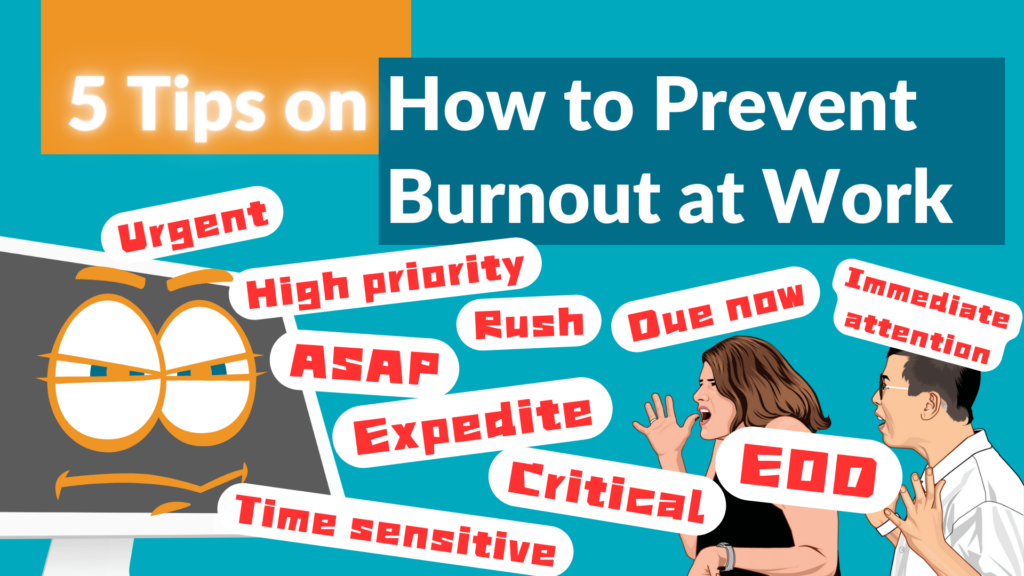
banner

Five Practical Tips to Prevent Burnout at Work

Burnout is a real issue that affects productivity, team morale, and the ability to achieve organizational goals. Preventing burnout is essential as people are a company’s most valuable asset. Ensuring that your team isn’t overwhelmed or constantly on the verge of burnout will improve overall well-being and contribute to a healthier, more productive work environment. Here are five practical tips to prevent burnout at work.

1. Reduce False Urgency

False urgency is when employees feel constantly busy, yet they aren’t accomplishing much. They are reacting instead of being proactive. This constant sense of urgency can lead to burnout because it keeps people in a state of stress. To reduce false urgency, take time to set clear expectations and deadlines, and make sure that team members are working toward meaningful goals. Avoid creating an environment where everyone feels the need to rush without a clear direction.

For more information on this, check out a video on how to reduce false urgency at work. https://curiositybased.com/reduce-false-urgency-at-work/

2. Encourage Taking Breaks

Trust your team to manage their workload and encourage them to take breaks during the day. Regular breaks can help break up the monotony of the workday and refresh the mind. Whether it’s taking a lunch break, stepping outside for a walk, or running errands, allowing employees to take breaks can help prevent burnout. It’s important to also model this behavior by taking breaks yourself. Leading by example helps normalize taking time to recharge.

3. Make Time to Reflect, Connect, and Celebrate

Creating a culture of recognition and appreciation is crucial. Employees need to feel valued not only for their work but for their humanity. Regularly connecting with your team and celebrating milestones or achievements fosters a sense of pride and accomplishment. You can implement team-building activities or icebreakers to enhance the work environment and encourage meaningful relationships. Taking time to reflect on successes and challenges will help build a supportive and balanced workplace.

4. Have Companywide Breaks

At CuriosityBased, a companywide break is implemented every quarter where everyone takes time off to rest and recharge. While not all companies may have the resources to provide an entire week, implementing shorter breaks—such as a half-day or a day each month—can have a big impact. Alternatively, providing employees with paid time off on holidays can help them disconnect and rejuvenate, reducing the risk of burnout.

5. Have a Backup Plan

Sometimes, employees feel pressured to do everything themselves, believing they are the only ones who can get the job done. This can lead to burnout when employees feel that the work will fall apart without them. To prevent this, establish a clear backup plan. Let employees know that if they are absent, there’s a temporary solution in place. Whether that means pausing the work or delegating it to someone else, having a plan in place reduces stress and ensures continuity.

Conclusion: Preventing Burnout is Key

Burnout is a real issue, but it is far easier to prevent than to recover from. By applying these five tips—reducing false urgency, encouraging breaks, reflecting and celebrating achievements, scheduling companywide breaks, and having a backup plan—you can help your team avoid burnout and create a healthier work environment.

If you found five practical tips to prevent burnout at work to be helpful, be sure to share them with others and start applying them to your workplace!

Hashtags:

#PreventBurnout #WorkplaceWellness #HealthyWorkplace #EmployeeWellbeing #WorkplaceCulture #LeadershipTips #StressManagement #TeamWellbeing #Productivity #BurnoutPrevention

How to Reduce False Urgency at Work

False urgency occurs when people feel unnecessarily busy due to poor planning and unrealistic expectations. It’s easy to fall into a pattern where it feels like you’re always in a state of emergency, putting out fires instead of proactively preventing them. Here are three effective strategies for how to reduce false urgency at work and prevent burnout.

1. Set Realistic Expectations

The first step to reducing false urgency is setting realistic expectations. When planning a new project or campaign, it’s crucial to gather all the people involved and assess upcoming holidays, vacations, and other priorities. Don’t forget to consider any unknown factors, like new partners or processes, that could require extra buffer time. Setting clear expectations about deadlines is key.

It’s frustrating, when managers set unrealistic deadlines, such as needing something by Monday, although they won’t review the work until Thursday. It’s important to be realistic about when things need to be done. Setting realistic deadlines and response time expectations can prevent the sense of urgency that isn’t really necessary.Clear communication helps prevent misunderstandings and reduces unnecessary stress.

2. Communicate Response Time Expectations

When you don’t set clear expectations about response times, others may think a task is urgent when it isn’t. This can create unnecessary pressure for everyone involved. It’s important to be transparent about when you need something done and explain why it matters. Doing so will help others understand the urgency, or lack thereof, around a request.

3. Limit Off-Hours Communication

A lot of false urgency stems from around-the-clock communication. With technology making it easy to send emails and messages at any time, it’s easy to feel like you have to be “always on.” Dr. Pham suggests using technology to your advantage by limiting off-hours communication. For instance, if you’re working late and send an email at 11:00 p.m., it might create the expectation of a response immediately.

To manage this, use the “schedule send” feature on email.Schedule emails to be sent the following day when the workday starts. This helps set clear boundaries for work communication, ensuring it only takes place during work hours.

By following these three tips — setting realistic expectations, clearly communicating response times, and limiting off-hours communication — you can reduce false urgency at work and prevent burnout at work.

If you found these tips helpful, don’t forget to like and share this post!