Daisy Jones & the Six: Lessons on Love, Respect & Learning (Spoilers)
I don’t watch many shows and I don’t own a TV, so I surprised myself with how obsessed I became with Amazon Prime’s new series, “Daisy Jones and the Six.” The show depicts the rise and fall of a fictional rock band that achieved great fame in the 1970s.
I found myself re-watching episodes, searching for interviews with the actors, and even reading the original book by Taylor Jenkins Reid, on which the series is based. I decided to explore why I became so engrossed, embracing curiosity.
Here’s what watching Daisy Jones taught me about love, respect, and learning. Please note that this discussion contains spoilers, including the ending. If you haven’t seen the series yet, you may want to pause here and watch it first.
Lessons on Love
The show demonstrates that people are capable of loving multiple individuals simultaneously. It’s not about loving someone more or less, but rather about loving them differently because they resonate with different aspects of who we are. The central plot revolves around the love triangle between Daisy Jones, Billy Dunn (the two lead singers), and Billy’s wife, Camlia. While some fans may interpret this differently, I firmly believe that Billy loves both women equally, albeit in different ways. They each connect with different parts of his complex self.
Lessons on Respect
To make the best choices for themselves, individuals must possess self-respect. I particularly appreciated the portrayal in the Amazon Prime version compared to the book. In the book, Camilla tells Daisy to stay away, and Daisy complies. However, in the show, Camilla tells Billy that he must choose whether to remain in their relationship or not. This act demonstrates self-respect. Camilla doesn’t approach Daisy with a possessive stance. Similarly, Daisy respects herself by realizing that she can’t simply stay in the band, hoping for a romantic relationship with Billy. She understands that she needs to leave the band, enter rehab, and regain control of her own life. Her decision is not influenced by Camilla’s request, as depicted in the book. Billy also exhibits self-respect by striving to be a faithful partner and father, contrary to his own father’s behavior. He understands the importance of making difficult choices to align with the best version of himself. As they all respect themselves and set boundaries, they are able to pursue their own best lives.
Lessons on Lifelong Learning
The series teaches us that it’s never too late to learn something new, regardless of our age. The actors Sam Clafin and Riley Keough learned how to sing and perform as a band in just a year and a half, and they excel at it! They even became the first fictionalized band to reach number one on the Billboard charts. The behind-the-scenes story of the show’s production has inspired me to contemplate my own potential for learning. It’s impressive that all the actors are singing and playing their instruments, without the use of voiceovers. The music is undeniably catchy.
If you’ve watched the series, I’d love to hear if you agree with any of my observations. Which of these three lessons resonates with you the most? If you found this post helpful, please consider sharing it with a friend or on social media.
4 Common Misconceptions that Asians are Facing in the Workplace
As an Asian American, I’ve noticed that we face different assumptions from other racial groups. In the workplace, I’ve identified four common misconceptions that Asians are facing in the workplace that aren’t just held by non-Asian, but within our community as well.
Here are 4 Common Misconceptions that Asians Face in the Workplace:
Misconception #1: Asians are all the same.
In the US, Asians come from over 20 countries in the East, Southeast, and Indian subcontinent. We’re not all Chinese. Included in that population are the pacific islanders and native Hawaiians.
Misconception #2: There are too many Asians in the workplace.
When there are more than a few of us, then there are too many of us. BeamJobs reported how this is particularly true in tech where Asians make up 29% of employees at the 35 largest tech companies. I remember seriously debating if I should bring on another team member who was Asian American on my already all-Asian team because I was worried people would think I only hired other people of Asian heritage. The impact is that some Asians can feel self-conscious and even guilty about taking up so much space, which can lead to Asians minimizing their presence and then perpetuating another stereotype of Asian silence.
Misconcpetion #3: Asians don’t “count” as people of color.
I believe Asians aren’t counted as “people of color” because that term is often conflated with those experiencing economic hardship who are entitled to aid. Therefore Asians, who have the highest median household income in King County, where I live, presumably don’t meet those criteria. For these reasons, there are Asian Americans who don’t see themselves as people of color. For Asians who do call ourselves “people of color,” we are compelled to remind others we are not white. The impact of this assumption is denying Asians experience racism in the workplace.
Misconception #4: Asians as the silent workhorses.
Asians are often described as “hard-working”. We are the silent workhorses. I am also guilty of holding this assumption. I have asked for help from Asian colleagues instead of non-Asian colleagues in off-hours because I think Asians are more likely to say yes.
Which of these misconceptions that Asians are facing in the workplace have you unintentionally had? I’d love for you to share your thoughts in the comments section. If this was helpful, please share it with a friend or post it on social media.
Even before the pandemic, I heard people complain about how difficult it is to develop new friendships or deepen existing ones, especially as an adult. People can act as if others are withholding friendship from them.
If you’re struggling to build or deepen relationships, it might be because you’re too polite.
Relationship building requires risk-taking. One person must initiate. You can wait around for other people, or do it yourself. I prefer to initiate. Sometimes my actions might be interpreted as rude. I’d rather take the risk that someone will perceive me as rude than do nothing at all. I’ve been turned down before, and I’m grateful I found out sooner rather than later that the person didn’t want to reciprocate.
Here are some tips that can help you deepen your relationships. Warning: They might be perceived as rude.
Just say “no” (instead of saying nothing of all)
It can be hard to say “no.” But there is something worse. And that’s not saying anything at all.
Think about how you feel when someone doesn’t respond to an invitation or request. I’ve sometimes asked for something from someone I know, and that person said nothing, even after a reminder. I wondered, did he or she think less of me? Did I ask too much? Did I cross a line? Some people think saying no is rude. I think it’s ruder to ignore someone.
That’s why when I can’t say “yes” to an invitation, I strive to decline as soon as possible. I don’t want to keep anyone waiting or guessing. Whenever someone says no to me, I immediately thank the person.
Yes, we’re all busy. That is not an excuse. Some of the best examples of a quick, firm, and kind decline came from some seriously busy people, including a Fortune 500 CEO and a county court judge. If they can take the time to say no, so can I. And the way they said no made me feel safe, as if I could still ask for something later, which I did and received a yes. “No” just means “not this time.” Silence often implies I shouldn’t have asked.
Takeaway: The next time a friend or an acquaintance asks you for something, and you know you can’t help, send a quick and kind decline instead of silence or pushing it off.
Ask for help (don’t just offer it)
It’s easy to offer help. It probably makes you feel good or helpful. When you are the one offering help, you have power. You determine how you will help. Most people often feel good about being asked for help.
Think about how you feel when you ask for help. If you are like most people I’ve talked to, you don’t like asking for help. You might even think it’s rude.
And yet asking for help is more likely to make someone feel connected to you than offering help. For example, I have developed deep friendships with people I asked for a ride to or from an event when they never offered.
Asking for something signals you want to continue the conversation with this person. I’m really testing to see how this person responds—will it be yes, no, or nothing at all? When the person doesn’t reply or deflects, even after I nudge a few times, then I’ve discovered an unspoken boundary.
When you attempt to deepen a relationship by asking for help, you may quickly learn the other person’s limits. At least you gave him or her a chance and now you know.
Takeaway: Think of what you can ask for from others. Try asking someone you want to have a deeper relationship with.
Ask that overly personal question (skip the small talk)
I hate small talk, especially if the conversation never moves beyond it.
If you like small talk, and it works for you, you might want to skip this tip.
Lately, I’ve been thinking about class-based assumptions (I’ve done a lot of research on assumptions). A meeting I planned to attend was canceled at the last minute. I decided to email the other person who I knew was attending. I asked to connect by phone so we could use the time we had already set aside. He sent me his number and I called him. After about five minutes, I decided to cut off the small talk and take a risk. I asked him how he would feel talking about his class background. As a result, we got into a deep conversation on a topic that he told me he hadn’t really talked about before, and we did become closer.
I tried the same question on another acquaintance a few months earlier. Once she realized I was asking her what she personally thought about class, she mumbled an answer and then told me she had to get off the phone to deal with an emergency. I suspect she thought I was rude.
In both cases, I took a risk with an acquaintance. Deepening one out of two relationships is pretty good odds. It was worthwhile to test my limits.
Takeaway: Try skipping the small talk and ask something that’s mildly overpersonal and see how the other person responds.
Invite yourself over
You’ve probably heard people say, “I’ll have to have you over some time.” You may have even said it yourself.
Consider inviting yourself as a way to take someone up on their explicit or implicit offer.
The other day, I decided to invite myself to a friend’s house. Once when we were at an Indian restaurant, he mentioned he makes good paneer and casually said I should come over sometime to try it out. So, I text messaged him, “My boyfriend and I would love to come over for that homemade paneer you mentioned.” He immediately asked me when I was free and set a date. We ended up having a great three-hour conversation, and he said we should get together again.
When you invite yourself, it signals, “I believe your offer was sincere, and I want to spend time with you.” It’s a bold move, some might even say rude. I’ve done this with people who have offered and even those who haven’t. For example, I asked a friend who I know often hosts friends and family from out of state if I could have a “staycation” with her for a few nights. She agreed and we talked late into the night about many things we usually can’t squeeze into our regular phone calls. She offered to host again.
If you invite yourself and the person hesitates or deflects your invitation, you might realize it was just a polite but superficial offer to begin with. You can gently retract by not pushing the issue further.
Takeaway: Think about someone who has offered hospitality to you that you genuinely want to get to know better. Try inviting yourself over.
What some people consider rude, I see as taking a risk. And if someone really wants to reciprocate and deepen a relationship with you, he or she will recognize your effort.
Diversify both the writers and performers of our leadership narratives
Many companies claim they support diversity and want to increase the number of women and people of color in their leadership ranks.
Saying is easy. Doing is hard.
Imagine hearing an all-white, mostly male executive team espouse the value of diversity. Yet, no one on the team voluntarily gave up their seat to make room for a more “diverse” candidate? In many cases, diversification requires structural and organizational change and financial investment. It can mean replacing the people who fill a limited number of roles.
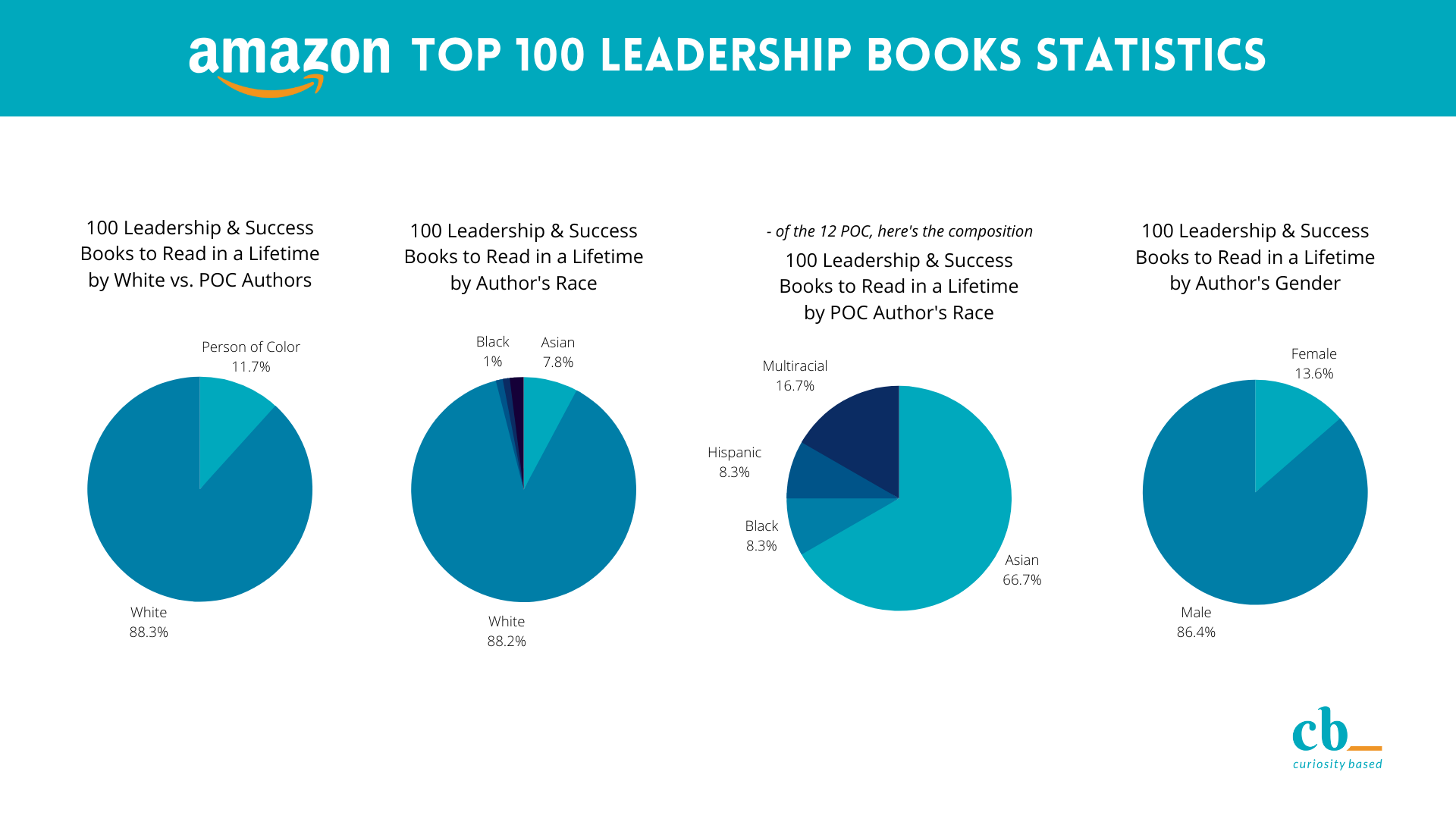
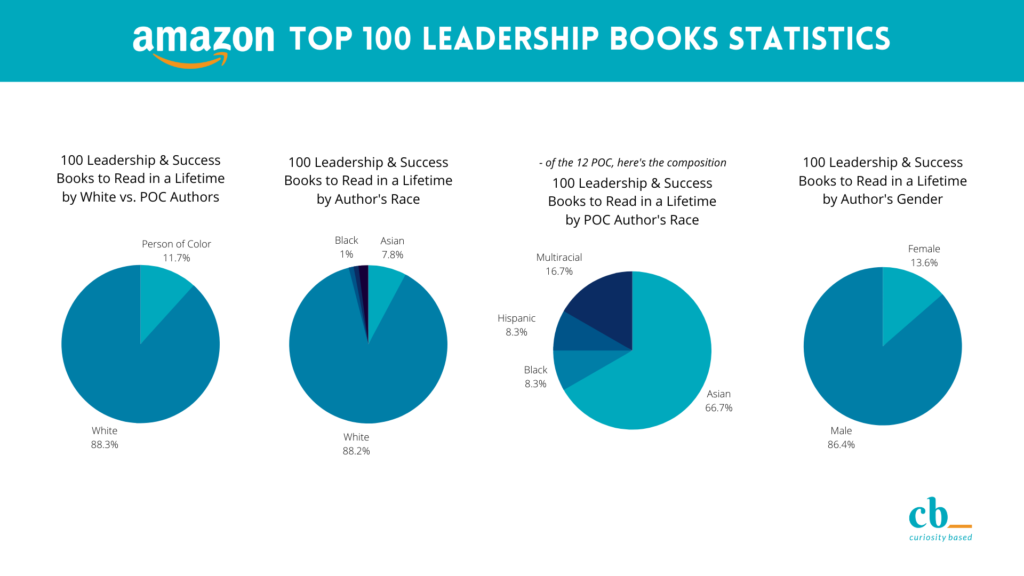
Meanwhile, most of the top ranked leadership and management books are written by white men. Of Amazon’s top 100 recommended books on leadership, only 12 were written by a woman or person of color. Only 18% of business books are written by women. Society is demanding a change in representation, yet the leadership playbooks haven’t kept up.
Amazon Top 100 Leadership Books Statistics
I’ll liken this to movies and plays. While the actors are changing, they are still performing the same scripts. We’re not diversifying the pool of the screenwriters and plays.
We don’t have to wait for the infrastructure change required to increase diverse representation before we start exposing ourselves to underrepresented leadership perspectives.
These are parallel and complementary efforts. The former requires structurally making space for new people. The latter asks people to expand their minds. You can still read Adam Grant and Patrick Lencioni. You can also read Adrienne Maree Brown and Dr. Laura Huang. The virtual bookshelf and podcast library aren’t limited in the way seats on a corporate board or executive team may be.
Here’s the thing—leadership books by underrepresented authors exist though they rarely make it to the recommended book lists. My company started to create lists of books authored by different communities: women, Black Americans, LGBTQ, authors with disabilities, etc. Based on our research, we compiled 100+ books per group, and we know there are many missing. Many of the books on these lists were self-published. The lists include memoirs and social commentary. We expand what “leadership narrative” means.
On the demand side, we, as the readers, the audience, and consumers, have influence.
We can consult existing leadership narratives written by underrepresented authors and find ways to integrate relevant philosophies that align with and support our mission. Many authors, like Ruchika Tulyshan, Mikaela Kiner, Cindi Bright, and Dr. Marie Gervais, share useful strategies and tactics to foster inclusion at work. We can also validate those authors by promoting their work.
Clearly, books by underrepresented authors are not always about race and diversity. Some books address race and gender; most do not. It shows that books by underrepresented authors don’t just have to focus on their identity.
Women and people of color who are in leadership roles were hired for their expertise. Their diverse perspectives are a bonus. That’s how we should approach leadership books. Just as we don’t expect white male authors to write about their race and gender, underrepresented leadership authors shouldn’t need to focus on their race and gender.
Designers use a concept called the curb cut effect: if you design something for those with special needs, it may actually end up benefiting more people. A common example of this is when curb cuts were made into sidewalks for wheelchair users and ended up helping many others, like those with baby strollers and luggage. The idea here is when someone writes from a minority perspective, that perspective will end up helping and benefiting others too.
An excellent example of this is Stacey Abram’s book, Lead from the Outside, which was originally titled Minority Leader. Each chapter has practical worksheets and frameworks that everyone, including white men who are not in the minority, would also find helpful.
As consumers, we should evaluate our expectations for what counts as credible. Many popular leadership books are written by academics or those with corporate experience. White men dominate both academia and the corporate world, so leadership books also follow suit. It’s a vicious cycle. We think we need authors to have those credentials, so publishers only publish authors with those credentials, which reinforces the belief that we should only read those with these credentials.
Large corporation CEOs already author many books. Many fewer books are written by small business owners, who also are much more diverse. Moreover, small businesses account for nearly 99.75% of all companies, and they are responsible for 66% of new job creation. So why are we looking for the small minority of leaders at large companies to teach us? How is their experience more applicable or relevant?
When I read leadership books by white men, especially in business, they often cite their leadership roles in major organizations and relationships with billionaires. I just can’t relate.
We lament the lack of diversity in leadership as a way to advocate for systemic change.
As individuals, we may not have the power, position, or capacity to influence who is represented in our boardroom and executive teams.
We do have the choice to start reading, supporting, and consuming leadership narratives by underrepresented authors.
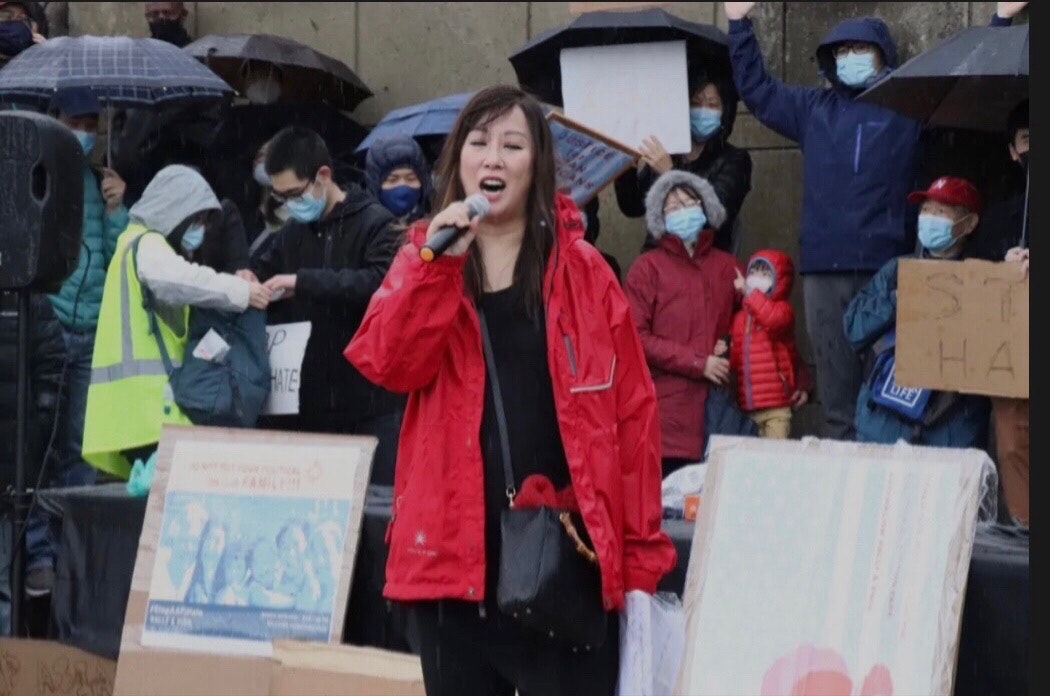
Making the Moment Matter: How Anti-Asian Hate Surfaces Perceptions of Asians Inside and Outside the Asian Community
Our nation has seen a marked increase in anti-Asian hate crimes and violence, especially against Asian women, with the recent killings in Atlanta as the most heart-breaking example.
This is a personal matter for me as an Asian woman leading a team of all-Asian women. Though we come from different parts of Asia – Vietnam, China, Myanmar and Korea – many people don’t understand those distinctions. “Asians” are seen as a monolithic group. This inability to recognize our individual cultures stems from a lack of exposure to Asians – of knowing us and understanding our communities. Instead, we are known as, and resented for, being the “model minority.” This stereotype casts Asians as high achieving, hard working minorities who won’t complain and will passively accept abuse. What’s more, some might say, we have suffered far less than Black and Brown people, so what do Asians really have to complain about?
How can we use this current moment to challenge this perception? And how do Asians also change this sentiment among ourselves?
I talked to an Asian American girlfriend recently about people reaching out to check in. “I know it’s bad, but what we are experiencing isn’t as bad as what Black people have suffered,” she said.
I understood what she meant. I have felt this guilt myself. As if I don’t deserve to feel bad, so I should not say anything. That’s part of our problem.
Last month, I facilitated numerous workshops on Exploring Race-Related Assumptions. In one session, an Asian American man told me he’d assumed the facilitator was going to be white or Black – he was surprised I was Asian. He shared that he’d been taught not to initiate hard conversations or create controversy by Asian elders. I so appreciated his candor. His comment reinforces how Asians, particularly women, are seen as not willing to speak out and how this perception is internalized even within our Asian communities.
His comment also underlines why we must challenge assumptions of what leaders look like. We must see Asian women beyond the stereotypes of the silent work horses, tigers moms or submissive sexual objects.
Aside from wanting to foster more curiosity in the world, I founded my company to celebrate and contribute to the diversification of leadership – to challenge how we lead and provide an alternative to the dominant narratives that are largely constructed by white men in the US. I respect many of those men. I also think there’s room for other voices. Increasing exposure for Asians is critical to fighting stereotypes and expectations of passiveness.
America has a short attention span. That means the mic is being passed around to raise awareness to any given cause. It was #metoo movement yesterday, it could be Black Lives Matter again tomorrow. Today it’s anti-Asian hate.
Asians have to take the mic when it’s given to us. If we don’t, we reinforce the perception that even Asians don’t think our pain matters or at least, that it matters less than the pain of others who face prejudice based on the color of their skin. We then perpetuate the idea that we are a stoic, model minority willing to take the blows. And we don’t give others a chance to stand in solidarity with us, to console us, when we need them.
I appreciate all of my non-Asian friends who have reached out to check in on me and who are standing in solidarity with my community. The first friend to let me know he was thinking about me was a Black man from the American South. It was through our friendship he started understanding the different Asian cultures; he said he grew up referring to all Asians as “Chinese.” Through exposure, our perceptions of one another changed. I am also grateful I have my team and other Asian friends to commiserate with. I feel seen and heard.
I know that Chung Park, Hyun Jung Grant, Suncha Kim, Yong Ae Yue, Delaina Ashley Yaun, Xiaojie Tan, Daoyou Feng, and Paul Andre Michels did not die in Atlanta in vain. Their lives will serve as a reminder that even Asians need to step up and take the mic to loudly and publicly decry hate. And a reminder that we won’t be standing alone when we do.