What I learned by trying to dance like Michael Jackson
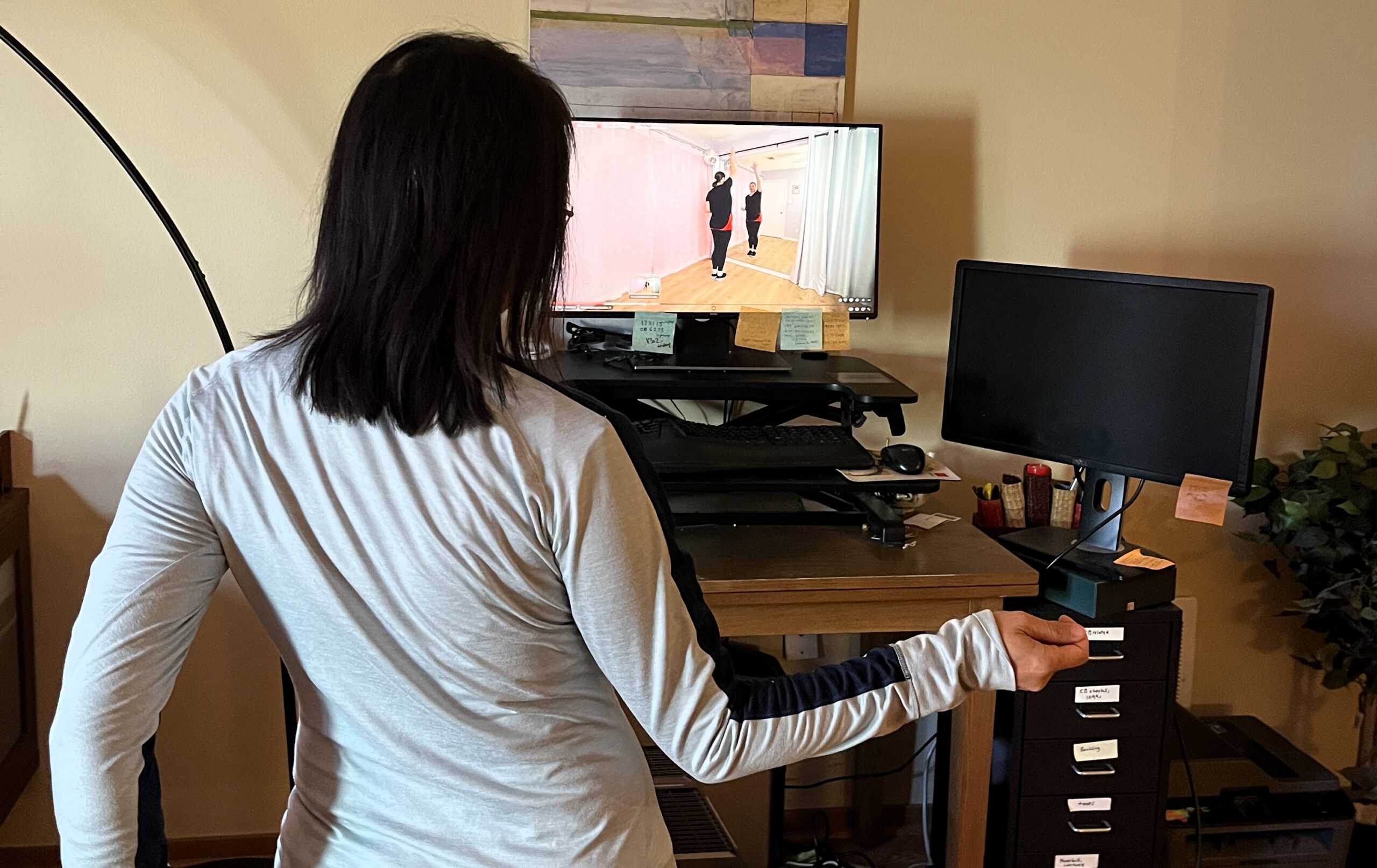
Julie following along to the video, “BEAT IT” Dance ❤️ Michael Jackson ❤️ Beginner Dance Tutorial ❤️ Step-by-Step Choreography.” The instructor has her back to the viewer.
Is there something you’ve been struggling to learn? Maybe you should look at how you’ve been learning it. I just realized this for myself.
When the biopic of Michael Jackson came out, I went to see it three times. I was inspired by how the lead actor, Jaafar Jackson (Michael’s nephew), took two years to learn how to dance like Michael Jackson. So, I decided to look up tutorials on how to do some “MJ” moves myself.
I’ve always been a big fan of Michael Jackson’s music. Whenever Billie Jean plays at weddings, I’m the first person on the dance floor. What I lack in skills as a dancer, I make up for in enthusiasm. But, when I’ve taken group dance lessons as an adult, I’ve felt frustrated because I couldn’t keep up with the other adult learners. I figured that I must actually be uncoordinated. The movie inspired me to try again, and also to exercise different parts of my brain.
There are a lot of tutorials on how to mimic Michael Jackson’s moves on YouTube. With Carrie and her YouTube channel, Beginning Dance Tutorials, I was able to learn the basic steps of “Beat It” in a 20 min video. I couldn’t believe it.
What changed?
After comparing this video to others, I realized that Carrie, the instructor, had her back to me, which meant I was shadowing her as we danced in the same direction. In almost every other tutorial, the teacher is facing the camera, like in a mirror. It made me realize that my real life dance instructors also faced me. This observation gave me an epiphany. What I thought was my own lack of coordination was actually my brain’s inability to make the cognitive flip to translate the instructor’s moves to how I should move because we were facing opposite directions.
I imagine feeling like someone who is diagnosed with dyslexia that comes to understand why it’s hard for them to read in a standard way. Once I learned how I learn differently, I knew I was capable of mimicking moves as long as I shadowed from behind.
As someone who conducts training, it reminds me to try to approach teaching my concepts in a variety of different ways to accommodate different learning styles.
Have you ever had this experience of discovering you just needed a different teaching style? Or is there something with which you’ve been frustrated that you can’t learn? Maybe you just need to explore what is making it difficult for you to learn.
I’d love to hear from you. something because it feels like you risk rejection? If so, please tell me about it, or ask away. I’d love to hear from you.
Since last fall, I’ve been focused on conducting research for my next book which will focus on respect in friendships. It’s one thing to write a book. It’s another thing to market and sell one.
While I’m proud that the sales from 7 Forms of Respect® are in the top 10% of self-published books, I dream this next book will reach many more people. I want total strangers across the country to approach respect with curiosity in everyday conversations. I envision the book being on people’s shelves and coffee tables. I hope it will lead to opportunities to grow CuriosityBased’s business and brand. And sometimes that dream seems so elusive, I wonder if it will ever happen.
Everything we’ve achieved to sell and market the 7 Forms of Respect® thus far has been through word of mouth, earned media, and consistent content creation. I recognize that to get to the next level, I’m going to have to get an agent and a traditional publisher who can distribute my book widely.
Last month, I was sharing my desire for higher distribution with another writer friend. He tried to soothe me by saying, “As long as you’re trying your hardest.” His words made me realize, “I don’t think I am trying my hardest. I don’t actually think I’m doing the things that make me uncomfortable, that risk rejection. I could be asking for a lot more help.”
This is where you come in. I have to strengthen my “platform” to prove to potential agents there’s an existing market for my work on which they can build.
So, I am asking you for help in three simple ways:
I want to grow newsletter subscribers by 20% by the end of summer. Could you please recommend to a few people to subscribe to this newsletter?
If you read the book, 7 Forms of Respect®, please review it on GoodReads and/ or Amazon. We have 95 reviews across both platforms and I’d like to get to 200 by the end of the summer.
Follow us on LinkedIn and Facebook and like or share our content.
Phew. There, I did it. I asked you for help.
Since that conversation with my friend, I’ve risked rejection daily by directly asking people if I can add them to my newsletter subscriber list. Fortunately, everyone has said, “Yes.”
Are you struggling to ask me for help with something because it feels like you risk rejection? If so, please tell me about it, or ask away. I’d love to hear from you.
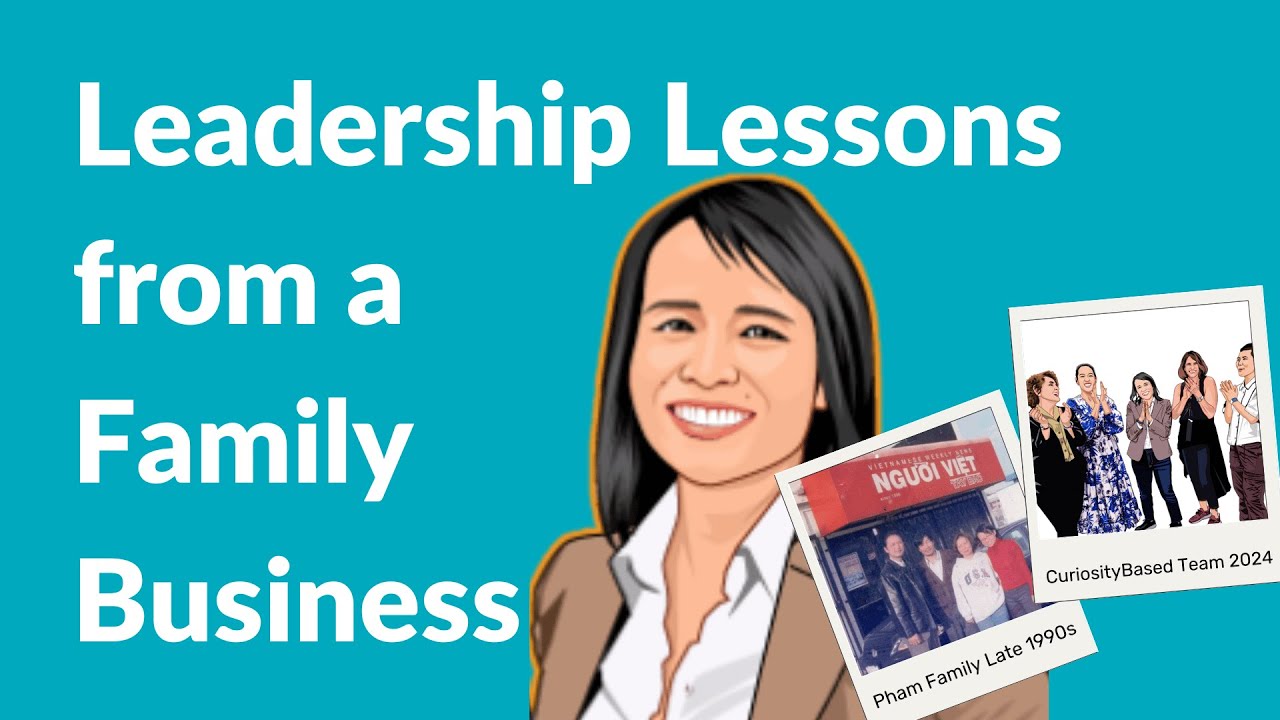
Julie’s father, Kim Pham, standing third from the right with his friends and supporters of their family newspaper, Nguoi Viet Tay Nac (Northwest Vietnamese News), circa 1988.
Did you observe the kinds of friendships that your parents, or whomever raised you, had while you were growing up? What did you learn from them about how to treat your own friends? My next book will focus on respect in friendships. As part of my research, I ask people these questions.
While some say their caregivers explicitly taught them how to treat their friends, most say they learned through observations. There was a mix of positive and negative models of friendship. Some said their parents didn’t have friends and, as a result, they themselves didn’t learn how to form friendships until well into adulthood. Many say they had never thought about their parents’ friendships before.
I hadn’t made the connection between my parents’ friendships and my own until I asked myself these questions. As the co-founders of the local Vietnamese newspaper, they were very involved in our immediate Vietnamese community. The line between personal and professional was thin. Many of my parents’ friends were entrepreneurs. Even the doctors and lawyers owned their own practices that served others in our refugee community. Being a friend meant supporting each other’s businesses. My brothers and I were always reminded when we went to a shop or a restaurant that it was owned by someone who advertised in the newspaper.
My parents taught me that friendship means helping each other out with whatever resources we have. This may include giving advice, making key introductions and referrals, and whenever possible, being customers. Many of my friends today are other entrepreneurs, creatives, founders, or have leadership roles at their organizations. We talk about work in the same way others talk about their hobbies or vacations. When it comes to other friends who don’t want to talk about work outside of work, I try to show respect by asking about their families and hobbies. Still, I like to be asked about CuriosityBased because my work is a core part of who I am.
What did you learn about friendship from those who raised you? How is that showing up in your expectations of respect in your own friendships now?
I’d love to hear from you. If you’re interested in having a one on one interview or participating in a focus group, please let me know.
#32: Curiosity in Life Enrichment with Monika Mathews
32: Curiosity in Life Enrichment with Monika Mathews
Curiosity at Work podcast episode 32: Curiosity in Life Enrichment with Monika Mathews, Dr. Julie Pham speaks with Monika, CEO and founder of Queen Care and Life Enrichment Group. They discuss the importance of curiosity in entrepreneurship, the evolution of Queen Care from a nonprofit initiative, and the challenges of leading a diverse workforce. Monica shares her journey of personal growth and the significance of self-care in sustaining her business. The conversation highlights the generational differences in work ethic and the need for curiosity in understanding and bridging these gaps.
Takeaways
Curiosity is a driving force in entrepreneurship.
Failure can lead to valuable insights and growth.
Queen Care originated from a nonprofit initiative focused on youth empowerment.
Effective leadership requires letting go and trusting your team.
Understanding generational differences is crucial for workplace harmony.
Self-care is essential for long-term sustainability in business.
Curiosity fosters personal and professional development.
Mentorship plays a vital role in nurturing curiosity. -The wellness industry faces unique challenges that require innovative solutions.
Investing in young people can lead to a more engaged workforce.
More Curiosity at Work podcast episodes can be found here: https://curiositybased.com/category/curiosity-at-work-podcast/ or at https://curiositybased.com/
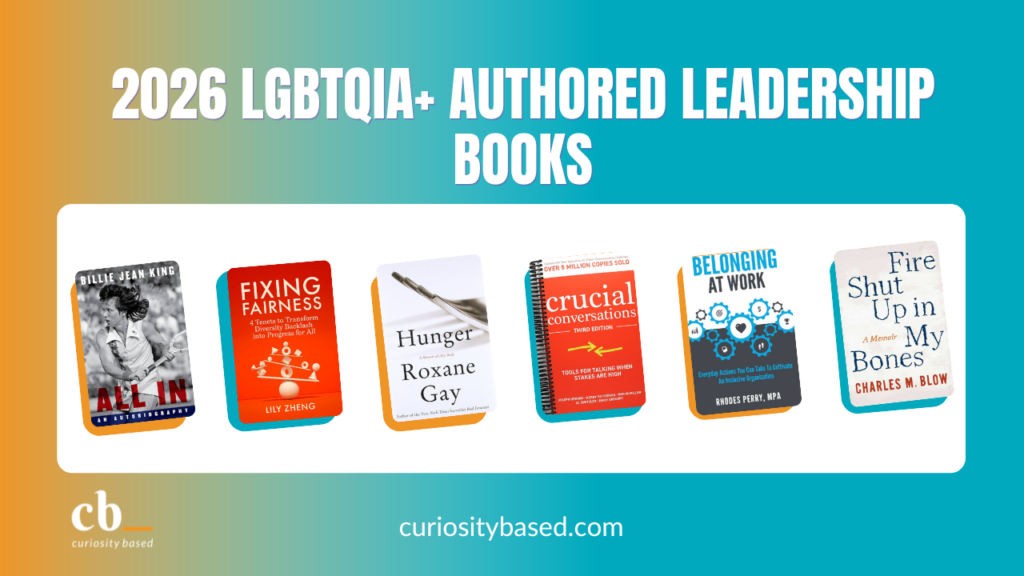
n honor of Pride Month, CuriosityBased curated this 2026 LGBTQIA+ Authored Leadership Book List of books written by authors that identify as LGBTQIA+. This list is meant to be a resource, not an official endorsement. The books are listed in alphabetical order by book title. Check out all of the CuriosityBased curated leadership book lists.
A Burst of Light: and Other Essays — Audre Lorde
A Place for Us: A Memoir — Brandon J. Wolf
A Queer History of the United States — Michael Bronski
A Year of Pride and Joy — Simon James Green
All Boys Aren’t Blue: A Memoir-Manifesto — George M. Johnson
All Down Darkness Wide: A Memoir — Sean Hewitt
All In: An Autobiography — Billie Jean King
All Pride, No Ego — Jim Fielding
All The Things She Said — Daisy Jones
Allies at Work — Dr. David M. Hall
Alphabet Soup: The Essential Guide to LGBTQ2+ Inclusion — Michael Bach
An Archive of Hope: Harvey Milk’s Speeches and Writings — Harvey Milk
And A Voice to Sing With: A Memoir — Joan Baez
And Now We Are Going to Have a Party — Nicola Griffith
Another Word for Love — Carvell Wallace
Authentic Leadership — Lemuel W. Watson & Joshua Moon Johnson
Bad Feminist — Roxanne Gay
Baggage: Tales from a Fully Packed Life — Alan Cumming
Baggage: Tales from a Fully Packed Life — Alan Cumming and Dey Street Books
Banned from California — Robert C. Steele
Be a Revolution — Ijeoma Oluo
Beautiful on the Outside: A Memoir — Adam Rippon
Before We Were Trans: A New History of Gender — Dr. Kit Heyam
Belonging At Work: Everyday Actions You Can Take to Cultivate an Inclusive Organization — Rhodes Perry
Beyond The Rainbow — Jenn T. Grace
Binge — Tyler Oakley
Black Boy Out of Time — Hari Ziyad
Blood, Bones & Butter — Gabrielle Hamilton
Body Becoming: A Path to Our Liberation — Robyn Henderson-Espinoza
Borderlands / La Frontera: The New Mestiza — Gloria Anzaldúa
In Curiosity at Work podcast episode 31: Curiosity in County IT with Viggo Forde, Dr. Julie Pham speaks with Viggo Forde, the Chief Information Officer for Snohomish County. They discuss the role of curiosity in the IT sector, particularly within government operations. Viggo shares his experiences from the private sector to public service, emphasizing the importance of fostering curiosity among employees, the evolution of IT in government, and how innovation funds can support agile projects. They also touch on the impact of AI on job roles and the personal challenges of maintaining curiosity in a busy work environment.
Takeaways
Maintaining an open mindset is key to practicing curiosity.
Curiosity is essential for personal and professional growth.
Leadership should encourage asking questions and exploring new areas.
Information management is crucial for effective government operations.
The pace of decision-making in government differs from the private sector.
AI should be viewed as a tool for enhancing productivity, not replacing jobs.
Training and development opportunities foster a culture of curiosity.
Innovation funds can help implement new ideas without lengthy planning cycles.
Collaboration with external partners can enhance project outcomes.
Personal hobbies can spark curiosity and creativity outside of work.
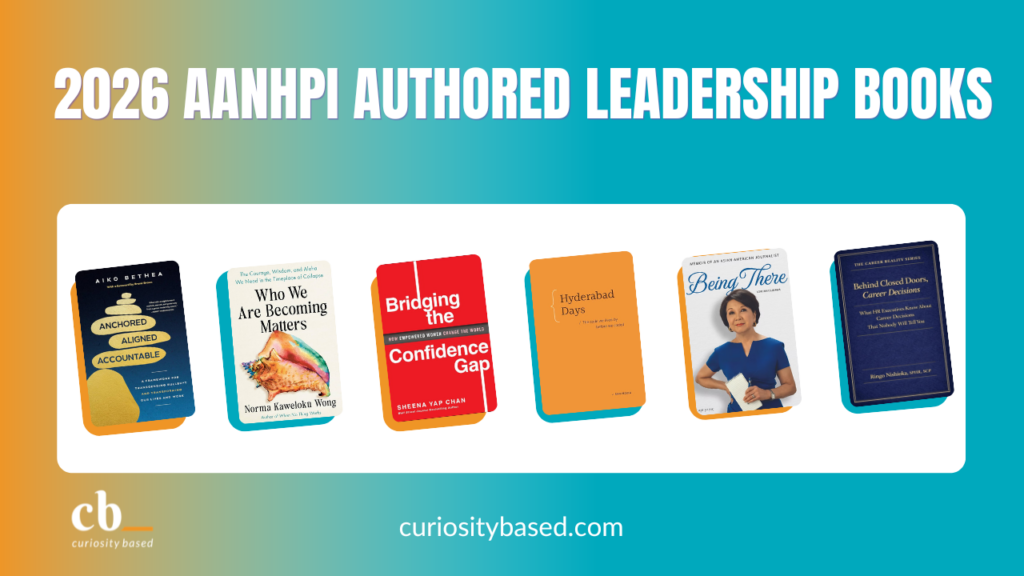
In honor of AANHPI Heritage Month, CuriosityBased curated this 2026 AANHPI Authored Leadership Book List of books written by AANHPI authors. This list is meant to be a resource, not an official endorsement. The books are listed in alphabetical order by book title.Check out all of the CuriosityBased curated leadership book lists.
13 Key Strategies to Make Money Fast in Business by Dr. Izdihar Jamil
7 Forms of Respect: A Guide to Transforming Your Communication by Julie Pham, PhD
A Living Remedy: A Memoir by Nicole Chung
A Principled Stand: The Story of Hirabayashi v. United States by Gordon K. Hirabayashi
Acitivites of Daily Living by Lisa Chen
Actions Speak Louder: A Step-By-Step Guide to Becoming an Inclusive Workplace by Deanna Singh
Adventures of the Karaoke King by Harold Taw
All in by Jerry Yang
All of Us or None: Migrant Organizing in an Era of Deportation and Dispossession by Monisha Das Gupta
All You Can Ever Know: A Memoir by Nicole Chung
Ambitious Women Rise by Dr. Izdihar Jamil
America for Americans: A History of Xenophobia in the United States by Erika Lee
An American Family: A Memoir of Hope and Sacrifice by Khizr Khan
Anchored, Aligned, Accountable: A Framework for Transcending Bullsh*t and Transforming Our Lives and Work by *Aiko Bethea*
Another Appalachia: Coming Up Queer and Indian In a Mountain Place by Neema Avashia
Art of Gathering, The: How We Meet and Why it Matters by Priya Parker
Art of Stillness, The: Adventures in Going Nowhere by Pico Iyer
Art of Strategy, The: A Game Theorist’s Guide to Success by Avinash K. Dixit
Art of the Start 2.0, The by Guy Kawasaki
Asian American Achievement Paradox, The by Jennifer Lee, Min Zhou
Asian American Histories of the United States by Catherine Ceniza Choy
Asian Women Trailblazers Who BossUp by Tam Luc, et al.
AugmentAsian: Professional & Leadership Success by AsianUpward & Elevate Teams
Authentic Inclusion: Drives Disruptive Innovation by Frances West
Backable: The Surprising Truth Behind What Makes People Take a Chance by Suneel Gupta
Be Water, My Friend: The Teachings of Bruce Lee by Sharon Lee
Be Your Own Cheerleader: An Asian and South Asian Woman’s Guide by Neelu Kaur
Behind Closed Doors, Career Decisions: What HR Executives Know About Career Decisions That Nobody Will Tell you (The Career Reality Series Book 4) by Ringo Nishioka
Behind Closed Doors, Hiring Decisions: What the Room Knows About Hiring Decisions That Nobody Will Tell You by Ringo Nishioka
Behind Closed Doors, Interview Questions: What Recruiters Know About Interview Questions That Nobody Will Tell You by Ringo Nishioka
Behind Closed Doors, Resumes: How Resumes are Judged Before Anyone Speaks to You (The Career Reality Series Book 1) by Ringo Nishioka
Behind Deep Blue: Building the Computer that Defeated the World Champion by Feng-Hsiung Hsu
Being Mortal: Medicine and What Matters in the End by Atul Gawande
Being There: Memoir of an Asian American Journalist by Lori Matsukawa
Bengali Harlem and the Lost Histories of South Asian America by Vivek Bald
Best We Could Do, The by Thi Bui
Beyond Happiness: How Authentic Leaders Prioritize Purpose and People by Jenn Lim
Big Little Man: In Search of My Asian Self by Alex Tizon
Big We, The by Hali Lee
Bitter Fruit: The Politics of Korean-Black Conflict in New York City by Claire Jean Kim
Blue Ocean Strategy by W. Chan Kim
Boat Baby by Vicky Nguyen
Boldly You: A Story about Discovering What You’re Capable of When You Show Up for Yourself by Janet Phan
Boundaries by Maya Lin
Brave, Not Perfect by Reshma Saujani
Breaking the Bamboo Ceiling: Career Strategies for Asians by Jane Hyun
Bridging the Confidence Gap: How Empowered Women Change the World by Sheena Yap Chan
Brotherhood: Dharma, Destiny, and the American Dream by Deepak Chopra & Sanjiv Chopra
Brotopia: Breaking Up the Boys’ Club of Silicon Valley by Emily Chang
Budding Lotus in the West by Nhi Yến Đỗ Trần
Caste Matters by Suraj Yengde
Checklist Manifesto, The: How to Get Things Right by Atul Gawande
Color of Success, The: Asian Americans and the Origins of the Model Minority by Ellen D. Wu
Come into My Office: Stories from an HR Leader in Silicon Valley by Mai Ton
Conversations that Change Everything by Dr. Zachary Van Rossum and Dr. Tammy Wang
Cooked Seed, The: A Memoir by Anchee Min
Courage: The Backbone of Leadership by Gus Lee, Diane Elliott-Lee
Creating Culture: Empowered Leadership for Systems Change by Jyoti Jani
Creating the Digital Future: Secrets of Consistent Innovation at Intel by Albert Y.c. Yu
Crying in H Mart: A Memoir by Michelle Zauner
Dat: Tackling Life and the NFL by Dat Nguyen
Dear Girls: Intimate Tales, Untold Secrets & Advice by Ali Wong
Death of Truth, The: Notes on Falsehood in the Age of Trump by Michiko Kakutani
Decoding the World: A Roadmap for the Questioner by Arvind Gupta and Po Bronson
Delivering Happiness by Tony Hsieh
Diversity Advantage, The: Fixing Gender Inequality In The Workplace by Ruchika Tulshyan
Eat a Peach: A Memoir by David Chang
Edge: Turning Adversity Into Advantage by Laura Huang
Empress: The Astonishing Reign of Nur Jahan by Ruby Lal
Enduring Conviction: Fred Korematsu and His Quest for Justice by Lorraine K. Bannai
Energize: Make the Most of Every Moment by Simon Alexander Ong
Enough About Me: The Unexpected Power of Selflessness by Richard Lui
Every Day Is a Gift by Tammy Duckworth
Falling Back in Love With Being Human: Letters to Lost Souls by Kai Cheng Thom
Fatty Fatty Boom Boom by Rabia Chaudry
Fault Lines: A Memoir by Meena Alexander
FEISTY: Dangerously Amazing Women Using Their Voices by Dr. Izdihar Jamil
Fierce and Fearless: Patsy Takemoto Mink by Judy Tzu-Chun Wu & Gwendolyn Mink
Finding the Edge: My Life on the Ice by Karen Chen
Fixing Fairness: 4 Tenets to Transform Diversity Backlash into Progress for All by Lily Zheng
Fresh Off the Boat: A Memoir by Eddie Huang
Glue: How Project Leaders Create Cohesive Teams by Anh Dao Pham
Go Back to Where You Came From by Wajahat Ali
Good Talk by Mira Jacob
Grit: The Power of Passion and Perseverance by Angela Duckworth
Growing Up Asian in Black and White America by Julia Lee
Growing Up Brown: Memoirs of a Filipino American by Peter M. Jamero
Hawaii’s Story by Liliuokalani
Healing Resistance: A Radically Different Response to Harm by Kazu Haga
Heart of Fire: An Immigrant Daughter’s Story by Mazie K. Hirono
Hit Refresh: The Quest to Rediscover Microsoft’s Soul by Satya Nadella
Holding Serve: Persevering on and Off the Court by Michael Chang
House Barbie: A Memoir by Geena Rocero
House of Sticks: A Memoir by Ly Tran
How K-Dramas Can Transform Your Life by Jeanie Y. Chang, LMFT
How to Raise a Feminist Son by Sonora Jha
How to Speak Machine by John Maeda
Hyderabad Days: The code we lived by before we coded by Ravi Vedula
I Love a Broad Margin to My Life by Maxine Hong Kingston
I Love Yous Are for White People: A Memoir by Lac Su
I Still Haven’t Found What I’m Looking For: Now What? by Dr. Sweta Chawla
I’ll Love You Forever: Notes from a K-Pop Fan by Giaae Kwon
I’m the One That I Want by Margaret Cho
If Lin Can: How Jeremy Lin Inspired Asian Americans by Richard Ho, et al.
Impressive First Impressions by Vu H. Pham
In Sensorium: Notes for My People by Tanaïs
Inclusion on Purpose by Ruchika Tulshyan
Innovation Starts With I: Increase Your Influence. Ignite Your Impact. by Saleema Vellani
Inspiring Women of Hawaii by Loretta Chen
Invitation to Lead: Guidance for Emerging Asian American Leaders by Paul Tokunaga
It Is Done: 15 Secrets to Manifest Your Dream Life by Dr. Izdihar Jamil
It Rhymes With Takei by George Takei by George Takei
It Takes Moxie by Maureen Francisco
It’s Always Sunny Above the Clouds: Getting into the Cockpit by Nick Tran
Journey for Justice: The Life of Larry Itliong by Dawn B. Mabalon, PhD, Gayle Romasanta
Joyful Living: Find Joy in the Journey by Lien Ngu
Karma of Success, The: Spiritual Strategies to Free Your Inner Genius by Liz Tran
Leader’s Guide to Unconscious Bias, The by Anne Chow
Leadership and Crisis by Bobby Jindal
Leadership Toolkit for Asians by Jane Hyun
Legal Heroes in the Trump Era by Tahmina Watson
Like Water: A Cultural History of Bruce Lee by Daryl Joji Maeda
Limitless: Upgrade Your Brain, Learn Anything Faster by Jim Kwik
Lions and Tigers and Bears: The Internet Strikes Back by George Takei
Living for Change by Grace Boggs
Local by Jessica Machado Born
Loneliest Americans, The by Jay Caspian Kang
Love for Imperfect Things by Haemin Sunim
Love Your Asian Body: AIDS Activism in Los Angeles by Eric C. Wat
Love, Loss, and What We Ate: A Memoir by Padma Lakshmi
Ma and Me by Putsata Reang
Madame Wu Chien-shiung: The First Lady Of Physics Research by Tsai-chien Chiang
Magical Language of Others, The: A Memoir by E.J. Koh
Making a Scene by Constance Wu
Making of a Manager, The: What to Do When Everyone Looks At You by Julie Zhuo
Making of Asian America, The: A History by Erika Lee
Meet Me Tonight in Atlantic City by Jane Wong
Mid-Career Momentum: Design Your Next Phase with Purpose and Joy. by Sharmin Banu
Minor Feelings: An Asian American Reckoning by Cathy Park Hong
Mixed Plate: Chronicles of an All-American Combo by Jo Koy
Modern Asian Mom: A Memoir by Juliet Dang
Money Makers: Build A Business WITHOUT Paid Ads by Dr. Izdihar Jamil
Monsoon Diaries, The: A Memoir by Calvin D. Sun
Mott Street: A Chinese American Family’s Story by Ava Chin
Moving Beyond Boxes: The Journey to Self-Discovery by Dr. Nhu Truong
Muslim Women Are Everything: Stereotype-Shattering Stories by Seema Yasmin and Fahmida Azim
My Forty Years as a Diplomat by Feng-Shan Ho
My Life in Full: Work, Family, and Our Future by Indra Nooyi
My Life: Growing up Asian in America by CAPE and SuChin Pak
My Money My Way: Taking Back Control of Your Financial Life by Kumiko Love
My Unforgotten Seattle by Ron Chew
Myth of the Model Minority, The by Rosalinda Chou and Joe Feagin
Naturally Tan by Tan France
Next American Revolution, The by Grace Lee Boggs
Nisei Radicals: The Feminist Poetics and Transformative Ministry by Diane C. Fujino
Not Nice: Stop People Pleasing, Staying Silent, & Feeling Guilty by Dr. Aziz Gazipura
Novelist as a Vocation by Haruki Murakami
Oh My Mother! A Memoir in Nine Adventures by Connie Wang
Oh Myyy!: There Goes the Internet by George Takei
Out of the Gobi: My Story of China and America by Weijian Shan
Pachinko by Min Jin Lee
Pay Up: The Future of Women and Work by Reshma Saujani
Perfect Enough: How to be happier and more productive by Judy T. Dang
Permission to Come Home: Reclaiming Mental Health by Jenny Wang
Postcolonial Leadership, A by Hee An Choi
Power of Unwavering Focus, The by Dandapani
Power Your Purpose: A Leader’s Guide by Shian Chuan
Purpose Mindset: How Microsoft Inspires Employees by Akhtar Badshah
Racial Melancholia, Racial Dissociation by David Eng
Radical : Fighting to Put Students First by Michelle Rhee
Radical Curiosity by Priyanka Raha
Reflections of Seattle’s Chinese Americans: The First 100 Years by Ron Chew
Reset: My Fight for Inclusion and Lasting Change by Ellen Pao
Rich Dad Poor Dad by Robert T. Kiyosaki
Rise of Chinese American Leaders in U.S. Higher Education, The by Honggang Yang, Wenying Xu
Rise: A Pop History of Asian America from the Nineties to Now by Jeff Yang, Phil Yu, Philip Wang
SAVING FIVE; A Memoir of Hope by Amanda Nguyen
Savor: A Chef’s Hunger for More by Fatima Ali
See No Stranger: A Memoir and Manifesto of Revolutionary Love by Valarie Kaur
Seek: How Curiosity Can Transform Your Life by Scott Shigeoka
Seven Spiritual Laws of Success, The by Deepak Chopra
She Made It Happen: 15 Inspiring Stories from Female Entrepreneurs by Dr. Izdihar Jamil
Sheer Determination: Swimming Upstream in a Downstream World by Kay Hirai
Shorter: Work Better, Smarter, and Less by Alex Soojun-Kim Pang
Show Your Worth: 8 intentional Strategies by Shelmina Babai Abji
Sigh, Gone: A Misfit’s Memoir by Phuc Tran
Silent Master, The: Awakening the Power Within by Tae Yun Kim
Smart, Not Loud: How to Get Noticed at Work by Jessica Chen
Soil of Leadership, The by Britt Yamamoto
Somewhere Inside by Laura Ling & Lisa Ling
Speak, Okinawa: A Memoir by Elizabeth Miki Brina
Starry Field: A Memoir of Lost History by Margaret Juhae Lee
Stay True by Hua Hsu
Still life with Rice by Helie Lee
Strangers in the Land: Exclusion, Belonging, and the Epic Story of the Chinese in America by Michael Luo
Suitable Boy, A by Vikram Seth
Sun Shining on Morning Snow by Ingrid Hu Dah
Talk it Up! A Guide to Successful Public Speaking by Mr. David Suk Brown
Tao of Self-Confidence, The by Sheena Yap Chan
The Hyakusho Way: Japanese Wisdom for a Flourishing Life by Britt Yamamoto
They Called Us Exceptional by Prachi Gupta’
Thick Face, Black Heart by Chin-Ning Chu
Things You Can See Only When You Slow Down, The by Haemin Sunim
This is Not a T-Shirt by Bobby Hundreds
This Is One Way to Dance: Essays by Sejal Shah
To The Stars: The Autobiography of George Takei by George Takei
Unassimilable: An Asian Diasporic Manifesto for the Twenty-First Century by Bianca Mabute-Louie
Uncompete: Rejecting Competition to Unlock Success by Ruchika T. Malhotra
Unlearning Silence: How to Speak Your Mind by Elaine Lin Hering
Unprecedented: The Masters and Me by Tiger Woods
Unrig the Game: What Women of Color Can Teach Everyone by Vanessa Priya Daniel
Unshrink Yourself: 12 Mini-Shifts to Ditch Self-Doubt and Own Your Life by Thanh Nguyen
Unspoken Rules, The: Secrets to Starting Your Career Off Right by Gorrick Ng
Unsung Hero: The Col. Young O. Kim Story by Woo Sung Han
Uplifted: Journeys of Abundance, Community, and Identity by Geena Chen
Viewfinder: A Memoir of Seeing and Being Seen by Jon M. Chu
Visibility Mindset, The by Bernice M. Chao & Jessalin Lam
Wake Up: Closing the Gap Between Good Intentions and Real Change by Michelle Mijung Kim
War on Normal People, The by Andrew Yang
We Were Dreamers: An Immigrant Superhero Origin Story by Simu Liu
What if Pigs Can Fly? by Van Lai-DuMone
What My Bones Know: A Memoir by Stephanie Foo
When Breath Becomes Air by Paul Kalanithi
When Fish Fly by John Yokoyama
When Invisible Children Sing by Chi Cheng Huang
Where I Belong: Healing Trauma and Embracing Asian American Identity by Soo Jin Lee
Where the Past Begins: Memory and Imagination by Amy Tan
Who We Are Becoming Matters by Norma Wong
Why Not Me? by Mindy Kaling
With Schwarzkopf: Life Lessons of The Bear by Gus Lee
Woman On Top: The Art of Smashing Stereotypes by Loretta Chen
Woman Warrior, The by Maxine Hong Kingston
Women Who Lead by Dr. Izdihar Jamil
Working Well: How to Build a Happier, Healthier Workplace Through the Science of Attunement by Nidhi Tewari, MSW, LCSW
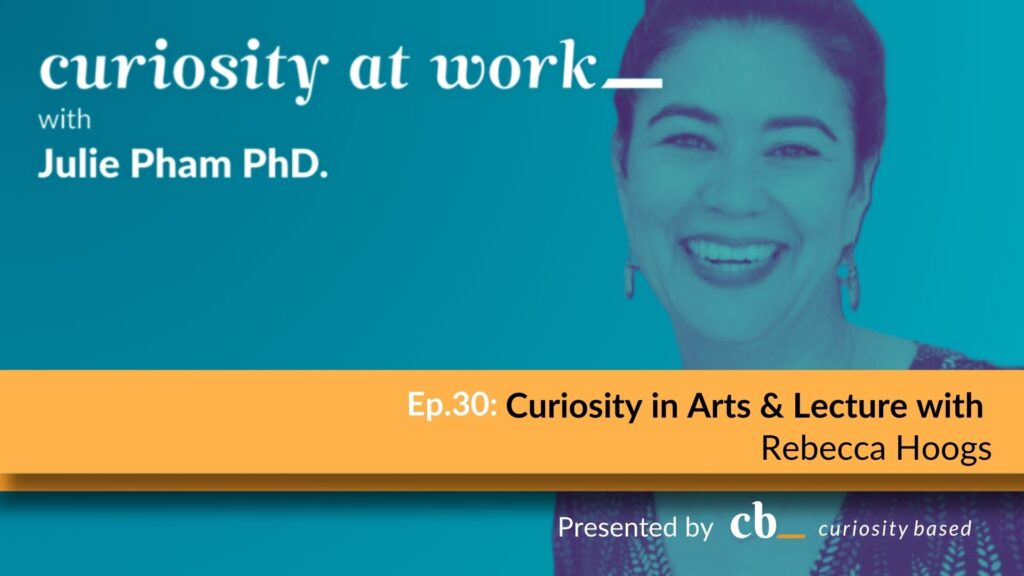
#30 Curiosity in Arts & Lecture with Rebecca Hoogs
#30 Curiosity in Arts & Lecture with Rebecca Hoogs
What does curiosity look like in arts leadership?
In the Curiosity at Work podcast episode #30 Curiosity in Arts & Lecture with Rebecca Hoogs, Dr. Julie Pham speaks with Rebecca Hoogs, Executive Director of Seattle Arts & Lectures, about curiosity as a core leadership value.
Rebecca’s path through nonprofit management and poetry offers a powerful reminder: curiosity is not just a mindset. It is a practice.
In this conversation, Julie and Rebecca explore:
• Why listening and asking better questions are essential leadership skills • How curiosity shapes community and audience engagement • The tension between problem-solving and staying open • The role of moderation and active listening in public conversations • Why paying writers strengthens the local creative economy • How poetry and creative writing are rooted in curiosity
Leadership is not only about direction. It is about creating space for others to share their stories.
Rebecca reminds us how curiosity fuels arts leadership and helps leaders slow down, listen more deeply, and build stronger communities. What happens when you slow down?
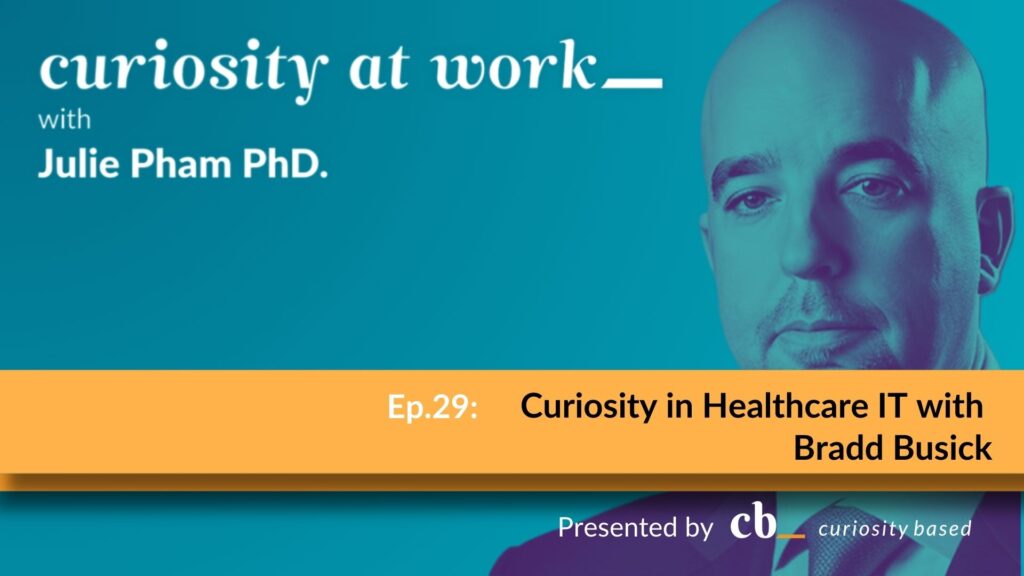
What does curiosity look like inside a healthcare system?
In Episode 29 of the Curiosity at Work podcast, Curiosity in Healthcare IT with Bradd Busick, Dr. Julie Pham sits down with Bradd, Senior Vice President and CIO at MultiCare Health, to explore how curiosity shapes healthcare IT, patient care, and leadership during uncertainty.
From navigating COVID-19 to accelerating telehealth adoption, Bradd shares how technology is not just a support function — it’s part of the care team.
They discuss:
• Why psychological safety is essential for reporting failures • How a questioning mindset improves patient outcomes • The evolving role of the CIO in healthcare • Why investing in IT directly impacts care delivery
One of our favorite lines from the episode: “IT is part of the care team.”
Curiosity isn’t abstract. It changes how we lead, how we respond to uncertainty, and how we care for others.
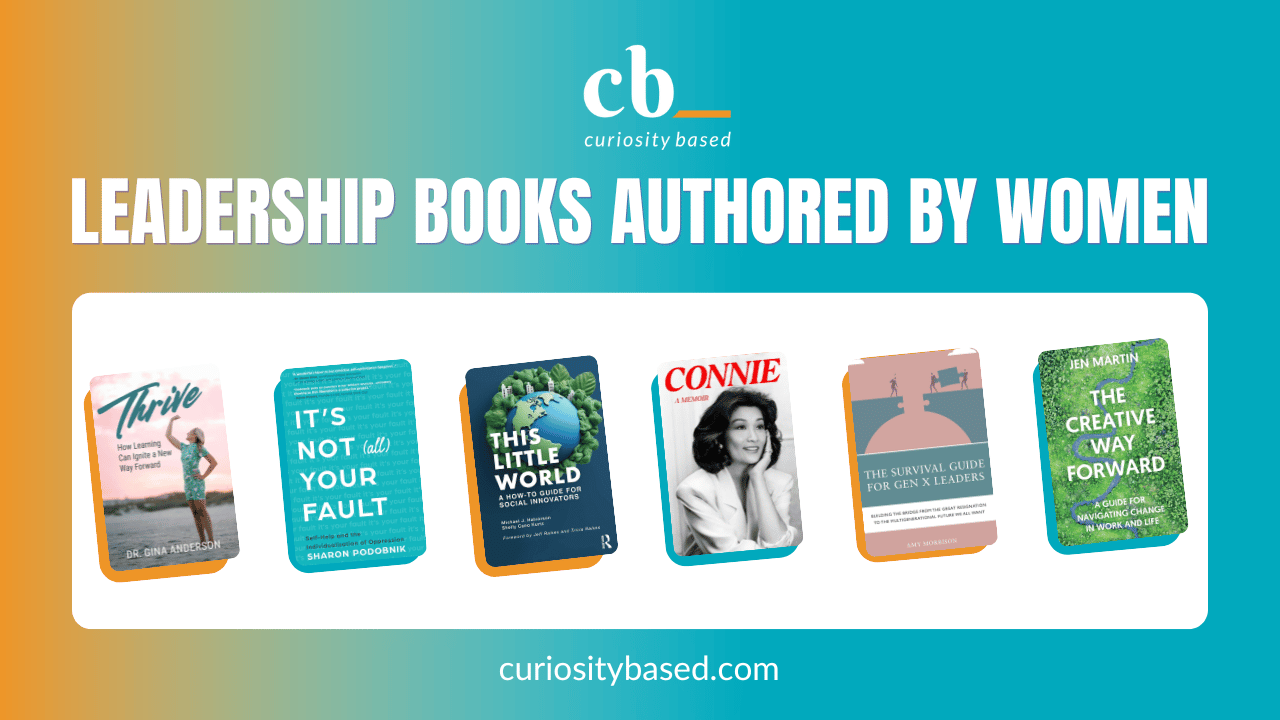
We curated this list 2026 Women Authored Leadership Book List to promote women authored leadership books. This list is meant to be a resource, not an official endorsement and the books listed are in alphabetical order. Check out our other leadership book lists by authors who identify as LGBTQIA+, AANHPI, Native American, Black, and Hispanic/ Latino/ Latinx. View all of our leadership book lists here.
#KeepGoing: From 15-Year-Old Mom to Successful CEO & Entrepreneur – Mari Tautimes
#NotYourPrincess: Voices of Native American Women – Lisa Charleyboy & Mary Beth Leatherdale (eds)
[Un]framing the “Bad Woman” – Alicia Gaspar de Alba
10 New Rules for Women at Work – Deb Liu
101 Reasons to Get Out of Bed – Natasha Milne
12 Tools for Managing a Selfish Leader – Josefine Campbell
3HAG Way – Shannon Byrne Susko
50 Billion Dollar Boss – Kathey Porter
7 Deadly Sins of Women in Leadership – Kate Coleman
7 Forms of Respect – Julie Pham, PhD
A Body, Undone: Living On After Great Pain – Christina Crosby
A CEO for All Seasons – Carolyn Dewar
A Different Kind of Power: A Memoir – Jacinda Ardern
A Face for Picasso – Ariel Henley
A Good Cry, What we Learn from Tears and Laughter – Nikki Giovanni
A House of My Own: Stories From My Life – Sandra Cisneros
A Mind Spread Out on the Ground – Alicia Elliott
A Mythic Life: Learning to live our greater story – Jean Houston
A Passion for the Possible – Jean Houston
A Room of One’s Own – Virginia Woolf
A Writer’s Diary – Virginia Woolf
Abandon Me: Memoirs – Melissa Febos
Act Like a Leader, Think Like a Leader – Hermina Ibarra
Acting Up: Winning in Business and in Life – Janice Bryant Howroyd
After the Idea – Julia Austin
After the Rain – Alexandra Elle
Against White Feminism – Rafia Zakaria
Ain’t I a Woman: Black Women and Feminism – Bell Hooks
All About Love – Bell Hooks
All In: An Autobiography – Billie Jean King
All It Takes Is a Goal – Jon Acuff
All That She Carried – Tiya Miles
All the Leader You Can Be – Suzanne Bates
Ally Leadership – Stephanie Chung
Almost a Woman – Esmeralda Santiago
America for Americans – Erika Lee
American Indian Stories – Zitkala-Sa
An Indian Among Los Indígenas – Ursula Pike
An Overachiever’s Guide to Breaking the Rules – Heather Whelpley
An Unquiet Mind: A Memoir of Moods and Madness – Kay Redfield Jamison
Anchored, Aligned, Accountable – Aiko Bethea
And A Voice to Sing With: A Memoir – Joan Baez
And Now We Are Going to Have a Party – Nicola Griffith
Annapurna: A woman’s place – Arlene Blum
AOC: The Fearless Rise and Powerful Resonance of Alexandria Ocasio-Cortes – Lynda Lopez
Apocalyptic Best Practices – Elisebeth VanderWeil
Are You Mad at Me? – Meg Josephson
As Long As Grass Grows – Dina Gilio-Whitaker
As We Have Always Done – Leanne Betasamosake Simpson
Ask For It – Linda Babcock & Sara Laschever
ASL Saved My Life…Until it didn’t – Jenni Kleinman Berebitsky
Atlas of the Heart – Brene Brown
Audition – Katie Kitamura
Authenticity, Identity, and Being Yourself at Work – Susan David
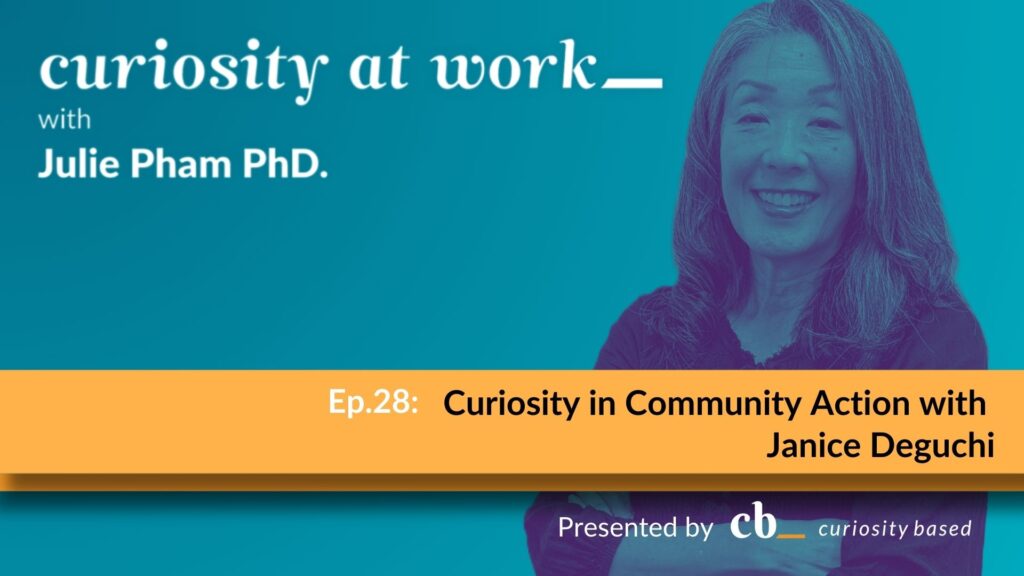
#28 Curiosity in Community Action with Janice Deguchi
#28 Curiosity in Community Action with Janice Deguchi
In episode #28 of Curiosity at Work podcast: “Curiosity in Community Action with Janice Deguchi,” Dr. Julie Pham interviews Deguchi, executive director of Neighborhood House, a community action organization. They discuss the importance of curiosity in the social service sector, the structure and services of Neighborhood House, and the challenges of practicing curiosity as a leader.
Furthermore, Janice shares insights on the diverse workforce at Neighborhood House, the significance of culturally responsive behavioral health care, and the need for continuous learning in leadership roles.
Key takeaways include:
Curiosity is essential in the social service sector.
Community Action organizations are rooted in the civil rights movement.
Neighborhood House serves a diverse population from birth to end of life.
A significant portion of the workforce is involved in direct services.
Diversity in the workforce enhances community engagement.
Culturally responsive behavioral health care is crucial for immigrant communities.
Practicing curiosity can be challenging for leaders with busy schedules.
Slowing down can lead to better decision-making and understanding.
Peer support and thought partnership are vital for effective leadership.
Continuous learning through podcasts and peer interactions fuels curiosity.
In honor of Women’s History Month, we created this list of 500+ 2025 leadership books written by women, and by people who identify as women. This list is meant to be a resource, not an official endorsement. The books are not ranked in any particular order.
[Un]framing the “Bad Woman”: Sor Juana, Malinche, Coyolxauhqui, and othe rebels with a cause by Alicia Gaspar de Alba
#Not Your Princess: Voices of Native American Women by Lisa Charleyboy, Mary Beth Leatherdale (editors)
50 Billion Dollar Boss: African American Women Sharing Stories of Success in Entreprenuership and Leadership by Kathey Porter
A House of My Own: Stories From My Life by Sandra Cisneros
A Mythic Life: Learning to live our greater story by Jean Houston
A Passion for the Possible: A guide to realizing your true potential by Jean Houston
Abandon Me: Memoirs by Melissa Febos
After the Rain: Gentle Reminders for Healing, Courage, and Self-Love by Alexandra Elle
Ain’t I a Woman: Black Women and Feminism by Bell Hooks
All Bout Love by Bell Hooks
All In: An Autobiography by Billie Jean King
Almost a Woman by Esmeralda Santiago
American Indian Stories by Zitkala-Sa
And A Voice to Sing With: A Memoir by Joan Baez
And Now We Are Going to Have a Party: Liner Notes to a Writer’s Early Life by Nicola Griffith
Annapurna: A woman’s place by Arlene Blum
AOC: The Fearless Rise and Powerful Resonance of Alexandria Ocasio-Cortes by Lynda Lopez
Apocalyptic Best Practices: A unique approach to fear and change by Elisebeth VanderWeil
As Long As Grass Grows: The Indigenous Fight for Environmental Justice, from Colonization to Standig Rock by Dina Gilio-Whitaker
As We Have Always Done: Indigenous Freedom Through Radical Resistance by Laeanne Betasamosake Simpson
Ask For It: How women can use the power of negotiation to get what they really want by Linda Babcock & Sara Laschever
ASL Saved My Life…Until it didn’t by Jenni Kleinman Berebitsky
Atlas of the Heart: Mapping Meaningful Connection and the Language of Human Experience by Brene Brown
Bad Indians: A Tribal Memoir by Deborah Miranda
Balancing Work and Life: The Nia guide for Black Women by Sheryl Huggins, Cherly Mayberry McKissack
Bamboozled: How God Tricked Me inot the Life of My Dreams by Yvonne Orji
Be Water, My Friend: The Teachings of Bruce Lee by Sharon Lee
Becoming by Michelle Obama
Being Heumann: an unrepentent memoir of a disability rights activist by Judith E. Heumann
Believe Bigger: Discover the Path to Your Life Purpose by Marshawn Evans Daniels
Biased: Uncovering the hidden prejudice that shapes what we see, think, and do by Jennifer Eberhardt
Big Magic: Creative Living Beyond Fear by Elizabeth Gilbert
Bird of Paradise: How I became a Latina by Raquel Cepeda
Black Futures by Kimberly Drew, Jenna Wortham
Black Indian: A memoir by Shonda Buchanan
Black Power Inc.: The New Voices of Success by Cora Daniels
Blood, Bones & Butter: The Inadvertent Education of a Reluctant Chef by Gabrielle Hamilton
Borderlands / La Frontera: The New Mestiza by Gloria Anzaldúa
Boss Bride: The Powerful Woman’s Playbook for Love and Success by Charreah Jackson
Boundaries by Maya Lin (artist)
Braiding Sweetgrass: Indigenous wisdom, scientific knowledge, and the teachings of plants by Robin Wall Kimmerer
Bridges to Heal US: Stories and Strategies for Racial Healing by Erin Jones
Brotopia: Breaking Up the Boy’s Club of Silicon Valley by Emily Chang
Caring: A feminine apporach to ethics and moral education by Nel Noddings
Climb: Taking Every Step with Conviction,Courage, and Calculated Risk to Achieve a Thriving Career and a Successful Life by Michelle Gadsden-Williams, Carolyn M. Brown
Come into My Office: Stories from an HR Leader in Silicon Valley by Mai Ton
Common Fire: Leading lives of commitment in a complex world by Sharon Parks, et. al.
Courage: The Backbone of Leadership by Gus Lee, Diane Elliott-Lee
Crazy Brave: A Memoir by Joy Harjo
Critically Sovereign: Indigenous Gender, Sexuality, and Feminist Studies by Joanne Barker
Crux: A cross-border memoir by Jean Guerrero
Crying in H Mart: A Memoir by Michelle Zauner
Dancing at the Edge of the World: thoughts on words, woment, places by Ursula LeGuin
Dare to Lead: Brave Work. Tough Conversations. Whole Hearts. by Brene Brown
Dear Female Founder: 66 Letters of Advice from Women Entrepreneurs Who Have Made $1 Billion in Revenue by Lu Li
Dear Girls: Intimate Tales, Untold Secrets & Advice for Living Your Best Life by Ali Wong
Disability Visibility: First-Person Stories from the Twenty-First Century by Alice Wong
Disarm Your Limits: The flight formula to lift you to success and propel you to the next horizon by Jessica Cox
Dog Flowers: A Memoir by Danielle Geller
Double Down: Bet on Yourself and Scuceed on Your Own Terms by Antionette M. Clarke, Tricia Clarke-Stone
Dream Big by Deborah Rosado Shaw
Dream in Color: How the Sánchez Sisters are Making History in Congress by Linda Sánchez
Driven by Intention: Own Your Purpose, Gain Power, and Pursue Your Passion as a Woman at Work by Michelle Gadsden-Williams
Drop the Ball: Achieving more by doing less by Tiffany Dufu
Dwellings: A Spiritual History of the Living World by Linda Hogan
Eat, Pray, Love: One woman’s search for everything across Italy, India, and Indonesisa by Elizabeth Gilbert
Edge: Turning Adversity Into Advantage by Laura Huang
Elegy for a Disease: A Personal and Cultural History of Polio by Anne Finger
Emergent Strategy: Shaping Change, Changing Worlds by adrienne maree brown
Empress: The Astonishing Reign of Nur Jahan by Ruby Lal
Enduring Conviction: Fred Korematsu and His Quest for Justice by Lorraine K. Bannai
Entrepreneurial You: Monetize Your Expertise, Create Multiple Income Streams, and Thrive by Dorie Clark
Everybody’s Got Something by Robin Roberts & Veronica Chambers
Expect to Win: Proven Strategies for Success Froma a Wall Street Vet by Carla A. Harris
Extraordinary Bodies: Figuring Physical Disability in American Culture and Literature by Rosemarie Garland-Thomson
Farmworker’s Daughter: Growing up Mexican American by Rose Castillo Guilbault
Fault Lines: A Memoir by Meena Alexander
Feeling Power: Emotions and education by Megan Boler
Feminist Queer Crip by Alison Kafer
Field Mice: Memoirs of a Migrant Child by Emma Gonzalez
Fierce Conversations: Achieving success at work & in life, one conversation at a time by Susan Scott
Find Another Dream by Maysoon Zayid
Finding Beauty in a Broken World by Terry Tempest Williams
Finding Latinx: In Search of the Voices Redefining Latino Identity by Paola Ramos
Finding Me: A Memoir by Viola Davis
Finding My Voice: My Journey to the West Wing and the Path Forward by Valarie Jarret
Finding Our Way: Leadership for uncertain times by Margaret Wheatley
Finding the Edge: My Life on the Ice by Karen Chen
Frida by Barbara Mujica
FutureProofed: How to Navigate Disruptive Change, Find Calm in Chaos, and Succeed in Work & Life by Natalia Peart
Gathering Moss: A Natural and Cultural History of Mosses by Robin Wall Kimmerer
Girl Code: Unlocking the Secrets to Success, Sanity, and Happiness for the Female Entrepreneur by Cara Alwill Leyba
God is Red: A Native View of Religion by Vine deLoria, Jr.
Great Asian Americans: Ellison Onizuka by Stephanie Cham
Great Asian Americans: Michelle Kwan by Stephanie Cham
Great Asian Americans: Patsy Mink by Stephanie Cham
Great Asian Americans: Tammy Duckworth by Stephanie Cham
Great Asian Americans: Yo-Yo Ma by Stephanie Cham
Grit: The power of passion and perseverence by Angela Duckworth
Haben: The deafblind woman who conquered Harvard Law by Haben Girma
Hawaii’s Story by Liliuokalani, Queen of Hawaii
Heart Berries by Terese Marie Mailhot
Heart of Fire: An Immigrant Daughter’s Story by Mazie K. Hirono (politician)
Hermanas: Deepening our identity and growing our influence by Natialia Kohn Rivera
Hidden Figures: The American Dream and the Untold Story of the Black Women Mathematicians Who Helped Win the Space Race by Margot Lee Shetterly
Hispanic Women Seeking Higher Leadership Roles in Business by Syliva C. Motta, PhD
Hood Feminist: Notes from the Women that a Movement Forgot by Mikki Kendall
How Remarkable Women Lead: The Breakthrough Model for Work and Life by Joanna Barsh
How to Get Stupid White Men Out of Office: The Anti-Politics, Un-Boring Guide to Power by adrienne maree brown (eds)
How to Raise a Feminist Son: Motherhood, Masculinity, and the Making of My Family by Sonora Jha
Deborah Smith Pegues by Sally Helgesen (& Marshall Goldsmith)
Hunger: A Memoir of (My) Body by Roxane Gay
I Am Schizophrenic: Poetry from a beautiful brain by Kerenza Ryan
I Got This: To Gold and Beyond by Lauren Hernandez
I Love a Broad Margin to My Life by Maxine Hong Kingston (author)
I Shouldn’t Be Telling You This: How to Ask for the Money, Snag the Promotion, and Create the Career You Deserve by Kate White
I’m Judging You: The do-better manual by Luvvie Ajayi
I’m the One That I Want by Margaret Cho
In a Different Voice: Psychological theory and women’s development by Carol Gilligan
In Search of Our Mothers’ Gardens: Womanist prose by Alice Walker
In the Company of Women: Inspiration and Advice from over 100 Makers, Artists, and Entrepreneurs by Grace Bonney
In the Country We Love: My Family Divided by Diane Guerrero
In The Dream House: A Memoir by Carmen Maria Machado
In the Shadow of the Eagle: A Tribal Representative in Maine by Donna M. Loring
Inclusion Revolution: The Essential Guide to Dismantling Racial Inequity in the Workplace by Daisy Auger-Dominguez
Inclusion: Diversity, the New Workplace, & The Will To Change by Jennifer Brown
Inventing Latinos: A New Story of American Racism by Laura E. Gómez
Isabel’s Hand-Me-Down Dreams by Isabel Lopez
It Takes Moxie by Maureen Francisco
It’s About Damn Time by Arlan Hamilton
It’s About Time: The Art of Choosing the Meaningful Over the Urgent by Valorie Burton
Journey to the Future: A Roadmap for Success for Youth by Ltc. Consuelo Castillo Kickbusch
Just as I am by Cicely Tyson
Know What Makes Them Tick: How to successfully negotiate almost any situation by Shonda Rhimes
Know Your Value: Women, Money, and Genting What You’re Worth by Mika Brzezinski
Lakota Woman by Mary Brave Bird
Latina Empowerment Through Leadership: Mindful Stories from Inspiring Women by Catherine Munos Garces, Monica Rivera, et al
Latinas in Aviation by Jacqueline S. Ruiz
Latinas Rising Up in HR: Inspirational Stories of Human Resources Professionals Leading, Thriving, and Breaking Barriers by Priscilla Guasso
Latinos in American Society: Families and Communities in Transition by Dr. Ruth Enid Zambrana
Lead from the Outside: How to Build Your Future and Make Real Change by Stacey Abrams
Leadershp the Eleanor Roosevelt Way: Timeless strategies from the first lady of courage by Robin Gerber
Lean In: Women, Work, and the Will to Lead by Sheryl Sandberg
Leapfrog: The New Revolution for Women Entrepreneuers by Nathalie Molina Niño
Leaving Isn’t the Hardest Thing: Essays by Lauren Hough
Leaving Little Havana: A memoir of Miami’s Cuban ghetto by Cecilia M. Fernandez
Legal Heroes in the Trump Era: Be Inspired. Expand Your Impact. Change the World. by Tahmina Watson
Life in Motion: An Unlikely Ballerina by Misty Copeland
Limitless: The Power of Hope and Resilience to Overcome Circumstances by Mallory Weggemann
Little Black Book: A Toolkit for Working Women by Otegha Uwagba
Living for Change by Grace Boggs
Love, Loss, and What We Ate: A Memoir by Padma Lakshmi
Mad at School: Rhetorics of Mental Disability and Academic Life by Margaret Price
Madame Wu Chien-shiung: The First Lady Of Physics Research by Tsai-chien Chiang
Marbles: Mainia, Depession Michelangelo, and Me by Ellen Forney
Martina by Martina Navratilova
Mean by Myriam Gurba
Men Explain Things to Me by Rebecca Solnit
Men We Reaped: A Memoir by Jesmyn Ward
Mexican Enough: My Life Between the Borderlines by Stephanie Elizondo Griest
Million Dollar Women: The Essential Guide for Female Entreprenuers Who Want to Go Big by Julia Pimsleur
Mindset: The new psychology of success by Carol Dweck
Minor Feelings: An Asian American Reckoning by Cathy Park Hong
Miss Jessie’s: Creating a Successful Business From Scratch — Naturally by Micho Branch
More Myself: A Journey by Alicia Keys
More than Enough: Claiming Space for Who You Are (No Matter What They Say) by Elaine Welteroth
More Than Pretty: Doing the Sould Work that Uncovers Your True Beauty by Erica Campbell
More than Ready: Be Strong and Be You… and Other Lessons for Women of Color on the Rise by Cecilia Muñoz
Multipliers: How the best leaders make everyone smarter by Liz Wiseman
Muscogee Daughter: My sojourn to the Miss America Pageant by Susan Supernaw
My (Underground) American Dream: My True Story as an Undocumented Immigrant Who Became a Wall Street Executive by Julissa Arce
My Beloved World by Sonia Sotomayor
My Life in Full: Work, Family, and Our Future by Indra Nooyi (business)
My Life: Queen of the Court by Serena Williams
My Own Words by Ruth Bader Ginsburg, Mary Hartnett, Wendy Williams
My Time to Speak: Reclaiming Ancestry and Confronting Race by Ilia Calederon
Nice Girls Don’t Get the Corner Office: Unonscious Mistakes Women Make that Sabotage Their Careers by Lois P. Frankel, PhD
Night Flying Woman: An Ojibway Narrative by Ignatia Broker
Nisei Radicals: The Feminist Poetics and Transformative Ministry of Mitsuye Yamada and Michael Yasutake by Diane C. Fujino
Nooping: The Cure for White Ladies by Leanne Betasamosake Simpson
Octavia’s Brood: Science Fiction from Social Justice Movements by adrienne maree brown (eds)
Once I Was You: A Memoir of Love and Hate in a Torn America by María Hinojosa
One Life by Megan Rapinoe and Emma Brockes
Own It: The Power of Women at Work by Sallie Krawcheck
Own Your Phenomenal Self: A Guide on Character, Success, & Leadership by Rita P. Mitchell
Perfectly You: Embracing the Power of Being Real by Mariana Atencio
Pleasure Activism: The Politics of Feeling Good by adrienne maree brown
Poet Warrior: A Memoir by Joy Harjo
Portage Lake: Memories of an Ojibwe Childhood by Maude Kegg
Postcolonial Leadership, A: Asian Immigrant Christian Leadership and Its Challenges by Hee An Choi
Power Moves: How Women Can Pivot, Reboot, and Build a Career of Purpose by Lauren McGoodwin
Presence: Bringing your boldest self to your biggest challenges by Amy Cuddy
Pressure is a Privilege: Lessons I’ve Learned from Life and the Battle of the Sexes by Billie Jean King
Presumed Incompetent: The Intersections of Race and Class for Women in Academia by Gabriella Gutiérrez y Muhs, Yolanda Flores Niemann, Carment G. González
Professional Troublemaker: The Fear-Fighter Manual by Luvvie Ajayi Jones
Purpose Driven Leadership: Building and fostering effective teams by Brigette Tasha Hyacinth
Radical : Fighting to Put Students First by Michelle Rhee
Radical Candor: Be a kick-ass boss without losing your humanity by Kim Scott
Radical Dharma: Talking Race, Love and Liberation by Rev Angel Kyodo Williams
Reality Is Broken: Why games make us better and how they can change the world by Jane McGonigal
Recovering the Sacred: The power of naming and claiming by Winona LaDuke
Redefining Realness: My Path To Womanhood, Identity, Love & So Much More by Janet Mock
Representation Matters: How Victory Fund, Victory Institute, and LGBT Leaders are Transforming America by Karen Ocamb
Reset: My Fight for Inclusion and Lasting Change by Ellen Pao
Right Within: How to Heal From Racial Trauma in the Workplace by Minda Harts
Rising Strong: How the ability to reset transforms the way we live, love, prent, and lead by Brene Brown
Rita Moreno: A Memoir by Rita Moreno
Run to Win: Lessons in Leadership for Women Changing the World by Stephanie Schriock & Christina Reynolds
Salsa, Soul, and Spirit: Leadership for a multicultural age by Juana Bordas
See No Stranger: A Memoir and Manifesto of Revolutionary Love by Valarie Kaur
Self Made: Becoming Empowered, Self Reliant and Rich in Every Way by Nely Galán
Seriously…I’m Kidding by Ellen Degeneres
Serving in Silence by Margarethe Cammermeyer
Silencing Gender, Age, Ethnicity and Cultural Biases in Leadership by Camilla A. Montoya, Julieta V. García. et al.
Sister Outsider: Essays and Speeches by Audre Lorde
Sitting Pretty: The View from My Oridinary Resilient Disabled Body by Rebekah Taussig
Small Doses: Potent Truths for Everyday Use by Amanda Seales
Small Victories: Spotting Improbable Moments of Grace by Anne Lamott
So You Want to Talk About Race by Ijeoma Oluo
Speedbumps: Flooring it through Hollywood by Teri Garr
Stand Out: How to find your breakthrough idea and build a following around it by Dorie Clark
Staring: How We Look by Rosemarie Garland-Thomson
Still life with Rice by Helie Lee
Strategize to Win: The New Way to Star Out, Step Up, or Start Over in Your Career by Carla Harris
Successful Women Think Differently: 9 Habits to Make You Happier, Healthier & More Resilient by Valorie Burton
Surviving Autocracy by Masha Gessen
Swimming with Sharks in Dark Waters by Athene Brinson
Take Charge of your Brand: Quck and simple techniques to help you own and manage your personal brand for professional and personal success by Guisselle Nuñez
Teaching to Transgress: Education as the practice of freedom by bell hooks
That’s What She Said: What Men Need to Know (And Women Need to Tell Them) About Working Together by Joanne Lipman
The 1619 Project: A New Origin Story by Nikole Hannah-Jones
The 9 Steps to Financial Freedom: Practical and Spiritual Steps So You Can Stop Worrying by Suze Orman
The Art of Gathering: How We Meet and Why it Matters by Priya Parker
The Black Widow’s Guide to Killer Pool: Become the Player to Beat by Jeanette Lee
The Book of Awesome Black Americans: cientific Pioneers Trailblazing Entrepreneuers, Barrier-Breaking Activists and AFro-Futurists by Monique jones
The Buena Salud Guide to Understanding Depression and Enjoying Life by Jane Delgado
The Confidence Code: The Science and Art of Self-Assurance – What Women Should Know by Katty Kay & Claire Shipman
The Cooked Seed: A Memoir by Anchee Min
The Disability Experience: Working Toward Belonging by Hannalora Leavitt
The Diversity Advantage: Fixing Gender Inequality In The Workplace by Ruchika Tulshyan
The Education of an Idealist: A Memoir by Samantha Power
The Far Away Brothers: Two young migrants and the making of an American life by Lauren Markham
The Gloria Anzaldúa Reader (Latin America Otherwise) by Gloria Anzaldua
The Hill We Climb by Amanda Gorman
The Holly Woodlawn Story: A Low Life in High Heels by Holly Woodlawn
The Holy Intimacy of Strangers by Sarah York
The Injustice Never Leaves You: Anti-Mexican Violence in Texas by Monica Muñoz Martinez
The Latina Guide to Health: Consejos and Caring Answers by Jane Delgado
The Leadership Shift: The strategic Positioning of Latino Business Leaders by Dr. Nilda Perez
The Likeability Trap: How to Break Free and Succeed As You Are by Alicia Menendez
The Little Black Book of Success: Laws of Leadership for Black Women by Elaine Meryl Brown; Marsha Haygood; Angela Burt-Murray
The Making of a Manager: What to Do When Everyone Looks To You by Julie Zhuo
The Man Without a Face: The Unlikely Rise of Vladimir Putin by Masha Gessen
The Memo: What Women of Color Need to Know to Secure a Seat at the Table by Minda Harts
The Misadventures of Awkward Black Girl by Issa Rae
The Next Generation of Women Leaders: What You Need to Lead but Won’t Learn in Business School by Selena Rezvani
The Obsessive Joy of Autism by Julia Bascom
The One Week Budget by Tiffany Aliche
The Power of Latino Leadership: Culture, inclusion, and contribution by Juana Bordas
The pretty one: on life, pop cultue, disability, and other reasons to fall in love with me by Keah Brown
The Race Whisperer: Barack Obama and the political uses of race by Melanye Price
The Road to Someplace Better: From the Segregated South to Harvard Business School and Beyond by Lillian Lincoln Lambert
The Sacred Hoop: Recovering the Feminine in American Indian Traditions by Paula Gunn Allen
The School Days of an Indian Girl, and an Indian Teacher Among Indians by Zitkala-Sa
The Silent Master: Awakening the Power Within by Tae Yun Kim (martial artist)
The Soul of a Woman by Isabel Allende
The Tao of Raven: An Alaska Native Memoir by Ernestine Hayes
The Transformational Consumer: Fuel a lifelong love affair with your customers by helping them get healthier, wealthier, and wiser by Tara-Nicholle Nelson
The Truths We Hold: An American Journey by Kamala Harris
The Turquoise Ledge by Leslie Silko
The Undocumented Americans by Karla Conejo Villavicencio
The Virtuous Circle: Restore Your Confidence, Bounce Back, and Emerge Stronger by Gaby Natale
The White Album by Joan Didion
The World I Live In by Helen Keller
Thick Face, Black Heart: The warrior philosophy for conquering the challenges of business and life by Chin-Ning Chu
Thrive: The Thrid Metric to Redefining Success and Creating a Life of Well-Being, Wisdom, and Wonder by Arianna Huffington
Too Late to Die Young: Nearly True Tales from a Life by Harriet McBryde Johnson
Truth or Dare: Encounters with power, authority, and mystery by Starhawk
Unwritten Rules of Social Relationships: Decoding social mysteries theough autism’s unique perspectives by Temple Grandin
Upper Hand: The Future of Work for the Rest of Us by Sherrell Dorsey
Waist-High in the World: A Life Among the Nondisabled by Nancy Mairs
We Should All Be Feminists by Chimamanda Ngozi Adichie
We Will Not Cancel Us by adrienne maree brown
Werk 101: Get Your Life Together Guide by Koereyelle DuBose
What I Know for Sure by Oprah Winfrey
What Will it Take to Make a Woman President? by Marianne Schnall
When I Was Puerto Rican by Esmeralda Santiago
When Things Fall Apart by Pema Chodron
Where the Past Begins: Memory and Imagination by Amy Tan
Whiteness Visible: The meaning of whiteness in American literature and culture by Valerie Babb
Wiping the War Paint off the Lens: Nativve American Film and Video by Beverly Singer
Wishful Drinking by Carrie Fisher
WOLFPACK: How to Come Together, Unleash Our Power, and Change the Game by Abby Wambach
Women and Leadership: Real Lives, Real Lessons by Julia Gillard & Ngozi Okonjo-Iweala
Women of Color in Tech: A Bluepring for Inspiing and Menotring the Next Generation of Technology Innovators by Susanne Tedrick
Women’s Ways of Knowing (10th Anniversary Edition): The Development of Self, Voice, and Mind by Mary Field Belenky, et. al.
You Are a Mogul: How to Do the Impossible, Do It Yourself, and Do It Now by Tiffany Pham
Your Next Level Life: 7 Rules of Power, Confidence, and Opportunity for Black Women in America by Karen Arrington
Force Majeure: A Futurist’s Guide to Boldly Thriving on Your Terms in the Future of Work by Dr. Terri Horton
Blue Ocean Strategy by Renee Mauborgne
101 Reasons to Get Out of Bed by Natasha Milne
In-N-Out Burger: A Behind-the-Counter Look at the Fast-Food Chain That Breaks All the Rules by Stacy Perman
Option B by Sheryl Sandberg
The Change Masters by Rosabeth Moss Kanter
Confidence by Rosabeth Moss Kanter
Groundswell by Charlene Li
Open Leadership by Charlene Li
Leadereship and the new Science: Discovering Order in a Chaotic World by Margaret Wheatley
Nimble, Focused, Feisty: Organizational Cultures that Win in the New Era and How to Create Them by Sara Roberts
Key to Yourself by Dr. Venice Bloodworth
Quiet: The Power of Introverts in a World That Can’t Stop Talking by Susan Cain
Slide-ology by Nancy Duarte
Resonate by Nancy Duarte
The Shift by Lynda Gratton
Hot Sports by Lynda Gratton
The 100 Year Life by Lynda Gratton
The Signals are Talking by Amy Webb
Weapons of Math Destruction by Cathy O’Neil
The Confidence Game by Maria Konnikova
The Moonshot Effect by Kate Purmal & Lisa Goldman
Branding Pays by Karen Kang
The End of Competative Advantage by Rita Gunther McGrath
Invent It, Sell It, Bank It!: Make Your Million-Dollar Idea into a Reality by Lori Greiner
I’d Rather Be In Charge by Charlotte Beers
Think Like a Negotiator by Eldonna Lewis Fernandez
ROAR: How to Build a Resilient Organization by Sandy Asch
Bridge Builders by Maria Keckler
#Values by Dr. Betty Uribe
Leading by My Ponytail by Karen M. Walker & Judy Ducharme
Business as Unusual by Anita Roddick
Thanks for the Feedback by Sheila Heen & Douglas Stone
The New Social Learning by Marcia Conner
Show Your Work by Jane Bozarth
Darling, You Can’t Do Both by Janet Kestin & Nancy Vonk
How to Wow by Francsis Cole Jones
All the Leader You Can Be by Suzanne Bates
Profit from the Positive by Senia Maymin & Margaret H. Greenberg
Awakening Compassion at Work by Jane Dutton & Monica Worline
Leading so People Will Follow by Erika Andersen
It’s Not Rocket Science: 7 Game Changing Traints for Uncommon Success by Mary Spio
Unfinished Business by Anne-Marie Slaughter
A to Z: Your Navigator to Success by Chin-Ning Chu
Rising to the Challenge, My Leadership Journey by Carly Fiorina
Rookie Smarts by Liz Wiseman
The Theat and Life of Great American Cities by Jane Jacobs
Engaging Emergence: Turning Upheaval into Opportunity by Peggy Holman
Hiding in the Bathroom: An Introvert’s Roadmap to Getting Out There by Morra Aarons-Mele
Notorious BIG: The Life and Times of Ruth Bader Ginsburg by Irin Carmon & Shana Knizhnik
The New IT: How Technology are Enabling Business Strategy in the Digital Age by Jill Dyche
A Room of One’s Own by Virginia Woolf
Female Firebrands: Stories and Techniques to Ignite Change, Take Control, and Succeed in the Workplace by Mikaela Kiner
Blaze Your Own Trail: An Interactive Guide to Navigating Life with Confidence, Solidarity, and Compassion by Rebekah Bastian
Inclusion on Purpose: An Intersectional Approach to Creating of Culture of Belonging at Work by Ruchika Tulshyan
The No Club: Putting a Stop to Women’s Dead End-Work by Linda Babcock, Brenda Peyser, Lise Vesterlund, and Laurie Weingart
Show Your Worth: 8 Intention Strategies for Women to Emerge as Leaders at Work by Shelmina Babai Abji
Humor, Seriously: Why Humor is a Secret Weapon in Business and Life by Jennifer Aaker & Naomi Bagdonas
Somebody’s Daughter: A Memoir by Ashley C. Ford
7 Forms of Respect: A Guide to Transforming Your Communication and Relationships at Work by Julie Pham, PhD
Power Your Purpose: A Leader’s Guide to Creating a Better Life and a Better World by Shian Chuan
Red Paint: The Ancestral Autobiography of a Coast Salish Punk by Sasha Lapointe
Black and Blue: A Memoir of Racism and Resilience by Veronica Gorrie
Spílexm: A Weaving of Recovery, Resilience, and Resurgence by Nicola I. Campbell
White Magic by Elissa Wshuta
An Indian Among Los Indígenas: A Native Travel Memoir by Ursula Pike
Carry: A Memoir of Survival on Stolen Land by Toni Jensen
A Mind Spread Out on the Ground by Alicia Elliott
Native American DNA by Kim TallBear
Raising Ourselves: A Gwitch’in Coming of Age Story from the Yukon River by Velma Wallis
Blonde Indian: an Alaska Native Memoir by Ernestine Hayes
Cormorant Hunter’s Wife by Joan Naviyuk Kane
Roughly for the North by Carrie Ayagduk Ojanen
Tales of Ticasuk: Eskimo Legends & Stories by Ticasuk Emily Ivanoff Brown
Our Brave Foremothers: Celebrating 100 Black, Brown, Asian & Indigenous Women Who Changed the Course of History by Rozella Kennedy
Black Fatigue: How Racism Erodes the Mind, Body, and Spirit by Mary-Francis Winters
Year of Yes: How to Dance it Out, Stand in the Sun, and Be Your Own Person by Shonda Rhimes
How Boards Work and How They Can Work Better in a Chaotic World by Dambisa Moyo
Chasing Youth Culture and Getting it Right: How Your Business Can Profit by Tapping Today’s Most Powerful Trendsetters and Tastemakers by Tina Wells
Unapologetically Ambitious: Take Risks, Break Barriers, and Create Success on Your Own Terms by Shellye Archambeau
The Rise: Creativity, the Gift of Failure, and the Search for Mastery by Sarah Lewis
Black Entrepreneuer Survival Guide: The complete guide to becoming a successful African American entrepreneuer by Dunneille D. Anderson
CEO of My Soul: The Self-Love Journey of a Small Business Owner by Nic Cober Esquire
Success Never Smelled So Sweet: How I Followed My Nose and Found My Passion by Lisa Price & Hilary Beard
We Should All Be Millionaires: A Woman’s Guide to Earning More, Building Wealth, and Gaining Economic Power by Rachel Rodgers
9 Laws of Success: Attracting the Life, Love, Health & Success You Want! by Stormy Wellington
Self-Esteem is the New Black: How to become the confident woman you have always wanted to be! by Monique Mays
Get Good with Money: Ten Simple Steps to Becoming Financially Whole by Tiffany “The Budgetnista” Aliche
How We Show Up: Reclaiming Family, Friendshop, and Community by Mia Birdsong
Bad Feminist by Roxane Gay
Eloquent Rage: A Black Feminist Discovers Her Superpower by Brittney Cooper
Mom and Me and Mom by Maya Angelou
The Black Woman Millionaire: A Revolutionary Act that DEFIES Impossible by Dr. Venus Opal Reese
When the Miracle Drops: How Instagram Helped Turn a Quick Fix Into a Million-Dollar Product by Jessica Dupart
The Path Made Clear: Discovering Your Life’s Direction and Purpose by Oprah Winfrey
Mental Detox: The Power and Guidance to Implement Peace, Joy, Balance, and Financial Abundance in Your Life by Cheyenne Bryant
Quantam Leaps: 10 Steps to Help You Soar by Gloria Mayfield Bangs
Meaty: Essays by Smantha Irby
Where You Are is Not Who You Are by Ursula Burns
Set Boundaries, Find Peace: A guide to reclaiming yourself by Nedra Glover Tawwab
I’m Not Yelling by Elizabeth Leiba
Responsible Marketing by Lola Bakare
Feeding the Soul by Tabitha Brown
Ready, Set, Manifest: A Handbook for the in-between and leaps in life by Debbie Lacey
In the Shadow of the Mountain: A Memoir of Courage by Silvia Vasquez-Lavado
Through the Dark by Yolanda Nava
Thriving in the Fight: A Survival Manual for Latinas on the Front Lines of Change by Denise Padin Collazo
Justice & Space Matter in a Strong, Unified Latino Community by Kathy Bussert-Web, Maria Eugenia Diaz, Krystal A Yanez
Breaking Ground and Barriers: Hispanic Women Developing Effective Leadership by Gloria Bonilla-Santiago, Ph.D.
Latinization and the Latino Leader: How to Value, Develop, and Advance Latino Professionals by Cristina Benitez & Marlene Gonzalez
Latino and Latina Leaders of the 21st Century: Ordinary Beginnings, Extraordinary Outcomes by Kay (Kayla) S. Garcia
The More or Less Definitive Guide to Self Care by Anna Borges
Act Like a Leader, Think Like a Leader by Hermina Ibarra
You Don’t Hae to Like Me: Essays on Growing Up, Speaking Out, and Finding Feminism by Alida Nugent
Demystifying Disability: What to Know, What to Say, and How to Be an Ally by Emily Ladau
Year of the Tiger: An Activists Life by Alice Wong
What Doesn’t Kill You: A Life with Chronic Illness – Lessons from a Body in Revolt by Tessa Miller
Resistance and Hope: Essays by Disabled People by edited by Alice Wong
A Face for Picasso: Coming of Age with Crouzon Syndrome by Ariel Henley
Just Human: The Quest for Disability Wisdom, Respect, and Inclusion by Arielle Silverman, PhD
How I See It: A Personal and Historical View of Disability by H Penny Mishkin
Successfull to Burnt Out: Experiences of Women on the Autism Spectrum by Karletta Abianac
More the Same than Different: What I Wish People Knew About Respecting and Including People with Disabilities by Lorraine Cannistra
Not a Poster Child: Living Well with a Disability – A Memoir by Francine Falk-Allen
My Body is Not a Prayer Request: Disability Justice in the Church by Amy Kenny
Glue: How Project Leaders Create Cohesive, Engaged, High-Performing Teams by Anh Dao Pham
Uplifted: Journeys of Abundance, Community, and Identity by Geena Chen
Sheer Determination: Swimming Upstream in a Downstream World by Kay Hirai
Fierce and Fearless: Patsy Takemoto Mink, First Woman of Color in Congress by Judy Tzu-Chun Wu & Gwendolyn Mink
The Next American Revolution: Sustainable Activism for the Twenty-First Century by Grace Lee Boggs
The Death of Truth: Notes on Falsehood in the Age of Trump by Michiko Kakutani
The Woman Warrior: Memoirs of a Girlhood Among Ghosts by Maxine Hong Kingston
America for Americans: A History of Xenophobia in the United States by Erika Lee
Somewhere Inside: One Sister’s Captivity in North Korea and the Other’s Fight to Bring Her Home by Laura Ling & Lisa Ling
I Still Haven’t Found What I’m Looking For: Now What? 21 Days to Confidence and Clarity by Dr. Sweta Chawla
The Asian American Achievement Paradox by Jennifer Lee, Min Zhou
Breaking the Bamboo Ceiling: Career Strategies for Asians by Jane Hyun
Perfect Enough: How to be happier and more productive by letting go of perfectionism by Judy T. Dang
The Wake Up: Closing the Gap Between Good Intentions and Real Change by Michelle Mijung Kim
Why Not Me? by Mindy Kaling
Innovation Starts With I: Increase Your Influence. Ignite Your Impact. by Saleema Vellani
Sound Is Not Enough: The Art of Captioning for Universal Access by Svetlana Kouznetsova
I’m Speaking: Every Woman’s Guide for Finding Your Voice and Using It Fearlessly by Jessica Doyle-Mekkes
Back to Business: Finding Your Confidence, Embracing Your Skills, and Landing Your Dream Job After a Career Pause by Nancy McSharry Jensen & Sarah Duenwald
Insight by Tasha Eurich
Build your dream team: Leadership based on a passion for people by Candela Iglesis
Conversational Intelligence: How great leaders build trust and get extraordinary results by Judith Glaser
Dare to Inspire by Allison Holzer
Disrupt it Yourself by Simone Ahuja
Disrupters: Success strategies from women who break the mold by Patti Fletcher
Fearless Growth by Amanda Setili
Managing Up by Mary Abbajay
Power Your Tribe by Christine Comaford
Teaming: How organizations learn, innovate and compete in the knowledge economy by Amy Edmondson
The Future Workplace Experience by Jeanne Meister and Karen Mulcahy
The myth of the nice girl by Fran Hauser
Brave Leadership: Unleash your most confident, powerful and authentic self by Kimberly Davis
Emotional agility by Susan David
Fierce Leadership by Susan Scott
Leading gracefully: A women’s guide to confident, authentic and effective leadership by Monique Tallon
The Fearless Organization by Amy C. Edmondson
The Insiders guide to culture change by Siobhan McHale
Thinking in Bets: Making smarter decisions when you don’t have al the facts by Anne Duke
The Good Boss: 9 Ways Every Manager Can Support Women at Work by Kate Eberle Walker
The Gray Rhino by Michele Wucker
The Long Game: How to Be a Long-Term Thinker in a Short-Term World by Dorie Clark
The Art of Change Leadership: Driving Transformation In a Fast-Paced World by Cheryl Cran
What I Wish I Knew When I Was 20: A Crash Course on Making Your Place in the World by Tina Seelig
Quirky: the remarkable story of how traits, foibles and genius of breakthrough innovators who changed the world by Mellisa Schilling
The 9 types of leadership by Beatrice Chestnut
How Innovation Really Works by Ann Knott
How Women Decide by Therese Huston
The Culture Map by Erin Meyer
The Managers Path by Camille Fournier
Jennifer Riel & Roger Marting by Elizabeth Shassere
Build an A team: Play to their strengths and lead them up the learning curve by Whitney Johnson
From Supervisor to Super Leader by Shanda Miller
Leading with grit by Laurie Sudbrink
Know My Name by Chanel Miller
Open Leadership: How Social Technology Can Transform the Way You Lead by Charlene Li
Powerful: Building a culture of freedom & responsibility by Patty McCord
The Art of Authenticity by Karissa Thacker
The Art of Quiet Influence by Jocelyn Davis
The Female Advantage: Women’s Ways of Leadership by Sally Helgesen
The influence effect: A new path to power for women leaders by Kathryn Heath, Jill Flynn and Mary Davis Holt
Women Make Great Leaders by Jill Griffin
Leadership Unchained: Defy Conventional wisdom for breakthrough performance by Sara Canady
Move: How decisive leaders execute strategy despite obstacles, set backs and stalls by Patti Azzarello
The language of emotional intelligence by Jeanne Segal
Rule Makers, Rule Breakers by Michele Gelfand
The Hope Driven Leader by Libby Gill
Bad leadership: What it is how it happens why it matters by Barbara Kellerman
The Secret Thoughts of Successful Women by Valerie Young
Creating Great Choices by Jennifer Riel & Roger Martin
Counter Mentor Leadership by Kelly Riggs & Robby Riggs
How to Work With and Lead People Not Like You by Kelly McDonald & Teri Schmidt
The Art of Caring Leadership by Heather Younger
The Inspiration Code by Kristi Hedges
The Leader of the Future 2 by Frances Hesselbein & Marshall Goldsmith
Unleashed by Frances Frei & Anne Morriss
I Wish I’d Known This: 6 Career-Accelerating Secrets for Women Leaders by Brenda Wensil & Kathryn Heath
The Leadership Gap: What Gets Between You and Your Greatness by Lolly Daskal
Who Thought This Was a Good Idea?: And Other Questions You Should Have When You Work in the White House by Alyssa Mastromonaco
The Most Powerful Woman in the Room is You by Lydia Fenet
The Making of a Manager: What to Do When Everyone Looks Like You by Julie Zhuo
She Thinks Like a Boss: Leadership by Jemma Roedel
Lead Like a Woman by Deborah Smith Pegues
When Women Lead by Julie Boorstin
Becoming by Michelle Obama
The Female Vision: Women’s Real Power at Work by Sally Helgesen & Julie Johnson
The Black Woman in Leadership’s Survival Guide by Becca Bakre & Ashley Gray
The Manicurist’s Daughter: A Memoir by Susan Lieu
In Her Own Voice: A Woman’s Rise to CEO: Overcoming Hurdles to Change the Face of Leadership by Jennifer McCollum
Sit Down to Rise Up by Shelly Tygielski
The Boldly Inclusive Leader by Minette Norman
Unlearning Silence: How to Speak Your Mind, Unleash Talent, and Live More Fully by Elaine Lin Hering
The Creative Way Forward: A Guide for Navigating Change in Work and Life by Jen Martin
Building a Life Worth Living: A Memoir by Marsha M. Linehan
Connie: A Memoir by Connie Chung
The Survival Guide for Gen X Leaders: Building the Bridge from the Great Resignation to the Multigenerational Future We All Want by Amy Morrison
Creating Equity with Gracious Space: Applications in Inclusion and Belonging by Patricia Hughes
Bird by Bird: Some Instructions on Writing and Life by Anne Lamott
Be BOLD Today: Unleash Your Potential, Master Your Mindset, and Achieve Success by Leigh Burgess
A Writer’s Diary by Virginia Woolf
Chinese Cinderella:The true story of an unwanted daughter by Adeline Yen Mah
Dust track on a road by Zora Neale Hurston
Blackbird:A childhood lost and found by Jennifer Lauck
Falling Leaves by Adeline Yen Mah
Desert Flower by Cathleen Miller and Waris Dirie
Female Innovators at Work: women on top of tech by Danielle Newnham
Sharing Space: An Astronaut’s Guide to Mission, Wonder, and Making Change by Cady Coleman
It’s Not (All) Your Fault: Self-Help and the Individualization of Oppression by Sharon Podobnik
This Little World: A How-To Guide for Social Innovators by Shelly Kurtz
Joyful Living: Find Joy in the Journey by Lien Ngu
Budding Lotus in the West: Buddhism from an Immigrant’s Feminist Perspective by Nhi Yến Đỗ Trần
The Let Them Theory by Mel Robbins
Thrive: How Learning Can Ignite a New Way Forward by Gina Anderson
Beyond Inclusion, Beyond Empowerment A Developmental Strategy to Liberate Everyone by Leticia Nieto
Get Up And Get On It: A Black Entrepreneur’s Lessons on Creating Legacy and Wealth by Dana Frank
DEI-ing: A Guide to Navigating the Gotdamn Mess They’ve Made of Diversity, Equity, and Inclusion by Dr. Cheryl Ingram
Purple Harvest: Planting Goals, Growing Truths by Dr. Rashonda Harris
Incidents in the life of a slave girl by Harriot Jacobs
Death of Innocence by Christopher Benson and Mamie Till-Mobley
We are bridges by Cassandra lane
Singing away the hunger by Mpho ‘M’atsepo Nthunya
Calling In: How to Start Making Change with Those You’d Rather Cancel by Loretta Ross
Men we reaped by Jesmyn Ward
Lovely One: A Memoir by Ketanji Brown Jackson
All that she carried by Tiya Miles
Constructing a nervous system by Margo Jefferson
Zami:A new spelling of my name by Audre Lorde
The source of self-regard by Tony Morrison
The light we carry by Michelle Obama
Barracoon “The story of The last Black Cargo by Zora Neale Hurston
Black Women Taught Us: An Intimate History of Black Feminism by Jenn M. Jackson, PhD
On Thriving: Harnessing Joy Through Life’s Great Labors by Brandi Sellerz-Jackson
Madness: Race and Insanity in a Jim Crow Asylum by Anotonia Hylton
First Things First: Hip-Hop Ladies Who Changed the Game by Nadirah Simmons
Ida B. Wells Marches for the Vote by Dinah Johnson
Praiseong for the Kitchen Ghosts: Stories and Recipes from Five Generations of Black Country Cooks by Crystal Wilkinson
I Did a New Thing: 30 Days to Living Free by Tabitha Brown
Nothing is Missing: A Memoir of Living Bodly by Nicole Walters
The Elevation Approach by Tina Wells
Black Titan: A.G. Gaston and the Making of a Black American Millionaire by Carol Jenkins & Elizabeth Gardner Hines
Black, White, and The Grey by Mashama Bailey & John O. Morisano
Bee Fearless: Dream Like a Kid by Mikaila Ulmer
Wildflower: A Memoir by Aurora James
Please Don’t Sit On My Bed In Your Outside Clothes by Phoebe Robinson
The Black Girl’s Guide to Financial Freedom: Build Wealth, Retire Early, and Live the Life of Your Dreams by Paris Woods
Life Coaching for Successful Women: Powerful Questions, Practical Answers by Valorie Burton
Of Greed and Glory: In Pursuit of Freedom for All by Deborah G. Plant
Worthy by Jada Pinkett Smith
Leslie F*cking Jones: A Memoir by Leslie Jones
Eartha & Kitt: A Daughter’s Love Story in Black and White by Kitt Shapiro
I Saw Death Coming: A History of Terror and Survival in the War Against Reconstruction by Kidada E. Williams
Inside Out: The Equity Leader’s Guide to Undoing Institutional Racism by Caprice D. Hollins
The Urgent Life: My Story of Love, Loss, and Survival by Bozoma Saint John
Unbowed by Wangari Maathai
Acting Up: Winning in Business and in Life Using Down-Home Wisdom by Janice Bryant Howroyd
The Extraordinary Power of Leader Humility by Marilyn Gist
I’m Still Here: Black Dignity in a World Made for Whiteness by Austin Channing Brown
The Purpose of Power: How We Come Together When We Fall Apart by Alicia Garza
A Good Cry, What we Learn from Tears and Laughter by Nikki Giovanni
Speaking Truth to Power by Anita Hill
Good Night Sotries for Rebel Girls: 100 Real-Life Tales of Black Girl Magic by Sonja Thomas, Lilly Workneh
Undrowned: Black Feminist Lessons from Marine Mammals by Alexis Pauline Gumbs
Impolite Conversations: On Race, Politics, Sex, Moneu, and Religion by Cora Daniels & John L. Jackson Jr.
You Got This!: Unleash Your Awesomness, Find Your Path, and Change Your World by Maya Penn
Black Girls Rock!: Owning Our Magic, Rocking Our Truth by Beverly Bond
The Last Black Unicorn by Tiffany Haddish
We hope that you enjoyed exploring our 2025 leadership books written by women and those that identify as women. You can check out our other leadership book lists by authors who identify as Black,Hispanic/Latino/Latinx, AANHPI, Native American, and those who identify as having disabilities.
Admitting you’re wrong at work can be challenging, but it’s an essential part of professional accountability. We all make mistakes, and acknowledging them not only shows personal responsibility but also fosters a culture where it’s okay to make errors and learn from them. Here are six tips to help you admit your mistakes gracefully, strengthen trust, and enhance respect within your team.
1. Directly Admit It
When you realize you’ve made a mistake, address it as soon as possible. Simply acknowledge the mistake and take responsibility for it. For example, say, “This happened, and I’m responsible for it.” Being upfront shows that you’re aware of the mistake and ready to own it without deflection.
2. Don’t Blame Others
Avoid placing blame on others, even if the situation was influenced by factors outside your control. Focus solely on your role in the mistake. Blaming others can undermine your credibility and erode trust within your team. Owning your part in the mistake strengthens your accountability.
3. Don’t Over-Explain
While it may be tempting to go into detailed explanations, avoid over-explaining. Providing too much information can come across as defensive and may make it seem like you’re making excuses. Keep your explanation brief and to the point, focusing on the fact that you made an error and what you plan to do about it.
4. Acknowledge the Impact
Acknowledge how your mistake may have impacted others. Be open to hearing their feedback and concerns, and invite them to share any additional effects you might not be aware of. Demonstrating empathy for how others are affected shows that you’re genuinely concerned about the team and willing to make things right.
5. Suggest a Solution
Once you’ve acknowledged the mistake, suggest a possible solution to address it. Then, invite feedback from others to see if your solution is the best one. By involving the team in finding a solution, you not only demonstrate problem-solving skills but also show that you value their input.
6. Use the Mistake as a Learning Opportunity
Talking about your mistake in other settings, such as team meetings, can signal that it’s okay to make mistakes as long as we learn from them. Sharing your experience openly with the team helps create a culture of accountability and growth. It shows that making mistakes is a part of the learning process and an opportunity to improve.
Conclusion: Strengthen Team Morale Through Accountability
Admitting you’re wrong at work and handling it with grace not only demonstrates accountability but also strengthens trust within your team. It signals that mistakes are opportunities for growth, and that learning from them is more important than perfection. By following these six tips, you can create a more open, respectful, and resilient work environment.
How to Promote Yourself Professionally Without Bragging
Talking about your accomplishments is an important part of career growth. However, it can feel uncomfortable or awkward, especially when you don’t want to come across as bragging. Dr. Julie Pham shares five practical tips on how to promote yourself professionally without bragging and in a humble and impactful way. These strategies allow you to share your achievements without feeling boastful, helping you gain recognition and build stronger connections in your career.
1. Focus on the Impact
When sharing an accomplishment, shift the focus to the impact it had on others. For example, rather than just saying “I created a business development program,” talk about how it helped generate new revenue and customers for 10 independently owned restaurants. By highlighting the results and the benefits to others, you demonstrate your value without sounding self-centered.
2. Share a Lesson Learned
Talking about a lesson you’ve learned not only shows your growth but also adds value to the listener. Dr. Pham shares her experience of creating a program to connect people across different industries. In the process, she learned how to tailor her communication style to suit different audiences. By framing your accomplishments as learning experiences, you make your success relatable and valuable to others.
3. Share the Glory
When discussing your achievements, it’s a great opportunity to give credit to others involved. For example, Dr. Pham mentions how she created a program with three other inspiring entrepreneurs. By sharing the credit, you show that you value teamwork and collaboration, which also makes your accomplishment feel more genuine and grounded.
4. Share Why It Matters
When talking about your accomplishments, explain why it’s meaningful to you. Sharing the personal significance behind an achievement allows you to connect with others on a deeper level. Dr. Pham, for example, is proud of earning a graduate degree because no one in her family went to college. Providing context and showing what you value makes your accomplishments more relatable.
5. Share What Others Have Said
You can also promote yourself by referencing positive feedback you’ve received from others. For instance, Dr. Pham shares how many audience members have told her that her keynote was meaningful. This provides external validation and reinforces your achievements without you having to say much about it yourself.
Conclusion: Promoting Yourself with Confidence
Promoting yourself can be difficult, but sharing your accomplishments adds value to a conversation and helps others get to know you better. It’s not about bragging—it’s about showcasing your contributions and experiences in a way that builds connection and recognition.
If you found these tips helpful, please like and share this post! You can also check out our video on four tips to avoid sounding arrogant
5 Simple Ways to Build Strong Relationships at Work
Building strong relationships at work is essential for creating a positive environment and enhancing collaboration. Whether you’re new to your workplace or looking to deepen existing connections, Dr. Julie Pham shares these 5 simple ways to build strong relationships at work that will help foster a supportive and productive work atmosphere. These strategies are effective regardless of your role in the organization—whether you’re a leader, manager, or a team member.
5 Simple Ways to Build Strong Relationships at Work
1. Make Time for Connection
To strengthen your relationships, prioritize making time for connection. Ask open-ended questions instead of closed ones. For example, instead of asking, “How was your weekend?” you could ask, “What did you do over the weekend?” This encourages your colleagues to share specific experiences, fostering a more engaging conversation. For more tips on effective communication, check out our video on five proven icebreakers for team building.
2. Celebrate the Wins
It’s easy to get caught up in the daily grind, but don’t forget to celebrate your wins. Take the time to congratulate and acknowledge your colleagues for a job well done. Be specific in your praise, as this makes your acknowledgment more meaningful.
3. Ask for Help
Don’t hesitate to ask for help, especially from those who aren’t obligated to assist you. This can increase opportunities for collaboration and shows that you are willing to be vulnerable. It can be difficult to ask for help, but doing so can strengthen your relationships. For additional insights, check out our video on reframing asking for help as a way to deepen relationships.
4. Share What Influences You
Whenever relevant, share what influences your approach to work. For instance, you might say, “I grew up in an immigrant household where wasting resources was discouraged.” This context can help your team understand your perspective, especially during discussions like budgeting season.
5. Give Constructive Feedback
While it may seem counterintuitive, giving constructive feedback can actually strengthen relationships. When delivered with the intention of improvement, feedback shows that you care about your colleagues and want everyone to succeed.
We hope you find these tips helpful in building stronger relationships at work. If you did, please click like and share this post!
4 Leadership Lessons from Family-Owned Businesses: Insights from Dr. Julie Pham
We often seek business advice from CEOs of large companies, assuming that their revenue and employee numbers add credibility. However, there are valuable leadership lessons from family-owned businesses. These businesses often boast decades of experience, high employee retention, and loyal customers, providing a wealth of insights.
In this video, Dr. Julie Pham shares four leadership lessons she learned from running her family’s Vietnamese language newspaper. These principles have shaped her approach at CuriosityBased, and they can work for any organization, large or small.
1. Prioritize the Collective Over the Individual
In family-owned businesses, owners often make sacrifices for the team, especially during tough times. Unlike large company CEOs, who might avoid salary cuts during layoffs, family business owners ensure the team’s well-being, sometimes at their own expense. Dr. Julie witnessed her parents forgo their salaries to make payroll. Reflect on whether you’d be willing to make similar sacrifices. How would you feel working in a place where the collective is prioritized over the individual?
2. Do Work You Love
Many family business founders blend their passions with their work, often making it a natural part of their daily lives. Dr. Julie frequently discussed community service with her parents over meals. Ask yourself if you’re doing work you love—work that doesn’t feel like a chore, but something you’re passionate about.
3. Give and Expect Loyalty
Loyalty is foundational in family-owned businesses. It fosters trust, stability, and safety within the organization. Supporting each other through challenges and helping underperformers improve is crucial. Loyalty doesn’t mean neglecting performance standards but creating a supportive environment for growth. Do you prioritize giving and receiving loyalty in your workplace?
4. Take Pride in Your Work
Family-owned businesses take immense pride in their work, often seeing it as a part of their identity. It’s concerning when people hesitate to discuss their work outside their field. Consider whether you’re doing work you’re proud of, work you’d happily share with others.
These leadership lessons are not strict rules but guiding principles that can help you foster a strong company culture. If you found this post helpful, please like and share it.
Effective Communication at Work: One-on-One Meeting Agendas
How to Craft an Effective Agenda for One-on-One (1:1) Meetings
Effective communication in the workplace is essential, especially during one-on-one (1:1) meetings between managers and team members. These meetings are opportunities to foster productivity, clarify goals, and build stronger working relationships. However, without a structured agenda, a 1:1 meeting can easily lose focus. Here’s how to craft one-on-one meeting agendas to make your 1:1 meetings more productive and impactful.
A) Start with a Status Update
Kick off the meeting with a status update to set the tone for the conversation. This demonstrates that you’re organized and prepared. Organize your tasks into three categories:
Backlog/Not Yet Started
In Progress
Finalizing
This simple structure makes it easier to track progress, identify areas that need attention, and keep the discussion on track.
B) Questions and Comments on Status Update
After the status update, dive into specific questions or comments related to your progress. Use this time to address any current challenges or roadblocks you’re facing. For example, if you’ve encountered a problem with code, ask, “Who can assist with code-related issues?” Or if you’re planning an event, inquire, “Are there any dietary restrictions, or should I survey the guests?”
Additionally, share your discoveries and challenges:
“Here’s what I found…”
“I could use some help with…”
“This is how I plan to apply what I’ve learned toward my goals…”
This allows for open communication and collaboration, ensuring any issues are resolved promptly.
C) Seek Feedback for Improvement
This section is crucial for personal and professional growth. Ask for feedback to ensure you’re meeting expectations and identify areas for improvement:
“Am I meeting expectations?”
“What can I improve?”
This helps foster a culture of continuous improvement, making it easier to align with team goals and organizational standards.
D) As-Time-Permits Questions
If there’s still time left in the meeting, use it to explore broader or open-ended questions. These can be questions you’ve prepared in advance for a deeper discussion. Examples include:
“Why do we approach this task in this particular way?”
“Considering today’s discussion, how should I approach similar tasks in the future?”
These questions encourage a reflective discussion that can lead to deeper insights and better decision-making.
This agenda structure is more than just a guideline; it’s a tool to facilitate engaging, insightful dialogues tailored to your professional growth. It aims to maximize every moment of the 1:1 meeting, turning the interaction into a platform for better understanding and actionable insights. As you prepare for your next 1:1, a well-crafted agenda will be your stepping stone towards a more meaningful and productive discussion.
StartingManaging Up: Essential Questions to Ask Your New Boss
Starting a new job or working under a new manager can be both exciting and nerve-wracking. One of the best ways to ease into your new role and build a strong relationship with your boss is by asking the right questions. In this blog post, I’ll guide you through managing up by suggesting key questions to ask your new boss. These questions aren’t just random—they are strategic tools designed to help you understand your manager’s expectations, align your goals, and foster effective communication.
Basic Get-to-Know-You Questions
Let’s start with the basics. These questions help you understand your manager’s communication style and expectations. Here’s why they matter:
1. How long have you been with the company?
Why ask: Knowing your boss’s tenure gives you insights into their experience and understanding of the company culture. This helps you understand their perspective and how they might approach challenges.
2. What do you like most about your job?
Why ask: Understanding what motivates your manager will help you align your contributions with what drives them. This insight can help you better support their goals.
3. What do you find most challenging about your job?
Why ask: Knowing what challenges your boss faces provides an opportunity for you to become a problem-solver on your team. It shows initiative and a willingness to help.
4. What are the main responsibilities of our team?
Why ask: This question sets the stage for understanding what is expected from the team as a whole, ensuring you align your work with team goals.
5. What are my main responsibilities on our team?
Why ask: Clarifying your role helps you focus on what truly matters, ensuring you’re aligned with your manager’s expectations.
6. How do you see me supporting our team’s objectives?
Why ask: This question ensures your actions align with your manager’s goals. It shows initiative and a commitment to contributing to team success.
Going Deeper: Questions for Alignment
Once you’ve established the basics, it’s time to dig deeper. These questions help you understand your manager’s goals, values, and priorities:
7. How have past career experiences influenced what you do today?
Why ask: Understanding how your manager’s career experiences shape their decision-making provides valuable context for how they approach their role and guide the team.
8. What do you value most (personally and professionally)?
Why ask: Knowing what your manager values can help guide your actions and decisions, ensuring you contribute in a way that aligns with their priorities.
9. What are you ultimately trying to accomplish at this organization?
Why ask: This question helps you align your goals with your manager’s long-term vision for the organization. It gives you clarity on how your role fits into the bigger picture.
10. How can I support your vision?
Why ask: This shows your willingness to be a team player and contribute to shared goals. It also positions you as someone eager to help your manager succeed.
Conclusion: Building a Strong Relationship Through Effective Communication
Asking the right questions isn’t just about gathering information; it’s about building a strong relationship with your new boss. By asking thoughtful questions, you show initiative, curiosity, and a genuine desire to align with your manager’s expectations and the organization’s objectives. The more you understand your manager’s values and goals, the more effectively you can contribute to team success and grow in your role.
Mastering Workplace Communication with Effective Verbal Skills
The Four Pillars of Effective Verbal Communication
Over the years, I’ve seen that the foundation of every strong professional relationship is effective verbal communication. It is, in fact, one of the three essential elements of practicing curiosity: self-awareness, relationship-building, and clear communication. Because misunderstandings in the workplace happen frequently—and can be costly both in resources and relationships—it is critical to communicate with clarity and purpose.
That’s why I want to share a structured approach that has been a game-changer in my professional journey: The Four Pillars of Effective Communication.
Why a Structure Matters
When you need to raise a difficult topic at work, the natural impulse is to over-explain. Many people give long introductions, adding multiple layers of context, and end up burying their main point. By contrast, a simple four-step framework keeps your message focused, concise, and impactful.
The Four Pillars of Effective Communication
The Point: Begin with your main idea or question. This is the heart of your message. Aim to state it in fewer than 10 words.
Context: Next, set the stage by reminding your listener of the background or your role in the issue.
Significance: Then, explain why you’re raising the issue now. Highlight its urgency or importance.
Possible Consequence: Finally, outline what might happen if the issue is not addressed. Showing consequences clarifies the stakes and encourages action.
Applying the Pillars in Real-World Scenarios
Team Priorities
The Point: I need clarity on our team’s priorities.
Context: I’m shaping our project plan around them.
Significance: A clear plan prevents confusion.
Possible Consequence: Ambiguity will hurt productivity.
Project Timelines
The Point: I think we should request an extension.
Context: Delays from another team pushed back our schedule.
Significance: Our client expects quality results.
Possible Consequence: Rushing may compromise quality.
Resource Allocation
The Point: We need additional support for this project.
Context: Right now, I’m the only contributor.
Significance: Timely delivery is critical to our client.
Possible Consequence: Missing the deadline could damage trust.
Effective verbal communication is both an art and a science. By practicing this four-pillar strategy, you’ll deliver messages that are clear, actionable, and respected. In professional relationships, where curiosity and clarity matter most, every conversation is an opportunity to build trust and drive results.
Professional Networking Strategies: Three Approaches for Engaging Conversations
When engaging in professional networking, you may encounter conversations that seem boring. Here are three professional networking strategies you can use to make the conversation more engaging and beneficial.
Learn about their field/industry(Build basic knowledge)
Start by gaining basic knowledge about their field or industry. Treat the person as a subject matter expert and a personal tutor on the topic. Ask questions like: What does your work entail? What’s the business model? Who are the different players in your field? What does an average day of work look like for you? Don’t hesitate to ask for explanations of any acronyms they use.
Learn about their opinion of their field/industry(Build your understanding of different perspectives)
Dive deeper into their opinions and perspectives related to their work. This approach helps you develop a broader understanding of the topic. Make comparisons to check your understanding. For example, you could ask: Is having a personal wealth manager like having a general contractor who finds subcontractors for you, while managing your investments with online brokerages is more like shopping online and reading reviews yourself? This approach allows you to expand your knowledge and seek clarification on specific aspects.
Learn why they care about their field/industry (Understand their motivations)
Explore the personal motivations behind their work. This approach is useful when you genuinely want to understand their perspective or when you are not particularly interested in the topic itself. Ask questions like: How did you get into wealth management? Have you always been interested in money? What makes you stay in this field? What are some of your favorite customer success stories? Understanding what underlies someone’s passion and motivation might be more interesting than the work itself.
During the conversation, try to refer to your own experiences or opinions on related matters. This may prompt them to ask you follow-up questions. If they don’t, continue asking questions to gain useful knowledge from the conversation. People generally enjoy talking about their passions, so by showing interest in their field and making them feel good about themselves, you leave a favorable impression.
Regarding which approach you naturally gravitate towards, it depends on your personal preferences and the specific situation. Some individuals may find themselves naturally inclined towards one approach over the others. However, it’s beneficial to be adaptable and use a combination of these approaches based on the context and the person you are engaging with.
Which of these professional networking approaches do you think that you naturally gravitate towards? If this post was helpful, please share it with a friend or post it on social media. You can also check out these tips on how to make networking less stressful or these on how to grow your professional network.
It’s natural to feel defensive or hurt when getting negative or constructive feedback. I know I feel that way. A common mistake I see people make about getting feedback is that they think they automatically had to change or react immediately. We all benefit from taking some time to think about the feedback given to us because it is just one person’s opinion, not a universal truth. Knowing how to respond to constructive feedback takes practice. Here are three different stages that will help you practice how to respond to constructive feedback.
First stage– how to respond when you’re getting the constructive feedback:
Thank the person for the feedback.
Ask clarifying questions, such as the behavior they’re giving you feedback on. Be careful not to sound defensive when you are asking these clarifying questions that you were not being defensive. You are truly trying to understand what they saw. Sometimes people can’t give you examples, and that is telling their feedback might be very subjective. For example, they may say “you’re rude” and they can’t think of any examples of things you’ve said. If you don’t think you can stop yourself from getting defensive, skip to the next step.
Let them know you need some time to process their feedback. We often assume that we have to react right away and I think that’s wrong. We all need some time to process hard news, so give yourself permission to take that time. It will also benefit them because when you respond to them, you will be more calm and have processed what they said.
Second stage, process the constructive feedback by yourself:
Remind yourself that negative feedback isn’t a personal attack.
Ask yourself why you do what you’re being criticized for–is there a purpose?
When you’re processing, it could also be helpful to think about why you do that thing that you do. Perhaps you grew up in a family that was very blunt and direct. You can explain this, not as a way to get them to excuse you, but as a way for them to understand you more. For example, “I grew up in a family that spoke very directly to one another and I guess that has been carried over in how I present myself at work. I will think about making adjustments and I also want you to understand this is where I am familiar and comfortable with.”
Talk to other people about the feedback you received and ask for different interpretations. It’s natural for different people to have different interpretations and reactions to your behavior, which is why it’s important not to let one person’s opinion sway everything. I remember one person was told she was too blunt by a few coworkers, and then she was told by other coworkers she was too indirect and not blunt enough.
Decide if you want to take it or leave it and/or just adjust your behavior with the person giving you that feedback. Remember, this is just one person’s opinion.
Third stage- closing the feedback loop:
After you’ve taken the time to process, then go back to the person and see if you can talk about it. This is the third stage and closes the loop.
Which of these strategies resonates with you? I’d love for you to share your thoughts in the comments section. If this was helpful, please share it with a friend or post it on social media.
How do you say “no” to a friend or acquaintance when they ask you for help? It can be really hard to ask for help, even from your friends. When someone asks me for help, I’m thinking about how difficult it must’ve been for them to ask for help. I naturally want to say yes not because I want to do the thing but because I want to reward them for having the courage to ask for help. Even though you’re compassionate, it doesn’t mean you have to say yes. I think this leads to more people who say yes than they should.
It’s important to recognize the way we say no to our coworkers will be different from the way that we say no to our friends or acquaintances.
Here are 8 tips for saying “no” to your a friend’s or acquaintance’s request:
Try to understand the request.
Take the time to ask questions. At least making the effort to consider the request. When you ask questions about their ask, you may find out they actually need something else or you may be able to think of another solution.
If you need more time or information, tell them when you can give them an answer by.
Think about how you feel when you ask someone for help over email or text message and they don’t respond. Do you get worried about how they might be thinking about you? I’ve experienced times where friends have totally ignored me when I’ve asked for help and I was left worrying about how my request made them feel. So when you need more time to think about something, it’s important to just respond to say that. You could say, “I’ll let you know at the end of the week if I can do it.”
If the request is easy to understand and for you it’s a clear-cut “no,” respond as soon as you can.
They might be worried and wondering how you’re feeling about their request. If you can’t do it, just let them know the sooner the better. A lot of people, if they don’t want to say yes, or if they can’t say yes, then they just don’t say anything at all. I think if you know it’s something you can’t do, just say that immediately. It’s better than dragging it out.
Say “no“ and offer an alternative solution.
“I can’t do that, however, I can do this.” I’ve been asked to attend fundraising events and to make cash donations. Instead, I have offered to donate my services so they can auction them off. When you asked questions about their request, you may have come up with alternative solutions, so share them. You do want to be helpful, even if you’re not the one who can directly help them.
Share why you need to say no and what your priorities are.
It could be helpful for the person to understand why you were saying no. This doesn’t require a long, apologetic explanation. In fact, the shorter the better. I’ve shared “It’s really difficult for me to meet up in person, so I will have to say no.” or “I won’t be able to make a donation because my priority giving areas are this and this” or “All of my resources are dedicated to my family right now.”
Don’t give them hope if this is something you’ll never do.
Think about if this is something you’d ever be willing to do or not. For example, some people have asked me to pet sit and I know I will never pet sit. In this case, I just let them know I have no experience with pets and I would not be a good candidate for pet sitting.
Welcome them to ask you again if you do want to be asked.
Sometimes you have to say no because you’re not available to help them out. If that’s the case, you can let them know by saying “I can’t help this time, please do ask again though.” It lets them know that even though you can’t do it now, it lets them know they can still ask you again in the future.
Wish them good luck.
Even if you can’t help them and you don’t know anyone who can, wish them some luck so they can get the help they need.
If you can say no to your friends and acquaintances more easily, then you will be practicing setting your boundaries and limiting how many things you do out of a self imposed sense of obligation versus out of true desire.
Which of these strategies resonates with you? I’d love for you to share your thoughts in the comments section. If this was helpful, please share it with a friend or post it on social media.
How to Say No Professionally to Your Boss or Co-worker
“How can I say no to extra work from my boss or colleague professionally and without making enemies?”
We’ve all been in situations where a coworker or our manager or even our manager’s manager has asked us for help to do something that we don’t want to do or that we don’t have the capacity to do. It could be very difficult considering the power dynamics. It’s important to recognize that the way we say no to our friends/acquaintances will be different from the way that we say no at work.
The first stage is to demonstrate that you’re trying to understand and consider their request with these four steps:
1. Paraphrase the request to confirm understanding.
You could say something like “just to make sure I understand your request, is this what you’re saying…?” You may even find out what you think they’re asking for is different from what they think they’re asking for.
2. Try to determine if you’re the only one who can do it the extra work.
Determine if there’s someone else on the team who could help you with the extra work. You may feel you are deflecting on work if you do that, but think of it as you are sharing the responsibility and opportunity for exposure. Perhaps your coworker hadn’t thought about asking certain people because they just don’t have as much exposure to them. There’s an opportunity for you to play “connect the dots” and you can say “I think so-and-so can help you.”
3. Try to understand if their deadline is fixed or flexible.
If you’re willing to do it, yet you need more time, try to see if you can negotiate the deadline. Sometimes people feel more urgency than is actually needed. Try to understand what they’re thinking about by determining this deadline.
4. If you need time to process and let them know when you’ll get back to them.
People often just want to hear a response, whether that is in the affirmative or negative. Yet so often, if we can’t respond in the affirmative, we don’t even respond in the negative. You will earn a lot of goodwill if you respond as soon as possible and offer when you can get back to them.
In the second stage, decide if you still want to say no. If you still want to say no after you have discussed the request, take these five steps to say no professionally:
1. Share what you have to give up doing if you fulfill their request.
Oftentimes when people are asking for help, they don’t think about what you might have to give up in order for you to accommodate the request. You just have to tell them.
2. Ask them what they think you should give up or delay to fulfill their request.
After you tell them what you’re working on, you can turn the question onto them and ask what they think you should give up. This also signals you do have to give something up in order to fulfill their request and it will make them rethink their request. Sometimes people make requests that are not thought out because they just want to get some relief.
3. Share alternative solutions to get their needs addressed.
You may know other people or resources in the department that they don’t know about and they could actually use to fulfill their request. Even if you just say “you may want to check with so-and-so, you will start to be seen as helpful.
4. If the request makes you uncomfortable, say that.
If you’re not sure how to explain why, just say, “I don’t know why, I just don’t feel comfortable doing this.” There could be so many different reasons for why you don’t want to say yes to this request. If it makes you uncomfortable, share that.
5. Reinforce your desire to be helpful and that you want to focus on doing your current job/task well.
You want to end the conversation on a positive note. Let them know you do want to be helpful, and yet there’s just so much other work, and no relief in sight, so you have to say no.
Which of these strategies on how to say no professionally resonates with you? I’d love for you to share your thoughts in the comments section. If this was helpful, please share it with a friend or post it on social media.
What I learned in managing expectations with others and with myself
Feb 1, 2022 to Jan. 21, 2023 marked the Year of the Tiger. This is a display at Wing Luke Museum.
In my second year as an entrepreneur, I learned a lot about how to manage expectations with others and especially managing my own expectations of myself.
Managing expectation is a never ending exercise in clearly articulating our needs, wants, and hopes. It requires activating all three elements of practicing curiosity: self- awareness, relationship building, and communication.
Here’s what I learned to help me navigate the dynamics of managing expectations that I’ve applied to both my personal and professional life.
Don’t expect people to change, yet believe them if they do change
Changing behavior is difficult for those who want to change, and impossible for those who don’t want to change. I’ve learned not to expect people to change. At the same time, people can change and I have to let go of grudges and old expectations to believe that they have changed. This has been especially true in my personal life. I’ve seen my mom change after my dad passed, in positive ways I didn’t expect. Just as I want others to see that I am capable of change, I have to be willing to believe others can change too, even if I shouldn’t expect it.
Explicitly describe what people can expect from me
I have to constantly remind myself that people can’t read my mind and I have to be more explicit. In regards to their own expectations, some people think in terms of what they will gain and benefit. For my clients, I describe what they will get with specific examples. For my team, I try to anticipate their questions and concerns. This is especially important now as people worry about layoffs. For my friends, I let them know what kind of support I can provide.
Explicitly describe what people shouldn’t expect from me
Other people think in terms of what they might lose or won’t get, so I also list what I won’t be doing and what they will not get, so that I can manage their expectations. For example, I often tell people my 7 Forms of Respect framework will NOT teach them how to be respectful, that it’s not like 7 Habits of Highly Effective People. For my team, I’ve made it clear that until we become consistently profitable, I can’t increase hours or provide more benefits. For my friends, I let them know when I can’t provide support in the ways they asked of me.
Accept that people will have expectations of me I can’t fulfill
It’s natural for people to make assumptions about me that lead to certain expectations. I have found that people often think because I’m a woman of color in leadership development, my work will focus on diversity, equity, and inclusion (DEI) when it doesn’t. I don’t get upset by this expectation; I just explain that I’m not a DEI expert.
Name incorrect expectations
Painful learning experiences made me learn how to name incorrect expectations before I reset their expectations. For example, I now sometimes start workshops with, “You may think this is racial justice training and it’s not. This is what we’ll be doing instead and why.”
Ask people to manage my expectations by managing theirs
In being clear that expenses outpaced revenue this past year, I tell my team that I understand they have to consider their individual financial needs because I don’t know when I can provide higher salaries. I just ask them to keep me updated if they do search for work elsewhere. When a team member left for a great career opportunity, I was not surprised. My expectations were managed.
Differentiate between expectations and hope
Entrepreneurship requires optimism. I was wildly overly optimistic in my revenue projections coming into my second year. I realized expectations should be based on my previous experiences to believe what is realistic and possible, not from strangers’ success stories I read on the Internet!
Don’t compare myself to others in creating expectations for myself
This is a hard one to admit that I do. I constantly have to remind myself not to compare. I have
close friends who are also authors of wildly successful books. As a self-published author without a long track record of prestigious publications or public speaking, I can’t apply the same expectations for success to myself. If I only look at those who I think have more, I will always feel I don’t have enough. So, I can’t compare.
Continue to do things I love even if they don’t meet my expectations
There are so many things I love doing, such as writing essays like this, that don’t meet my expectations of desired outcomes. I often remind myself that I don’t write because I expect a lot of views; I write to have an impact, even if that impact is limited to a few readers. Think about what things you love to do and that you would do no matter what, even if they don’t live up to your expectations. This lesson is also connected to the one on differentiating between expectations and hope (see lesson #7).
Lower my expectations to “good enough” so I can experiment faster
I sometimes slip into perfectionist standards. This past year, I pushed myself to create content with less and sometimes no outside editing before I post. I’ve been surprised by how my raw content can resonate with people, like my 2021 reflections on managing my energy instead of my time or my Instagram reel that went viral when I made fun of myself. This lesson is one I will lean into even more in 2023.
I’ve learned to accept that managing expectations is an iterative process in which I have to be asking questions and listening carefully to both others and to myself.