
banner

Effective Strategies for Making Friends as an Adult
How to Make Friends as an Adult: Practical Strategies for Expanding Your Social Circle

Making friends in adulthood can be challenging. Unlike school or hometown communities, adulthood doesn’t naturally offer opportunities to meet new people. But don’t worry! In this post, I’ll share six practical strategies for meeting potential friends and nurturing those connections.

1. Reconnect with People You Already Know

Start by reaching out to acquaintances you’d like to deepen your connection with. Reconnect with old colleagues, classmates, or neighbors. Sometimes, rekindling old relationships can lead to meaningful friendships that were just waiting for the right moment to blossom.

2. Leverage Your Current Network

Your existing network can be a powerful resource for meeting new people. Request introductions from friends, family, or colleagues. This is especially helpful if you’re relocating to a new area or starting a new job. You’d be amazed at how many new connections your current circle can introduce you to.

3. Engage in Online Communities

Online forums, social media groups, and virtual communities provide a unique space for forming friendships without needing in-person interaction. Whether it’s a hobby, interest, or professional group, online platforms offer an opportunity to connect with like-minded individuals from all over the world.

4. Volunteer Your Time

Volunteering is a fantastic way to meet people who share your values and passions. Whether it’s community service, environmental work, or helping at a local shelter, volunteering allows you to bond with others who are committed to similar causes. For me, some of my most meaningful friendships have come from volunteering.

5. Participate in Meetup Groups

Meetup groups are perfect for exploring new interests and meeting others who share your passions. Whether you’re into hiking, reading, or trying new activities, these clubs offer a fun and low-pressure way to socialize. Engaging in these groups can lead to lasting friendships based on common interests.

6. Attend Networking Events

While networking events might feel intimidating, they are specifically designed for connection. Whether you’re looking to grow your professional network or simply meet new people, networking events provide structured opportunities to interact. To reduce nervousness, check out our tips on networking skills. Your local chamber of commerce or professional groups can help you find these events.

The Key to Making Friends: Follow Up

Building a lasting friendship requires initiative. After meeting someone new, take the step to follow up. Invite them for a one-on-one chat, either in person or online, or suggest a group event to make the process more comfortable. You could say something like, “I really enjoyed our conversation and would love to hear more. Would you like to meet up again?”

Friendship in Adulthood: The Importance of Openness and Effort

Making friends as an adult requires a blend of openness and effort. Stepping out of your comfort zone to meet new people can be challenging, but with these strategies, you can expand your social circle and build meaningful connections. Remember, friendship takes time, so be patient and persistent.

How to Say No Professionally to Your Boss or Co-worker

“How can I say no to extra work from my boss or colleague professionally and without making enemies?”

We’ve all been in situations where a coworker or our manager or even our manager’s manager has asked us for help to do something that we don’t want to do or that we don’t have the capacity to do. It could be very difficult considering the power dynamics. It’s important to recognize that the way we say no to our friends/acquaintances will be different from the way that we say no at work.

The first stage is to demonstrate that you’re trying to understand and consider their request with these four steps:

1. Paraphrase the request to confirm understanding.

You could say something like “just to make sure I understand your request, is this what you’re saying…?” You may even find out what you think they’re asking for is different from what they think they’re asking for.

2. Try to determine if you’re the only one who can do it the extra work.

Determine if there’s someone else on the team who could help you with the extra work. You may feel you are deflecting on work if you do that, but think of it as you are sharing the responsibility and opportunity for exposure. Perhaps your coworker hadn’t thought about asking certain people because they just don’t have as much exposure to them. There’s an opportunity for you to play “connect the dots” and you can say “I think so-and-so can help you.” 

3. Try to understand if their deadline is fixed or flexible.

If you’re willing to do it, yet you need more time, try to see if you can negotiate the deadline. Sometimes people feel more urgency than is actually needed. Try to understand what they’re thinking about by determining this deadline.

4. If you need time to process and let them know when you’ll get back to them.

People often just want to hear a response, whether that is in the affirmative or negative. Yet so often, if we can’t respond in the affirmative, we don’t even respond in the negative. You will earn a lot of goodwill if you respond as soon as possible and offer when you can get back to them.

In the second stage, decide if you still want to say no. If you still want to say no after you have discussed the request, take these five steps to say no professionally:

1. Share what you have to give up doing if you fulfill their request.

Oftentimes when people are asking for help, they don’t think about what you might have to give up in order for you to accommodate the request. You just have to tell them.

2. Ask them what they think you should give up or delay to fulfill their request.

After you tell them what you’re working on, you can turn the question onto them and ask what they think you should give up. This also signals you do have to give something up in order to fulfill their request and it will make them rethink their request. Sometimes people make requests that are not thought out because they just want to get some relief.

3. Share alternative solutions to get their needs addressed.

You may know other people or resources in the department that they don’t know about and  they could actually use to fulfill their request. Even if you just say “you may want to check with so-and-so, you will start to be seen as helpful.

4. If the request makes you uncomfortable, say that.

If you’re not sure how to explain why, just say, “I don’t know why, I just don’t feel comfortable doing this.” There could be so many different reasons for why you don’t want to say yes to this request. If it makes you uncomfortable, share that. 

5. Reinforce your desire to be helpful and that you want to focus on doing your current job/task well.

You want to end the conversation on a positive note. Let them know you do want to be helpful, and yet there’s just so much other work, and no relief in sight, so you have to say no.

Which of these strategies on how to say no professionally resonates with you? I’d love for you to share your thoughts in the comments section. If this was helpful, please share it with a friend or post it on social media.

Tips on Deepening Relationships Remotely
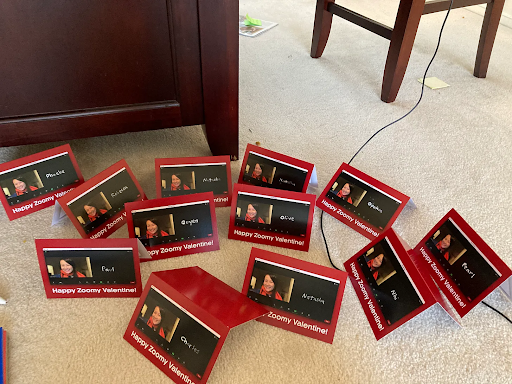
My 2021 Valentine Card concept. To capture the spirit of 2020, the theme was “silver linings.” The front of the card is a Zoom frame and the right square is black. I personalized each card by writing the recipient’s name in with white ink. The inside had the design of a Zoom chat window with a standard message sharing some silver linings I experienced in 2020. Below the fold was space for me to handwrite a personal message. I sent the card in a white envelope lined in silver, to add to the “silver lining” theme.

I get energy from interacting with other people. I organize social gatherings. I love meeting new people. In many ways, I’m a classic extrovert. When the quarantine started, I wondered how I would survive. 

My social schedule went from 4-8 in-person meetings on any given day to none. For the first 5 month, because I lived alone, I didn’t see anyone, not my family, not my boyfriend through June. What surprised me was how some of my more introverted friends went stir crazy from the lack of human interaction and I was actually doing pretty okay. 

I thought I’d be the one feeling super isolated. It has been the opposite. I do acknowledge that my lowest-scoring Love Language is touch, so I don’t actually need to physically be with people to feel connected to them. 

While the rate of making new relationships has dropped a lot, I have deepened existing relationships exponentially.

There are many friends I would only see 1-2x a year who I now talk to regularly on the phone. 

Although I appreciate large gatherings to increase the chances of meeting a stranger who might become a lifelong friend, my favorite form of connecting is 1:1 conversations, which I am still able to have virtually. And because I don’t have to worry about commute time, I’m actually able to connect socially with more people 1:1 on any given day than ever before.

So here are some tips for deepening relationships remotely. The quarantine amplified their impact. 

  1. Text message. I send a text to at least 5 acquaintances/casual friends a week. Send a text to say  “happy birthday” or a “checking in…how are you?” I use Facebook to get reminders of people’s birthdays and updates on their lives. When I see a reminder, I check to see if I have that person’s phone number and if I do, I text message a happy birthday wish or a congratulations because it is so much more personal. It has sometimes led to long text exchange or even phone conversations to catch up. Most of the time, it just reminds people, “Someone is thinking about you.” 
  1. Email update. Once a year, I send out a long email update that I personalize with mail merge. My rule of thumb is if I can’t refer to a specific detail about that person’s life or the last time we interacted, I shouldn’t be emailing them. And to be real in the email, I include the happy and the hard stuff. I will usually include a small request, like check out a free workshop I’m piloting or an essay I just wrote to give me feedback. It’s my way of asking people to be part of my journey. I have gotten detailed responses from people, telling me about their lives.
  1. Phone calls. I have regular weekly,  monthly, and quarterly phone calls with friends now. I often take calls while I’m stretching or walking. I am on video conferencing so much that I love an old fashioned phone call and I know others often appreciate it too. I’ve said to people,  “Hey, want to make this a regular thing?” Many are also ad hoc phone calls. There are some days I can reconnect with 4-7 different friends and acquaintances this way. I have one friend who I only met 2-3 times over two years before the quarantine and now we talk once a month. Another friend refers to our now monthly calls as “therapy.” 
  1. Send cards when people don’t expect them. Most people send their cards out in December. Since I was in high school, I have sent out Valentine cards because most adults don’t get Valentines. I express appreciation for friends who supported me during the previous year. I design each year’s card to recap the theme of the previous year and I’m particularly proud of this year’s concept. I still write at least 3-5 lines of a personal message in each card. Since I started using EE Printing ten years ago, I can send out about a 100 a year, limited by my ability to write personal messages.  These have been great ways to reconnect with people. 

I heard a great interview with Morra Aarons-Mele of Women Online by Guy Raz with more tips. 

This post was based on “Tips on Deepening Relationships Remotely,” which was originally posted on Feb. 21, 2022.