Managing expectations is a never-ending exercise in clearly articulating our needs, wants, and hopes. It requires activating all three elements of practicing curiosity: self- awareness, relationship building, and communication.
Here’s what I learned to help me navigate the dynamics of managing expectations that I’ve applied to both my personal and professional life. Here are four tips to manage your own expectations of yourself:
Differentiate between expectations and hope
It’s easy to let expectations slide into hopes, which often don’t have any basis in reality. I realized expectations should be based on my previous experiences to determine what is realistic and possible. For example, I was a bit too optimistic in my second year in business. I was hopeful. I didn’t have any evidence that supported my expectations, meaning they were really just hopes.
Don’t compare myself to others in creating expectations for myself
If I only look at those who I think have more than me, I will always feel I don’t have enough. So, I can’t compare. This is a hard one to admit that I do. I constantly have to remind myself not to compare. I have close friends who are also authors of wildly successful books. As a self-published author without a long track record of prestigious publications or public speaking, I can’t apply the same expectations of success to myself.
Continue to do things I love even if they don’t meet my expectations
There are so many things I love doing, such as writing essays like this, that don’t meet my expectations of desired outcomes. I often remind myself that I don’t write because I expect a lot of views; I write to have an impact, even if that impact is limited to a few readers. Think about what things you love to do and that you would do no matter what, even if they don’t live up to your expectations. This lesson is also connected to the one on differentiating between expectations and hope (see lesson #7).
Lower my expectations to “good enough” so I can experiment faster
I sometimes slip into perfectionist standards. This past year, I pushed myself to create content with less and sometimes no outside editing before I post. I’ve been surprised by how my raw content can resonate with people, like my 2021 reflections on managing my energy instead of my time or my Instagram reel that went viral when I made fun of myself. This lesson is one I will lean into even more in 2023.
I’ve learned to accept that managing expectations is an iterative process in which I have to be asking questions and listening carefully to both others and to myself.
In honor of Black History Month, we created this list of books authored by Black leaders. This list is meant to be a resource, not an official endorsement. The books are not ranked or listed in any particular order.
In Search of Our Mother’s Garden: Womanist Prose by Alice Walker
Purpose Driven Leadership: Building and fostering effective teams by Bridgette Tasha Hyacinth
The Transformational Consumer: Fuel a lifelong love affair with your customers by helping them get healthier, wealthier, and wiser by Tara-Nicholle Nelson
Haben: The Deafblind Woman Who Conquered Harvard Law by Haben Girma
Unprecedented: The Masters and Me by Tiger Woods
The Truths We Hold: An American Journey by Kamala Harris
The Fire Next Time by James Baldwin
Sister Outsider: Essays and Speeches by Audre Lorde
Hunger: A Memoir of (My) Body by Roxane Gay
Everybody’s Got Something by Robin Roberts & Veronica Chambers
This is the Fire: What I say to My Friends About Racism by Don Lemon
On the Other Side of Freedom: The Case for Hope by DeRay Mckesson
White Girls by Holton Als
Nothing Personal by James Baldwin
Revelations: The Autobiography of Alvin Ailey by Alvin Aily & A. Peter Bailey
Emergent Strategy: Shaping Change, Changing Worlds by Adrienne Maree Brown
We Will Not Cancel Us by Adrienne Maree Brown
Love and Rage by Lama Rod Owens
Pleasure Activism: The Politics of Feeling Good by Adrienne Maree Brown
How to Get Stupid White Men Out of Office: The Anti-Politics, Un-Boring Guide to Power by Adrienne Maree Brown
It’s About Damn Time by Arlan Hamilton
My Story of Embracing Purpose, Healing & Hope by Kamaro Brown
The Mentor Leader by Tony Dungy
Uncommon: Finding Your Path to Significance by Tony Dungy
The Secrets to Success: When you want to Succeed as Bad as You Want to Breath by Eric Thomas
Produced by Faith: Enjoy real success without losing your true self by DeVon Franklin
Super Rich: A guide to having it all by Russell Simmons
It Worked for Me: In life and leadership by Colin Powell
Reach: 40 Black men speak on living, leading, and succeeding by Ben Jealous & Trabian Shorters
Black Faces in White Places: 10 game-changing strategies to achieve success and find greatness by Randal Pinkett & Jeffrey Robinson
The Gatekeepers are Gone: Hustle + Technology = Success by Lamar Tyler
Know What Makes Them Tick: How to successfully negotiate almost any situation by Shonda Rhimes
The Autobiography of Malcolm X: As told to Alex Haley by Malcolm X & Alex Haley
What I Know for Sure by Oprah Winfrey
Hidden Figures: The American Dream and the Untold Story of the Black Women Mathematicians Who Helped Win the Space Race by Margot Lee Shetterly
The Misadventures of Awkward Black Girl by Issa Rae
The One Week Budget by Tiffany Aliche
I’m Judging You: The do-better manual by Luvvie Ajayi
We Should All Be Feminists by Chimamanda Ngoni Adichie
The Awkward Thoughts of W. Kamau Bell by W. Kamau Bell
Between the World and Me by Ta-Nehisi Coates
My Bondage and My Freedom by Frederick Douglass
Drop the Ball: Achieving more by doing less by Tiffany Dufu
Biased: Uncovering the hidden prejudice that shapes what we see, think and do by Jennifer Eberhardt
Stamped from the Beginning: The definitive history of racist ideas in America by Ibram X. Kendi
Lovesong: Becoming a Jew by Julius Lester
Becoming by Michelle Obama
The Race Whisperer: Barack Obama and the political uses of race by Melayne Price
A Promised Land by Barack Obama
Strength to Love by Martin Luther King, Jr.
My Grandmother’s Hands: Racialized Trauma and the Pathway to Mending Our Hearts and Bodies by Resmaa Menakem
Just As I Am by Cicely Tyson
Black and White: The Way I See It by Richard Williams
Uncomfortable Conversations With a Black Man by Emmanuel Acho
A Way Out of No Way: A Memoir of Truth, Transformation, and the New American Story by Raphael Warnock
Professional Troublemaker: The Fear Fighter Manual by Luvvie Jayi Jones
Finding Me: A Memoir by Viola Davis
More than Enough: Claiming Space for Who You Are (No Matter What They Say) by Elaine Welteroth
My Life: Queen of the Court by Serena Williams
Small Doses: Potent Truths for Everyday Use byAmanda Seales
Bamboozled: How God Tricked Me into the Life of My Dreams byYvonne Orji
After the Rain: Gentle Reminders for Healing, Courage, and Self Love by Alexandra Elle
The 1619 Project: A New Origin Story by Nikole Hannah-Jones
The Mind of a Winner by Steve Canal
All Bout Love by Bell Hooks
The Little Black Book of Success: Laws of Leadership for Black Women by Elaine Meryl Brown, Marsha Haygood & Angela Burt-Murray
Your Next Level Life: 7 Rules of Power, Confidence, and Opportunity for Black Women in America by Karen Arrington
Playing the Game Without a Coach: How Courage, Resilience and Forgiveness Helped One Man Seize the American Dream by Benjamin Raymond
The Wealth Choice: Secret Success of Black Millionaires by Dennis Kimbro
Beating the Odds: Eddie Brown’s Investing and Life Strategies by Eddie Brown
Strategize to Win: The New Way to Star Out, Step Up, or Start Over Your Career byCarla Harris
Rise and Grind: Outperform, Outwork, and Outhustle Your Way to a More Successful and Rewarding Life byDaymond John & Daniel Paisner
Life in Motion: An Unlikely Ballerina byMisty Copeland
The Work: Searching for a Life that Matters by Wes Moore
The Last Black Unicorn by Tiffany Haddish
Lead from the Outside: How to Build Your Future and Make Real Change by Stacey Abrams
50 Billion Dollar Boss: African American Women Sharing Stories of Success in Entrepreneurship and Leadership by Kathey Porter
Black Business Secrets: 500 Tips, Strategies, and Resources for the African American Entrepreneur by Dante Lee
Black Fortunes: The Story of the First Six African Americans Who Escaped Slavery and Became Millionaires by Shomari Wills
Black Power Inc.: The New Voices of Success by Cora Daniels
Climb: Taking Every Step with Conviction, Courage, and Calculated Risk to Achieve a Thriving Career and a Successful Life by Michelle Gadsden-Williams, Carolyn M. Brown
Boss Bride: The Powerful Woman’s Playbook for Love and Success by Charreah Jackson
Conversations in Black: On Power, Politics, and Leadership by Ed Gordon
Double Down: Bet on Yourself and Succeed on Your Own Terms by Antionette M. Clarke & Tricia Clarke-Stone
Expect to Win: Proven Strategies for Success From a Wall Street Vet by Carla A. Harris
It’s About Time: The Art of Choosing the Meaningful Over the Urgent by Valorie Burton
Little Black Book: A Toolkit for Working Women by Otegha Uwagba
Miss Jessie’s: Creating A Successful Business from Scratch – Naturally by Micho Branch
Mo’s Bows: A Young Person’s Guide to Start-up Success: Measure, Cut, Stitch Your Way to a Great Business by Moziah Bridges & Tramica Morris
More Than Pretty: Doing the Soul Work that Uncovers Your True Beauty by Erica Campbell
The Book of Awesome Black Americans: Scientific Pioneers Trailblazing Entrepreneurs, Barrier-Breaking Activists and Afro-Futurists by Monique Jones
The Memo: What Women of Color Need to Know to Secure a Seat at the Table by Minda Harts
The Merchant Prince of Black Chicago: Anthony Overton and the building of a Financial Empire by Robert E. Weems
Balancing Work and Life: The Nia Guide for Black Women by Sherly Huggins & Cheryl Mayberry McKissack
The Road to Someplace Better: From the Segregated South to Harvard Business School and Beyond by Lillian Lincoln Lambert
You Got This!: Unleash Your Awesomeness, Find Your Path, and Change Your World by Maya Penn
Women of Color in Tech: A Blueprint for Inspiring and Mentoring the Next Generation of Technology Innovators by Susanne Tedrick
Finding My Voice: My Journey to the West Wing and the Path Forward by Valarie Jarret
Believe Bigger: Discover the Path to Your Life Purpose by Marshawn Evans Daniels
Swimming with Sharks in Dark Waters by Athene Brinson
FutureProofed: How to Navigate Disruptive Change, Find Calm in Chaos, and Succeed in Work & Life by Natalia Peart
Own Your Phenomenal Self: A Guide on Character, Success, & Leadership by Rita P. Mitchell
Werk 101: Get Your Life Together Guide by Koereyelle DuBose
Illogical: Saying Yes to a Life Without Limits by Emmanuel Acho
Impolite Conversations: On Race, Politics, Sex, Money, and Religion by Cora Daniels & John L. Jackson Jr.
Driven by Intention: Own Your Purpose, Gain Power, and Pursue Your Passion as a Woman at Work by Michelle Gadsden-Williams
Right Within: How to Heal From Racial Trauma in the Workplace by Minda Harts
Gracism: The Art of Inclusion by Dr. David A. Anderson
So You Want to Talk About Race by Ijeoma Oluo
All Bout Love by Bell Hooks
Ain’t I a Woman: Black Women and Feminism by Bell Hooks
You’ve Got to Be Hungry: The Greatness Within to Win by Les Brown
The Art of Ronin Leadership by Mike Howard
Hood Feminist: Notes from the Women that a Movement Forgot by Mikki Kendall
Where Do We Go from Here: Chaos or Community by Dr. Martin Luther King Jr.
Upper Hand: The Future of Work for the Rest of Us by Sherrell Dorsey
Will by Will Smith
More Myself: A Journey by Alicia Keys
Undrowned: Black Feminist Lessons from Marine Mammals by Alexis Pauline Gumbs
These Wilds Beyond our Fences: Letters to My Daughter on Humanity’s Search for Home by Bayo Akomolafe
Black Futures by Kimberly Drew & Jenna Wortham
Radical Dharma: Talking Race, Love and Liberation by Rev Angel Kyodo Williams
Just Mercy: A Story of Justice and Redemption by Bryan Stevenson
Good Night Stories for Rebel Girls: 100 Real-Life Tales of Black Girl Magic by Sonja Thomas & Lilly Workneh
How to Be an Antiracist byIbram X. Kendi
Bridges to Heal US: Stories and Strategies for Racial Healing by Erin Jones
The Color of Water: A Black Man’s Tribute to His White Mother by Andre Braugher, James McBride, Lainie Kazan
The Tipping Point: How Little Things Can Make a Big Difference by Malcolm Gladwell
David and Goliath: Underdogs, Misfits, and the Art of Battling Giants by Malcolm Gladwell
Allow Me to Retort: A Black Guy’s Guide to the Constitution by Ellie Mystal
Fire Shut Up in My Bones by Charles Blow
The Devil You Know: A Black Power Manifesto by Charles Blow
Speaking Truth to Power by Anita Hill
Writings on the Wall: Searching for a New Equality Beyond Black and White by Kareem Abdul-Jabbar
Becoming Kareem: Growing Up On and Off the Court by Kareem Abdul-Jabbar
Up from Nothing: The Untold Story of How We (All) Succeed by John Hope Bryant
The Memo: Five Rules for Your Economic Liberation by John Hope Bryant
Love Leadership: The New Way to Lead in A Fear Based World by John Hope Bryant
The Purpose of Power: How We Come Together When We Fall Apart by Alicia Garza
I’m Still Here: Black Dignity in a World Made for Whiteness by Austin Channing Brown
Standing Above the Crowd by James Donaldson
The Extraordinary Power of Leader Humility: Thriving Organizations – Great Results by Marilyn Gist, PhD
Talk it Up!: A Guide to Successful Public Speaking by David Suk Brown & Danny Suk Brown
Our Brave Foremothers: Celebrating 100 Black, Brown, Asian & Indigenous Women Who Changed the Course of History by Rozella Kennedy
You Owe You: ignite Your Power, Your Purpose, and Your Why by Eric Thomas, PhD
Black Fatigue: How Racism Erodes the Mind, Body, and Spirit by Mary-Francis Winters
Outliers: The Story of Success by Malcolm Gladwell
Year of Yes: How to Dance it Out, Stand in the Sun, and Be Your Own Person by Shonda Rhimes
Acting Up: Winning in Business and in Life Using Down-Home Wisdom by Janice Bryant Howroyd
How Boards Work and How They Can Work Better in a Chaotic World by Dambisa Moyo
Chasing Youth Culture and Getting it Right: How Your Business Can Profit by Tapping Today’s Most Powerful Trendsetters and Tastemakers by Tina Wells
Blink: The Power of Thinking Without Thinking by Malcolm Gladwell
Why Should White Guys Have All the Fun? by Reginald Lewis & Blair S. Walker
Unapologetically Ambitious: Take Risks, Break Barriers, and Create Success on Your Own Terms by Shellye Archambeau
The Rise: Creativity, the Gift of Failure, and the Search for Mastery by Sarah Lewis
Display of Power by Daymond John
Black Entrepreneur Survival Guide: The complete guide to becoming a successful African American Entrepreneur by Dunneille D Anderson
Black Wall Street: From Riot to Renaissance in Tulsa’s Historic Greenwood District by Hannibal B. Johnson
CEO of My Soul: The Self-Love Journey of a Small Business Owner by Nic Cober Esquire
Mom and Me and Mom by Maya Angelou
How to Succeed in Business Without Being White: Straight Talk on Making It in America by Earl G. Graves
Success Never Smelled So Sweet: How I Followed My Nose and Found My Passion by Lisa Price & Hilary Beard
We Should All Be Millionaires: A Woman’s Guide to Earning More, Building Wealth, and Gaining Economic Power by Rachel Rodgers
9 Laws of Success: Attracting the Life, Love, Health & Success You Want! By Stormy Wellington
Self-Esteem is the New Black: How to become the confident woman you have always wanted to be! by Monique Mays
Everyday Millionaires: How Ordinary People Built Extraordinary Wealth – And How You Can Too by Chris Hogan
Get Good with Money: Ten Simple Steps to Becoming Financially Whole by Tiffany “The Budgetnista” Aliche
How We Show Up: Reclaiming Family, Friendship, and Community by Mia Birdsong
Bad Feminist by Roxane Gay
Eloquent Rage: A Black Feminist Discovers Her Superpower by Brittney Cooper
The Pursuit of Happyness by Chris Gardner
Green Power: The Successful Way of A.G. Gaston by A.G. Gaston
The Black Woman Millionaire: A Revolutionary Act that DEFIES Impossible by Dr. Venus Opal Reese
When the Miracle Drops: How Instagram Helped Turn a Quick Fix Into a Million-Dollar Product by Jessica Dupart
Building Atlanta: How I Broke Through Segregation to Launch a Business Empire by Herman J. Russell
The Path Made Clear: Discovering Your Life’s Direction and Purpose by Oprah Winfrey
Mental Detox: The Power and Guidance to Implement Peace, Joy, Balance, and Financial Abundance in Your Life by Cheyenne Bryant
Quantum Leaps: 10 Steps to Help You Soar by Gloria Mayfield Bangs
Air Traffic: A Memoir of Ambition and Manhood in America by Gregory Pardlo
A Lucky Man by Jamel Brinkley
Heavy: An American Memoir by Kiese Laymon
Invisible Man, Got the Whole World Watching: A Young Black Man’s Education Book by Mychal Denzel Smith
Meaty: Essays by Samantha Irby
Unbowed by Wangari Maathai
Writing My Wrongs: Life, Death and Redemption in an American Prison by Shaka Senghor
Where You Are is Not Who You Are by Ursula Burns
The Perfect Day to Boss Up by Rick Ross & Niel Martinez-Belkin
Feeding the Soul by Tabitha Brown
Set Boundaries, Find Peace: A guide to reclaiming yourself by Nedra Glover Tawwab
I don’t like to get “no.” And yet not ever getting “no” could be a sign of complacency or lack of self-awareness.
While it’s natural to want to hear yes to the things we ask for, there’s a lot of benefit in getting no’s.
I’m referring to the requests we make that actually matter to us. There is the popular Rejection Therapy game that challenges people to make often ridiculous requests of strangers in order to condition ourselves to accept rejection. I’m not talking about asking a stranger to lend you $100 or knocking on someone’s door and seeing if they’ll host you for a meal.
Instead, think about asking for things you care about.
Here are four reasons why getting “no” to the requests that matter to can actually help us:
Ego-check: Getting a “no” keeps our egos in check and helps us understand the goal is not to always get a yes. If I got “yes” all the time, I’d get an inflated sense of self and I’d start to believe I’m invincible. For example, I have a big network of friends, acquaintances, and supporters; I hear people tell me, “You know everyone in Seattle.” In reality, I reach out to a lot of people to reconnect, and some of them say they’re too busy, and many of them just ignore me. Am I disappointed? Yes. I’m always a little disappointed and sometimes, very disappointed. The rejection or lack of response reminds me that there are a lot of people out there who don’t care enough about me and that’s okay. Getting the “no’s” doesn’t detract from those who did say “yes.”.
Empathy: Getting “no” actually can strengthen our ability to empathize with others, who get rejected. For example, I’ve been rejected for jobs I really wanted that I interviewed for, so I can understand and empathize with others who have gotten job rejections. If we’re getting a lot of people saying yes to our asks, one possible reason is because we hold positional power that we might not even recognize. If we have been thinking people don’t say “no” because we’re exceedingly charming or persuasive, it could be because they feel they can’t say no and we may even need to check our ego (see Ego Check). At work, this might happen if we’re in a leadership role. Among our friends, it could be because we have higher social status. In our family, we may have a position of authority or others have financial dependence on us. If we don’t get “no’s” ourselves, we will lose our ability to empathize with those we decline or with those who get rejected.
Push our boundaries– Getting no’s expands our opportunities to learn and push beyond our comfort zone. When I’m selling services for my company, CuriosityBased, I remind myself if I’m not hearing that many no’s, then I’m probably not making enough asks. Hearing “no” tells me I’m out there, asking from people who I don’t know if they will say yes. For example, I could ask 10 people and 8 say yes. If I were to ask 20 people and 10 people said yes, I’ve just pushed my boundaries and I can work on learning from the 10 no’s instead of just the 2 no’s. A high “yes” rate may mean we’re limiting ourselves to those we think will say “yes” to us, which inherently increases our chance of getting a “yes.”
Reinforce your own boundaries– Getting a “no” helps me understand what I’m not willing to do to get someone to say “yes”. It reminds me that I can set my own boundaries too. When someone says no because they don’t agree with me, it pushes me to ask myself, “Is there a need for me to change so I can get them to say yes? What would I be losing if I tried to accommodate them?” In answering these questions, I might realize their “no” means we weren’t a good fit. This recently happened to me when a prospective client said they were “too advanced” and CuriosityBased workshops weren’t helpful to those who were “further along in their equity journey.” They’re spot on. Their “no” reflected how they wanted training workshops, which takes participants through a linear progression of different levels of mastery. CuriosityBased designs experiences to enable people to have vulnerable conversations so they can learn from one another instead of from a single instructor. People have taken the same CuriosityBased workshop over and over again with different people and still learn something new each time. The idea that people can be “being further along” conflicts with my philosophy on learning. (You can read more here). Understanding this potential client’s “no” reminds me it’s okay not to compromise or change myself to get to a yes.
If you realize you seldom get turned down, ask yourself why. Is it because you’re actually not making that many requests? And what would happen if you asked more often, even if it means increasing the risk people will say no.
Try asking those who you’re not sure will say yes to you. See if it changes how you feel about getting your ask rejected by them.
Have you been asking for help and yet you can’t figure out why people don’t say yes to you? I wrote earlier about the SMART method and asking for help. If you’re getting no’s all the time though, it might be because you’re making some mistakes in asking for help.
I’ve identified five common mistakes people make when they think they’re asking for help:
Not asking and just hoping someone will offer
That’s right. The biggest mistake you can make when asking for help is you’re not actually asking. You’re just talking about how you need help and you hope someone will offer you help. You may even feel like you’re asking by talking about how you need help. Unless you actually make an ask for something that ends with a question mark, then you’re not really asking for help. If you don’t ask, explicitly, then the person that you think you’re asking might not realize that you are actually asking. They might not want to presume that you’re asking and that you might actually even be insulted if they offer, so they don’t. Then there are some people who think it’s really important that whoever needs help actually ask for it. Unless you actually know someone well, it’s unlikely that they will just offer help. I remember talking to this political candidate who was telling me her life story and all the reasons why she ran and how she needs money to run her campaign and then there was this really long pause, and then I said, “are you asking me to help you with your campaign?” And then she said, “yes, yes I am.” I actually had to prompt someone who is bringing a political campaign to make an ask. You may appear like you’re lacking a lot of confidence or even being embarrassed in your ask if you don’t actually ask.
Being vague about what you need
This means not being specific about what you need. It can be hard to say yes to something, if you don’t know what you’re getting into. That’s why it’s important to be specific about what you need, so that other people can envision being able to help you or not. But what I really like about the SMART method developed by Wayne Baker is that it’s very specific and detailed in how to make an ask. A big request can make the other person feel like they’re not really knowing what they’re getting themselves into if they say yes and they might not care enough to ask you follow-up questions, causing you to lose your opportunity because you were vague. When you are specific in your request, it shows that you have thought it through. If you’re vague in your request, it could signal that the request is casual and you have not thought it through.
Not sharing why you need help
If you’re asking for help, you have to be prepared to share why you need that help. You have to convey a sense of genuine need. If you don’t share, you can come off as though you’re hiding something, or as though you don’t trust the person, which is really bad if you’re actually asking them for something. So imagine saying “I need a job because I just got laid off. Could you help me with my job search for a tech role?” or “ my car broke down and I can’t afford to take an Uber. Would you be willing to take me to the airport?” That could be why you need the help. They don’t have to guess, and if you leave them to guess, they might think it’s something much more negative than it is.
Trying to make the ask into a transaction
This is when someone says, if you do this for me, I will do this for you. There’s good intent here. I understand that it could be hard to ask for help without offering something in return. The fact is, what you’re offering in return is a “thank you” and actually making use of whatever you’re asking for help with. When you try to offer something for something, it can make the request feel really transactional. The person on the giving end doesn’t want to feel like they’re only saying yes, because you offer them something. For example, if you say, can you help me with my job search? I’ll buy you dinner if you do.” Chances are the person would’ve helped even without the dinner and now because you said it, they might look like they are interested in the dinner instead of just hoping for altruistic reasons. People want to feel altruistic. Help them by tapping into their generous spirit, not their desire to get something in return.
Asking someone when you haven’t been in contact and not acknowledging that
Sometimes you need some help from someone you haven’t been in contact with for a while. That doesn’t mean that you shouldn’t ask for help, especially if you thought you had enough of a relationship that you could ask. What’s important though is that you acknowledge that you haven’t talked to them in a while. Maybe look up when was the last time you talked to them and comment on some things that they use on their social media or some other platform that shows that you’ve also been keeping track of their activities. The point of this is not to pretend that no time has passed. You don’t wanna look like you’re just coming in for a favor and then you feel entitled to their help because you knew each other from before.
Have you unconsciously been making any of these mistakes when you’ve asked for help? If so, stop it! And also check out my blog post on asking for help in this SMART method.
Before you ask someone else for help, you have to get clear on what you’re asking for. No one can read your mind.
My favorite way to ask for help is using the SMART method, developed by Wayne Baker, a professor at the University of Michigan, from his book, All You Have to Do is Ask. I like it because it’s really clear and memorable. Just think about smart goals, and how popular that structure is. The smart goal is specific, measurable, actionable, realistic, and time bound.
A SMART has a lot of similarities to a smart goal.
The SMART method stands for
Specific
meaningful
action-oriented
realistic
Time-bound
Specific means that you’re asking for something specific, not for something vague or they have to guess.
Meaningful means that it’s personally meaningful to you. If this person were to say, yes, it would have a positive impact on you.
Action oriented means that the person can take action on it, that there’s something they can do. Yeah that doesn’t have to be physical. The action could just be. I want you to spend five minutes thinking about this.
Realistic means that with something that the person can realistically do. You’re not asking them for something that is really out of their means. For example, maybe you think they can lend you $500 but it might be difficult for them to lend you $5000. So be realistic about your ask. This is a personal assessment of the situation on your part. It’s not a discrete element of the ask itself.
Time bound means that you’re asking for it to be done by a specific time. So you might ask for something, but you don’t say when. When you’re asking for something and you want it done now, you may think that people understand that you mean “now” but if you don’t say it, they may not think it’s that urgent. Of all the elements of a SMART ask, this is the one that I often forget.
You can use this in your personal and professional life. Here are some examples I’ve used:
Since we live in the same suburb, would you be willing to give me a ride to this Friday’s event in Seattle? It will be really difficult for me to attend if I can’t get a ride.
Would you be willing to make introductions to organizational leaders who might be interested in hiring CuriosityBased for team building services? I’m really working on growing my business. To make it easy for you, I could give you some introductory text.
Are you available and interested in speaking on this panel for Leadership Tomorrow, an organization that I volunteer with? It will take about one hour of prep and one hour of actually speaking on the panel. It will take place on May 2 and I’d like to know by April 2 if you can do it.
So you can see that each of these asks have all of the elements of a SMART ask.
Try this for yourself. Go out and ask for what you need, just check if it has all of the elements of a SMART ask. Asking someone for help can feel uncomfortable, and having this structure might make it easier for you, because you’re focusing on the elements of the ask and not the feelings of hesitation or discomfort around making the ask itself.
I’ve written a lot about the benefits of asking for help. You can read more here.
6 Tips on How to Make the Most of Informational Interviews When You’re Looking For A Job
How to Make the Most of Informational Interviews
If you’re looking for a job, you might think the best strategy is to apply everywhere and talk to anyone who can help. However, in my experience, what I thought I wanted was not always what I truly wanted. Informational interviews helped me gain clarity.
What Is an Informational Interview?
An informational interview gives you insight into a job, company, or industry—and helps you get advice from someone already in that field. It’s a chance to make a strong impression on someone who might later connect you with others.
Importantly, an informational interview is not a job interview. Don’t treat it like one. If you do, you’ll likely feel disappointed. The goal is to learn, not to get hired immediately.
My Experience with Informational Interviews
I’ve done many informational interviews throughout my career. When I transitioned from working at my family’s newspaper to big tech, I spoke with five new people each week for eight weeks—forty interviews total.
These conversations helped me refine what kind of career I wanted. They also gave me new language to describe my skills. For example, someone might tell you that what you call a “coordinator” role is known as a “project manager” in their industry. Small insights like that help you talk about your goals more clearly and discover roles you didn’t even know existed.
Make a Positive Impression
An informational interview is also your chance to leave a good impression. Show that you’re smart, articulate, and curious. Ask thoughtful questions and listen closely.
If you come across as pushy or unprepared, people will hesitate to introduce you to others. But if you’re engaged and attentive, you’re more likely to expand your network naturally.
How to Get Informational Interviews
Start with your network. Reach out to friends, volunteers, mentors, and colleagues for introductions. Form a small group of accountability partners who can help you find connections.
I rarely do cold outreach, so I focus on referrals and warm introductions. If you want more strategies, check out my blog post on Six Tips to Get a Job You Love.
Tips for a Successful Informational Interview
1. Do Your Research
Before the conversation, spend a few minutes learning about the person. Review their LinkedIn profile, company website, or recent talks. Mention something specific—like “I watched your panel discussion on career growth”—so they know you came prepared.
Avoid basic questions such as “What do you do?” That shows you didn’t prepare and wastes valuable time. Doing your homework signals professionalism and helps you ask more meaningful questions.
2. Prepare Three Specific Questions
Some informational interviews last an hour, but others might be just 15 minutes. Prepare for the shorter version. Think of three focused questions that are relevant to your interviewee.
For example: “Since you’ve worked in corporate settings for years, what advice would you give to someone transitioning from nonprofit work?”
When I once asked a Director-level professional a question like that, he later referred me for a job. His recruiter note said, “She’s a precise, concise communicator and a clear thinker.” That’s the impression you want to make.
3. Ask for Referrals
If the conversation goes well, ask whether they can recommend anyone else you should talk to. They may not think of someone right away, so follow up later.
To make it easier, write an introductory blurb they can forward. Many people forget this step, but it’s crucial. If you’re not willing to write your own blurb, it’s harder for them to use their social capital to connect you.
4. Offer to Help Them
At the end of the interview, ask if there’s anything you can do to help them. Even small offers matter and show that you were listening.
For instance, if they mention their child plays in a youth symphony, you could share information about a music program. Or if they love a certain cuisine, you might offer restaurant recommendations.
I always appreciate when people ask this question—it shows generosity. Personally, I often suggest they subscribe to the CuriosityBased newsletter or follow our social channels.
5. Follow Up with a Thank-You Email
Always send a thank-you email after your interview. Reference something they said to show you listened. If you forget, don’t worry—it’s never too late. A quick note such as, “I’ve been meaning to thank you for our conversation last month” still makes a great impression.
6. Keep Them Updated
If they introduce you to someone, follow up to let them know how it went. A short message like, “Thank you again for the introduction. We spoke last week, and it was a great conversation,” helps strengthen the relationship.
And when you eventually land a job—even if it’s in a different field—send an update. People appreciate knowing their effort made a difference.
Final Thoughts
Informational interviews are one of the most effective ways to explore careers and build meaningful professional relationships. When you approach them with curiosity, preparation, and gratitude, they can open doors you didn’t even know existed.
I hope you’ve had these tips helpful. If you did, please share on social media and with your friends.
Since the layoffs started last fall, I know a lot of talented people looking for work.
I empathize. I’ve been laid off twice, in 2012 and 2014. Before that, I had to prove I could work in the corporate world when my work experience was limited to academia and working at my family’s newspaper. In 2011, I met Paul Anderson, the founder of Prolango, a career search firm. I invested in the Prolango job search boot camp and followed the Prolango method, which emphasizes intense networking, and I landed my first 6-figure salary job two months later.
I don’t think applying to jobs through online portals works. I did that for six months and only got a few invitations for candidate screens that went nowhere, despite my Cambridge PhD and my experience working at two established tech companies. The last time I got a job outside my network was as a research assistant in college. That’s why I can empathize with those trying to switch their careers, get a new job after a layoff, get their first job out of college or grad school, or find a job that will sponsor their visa to stay in the US.
Over time, I developed some of my own job search tips honed from my own experience, in addition to Prolango’s.
1) Outreach to people you know first.
You have to be willing to check in and ask your existing network to help you expand your network. The way I like to do this is by creating a newsletter, that is, an update email about what’s happening in your life. Some people will create a PDF and email this out. I actually like to write a text email with various links that people can click OK if they’re interested in learning more. This update email should include personal and professional updates about you, like “I just graduated from school and I’m looking to do this” or “I just left my job” along with details like, “this is where I’m living now, this is how my family is doing and this is how I’m doing healthwise”. You have to be willing to share enough personal details so that the email feels personal. I like to include both highs and lows.
I recommend sending this email through your email provider using a mail merge app. If you’re on Outlook, you can use the built-in mailmerge app. I’m a huge fan of yet another mail merge, which is a plug-in for Gmail. It’s free for up to a certain number of emails to send out every day. A merge field is that personalized part of an email, like a person’s name. I always have a personal note merge field in the opening paragraph. When I think about who I should email, my rule of thumb is that I need to be able to write about something personal in their life. It could refer to the last conversation we had or to something I saw on their social media. I need to be able to say something like, “How is your daughter? Last time we talked, she was graduating from high school.” If I can’t think of something personal to write, I won’t write. Including a personalized line does take a lot more effort, and I also think it’s a lot more effective.
2) Volunteer as a way to network, learn, and get endorsed.
I’ve made some major career pivot in my life, going from academia to working at my family’s newspaper to working in tech as a digital marketer, and then as a nonprofit executive, and now as an entrepreneur. My academic background is as a historian, which is very specialized and not directly relevant to what I do today. I made up for this by volunteering so that I could gain new skills by doing, and also to expand, see what might not work. I volunteered to head marketing for the local chapter of the National Association of Asian American Professionals (NAAAP), even though I had just joined social media a few months prior and I had never blogged before. I joined a lot of other committees and boards of small nonprofit, so that I could have a platform to learn by doing. The great thing about volunteering is that unless you do something illegal, they’re not really going to fire you. I learned so much about selling when I served on a committee for a concert at Seattle Symphony, and the other volunteers, who are much more senior in their career, mentored, and coached me on how to sell.
The other benefit of this is that by doing a good job as a volunteer, you have people who can endorse you later on, and who are willing to introduce you to people. So, even though I had no formal marketing experience, I learned enough where I was able to lead this Seattle chapter to place number #1 in the country in marketing at the national NAAAP convention. And I cited that experience as proof of my ability to learn on the job.
3) Do a lot of informational interviews.
An informational interview is a conversation where you learn about someone’s specific job, industry, and expertise, and it also gives them an opportunity to learn about you. It’s not intended to lend you a job, though it may. You’re really just getting background information. My friend, Paul Anderson, the founder of Prolango consulting, which helps people find their dream jobs, gave me this formula for how many informational interviews: He said if you wanna get a job in three months, you reconnect with five people a week you know. If you want to get a job in two months, you have five informational interviews per week with people you don’t know. And if you want to get a job in one month, you talk to 10 new people each week. I did the two month version, and I consistently had five informational interviews per week and I was able to land my first six-figure salary job at a major tech company, after working 60 hr a week for my parents for about $1,500 a month plus free rent. As you meet people, always in the conversation, asking if they think that there is someone else that they could introduce you to. The point of these conversations is not to get a job, the point is to increase your opportunities to make a good impression on someone who could introduce you to someone who could give you a job. I’m going to write a separate blog post and video about informational interviews, so subscribe to our YouTube channel to get alerts.
4) Write short bios about you that are easily share-able.
As you meet people, make it really easy for them to introduce you to other people. I like to prepare a short, 4 to 6 sentence bio that is personalized with a specific ask. Create a generic boilerplate version, and then always personalize the last sentence of it. When people ask me to connect them with someone in my network, I always ask them to write this in third person so I can copy and paste it and it looks like I wrote it. The bio should be short and impressive. It’s more powerful if you can include a sentence about why you want to meet that particular person.
Here’s an example:
Kim Doe Is an experienced lawyer who has worked at (companies) for the past (number of years). She specializes in (various specialties). She has been recognized for (listening awards, recognitions). She is now Interested in pursuing a career in (new field). She would like to talk to you about (specific questions/topics Kim would ask)
Make it really easy for the person that is going to introduce you. Also, you get to emphasize what you want to emphasize with, not have them guess.
5) Find other job seekers as networking partners.
Looking for a job can be very lonely and depressing. One of the key things that I learned with Prolango was to have a small group of accountability partners. Part of the Prolango job search Boot Camp was having to report every week how many people I reached out to, who I met with, how those meetings went, and what I learned. The mere fact that I knew I had to do made me more likely to do the work of reaching out to get the informational interviews. These accountability partners could be looking for similar jobs, or they could be looking for very different jobs. That’s up to you. As they are networking, they can be listening for opportunities for you, and you can be listening for opportunities for them. It’s just getting more people out there to be your eyes and ears. They can also commiserate with you when times get hard.
6) Write a proposal about why you’re right for the job.
In one informational interview, I talked to the CEO of a big company and asked him for advice. I will never forget his words. He said, “You’re very smart, and have an impressive background. And there are a lot of people who are very smart, and have impressive backgrounds. You have to tell me what value you are going to bring to my company.“ A lot of people want to help, but you have to be clear about how you’re going to help them. If there is a job or company that you really want to work for, then writing a proposal about the value you could bring would be a good exercise to help you think through what you would do with the company, and also to demonstrate to your potential future employer, your ability to think critically, and to communicate through writing.
Ideally, you write the proposal after you’ve had a chance to talk to some people at the company so you can get a little more information for which you could base your proposal. In the proposals I’ve written, I like to include a list of reasons why I am perfectly suited for that company, why I am physically interested in it, a SWOT analysis of the company, and what my unique skills could do to address the challenges and needs of the company. Bonus: include a timeline of when you think you can do it by.
If you’re already at the interview stage, you may also want to set salary expectations. My proposals have been 4 to 5 pages, which may sound long, but you’re actually giving extra evidence to people that’s why they should hire you. I’ve also been on the receiving end when someone voluntarily put together a proposal and it’s sealed the deal for me.
I hope that these job tips have been helpful. Even though I have my own company now and I’m not looking for a job, I still have a practice of sending out an update email every 12 to 18 months and I still volunteer so I can build new skills. Please leave comments below about which tips you found most valuable.
You can also watch short video versions of this blog post along with other job search tips on our YouTube channel. Please subscribe to get alerted when that video comes out.
We assume that “training” and “learning” are the same, when they are not. Learn how they are different and which one is a better fit for your needs.
If you can’t explain the difference between training and learning, you aren’t alone. You likely use these words interchangeably, as I have, or know there is a difference, but you might struggle to explain what that difference might be. I looked up the definitions:
“Training” is about transmitting knowledge or information, while “learning” is about the process of absorbing information to build skills that can be used in a variety of contexts.
With “training,” you’ll get information. For a lot of people, getting information is enough, especially if you already know how to apply knowledge. “Learning” is equivalent to building critical thinking skills. A lot of people assume they’re the same when they’re not. You may also think of the difference between the two as “training” being “passive learning,” while “learning” is “active learning.”
Training Versus Learning
Employers say they want “training” for their teams. That might be because we often describe anything educational in the professional setting as “training.”
While I outline these two categories below, I understand that there are many professional development offerings that fall in between the two poles. There are many classes that provide training with strong learning elements to practice what is being taught.
I’m a big advocate for “learning” experiences over “training.” The difference can be summed up with this comment we heard from a participant in a learning experience I held on listening effectively. She said, “I’ve been to a lot of trainings about how to listen, where we just sat there, listening to the instructor tell us how to listen better. This is the first time I’ve spent practicing listening in a training about listening.”
Professional development is dominated by training to the point that if people don’t get a massive list of new vocabulary and worksheets, they don’t think they are learning anything new or valuable.
When I take people through a learning experience, I use the Socratic method, and I ask lots of questions to stimulate critical thinking and invite people to draw out their own learning. I’ve had people leave learning experiences I’ve led saying, “I now have more questions than answers.” That can be incredibly frustrating for some people, and eye opening and empowering for others.
At the end of a training session, If you asked the participants what they learned, the answers should be fairly consistent And they came to be tested on their knowledge. With the learning experience, I ask people to describe a take away. I’m always surprised by how people have different takeaways and I as a facilitator and content creator get to learn something as well. One person described this closing reflection as “naming our own meaning.”
Choosing What’s Right For You
There are times when training is the more appropriate choice and other times when learning is what is needed. These questions are designed to help you determine what you need to give to your team, especially while many of us are working remotely.
Do you need to deliver the same content to as many people as possible at one time or can you have multiple sessions with smaller groups of people?
Do you prefer people to something in a particular way or are you open to different ways of achieving the same/similar results?
Do you have deep trust across your different departments or are you looking to build more trust across silos?
Are your employees asking you for more content to help them do their work better or for more connection with each other?
Is your team or company made up of individual contributors or collaborators?
Do you want your team to have a shared language or a shared culture?
Are you prioritizing serving external clients or internal clients?
Are your team members more interested in listening passively or engaging actively?
If you mostly chose the first choice, then training is probably a better option for you. If your answers fell primarily toward the second choice, then you should explore learning experiences.
Prior to the pandemic, when we could be in person with one another, a good training was an efficient way to transmit substantial amounts of content. We took for granted the connection that came from being physically present together. Now, as we work remotely, taking the time to slow down and learn from and alongside one another allows colleagues to connect meaningfully. Before you default to training, explore what learning experiences could do for your team.
What I learned in managing expectations with others and with myself
Feb 1, 2022 to Jan. 21, 2023 marked the Year of the Tiger. This is a display at Wing Luke Museum.
In my second year as an entrepreneur, I learned a lot about how to manage expectations with others and especially managing my own expectations of myself.
Managing expectation is a never ending exercise in clearly articulating our needs, wants, and hopes. It requires activating all three elements of practicing curiosity: self- awareness, relationship building, and communication.
Here’s what I learned to help me navigate the dynamics of managing expectations that I’ve applied to both my personal and professional life.
Don’t expect people to change, yet believe them if they do change
Changing behavior is difficult for those who want to change, and impossible for those who don’t want to change. I’ve learned not to expect people to change. At the same time, people can change and I have to let go of grudges and old expectations to believe that they have changed. This has been especially true in my personal life. I’ve seen my mom change after my dad passed, in positive ways I didn’t expect. Just as I want others to see that I am capable of change, I have to be willing to believe others can change too, even if I shouldn’t expect it.
Explicitly describe what people can expect from me
I have to constantly remind myself that people can’t read my mind and I have to be more explicit. In regards to their own expectations, some people think in terms of what they will gain and benefit. For my clients, I describe what they will get with specific examples. For my team, I try to anticipate their questions and concerns. This is especially important now as people worry about layoffs. For my friends, I let them know what kind of support I can provide.
Explicitly describe what people shouldn’t expect from me
Other people think in terms of what they might lose or won’t get, so I also list what I won’t be doing and what they will not get, so that I can manage their expectations. For example, I often tell people my 7 Forms of Respect framework will NOT teach them how to be respectful, that it’s not like 7 Habits of Highly Effective People. For my team, I’ve made it clear that until we become consistently profitable, I can’t increase hours or provide more benefits. For my friends, I let them know when I can’t provide support in the ways they asked of me.
Accept that people will have expectations of me I can’t fulfill
It’s natural for people to make assumptions about me that lead to certain expectations. I have found that people often think because I’m a woman of color in leadership development, my work will focus on diversity, equity, and inclusion (DEI) when it doesn’t. I don’t get upset by this expectation; I just explain that I’m not a DEI expert.
Name incorrect expectations
Painful learning experiences made me learn how to name incorrect expectations before I reset their expectations. For example, I now sometimes start workshops with, “You may think this is racial justice training and it’s not. This is what we’ll be doing instead and why.”
Ask people to manage my expectations by managing theirs
In being clear that expenses outpaced revenue this past year, I tell my team that I understand they have to consider their individual financial needs because I don’t know when I can provide higher salaries. I just ask them to keep me updated if they do search for work elsewhere. When a team member left for a great career opportunity, I was not surprised. My expectations were managed.
Differentiate between expectations and hope
Entrepreneurship requires optimism. I was wildly overly optimistic in my revenue projections coming into my second year. I realized expectations should be based on my previous experiences to believe what is realistic and possible, not from strangers’ success stories I read on the Internet!
Don’t compare myself to others in creating expectations for myself
This is a hard one to admit that I do. I constantly have to remind myself not to compare. I have
close friends who are also authors of wildly successful books. As a self-published author without a long track record of prestigious publications or public speaking, I can’t apply the same expectations for success to myself. If I only look at those who I think have more, I will always feel I don’t have enough. So, I can’t compare.
Continue to do things I love even if they don’t meet my expectations
There are so many things I love doing, such as writing essays like this, that don’t meet my expectations of desired outcomes. I often remind myself that I don’t write because I expect a lot of views; I write to have an impact, even if that impact is limited to a few readers. Think about what things you love to do and that you would do no matter what, even if they don’t live up to your expectations. This lesson is also connected to the one on differentiating between expectations and hope (see lesson #7).
Lower my expectations to “good enough” so I can experiment faster
I sometimes slip into perfectionist standards. This past year, I pushed myself to create content with less and sometimes no outside editing before I post. I’ve been surprised by how my raw content can resonate with people, like my 2021 reflections on managing my energy instead of my time or my Instagram reel that went viral when I made fun of myself. This lesson is one I will lean into even more in 2023.
I’ve learned to accept that managing expectations is an iterative process in which I have to be asking questions and listening carefully to both others and to myself.
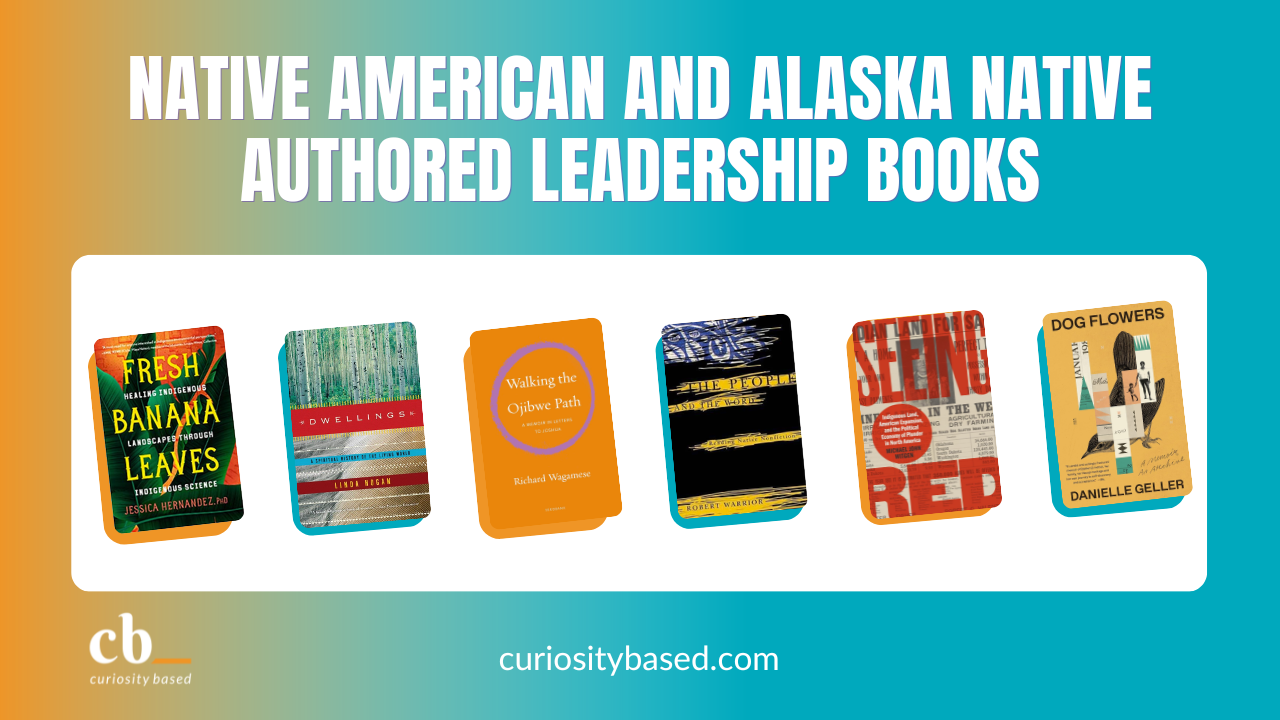
We created this list to promote leadership narratives written by people of American Indian and Alaskan Native Heritage. This list is meant to be a resource, not an official endorsement. The books are not ranked or listed in any particular order.
Recovering the Sacred: The power of naming and claiming by Winona LaDuke
Braiding Sweetgrass: Indigenous wisdom, scientific knowledge, and the teachings of plants by Robin Wall Kimmerer
The Tao of Raven: An Alaska Native Memoir by Ernestine Hayes
Black Indian: A memoir by Shonda Buchanan
Custer Died for Your Sins: An Indian manifesto by Vine deLoria Jr.
Where White Men Fear to Tread: The Autobiography of Russell Means by Russell Means and Marvin J. Means
Prison Writings: My life is my Sun Dance by Leonard Peltier
The School Days of an Indian Girl, and an Indian Teacher Among Indians by Zitkala-Sa
The Man Made of Words: Essays, stories, passages by N. Scott Momaday
Muscogee Daughter: My Sojourn to the Miss America Pageant by Susan Supernaw
Life of Black Hawk, or Ma-ka-tai-me-she-kia-kiak: Dictated by himself by Black Hawk
Our History Is the Future: Standing Rock Versus the Dakota Access Pipeline, and the Long Tradition of Indigenous Resistance by Nick Estes
Everything You Know About Indians is Wrong by Paul Chatt Smith
Code Talker: The first and only memoir of the original Navajo Code Talkers of WWII by Chester Nez
Abandon Me: Memoirs by Melissa Febos
Heart Berries by Terese Marie Mailhot
As Long As Grass Grows: The Indigenous Fight for Environmental Justice, from Colonization to Standing Rock by Dina Gilio-Whitaker
Crazy Brave: A Memoir by Joy Harjo
Gathering Moss: A Natural and Cultural History of Mosses by Robin Wall Kimmerer
God is Red: A Native View of Religion by Vine deLoria Jr.
The Heartbeat of Wounded Knee by David Treuer
The Inconvenient Indian: A Curious Account of Native People in North America by Thomas King
Lakota Woman by Mary Brave Bird
#Not Your Princess: Voices of Native American Women by Lisa Charleyboy and Mary Beth Leatherdale (editors)
The Turquoise Ledge by Leslie Silko
Men We Reaped: A Memoir by Jesmyn Ward
Dwellings: A Spiritual History of the Living World by Linda Hogan
Bad Indians: a Tribal Memoir by Deborah Miranda
Night Flying Woman: An Ojibway Narrative by Ignatia Broker
Dog Flowers: A Memoir by Danielle Geller
Portage Lake: Memories of an Ojibwe Childhood by Maude Kegg
Everything You Wanted to Know about Indians But Were Afraid to Ask by Anton Treuer
The Assassination of Hole in the Day by Anton Treuer
As We Have Always Done: Indigenous Freedom Through Radical Resistance by Leanne Betasamosake Simpson
Nooping: The Cure for White Ladies by Leanne Betasamosake Simpson
The People and the Word: Reading Native Nonfiction by Robert Warrior
Tribal Secrets: Recovering American Indian Intellectual Traditions by Robert Warrior
Like a Loaded Weapon by Robert A. Williams Jr.
Bear Island: The War at Sugar Point by Gerald Vizenor
The Third Space of Sovereignty by Kevin Bruyneel
Navajo Courts and Navajo Common Law: A Tradition of Tribal Self-Governance by Raymond D. Austin
Firsting and Lasting: Writing Indians out of Existence in New England by Jean O’Brien
X-Marks by Scott Richard Lyons
Red Skin, White Masks: Rejecting the Colonial Politics of Recognition by Glen Sean Coulthard
The Queerness of Native American Literature by Lisa Tatonetti
Speaking of Indigenous Politics: Conversations with Activists, Scholars, and Tribal Leaders by J. Kehaulani Kauanui and Robert Warrior
Standing with Standing Rock: Voices from the #NoDAPL Movement by Nick Estes and Jaskiran Dhillon
Hungry Listening: Resonant Theory for Indigenous Sound Studies by Dylan Robinson
Written by the Body: Gender Expansiveness and Indigenous Non-Cis Masculinities by Lisa Tatonetti
You Don’t Have to Say You Love Me by Sherman Alexie
Remembering Our Intimacies: Mo’olelo, Aloha ‘Aina, and Ea by Jamaica Heolimeleikalani Osario
Red Nation Rising: From Bordertown Violence to Native Liberation by Nick Estes, Melanie K. Yazzi, Jennifer Nez Denetdale, and David Correia
Wiping the War Paint off the Lens: Native American Film and Video by Beverly Singer
The People Shall Continue by Simon Ortiz
Poet Warrior: A Memoir by Joy Harjo
The Four Hills of Life: Ojibwe Wisdom by Thomas Peacock and Marlene Wisuri
The Sacred Hoop: Recovering the Feminine in American Indian Traditions by Paula Gunn Allen
Critically Sovereign: Indigenous Gender, Sexuality, and Feminist Studies by Joanne Barker
For Indigenous Eyes Only: A Decolonization Handbook by Waziyatawin and Michael Yellow Bird
Mark My Words: Native Women Mapping Our Nations by Mishuana Goeman
The Beginning and End of Race: Confronting Sexual Violence in Native America by Sarah Deer
When My Brother Was an Aztec by Natalie Diaz
A History of my Brief Body by Billy-Ray Belcourt
Starvation Mode by Elissa Washuta
The Roots of Ticasuk by Ticasuk (Emily Ivanoff Brown)
Native American DNA by Kim TallBear
Fresh Banana Leaves: Healing Indigenous Landscapes Through Indigenous Science by Jessica Hernandez, PhD
Pollution is Colonialism by Max Libioron
Making Love with the Land by Joshua Whitehead
Nulato: An Indian Life on the Yukon by Poldine Carlo
Cold River Spirits: Whispers from a Family’s Forgotten Past by Jan Harper-Haines
Two Old Women: An Alaska Legend of Betrayal, Courage and Survival by Velma Wallis
Bad Girl and the Man who Followed the Sun by Velma Wallis
Raising Ourselves: A Gwitch’in Coming of Age Story from the Yukon River by Velma Wallis
We Have Not Stopped Trembling Yet: Letters to my Filipino-Athabascan Family by E.J.R David
Qulirat Qanemcit-Ilu Kinguvarcimalriit: Stories for Future Generations by Paul John
Yuuyaraq: The Way of the Human Being by Harold Napoleon
A Yupiaq Worldview: A Pathway to Ecology and Spirit by Anagyuqaq Kawagley
Qanruyuteput IInruugut: Our Teachings Are Medicine by Alice Rearden
Yupiit Qanruyutait: Yup’ik Words of Wisdom by Ann Fienup-Riordan
Rock Piles Along the Eddy by Ishmael Hope
Blonde Indian: An Alaska Native Memoir by Ernestine Hayes
Indian Stories: Ahtna India Stories from Cantwell, Alaska by Jake Tansy
Cormorant Hunter’s Wife by Joan Naviyuk Kane
Roughly for the North by Carrie Ayagduk Ojanen
People of Kauwerak: Legends of the Northern Eskimo by William A. Oquilluk
Takes of Ticasuk: Eskimo Legends and Stories by Ticasuk Emily Ivanoff Brown
Fifty Miles from Tomorrow: A Memoir of Alaska and the Real People by William Iggiagruk Hensley
Sand Talk: How Indigenous Thinking Can Save the World by Tyson Yunkaporta
Red Paint: The Ancestral Autobiography of a Coast Salish Punk by Sasha Lapointe
Black and Blue: A Memoir of Racism and Resilience by Veronica Gorrie
Spílexm: A Weaving of Recovery, Resilience, and Resurgence by Nicola I. Campbell
Peyakow: Reclaiming Cree Dignity by Darrel McLeod
White Magic Elissa Washuta
An Indian Among Los Indígenas: A Native Travel Memoir by Ursula Pike
Carry: A Memoir of Survival on Stolen Land by Toni Jensen
Changing my expectations of myself and of others is easy and hard at the same time. It’s easy because it doesn’t require any physical change or financial investment. Yet it is hard because it demands that I challenge my own beliefs.
I’ve developed a list of what I call “reframes,” that can help to spark our thinking and re-frame our expectations. A popular reframe is changing a thought from “I have to…” to “I get to…”
Instead of seeing a task like picking up your kids from school as a burden that “you have to do,” you might think of it as an opportunity that “you get to do.” It is a way to shift our perspective, especially when we feel stuck.
We often think of things as “a glass half empty” or as “a glass half full” situations. The classic framing of an optimist would consider the glass half full.
While I’m an unapologetically optimistic person, I don’t use reframing to trick myself into thinking positively. Instead, I reframe to explore different possible interpretations for any given situation, while also acknowledging that how I feel in any given moment will be influenced by external factors beyond my control.
The glass can be half empty and half full simultaneously. There is no particular “right” interpretation, just different.
All of these reframes I offer are opportunities to practice curiosity and to ask ourselves, is there another way to understand this situation, to examine our own expectations?
Reframing reminds us of all the different, contradictory feelings and thoughts we can hold at the same time.
I’ve loosely categorized these reframes into three buckets that align with how we at CuriosityBased describe the three elements of practicing curiosity:
1) increasing self-awareness (getting curious about myself)
2) building relationships (getting curious about other people and let them get curious about me)
3) communicating clearly (listening and asking questions with curiosity)
Each reframe is a set of two to three different interpretations of the same thing, usually stated as questions, as written below. Here they are:
Increase self-awareness (Get curious about myself)
What should matter to me?/What does matter to me?
What does success look like to me?/ What does success feel like to me?
Am I not being heard?/ Am I not getting what I want?
Am I Managing my energy /Am I managing my time?
Is this a problem to solve?/Is this problem teaching me something?
Is someone judging me/Am I judging myself?
What will I achieve?/What will I learn?
Am I feeling pain?/Am I feeling change?
Do I own my possessions?/Do my possessions own me?
Am I the victim?/Am I the persecutor?
They made me feel bad/I made myself feel bad
What should do in this situation?/What could do in this situation?/What would I do in this situation?
Building relationships (get curious about other people and let them get curious about me)
Is someone judging me?/Am I judging someone?
Am I waiting for an invitation?/Should I extend an invitation?
Are they asking me for something?/Are they offering me something?
Was I wrong?/Was I in the wrong?
Do I feel superior to…?/Do I feel inferior to…?
Does their behavior reflect disrespect?/ Does their behavior reflect a lack of respect?
Am I anti-(fill in the blank)? Am I pro-(fill in the blank)
Am I Code switching? Am I strategically adapting?
You make me whole/I am already whole
Was their intention good?/ Was their intention bad?/ What was their intention?
Is someone making assumptions about me?/ Am I making an assumption about them?
Communicate clearly (listening and asking questions with curiosity)
Do we have different perspectives?/ Do we have different approaches?
Do we have different values?/ Do we have different priorities?
What should we do?/ What could we do? What would we do?
Are we thinking of the present in this situation? Are we thinking of the future in this situation? Are we thinking of the past in this situation?
Are we talking about a need?/ Are we talking about a want?
What does success look like to us? What does success feel like to us?
Which of these reframes resonate with you? Do you have some reframes you’d like to share?
Simple, inexpensive vacation tips to help you rest and reconnect
My friends Joyce Zhou (left) and Louisa Lambert (right) with me in the center, near the Edmonds waterfront during my “Northern” tour.
When I decided to leave my executive job last year, I had to make a lot of personal budget cuts so I could self-fund my company.
These constraints forced me to be more creative and scrappy. “Vacations” used to mean trips far from here. I would use this time to travel to Vietnam, Burma, England, the East Coast, the mid-West or at least California. I now “vacation” by reconnecting with friends who live 10, 20, at most 40 miles away.
Through these trips, I’ve deepened my appreciation for the natural beauty of local parks and waterfronts, as well as for the familiarity of long-time friendships.
I’ve put together a list of easy, low-cost hyperlocal travel tips, including guest-room hopping (i.e., upscale couch surfing). I hope they help you both rest and reconnect with yourself and with your friends.
Don’t over schedule/overbook My natural impulse is to try to do and see as many things with as many people as possible. I constantly have to remind myself that running to meet back-to-back visits is stressful. Also, leaving open space on my schedule allows for spontaneous activities. Recently, I went on a walk with a friend and then she asked me if I was available for dinner that night. And I was free!
Housesit for friends I recently house sat for a friend in her charming Columbia City home. It was a great way to change scenery for me, and I used it as an opportunity to visit with many of my friends in the area. She thought I was doing her a favor by watering her plants on a daily basis but I really felt like she was doing me the favor.
Invite yourself over for a meal or coffee I contact friends who live in the area where I’ll be vacationing and I invite myself over. People often thank me for initiating and breaking us out of the cycle of saying, “we should get together sometime.” For more, read my essay on “Being a bit rude can deepen relationships.”
Local sleepovers and guest room surfing My friend and website designer, Stacy Nguyen, and I have an annual summertime tradition of me coming over for a sleepover at her place in Lynnwood. I have since added more cities on this “Northern tour” of Washington by visiting friends in Edmonds and Marysville. I also do a 5-day long West Seattle trip so I can easily visit my friends out there. Fortunately, many of my friends have guest rooms, so I don’t have to couch surf. Bonus: Sleepovers allow for late night conversations.
Take walks I often suggest going for walks at local parks with friends whose neighborhood I’m visiting. It’s a free and healthy alternative to Happy Hour. I just discovered how delightful the illustrated Seattle Walk Report guides are.
My hyperlocal vacations usually involve me asking for friends to pick me up or drop me off at the bus stop or at another friends’ place, to plan a meal, to host me. These are not just people I’m visiting, they are helping make my vacation possible.
Let me know which tips you found helpful! And please share with me your own tips.
We created this list to promote leadership narratives written by authors with disabilities. This list is meant to be a resource, not an official endorsement. The books are not ranked or listed in any particular order.
Disarm Your Limits: The flight formula to lift you to success and propel you to the next horizon by Jessica Cox
The White Album by Joan Didion
Chef Interrupted by Trevis Gleason
Fall Down, Laughing: How Squiggy caught multiple sclerosis and didn’t tell nobody by David Lander
Speedbumps: Flooring it through Hollywood by Teri Garr
And Now We Are Going to Have a Party: Liner Notes to a Writer’s Early Life by Nicola Griffith
To Know As We Are Known: Education as Spiritual Journey by Parker Palmer
The World I Live In by Helen Keller
Don’t Worry, He Won’t Get Far on Foot by John Callahan
Haben: The Deafblind Woman who Conquered Harvard Law by Haben Girma
Exile and Pride: Disability, Queerness, and Liberation by Eli Clare
Wishful Drinking by Carrie Fisher
House of Prayer No. 2 by Mark Richard
Resistance and Hope: Essays by Disabled People edited by Alice Wong
Marbles: Mania, Depression Michelangelo, and Me by Ellen Forney
Strangers Assume My Girlfriend Is My Nurse by Shane Burcaw
I Am Schizophrenic: Poetry from a Beautiful Brain by Kerenza Ryan
Apocalyptic Best Practices: A Unique approach to fear and change by Elisebeth VanderWeil
You Don’t Have to Say You Love Me by Sherman Alexie
Being Huemann: An Unrepentant Memoir of a Disability Rights Activist by Judith E. Heumann
The Pretty One: On life, pop culture, disability, and other reasons to fall in love with me by Keah Brown
Sitting Pretty: The View from My Ordinary Resilient Diabled Body by Rebekah Taussig
Disability Visibility: First-Person Stories from the Twenty-First Century by Alice Wong
Nothing About Us Without Us: Disability Oppression and Empowerment by James I. Charlton
I Am Not a Label by Cerrie Burnell
Limitless: The Power of Hope and Resilience to Overcome Circumstances by Mallory Weggemann
Care Work: Dreaming Disability Justice by Leah Lakshmi Piepzna-Samarasinha
Life in the Mind Interrupted: Essays on Mental Health and Disability in Higher Education by Katie Rose Guest Pryal
Rolling Warrior: The Incredible, Sometimes Awkward, True Story of a Rebel Girl on Wheels Who Helped Spark a Revolution by Judith Heumann
The Disability Experience: Working Toward Belonging by Hannalora Leavitt
When the Chant Comes by Kay Ulanday Barrett
The Story of My Life by Helen Keller
Look Me in the Eye: My Life with Asperger’s by John Elder Robison
Be Different by John Elder Robison
Switched On: A Memoir of Brain Change and Emotional Awakening by John Elder Robison
Moving Violations: Warzones, Wheelchairs, and Declarations of Independence by John Hockenberry
Disfigured: On Fairy Tales, Disability and Making Space by Amanda Leduc
Thinking in Pictures: My Life with Autism byTemple Grandin
Calling all Minds: How to Think and Create Like an Inventor by Temple Grandin
The Way I See It: A Personal Look at Autism and Asperger’s by Temple Grandin
Unwritten Rules of Social Relationships: Decoding social mysteries through autism’s unique perspectives by Temple Grandin
Golem Girl by Riva Lehrer
Find Another Dream by Maysoon Zayid
Too Late to Die Young: Nearly True Tales from a Life by Harriet McBryde Johnson
If at Birth You Don’t Succeed: My Adventures with Disaster and Destiny by Zach Anner
Fading Scars: My Queer Disability History by Corbett O’Toole
Extraordinary Bodies: Figuring Physical Disability in American Culture and Literature by Rosemarie Garland-Thomson
Staring: How We Look by Rosemarie Garland-Thomson
Elegy for a Disease: A Personal and Cultural History of Polio by Anne Finger
Waist-High in the World: A Life Among the Nondisabled by Nancy Mairs
In the Province of God by Kenny Fries
The History of My Shoes and the Evolution of Darwin’s Theory by Kenny Fries
Body, Remember: A Memoir by Kenny Fries
Mad at School: Rhetorics of Mental Disability and Academic Life by Margaret Price
The Obsessive Joy of Autism by Julia Bascom
Blind: A Memoir by Belo Cipriani
Count Us In: Growing Up with Down Syndrome by Jason Kingley and Mitchell Levitz
Holding Change: The Way of Emergent Strategy Facilitation and Mediation by Adrienne Maree Brown
Pleasure Activism: The Politics of Feeling Good by Adrienne Maree Brown
Brilliant Imperfection: Grappling with Cure by Eli Clare
Feminist Queer Crip by Alison Kafer
ASL Saved My Life…Until it Didn’t by Jenni Kleinman Berebitsky
We Are Never Meeting in Real Life by Samantha Irby
Disabled Leadership by Dr. Tom A. Wiggins
Deaf Utopia: A Memoir – and a Love Letter to a Way of Life coauthored by Nyle DiMarco
Demystifying Disability: What to Know, What to Say, and How to be an Ally by Emily Ladau
Year of the Tiger: An Activist’s Life by Alice Wong
What Doesn’t Kill You: A Life with Chronic Illness – Lessons from a Body in Revolt by Tessa Miller
A Face for Picasso: Coming of Age with Crouzon Syndrome by Ariel Henley
Just Human: The Quest for Disability Wisdom, Respect, and Inclusion by Arielle Silverman, PhD
Different, Not Less: A neurodivergent’s guide to embracing your true self and finding your happily ever after by Cholé Hayden
How I See It: A Personal and Historical View of Disability by H Penny Mishkin
Successful to Burnt Out: Experiences of Women on the Autism Spectrum by Karletta Abianac
Adult ADHD: How to Succeed as a Hunter in a Farmer’s World by Thom Hartmann
More the Same than Different: What I Wish People Knew About Respecting and Including People with Disabilities by Lorraine Cannistra
Not a Poster Child: Living Well with a Disability – A Memoir by Francine Falk-Allen
My Body is Not a Prayer Request: Disability Justice in the Church by Amy Kenny
The ADHD Advantage: What You Thought was a Diagnosis May Be Your Greatest Strength by Dale Archer, MD
Black, Blind, & In Charge: A Story of Visionary Leadership and Overconing Adversity by David A. Paterson
Unleash Different: Achieving Business Success Through Disability by Rich Donovan
Crazy, Who Me?: My Journey as a Leader Overcoming Depression by John Panigas
Learn From Your Cringe-Worthy Experiences, And Share Your Lessons
KUOW reporter Bill Radke, Julie Pham, and author Monica Guzman at a live, public talk on July 7, 2022 at McCaw Hall. This is an example of the public talk, but not the one I described in the essay.
There I was, presenting to a virtual audience of 100 people about my work, something I had talked about dozens of times before. I was excited. It was going to be my biggest audience yet.
Five minutes into my talk, an audience member asked why I was presenting on a topic that wasn’t relevant to the event’s theme. I explained. She pressed. I became defensive. Messages started to flow into the chat, criticizing the relevancy of my topic and flaws they perceived in my work.
An audience member said my presentation was a waste of his time. I worked hard to maintain my composure. I thanked him and acknowledged that my work wasn’t going to be relevant and fit everyone’s needs. I tried to move into the planned activity and get people into breakout rooms. I said I wanted to give people time to process. In reality, I needed a break. Chat messages questioning my motives kept pouring in.
Finally, the session ended. I tried to hold on as long as I could. Then I turned off my camera and cried. I cried out of disappointment, shame, frustration and resentment. And then I asked myself, “What did I learn?”
I don’t regret what happened. If I’d been warned ahead of time about what would happen at that event, I would have still done it. When I share the story, some people try to reason what should have been done to prevent the negative reaction. I have to explain that I’m grateful for the experience.
I learned more in that 75 minute session than I had in the dozens of times prior I presented on the topic. I wouldn’t change a single thing. Pain is a teacher.
Whenever something like this happens, I process the pain by learning from it.
So, I talked about the experience a lot, with my team, with friends, acquaintances, and people I volunteer with. I even talked about it with clients and potential clients.
When I share my pain, others learn too. I learn from their reactions and observations. I want to know their perspective. The learning spreads. And I model what it means to be willing to learn from my mistakes.
Sharing this experience has also resulted in something surprising. Many shared their own related painful, shameful experiences. They implicitly said, “I’m going to let my pain be your teacher too.” They reciprocated. Our trust deepened.
We all have difficult, cringe-worthy, experiences we don’t want to talk about.
What can happen when you share what you learned from the pain?
Others can learn from you, and you can learn from them. I’ve been doing this all my life.
It’s what allowed me to make rapid career changes. I went from being an academic to running a Vietnamese newspaper, to tech marketing, to nonprofit leadership, and then starting my own company last year.
My life has been a series of painful experiences that I rapidly learned from. My parents are an inspiration for me. As Vietnamese refugees, I watched them navigate America in their limited English. They had no choice but to get out and try and they knew that it wouldn’t be perfect, and they did it anyway. Over and over again.
When I was a grad student, I had to learn Vietnamese quickly. I didn’t grow up speaking it, so I had to learn as an adult. Within two years, I was volunteering to present in Vietnamese to Vietnamese researchers. I had a very heavy American accent and I’m sure that there are times when I made many grammatical mistakes. And I did it anyway.
I got my real-life MBA by returning to Seattle and running my family ‘s Vietnamese language newspaper. One of the things I had to learn was how to sell. So, I’d get on these calls with ad agencies, and they would ask me all of these questions and I just had to say, “I don’t know, I don’t know.” I remember after one particularly hard call, I told myself, “You are bad at this now, but you’re going to get really good in two years.” And I did get better.
I decided to leave the best job I ever had in the middle of the pandemic to start my own company called CuriosityBased. With my own team, I’m constantly taking risks to push our own learning. Here are two examples:
Whenever we are about to go into a workshop with new exercises, I remind the team, “Even though we’ve rehearsed this a lot, we’re going to make some mistakes. And when they happen, we just need to roll with it. We will learn.”
When I created my first digital course, we opted for speed over quality. We created a course in two weeks, which usually takes three months to do. Some early testers criticized the video quality as unprofessional. And yet I put it out in the world because I wanted to start the learning process. I wanted to hear thoughts and reactions.
One of the things that I’m most proud of is that I share what I learn with others and in doing so, I model learning in public.
People often ask, “What am I going to achieve?”
I ask, “What am I going to learn?”
Some people are motivated by the impact that they’re going to have on the world. My motivations are much more selfish. I’m motivated by what I’m going to learn and sharing what I learned with others in hopes that they will share with me their perspectives and what they’ve learned. I’m motivated to create a space for people to practice curiosity.
I want to return to the event I described earlier. Here’s some of my lessons:
I didn’t manage the audience’s expectations.
I didn’t think enough about what the audience wanted to learn
I was warned before the talk and brushed off other people’s concerns. I was naïve.
When confronted with questions about the relevancy of my topic, I got defensive.
I feared engaging in conflict in front of a live audience, so I retreated to the agenda
All of these mistakes have since made me a much better presenter and facilitator.
It’s not just about getting better and changing; it’s about getting clearer.
I learned to lean into what I do and what I don’t do. From the pain came clarity.
Not only did I learn what I can change, I also learned what I’m not willing to change because it’s core to who I am. There are some things I won’t apologize for.
And remember, pain is a teacher. You don’t have to experience learning alone.
The author sits with two leaders who constantly inspire her with how they practice curiosity: Robert Britten (left), executive director of Equity, Diversity, and Inclusion (EDI) at Lake Washington Institute of Technology, and Dr. Suzy Ames, president of Peninsula College (right).
I liken practicing curiosity to meditation – it looks easy, but it’s really hard. There are some days it’s easier to practice curiosity than other days. And yet when leaders practice curiosity, we can set the conditions for creativity, innovation, resourcefulness, resilience, and empathy for our teams.
I’ve worked in and with companies that ranged from three employees to more than 100,000. Something that any size company has in common is that culture is set from the top. Those in power determine what’s acceptable behavior. Leaders, keep in mind that your team members are watching what you do. They will follow what you do, not what you say you do.
Here are some tips on how leaders can practice curiosity themselves, which will have ripple effects in your organization. These tips are based on mistakes I have made, things I’ve learned in meetings and in everyday interactions.
1. Speak last in meetings
Often a leader’s opinion can have outsized impact, and can influence what other people feel comfortable sharing. I often declare that I’m going to give my opinion last, so that others can share theirs first, especially when we are brainstorming or giving feedback.
2. Let other people facilitate team meetings
There is an expectation that the team leader always has to run the meetings. By accident, I flipped this my first year in business because someone on my team wanted to practice facilitation. I said that she could set the agenda and facilitate our weekly team syncs. Having someone else set the agenda will encourage them to talk to other people on the team to find out what should be discussed. And they get an opportunity to shine. There are actually many meetings I don’t facilitate at all, when I don’t have a discussion topic to lead. I love this! Another approach is rotating the facilitator role, especially among those who might not be in leadership positions.
3. Admit when you’re wrong
When I make a bad decision or mistake, I own up to it. I had to do that recently because a team member wanted to institute a new project management tool. Because I didn’t want to learn a new tech tool, I said I wouldn’t use it but everyone else could. Five months later, only half the team was using the tool. I realized my resistance undermined my colleague’s efforts to streamline work processes. I apologized to her and I committed to using the tool. I could tell she was appreciative that I admitted I was wrong.
4. Show what you don’t know
Leaders don’t have to pretend to have all the answers because, in reality, we don’t. I often get asked, “What should we do?” and I reply, “I’m not sure. What do you think we should do?” Early on in my career, I thought I needed to have all the answers. I was so relieved when a boss modeled for me he didn’t always know and he would ask me to suggest solutions. Asking clarifying questions is also a way for leaders to model that it’s okay not to know the answers. I often ask “Can you give me an example of that?” “What does that word mean?” When you think others don’t know a concept, even if you do, ask for an explanation so that it benefits everyone.
5. Be aware of the possible impact of your questions
Power dynamics means that sometimes people see questions from leaders as directives. A friend of mine told me she serves on a nonprofit board. She described when she asked the executive director (ED) of that nonprofit some questions, that ED responded defensively. I pointed out to her that the ED may have interpreted the question as an order because she as a board member is technically her boss. It can be helpful to preface a question with, “I’m asking this to understand, not because I want you to change anything or do something different.”
6. Make time to care
I talked about this in an earlier essay about managing my energy vs. my time. At the beginning of every meeting, our team members share our personal highs and lows. We get to be curious about others and let them be curious about us; this reciprocity is critical to relationship building. I’ve shared my struggles with maintaining a prediabetic diet, how I miss my late father, and other things that are pulling me down. Studies even show that teams that share their personal lows are able to be more honest with one another when it comes to the work.
7. Ask questions when you’re upset
Feeling anger, resentment, fear, annoyance can become curiosity killers. I have to be extra intentional about asking questions when I’ve got those feelings, because my gut reaction is to assume bad intentions. A friend told me that he was upset with someone on his team for not following his directions. He felt deeply disrespected. I suggested he ask that colleague, “What’s your process for your work?” to understand how they approach work. Then follow up with, “What do you think about the process I’m asking you to do?” Curiosity can be the antidote to assuming bad intentions just perpetuates.
I hope you’ll try some of these tips. Let me know how it goes.
My 2021 Valentine Card concept. To capture the spirit of 2020, the theme was “silver linings.” The front of the card is a Zoom frame and the right square is black. I personalized each card by writing the recipient’s name in with white ink. The inside had the design of a Zoom chat window with a standard message sharing some silver linings I experienced in 2020. Below the fold was space for me to handwrite a personal message. I sent the card in a white envelope lined in silver, to add to the “silver lining” theme.
I get energy from interacting with other people. I organize social gatherings. I love meeting new people. In many ways, I’m a classic extrovert. When the quarantine started, I wondered how I would survive.
My social schedule went from 4-8 in-person meetings on any given day to none. For the first 5 month, because I lived alone, I didn’t see anyone, not my family, not my boyfriend through June. What surprised me was how some of my more introverted friends went stir crazy from the lack of human interaction and I was actually doing pretty okay.
I thought I’d be the one feeling super isolated. It has been the opposite. I do acknowledge that my lowest-scoring Love Language is touch, so I don’t actually need to physically be with people to feel connected to them.
While the rate of making new relationships has dropped a lot, I have deepened existing relationships exponentially.
There are many friends I would only see 1-2x a year who I now talk to regularly on the phone.
Although I appreciate large gatherings to increase the chances of meeting a stranger who might become a lifelong friend, my favorite form of connecting is 1:1 conversations, which I am still able to have virtually. And because I don’t have to worry about commute time, I’m actually able to connect socially with more people 1:1 on any given day than ever before.
So here are some tips for deepening relationships remotely. The quarantine amplified their impact.
Text message. I send a text to at least 5 acquaintances/casual friends a week. Send a text to say “happy birthday” or a “checking in…how are you?” I use Facebook to get reminders of people’s birthdays and updates on their lives. When I see a reminder, I check to see if I have that person’s phone number and if I do, I text message a happy birthday wish or a congratulations because it is so much more personal. It has sometimes led to long text exchange or even phone conversations to catch up. Most of the time, it just reminds people, “Someone is thinking about you.”
Email update. Once a year, I send out a long email update that I personalize with mail merge. My rule of thumb is if I can’t refer to a specific detail about that person’s life or the last time we interacted, I shouldn’t be emailing them. And to be real in the email, I include the happy and the hard stuff. I will usually include a small request, like check out a free workshop I’m piloting or an essay I just wrote to give me feedback. It’s my way of asking people to be part of my journey. I have gotten detailed responses from people, telling me about their lives.
Phone calls. I have regular weekly, monthly, and quarterly phone calls with friends now. I often take calls while I’m stretching or walking. I am on video conferencing so much that I love an old fashioned phone call and I know others often appreciate it too. I’ve said to people, “Hey, want to make this a regular thing?” Many are also ad hoc phone calls. There are some days I can reconnect with 4-7 different friends and acquaintances this way. I have one friend who I only met 2-3 times over two years before the quarantine and now we talk once a month. Another friend refers to our now monthly calls as “therapy.”
Send cards when people don’t expect them. Most people send their cards out in December. Since I was in high school, I have sent out Valentine cards because most adults don’t get Valentines. I express appreciation for friends who supported me during the previous year. I design each year’s card to recap the theme of the previous year and I’m particularly proud of this year’s concept. I still write at least 3-5 lines of a personal message in each card. Since I started using EE Printing ten years ago, I can send out about a 100 a year, limited by my ability to write personal messages. These have been great ways to reconnect with people.
I heard a great interview with Morra Aarons-Mele of Women Online by Guy Raz with more tips.
We created this list to promote leadership narratives written by the Hispanic/Latino/Latinx community. This list is meant to be a resource, not an official endorsement. The books are not ranked or listed in any particular order.
The Gloria Anzaldúa Reader (Latin America Otherwise) by Gloria Anzaldúa
Borderlands / La Frontera: The New Mestiza by Gloria Anzaldúa
Almost a Woman by Esmeralda Santiago
In the Time of the Butterflies by Julie Alvarez
Farmworker’s Daughter: Growing up Mexican American by Rose Castillo Guilbault
The Power of Latino Leadership: Culture, Inclusion, and Contribution by Juana Bordas
When I was Puerto Rican by Esmeralda Santiago
Salsa, Soul, and Spirit: Leadership for a Multicultural Age by Juana Bordas
Autentíco: The definitive guide to Latino Career Success by Robert Rodriguez
Brown Church: Five Centuries of Latina/o Social Justice, Theology, and Identity by Robert Chao Romero
Hermanas: Deepening Our Identity and Growing Our Influence by Natalia Kohn Rivera
Isabel’s Hand-Me-Down Dreams by Isabel Lopez
Leaving Little Havana: A Memoir of Miami’s Cuban Ghetto by Cecilia M. Fernandez
Gmorning, Gnight!: Little Pep Talks for Me & You by Lin-Manuel Miranda
[Un]framing the “Bad Woman”:Sor Juana, Malinche, Coylxauhqui, and other rebels with a cause by Alicia Gaspar de Alba
Always Running: La Vida Loca – Gang Days in L.A. by Luis J. Rodriguez
Cruz: A Cross-Border Memoir by Jean Guerrero
Dear America: Notes of an Undocumented Citizen by Jose Antonio Vargas
Undocumented: A Dominican Boy’s Odyssey from a Homeless Shelter to the Ivy League by Dan-el Padilla Peralta
The Far Away Brothers: Two Young Migrants and the Making of an American Life by Lauren Markham
My Beloved World by Sonia Sotomayor
Latina Empowerment Through Leadership: Mindful Stories from Inspiring Women by Catherine Munos Garces, Monica Rivera, et al
An Organizer’s Tale by Cesar Chavez
My Time to Speak: Reclaiming Ancestry and Confronting Race by Ilia Calederon
Rita Moreno: A Memoir by Rita Moreno
American Poison: How Racial Hostility Destroyed Our Promise by Eduardo Porter
My (Underground) American Dream: My True Story as an Undocumented Immigrant Who Became a Wall Street Executive by Julissa Arce
The Virtuous Circle: Restore Your Confidence, Bounce Back, and Emerge Stronger by Gaby Natale
Self Made: Become Empowered, Self Reliant and Rich in Every Way by Nely Galán
Latino Leaders Speak: Personal Stories of Struggle and Triumph edited by Micky Ibarra and Maria Pérez-Brown
Leapfrog: The New Revolution for Women Entrepreneurs by Nathalie Molina Niño
The Soul of a Woman by Isabel Allende
In the Dream House: A Memoir by Carmen Maria Machado
Once I was You: A Memoir of Love and Hate in a Torn America by María Hinojosa
More than Ready: Be Strong and Be You…and Other Lessons for Women of Color on the Rise by Cecilia Muñoz
Perfectly You: Embracing the Power of Being Real by Mariana Atencio
Take Charge of Your Brand: Quick and Simple Techniques to Help You Own and Manage Your Personal Brand for Professional and Personal Success by Guisselle Nuñez
In the Country We Love: My Family Divided by Diane Guerrero
Frida by Barbara Mujica
Finding Latinx: In Search of the Voices Redefining Latino Identity by Paolo Ramos
The Undocumented Americans by Karla Conejo Villavicenci
AOC: The Fearless Rise and Powerful Resonance of Alexandria Ocasio-Cortes by Lynda Lopez
Latinx: The New Force in American Politics by Ed Morales
Mexican Enough: My Life Between the Borderlines by Stephanie Elizondo Griest
Being Brown: Sonia Sotomayer and the Latino Question by Lázaro Lima
An Unlikely Journey: Waking up from My American Dream by Julián Castro
Hispanic Women Seeking Higher Leadership Roles in Business by Sylvia C. Motta, PhD
Wild Tongues Can’t be Tamed: 15 Voices from the Latinx Diaspora edited by Saraciea J. Fennell
The Leadership Shift: The Strategic Positioning of Latino Business Leaders by Dr. Nilda Perez
¡Rise up, Mi Gente! A Roadmap for Latinos to Achieve Success in Corporate America by Jesse A Mejia
Inventing Latinos: A New Story of American Racism by Laura E. Gómez
The 5 Disciplines of Inclusive Leaders: Unleashing the Power of Us All coauthored by Andrés Tapia
When We Make It by Elisabeth Velasquez
I am Not Your Perfect Mexican Daughter by Erika L. Sanchéz
Latino Talent: Effective Strategies to Recruit, Retain, and Develop Hispanic Professionals by Robert Rodriguez
Silencing Gender, Age, Ethnicity, and Cultural Biases in Leadership by Camilla A. Montoya, Julieta V. García. et al.
Inclusion Revolution: The Essential Guide to Dismantling Racial Inequity in the Workplace by Daisy Auger-Dominguez
Latinas Rising Up in HR: Inspirational Stories of Human Resources Professional Leading, Thriving, and Breaking Barriers by Priscilla Guasso
The Secret Principles of Genius: The Key to Unlocking Your Hidden Genius Potential by I.C. Robledo
I Got This: To Gold and Beyond by Lauren Hernandez
The Engine of America: The Secrets to Small Business Success from Entrepreneurs Who Have Made It by Jane Delgado
The Latina Guide to Health: Consejos and Caring Answers by Jane Delgado
Field Mice: Memoirs of a Migrant Child by Emma Gonzalez
Los Amos del Mundo Están al Acecho by Cristina Martin Jimenez
Growing American Roots by Bob Menendez
Dream in Color: How the Sánchez Sisters are Making History in Congress by Linda Sánchez
Healing Journey: Surviving Domestic Violence by Lupe Valdez
La Nueva California: Latinos from Pioneers to Post-Millennials by David Hayes-Bautista
El Cinco de Mayo: An American Tradition by David Hayes-Bautista
Latinas in Aviation by Jacqueline S. Ruiz
Becoming Dr. Q: My Journey from a Migrant Farm Worker to brain Surgeon by Alfredo Quinones-Hinjosa
The Universal Tone: Bringing My Story to Light by Carlos Santana
Take a Stand: Lessons from Rebels by Jorge Ramos
The Injustice Never Leaves You: Anti-Mexican Violence in Texas by Monica Muñoz Martinez
Powerhouse Principles: The Ultimate Blueprint for Real Estate Success in an Ever-Changing Market by Jorge Perez
The Buena Salud Guide to Understanding Depression and Enjoying Life by Jane Delgado
Leadership Lessons of the White House Fellows: Learn How to Inspire Others, Achieve Greatness , and Find Success in Any Organization by Charles P. Garcia
Persevere with Power: What Heaven Starts, Hell Cannot Stop by Samuel Rodriguez
In Defense of Our America: The Fight for Civil Liberties in the Age of Terror by Anthony D. Romero
One Vote Away: How a Single Supreme Court Seat Can Change History by Ted Cruz
Still Dreaming: My Journey from the Barrio to Capitol Hill by Luis Gutiérrez
An American Son: A Memoir by Marco Rubio
The Undocumented Americans by Karla Cornejo Villavicencio
A House of My Own: Stories from My Life by Sandra Cisneros
Spirit Run: A 6000 Mile Marathon Through America’s Stolen Land by Noe Alvarez
Dirty Girls Social Club by Alisa Valdes-Rodriguez
Woven in Moonlight by Isabel Ibañez
The Latino Advantage in the Workplace by Mariela Dabbah and Arturo Poiré
Dream Big by Deborah Rosado Shaw
Youth, Identity, Power: The Chicano Movement by Carlos Munoz Jr.
Mean by Myriam Gurba
Presumed Incompetent: The Intersections of Race and Class for Women in Academia by Gabriella Gutiérrez y Muhs, Yolanda Flores Niemann, and Carmen G. González
Enrique’s Journey: The Story of a Boy’s Dangerous Odyssey to Reunite with his Mother by Sonia Nazarrio
A Passion for Politics (Mission Bells) by Anita Perez Ferguson
Latinos in American Society: Families and Communities in Transition by Dr. Ruth Enid Zambrana
Journey to the Future: A Roadmap for Success for Youth by Ltc. Consuelo Castillo Kickbusch
Homeless my Choice by Roy Juarez Jr.
The Story of Latinos and Education in American History by Dr. Abdín Noboa-Ríos
A Long Petal of the Sea by Isabel Allende
The Deepest Roots: Finding Food and Community on a Pacific Northwest Island by Kathleen Alcalá
Más Allá de la Justicia by Maria de lourdes Victoria
The Likeability Trap: How to Break Free and Succeed as You Are by Alicia Menendez
Ready, Set, Manifest!: A Handbook for the In-betweens and Leaps in Life by Debbie Lacey
Hurdles in the Dark by Elvira K. Gonzalez
In the Shadow of the Mountain: A Memoir of Courage by Silvia Vasquez-Lavado
Through the Dark by Yolanda Nava
Thriving in the Fight: A Survival Manual for Latinas on the Front Lines of Change by Denise Padin Collazo
Justice & Space Matter in a Strong, Unified Latino Community by Kathy Bussert-Web, Maria Eugenia Diaz, Krystal A Yanez
Breaking Ground and Barriers: Hispanic Women Developing Effective Leadership by Gloria Bonilla-Santiago, Ph.D.
Latinization and the Latino Leader: How to Value, Develop, and Advance Latino Professionals by Cristina Benitez & Marlene Gonzalez
Latino and Latina Leaders of the 21st Century: Ordinary Beginnings, Extraordinary Outcomes byKay (Kayla) S. Garcia
Latina Empowerment Through Leadership: Mindful Stories from Inspiring Women by Catherine Munoz-Garces, Monica Rivera, Lizza Monet Morales, Celia Garcia, Veronica Corona, Maggie Antillon Mathews, Roxana Damas, and Jennifer Ibarra
The More or Less Definitive Guide to Self Care by Anna Borges
Act Like a Leader, Think Like a Leader by Hermina Ibarra
You Don’t Have to Like Me: Essays on Growing Up, Speaking Out, and Finding Feminism by Alida Nugent
We created this list to promote leadership narratives written by those who identify as LGBTQ+. This list is meant to be a resource, not an official endorsement. The books are not ranked or listed in any particular order.
Entrepreneurial You: Monetize Your Expertise, Create Multiple Income Streams, and Thrive by Dorie Clark
Seriously…I’m Kidding by Ellen Degeneres
Shut Up, I’m Talking!: Coming Out in Hollywood and Making It to the Middle by Jason Stuart
All In: An Autobiography by Billie Jean King
An Archive of Hope: Harvey Milk’s Speeches and Writings by Harvey Milk
Rainbow Warrior: My Life in Color by Gilbert Baker
The Normal Heart by Larry Kramer
Freddie Mercury: A Life, In His Own Words by Freddie Mercury
GuRu by RuPaul
The Rainbow Comes and Goes: A Mother and Son on Life, Love, and Loss by Anderson Cooper & his mom Gloria Vanderbilt
Redefining Realness: My Path to Womanhood, Identity, Love & So Much More by Janet Mock
Untamed by Glennon Doyle
Punch Me Up to the Gods: A Memoir by Brian Broome
Leaving Isn’t the Hardest Thing: Essays by Lauren Hough
Pride Leadership: Strategies for the LGBTQ+ Leader to be the King or Queen of Their Jungle by Steven Yacovelli
Fit to Serve: Reflections on a Secret Life, Private Struggle, and Public Battle to Become the First Openly Gay U.S. Ambassador by James C. Hormel & Erin Martin
Sister Outsider: Essays and Speeches by Audre Lorde
In Defense of Our America: The Fight for Civil Liberties in the Age of Terror by Anthony D. Romero
Beautiful on the Outside: A Memoir by Adam Rippon
Tim Cook: The Genius Who Took Apple to the Next Level by Leander Kahney
The Path Forward: Rethinking Federal Marijuana Policy by Rep. Earl Blumenauer and Rep. Jared Polis
Forever Young: The Story of Troye Sivan by Alana Wulff
The Man Without a Face: The Unlikely Rise of Vladimir Putin by Masha Gessen
Surviving Autocracy by Masha Gessen
Raf Simons by Sunny Chanday
Hunger: A Memoir of (My) Body by Roxane Gay
Everybody’s Got Something by Robin Roberts & Veronica Chambers
Dear White People by Justin Simien
Michael Kors by Sunny Chanday
This is the Fire: What I say to My Friends About Racism by Don Lemon
Binge by Tyler Oakley
Tom Ford by Tom Ford
On the Other Side of Freedom: The Case for Hope by DeRay Mckesson
Blood, Bones, & Butter: The Inadvertent Education of a Reluctant Chef by Gabrielle Hamilton
White Girls by Hilton Als
Oh Myyy!: There Goes the Internet by George Takei
They Called Us Enemy: Expanded Edition by George Takei
The 9 Steps to Financial Freedom: Practical and Spiritual Steps to You Can Stop Worrying by Suze Orman
Zero to One: Notes on Startups, or How to Build the Future by Peter Thiel & Blake Masters
Trust: America’s Best Chance by Pete Buttigieg
Shortest Way Home: One Mayor’s Challenge and a Model for America’s Future by Pete Buttigieg
Nothing Personal by James Baldwin
Revelations: The Autobiography of Alvin Ailey by Alvin Ailey & A. Peter Bailey
In the Shadow of the Eagle: A Tribal Representative in Maine by Donna M. Loring
Me by Ricky Martin
And a Voice to Sing With: A Memoir by Joan Baez
The Holly Woodlawn Story: A Low Life in High Heels by Holly Woodlawn
The Gloria Anzaldúa Reader (Latin America Otherwise) by Gloria Anzaldúa
I’m the One That I Want by Margaret Cho
WOLFPACK: How to Come Together, Unleash Our Power, and Change the Game by Abby Wambach
A Room of One’s Own by Virginia Woolf
Emergent Strategy: Shaping Change, Changing Worlds edited by Adrienne Maree Brown
We Will Not Cancel Us edited by Adrienne Maree Brown
Love and Rage by Lama Rod Owens
I Hope We Choose Love: A Trans Girl’s Notes from the End of the World by Kai Cheng Thom
Martina by Martina Navratilova
Pleasure Activism: The Politics of Feeling Good edited by Adrienne Maree Brown
Octavia’s Brood: Science Fiction from Social Justice Movements edited by Adrienne Maree Brown
How to Get Stupid White Men Out of Office: The Anti-Politics, Un-Boring Guide to Power edited by Adrienne Maree Brown
The Children of Harvey Milk: How LGBTQ Politicians Changed the World by Andrew Reynolds
Representation Matters: How Victory Fund, Victory Institute, and LGBT Leaders are Transforming America by Karen Ocamb
Serving in Silence by Margarethe Cammermeyer
Frank: A Life in Politics from the Great Society to Same-Sex Marriage by Barney Frank
Pressure is a Privilege: Lessons I’ve Learned from Life and the Battle of the Sexes by Billie Jean King
Gunn’s Golden Rules: Life’s Little Lessons for Making it Work by Tim Gunn
Queer Eye: Love Yourself, Love Your Life by Antoni Porowski, Tan France, Jonathan Van Ness, Bobby Berk & Karamo Brown
My Story of Embracing Purpose, Healing, and Hope by Karamo Brown
Naturally Tan by Tan France
Over The Top by Jonathan Van Ness
71. One life by Megan Rapinoe & Emma Brockes
It’s About Damn Time by Arlan Hamilton
Inclusion: Diversity, the New Workplace, & The Will to Change by Jennifer Brown
Sissy: A Coming-of-Gender Story by Jacob Tobia
Borderlands/ La Frontera: The New Mestiza by Gloria Anzaldúa
Ma and Me: A Memoir by Putsata Reang
In Search of Our Mothers’ Gardens: Womanist prose by Alice Walker
Eat, Pray, Love: One woman’s search for everything across Italy, India, and Indonesia by Elizabeth Gilbert
Truth or Dare: Encounters with power, authority, and mystery by Starhawk
Stand Out: How to find your breakthrough idea and build a following around it by Dorie Clark
Feeling Power: Emotions and education by Megan Boler
And Now We Are Going to Have a Party by Nichola Griffith
Marbles: Mania, Depression, Michelangelo, and Me by Ellen Forney
All Boys Aren’t Blue: A Memoir-Manifesto by George M. Johnson
Fairest: A Memoir by Meredith Talusan
Hola Papi: How to Come Out in a Walmart Parking Lot and Other Life Lessons by John Paul Brammer
Long Live the Tribe of Fatherless Girls: A Memoir by T Kira Madden
People Change by Vivek Shraya
I’m Afraid of Men by Vivek Shraya
We Have Always Been Here: A Queer Muslim Memoir by Samra Habib
Boy Erased: A Memoir of Identity, Faith, and Family by Garrard Conley
Surpassing Certainty: What My Twenties Taught Me by Janet Mock
Warrior Princess: A US Navy SEAL’s Journey to Coming Out Transgender by Kristen Beck & Anne Speckhard
Virtually Human by Martine Rothblatt, PhD
Zami: A New Spelling of My Name: A Biomythography by Audre Lorde
I Can’t Date Jesus: Love, Sex, Family, Race, and Other Reasons I’ve Put My Faith in Beyonceby Michael Arceneaux
I Don’t Want to Die Poor: Essaysby Michael Arceneaux
Unapologetic: A Black, Queer, and Feminist Mandateby Charlene Carruthers
The Queer Advantage: Conversations with LGBTQ+ Leaders on Power of Identityby Andrew Gelwicks
The G Quotient: Why Gay Executives are Excelling as Leaders… and What Every Manager Needs to Knowby Kirk Snyder
Gender Outlaw: On Men, Women, and the Rest of Us by Kate Bornstein
No Ashes in the Fire: Coming of Age Black & Free in Americaby Darnell L Moore
All The Things She Said: Everything I Know About Modern Lesbian and Bi Cultureby Daisy Jones
The Queering of Corporate Americaby Carlos A. Ball
Even before the pandemic, I heard people complain about how difficult it is to develop new friendships or deepen existing ones, especially as an adult. People can act as if others are withholding friendship from them.
If you’re struggling to build or deepen relationships, it might be because you’re too polite.
Relationship building requires risk-taking. One person must initiate. You can wait around for other people, or do it yourself. I prefer to initiate. Sometimes my actions might be interpreted as rude. I’d rather take the risk that someone will perceive me as rude than do nothing at all. I’ve been turned down before, and I’m grateful I found out sooner rather than later that the person didn’t want to reciprocate.
Here are some tips that can help you deepen your relationships. Warning: They might be perceived as rude.
Just say “no” (instead of saying nothing of all)
It can be hard to say “no.” But there is something worse. And that’s not saying anything at all.
Think about how you feel when someone doesn’t respond to an invitation or request. I’ve sometimes asked for something from someone I know, and that person said nothing, even after a reminder. I wondered, did he or she think less of me? Did I ask too much? Did I cross a line? Some people think saying no is rude. I think it’s ruder to ignore someone.
That’s why when I can’t say “yes” to an invitation, I strive to decline as soon as possible. I don’t want to keep anyone waiting or guessing. Whenever someone says no to me, I immediately thank the person.
Yes, we’re all busy. That is not an excuse. Some of the best examples of a quick, firm, and kind decline came from some seriously busy people, including a Fortune 500 CEO and a county court judge. If they can take the time to say no, so can I. And the way they said no made me feel safe, as if I could still ask for something later, which I did and received a yes. “No” just means “not this time.” Silence often implies I shouldn’t have asked.
Takeaway: The next time a friend or an acquaintance asks you for something, and you know you can’t help, send a quick and kind decline instead of silence or pushing it off.
Ask for help (don’t just offer it)
It’s easy to offer help. It probably makes you feel good or helpful. When you are the one offering help, you have power. You determine how you will help. Most people often feel good about being asked for help.
Think about how you feel when you ask for help. If you are like most people I’ve talked to, you don’t like asking for help. You might even think it’s rude.
And yet asking for help is more likely to make someone feel connected to you than offering help. For example, I have developed deep friendships with people I asked for a ride to or from an event when they never offered.
Asking for something signals you want to continue the conversation with this person. I’m really testing to see how this person responds—will it be yes, no, or nothing at all? When the person doesn’t reply or deflects, even after I nudge a few times, then I’ve discovered an unspoken boundary.
When you attempt to deepen a relationship by asking for help, you may quickly learn the other person’s limits. At least you gave him or her a chance and now you know.
Takeaway: Think of what you can ask for from others. Try asking someone you want to have a deeper relationship with.
Ask that overly personal question (skip the small talk)
I hate small talk, especially if the conversation never moves beyond it.
If you like small talk, and it works for you, you might want to skip this tip.
Lately, I’ve been thinking about class-based assumptions (I’ve done a lot of research on assumptions). A meeting I planned to attend was canceled at the last minute. I decided to email the other person who I knew was attending. I asked to connect by phone so we could use the time we had already set aside. He sent me his number and I called him. After about five minutes, I decided to cut off the small talk and take a risk. I asked him how he would feel talking about his class background. As a result, we got into a deep conversation on a topic that he told me he hadn’t really talked about before, and we did become closer.
I tried the same question on another acquaintance a few months earlier. Once she realized I was asking her what she personally thought about class, she mumbled an answer and then told me she had to get off the phone to deal with an emergency. I suspect she thought I was rude.
In both cases, I took a risk with an acquaintance. Deepening one out of two relationships is pretty good odds. It was worthwhile to test my limits.
Takeaway: Try skipping the small talk and ask something that’s mildly overpersonal and see how the other person responds.
Invite yourself over
You’ve probably heard people say, “I’ll have to have you over some time.” You may have even said it yourself.
Consider inviting yourself as a way to take someone up on their explicit or implicit offer.
The other day, I decided to invite myself to a friend’s house. Once when we were at an Indian restaurant, he mentioned he makes good paneer and casually said I should come over sometime to try it out. So, I text messaged him, “My boyfriend and I would love to come over for that homemade paneer you mentioned.” He immediately asked me when I was free and set a date. We ended up having a great three-hour conversation, and he said we should get together again.
When you invite yourself, it signals, “I believe your offer was sincere, and I want to spend time with you.” It’s a bold move, some might even say rude. I’ve done this with people who have offered and even those who haven’t. For example, I asked a friend who I know often hosts friends and family from out of state if I could have a “staycation” with her for a few nights. She agreed and we talked late into the night about many things we usually can’t squeeze into our regular phone calls. She offered to host again.
If you invite yourself and the person hesitates or deflects your invitation, you might realize it was just a polite but superficial offer to begin with. You can gently retract by not pushing the issue further.
Takeaway: Think about someone who has offered hospitality to you that you genuinely want to get to know better. Try inviting yourself over.
What some people consider rude, I see as taking a risk. And if someone really wants to reciprocate and deepen a relationship with you, he or she will recognize your effort.
Diversify both the writers and performers of our leadership narratives
Many companies claim they support diversity and want to increase the number of women and people of color in their leadership ranks.
Saying is easy. Doing is hard.
Imagine hearing an all-white, mostly male executive team espouse the value of diversity. Yet, no one on the team voluntarily gave up their seat to make room for a more “diverse” candidate? In many cases, diversification requires structural and organizational change and financial investment. It can mean replacing the people who fill a limited number of roles.
Meanwhile, most of the top ranked leadership and management books are written by white men. Of Amazon’s top 100 recommended books on leadership, only 12 were written by a woman or person of color. Only 18% of business books are written by women. Society is demanding a change in representation, yet the leadership playbooks haven’t kept up.
Amazon Top 100 Leadership Books Statistics
I’ll liken this to movies and plays. While the actors are changing, they are still performing the same scripts. We’re not diversifying the pool of the screenwriters and plays.
We don’t have to wait for the infrastructure change required to increase diverse representation before we start exposing ourselves to underrepresented leadership perspectives.
These are parallel and complementary efforts. The former requires structurally making space for new people. The latter asks people to expand their minds. You can still read Adam Grant and Patrick Lencioni. You can also read Adrienne Maree Brown and Dr. Laura Huang. The virtual bookshelf and podcast library aren’t limited in the way seats on a corporate board or executive team may be.
Here’s the thing—leadership books by underrepresented authors exist though they rarely make it to the recommended book lists. My company started to create lists of books authored by different communities: women, Black Americans, LGBTQ, authors with disabilities, etc. Based on our research, we compiled 100+ books per group, and we know there are many missing. Many of the books on these lists were self-published. The lists include memoirs and social commentary. We expand what “leadership narrative” means.
On the demand side, we, as the readers, the audience, and consumers, have influence.
We can consult existing leadership narratives written by underrepresented authors and find ways to integrate relevant philosophies that align with and support our mission. Many authors, like Ruchika Tulyshan, Mikaela Kiner, Cindi Bright, and Dr. Marie Gervais, share useful strategies and tactics to foster inclusion at work. We can also validate those authors by promoting their work.
Clearly, books by underrepresented authors are not always about race and diversity. Some books address race and gender; most do not. It shows that books by underrepresented authors don’t just have to focus on their identity.
Women and people of color who are in leadership roles were hired for their expertise. Their diverse perspectives are a bonus. That’s how we should approach leadership books. Just as we don’t expect white male authors to write about their race and gender, underrepresented leadership authors shouldn’t need to focus on their race and gender.
Designers use a concept called the curb cut effect: if you design something for those with special needs, it may actually end up benefiting more people. A common example of this is when curb cuts were made into sidewalks for wheelchair users and ended up helping many others, like those with baby strollers and luggage. The idea here is when someone writes from a minority perspective, that perspective will end up helping and benefiting others too.
An excellent example of this is Stacey Abram’s book, Lead from the Outside, which was originally titled Minority Leader. Each chapter has practical worksheets and frameworks that everyone, including white men who are not in the minority, would also find helpful.
As consumers, we should evaluate our expectations for what counts as credible. Many popular leadership books are written by academics or those with corporate experience. White men dominate both academia and the corporate world, so leadership books also follow suit. It’s a vicious cycle. We think we need authors to have those credentials, so publishers only publish authors with those credentials, which reinforces the belief that we should only read those with these credentials.
Large corporation CEOs already author many books. Many fewer books are written by small business owners, who also are much more diverse. Moreover, small businesses account for nearly 99.75% of all companies, and they are responsible for 66% of new job creation. So why are we looking for the small minority of leaders at large companies to teach us? How is their experience more applicable or relevant?
When I read leadership books by white men, especially in business, they often cite their leadership roles in major organizations and relationships with billionaires. I just can’t relate.
We lament the lack of diversity in leadership as a way to advocate for systemic change.
As individuals, we may not have the power, position, or capacity to influence who is represented in our boardroom and executive teams.
We do have the choice to start reading, supporting, and consuming leadership narratives by underrepresented authors.
We created this list to promote leadership narratives written by Americans of Asian Pacific Islander (API) heritage. This list is meant to be a resource, not an official endorsement. The books are not ranked or listed in any particular order.
Sigh, Gone: A Misfits Memoir of Great Books, Punk Rock, and the Fight to Fit In by Phuc Tran
Crying in H Mart: A Memoir by Michelle Zauner
Living for Change by Grace Boggs
Where the Past Begins: Memory & Imagination by Amy Tan
Fresh Off the Boat: A Memoir by Eddie Huang
The Cooked Seed: A Memoir by Anchee Min
Out of the Gobi: My Story of China & America by Weijian Shan
Love, Loss, and What We Ate: A Memoir by Padma Lakshmi
Mixed Plate: Chronicles of an All-American Combo by Jo Koy
An American Family: A Memoir of Hope & Sacrifice by Khizr Khan
Brotherhood: Dharma, Destiny, and the American Dream by Deepak Chopra & Sanjiv Chopra
Hawaii’s Story by Liliuokalani
Nisei Radicals: The Feminist Poetics and Transformative Ministry of Mitsuye Yamada and Michael Yasutake by Diane C. Fujino
See No Stranger: A Memoir and Manifesto of Revolutionary Love by Valarie Kaur
Heart of Fire: An Immigrant Daughter’s Story by Mazie K. Hirono
How to Raise a Feminist Son: Motherhood, Masculinity, and the Making of my Family by Sonora Jha
Empress: The Astonishing Reign of Nur Jahan by Ruby Lal
The Souls of Yellow Folk: Essays by Wesley Yang
Dear Girls: Intimate Tales, Untold Secrets, & Advice for Living Your Best Life by Ali Wong
Fault Lines: A Memoir by Meena Alexander
Eat a Peach: A Memoir by David Chang
Reset: My Fight for Inclusion and Lasting Change by Ellen Pao
Grit: The Power of Passion and Perseverance by Angela Duckworth
The Art of Stillness: Adventures in Going Nowhere (TED Books) by Pico Iyer
The Art of Strategy: A Game Theorist’s Guide to Success in Business and Life by Avinash K. Dixit
The Art of the Start 2.0: The Time-Tested, Battle-Hardened Guide for Anyone Starting Anything by Guy Kawasaki
The Seven Spiritual Laws of Success: A Practical Guide to the Fulfillment of Your Dreams by Deepak Chopra
The Checklist Manifesto: How to Get Things Right by Atul Gawande
Limitless: Upgrade Your Brain, Learn Anything Faster, and Unlock Your Exceptional Life by Jim Kwik
Postcolonial Leadership, A: Asian Immigrant Christian Leadership and Its Challenges by Hee An Choi
Enough About Me: The Unexpected Power of Selflessness by Richard Lui
Legal Heroes in the Trump Era: Be Inspired, Expand Your Impact, Change the World by Tahima Watson
Hit Refresh: The Quest to Rediscover Microsoft’s Soul and Imagine a Better Future for Everyone by Satya Nadella
All In by Jerry Yang
Radical: Fighting to Put Students First by Michelle Rhee
My Life in Full: Work, Family, and Our Future by Indra Nooyi
Unprecedented: The Masters and Me by Tiger Woods
Delivering Happiness by Tony Hsieh
Be Water, My Friend: The Teachings of Bruce Lee by Sharon Lee
Unsung Hero: The Col. Young O. Kim Story by Woo Sung Han
You’re More Powerful Than You Think: A Citizen’s Guide to Making Change Happen by Eric Liu
Holding Serve: Preserving on and Off the Court by Michael Chang
Great Asian Americans: Michelle Kwan by Stephanie Cham
Great Asian Americans: Ellison Onizuka by Stephanie Cham
Great Asian Americans: Tammy Duckworth by Stephanie Cham
Great Asian Americans: Patsy Mink by Stephanie Cham
Great Asian Americans: Yo-Yo Ma by Stephanie Cham
To The Stars: The Autobiography of George Takei by George Takei
Big Little Man: In Search of My Asian Self by Alex Tizon
I love a Broad Margin to My Life by Maxine Hong Kingston
Dat: Tackling Life and the NFL by Dat Nguyen
Courage: The backbone of Leadership by Gus Lee and Diane Elliott-Lee
Madame Wu Chien-shiung: The First lady of Physics Research by Tsai-chien Chiang
It Takes Moxie by Maureen Francisco
Finding the Edge: My Life On The Ice by Karen Chen
Rich Dad Poor Dad: What the Rich Teach Their Kids About Money That the Poor and Middle Class Do Not! by Robert T. Kiyosaki
Still Life with Rice by Helie Lee
I’m the One That I Want by Margaret Cho
When Invisible Children Sing by Chi Cheng Huang
Creating the Digital Future: The Secrets of Consistent Innovation at Intel by Albert T.c. Yu
Boundaries by Maya Lin
The War on Normal People by Andrew Yang
Blue Ocean Strategy: How to Create Uncontested Market Space and Make the Competition Irrelevant by W. Chan Kim
Leadership and Crisis by Bobby Jindal
Enduring Conviction: Fred Korematsu and His Quest for Justice by Lorraine K. Bannai
A Principled Stand: The Story of Hirabayashi v. United States by Gordon K. Hirabayashi
Growing Up Brown: Memoirs of a Filipino American by Peter M. Jamero
The Silent Master: Awakening the Power Within by Tae Yun Kim
The Black Widow’s Guide to Killer Pool: Become the Player to Beat by Jeanette Lee
My Forty years as a Diplomat by Feng-Shan Ho
You Can’t Be Serious by Kal Penn
Behind Deep Blue: Building the Computer that Defeated the World Chess Champion by Feng-Hsiung Hsu
Not Nice: Stop People Pleasing, Staying Silent, & Feeling Guilty…And Start Speaking Up, Saying No, Asking Boldly, & Unapologetically Being Yourself by Dr. Aziz Gazupura
The Truths We Hold: An American Journey by Kamala Harris
Impressive First Impressions: A Guide to the Most Important 30 Seconds (And 30 Years) of Your Career by Vu H. Pham
With Schwarzkopf: Life Lessons of the Bear by Gus Lee
Purpose Mindset by Akhtar Badshah
You Are A Mogul: How to Do the Impossible, Do It Yourself, and Do it Now by Tiffany Pham
The Diversity Advantage: Fixing Gender Inequality in the Workplace by Ruchika Tulshyan
Shorter: Work Better, Smarter, and Less – Here’s How by Alex Soojung-Kim Pang
Minor Feelings: An Asian American Reckoning by Cathy Park Hong
Come into my Office: Stories from an HR Leader in Silicon Valley by Mai Ton
AugmentAsian: Strategies and Tools for Asian Pacific American Professional & Leadership Success by Asian Upward & Elevate Teams
Edge: Turning Adversity Into Advantage by Laura Huang
American Dreamer: How I Escaped Communist Vietnam and Built a Successful Life in America by Tim Tran
Glue: How Project Leaders Create Cohesive, Engaged, High-Performing Teams by Anh Dao Pham
Thick Face, Black Heart: The Warrior Philosophy for Conquering The Challenges of Business and Life by Chin-Ning Chu
Uplifted: Journeys of Abundance, Community, and Identity by Geena Chen
Sheer Determination: Swimming Upstream in a Downstream World by Kay Hire
Reflections of Seattle’s Chinese Americans: The First 100 Years by Ron Chew
Show Your Worth: 8 Intentional Strategies for Women to Emerge as Leaders at Work by Shelmina Babai Abri
Inclusion on Purpose: An Intersectional Approach to Create a Culture of Belonging at Work by Ruchika Tulshyan
Invitation to Lead: Guidance for Emerging Asian American Leaders by Paul Tokunaga
The Making of Asian America: A History by Erika Lee
World of Wonders: In Praise of Fireflies, Whale Sharks, and Other Astonishments by Aime Nezhukamatahil
The Visibility Mindset: How Asian American Leaders Create Opportunities and Push Past Barriers by Bernice M Chao & Jessalin Lam
This is Not a T-Shirt: A Brand, A Culture, A Community – A Life in Streetwear by Bobby Hundreds
It’s Always Sunny Above the Clouds: Getting the Next Generation Into the Cockpit by Nick Tran
Journey for Justice: The Life of Larry Itliong by Dawn B. Mabalon, PhD & Gayle Romas
Lions and Tigers and Bears: The Internet Strikes Back (Oh Myyy!)by George Takei
Every Day is a Gift: A Memoir by Tammy Duckworth
Fierce and Fearless: Patsy Takemoto Mink, First Woman of Color in Congress by Judy Tzu-hun Wu & Gwendolyn Mink
The Next American Revolution: Sustainable Activism for the Twenty-First Century by Grace Lee Boggs
7 Forms of Respect: A Guide to Transforming Your Communication and Relationships at Work by Julie Pham, PhD
The Death of Truth: Notes on Falsehoods in the Age of Trump by Michiko Kakutani
The Woman Warrior: Memoirs of a Girlhood Among Ghosts by Maxine Hong Kingston
America for Americans: A History of Xenophobia in the United States by Erika Lee
Somewhere Inside: One Sister’s Captivity In North Korea and the Other’s Fight to Bring Her Home by Laura Ling & Lisa Ling
Power Your Purpose: A Leader’s Guide to Creating a Better Life and a Better World by Shian Chuan
The Asian American Achievement Paradox by Jennifer Lee & Min Zhou
I Still Haven’t Found What I’m Looking For: Now What? 21 Days to Confidence and Clarity by Dr. Sweta Chawla
Energize: Make the Most of Every Moment by Simon Alexander Ong
The Art of Gathering: How We Come Together and Why it Matters by Priya Parker
Breaking the Bamboo Ceiling: Career Strategies for Asians by Jane Hyun
Perfect Enough: How to Be Happier and More Productive by Letting Go of Perfectionism by Judy t. Dang
The Wake Up: Closing the Gap Between Good Intentions and Real Change by Michelle MiJung Kim
The Loneliest Americans by Jay Caspian Kang
Why Not Me? By Mindy Kaling
Healing Resistance: A RAdically Different Response to Harm by Kazu Haga
The Things You Can See Only When You Slow Down by Haemin Sunim
Love For Imperfect Things: How to Accept Yourself in a World Striving for Perfectionism by Haemin Sunim
Being Mortal: Medicine and What Matters in the End by Atul Gawande
When Breath Becomes Air by Paul Kalanithi
Bitter Fruit: The Politics of Korean-Black Conflict in New York City by Claire Jean Kim
Racial Melancholia, Racial Dissociation: On the Social and Psychic Liv es of Asian Americans by David Eng
Authentic Inclusion: Drives Disruptive Innovation by Frances West
Innovation Starts with I: Increase Your Influence. Ignite Your Impact. By Saleema Vellani
Talk it Up! A Guide to Successful Public Speaking by Mr. David Suk Brown
Conquering the Chaos by Ravi Venkatesan
Women Who Lead: Timeless Life, Career, and Business Secrets from Inspiring Women Around the World by Izdihar Jamil
The Confidence of Yes: How to Harness the Energy of Opportunity by Izdihar Jamil
We are continually adding to this list. If you have any recommended additions please send us an email at info@curiositybased.com so we can add it here.
Women in Political Leadership: Interview with Seattle City Councilmember Teresa Mosqueda
What sparked your interest in serving in public office?
I come from a public health advocate perspective and have a history in public health. Social determinants of health predict healthy, safe communities. Ninety-five percent (95%) of things that make people healthy is having stable housing, healthy workplaces, living in toxic free communities, and people being able take leave when they need it. All of those social determinants of health take place in public policy.
What is it like being a woman in public office? What are some strengths and challenges you experience that might be unique for women in policy making spaces?
Many. Women are often criticized as candidates/elected officials by some who are defining what a woman should be doing if they don’t present with an approachable demeanor. If we’re critical on something or questioning a policy, that approach is not often seen in the same light as a male colleague. There’s a different level of expectation and it’s unfair and unjust. We are able to break away from that perspective more and more, but it’s still pervasive and is critical to policy. Often, you need to work twice as hard to prove yourself.
Folks who identify as female can help other identifying females by being that support. Speak up, validate ideas, surround individuals and folks who identify as women with people who are lifting those good ideas. Those ideas, if repeated by a man, are given more attention. The anecdote to the sexism is to lift up and support other colleagues and community members who are just and valid in their perspectives and to make sure their voices are heard.
From your perspective, what are the most pressing issues to our region?
Right now, the biggest pressing issue is lack of access to affordable housing, childcare, and economic instability (especially for sectors who have women/people of color/women of color in lower wage positions). The inequities in each of those categories has been exacerbated by COVID. This has been displayed as those in lower wage jobs were considered essential workers and had to continue to go to work, risking their exposure and family’s exposure to the virus… or pull themselves out of the workforce. There were not accessible places to go. The consequences have been hardest felt by women and women of color, who were disproportionately impacted.
What are some policy solutions that you’re particularly passionate about?
Directly supporting workers in the childcare industry and making sure that childcare workers are paid living wages, have union representation, and have career ladder opportunities. This actually stabilizes other sectors too. American Rescue Plan dollars are currently being put towards childcare allotments and childcare providers to prop up the childcare sector.
We also need to create more housing options across the city and region. Creating denser opportunities for people to live near work, places of worship, and community. We are working to have a walkable, livable city, with the majority of funding from the Jumpstart payroll tax.
How does curiosity aid the policymaking and decision making process?
Curiosity stems from rejecting status quo explanations and recognizing when a public policy is not just. Just because a policy is on the books or hasn’t been addressed before does not make it right. Early in my term, I heard from a handful of workers who were not able to take family leave after the death of a child. These workers were grieving the loss of their child while they had to get paperwork and finances in order. We asked, “why can’t they use their leave?”. Paid family leave is not just for being sick or in need of care. We passed bereavement leave. This is a good example of asking the question “why?”. If I lost a child or parent, I would not be functionally able to go back to work. It’s harmful not only for workers and systems, it’s also bad for the health of women in our country which has a higher infant and maternal mortality rate than any other developed nation. We need to get to the root of that problem. This is how curiosity stems from diverse lived experience, and asking “why is this the status quo?”
Interested in learning more from women in leadership? Check out our Leadership Book List, where we have compiled 350+ books written by women in leadership.
Women in Political Leadership: Interview with Bellevue City Councilmember Janice Zahn
What sparked your interest in serving in public office?
For me, it’s been a journey. I don’t know that I grew up thinking “I’ll be in public service.” Coming to the US as an immigrant from Hong Kong in the mid-70s, I always felt inherent gratitude that we were sponsored by my uncle to get education in college. In the mid-70s, Vietnamese refugees came to the US and one of my best friends in middle school was from Vietnam. The whole quest or interest in public service, whether volunteering or rolling up sleeves to solve problems, was always a part of me.
I pivoted from working in private agencies after I left college to the Port of Seattle and it really opened my outlook into what public service looks like. The Port of Seattle is a public government agency that’s baked in economic development with a huge interest in creating an inclusive economy and not leaving people behind as we create opportunities in the region. Along the way, I went back to school and got a public service degree 20 years later from the UW Evans School of Public Administration.
[It sounds like achieving inclusion and belonging are strong motivations for you.]
As a Bellevue Councilmember, a sense of belonging very much resonates. Our motto is “Bellevue welcomes our world and diversity is our strength.” We need to be a place where people feel like they belong. For Asian Americans, if they don’t feel like they belong, they might always feel like a perpetual foreigner.
What is it like being a woman in public office? What are some strengths and challenges you experience that might be unique for women in policy-making spaces?
Public office brings challenges and joy as well. For me, I have to wonder if it is only my perspective as a woman that I have a certain lived experience. Or is it because I am both a woman and person of color, an engineer, and in a biracial marriage? I wonder if it would be different if I was an elected male of color, versus an elected woman of color. One of the challenges is that we can’t pull apart our identities. We can’t play the “what if” game. When I’m in spaces where there are predominantly men, whether it’s in policy or in my engineering management career, there are not really as many people who look like me. I do believe that women are still treated differently than men from the patriarchy standpoint. We can show up with similar mannerisms, the things we say and how we say them, and we are judged differently. If I say something and don’t get feedback and then have a male colleague who says exactly the same thing, they’re suddenly getting an interactive dialogue. In a way, that’s the most insidious part of the disparities. We may never be able to put our finger on it because bias is so subtle. Lastly, as an Asian, I also wonder if we’re really hard on ourselves because of the “model minority” stereotype and the idea that we don’t want to shame our parents because they sacrificed so much for us to live the American dream. We can show up with perfectionism and are more mindful of how much we lift up our voices.
There are three different hierarchies: class, gender, and race. I think about the fact that the large parts of my career and ever since I came to the US, my dad had the belief that we need to speak English perfectly and lose our accents. The pathway to success meant to assimilate. When I think about the hierarchy, I find it to be very true. In the male dominated engineer space, I found that I had to put away a part of me to fit in. Later in my life, I shied away from conformity and began to really center the voices who weren’t being heard in public spaces and to lift the voices of women and minorities. It led to innovation with diverse thoughts and new ideas.
In some regards, our society is a system of systems. The way it works is that if you fit inside the system, you don’t get kicked out as an outlier. It’s a delicate dance. We are trying to change the system from within the system that is kicking us to the curb. For me, I was never someone who felt comfortable being an activist, probably because my dad had the belief that we had to keep our head down and be humble and not make waves. He was born in China and back then if you were a government official or successful in business, you could be sent to a reeducation camp. My whole family fled. The lesson learned was “don’t make waves or bad things will happen to you.” Despite this, we have found a way to change the system from within the system to try and make changes. It can feel slow and frustrating. Often, you’re gas lit and left wondering if your lived experience is valid or not. We don’t talk openly about it enough.
From your perspective, what are the most pressing issues to our region?
They’re all interrelated. Certainly in our region, in Bellevue and nationwide, affordable housing is huge. That leads to all kinds of various things, including homelessness, or lack of transportation choices for people. It leads to change of our environment and people who are most far from the resources living in spaces where there’s less green space and parks. Those system inequities also play into the broken, underfunded systems – like what we saw with COVID through healthcare access and economic opportunities.
I believe in inclusive economies. Who is surviving during COVID? – The big companies. Small mom and pop shops are struggling. We’re also seeing a disparity in who has a voice at the table and who’s facilitating the meetings being held at those tables.
Those pressing issues are grounded in who is in leadership that is willing to make the kind of changes needed to step away from the status quo and to step into that scale. Maybe we have done a little more with homelessness, transportation, economy, etc, but baby steps won’t get us into where we need to go anytime quickly. Instead, we are getting farther and farther behind. In Bellevue, the average price of a home is over $1 million. Rents in some of the smallest rentals are still at $2000. How much money do you need to make to survive on that kind of wage?
Mental and behavioral health services are also underfunded and part of a broken system. As a society, we have continued to treat the non-profit, community-based organizations as though people should love the work they do so much that they don’t need to have a living wage. That is wrong and unsustainable. We have to reckon with the fact that the very people who are working in these broken systems are not making a living wage yet are doing the hardest work to meet community needs. If we don’t change the ways we think about funding these organizations, we will exacerbate challenges. When you get on an airplane, you put on your own oxygen mask before helping others. Nonprofits are not getting the oxygen masks that they need.
What are some policy solutions that you’re particularly passionate about?
From a leadership standpoint, we need leaders who have the courage to speak truth to power and state what needs to change. At the same time, we need to give our community a voice and help to let them be advocates. We need more engagement with our youth. We need to lift community voices and organizations so that they understand how budgets are built, where the gaps are, where the changes are needed to make funding.
I’ve heard from others that we need to give people a place at the table. What we really need to do is bring people in to build a table together and engage in co-creation. We need to rethink the very way that government provides services and how we are grounded in “people first” to focus on what people need versus what we think they need.
The other part is that when we talk about challenges around housing, transportation, environment, and economy – they don’t stop and city borders. We need to get as regional as possible to collaborate and find solutions together.
How does curiosity aid the policymaking and decision making process?
If we want to have innovative solutions, curiosity is foundational. In addition to that, if we center things from a space of curiosity, it also creates a better entry point for conversation. I was trained as an engineer. I have a lot of curiosity and ask a lot of questions. Asking questions can be perceived as challenging someone’s work. Centering spaces with curiosity can lower the temperature in the room. We want to understand the thinking process behind policies. It’s about centering our ability to learn, versus a perception that we’re just criticizing someone’s sense work.
I’m naturally curious and it helps me learn and understand. It makes the decisions better. I have to say that it took me a while to get to that space where as a curious person, I didn’t see that there were issues asking questions. Once I got into leadership, management, and then council, I had to start with the framing of natural curiosity so that I was being proactive in explaining the ‘why’ behind my questions.
If we put out a policy that only addresses the ‘tip of the iceberg’ about what problem we’re trying to solve, you don’t get down to the root causes of the issue. The policy and solution you bring may make underlying causes worse. We can see it played out in homelessness policies. If we ask the ‘why’, it helps us to get more grounded in what problem we’re trying to solve.
Interested in learning more from women in leadership? Check out our Leadership Book List, where we have compiled 350+ books written by women in leadership.
Women in Political Leadership: Interview with Senator Yasmin Trudeau
What sparked your interest in serving in public office?
What inspired me more broadly is my culmination of lived experience, which made me want to pursue law and policy. I served almost 4 years representing the Office of the Attorney General as legislative director. Roles and openings in the Senate usually only come up every 20 years and there was a surprise announcement that a Senator was retiring. I wanted to take the opportunity to bring my lived experience more to the forefront and use my legal and advocacy experience inside the doors to engage with the public in a different way. My whole career has been focused on public service.
What is it like being a woman in public office? What are some strengths and challenges you experience that might be unique for women in policy making spaces?
“Mansplaining” happens. That’s being a woman in any setting, but particularly in professional settings, especially as a woman of color. I have a toddler and am also pregnant, so it’s a different culmination of experiences that also shows up. It depends on the day and depends on what takes the lead. I see those challenges as opportunities. Committee meetings happen at 8am and the virtual setting has been helpful. Sometimes my kid will jump on my lap during committee meetings. I have to manage that a lot while still paying attention. It’s also double the pressure.
[How have you learned to manage those challenges?]
If you’ve grown up in the struggle, you have mastered the “code switch” and fake it ‘til you make it. I always reflect on a professor that I had in law school who was young and looked younger. I am younger than most legislatures and look younger than that. I learned from her that if you let people speak, you actually find out a lot more than if you stop them.
From your perspective, what are the most pressing issues to our region?
Housing and Homelessness. The three committees I requested are: housing, human services, and law and justice (judiciary committee). In all of those, public safety issues are intertwined. Certainly in the minds of the public, there’s lots of confusion on how public safety influences homelessness. There’s also the matter of housing supply.
What are some policy solutions that you’re particularly passionate about?
The ones that come before those committees – housing in particular. I’m currently working on policy to support low income folks in housing who are double-struggling at the moment and am focused on serving those most vulnerable. I’m also focused on public safety and reclaiming and centering a narrative about what’s really happening regarding public safety.
How does curiosity aid the policymaking and decision making process?
I think that all of us should be curious all the time. What I see happen in politics a lot is that people come in with fixed views about the world and other people based on their political party and identities. That interrupts our ability to get to know each other both in the ways that we are distinct and similar from one another. I bring curiosity into every conversation, even if we’re on different pages. I’m curious about what brought them into public service. Was it a call to duty? I think that curiosity is fundamental if you really want to connect beyond our polarized landscape. There’s one book in particular that I read that I bought one month before the appointment process: See No Stranger. It’s about recognizing that there are things in everybody to be curious about.
Interested in learning more from women in leadership? Check out our Leadership Book List, where we have compiled 350+ books written by women in leadership.
Women in Political Leadership: Interview with Representative Debra Entenman
What sparked your interest in serving in public office?
Teachers and educators were positive influences and were very encouraging to me as a child. Public policy came to me when I returned to college after a 10 + year absence. I decided to take a few classes at Highline Community College. I was considering teaching. In one of the classes we were talking about public policy around high stakes testing. I thought “that’s not what teaching is”. Teaching is helping students to learn something new, to see their reaction when something clicks, and you know they understand. I began advocating for no high stakes testing and my teacher told me “I think you want to work in public policy.” I knew about policy as a theory, not as a career. I started volunteering with Children’s Alliance and changed my major to political science.
What is it like being a woman in public office? What are some strengths and challenges you experience that might be unique for women in policy making spaces?
Running as a Black woman and white woman are two different things. I am not here to uphold systems that did not have me in mind when they were established. I am here to make changes and be honest about the fundamental foundational changes that need to be made in public policy. Things happen differently for white women in this space than happens for me. Most of the time they come because they can afford to be part-time legislators, or to work on one issue that is a passion project for them. They have had the opportunity to be in leadership in a nonprofit and to do other things that some [Black women] haven’t had the opportunity to do. I have made significant sacrifices to become a legislator, significant decrease in family income, changes to how we do things at home and how my retirement fund would be smaller because I decided to leave my job with the federal government.
When running for office and I’m out in public people challenge me on how I look and the tone of voice I use. Consultants who are not used to working with Black women advised me to have a look. Sometimes I will wear my hair in braids or straighten my hair. I was told not to change my look so people will recognize me. I’m not going to behave that way.
For me, the most challenging thing is that, just like in our society, some people have low expectations of what you want to do as a policy maker as a woman. They think you only want to work on issues for children or don’t want to be on the finance committee. You have to break those barriers and say to people “ Let’s learn together.” We have the capacity.
From your perspective, what are the most pressing issues to our region?
What we have learned from COVID is that people need a safe place to live, healthy food to eat, and to feel like they are contributing to society. For some that means paid work, for others it’s volunteering, and for others it’s simply recognized. Older and younger people (seniors and children) want to be seen more than anything else. We have a society that is set up to value people who work and make money. If you don’t do that you are seen as less valuable. Employment should be fair and ethical, and as a society we should do more. What we don’t have are fundamental protections for shelter, food, healthcare, and education. In this country, those things should be available to everyone. A lot of the unrest in our country comes from not having basic necessities. Not saying it’s perfect but it is a better living without being worried about food, healthcare, access to education, and housing.
What are some policy solutions that you’re particularly passionate about?
I really think about what we do around support for families. Temporary Aid to Needy Families (TANF) should be reformed . We need to have fundamental changes in our system where we don’t view a person without money as a person without value. We have fraud prevention measures that are not helpful for families. We need to change the ways we provide assistance to people who are in need. I have worked around TANF reform and not cutting people off from TANF. People often argue that TANF is supposed to be temporary. If I am a parent and have a child, that child will need one caring adult over a period of time. It doesn’t end when that child is 5yo and goes to kindergarten. That child and family still needs assistance. We do little for single men based on their gender. I think that’s wrong. Why prioritize a woman over a man? What if a man has a child?… Does he get the same benefit? We have to ask questions about the system and goals of the system. Are we here to help people from being in poverty, hungry, or houseless or are we here to punish them like it is a moral failing to be poor? In capitalism, we are all part of a system and part of that system says that some people need to be unemployed. Do we take those whom are unemployed and not make sure there’s a safety net? Does work make a person valuable? With COVID, a lot of people lost their jobs and they are no less valuable to society.
How does curiosity aid the policymaking and decision making process?
I know when I think about making policy, you usually come with a problem and try to find a solution. I try to ask the question “has somebody tried to solve this before?” As a legislator, there are many ideas that someone has tried to solve before. I ask: What happened? What was their roadblock? Is there more to the system that needs to change before we can have a positive impact?
I’m always curious as to how we got to where we are now, who tried to change it, what their obstacles were, and if there were unintended consequences of policy. Advice I received from Congressman Smith is: When you are a legislator, sometimes the goal is to prevent policy that would have a negative impact. Be curious about the impact of policy and ask what the undoing of the policy will mean for the institution and the person who is the beneficiary.
As an example, I look at my work with police reform. Many people think that means we want to end policing. I am not a person who wants to end policing. I am a person who wants policing to be more effective and less impactive on the people who are interacting with police. I truly believe that an encounter with a police officer should not end in loss of life. We have to think about what is happening in policing now and policing policy. What is the goal of people living in society, the goal of police, and what is the goal of government? Most don’t come in contact with police at all. If they do, they should come out alive. We should all come out alive. Police officers work with prosecutors and have a relationship, biasing outcome. What does it mean for a person accused? Do we truly have independent investigations? What we have learned from doing this work, is as soon as a police officer is involved in a case where use of force occurred, it was all about protecting the police officer. Some people couldn’t see the bias in that. I think about why the incident occurred. Family members want to know what happened. We hear that over and over again.
We kept hearing from many people in policing that if people would comply there wouldn’t be negative outcomes. We have video evidence of people complying and still losing their life. We have to ask what happened in that occurrence, what are the policies and procedures, and what are the unintended consequences?
How did we get to policing to be this way in the first place? Policing came from patrolling and controlling enslaved people. At the foundation, we need to change policing in our country for the outcome to change.
Sometimes poor white people get killed by police but brown and black people are killed no matter their income level. This is an example of how curiosity led me to working on police-reform policy.
People still think that I personally don’t like the police, which is not true, what I want is for policing outcomes to be fair for everyone.
Interested in learning more from women in leadership? Check out our Leadership Book List, where we have compiled 350+ books written by women in leadership.